Download as PDF, PPTX

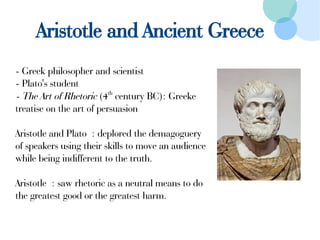
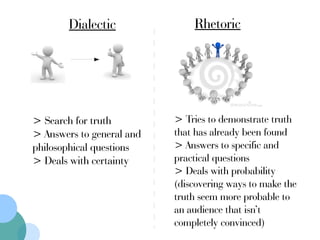
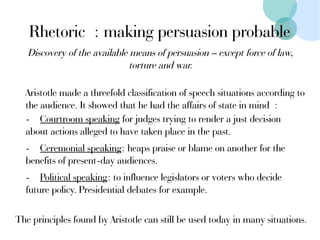

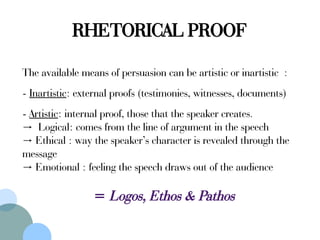
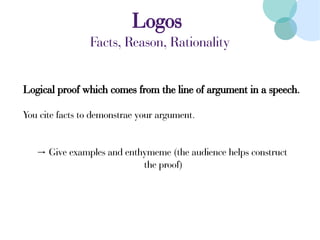
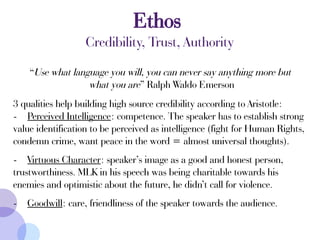
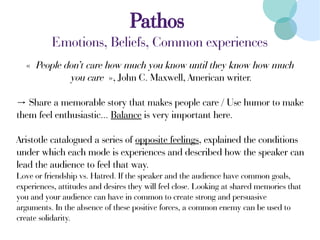
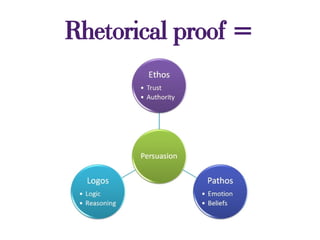
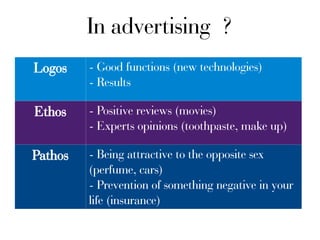
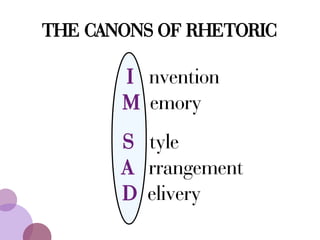
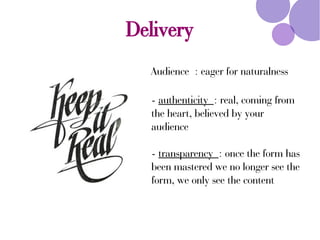
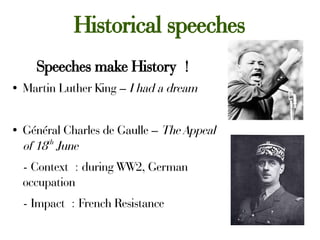
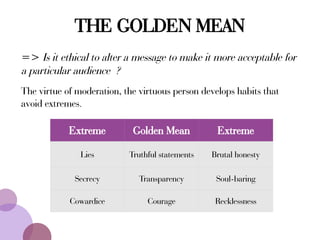


The document discusses Aristotle's views on rhetoric as an essential art of persuasion, emphasizing its ethical implications and classification of speech situations. It highlights the concepts of logos, ethos, and pathos as the artistic means of persuasion and outlines the importance of speaker credibility and audience connection. Additionally, it covers the canons of rhetoric, including invention, memory, style, arrangement, and delivery, while referencing historical speeches and the ethical dilemmas associated with altering messages for audience acceptance.


