The Nature of the Second Language acquisition and 
Learning 
Roll No:03 Semester-3 Year-2014-15 
Bharat Bhammar 
Paper-12 (ELT) 
Submitted to: Department of English 
S.B Gardi Maharaja Krishnakumarsinhji 
Bhavnagar University
The Nature of SLA and Learning 
 The term acquisition was originally used to emphasize the sub-conscious 
nature of the learning and acquisition has become 
largely synonyms. There has been much debate about exactly 
how language is learned, and many issues are still unresolved. 
There are many theories of SLA but name are fully accepted by 
all SLA researchers.
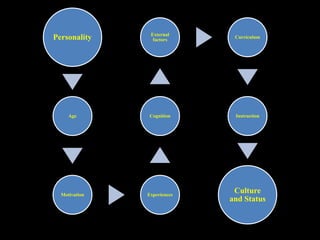
Personality 
Age 
External 
factors 
Cognition 
Motivation Experiences 
Curriculum 
Instruction 
Culture 
and Status
Learning and language acquisition 
 it has six observations 
1) Very little acquisition takes place most of the time 
learning occurs that two not is in real sense. Because 
of the lack of atmosphere very little acquisition 
except in English medium schools or convent school 
and metro cities-because lack of motivation, lack of 
practice. 
2) Background of language 1 is helpful in learning 
language L2.
3) Sometimes habits or incomplete knowledge of language L1 
it creates clashes while learning language L2 because very 
often students do not have enough knowledge of language L1. 
4) When language L2 is learnt in Indian context grammar is 
much more emphasized.
5) Learning of language L2 has become mechanical artificial 
and boring. 
6) Natural order of four basic skills of language learning is not 
maintained perhaps that is why learning of language L2 
becomes strainers.
Language acquisition in children 
 Swiss Psychologist-Jean Piaget was psychologist rather than 
Theorist. He studied the nature of the children of different ages 
after that he provided a tenable idea in regard to the nature of 
learning process. 
 According to Piaget the term 'genetic epistemology‘ means 
 'Genetic' - Development 
 'epistemology‘-A theory of knowledge acquisition.
 Piaget's genetic epistemology is devoted to a study of the 
development stage of children as they relate to their acquisition 
of knowledge. Piaget studies were biologically oriented and he 
gives prominence to psychological factory the gives secondary 
place to culture factors in explanation of human behaviour
Theory of Noam Chomsky 
 Noam Chomsky is famous in language pedagogy. His theory is 
related with transformational generative grammar. He also deals 
with language acquisition in children. He takes about structure 
of universal language in that structure. Besides when we think 
about language acquisition in children. 
 We should think about quality of experiences. Language 
acquisition in children takes place they get motivation, feedback 
all these two affects language acquisition.
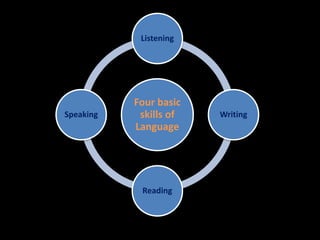
Listening 
Four basic 
skills of 
Language 
Writing 
Reading 
Speaking
The Nature of the Second Language acquisition and Learning

The Nature of the Second Language acquisition and Learning

  • 1.
    The Nature ofthe Second Language acquisition and Learning Roll No:03 Semester-3 Year-2014-15 Bharat Bhammar Paper-12 (ELT) Submitted to: Department of English S.B Gardi Maharaja Krishnakumarsinhji Bhavnagar University
  • 2.
    The Nature ofSLA and Learning  The term acquisition was originally used to emphasize the sub-conscious nature of the learning and acquisition has become largely synonyms. There has been much debate about exactly how language is learned, and many issues are still unresolved. There are many theories of SLA but name are fully accepted by all SLA researchers.
  • 3.
    Personality Age External factors Cognition Motivation Experiences Curriculum Instruction Culture and Status
  • 4.
    Learning and languageacquisition  it has six observations 1) Very little acquisition takes place most of the time learning occurs that two not is in real sense. Because of the lack of atmosphere very little acquisition except in English medium schools or convent school and metro cities-because lack of motivation, lack of practice. 2) Background of language 1 is helpful in learning language L2.
  • 5.
    3) Sometimes habitsor incomplete knowledge of language L1 it creates clashes while learning language L2 because very often students do not have enough knowledge of language L1. 4) When language L2 is learnt in Indian context grammar is much more emphasized.
  • 6.
    5) Learning oflanguage L2 has become mechanical artificial and boring. 6) Natural order of four basic skills of language learning is not maintained perhaps that is why learning of language L2 becomes strainers.
  • 7.
    Language acquisition inchildren  Swiss Psychologist-Jean Piaget was psychologist rather than Theorist. He studied the nature of the children of different ages after that he provided a tenable idea in regard to the nature of learning process.  According to Piaget the term 'genetic epistemology‘ means  'Genetic' - Development  'epistemology‘-A theory of knowledge acquisition.
  • 8.
     Piaget's geneticepistemology is devoted to a study of the development stage of children as they relate to their acquisition of knowledge. Piaget studies were biologically oriented and he gives prominence to psychological factory the gives secondary place to culture factors in explanation of human behaviour
  • 9.
    Theory of NoamChomsky  Noam Chomsky is famous in language pedagogy. His theory is related with transformational generative grammar. He also deals with language acquisition in children. He takes about structure of universal language in that structure. Besides when we think about language acquisition in children.  We should think about quality of experiences. Language acquisition in children takes place they get motivation, feedback all these two affects language acquisition.
  • 10.
    Listening Four basic skills of Language Writing Reading Speaking