
External Forces and Limestone
Environment
PROCESSES OF WEATHERING
Denudation is the long-term sum of processes that cause the
wearing away of the earth’s surface leading to a reduction in
elevation and relief of landforms and landscapes.
Weathering is the breaking down of rocks, soils and minerals as
well as artificial materials through contact with the Earth’s
atmospheric , biota and waters. Weathering occurs in situ, or "with
no movement“
Erosion refers to the processes which break up, transport and
deposit weathered materials and rocks. Its agents includes :
water, ice, snow, wind, waves and gravity.
Mass Wasting is the movement of weathered materials (with or
without water or ice) downslope by the force of gravity
The processes of weathering are facilitated by
two important elements of climate:
temperature and rainfall
The processes of weathering may be placed
into three categories:
1. Physical / Mechanical Weathering
2. Chemical Weathering
3. Biotic / Biological Weathering
The form of weathering results in the break-up of rock into
small pieces with no change in the chemical structure and
physical appearance of the rocks. This type of weathering is
most common in cold and dry climates. Physical weathering can
occur due to temperature, pressure, frost etc.
Temperature Changes
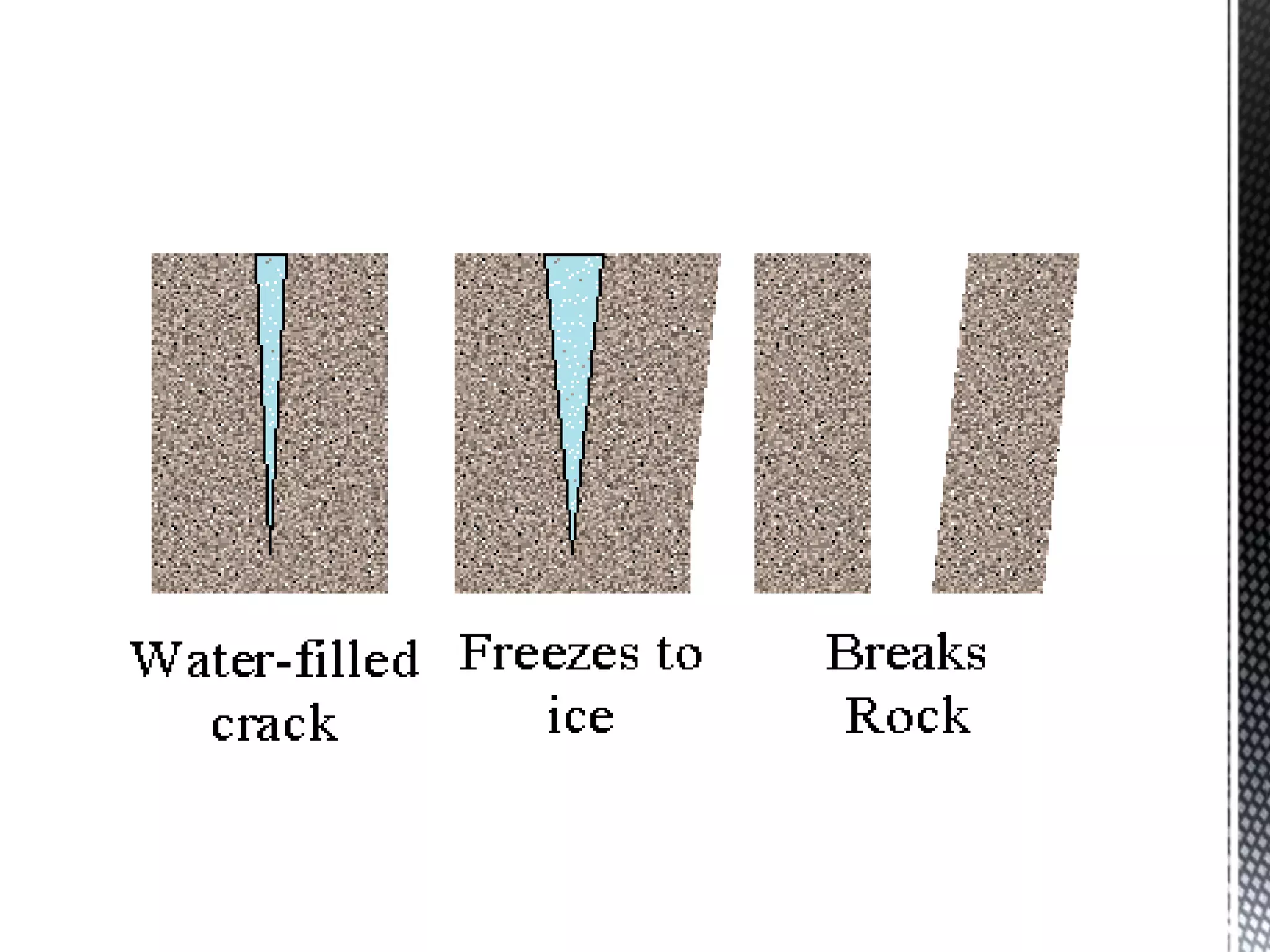
Frost action
Pressure Release
Certain frost-susceptible soils expand upon freezing as
a result of water traveling via capillary action to grow
ice lenses near the freezing front. This same
phenomenon occurs within pore spaces of rocks. The
ice accumulations grow larger as they attract liquid
water from the surrounding pores. The ice crystal
growth weakens the rocks which, in time, break up. It is
caused by the approximately 10% (9.87) expansion of
ice when water freezes, which can place considerable
stress on anything containing the water as it freezes.
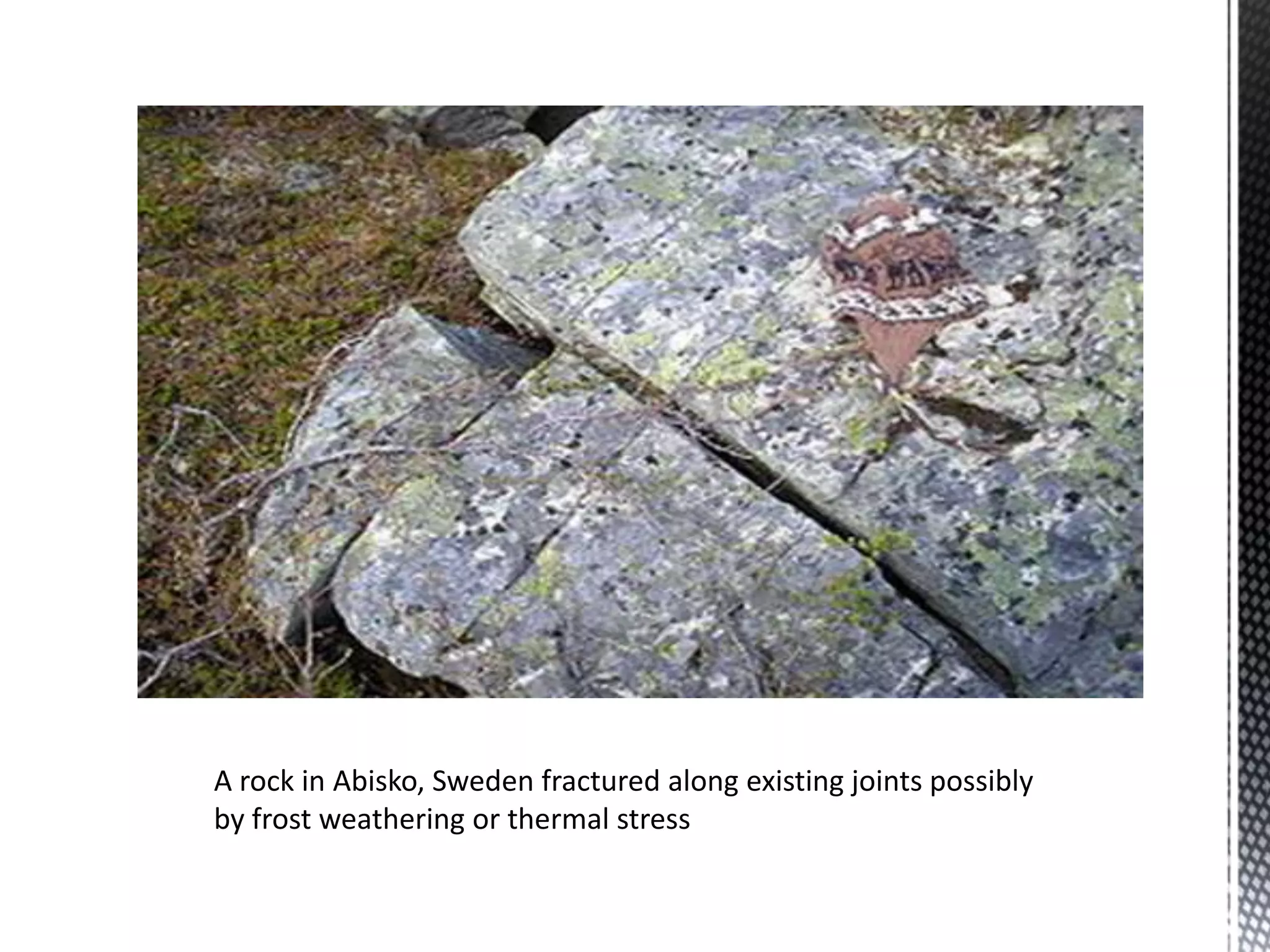
A rock in Abisko, Sweden fractured along existing joints possibly
by frost weathering or thermal stress
Pressure Release
Pressure release could have caused the exfoliated granite sheets
shown in the picture.
When rocks form under great pressure (volcanic rocks for example)
are exposed on the surface, the release of the pressure of overlying
layers causes them to expand, crack and breakup. Pressure release
forms areas of large broken blocks of rock.
Intrusive igneous rocks (e.g. granite) are formed deep beneath the
Earth's surface. They are under tremendous pressure because of
the overlying rock material. When erosion removes the overlying
rock material, these intrusive rocks are exposed and the pressure
on them is released. The outer parts of the rocks then tend to
expand. The expansion sets up stresses which cause fractures
parallel to the rock surface to form. Over time, sheets of rock break
away from the exposed rocks along the fractures, a process known
as exfoliation. Exfoliation due to pressure release is also known as
"sheeting".
Chemical Weathering
Processes
Chemical weathering changes the chemical structure and
physical appearance of the rock. The rock decomposes. It
occurs rapidly in hot , wet climates such as the Caribbean.
Limestone which is made of calcium carbonate is especially
vulnerable to the chemical weathering process known as
carbonation.
Carbonation
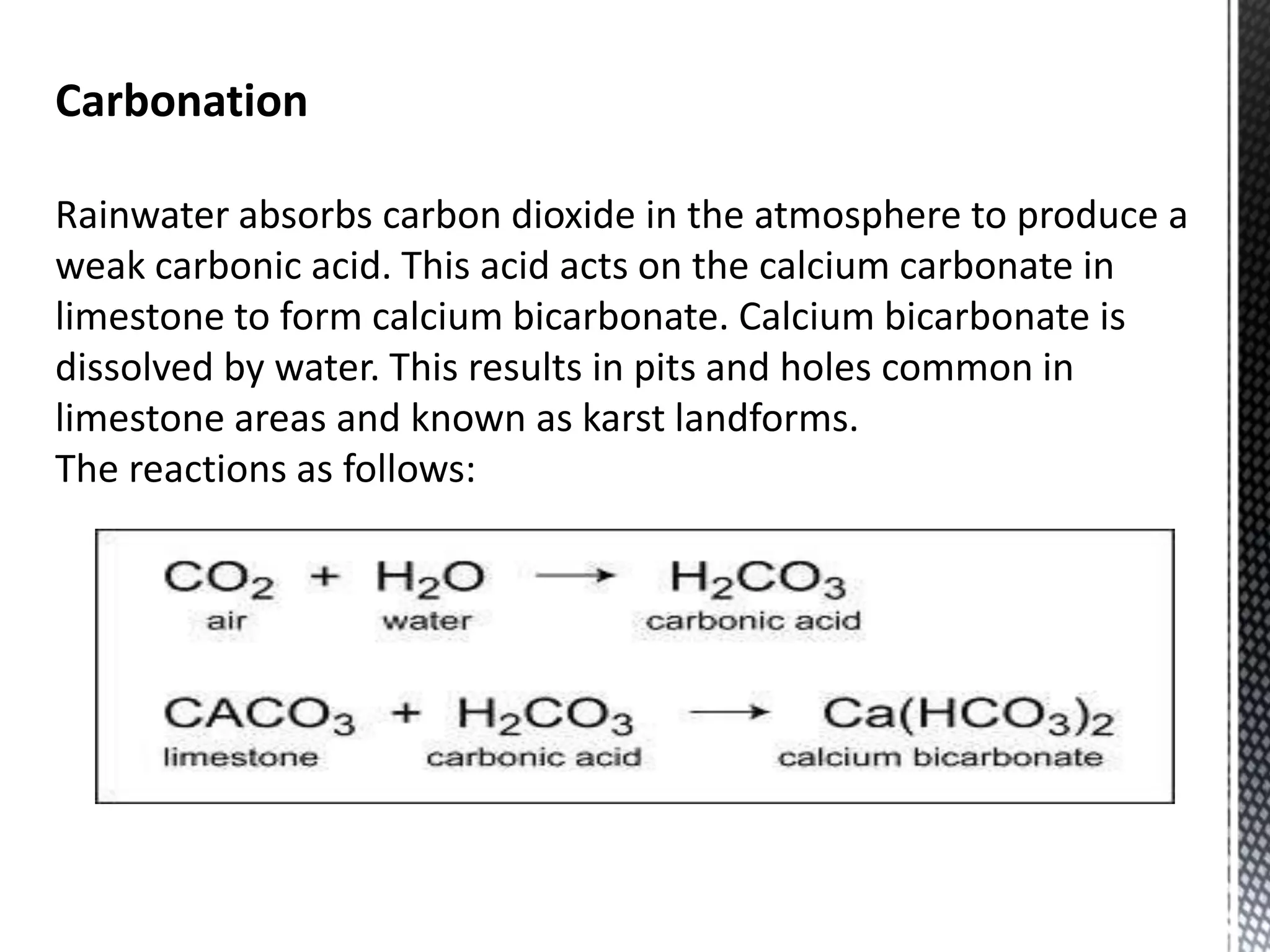
Rainwater absorbs carbon dioxide in the atmosphere to produce a
weak carbonic acid. This acid acts on the calcium carbonate in
limestone to form calcium bicarbonate. Calcium bicarbonate is
dissolved by water. This results in pits and holes common in
limestone areas and known as karst landforms.
The reactions as follows:
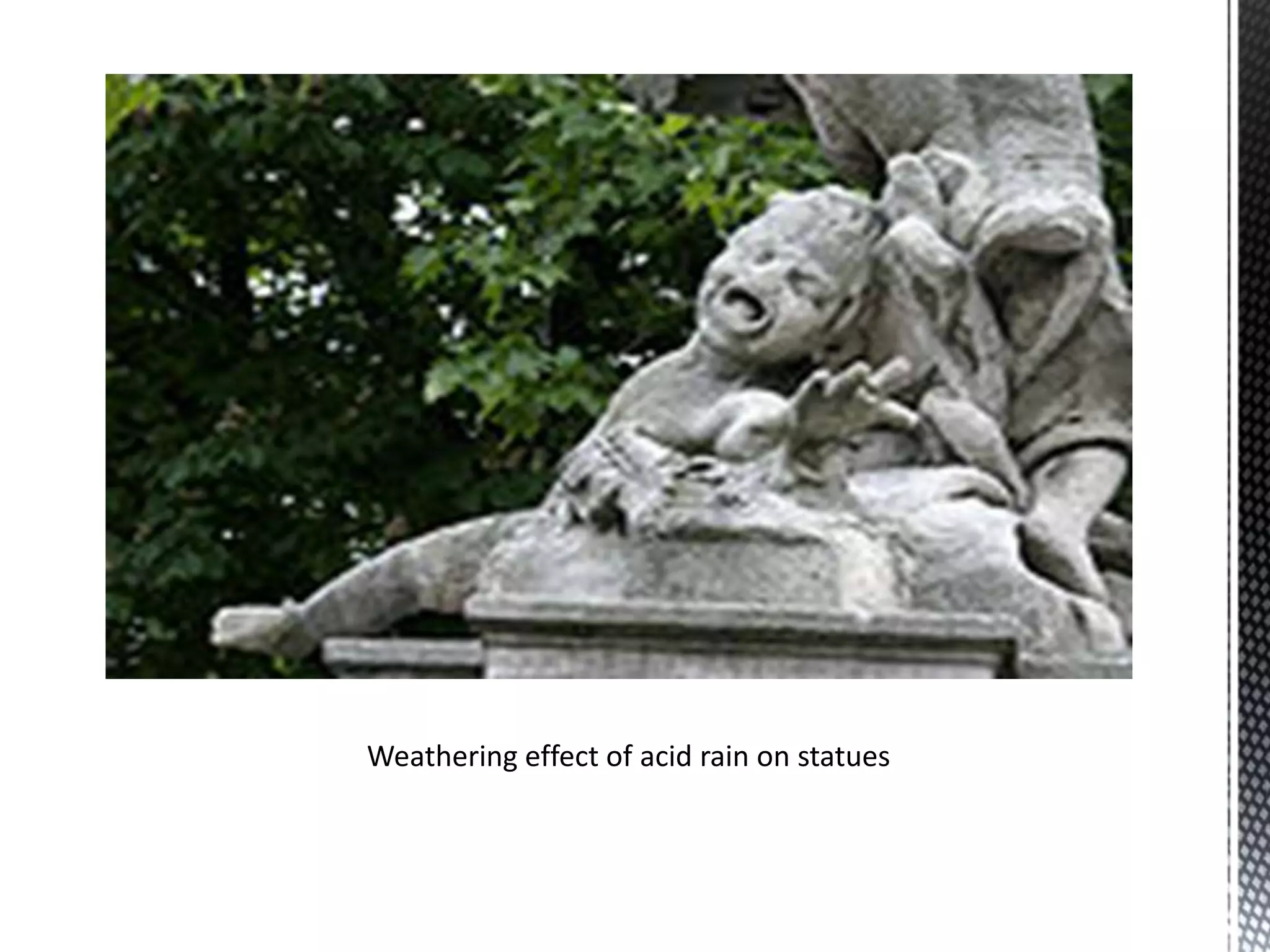
Weathering effect of acid rain on statues
Oxidation
This is the process of oxygen being added to a
compound. Rocks rich in iron react with oxygen in water
to form iron oxide as in the rusting of iron. The effect is
a thin soft crust on the outer part of the rock that is
easily broken down.
Solution
This occurs in rocks containing salts such as
sodium and potassium that are soluble in water.
Rainwater falling on these rocks will eventually
dissolve them.
Biotic/ Biological Weathering
Process
Biotic weathering is the result of the physical or
chemical effects of plants and animals on a rock; they
may cause disintegration or decomposition of rock.
Plant roots
Plant roots may get into cracks and spaces of a rock and break it
apart as they grow. This is a physical process, leading to
disintegration of rocks.
Decayed Vegetation
These may release organic acids which chemically alter rocks
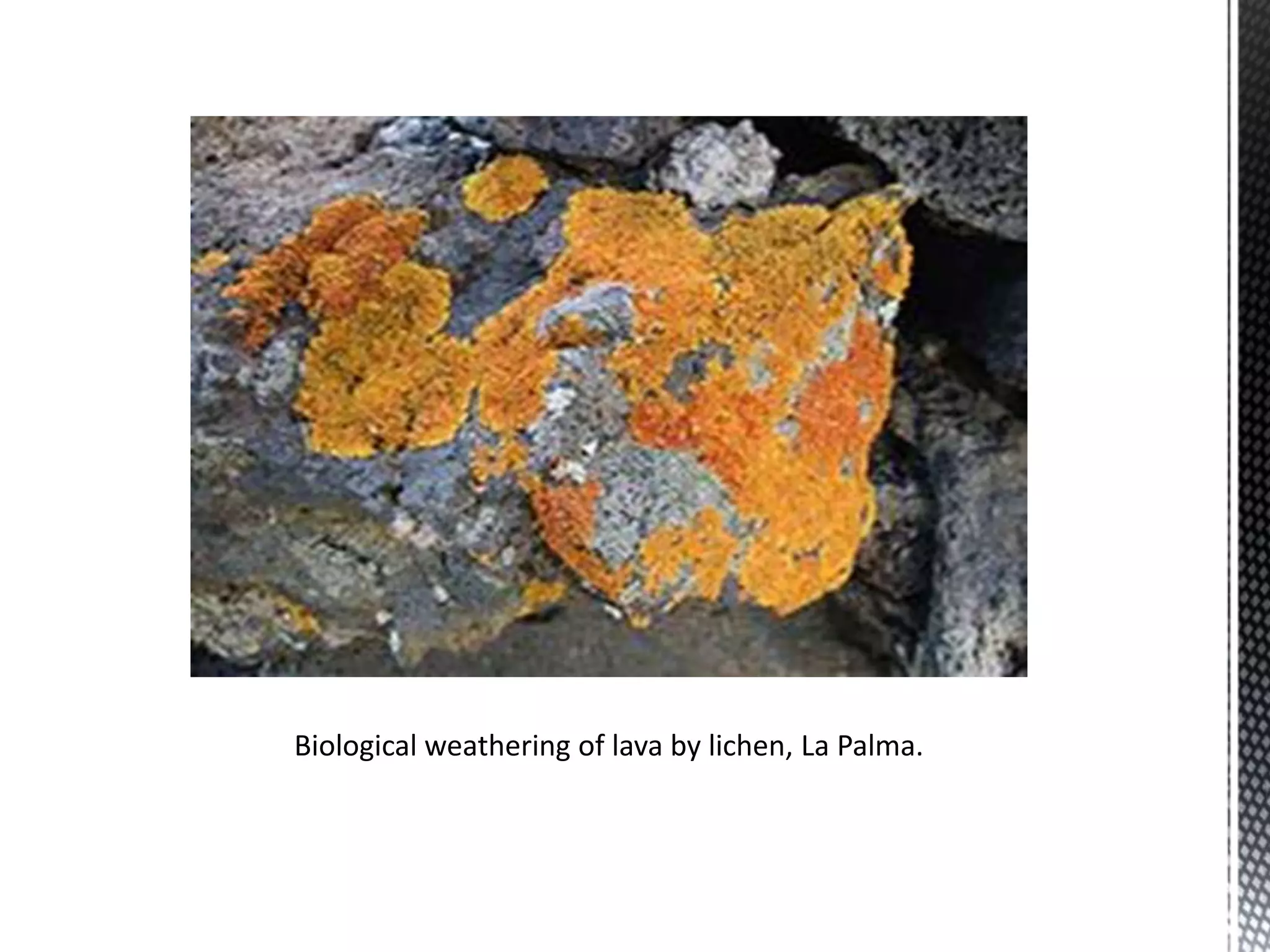
Biological weathering of lava by lichen, La Palma.
Activity 1. Answer the following questions
1. Explain how rocks are affected by
(i) ONE physical weathering process
(ii) ONE biotic/ biological weathering process
2.Give two characteristics of Limestone
3. Differentiate between chemical weathering and physical
weathering
4. Explain two ways in which weathering is affected by climate
5. State clearly the meaning of the terms- ‘weathering’ and
‘erosion’

Natural systems -weathering processes

  • 1.
    External Forces andLimestone Environment PROCESSES OF WEATHERING
  • 3.
    Denudation is thelong-term sum of processes that cause the wearing away of the earth’s surface leading to a reduction in elevation and relief of landforms and landscapes. Weathering is the breaking down of rocks, soils and minerals as well as artificial materials through contact with the Earth’s atmospheric , biota and waters. Weathering occurs in situ, or "with no movement“ Erosion refers to the processes which break up, transport and deposit weathered materials and rocks. Its agents includes : water, ice, snow, wind, waves and gravity. Mass Wasting is the movement of weathered materials (with or without water or ice) downslope by the force of gravity
  • 5.
    The processes ofweathering are facilitated by two important elements of climate: temperature and rainfall The processes of weathering may be placed into three categories: 1. Physical / Mechanical Weathering 2. Chemical Weathering 3. Biotic / Biological Weathering
  • 6.
    The form ofweathering results in the break-up of rock into small pieces with no change in the chemical structure and physical appearance of the rocks. This type of weathering is most common in cold and dry climates. Physical weathering can occur due to temperature, pressure, frost etc. Temperature Changes Frost action Pressure Release
  • 9.
    Certain frost-susceptible soilsexpand upon freezing as a result of water traveling via capillary action to grow ice lenses near the freezing front. This same phenomenon occurs within pore spaces of rocks. The ice accumulations grow larger as they attract liquid water from the surrounding pores. The ice crystal growth weakens the rocks which, in time, break up. It is caused by the approximately 10% (9.87) expansion of ice when water freezes, which can place considerable stress on anything containing the water as it freezes.
  • 11.
    A rock inAbisko, Sweden fractured along existing joints possibly by frost weathering or thermal stress
  • 12.
    Pressure Release Pressure releasecould have caused the exfoliated granite sheets shown in the picture. When rocks form under great pressure (volcanic rocks for example) are exposed on the surface, the release of the pressure of overlying layers causes them to expand, crack and breakup. Pressure release forms areas of large broken blocks of rock. Intrusive igneous rocks (e.g. granite) are formed deep beneath the Earth's surface. They are under tremendous pressure because of the overlying rock material. When erosion removes the overlying rock material, these intrusive rocks are exposed and the pressure on them is released. The outer parts of the rocks then tend to expand. The expansion sets up stresses which cause fractures parallel to the rock surface to form. Over time, sheets of rock break away from the exposed rocks along the fractures, a process known as exfoliation. Exfoliation due to pressure release is also known as "sheeting".
  • 13.
    Chemical Weathering Processes Chemical weatheringchanges the chemical structure and physical appearance of the rock. The rock decomposes. It occurs rapidly in hot , wet climates such as the Caribbean. Limestone which is made of calcium carbonate is especially vulnerable to the chemical weathering process known as carbonation.
  • 14.
    Carbonation Rainwater absorbs carbondioxide in the atmosphere to produce a weak carbonic acid. This acid acts on the calcium carbonate in limestone to form calcium bicarbonate. Calcium bicarbonate is dissolved by water. This results in pits and holes common in limestone areas and known as karst landforms. The reactions as follows:
  • 15.
    Weathering effect ofacid rain on statues
  • 16.
    Oxidation This is theprocess of oxygen being added to a compound. Rocks rich in iron react with oxygen in water to form iron oxide as in the rusting of iron. The effect is a thin soft crust on the outer part of the rock that is easily broken down.
  • 17.
    Solution This occurs inrocks containing salts such as sodium and potassium that are soluble in water. Rainwater falling on these rocks will eventually dissolve them.
  • 18.
    Biotic/ Biological Weathering Process Bioticweathering is the result of the physical or chemical effects of plants and animals on a rock; they may cause disintegration or decomposition of rock.
  • 19.
    Plant roots Plant rootsmay get into cracks and spaces of a rock and break it apart as they grow. This is a physical process, leading to disintegration of rocks. Decayed Vegetation These may release organic acids which chemically alter rocks
  • 20.
    Biological weathering oflava by lichen, La Palma.
  • 21.
    Activity 1. Answerthe following questions 1. Explain how rocks are affected by (i) ONE physical weathering process (ii) ONE biotic/ biological weathering process 2.Give two characteristics of Limestone 3. Differentiate between chemical weathering and physical weathering 4. Explain two ways in which weathering is affected by climate 5. State clearly the meaning of the terms- ‘weathering’ and ‘erosion’