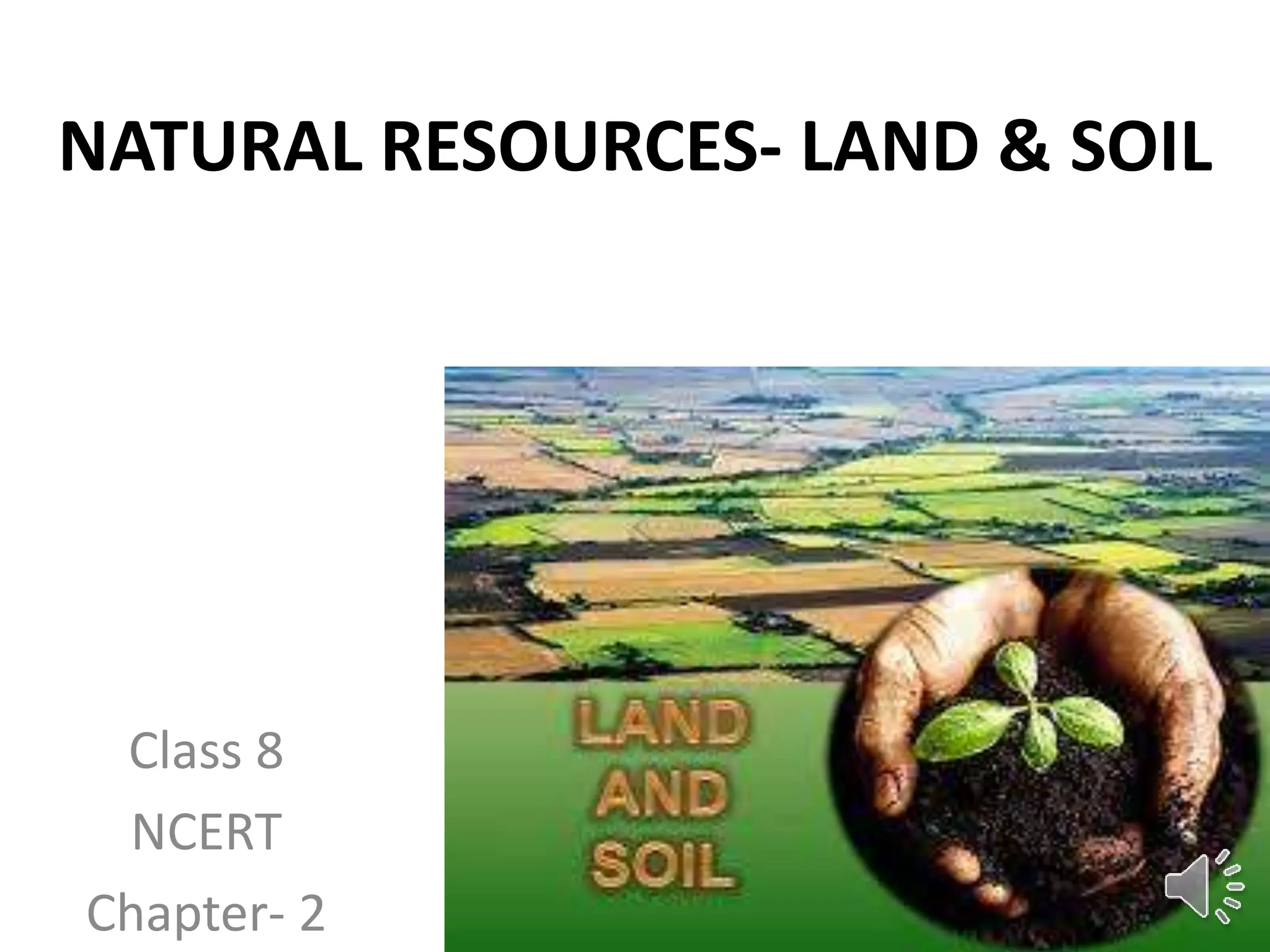
NATURAL RESOURCES- LAND & SOIL
Class 8
NCERT
Chapter- 2
LAND RESOURCES
• Factors influencing land use patterns-
1. Physical factors- relief features, soil, climatic
conditions
2. Human factors- density of population, land
tenure, technical level of people
3. Location and accessibility of the region
LAND UTILIZATION IN INDIA
• Total geographical area of India is 330 million
hectares
• Net sown area- 46%
• Area sown more than once- 31% of net sown area
• Forested area- 22.5%
• Permanent pastures- 4%
• Tree crops and fallow land- 7%
• Cultivable wasteland- 6.5%
• Not available for cultivation- 14%
LAND CULTIVATION
• It depends on –
1. Fertility of soil
2. Relief of land
3. Availability of water
4. Need of the people
PREPARING LAND USE PLAN
Proper land use plan can be prepared by-
Checking the further spread of deserts
Adopting scientific techniques
Conserving soils and forests
Providing irrigation facilities
Increasing the use of manures and chemical
fertilizers
SOIL RESOURCES
• Soil is the thin surface layer of the earth formed
by breaking of rocks, decayed organic matter,
living organisms, water and air
• Organic elements- humus,
• Inorganic elements- nitrogen, potassium, sulphur,
phosphorus, calcium, iron etc.
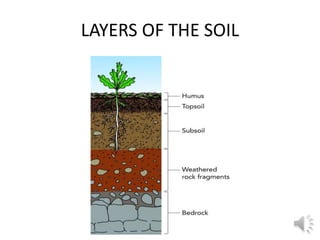
LAYERS OF THE SOIL
MAJOR SOILS OF INDIA
1. Alluvial soils
2. Black-Lava soils
3. Red soils
4. Laterite soils
5. Mountain soils
6. Desert soils
SOIL CONSERVATION
• Afforestation
• Check overgrazing
• Construction of dams
• Changing agricultural practices-
Crop rotation
Strip cropping
Terracing & contour bunding
Contour ploughing
Use of early maturing varieties

Natural resources land & soil

  • 1.
    NATURAL RESOURCES- LAND& SOIL Class 8 NCERT Chapter- 2
  • 2.
    LAND RESOURCES • Factorsinfluencing land use patterns- 1. Physical factors- relief features, soil, climatic conditions 2. Human factors- density of population, land tenure, technical level of people 3. Location and accessibility of the region
  • 3.
    LAND UTILIZATION ININDIA • Total geographical area of India is 330 million hectares • Net sown area- 46% • Area sown more than once- 31% of net sown area • Forested area- 22.5% • Permanent pastures- 4% • Tree crops and fallow land- 7% • Cultivable wasteland- 6.5% • Not available for cultivation- 14%
  • 4.
    LAND CULTIVATION • Itdepends on – 1. Fertility of soil 2. Relief of land 3. Availability of water 4. Need of the people
  • 5.
    PREPARING LAND USEPLAN Proper land use plan can be prepared by- Checking the further spread of deserts Adopting scientific techniques Conserving soils and forests Providing irrigation facilities Increasing the use of manures and chemical fertilizers
  • 6.
    SOIL RESOURCES • Soilis the thin surface layer of the earth formed by breaking of rocks, decayed organic matter, living organisms, water and air • Organic elements- humus, • Inorganic elements- nitrogen, potassium, sulphur, phosphorus, calcium, iron etc.
  • 7.
  • 8.
    MAJOR SOILS OFINDIA 1. Alluvial soils 2. Black-Lava soils 3. Red soils 4. Laterite soils 5. Mountain soils 6. Desert soils
  • 9.
    SOIL CONSERVATION • Afforestation •Check overgrazing • Construction of dams • Changing agricultural practices- Crop rotation Strip cropping Terracing & contour bunding Contour ploughing Use of early maturing varieties