Nano Emulsion
Presented by
Pratik Anil Sonar
M Pharmacy
(Department of Pharmaceutics)
H.R.Patel,institute of pharmaceutical education and research shirpur,dhule
1
Introduction
The emulsions with nano sized dispersed phase is called nano
emulsion having a wide variety of applications ranging from food,
dairy, pharmaceutics to paint and oil industries.
one of the high energy consumer method. Nano emulsion is
thermodynamically stable.
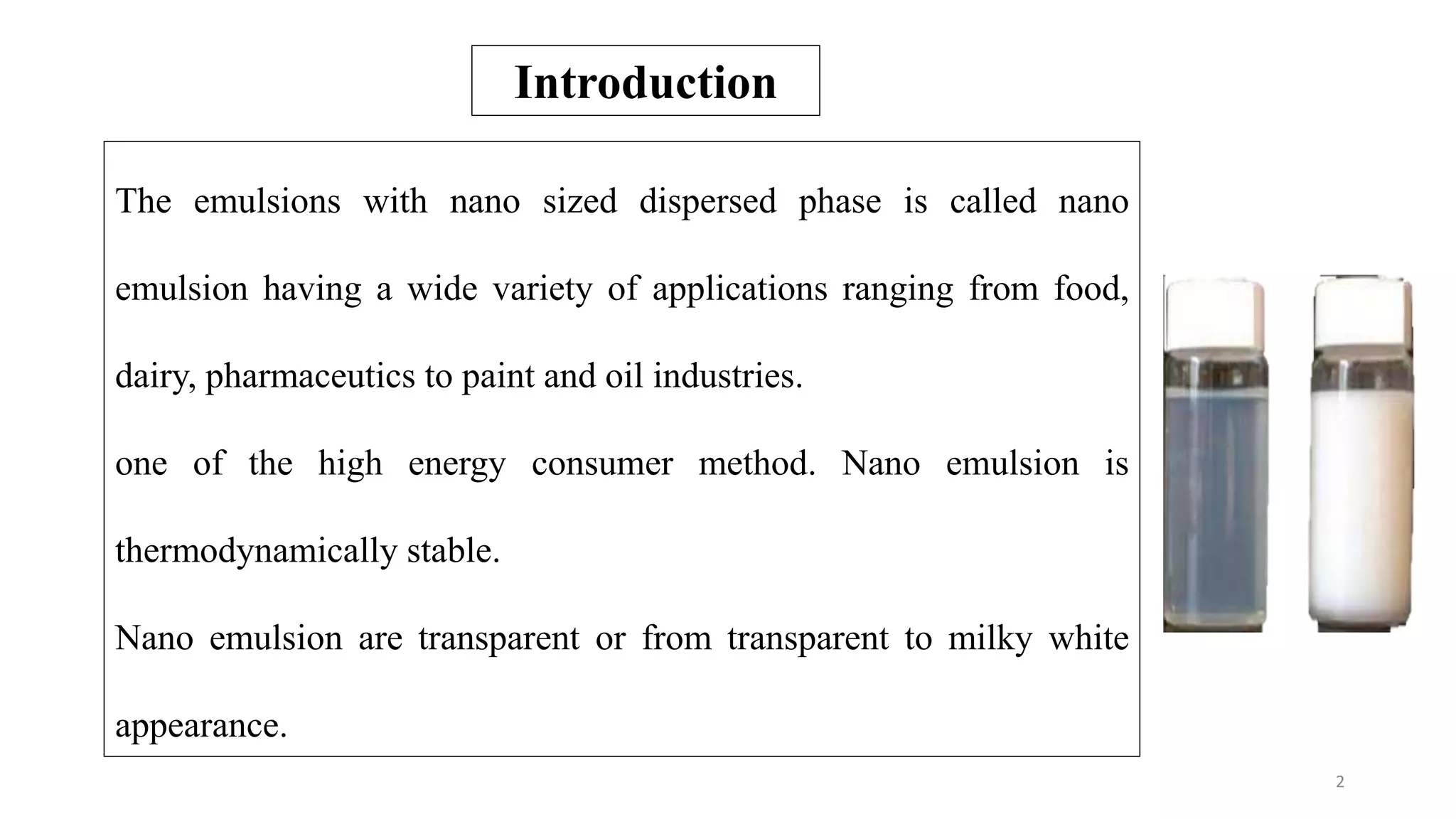
Nano emulsion are transparent or from transparent to milky white
appearance.
2
Nano emulsion (NEs) are Oil in Water (O/W) or Water in Oil (W/O) dispersions
of two immiscible liquids stabilized by using appropriate surfactants.
Nano emulsion with a mean droplet diameter of about 100nm-300nm sized
limits.
Nano emulsion are formulated into different dosage form like liquids, Creams,
gel, foams, spray etc. can be administered by different routs oral, parenteral, and
ocular or nasal.
3
Micro emulsion
Thermodynamically stable.
Comparatively long stability.
Higher surfactants concentration.
Less expensive then nano emulsion.
Micro emulsion are formulate in
Lab.
Nano emulsion
Kinetically stable.
Do not possess long term stability.
Required lower surfactants concentration.
Nano emulsion are generally expensive.
Nano emulsion are formulate in industries and
Lab.
Microemulsion Vs Nanoemulsion
4
Types of Nano emulsion
Oil-in-Water (O/W)
Water-In-Oil (W/O)
Bi Continuous nano emulsion
5
Methods of Preparation
A)High Energy Methods-
1)High Pressure Homogenization
2)Micro fluidization
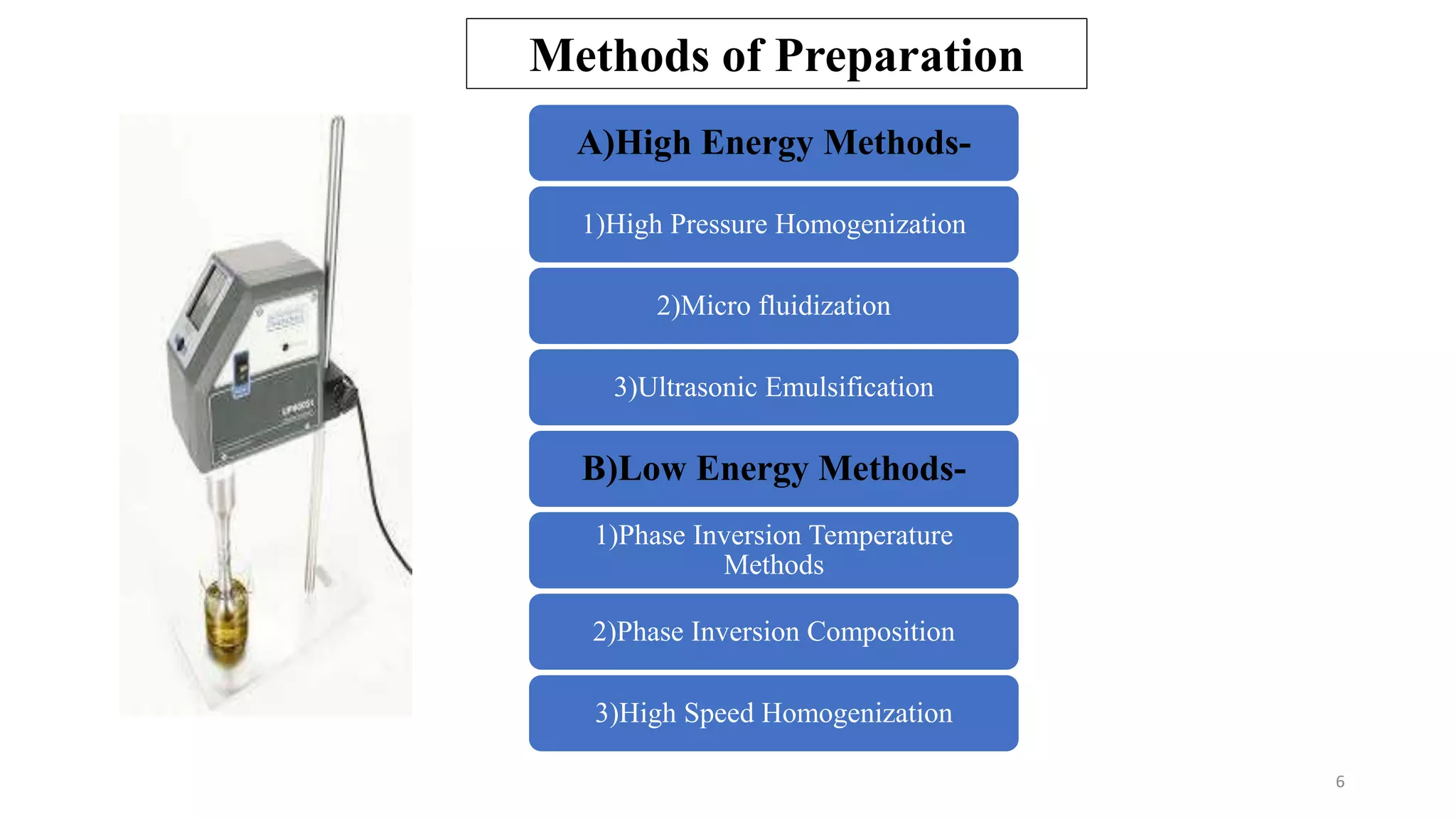
3)Ultrasonic Emulsification
B)Low Energy Methods-
1)Phase Inversion Temperature
Methods
2)Phase Inversion Composition
3)High Speed Homogenization
6
High pressure homogenization
7
Micro fluidization
8
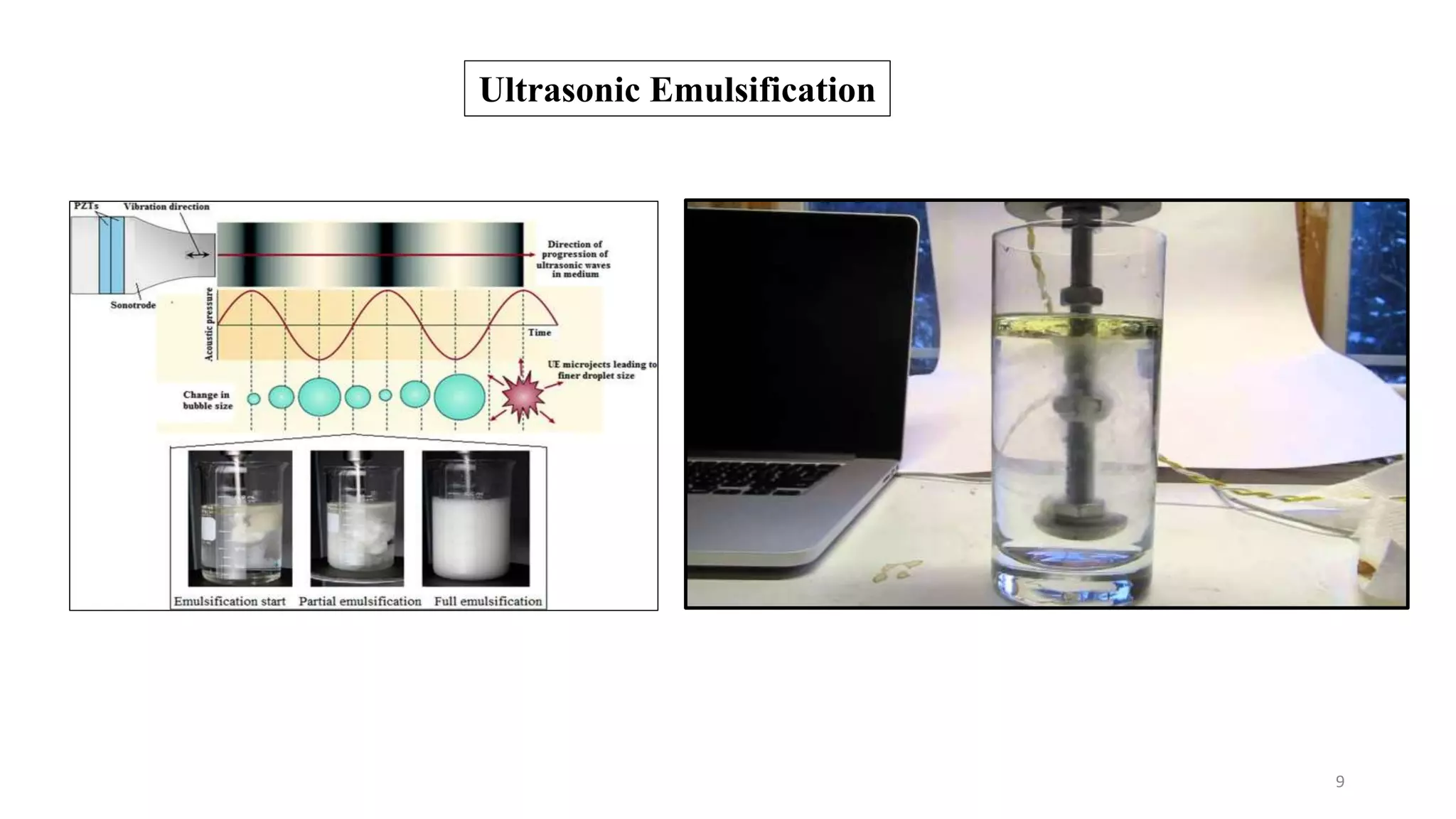
Ultrasonic Emulsification
9
Phase inversion Temperature
10
Advantages and Disadvantages of
Nano emulsion
Advantages-
It increase the rate of absorption.
It helpful in taste masking.
It required less amount of energy.
It increase the bioavailability.
Disadvantages-
Limited solubilizing capacity for
high melting substances.
The surfactant must be nontoxic for
using pharmaceutical application.
11
Application of Nano emulsion
Nan emulsion are used in cosmetics.
Nano emulsion are used as cell culture technology.
Nano emulsion in cancer therapy and targeted drug delivery.
Nano emulsion as a mucosal vaccines.
Nano emulsion in treatment of various other disease condition.
Nano emulsion for nasal drug delivery system.
Nano emulsion for ocular delivery.
12
Thank
you
13

Nano emulsion

  • 1.
    Nano Emulsion Presented by PratikAnil Sonar M Pharmacy (Department of Pharmaceutics) H.R.Patel,institute of pharmaceutical education and research shirpur,dhule 1
  • 2.
    Introduction The emulsions withnano sized dispersed phase is called nano emulsion having a wide variety of applications ranging from food, dairy, pharmaceutics to paint and oil industries. one of the high energy consumer method. Nano emulsion is thermodynamically stable. Nano emulsion are transparent or from transparent to milky white appearance. 2
  • 3.
    Nano emulsion (NEs)are Oil in Water (O/W) or Water in Oil (W/O) dispersions of two immiscible liquids stabilized by using appropriate surfactants. Nano emulsion with a mean droplet diameter of about 100nm-300nm sized limits. Nano emulsion are formulated into different dosage form like liquids, Creams, gel, foams, spray etc. can be administered by different routs oral, parenteral, and ocular or nasal. 3
  • 4.
    Micro emulsion Thermodynamically stable. Comparativelylong stability. Higher surfactants concentration. Less expensive then nano emulsion. Micro emulsion are formulate in Lab. Nano emulsion Kinetically stable. Do not possess long term stability. Required lower surfactants concentration. Nano emulsion are generally expensive. Nano emulsion are formulate in industries and Lab. Microemulsion Vs Nanoemulsion 4
  • 5.
    Types of Nanoemulsion Oil-in-Water (O/W) Water-In-Oil (W/O) Bi Continuous nano emulsion 5
  • 6.
    Methods of Preparation A)HighEnergy Methods- 1)High Pressure Homogenization 2)Micro fluidization 3)Ultrasonic Emulsification B)Low Energy Methods- 1)Phase Inversion Temperature Methods 2)Phase Inversion Composition 3)High Speed Homogenization 6
  • 7.
  • 8.
  • 9.
  • 10.
  • 11.
    Advantages and Disadvantagesof Nano emulsion Advantages- It increase the rate of absorption. It helpful in taste masking. It required less amount of energy. It increase the bioavailability. Disadvantages- Limited solubilizing capacity for high melting substances. The surfactant must be nontoxic for using pharmaceutical application. 11
  • 12.
    Application of Nanoemulsion Nan emulsion are used in cosmetics. Nano emulsion are used as cell culture technology. Nano emulsion in cancer therapy and targeted drug delivery. Nano emulsion as a mucosal vaccines. Nano emulsion in treatment of various other disease condition. Nano emulsion for nasal drug delivery system. Nano emulsion for ocular delivery. 12
  • 13.