National Adaptive Capacity Assessment

    Ireland Adapts to Climate Change

                       Climate Change Adaptation Information Event
                       March 23rd, 2013
                       Clarion Hotel, IFSC
                       Dublin
Context of Assessment


 Work fills a knowledge gap in adaptation research
 Conducted in the context of an emerging methodology,
  which Ireland helped pilot
 Sets out national institutional capacity to adapt to climate
  change
 Identifies key policies where climate change adaptation
  can be integrated
 Will help support the development of national climate
  change adaptation policy
Approach

 Developed by the World Resources Institute (WRI) in
  consultation with practioners / researchers
 National-level assessment process
 Identifies the fundamental actions that all countries
  need to perform to adapt effectively to climate
  change over time
 Framework assesses how well actions are performed
  in order to identify priorities for building adaptive
  activity and implementing adaptation actions.
Objectives for Ireland

 Focus of study national level institutions
 Identify strengths and weaknesses in capacity to adapt
  and identify key areas where action is needed
 Use the outputs of the assessment to inform emerging
  national policy on adaptation to climate change
 Determine a baseline from which to measure and review
  progress over time.
 Pilot the framework and share lessons learned with WRI
  and other pilot countries
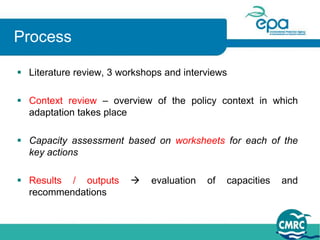
Key actions assessed
                       Have impact, vulnerability
 1. Assessment         assessments been done?

                       Have national adaptation
 2. Prioritisation     priorities been set?

                       Does national level
 3. Coordination       coordination exist?


                       Is appropriate info and analysis
 4. Information        available?


 5. Climate Risk       Do climate risk reduction
                       methods, guidelines,
 Assessment            approaches exist?
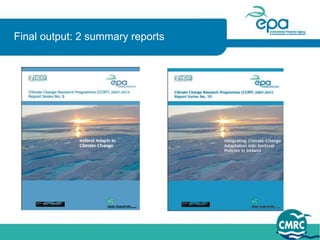
Process

 Literature review, 3 workshops and interviews

 Context review – overview of the policy context in which
  adaptation takes place

 Capacity assessment based on worksheets for each of the
  key actions

 Results / outputs          evaluation   of   capacities   and
  recommendations
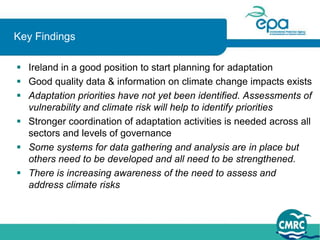
Final output: 2 summary reports
Key Findings

 Ireland in a good position to start planning for adaptation
 Good quality data & information on climate change impacts exists
 Adaptation priorities have not yet been identified. Assessments of
  vulnerability and climate risk will help to identify priorities
 Stronger coordination of adaptation activities is needed across all
  sectors and levels of governance
 Some systems for data gathering and analysis are in place but
  others need to be developed and all need to be strengthened.
 There is increasing awareness of the need to assess and
  address climate risks
Recommendations

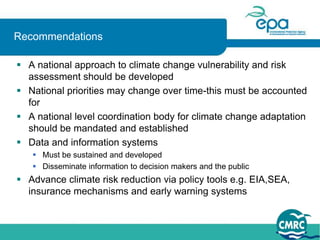
 A national approach to climate change vulnerability and risk
  assessment should be developed
 National priorities may change over time-this must be accounted
  for
 A national level coordination body for climate change adaptation
  should be mandated and established
 Data and information systems
    Must be sustained and developed
    Disseminate information to decision makers and the public
 Advance climate risk reduction via policy tools e.g. EIA,SEA,
  insurance mechanisms and early warning systems
Conclusions

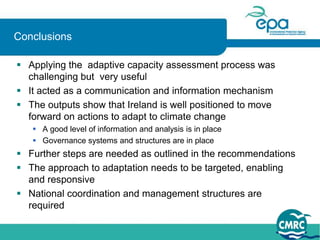
 Applying the adaptive capacity assessment process was
  challenging but very useful
 It acted as a communication and information mechanism
 The outputs show that Ireland is well positioned to move
  forward on actions to adapt to climate change
    A good level of information and analysis is in place
    Governance systems and structures are in place
 Further steps are needed as outlined in the recommendations
 The approach to adaptation needs to be targeted, enabling
  and responsive
 National coordination and management structures are
  required
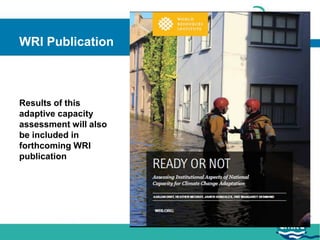
WRI Publication


Results of this
adaptive capacity
assessment will also
be included in
forthcoming WRI
publication
Thank You


   Research summary reports are available to download from www.epa.ie

   Details of WRI approach can be found at:
         http://www.wri.org/project/vulnerability-and-adaptation/nac-   framework

National Adaptive Capacity Assessment: Ireland adapts to climate change

  • 1.
    National Adaptive CapacityAssessment Ireland Adapts to Climate Change Climate Change Adaptation Information Event March 23rd, 2013 Clarion Hotel, IFSC Dublin
  • 2.
    Context of Assessment Work fills a knowledge gap in adaptation research  Conducted in the context of an emerging methodology, which Ireland helped pilot  Sets out national institutional capacity to adapt to climate change  Identifies key policies where climate change adaptation can be integrated  Will help support the development of national climate change adaptation policy
  • 3.
    Approach  Developed bythe World Resources Institute (WRI) in consultation with practioners / researchers  National-level assessment process  Identifies the fundamental actions that all countries need to perform to adapt effectively to climate change over time  Framework assesses how well actions are performed in order to identify priorities for building adaptive activity and implementing adaptation actions.
  • 4.
    Objectives for Ireland Focus of study national level institutions  Identify strengths and weaknesses in capacity to adapt and identify key areas where action is needed  Use the outputs of the assessment to inform emerging national policy on adaptation to climate change  Determine a baseline from which to measure and review progress over time.  Pilot the framework and share lessons learned with WRI and other pilot countries
  • 5.
    Key actions assessed Have impact, vulnerability 1. Assessment assessments been done? Have national adaptation 2. Prioritisation priorities been set? Does national level 3. Coordination coordination exist? Is appropriate info and analysis 4. Information available? 5. Climate Risk Do climate risk reduction methods, guidelines, Assessment approaches exist?
  • 6.
    Process  Literature review,3 workshops and interviews  Context review – overview of the policy context in which adaptation takes place  Capacity assessment based on worksheets for each of the key actions  Results / outputs  evaluation of capacities and recommendations
  • 7.
    Final output: 2summary reports
  • 8.
    Key Findings  Irelandin a good position to start planning for adaptation  Good quality data & information on climate change impacts exists  Adaptation priorities have not yet been identified. Assessments of vulnerability and climate risk will help to identify priorities  Stronger coordination of adaptation activities is needed across all sectors and levels of governance  Some systems for data gathering and analysis are in place but others need to be developed and all need to be strengthened.  There is increasing awareness of the need to assess and address climate risks
  • 9.
    Recommendations  A nationalapproach to climate change vulnerability and risk assessment should be developed  National priorities may change over time-this must be accounted for  A national level coordination body for climate change adaptation should be mandated and established  Data and information systems  Must be sustained and developed  Disseminate information to decision makers and the public  Advance climate risk reduction via policy tools e.g. EIA,SEA, insurance mechanisms and early warning systems
  • 10.
    Conclusions  Applying theadaptive capacity assessment process was challenging but very useful  It acted as a communication and information mechanism  The outputs show that Ireland is well positioned to move forward on actions to adapt to climate change  A good level of information and analysis is in place  Governance systems and structures are in place  Further steps are needed as outlined in the recommendations  The approach to adaptation needs to be targeted, enabling and responsive  National coordination and management structures are required
  • 11.
    WRI Publication Results ofthis adaptive capacity assessment will also be included in forthcoming WRI publication
  • 12.
    Thank You  Research summary reports are available to download from www.epa.ie  Details of WRI approach can be found at: http://www.wri.org/project/vulnerability-and-adaptation/nac- framework