Climate Adaptation Platforms Community of
Practice
Webinar: Connecting knowledge to policy and
practice
3rd October 2024
Rosie Witton, Sukaina Bharwani, Alice Chautard: SEI Oxford
What is the AGORA project?
AGORA - A Gathering place to cO-design and co-cReate Adaptation
AGORA supports the overall objectives of the Mission on Adaptation to
Climate Change to meaningfully and effectively engage communities and
regions in climate actions, accelerating and upscaling adaptation process for
building a climate resilient Europe.
Creating an alliance of online knowledge brokers serving regions in Europe
and beyond. Strengthening collective efforts to share actionable knowledge for
adaptation; connecting local-level experiences with policy-making; creating
connections between the platforms to enhance access to knowledge for
citizens and decision-makers; supporting ongoing development of platforms
through sharing best practices for user engagement.
Name:
Aim:
CAPs
Community
of Practice:
Agenda
• Christopher Phillips, University College Cork (Climate Ireland)
• Bodil Ståhl, Swedish National Knowledge Center for Climate Adaptation
• Rosie Witton, Stockholm Environment Institute (Agora Community Hub)
• Sukaina Bharwani, Stockholm Environment Institute (Connectivity Hub)
Welcome, Sukaina Bharwani & Alice Chautard
Short presentations (10 minutes each)
Facilitated discussion (45 minutes) - we will use Miro Boards
Audience Q&A (10-15 minutes) – submit your questions via the chat
Closing remarks, Sukaina Bharwani
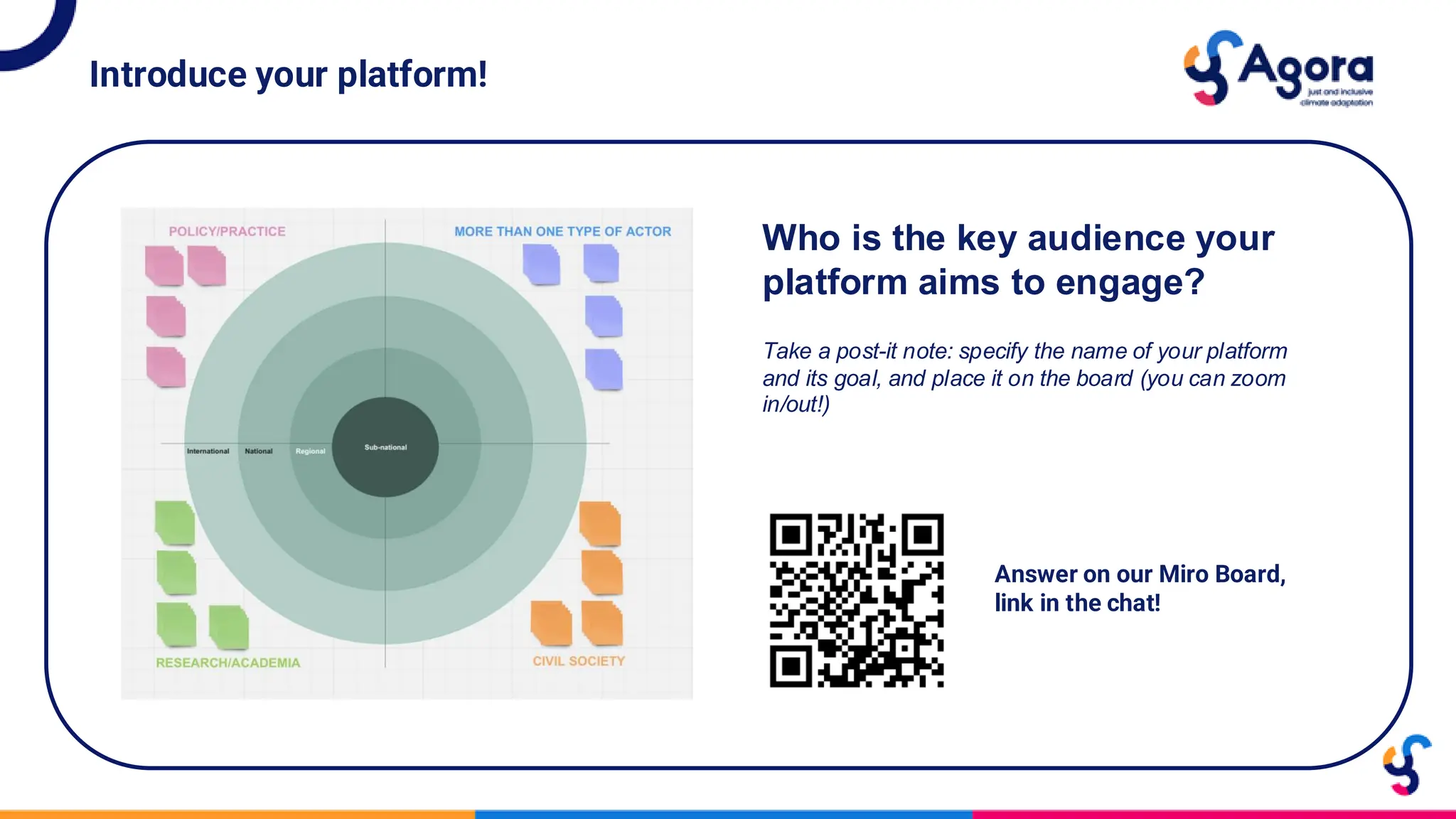
Introduce your platform!
Who is the key audience your
platform aims to engage?
Take a post-it note: specify the name of your platform
and its goal, and place it on the board (you can zoom
in/out!)
Answer on our Miro Board,
link in the chat!
Speakers
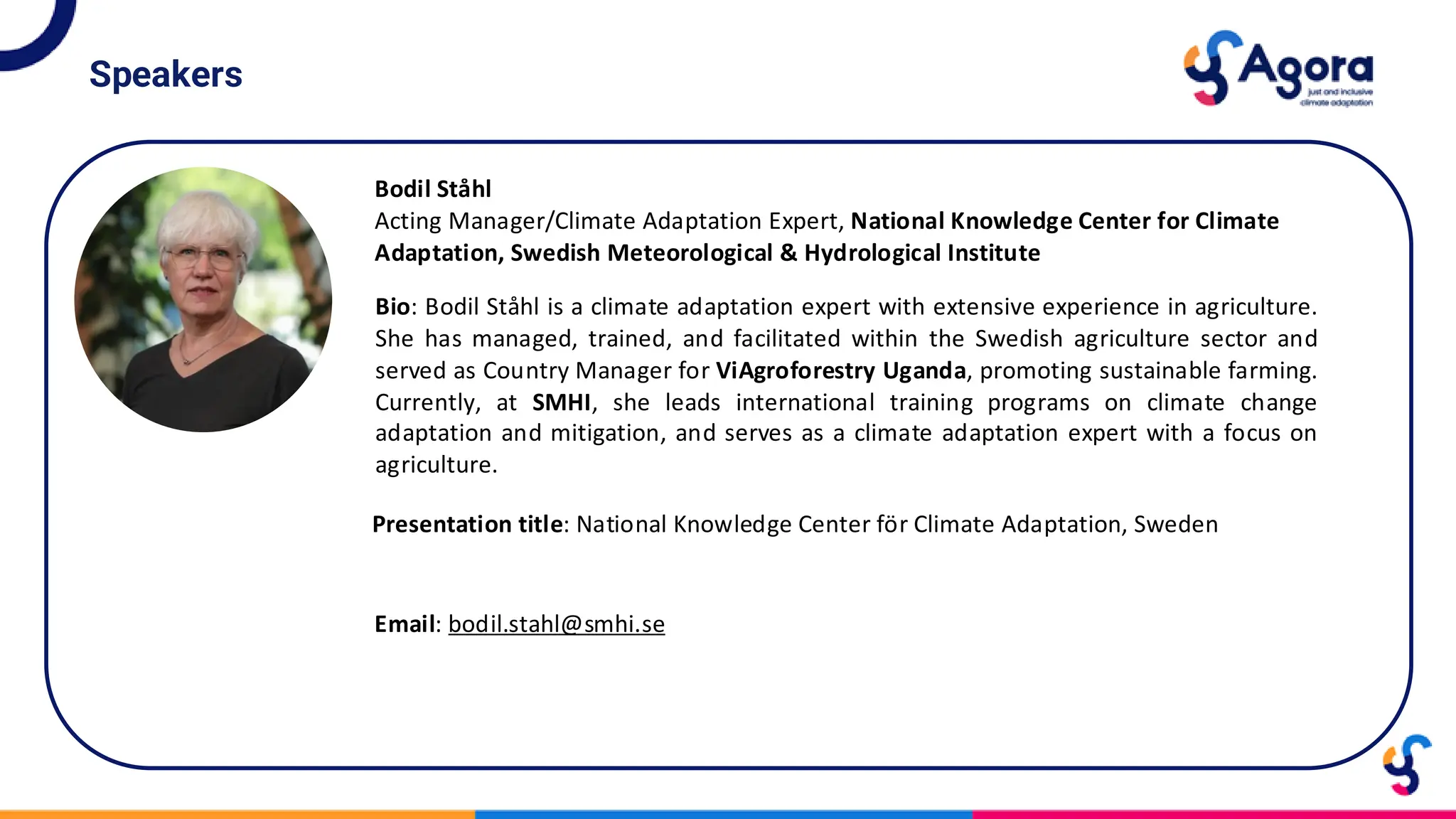
Bodil Ståhl
Acting Manager/Climate Adaptation Expert, National Knowledge Center for Climate
Adaptation, Swedish Meteorological & Hydrological Institute
Bio: Bodil Ståhl is a climate adaptation expert with extensive experience in agriculture.
She has managed, trained, and facilitated within the Swedish agriculture sector and
served as Country Manager for ViAgroforestry Uganda, promoting sustainable farming.
Currently, at SMHI, she leads international training programs on climate change
adaptation and mitigation, and serves as a climate adaptation expert with a focus on
agriculture.
Presentation title: National Knowledge Center för Climate Adaptation, Sweden
Email: bodil.stahl@smhi.se
NATIONAL KNOWLEDGE
CENTER FOR CLIMATE
ADAPTATION, SWEDEN
BODIL STÅHL, ACTING MANAGER
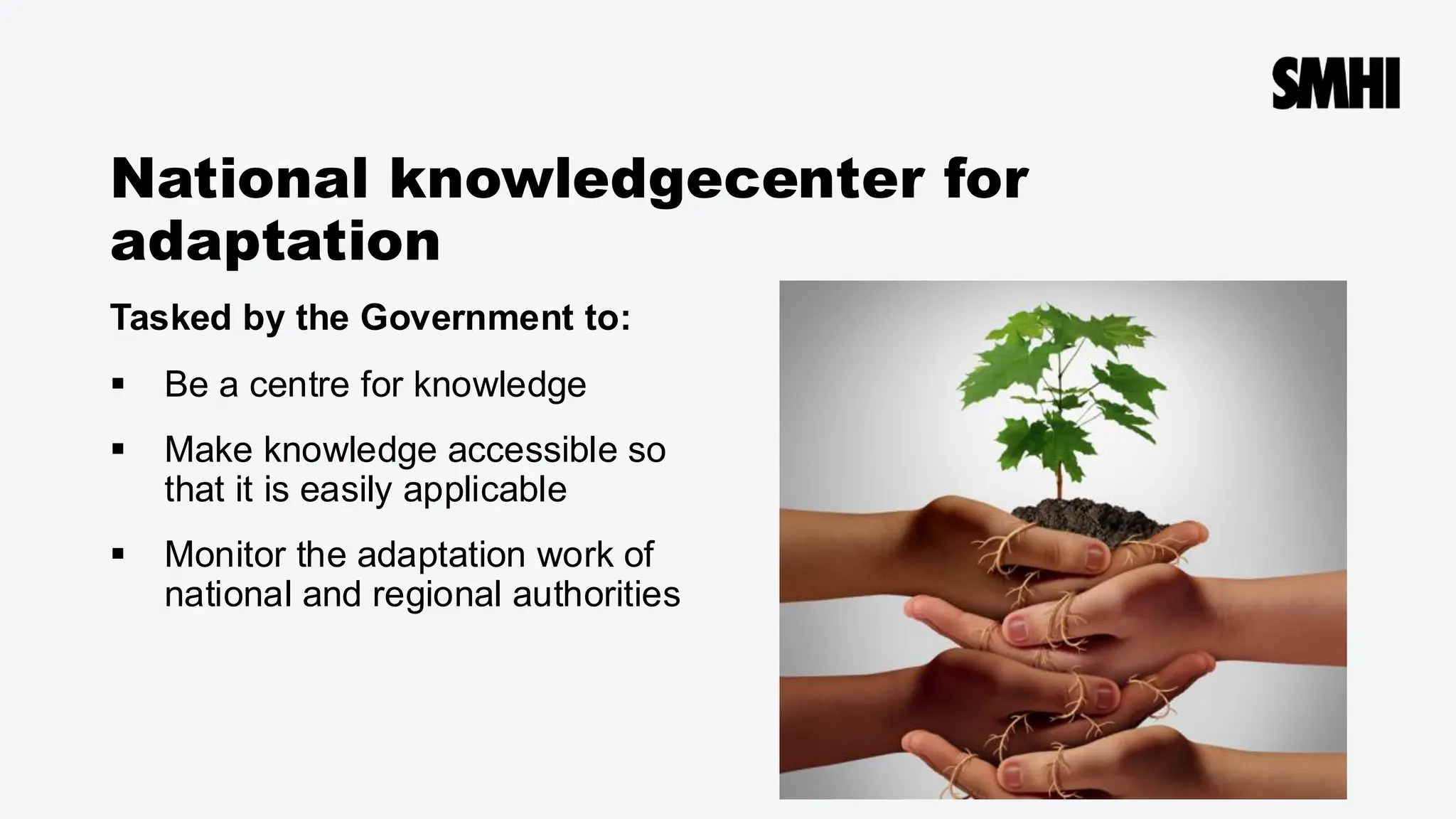
National knowledgecenter for
adaptation
Tasked by the Government to:
▪ Be a centre for knowledge
▪ Make knowledge accessible so
that it is easily applicable
▪ Monitor the adaptation work of
national and regional authorities
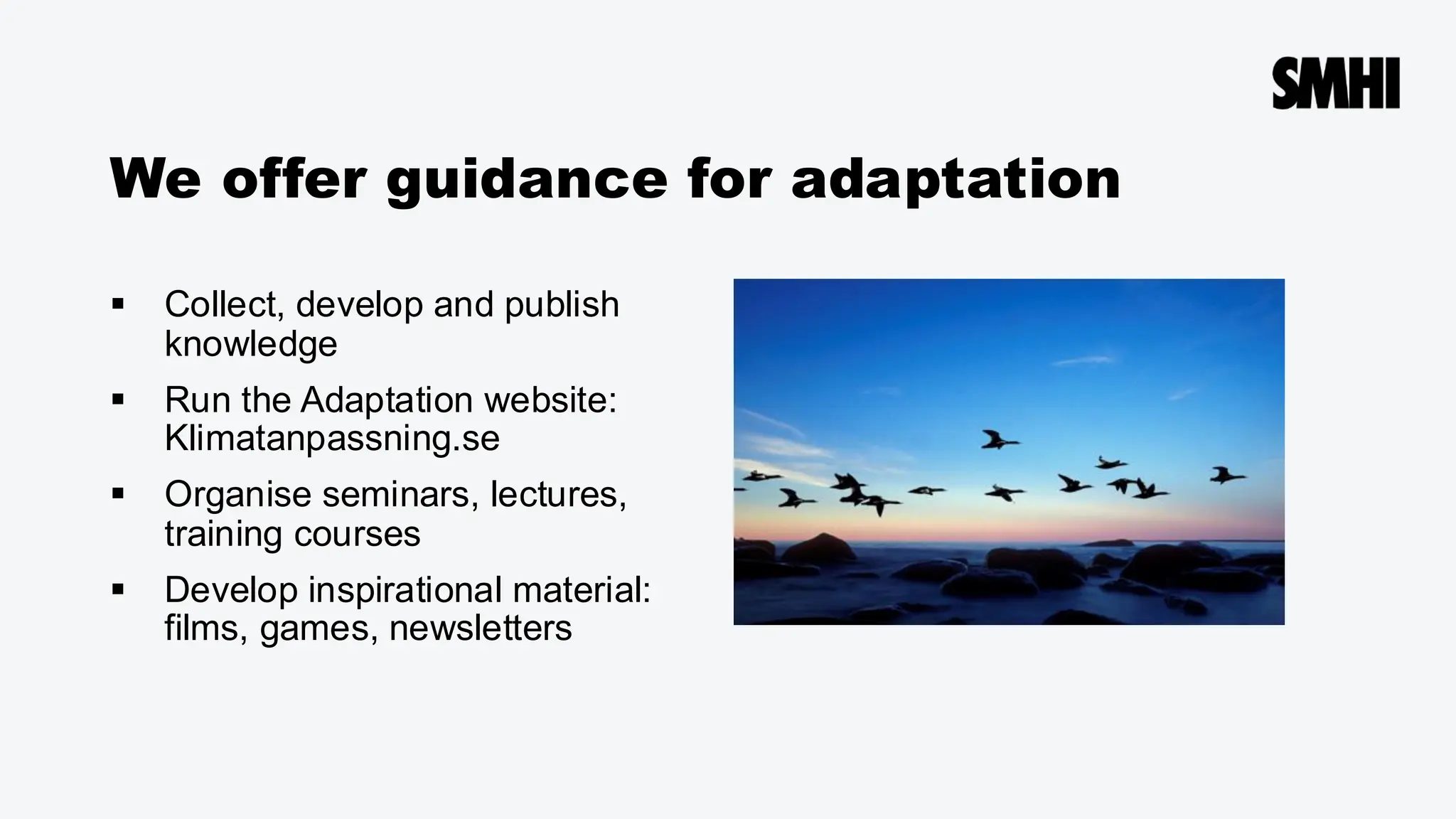
We offer guidance for adaptation
▪ Collect, develop and publish
knowledge
▪ Run the Adaptation website:
Klimatanpassning.se
▪ Organise seminars, lectures,
training courses
▪ Develop inspirational material:
films, games, newsletters
We offer guidance for adaptation (cont.)
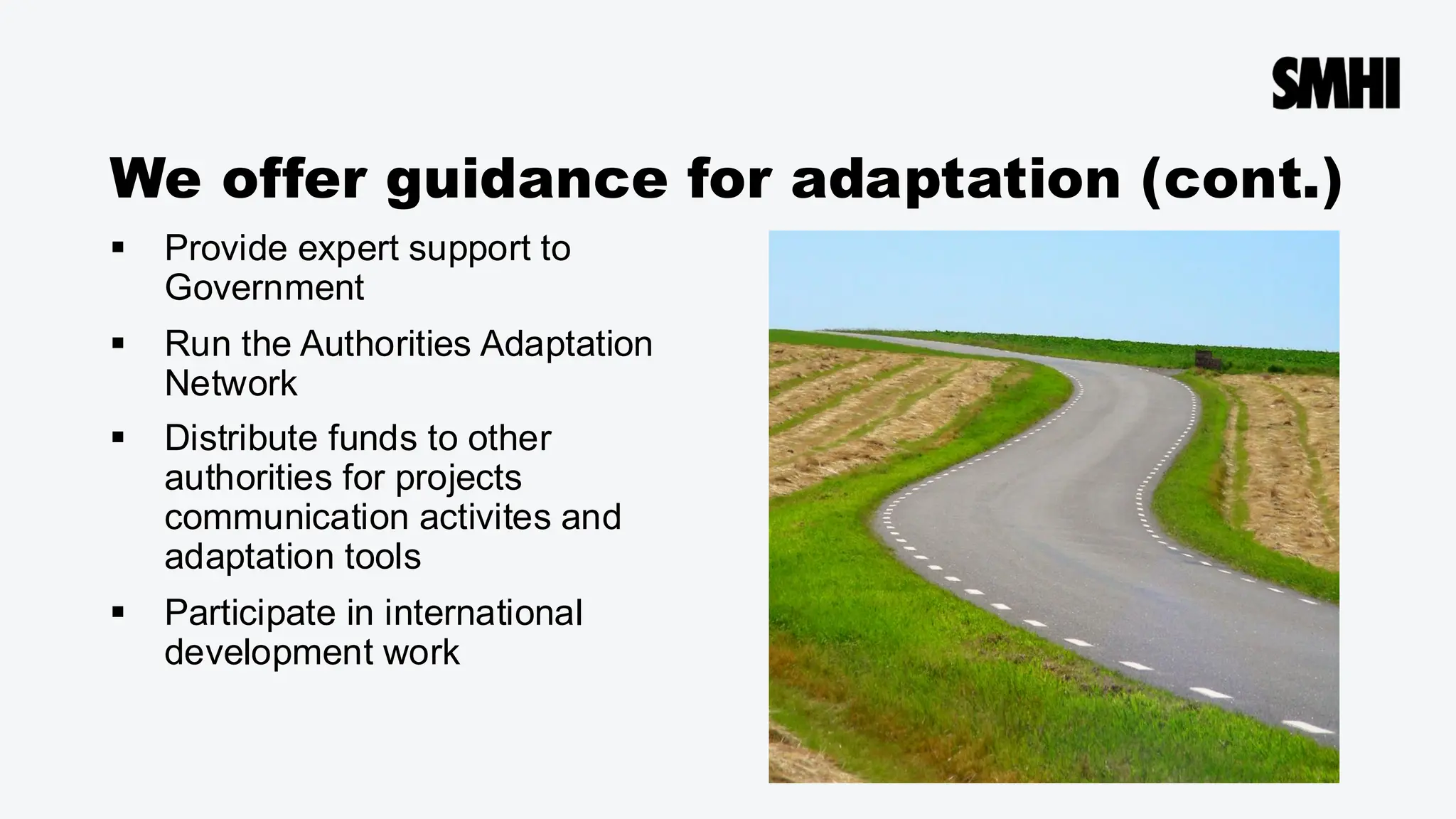
▪ Provide expert support to
Government
▪ Run the Authorities Adaptation
Network
▪ Distribute funds to other
authorities for projects
communication activites and
adaptation tools
▪ Participate in international
development work
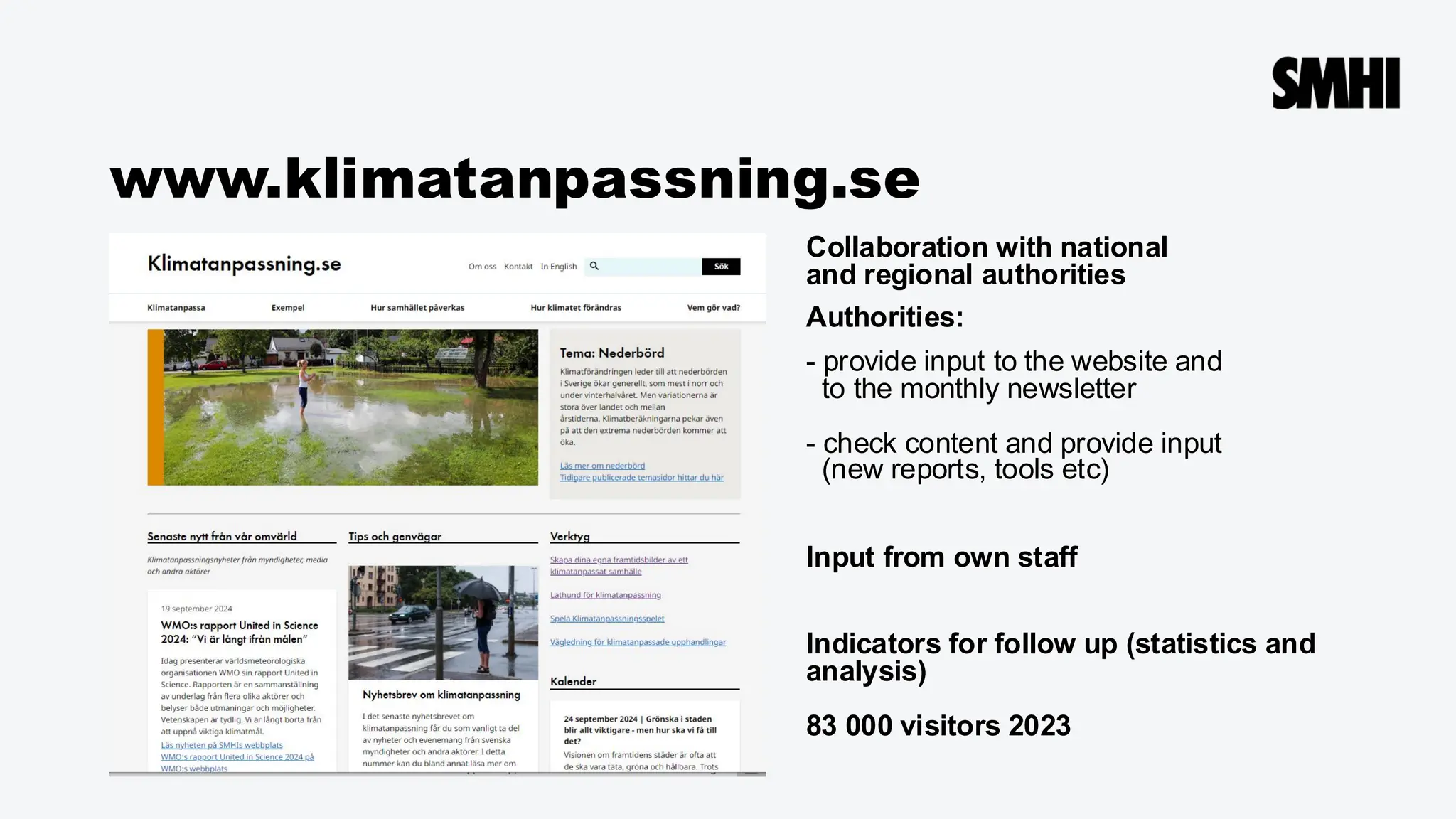
www.klimatanpassning.se
Collaboration with national
and regional authorities
Authorities:
- provide input to the website and
to the monthly newsletter
- check content and provide input
(new reports, tools etc)
Input from own staff
Indicators for follow up (statistics and
analysis)
83 000 visitors 2023
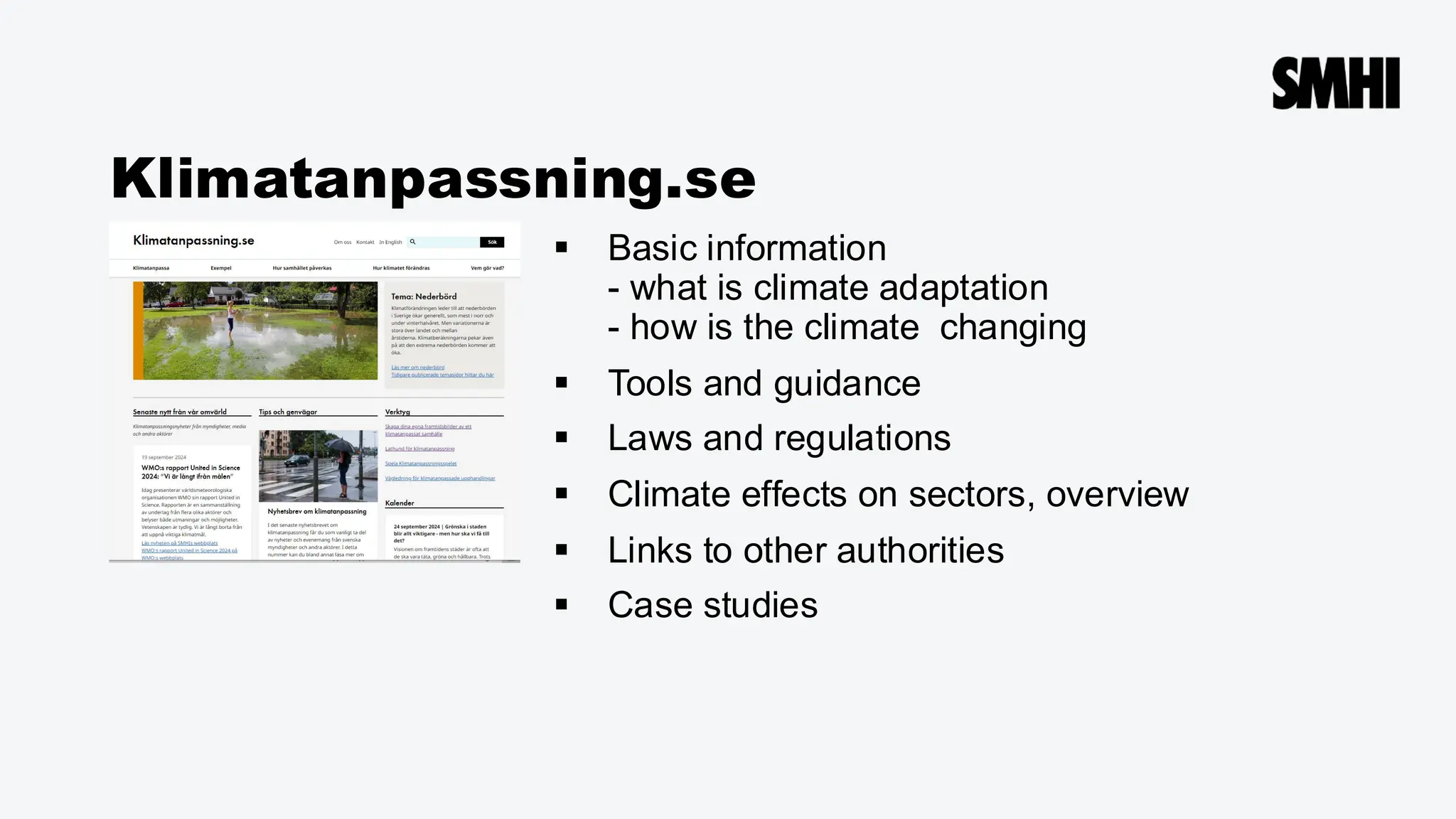
Klimatanpassning.se
▪ Basic information
- what is climate adaptation
- how is the climate changing
▪ Tools and guidance
▪ Laws and regulations
▪ Climate effects on sectors, overview
▪ Links to other authorities
▪ Case studies
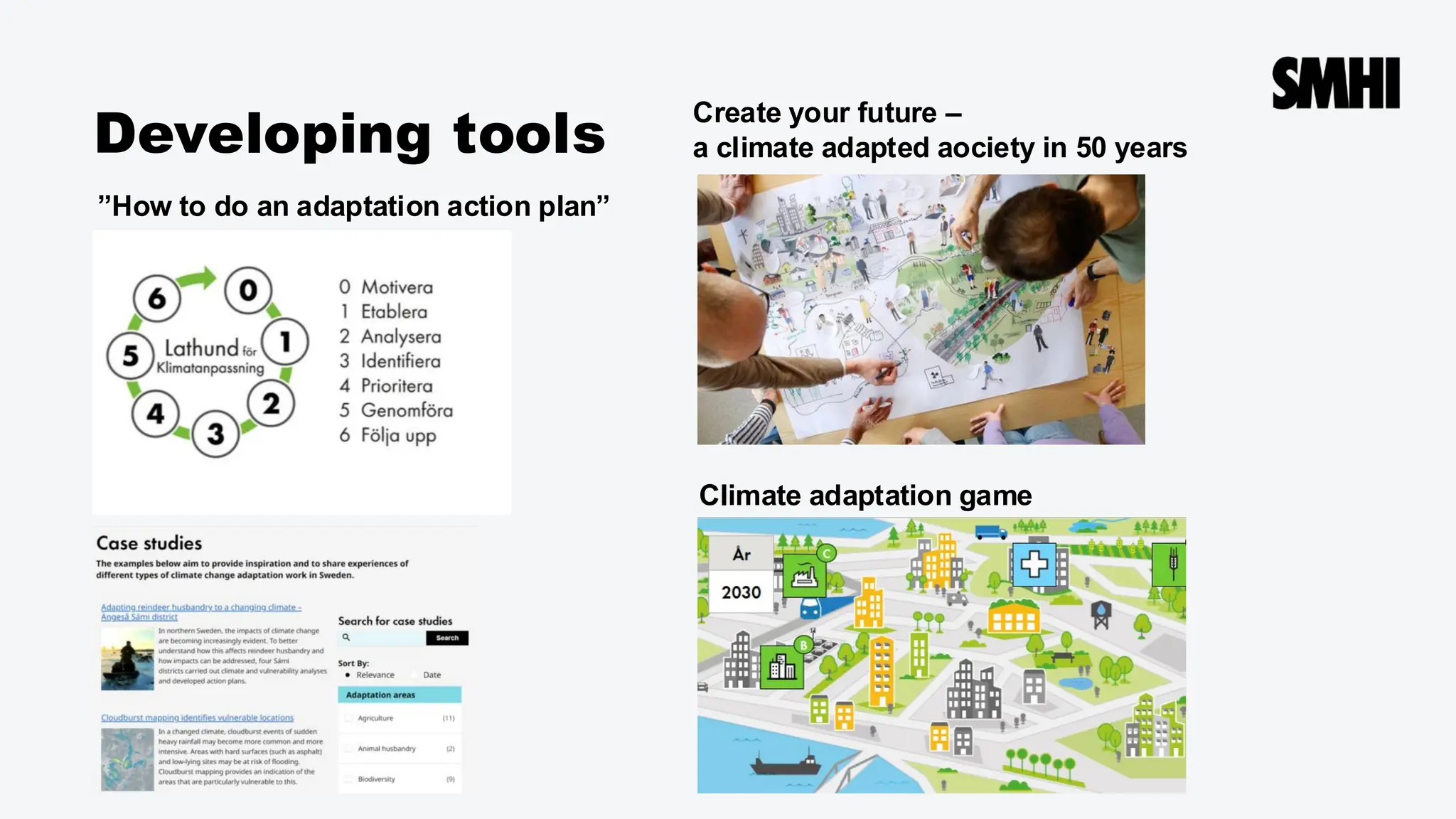
Developing tools
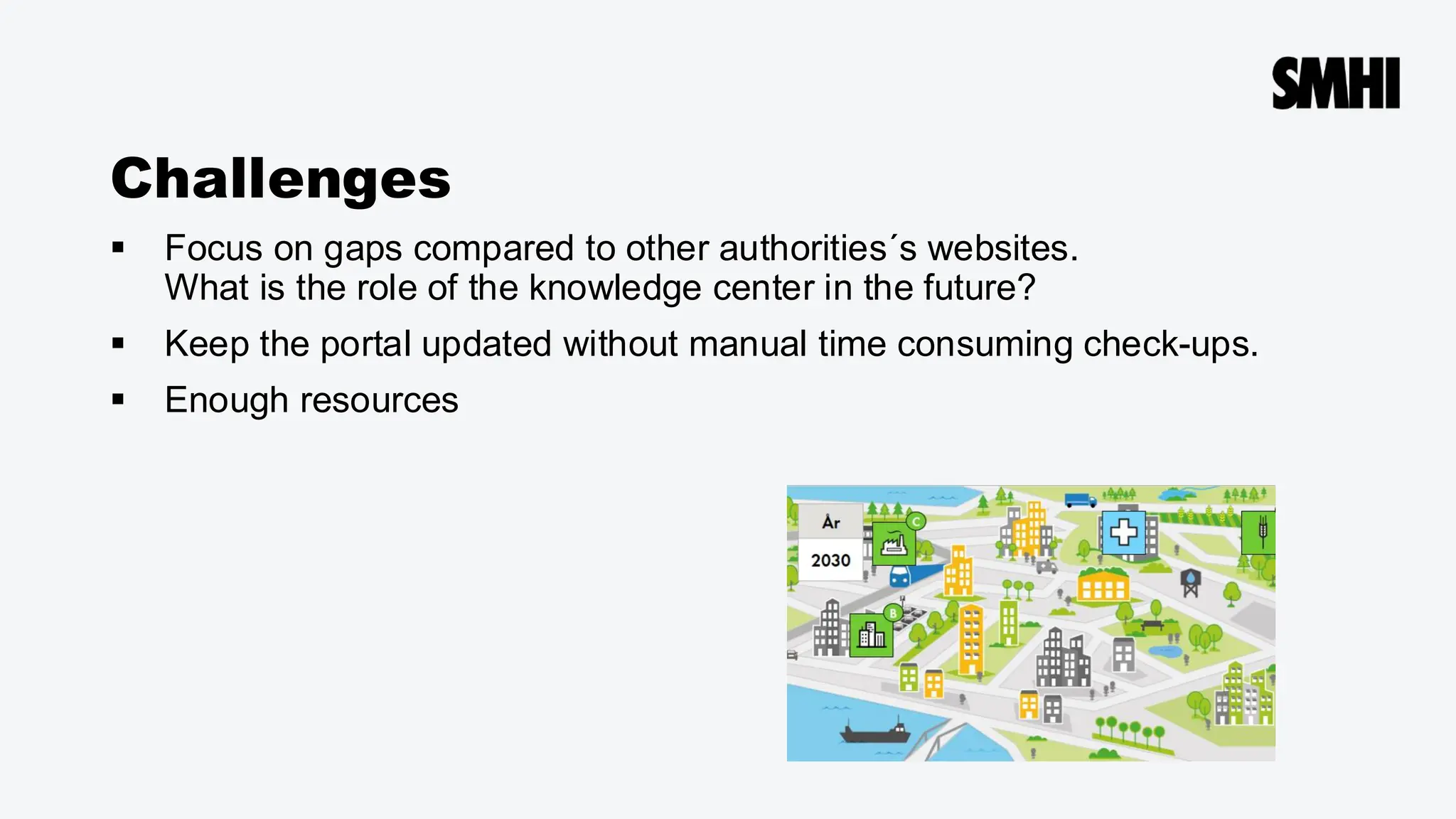
Create your future –
a climate adapted aociety in 50 years
Climate adaptation game
”How to do an adaptation action plan”
Challenges
▪ Focus on gaps compared to other authorities´s websites.
What is the role of the knowledge center in the future?
▪ Keep the portal updated without manual time consuming check-ups.
▪ Enough resources
Outlook towards 2025:
klimatanpassning.se
▪ New CMS (content management system) brings new opportunities and
features that enables cleverer maintenance.
▪ New CMS allows us to track content – each contributing authority has
easy access to its own ”over view”-page (their own files/links gathered)
▪ Due to the website being migrated to a new CMS, structure has been
reviewed –We are currently awaiting to go live with the new website.
▪ Need for new examples:
▪ Wider coverage of hazards/risks
▪ Focus on results – more examples of actions taken a few years back,
rather than new initiatives
Speakers
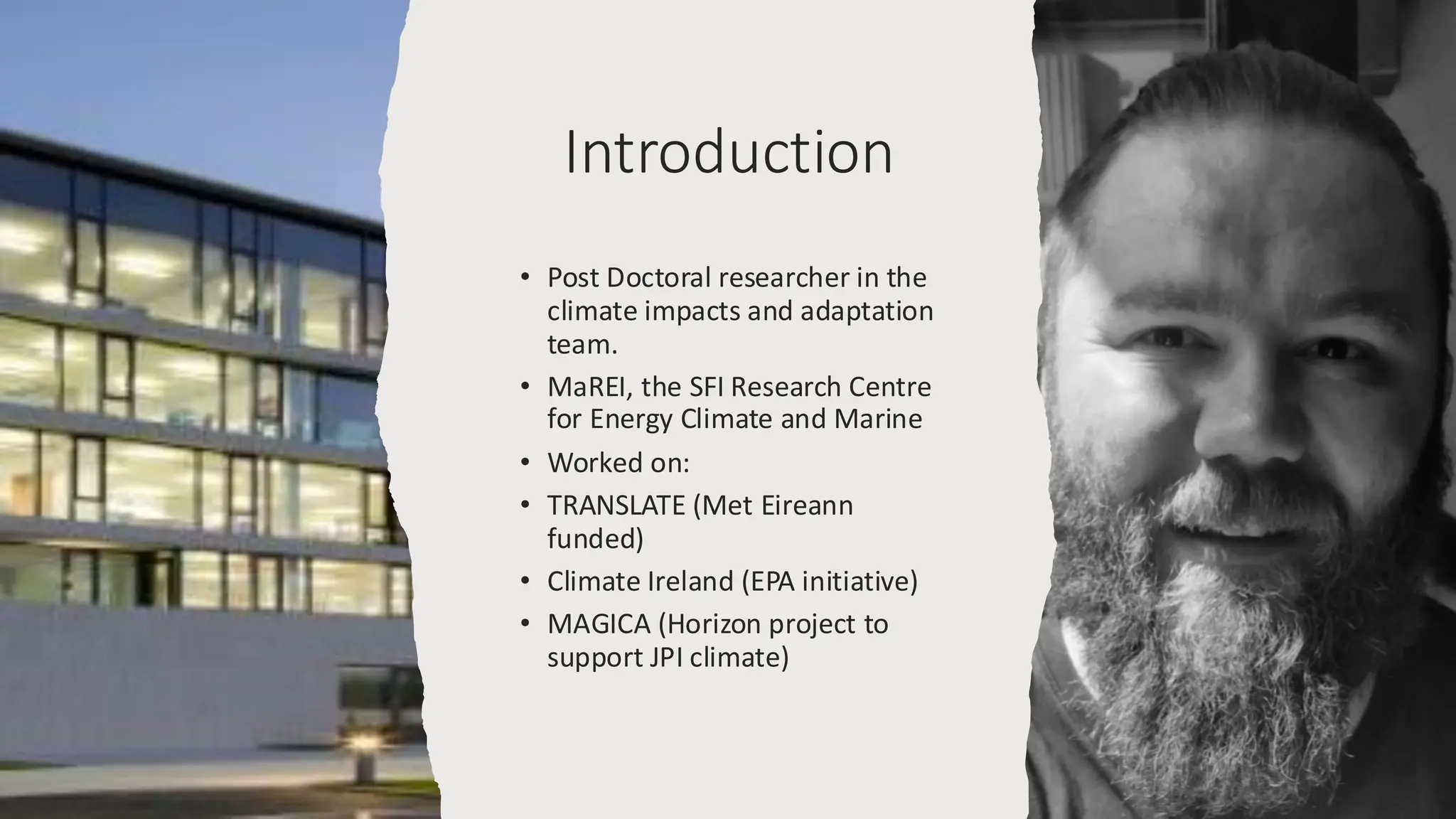
Dr Chris Philipps
Postdoctoral researcher, MaREI, the SFI Research Centre for Energy Climate and Marine
Bio: Dr. Chris Phillips is a postdoctoral researcher at the SFI MaREI Centre, working on
the MAGICA project to support climate policymaking. He has expertise in climate
science, adaptation, environmental psychology, and citizen science, with prior work on
the TRANSLATE project and the Climate Ireland platform.
Presentation title: Connecting Knowledge and Action: MaREI's Role in Climate Ireland
Email: christopherphillips@ucc.ie
Connecting Knowledge and
Action: MaREI's Role in Climate
Ireland
Dr. Chris Phillips
Introduction
• Post Doctoral researcher in the
climate impacts and adaptation
team.
• MaREI, the SFI Research Centre
for Energy Climate and Marine
• Worked on:
• TRANSLATE (Met Eireann
funded)
• Climate Ireland (EPA initiative)
• MAGICA (Horizon project to
support JPI climate)
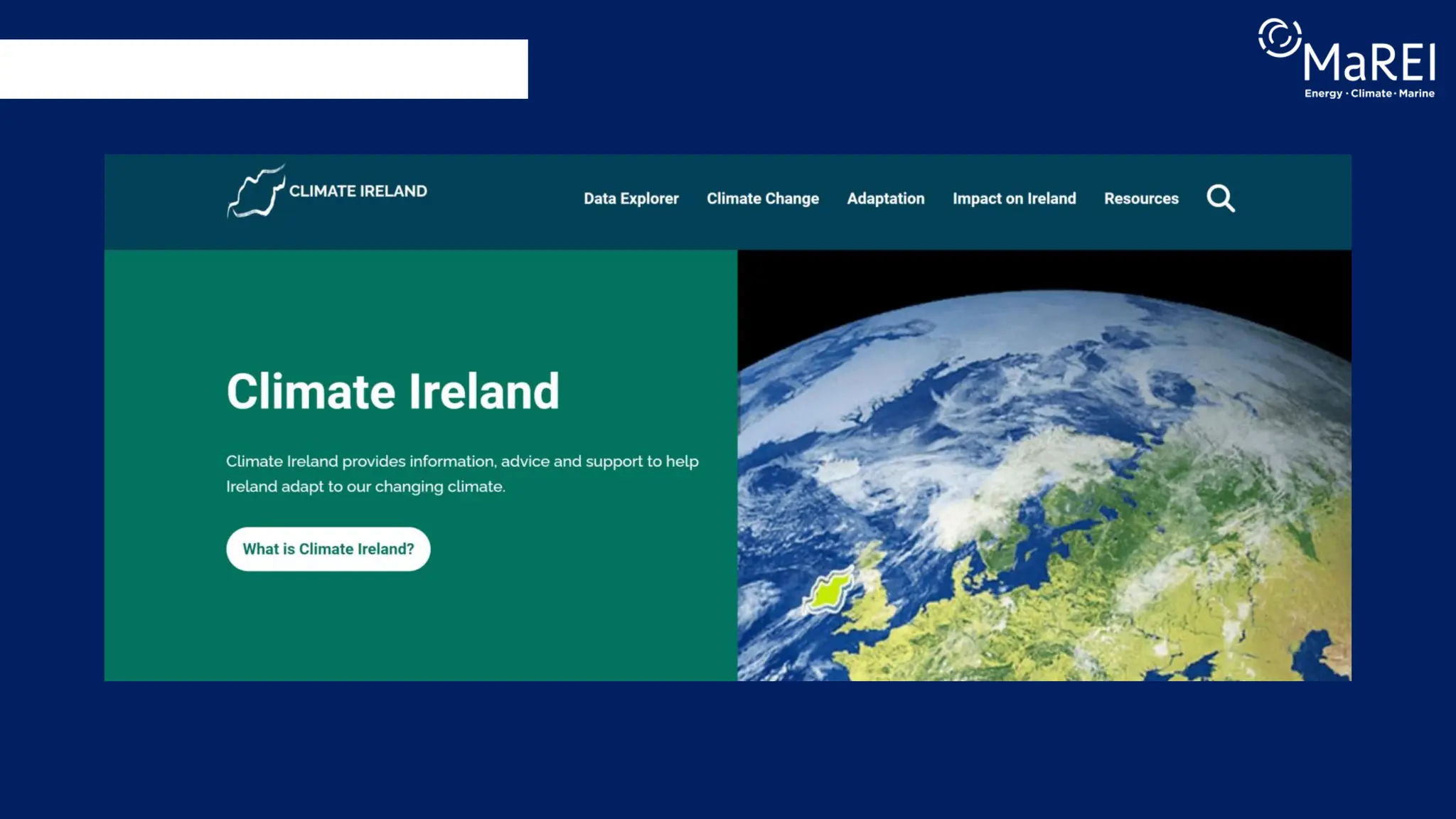
• Central Climate Resource: Climate Ireland serves as Ireland's main platform for climate
information, providing scientific and technical advice through decision-making tools and
frameworks.
• MaREI Origins: Originally developed by MaREI researchers at UCC, Climate Ireland was
created to support stakeholders in adapting to climate change and implementing
adaptation plans.
• Transition to EPA: Climate Ireland is now fully managed by the Environmental Protection
Agency (EPA), ensuring continuous support for Ireland's climate action.
• Key Functions: The platform builds organisational capacity, informs climate policy
development, and supports the planning and implementation of climate action with
research-led outputs.
• Risk Assessment Leadership: Developed methodologies for semi-quantitative risk
assessment for Local Authorities and contributed to the National Climate Change Risk
Assessment (NCCRA) for the financial and commercial sectors.
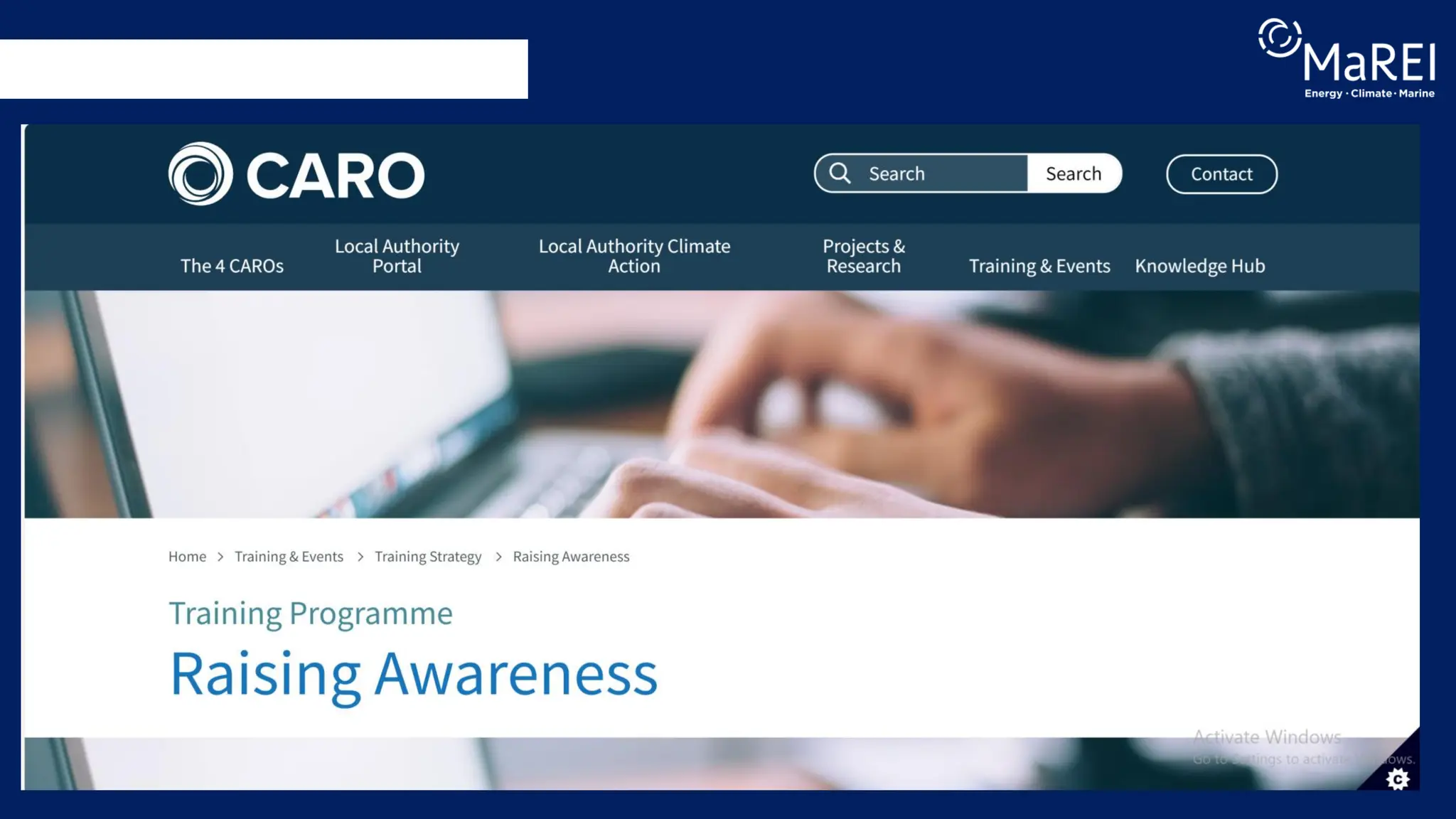
• Training & Capacity Building: Climate Ireland delivered the "Raising Awareness" training
course to climate action teams in Local Authorities, strengthening local adaptation
leadership.
Climate Ireland: MaREI Development and Adaptation Leadership
• User-Centric Design: Climate Ireland’s Learning Platform targets the specific needs of Local
Authority staff, addressing relevant climate challenges and actions.
• Collaboration with Policymakers: Developed with CAROs and LASNTG, the platform aligns
with national climate priorities and local government needs.
• Tailored Content Delivery: Staff are categorized by grades, ensuring training is relevant to
their specific roles and responsibilities.
• Engaging Multimedia Modules: The course features three core modules delivered through
videos, animations, and audio to enhance engagement and retention.
• Practical Action Steps: The training empowers staff to implement climate actions at both
professional and personal levels.
• Capturing Local Insights: The platform gathers user experiences and feedback to inform
future course updates.
• Widespread Access: The Learning Platform (learn.climateireland.ie) provides broad access
to training, supporting climate action across Ireland.
Raising Awareness training course
• Purpose: Evaluates the effectiveness of the Local Authority Raising Awareness Training
and its impact on decision-making and climate action.
• Research Need: Assessed how well the training translated into real-world action and
empowered decision-makers on climate adaptation.
• Focus: Analysed data from 15,000 participants to assess the training’s impact on
knowledge, awareness, and decision-making.
• Key Findings: 83% rated the training highly, with improved confidence in climate actions
and a positive link between engagement and learning.
• Future Training: Highlights the need for engaging, relatable content to enhance training
effectiveness.
• Contribution: Offers insights into optimising training to help local authorities meet climate
commitments.
• Policy Impact: Research will guide future policy and climate training strategies to support
local authorities.
• Next Steps: Developing new climate adaptation courses based on feedback from public
sector participants
Shaping Future Policy Through Climate Training Insights
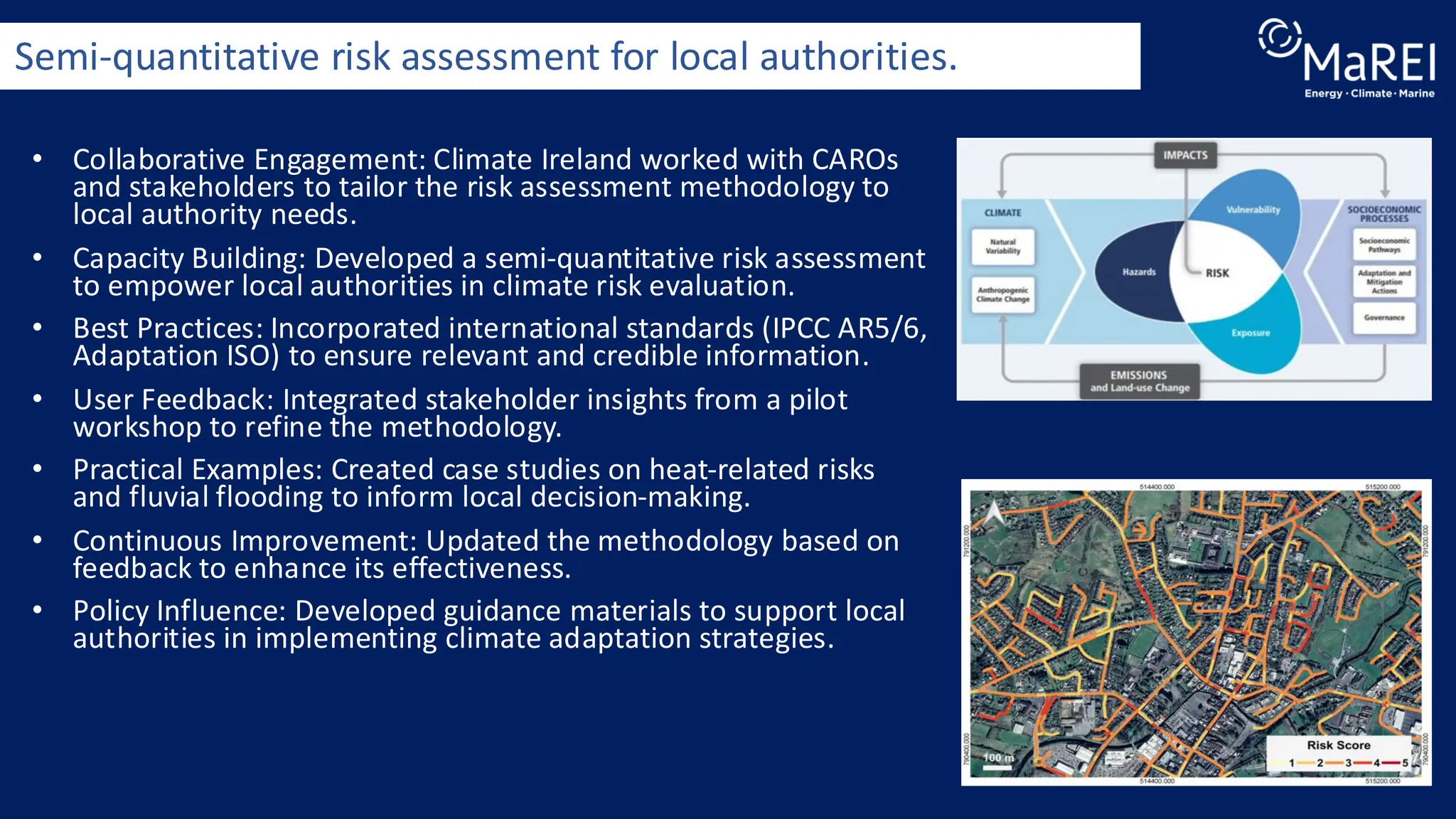
• Collaborative Engagement: Climate Ireland worked with CAROs
and stakeholders to tailor the risk assessment methodology to
local authority needs.
• Capacity Building: Developed a semi-quantitative risk assessment
to empower local authorities in climate risk evaluation.
• Best Practices: Incorporated international standards (IPCC AR5/6,
Adaptation ISO) to ensure relevant and credible information.
• User Feedback: Integrated stakeholder insights from a pilot
workshop to refine the methodology.
• Practical Examples: Created case studies on heat-related risks
and fluvial flooding to inform local decision-making.
• Continuous Improvement: Updated the methodology based on
feedback to enhance its effectiveness.
• Policy Influence: Developed guidance materials to support local
authorities in implementing climate adaptation strategies.
Semi-quantitative risk assessment for local authorities.
• Study Purpose: Aimed to understand climate risk assessment practices in finance and
commercial sectors to inform the National Climate Change Risk Assessment (NCCRA).
• Sector Selection: Chose finance and commercial sectors due to strict reporting
frameworks like TCFD and CSRD, making them key for national climate strategies.
• Literature Review: Conducted a review of policies, legislation, and approaches to
integrating climate adaptation into sectoral practices.
• Climate Risk Disclosure Report: Report focused on how organizations disclose climate
risks, offering lessons for national adaptation strategies.
• Sector Engagement: Interviewed 20 participants from finance, consultancy, and climate
services sectors to gain insights into current risk management practices.
• Key Insights: Highlighted how financial institutions integrate climate adaptation into risk
management, offering guidance for other sectors.
• Application to National Policy: Findings will support the refinement of NCCRA and offer a
model for integrating climate risks across sectors in Ireland.
Finance and Commercial sector Climate risk practices
Concluding remarks
• User-Centric & Collaborative: Climate Ireland’s design, in partnership with MaREI,
CAROs, and policymakers, ensures alignment with national climate goals and directly
addresses user needs.
• Delivering Relevant Info & Capturing Insights: Tailored multimedia training equips
Local Authorities with actionable knowledge, while user feedback drives continuous
improvement.
• Supporting Decision-Making: Practical case studies on climate risks inform local
decisions, empowering staff to act confidently.
• Measuring Success: With 15,000 participants and 83% reporting improved
confidence, the platform’s engagement fosters learning and capacity building.
• Influencing Policy: Climate Ireland shapes national climate strategies, providing risk
assessments and tools that drive real-world climate action.
Thank you
Dr. Chris Phillips
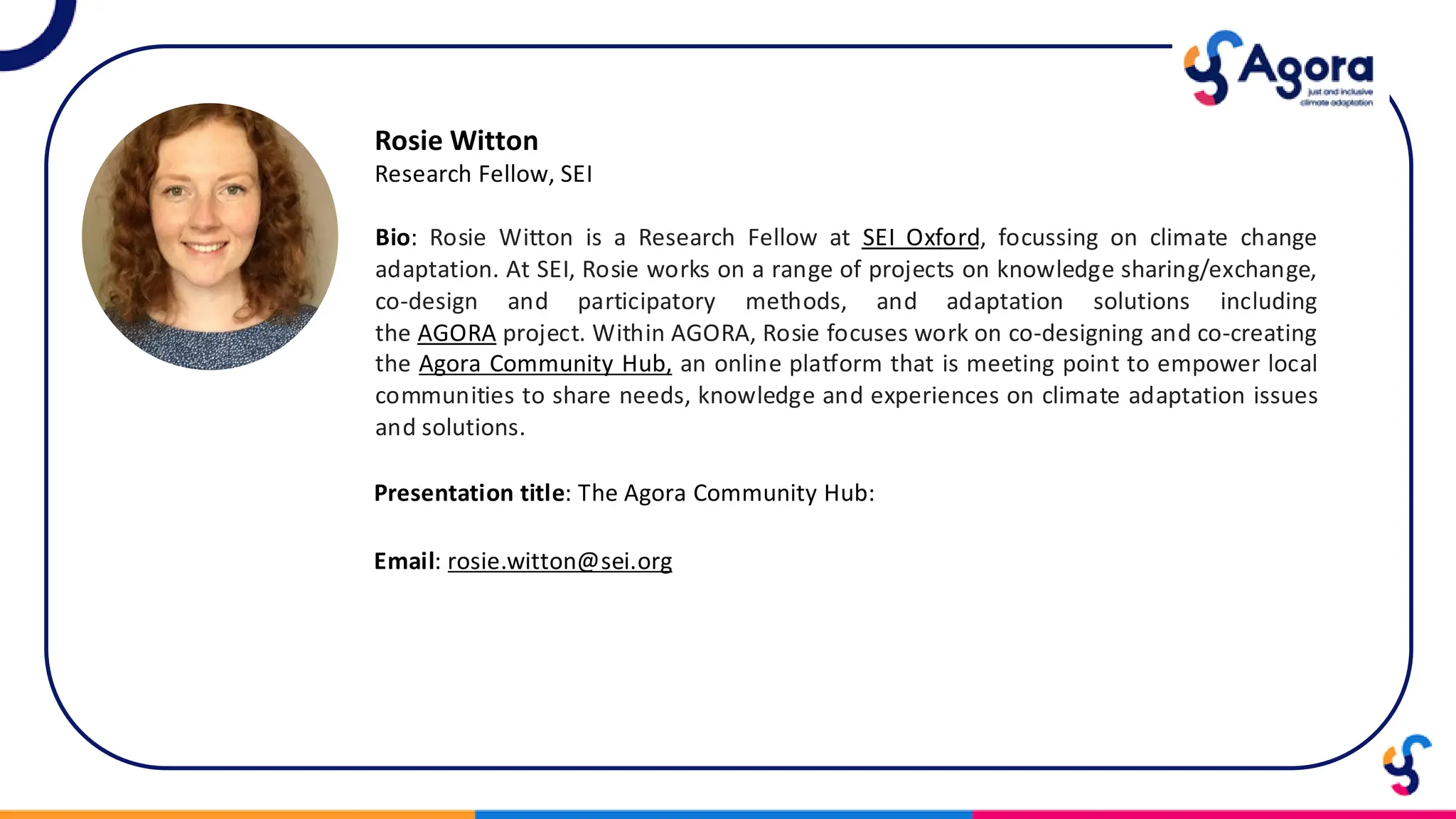
Rosie Witton
Research Fellow, SEI
Bio: Rosie Witton is a Research Fellow at SEI Oxford, focussing on climate change
adaptation. At SEI, Rosie works on a range of projects on knowledge sharing/exchange,
co-design and participatory methods, and adaptation solutions including
the AGORA project. Within AGORA, Rosie focuses work on co-designing and co-creating
the Agora Community Hub, an online platform that is meeting point to empower local
communities to share needs, knowledge and experiences on climate adaptation issues
and solutions.
Presentation title: The Agora Community Hub:
Email: rosie.witton@sei.org
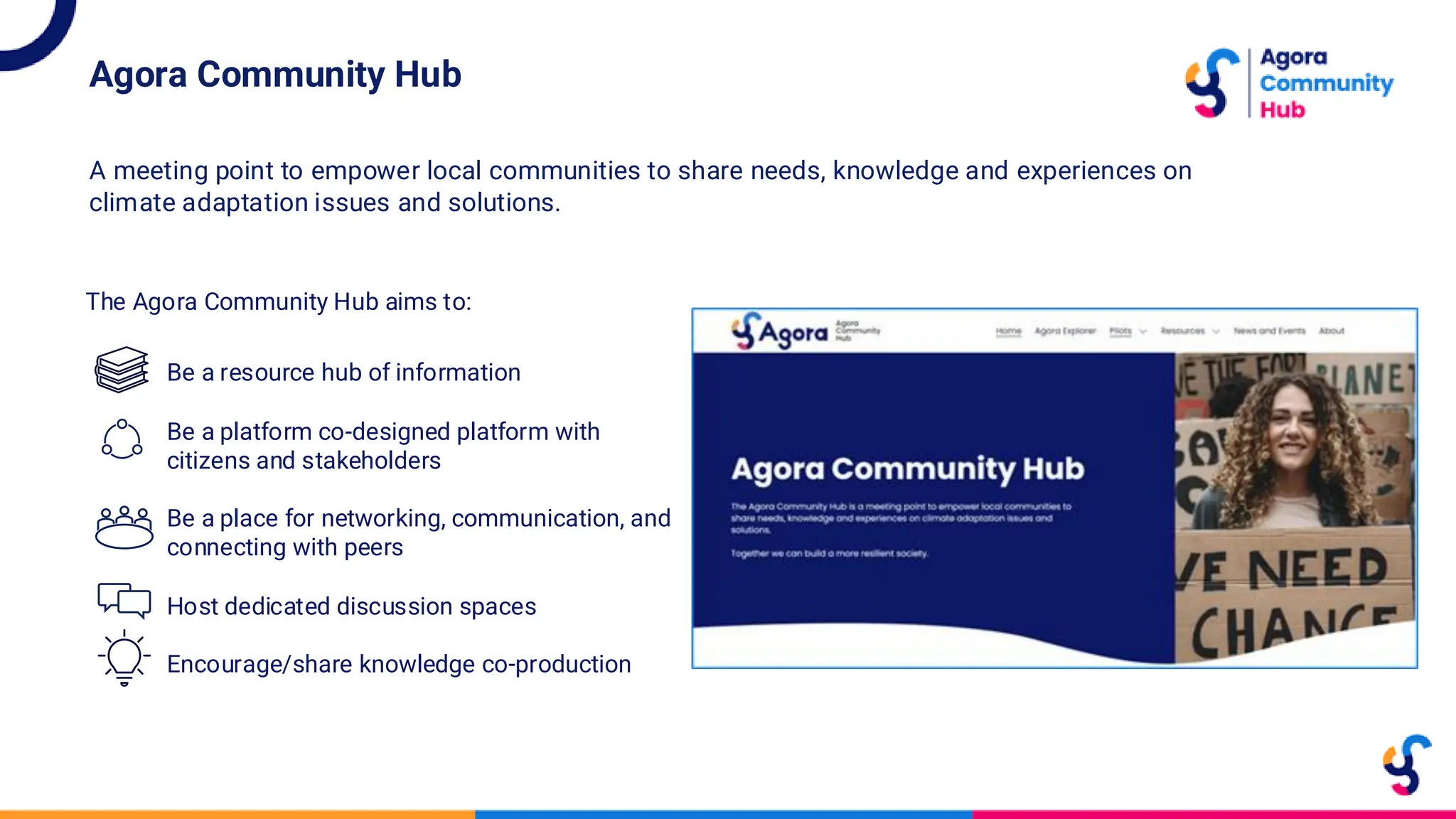
The Agora Community Hub aims to:
Be a resource hub of information
Be a platform co-designed platform with
citizens and stakeholders
Be a place for networking, communication, and
connecting with peers
Host dedicated discussion spaces
Encourage/share knowledge co-production
Agora Community Hub
A meeting point to empower local communities to share needs, knowledge and experiences on
climate adaptation issues and solutions.
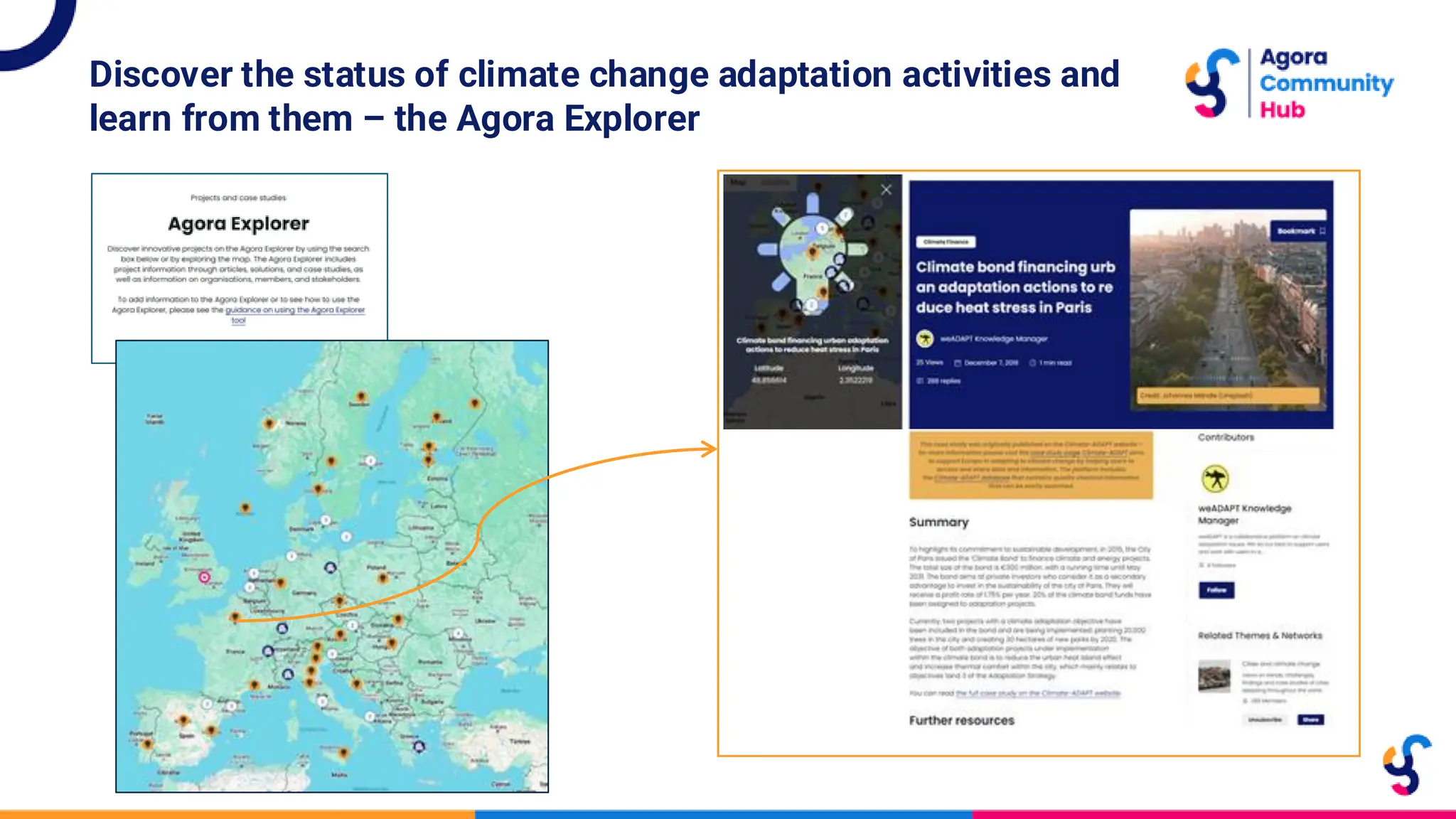
Discover the status of climate change adaptation activities and
learn from them – the Agora Explorer
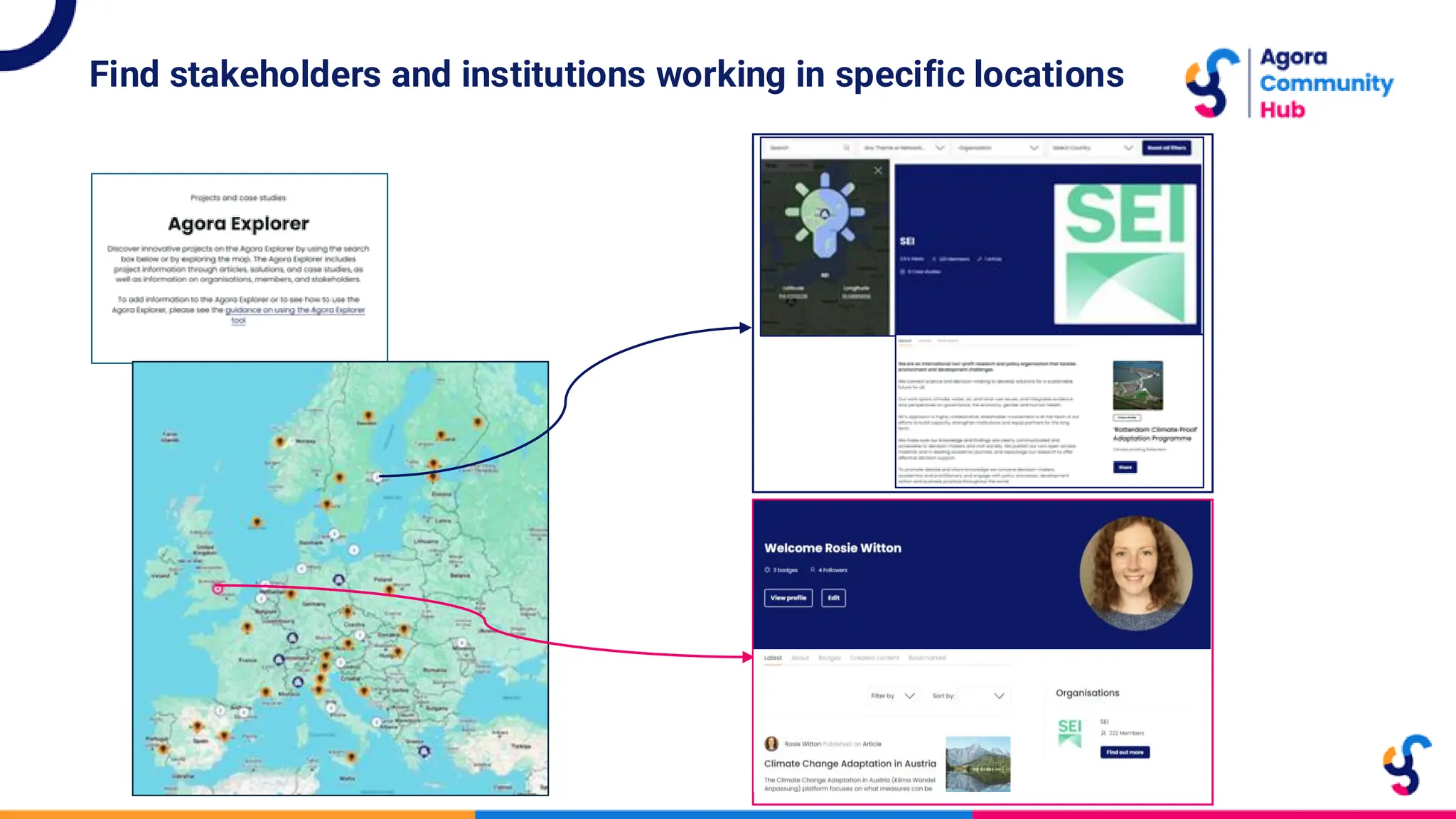
Find stakeholders and institutions working in specific locations
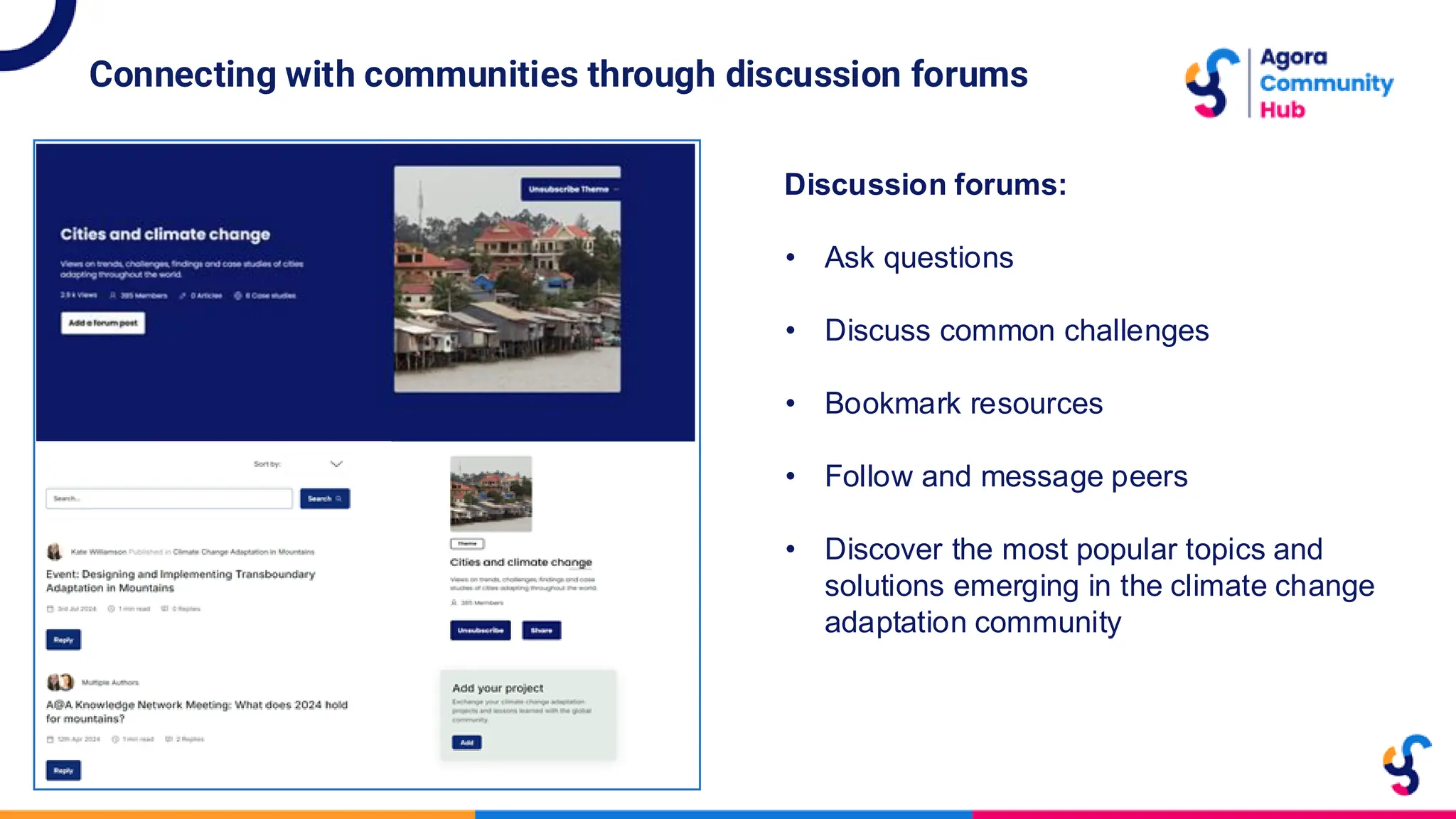
Connecting with communities through discussion forums
Discussion forums:
• Ask questions
• Discuss common challenges
• Bookmark resources
• Follow and message peers
• Discover the most popular topics and
solutions emerging in the climate change
adaptation community
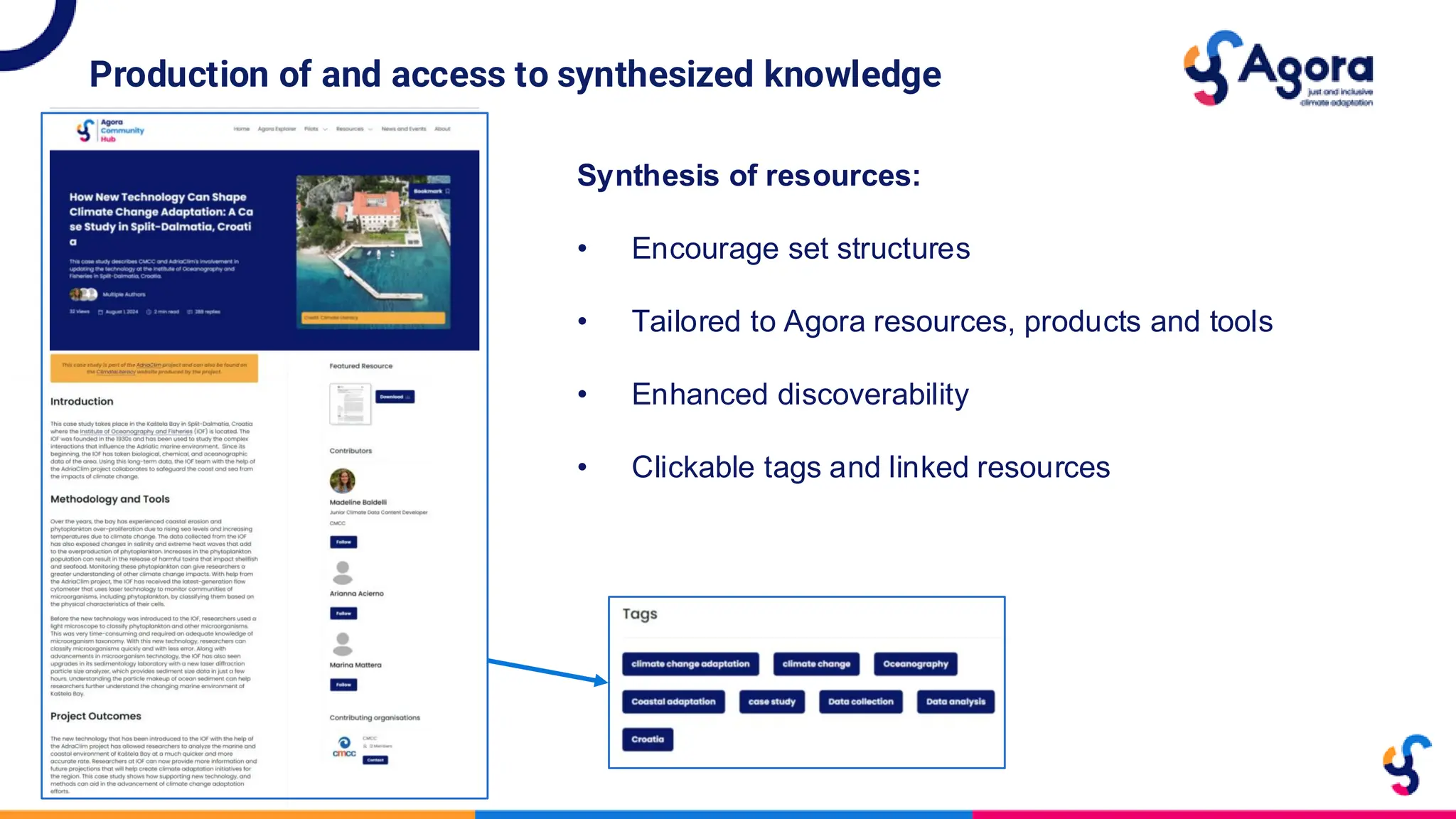
Production of and access to synthesized knowledge
Synthesis of resources:
• Encourage set structures
• Tailored to Agora resources, products and tools
• Enhanced discoverability
• Clickable tags and linked resources
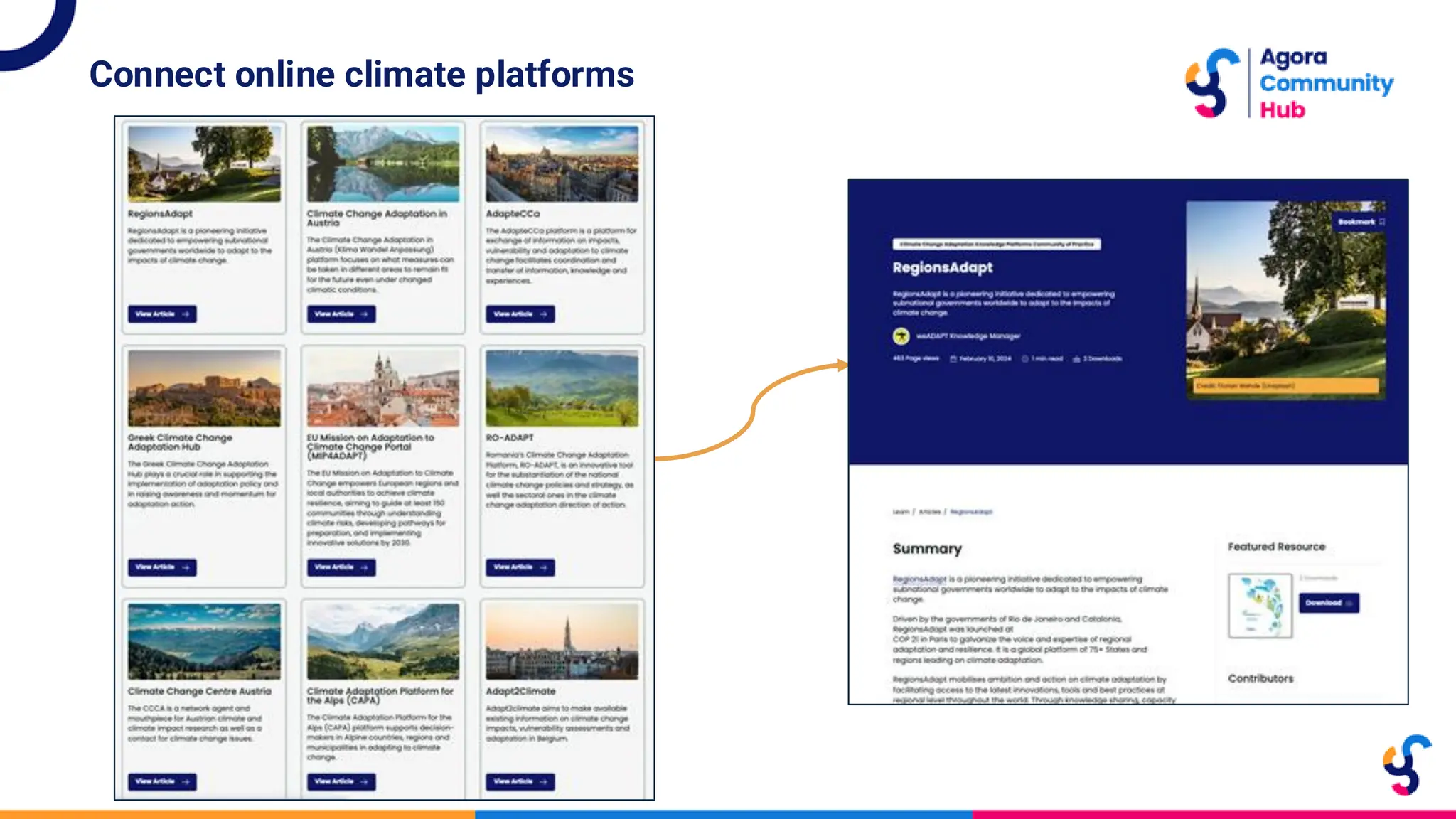
Connect online climate platforms
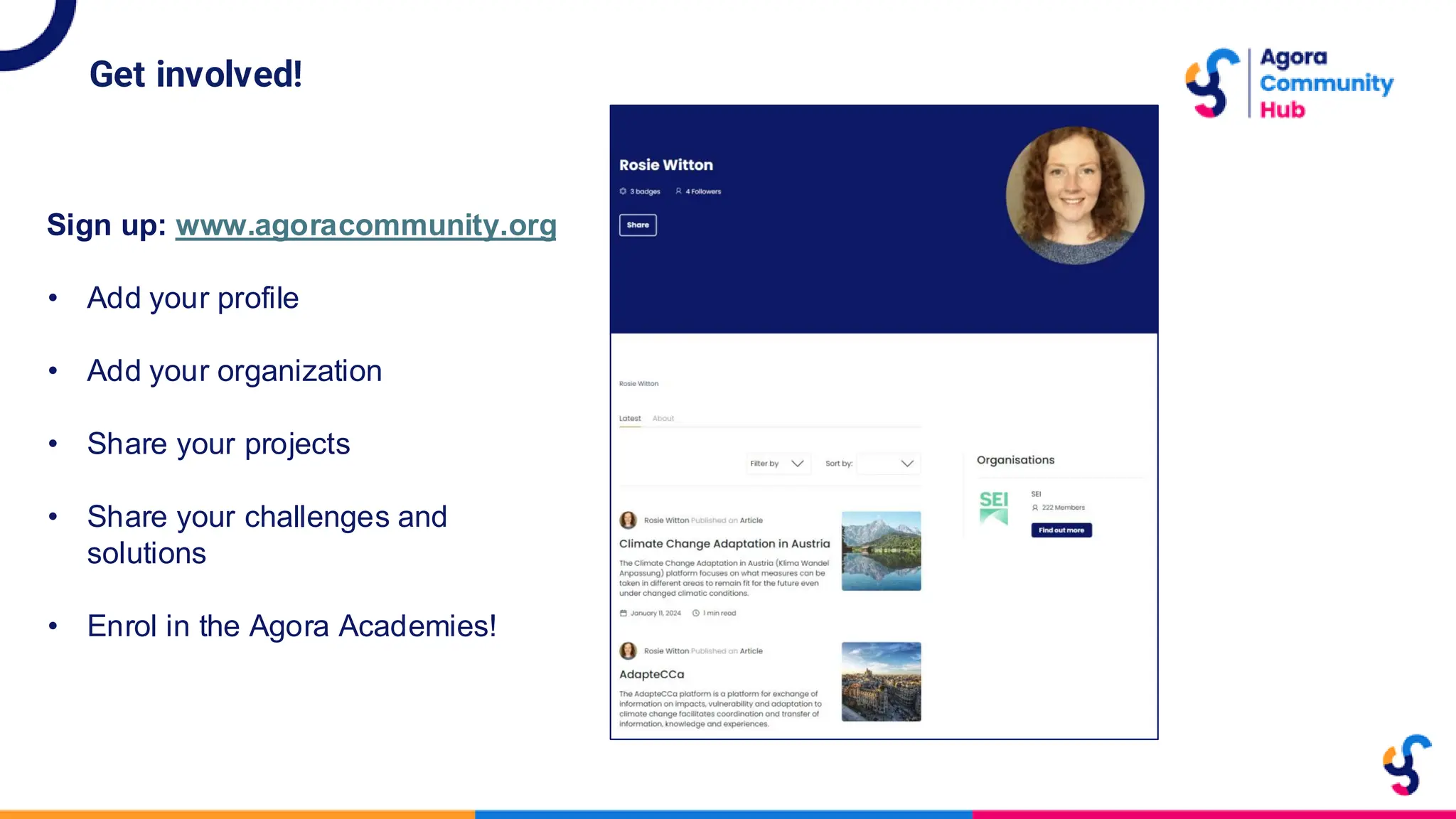
Get involved!
Sign up: www.agoracommunity.org
• Add your profile
• Add your organization
• Share your projects
• Share your challenges and
solutions
• Enrol in the Agora Academies!
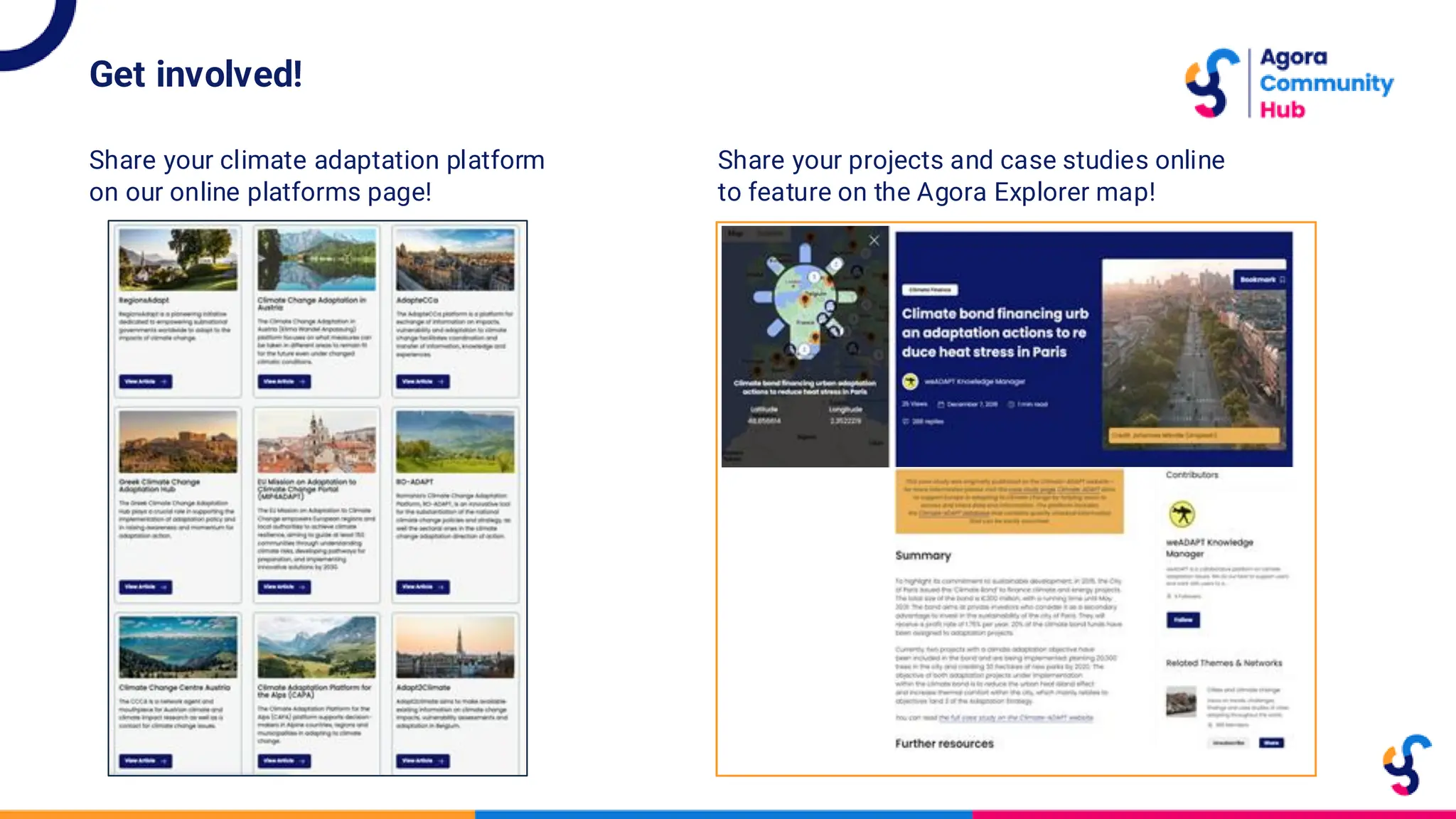
Get involved!
Share your climate adaptation platform
on our online platforms page!
Share your projects and case studies online
to feature on the Agora Explorer map!
Follow AGORA:
AGORA
Community Hub
@AgoraAdaptation
@adaptationagora_EU
@AdaptationAGORA
Sign-up to the
AGORA Mailing
List
Dr Sukaina Bharwani
Senior Research Fellow and weADAPT Director, SEI
Bio: Sukaina Bharwani is a Senior Researcher on adaptation issues leading several
work streams in large European and international projects. She also serves as Director
of the weADAPT global platform and network for climate change adaptation. In that role
she coordinates the strategic and technical development of weADAPT.
Presentation title: The Connectivity Hub: Connecting knowledge across scales
Email: sukaina.bharwani@sei.org
Maximising Impact
and Accessibility of
European Climate
Research
Sukaina Bharwani and Kate Williamson (SEI)
The Project | Context
Experience put in use -
Projects results impact
multiplier Projects results impact
multiplier
Brings together the previous experience of past and
ongoing Horizon projects concerning innovation for climate
resilience to allow a wide audience to access their results.
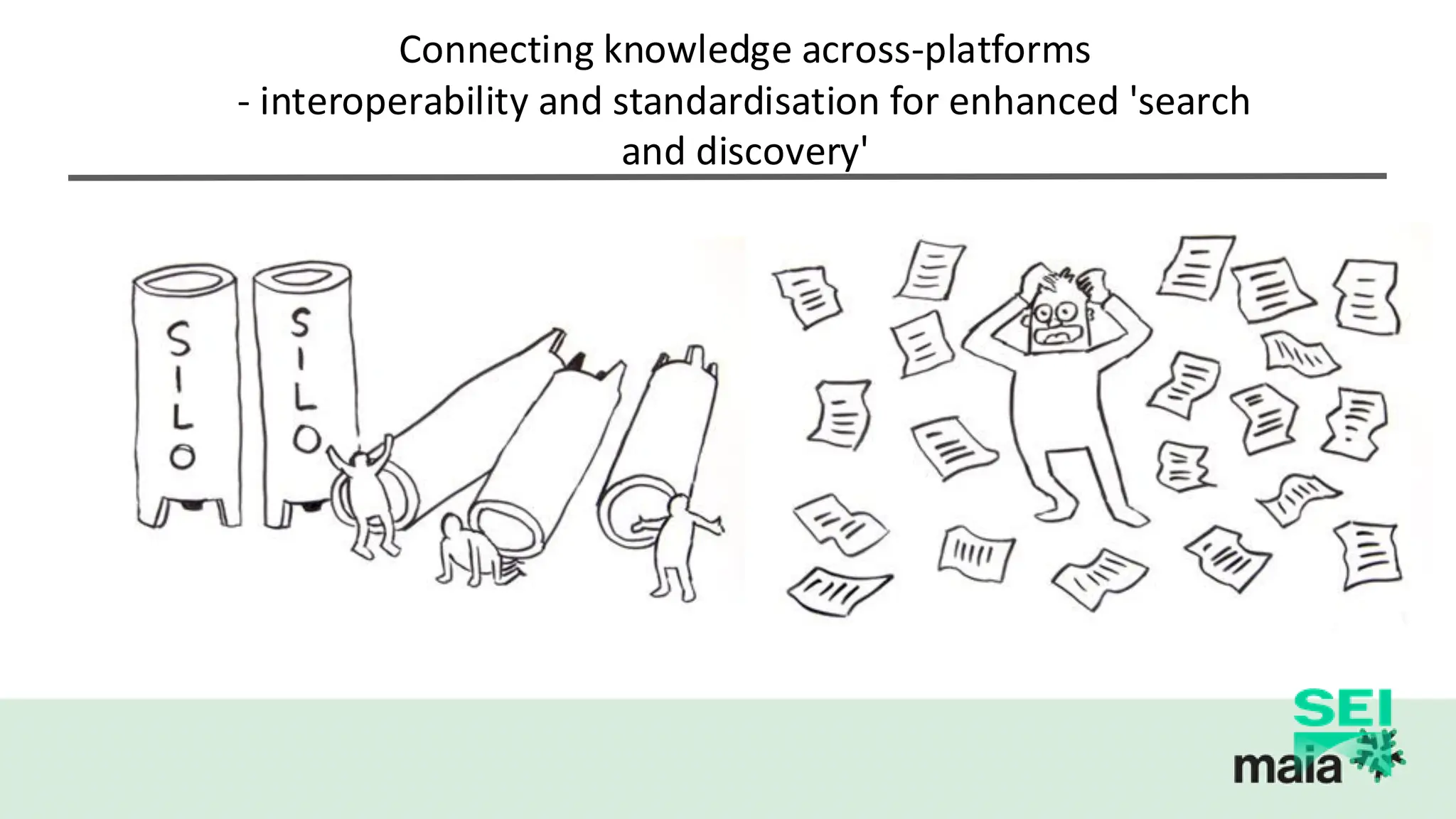
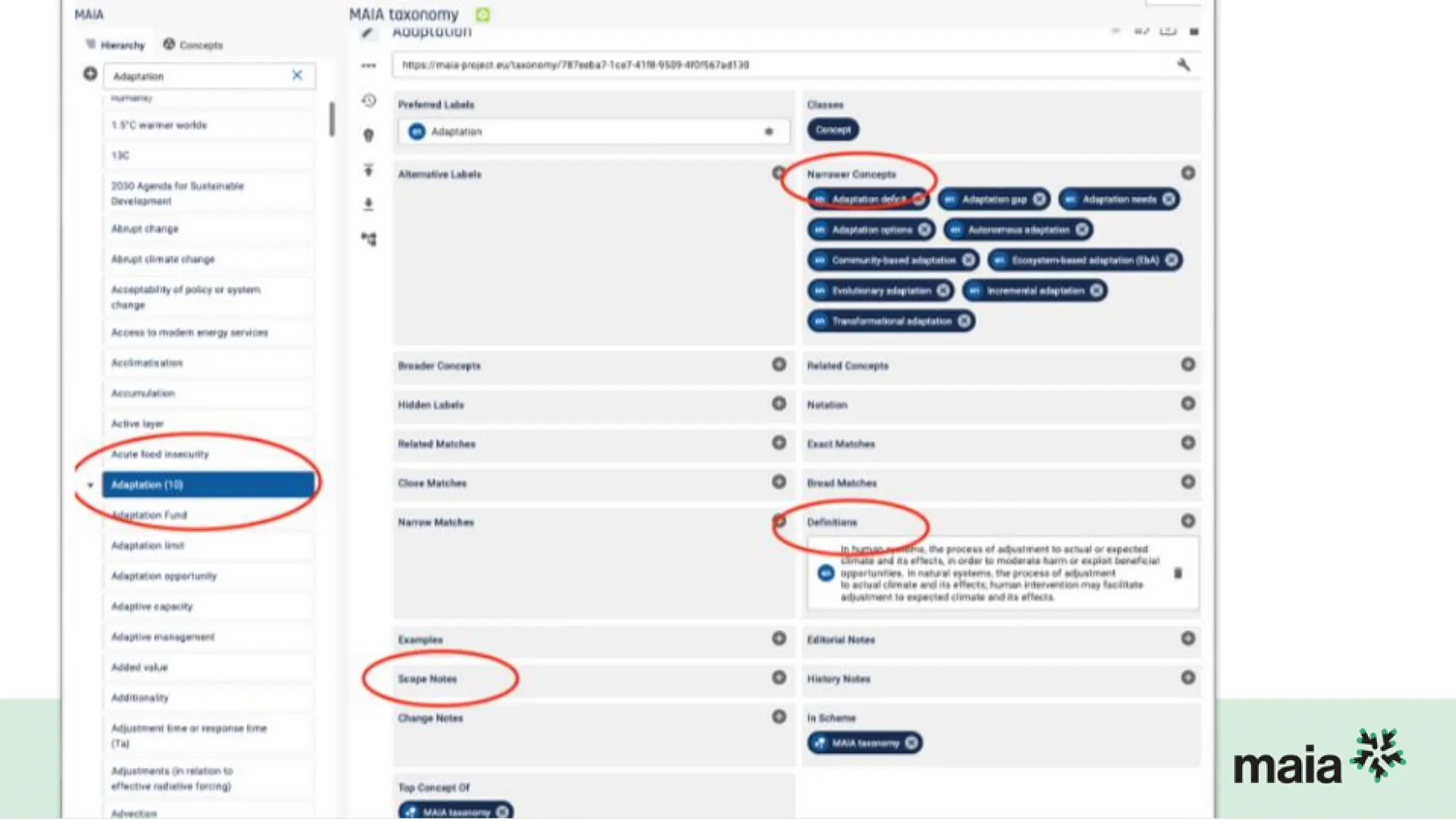
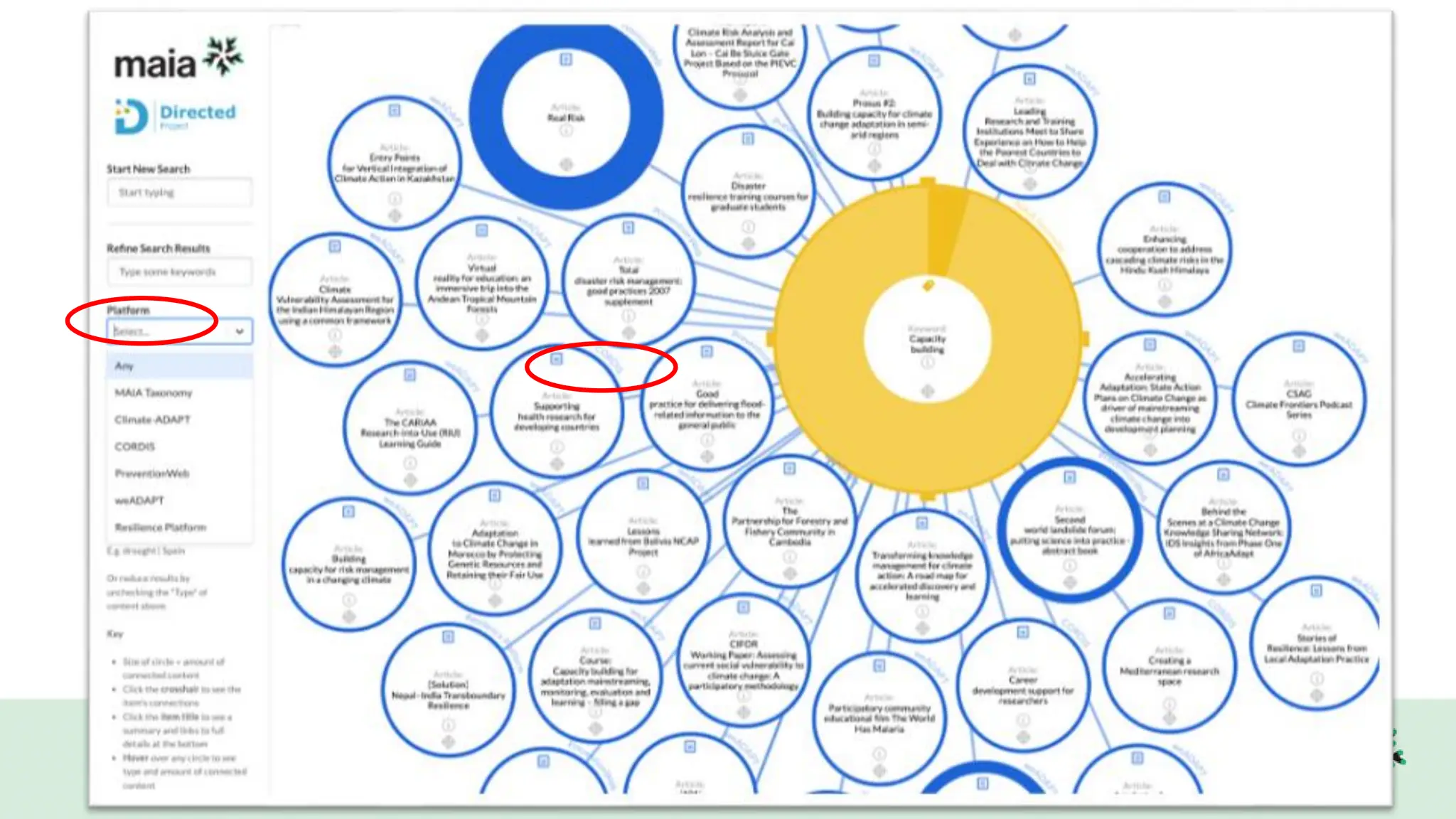
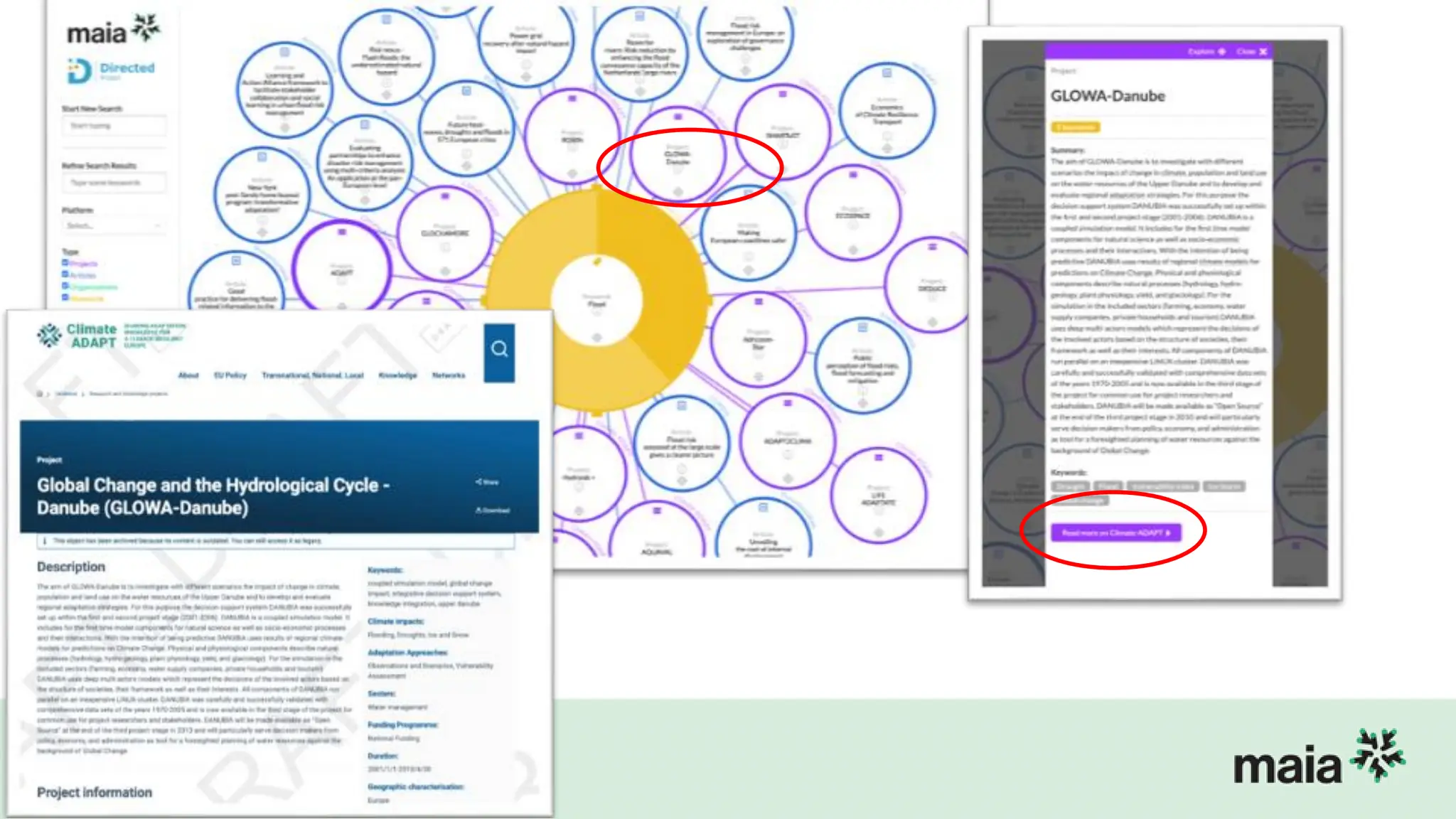
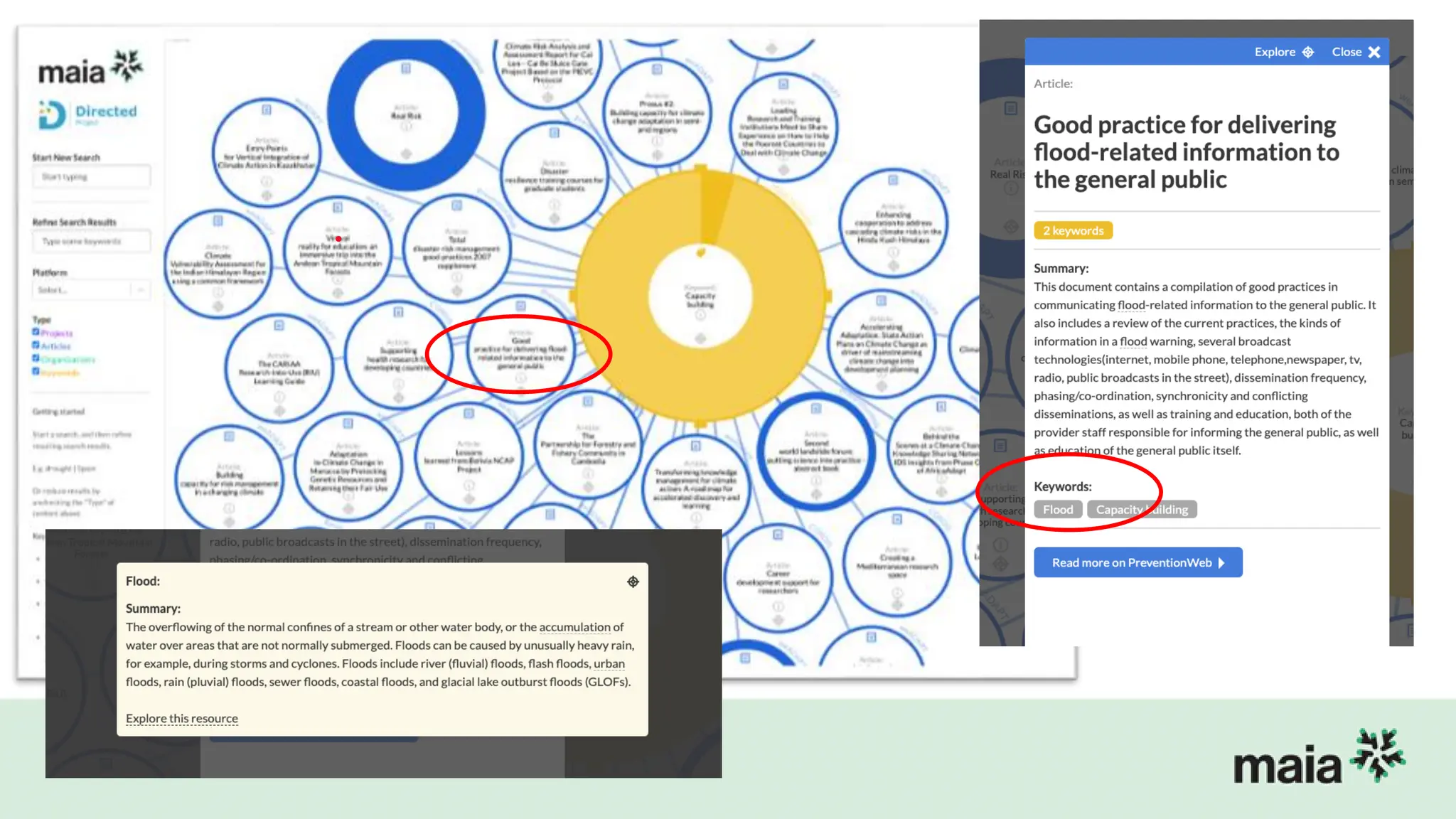
Connecting knowledge across-platforms
- interoperability and standardisation for enhanced 'search
and discovery'
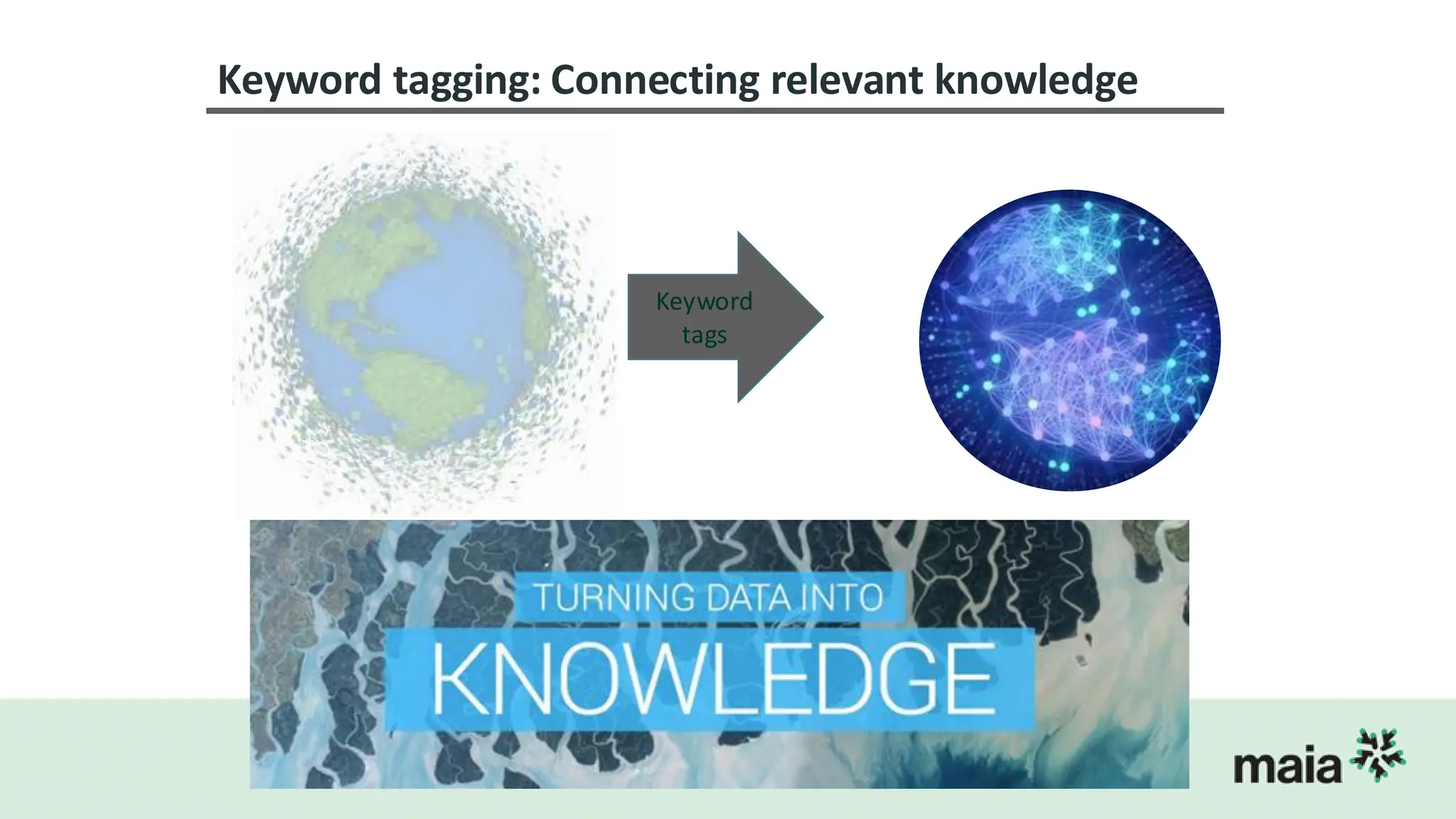
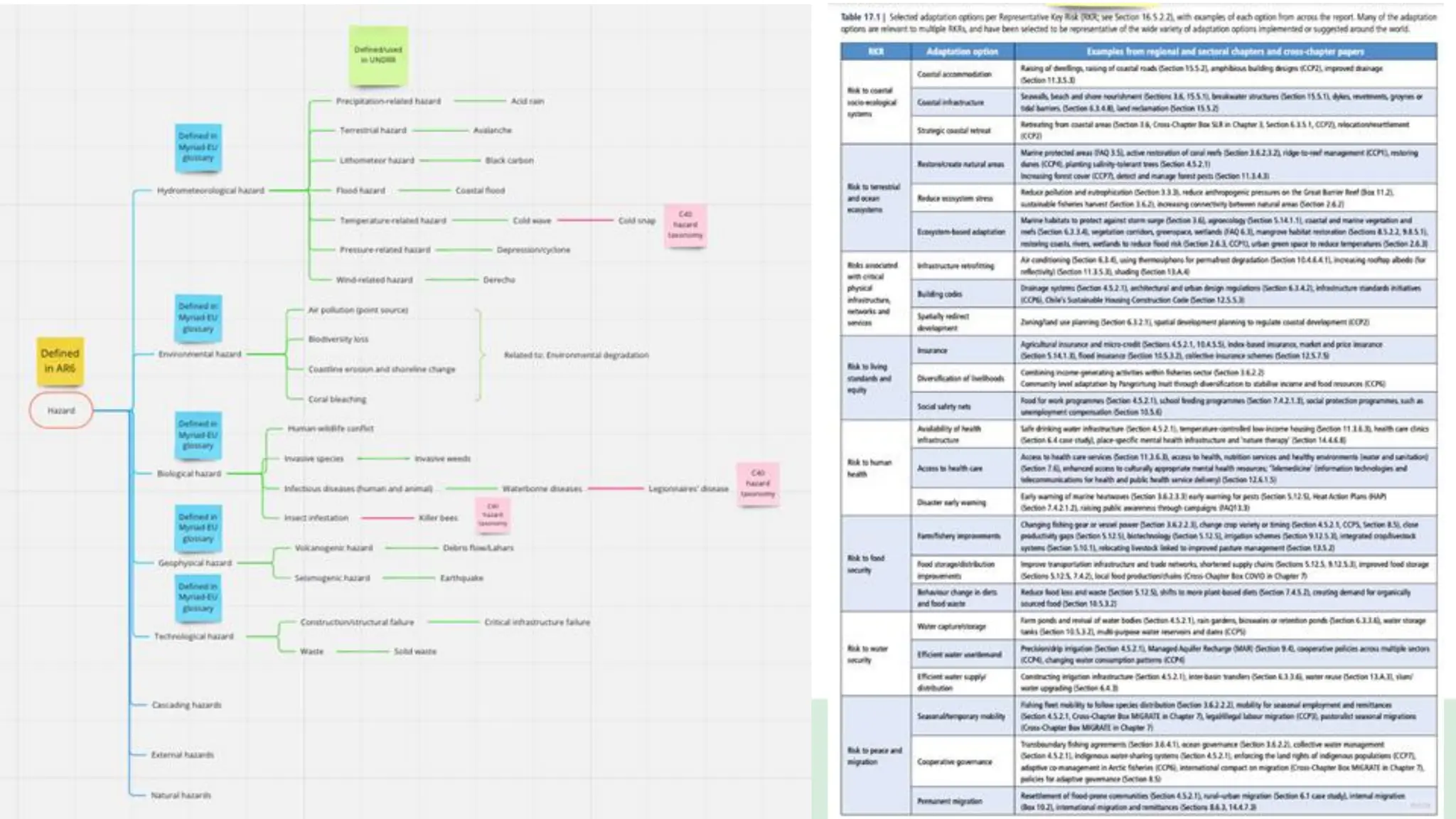
Keyword
tags
Keyword tagging: Connecting relevant knowledge
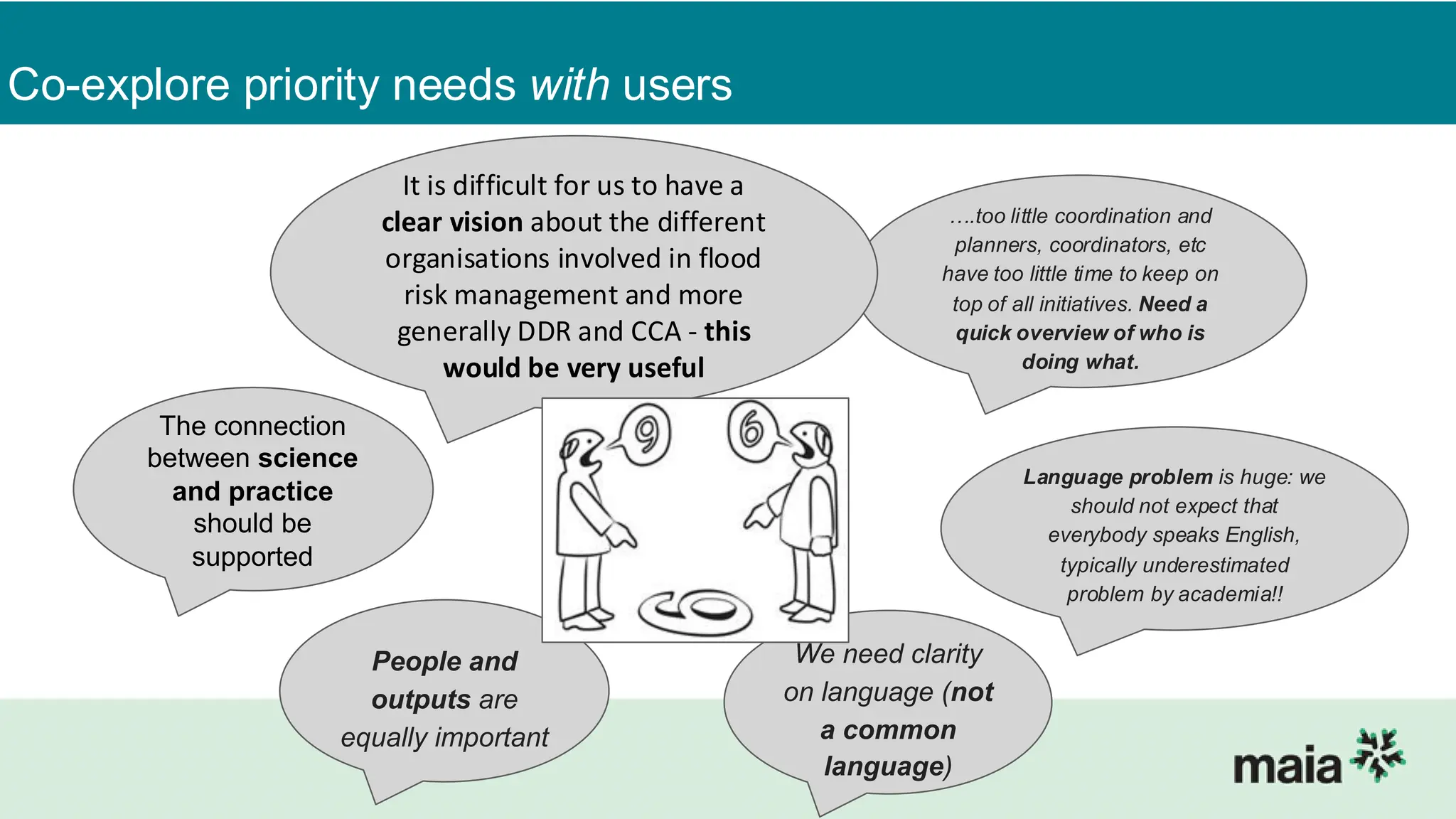
Co-explore priority needs with users
Language problem is huge: we
should not expect that
everybody speaks English,
typically underestimated
problem by academia!!
The connection
between science
and practice
should be
supported
….too little coordination and
planners, coordinators, etc
have too little time to keep on
top of all initiatives. Need a
quick overview of who is
doing what.
People and
outputs are
equally important
We need clarity
on language (not
a common
language)
It is difficult for us to have a
clear vision about the different
organisations involved in flood
risk management and more
generally DDR and CCA - this
would be very useful
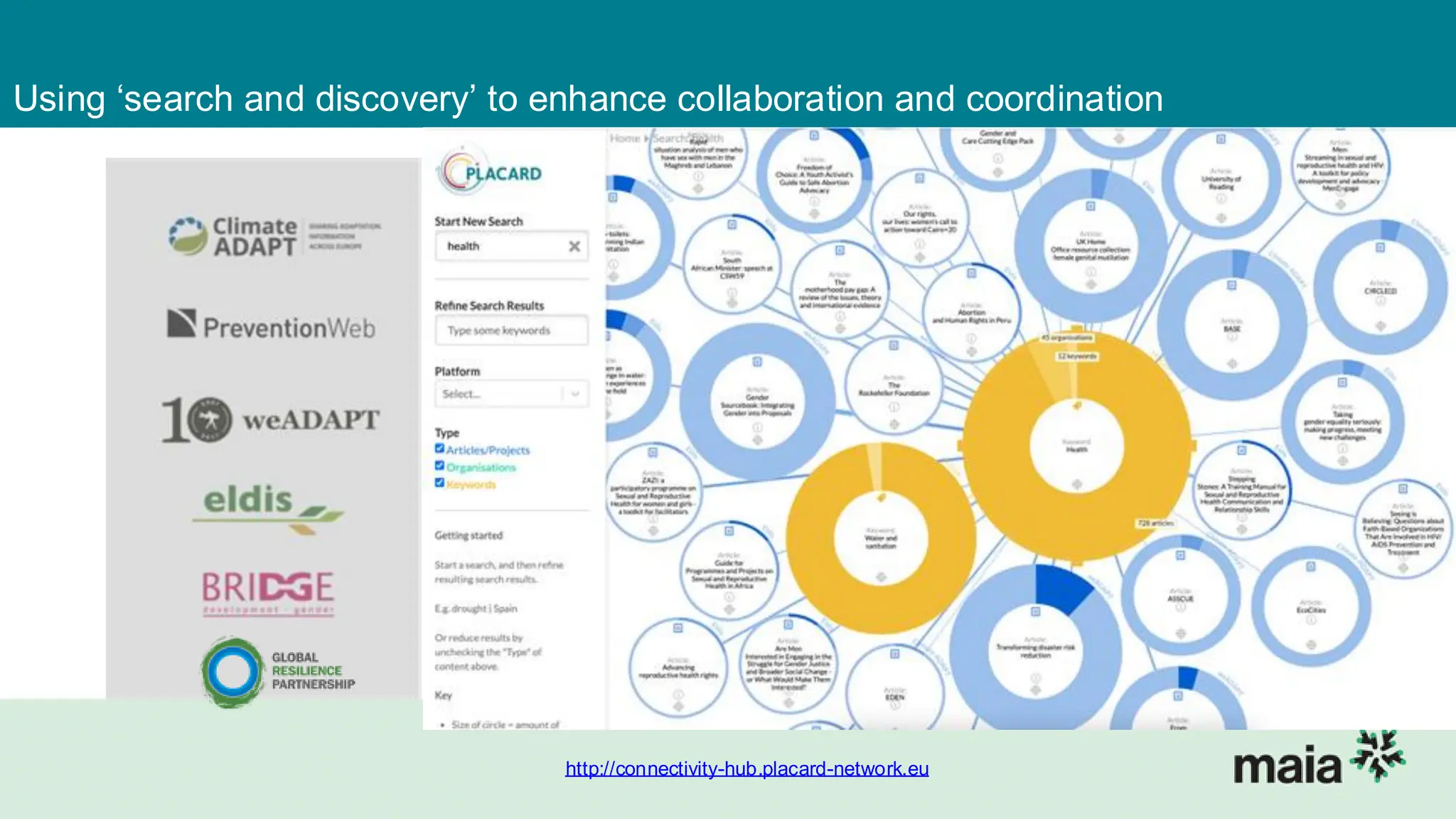
Using ‘search and discovery’ to enhance collaboration and coordination
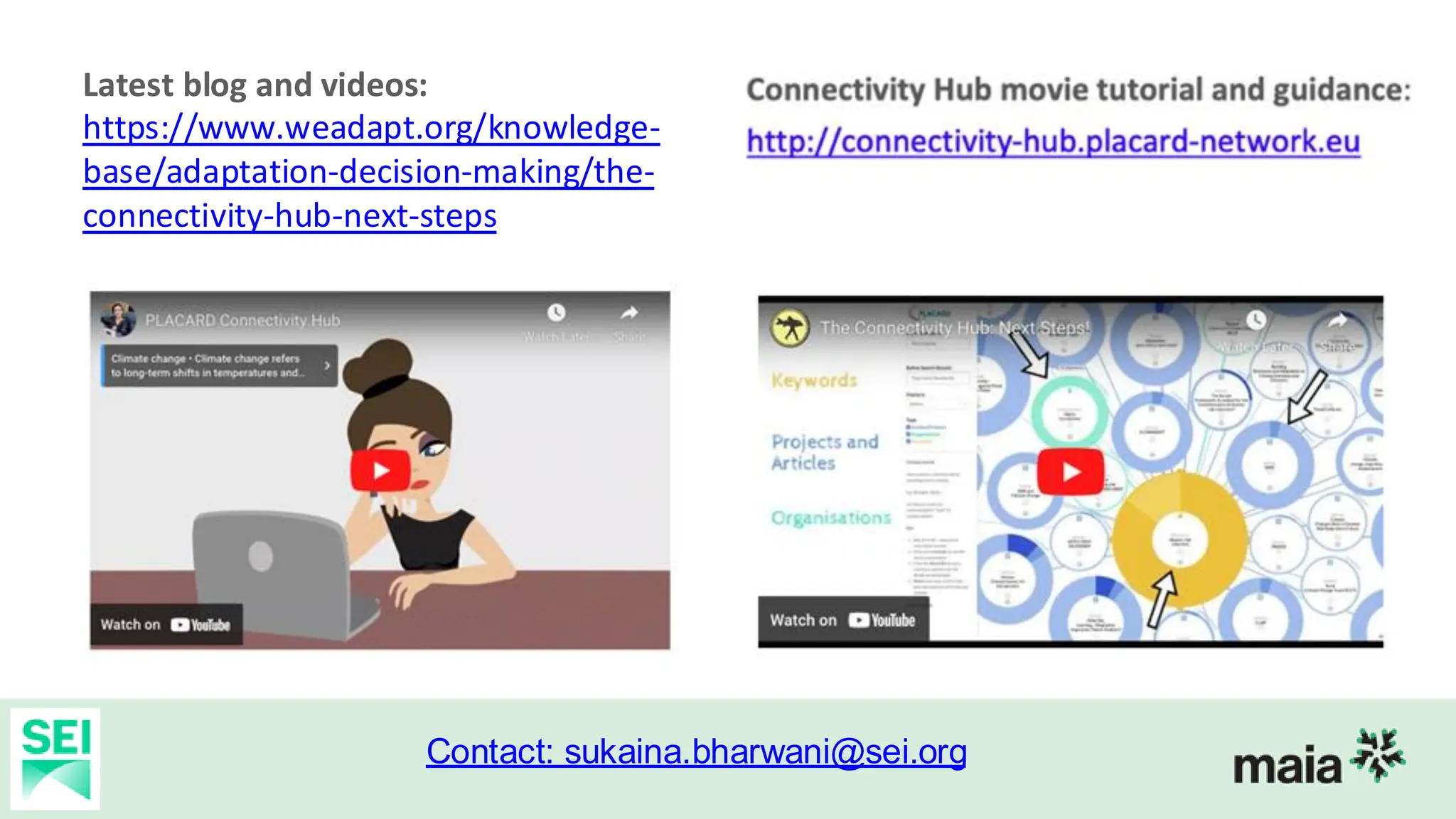
http://connectivity-hub.placard-network.eu
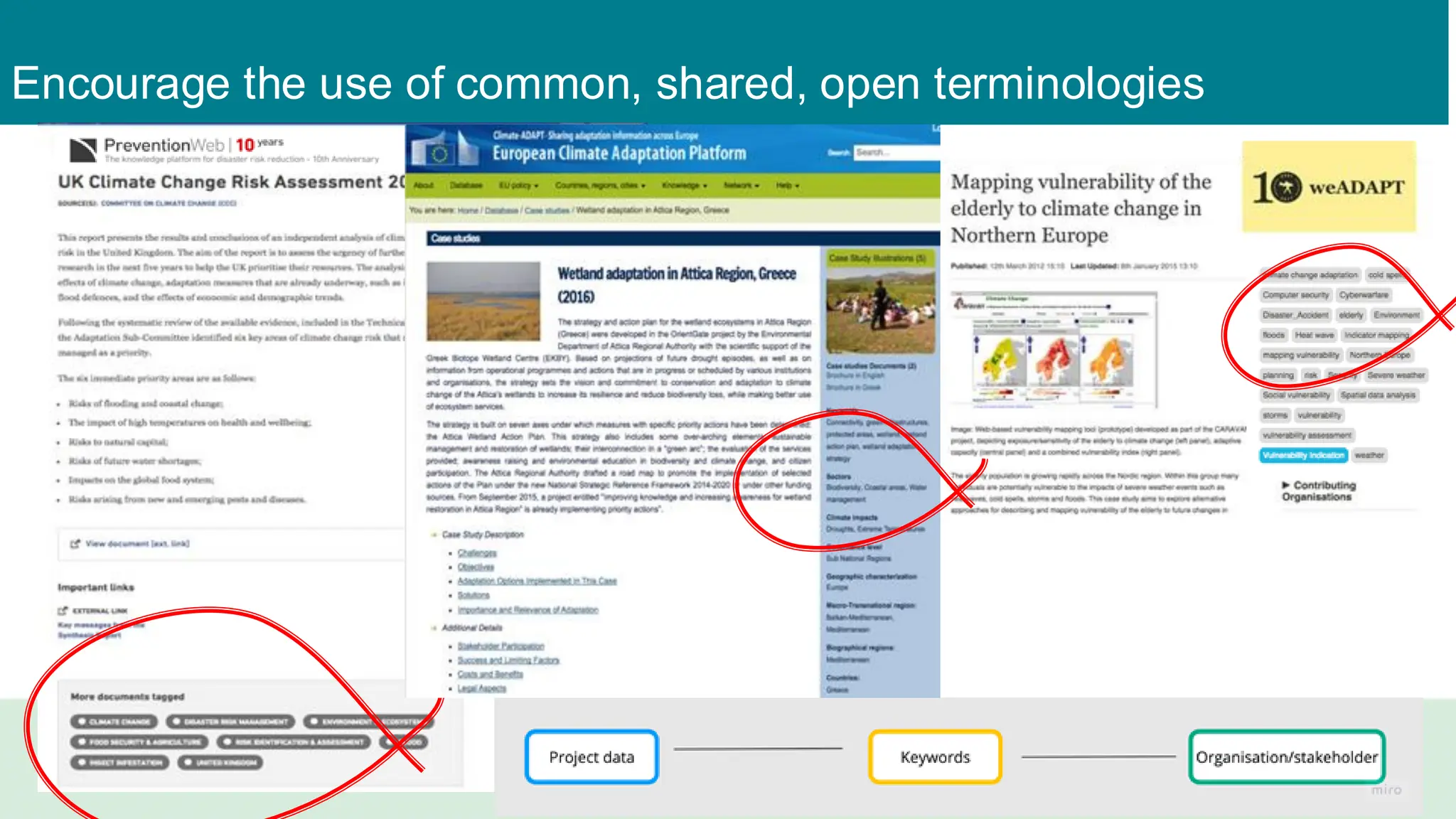
Encourage the use of common, shared, open terminologies
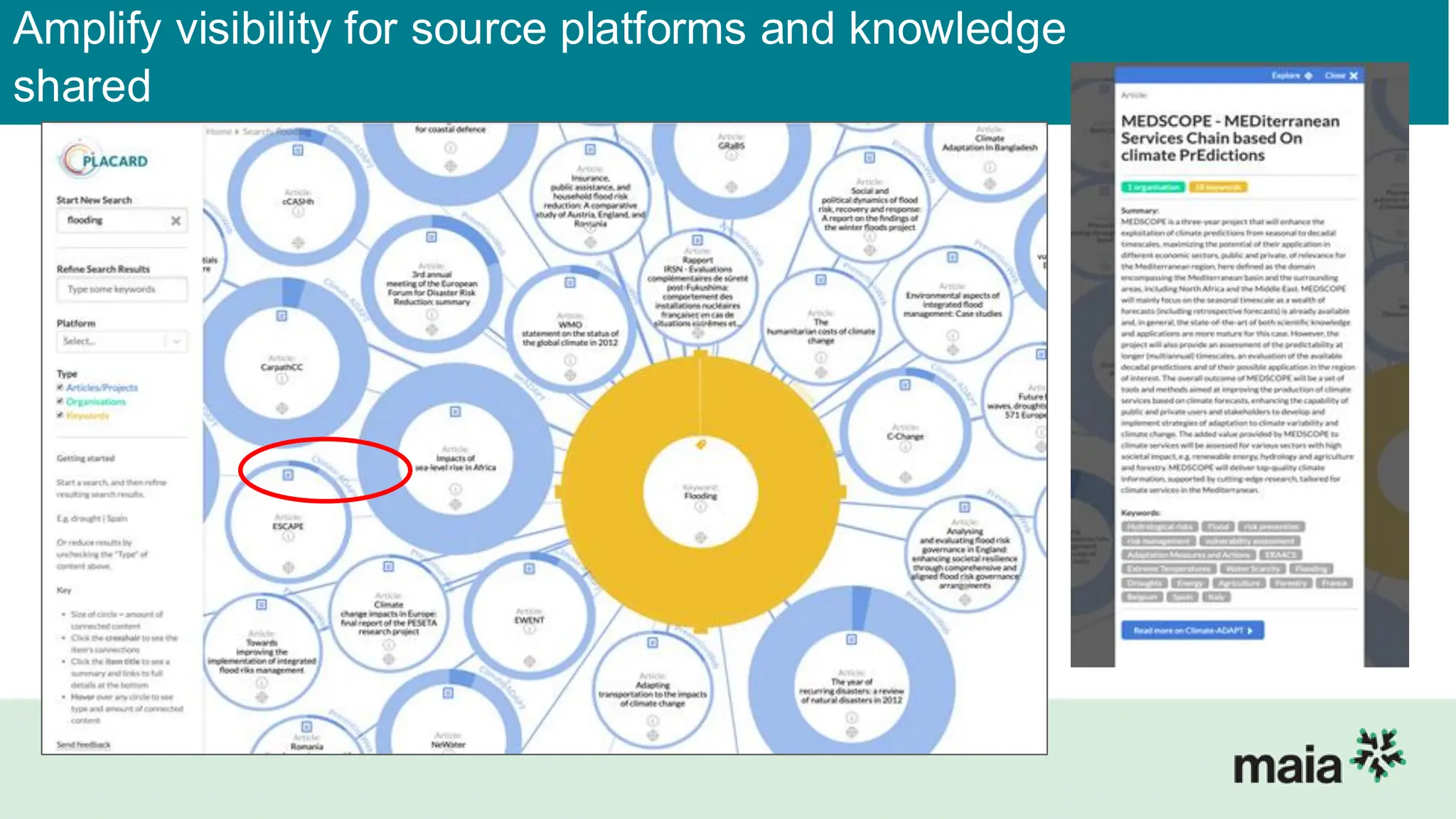
Amplify visibility for source platforms and knowledge
shared
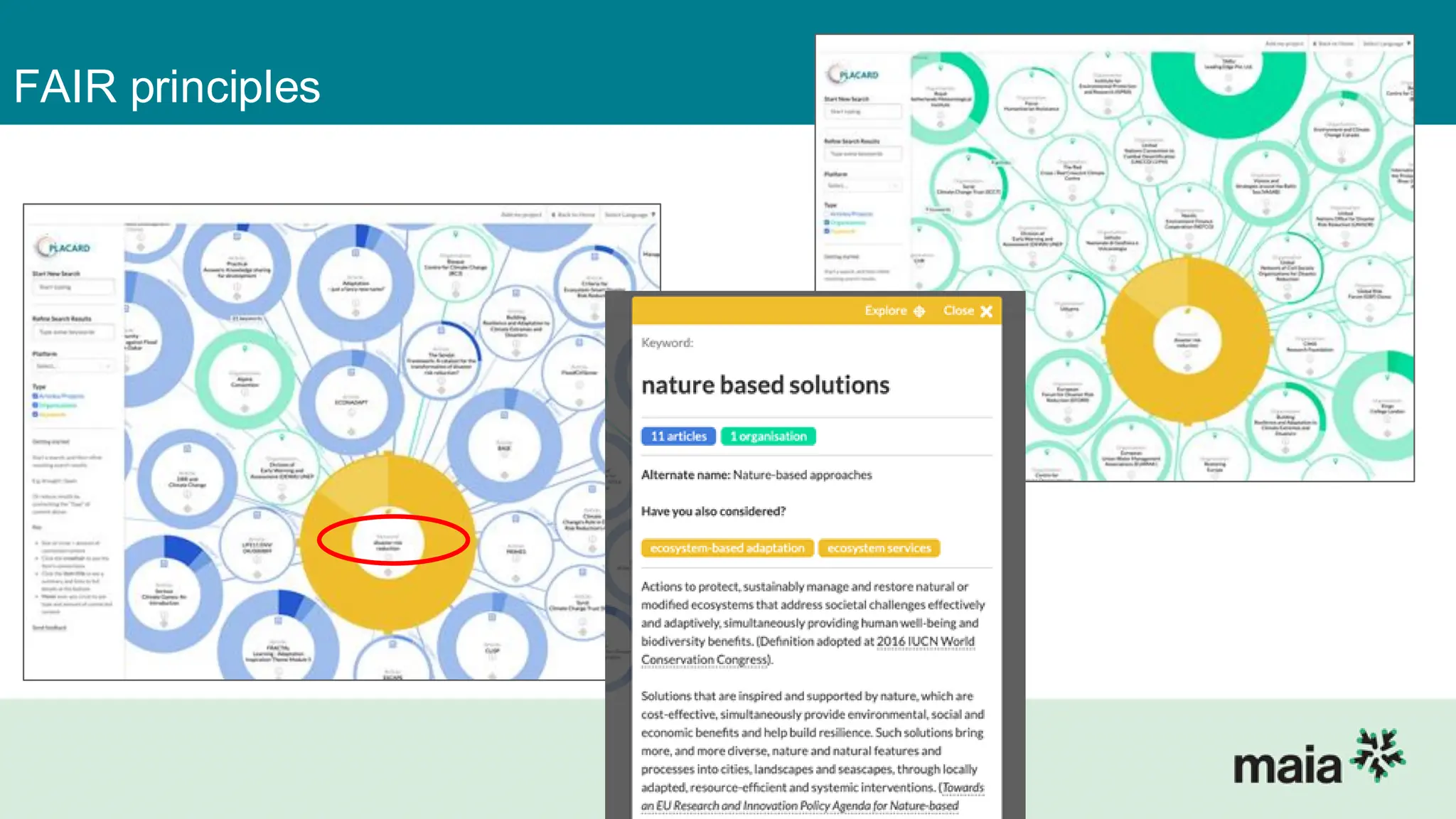
FAIR principles
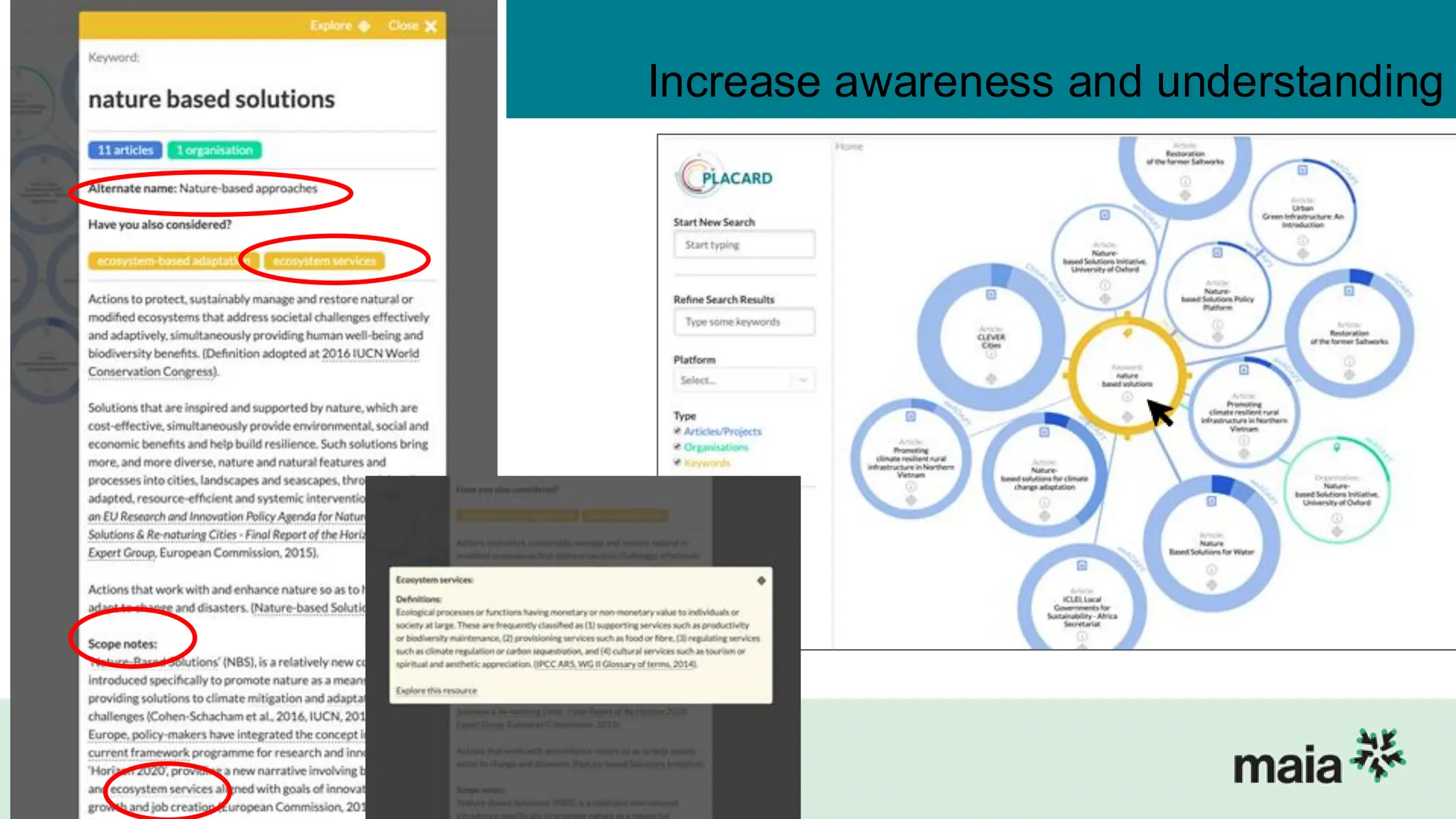
Increase awareness and understanding
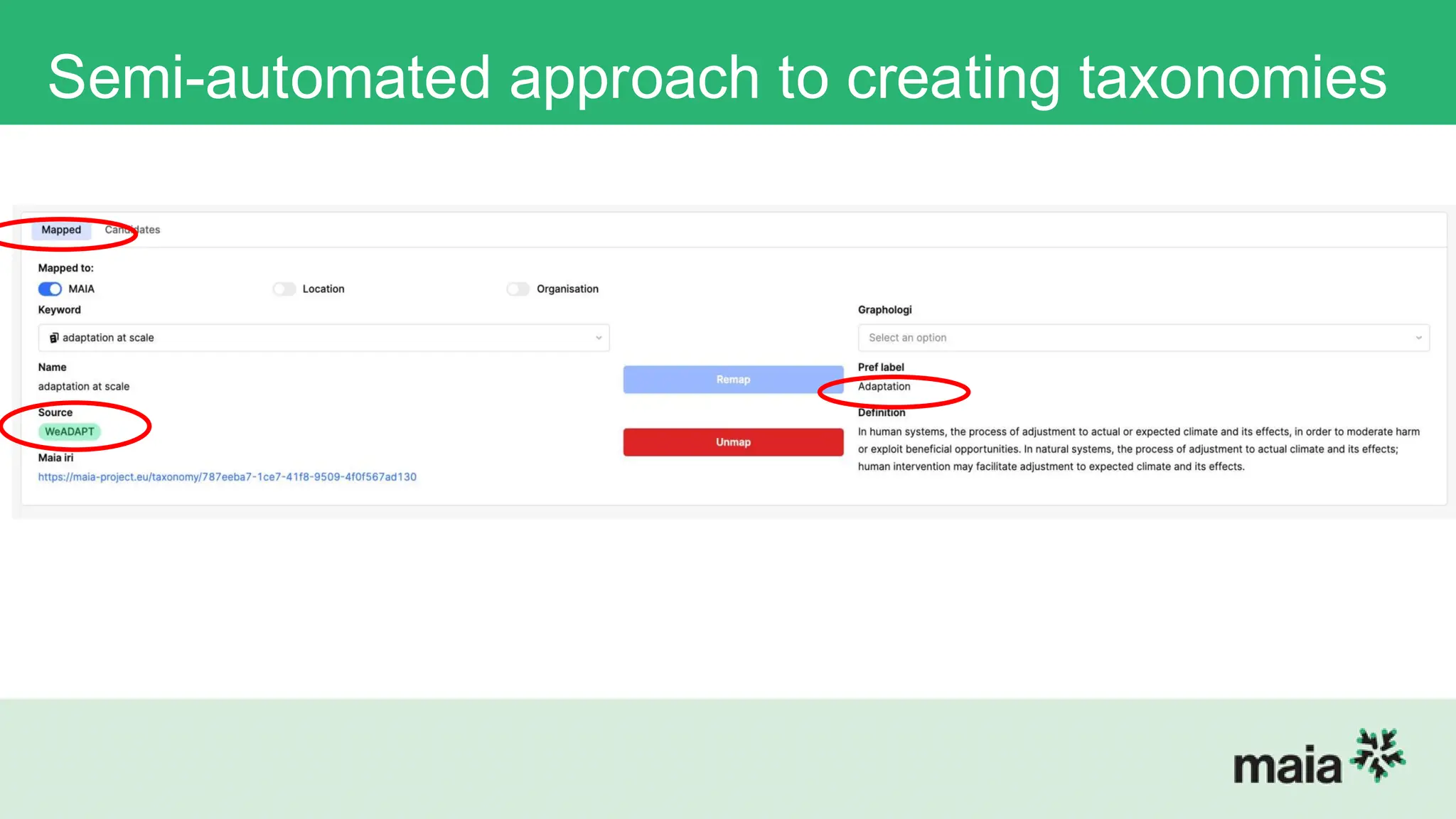
Semi-automated approach to creating taxonomies
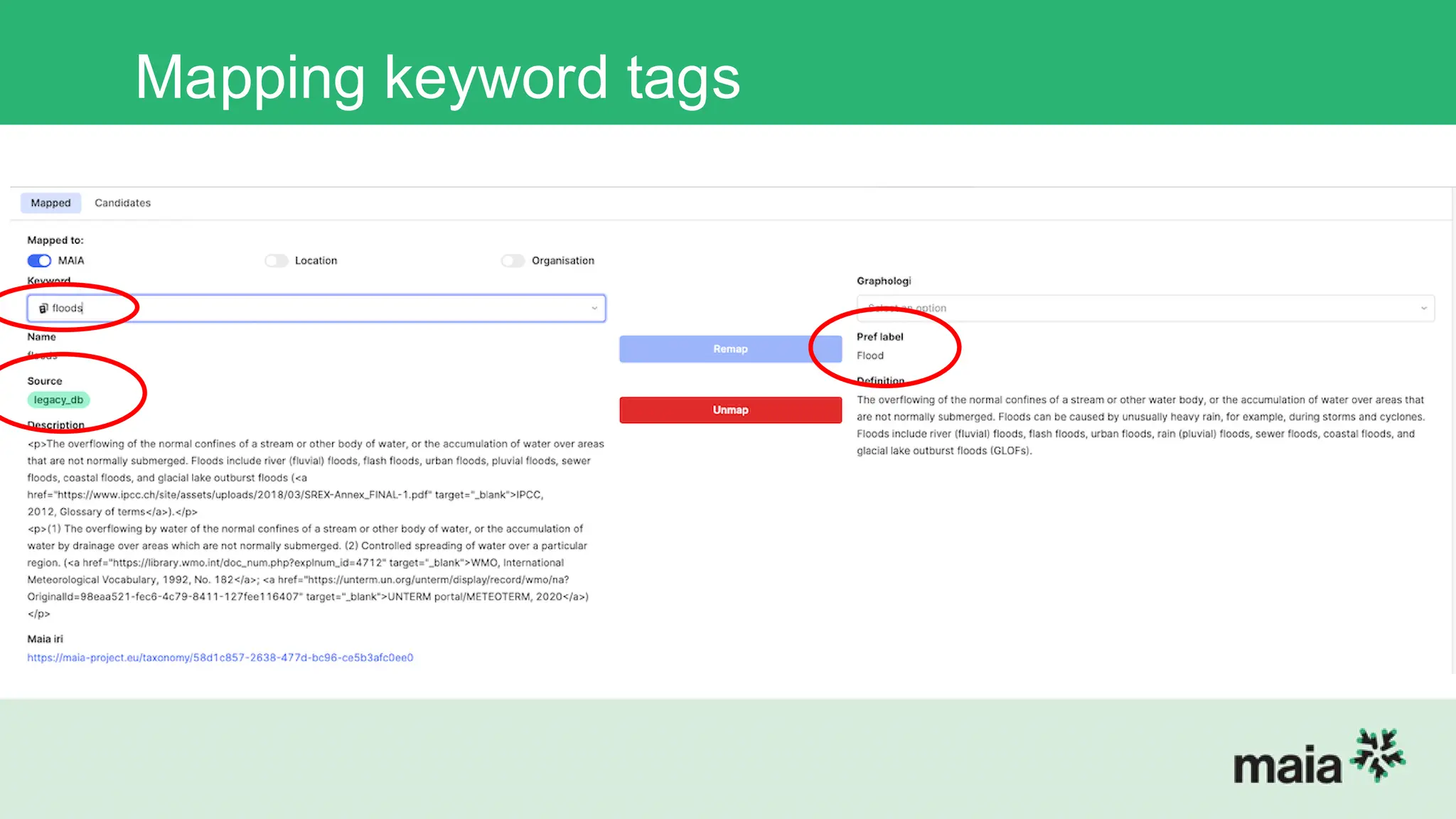
Mapping keyword tags
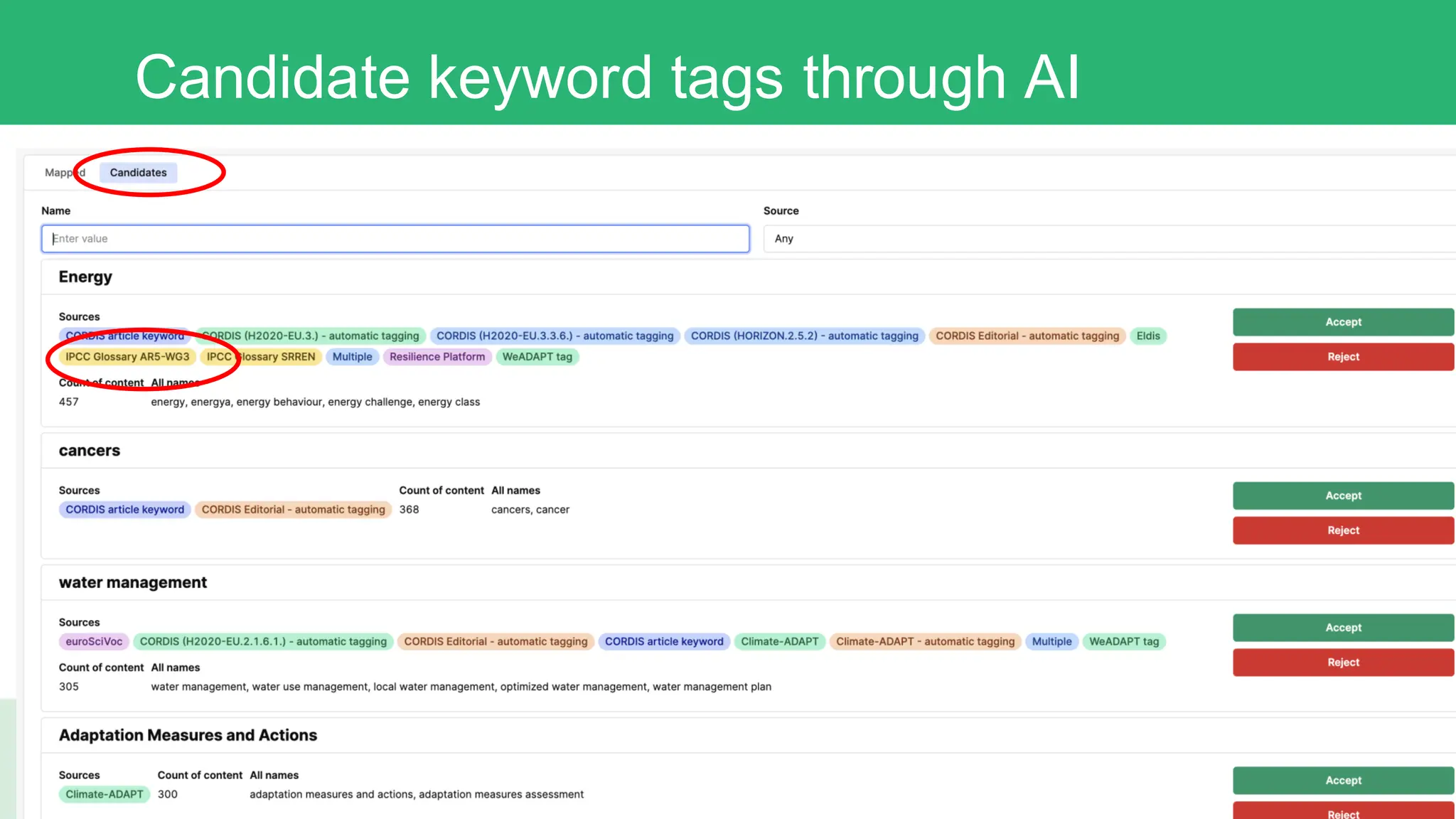
Candidate keyword tags through AI
Latest blog and videos:
https://www.weadapt.org/knowledge-
base/adaptation-decision-making/the-
connectivity-hub-next-steps
Contact: sukaina.bharwani@sei.org
The Connectivity Hub| Key benefits
Helps connect
disperse
knowledge
related to
climate change.
Facilitates access
by a
broad
of actorsto
adaptation
information.
Makes
knowledge
interoperable
and usable.
Key benefits
Discussion and Miro exercise
What are the enablers, barriers and opportunities for collaborations around:
1. Policy/Practice engagement;
2. Citizen engagement;
3. Monitorin Evaluation and Learning;
Respond via the Miro board (link in the chat).
Closing remarks and Menti Meter
We want to hear from you – respond via Menti Meter:

Webinar: Connecting knowledge to policy and practice

  • 1.
    Climate Adaptation PlatformsCommunity of Practice Webinar: Connecting knowledge to policy and practice 3rd October 2024 Rosie Witton, Sukaina Bharwani, Alice Chautard: SEI Oxford
  • 2.
    What is theAGORA project? AGORA - A Gathering place to cO-design and co-cReate Adaptation AGORA supports the overall objectives of the Mission on Adaptation to Climate Change to meaningfully and effectively engage communities and regions in climate actions, accelerating and upscaling adaptation process for building a climate resilient Europe. Creating an alliance of online knowledge brokers serving regions in Europe and beyond. Strengthening collective efforts to share actionable knowledge for adaptation; connecting local-level experiences with policy-making; creating connections between the platforms to enhance access to knowledge for citizens and decision-makers; supporting ongoing development of platforms through sharing best practices for user engagement. Name: Aim: CAPs Community of Practice:
  • 3.
    Agenda • Christopher Phillips,University College Cork (Climate Ireland) • Bodil Ståhl, Swedish National Knowledge Center for Climate Adaptation • Rosie Witton, Stockholm Environment Institute (Agora Community Hub) • Sukaina Bharwani, Stockholm Environment Institute (Connectivity Hub) Welcome, Sukaina Bharwani & Alice Chautard Short presentations (10 minutes each) Facilitated discussion (45 minutes) - we will use Miro Boards Audience Q&A (10-15 minutes) – submit your questions via the chat Closing remarks, Sukaina Bharwani
  • 4.
    Introduce your platform! Whois the key audience your platform aims to engage? Take a post-it note: specify the name of your platform and its goal, and place it on the board (you can zoom in/out!) Answer on our Miro Board, link in the chat!
  • 5.
    Speakers Bodil Ståhl Acting Manager/ClimateAdaptation Expert, National Knowledge Center for Climate Adaptation, Swedish Meteorological & Hydrological Institute Bio: Bodil Ståhl is a climate adaptation expert with extensive experience in agriculture. She has managed, trained, and facilitated within the Swedish agriculture sector and served as Country Manager for ViAgroforestry Uganda, promoting sustainable farming. Currently, at SMHI, she leads international training programs on climate change adaptation and mitigation, and serves as a climate adaptation expert with a focus on agriculture. Presentation title: National Knowledge Center för Climate Adaptation, Sweden Email: bodil.stahl@smhi.se
  • 6.
    NATIONAL KNOWLEDGE CENTER FORCLIMATE ADAPTATION, SWEDEN BODIL STÅHL, ACTING MANAGER
  • 7.
    National knowledgecenter for adaptation Taskedby the Government to: ▪ Be a centre for knowledge ▪ Make knowledge accessible so that it is easily applicable ▪ Monitor the adaptation work of national and regional authorities
  • 8.
    We offer guidancefor adaptation ▪ Collect, develop and publish knowledge ▪ Run the Adaptation website: Klimatanpassning.se ▪ Organise seminars, lectures, training courses ▪ Develop inspirational material: films, games, newsletters
  • 9.
    We offer guidancefor adaptation (cont.) ▪ Provide expert support to Government ▪ Run the Authorities Adaptation Network ▪ Distribute funds to other authorities for projects communication activites and adaptation tools ▪ Participate in international development work
  • 10.
    www.klimatanpassning.se Collaboration with national andregional authorities Authorities: - provide input to the website and to the monthly newsletter - check content and provide input (new reports, tools etc) Input from own staff Indicators for follow up (statistics and analysis) 83 000 visitors 2023
  • 11.
    Klimatanpassning.se ▪ Basic information -what is climate adaptation - how is the climate changing ▪ Tools and guidance ▪ Laws and regulations ▪ Climate effects on sectors, overview ▪ Links to other authorities ▪ Case studies
  • 12.
    Developing tools Create yourfuture – a climate adapted aociety in 50 years Climate adaptation game ”How to do an adaptation action plan”
  • 13.
    Challenges ▪ Focus ongaps compared to other authorities´s websites. What is the role of the knowledge center in the future? ▪ Keep the portal updated without manual time consuming check-ups. ▪ Enough resources
  • 14.
    Outlook towards 2025: klimatanpassning.se ▪New CMS (content management system) brings new opportunities and features that enables cleverer maintenance. ▪ New CMS allows us to track content – each contributing authority has easy access to its own ”over view”-page (their own files/links gathered) ▪ Due to the website being migrated to a new CMS, structure has been reviewed –We are currently awaiting to go live with the new website. ▪ Need for new examples: ▪ Wider coverage of hazards/risks ▪ Focus on results – more examples of actions taken a few years back, rather than new initiatives
  • 15.
    Speakers Dr Chris Philipps Postdoctoralresearcher, MaREI, the SFI Research Centre for Energy Climate and Marine Bio: Dr. Chris Phillips is a postdoctoral researcher at the SFI MaREI Centre, working on the MAGICA project to support climate policymaking. He has expertise in climate science, adaptation, environmental psychology, and citizen science, with prior work on the TRANSLATE project and the Climate Ireland platform. Presentation title: Connecting Knowledge and Action: MaREI's Role in Climate Ireland Email: christopherphillips@ucc.ie
  • 16.
    Connecting Knowledge and Action:MaREI's Role in Climate Ireland Dr. Chris Phillips
  • 17.
    Introduction • Post Doctoralresearcher in the climate impacts and adaptation team. • MaREI, the SFI Research Centre for Energy Climate and Marine • Worked on: • TRANSLATE (Met Eireann funded) • Climate Ireland (EPA initiative) • MAGICA (Horizon project to support JPI climate)
  • 18.
    • Central ClimateResource: Climate Ireland serves as Ireland's main platform for climate information, providing scientific and technical advice through decision-making tools and frameworks. • MaREI Origins: Originally developed by MaREI researchers at UCC, Climate Ireland was created to support stakeholders in adapting to climate change and implementing adaptation plans. • Transition to EPA: Climate Ireland is now fully managed by the Environmental Protection Agency (EPA), ensuring continuous support for Ireland's climate action. • Key Functions: The platform builds organisational capacity, informs climate policy development, and supports the planning and implementation of climate action with research-led outputs. • Risk Assessment Leadership: Developed methodologies for semi-quantitative risk assessment for Local Authorities and contributed to the National Climate Change Risk Assessment (NCCRA) for the financial and commercial sectors. • Training & Capacity Building: Climate Ireland delivered the "Raising Awareness" training course to climate action teams in Local Authorities, strengthening local adaptation leadership. Climate Ireland: MaREI Development and Adaptation Leadership
  • 21.
    • User-Centric Design:Climate Ireland’s Learning Platform targets the specific needs of Local Authority staff, addressing relevant climate challenges and actions. • Collaboration with Policymakers: Developed with CAROs and LASNTG, the platform aligns with national climate priorities and local government needs. • Tailored Content Delivery: Staff are categorized by grades, ensuring training is relevant to their specific roles and responsibilities. • Engaging Multimedia Modules: The course features three core modules delivered through videos, animations, and audio to enhance engagement and retention. • Practical Action Steps: The training empowers staff to implement climate actions at both professional and personal levels. • Capturing Local Insights: The platform gathers user experiences and feedback to inform future course updates. • Widespread Access: The Learning Platform (learn.climateireland.ie) provides broad access to training, supporting climate action across Ireland. Raising Awareness training course
  • 23.
    • Purpose: Evaluatesthe effectiveness of the Local Authority Raising Awareness Training and its impact on decision-making and climate action. • Research Need: Assessed how well the training translated into real-world action and empowered decision-makers on climate adaptation. • Focus: Analysed data from 15,000 participants to assess the training’s impact on knowledge, awareness, and decision-making. • Key Findings: 83% rated the training highly, with improved confidence in climate actions and a positive link between engagement and learning. • Future Training: Highlights the need for engaging, relatable content to enhance training effectiveness. • Contribution: Offers insights into optimising training to help local authorities meet climate commitments. • Policy Impact: Research will guide future policy and climate training strategies to support local authorities. • Next Steps: Developing new climate adaptation courses based on feedback from public sector participants Shaping Future Policy Through Climate Training Insights
  • 24.
    • Collaborative Engagement:Climate Ireland worked with CAROs and stakeholders to tailor the risk assessment methodology to local authority needs. • Capacity Building: Developed a semi-quantitative risk assessment to empower local authorities in climate risk evaluation. • Best Practices: Incorporated international standards (IPCC AR5/6, Adaptation ISO) to ensure relevant and credible information. • User Feedback: Integrated stakeholder insights from a pilot workshop to refine the methodology. • Practical Examples: Created case studies on heat-related risks and fluvial flooding to inform local decision-making. • Continuous Improvement: Updated the methodology based on feedback to enhance its effectiveness. • Policy Influence: Developed guidance materials to support local authorities in implementing climate adaptation strategies. Semi-quantitative risk assessment for local authorities.
  • 25.
    • Study Purpose:Aimed to understand climate risk assessment practices in finance and commercial sectors to inform the National Climate Change Risk Assessment (NCCRA). • Sector Selection: Chose finance and commercial sectors due to strict reporting frameworks like TCFD and CSRD, making them key for national climate strategies. • Literature Review: Conducted a review of policies, legislation, and approaches to integrating climate adaptation into sectoral practices. • Climate Risk Disclosure Report: Report focused on how organizations disclose climate risks, offering lessons for national adaptation strategies. • Sector Engagement: Interviewed 20 participants from finance, consultancy, and climate services sectors to gain insights into current risk management practices. • Key Insights: Highlighted how financial institutions integrate climate adaptation into risk management, offering guidance for other sectors. • Application to National Policy: Findings will support the refinement of NCCRA and offer a model for integrating climate risks across sectors in Ireland. Finance and Commercial sector Climate risk practices
  • 26.
    Concluding remarks • User-Centric& Collaborative: Climate Ireland’s design, in partnership with MaREI, CAROs, and policymakers, ensures alignment with national climate goals and directly addresses user needs. • Delivering Relevant Info & Capturing Insights: Tailored multimedia training equips Local Authorities with actionable knowledge, while user feedback drives continuous improvement. • Supporting Decision-Making: Practical case studies on climate risks inform local decisions, empowering staff to act confidently. • Measuring Success: With 15,000 participants and 83% reporting improved confidence, the platform’s engagement fosters learning and capacity building. • Influencing Policy: Climate Ireland shapes national climate strategies, providing risk assessments and tools that drive real-world climate action.
  • 27.
  • 28.
    Rosie Witton Research Fellow,SEI Bio: Rosie Witton is a Research Fellow at SEI Oxford, focussing on climate change adaptation. At SEI, Rosie works on a range of projects on knowledge sharing/exchange, co-design and participatory methods, and adaptation solutions including the AGORA project. Within AGORA, Rosie focuses work on co-designing and co-creating the Agora Community Hub, an online platform that is meeting point to empower local communities to share needs, knowledge and experiences on climate adaptation issues and solutions. Presentation title: The Agora Community Hub: Email: rosie.witton@sei.org
  • 29.
    The Agora CommunityHub aims to: Be a resource hub of information Be a platform co-designed platform with citizens and stakeholders Be a place for networking, communication, and connecting with peers Host dedicated discussion spaces Encourage/share knowledge co-production Agora Community Hub A meeting point to empower local communities to share needs, knowledge and experiences on climate adaptation issues and solutions.
  • 30.
    Discover the statusof climate change adaptation activities and learn from them – the Agora Explorer
  • 31.
    Find stakeholders andinstitutions working in specific locations
  • 32.
    Connecting with communitiesthrough discussion forums Discussion forums: • Ask questions • Discuss common challenges • Bookmark resources • Follow and message peers • Discover the most popular topics and solutions emerging in the climate change adaptation community
  • 33.
    Production of andaccess to synthesized knowledge Synthesis of resources: • Encourage set structures • Tailored to Agora resources, products and tools • Enhanced discoverability • Clickable tags and linked resources
  • 34.
  • 35.
    Get involved! Sign up:www.agoracommunity.org • Add your profile • Add your organization • Share your projects • Share your challenges and solutions • Enrol in the Agora Academies!
  • 36.
    Get involved! Share yourclimate adaptation platform on our online platforms page! Share your projects and case studies online to feature on the Agora Explorer map!
  • 37.
  • 38.
    Dr Sukaina Bharwani SeniorResearch Fellow and weADAPT Director, SEI Bio: Sukaina Bharwani is a Senior Researcher on adaptation issues leading several work streams in large European and international projects. She also serves as Director of the weADAPT global platform and network for climate change adaptation. In that role she coordinates the strategic and technical development of weADAPT. Presentation title: The Connectivity Hub: Connecting knowledge across scales Email: sukaina.bharwani@sei.org
  • 39.
    Maximising Impact and Accessibilityof European Climate Research Sukaina Bharwani and Kate Williamson (SEI)
  • 40.
    The Project |Context Experience put in use - Projects results impact multiplier Projects results impact multiplier Brings together the previous experience of past and ongoing Horizon projects concerning innovation for climate resilience to allow a wide audience to access their results.
  • 41.
    Connecting knowledge across-platforms -interoperability and standardisation for enhanced 'search and discovery'
  • 42.
  • 43.
    Co-explore priority needswith users Language problem is huge: we should not expect that everybody speaks English, typically underestimated problem by academia!! The connection between science and practice should be supported ….too little coordination and planners, coordinators, etc have too little time to keep on top of all initiatives. Need a quick overview of who is doing what. People and outputs are equally important We need clarity on language (not a common language) It is difficult for us to have a clear vision about the different organisations involved in flood risk management and more generally DDR and CCA - this would be very useful
  • 44.
    Using ‘search anddiscovery’ to enhance collaboration and coordination http://connectivity-hub.placard-network.eu
  • 45.
    Encourage the useof common, shared, open terminologies
  • 46.
    Amplify visibility forsource platforms and knowledge shared
  • 47.
  • 48.
  • 50.
    Semi-automated approach tocreating taxonomies
  • 51.
  • 52.
  • 57.
    Latest blog andvideos: https://www.weadapt.org/knowledge- base/adaptation-decision-making/the- connectivity-hub-next-steps Contact: sukaina.bharwani@sei.org
  • 58.
    The Connectivity Hub|Key benefits Helps connect disperse knowledge related to climate change. Facilitates access by a broad of actorsto adaptation information. Makes knowledge interoperable and usable. Key benefits
  • 60.
    Discussion and Miroexercise What are the enablers, barriers and opportunities for collaborations around: 1. Policy/Practice engagement; 2. Citizen engagement; 3. Monitorin Evaluation and Learning; Respond via the Miro board (link in the chat).
  • 61.
    Closing remarks andMenti Meter We want to hear from you – respond via Menti Meter: