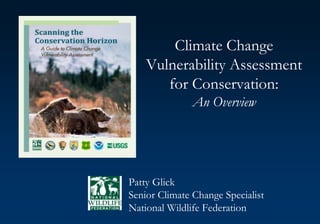
Climate Change
Vulnerability Assessment
for Conservation:
An Overview
Patty Glick
Senior Climate Change Specialist
National Wildlife Federation
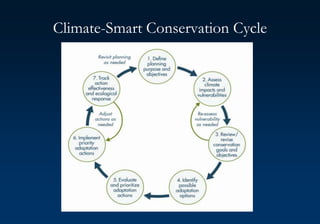
Climate-Smart Conservation Cycle
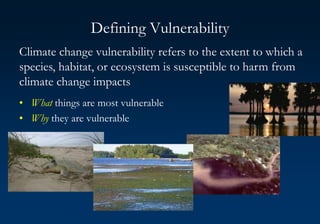
Defining Vulnerability
Climate change vulnerability refers to the extent to which a
species, habitat, or ecosystem is susceptible to harm from
climate change impacts
• What things are most vulnerable
• Why they are vulnerable
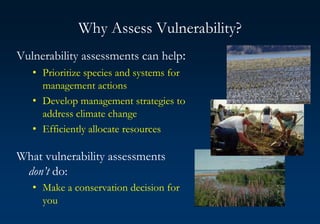
Why Assess Vulnerability?
Vulnerability assessments can help:
• Prioritize species and systems for
management actions
• Develop management strategies to
address climate change
• Efficiently allocate resources
What vulnerability assessments
don’t do:
• Make a conservation decision for
you
Key Steps for Undertaking a
Vulnerability Assessment
1. Determine objectives and
scope
2. Gather relevant data and
expertise
3. Assess the components of
vulnerability
4. Apply assessment results in
adaptation planning
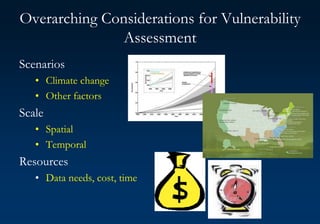
Overarching Considerations for Vulnerability
Assessment
Scenarios
• Climate change
• Other factors
Scale
• Spatial
• Temporal
Resources
• Data needs, cost, time
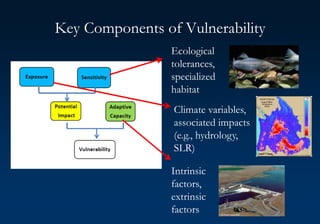
Key Components of Vulnerability
Ecological
tolerances,
specialized
habitat
Climate variables,
associated impacts
(e.g., hydrology,
SLR)
Intrinsic
factors,
extrinsic
factors
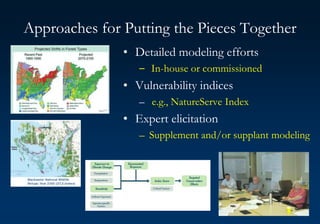
Approaches for Putting the Pieces Together
• Detailed modeling efforts
– In-house or commissioned
• Vulnerability indices
– e.g., NatureServe Index
• Expert elicitation
– Supplement and/or supplant modeling
Using Vulnerability Assessment Results
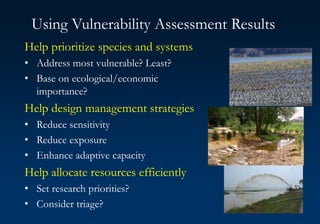
Help prioritize species and systems
• Address most vulnerable? Least?
• Base on ecological/economic
importance?
Help design management strategies
• Reduce sensitivity
• Reduce exposure
• Enhance adaptive capacity
Help allocate resources efficiently
• Set research priorities?
• Consider triage?
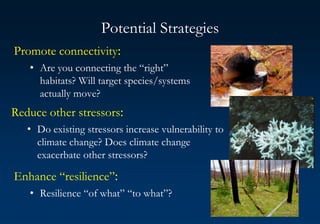
Potential Strategies
Promote connectivity:
• Are you connecting the “right”
habitats? Will target species/systems
actually move?
Reduce other stressors:
• Do existing stressors increase vulnerability to
climate change? Does climate change
exacerbate other stressors?
Enhance “resilience”:
• Resilience “of what” “to what”?
Other Adaptation Questions
What if you can’t reduce
vulnerability?
• Do we still do what we are already
doing to try to “buy time”?
• Do you decide to “let nature take its
course”?
• Do you actively facilitate a transition
to some new state?
• Should we change our conservation
goals?

Patty Glick vulnerability presentation

  • 1.
    Climate Change Vulnerability Assessment forConservation: An Overview Patty Glick Senior Climate Change Specialist National Wildlife Federation
  • 2.
  • 3.
    Defining Vulnerability Climate changevulnerability refers to the extent to which a species, habitat, or ecosystem is susceptible to harm from climate change impacts • What things are most vulnerable • Why they are vulnerable
  • 4.
    Why Assess Vulnerability? Vulnerabilityassessments can help: • Prioritize species and systems for management actions • Develop management strategies to address climate change • Efficiently allocate resources What vulnerability assessments don’t do: • Make a conservation decision for you
  • 5.
    Key Steps forUndertaking a Vulnerability Assessment 1. Determine objectives and scope 2. Gather relevant data and expertise 3. Assess the components of vulnerability 4. Apply assessment results in adaptation planning
  • 6.
    Overarching Considerations forVulnerability Assessment Scenarios • Climate change • Other factors Scale • Spatial • Temporal Resources • Data needs, cost, time
  • 7.
    Key Components ofVulnerability Ecological tolerances, specialized habitat Climate variables, associated impacts (e.g., hydrology, SLR) Intrinsic factors, extrinsic factors
  • 8.
    Approaches for Puttingthe Pieces Together • Detailed modeling efforts – In-house or commissioned • Vulnerability indices – e.g., NatureServe Index • Expert elicitation – Supplement and/or supplant modeling
  • 9.
    Using Vulnerability AssessmentResults Help prioritize species and systems • Address most vulnerable? Least? • Base on ecological/economic importance? Help design management strategies • Reduce sensitivity • Reduce exposure • Enhance adaptive capacity Help allocate resources efficiently • Set research priorities? • Consider triage?
  • 10.
    Potential Strategies Promote connectivity: •Are you connecting the “right” habitats? Will target species/systems actually move? Reduce other stressors: • Do existing stressors increase vulnerability to climate change? Does climate change exacerbate other stressors? Enhance “resilience”: • Resilience “of what” “to what”?
  • 11.
    Other Adaptation Questions Whatif you can’t reduce vulnerability? • Do we still do what we are already doing to try to “buy time”? • Do you decide to “let nature take its course”? • Do you actively facilitate a transition to some new state? • Should we change our conservation goals?

Editor's Notes

  • #4 In the context of fish and wildlife conservation, vulnerability to climate change refers to the extent to which a species, habitat, or ecosystem is susceptible to harm from climate change impacts. It can be considered a relative concept, where you have some species or systems that are more vulnerable than others (and you may even have some that are not vulnerable at all but perhaps even benefit from climate change) – this is the “what” question.You can also be more specific as to why a particular target or set of targets is vulnerable.