Case Presentation on Myocardial
infarction
Pharm.D
intern
By:
MAHDYALI AHMADOSMAN
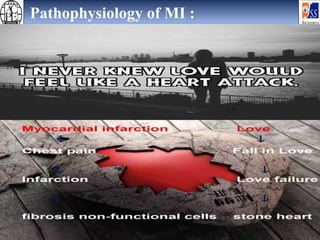
Pathophysiology of MI :
A Real Case
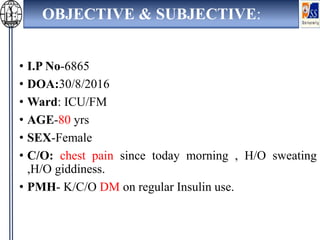
OBJECTIVE & SUBJECTIVE:
• I.P No-6865
• DOA:30/8/2016
• Ward: ICU/FM
• AGE-80 yrs
• SEX-Female
• C/O: chest pain since today morning , H/O sweating
,H/O giddiness.
• PMH- K/C/O DM on regular Insulin use.
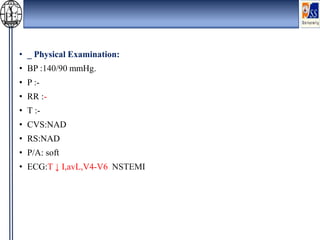
• _ Physical Examination:
• BP :140/90 mmHg.
• P :-
• RR :-
• T :-
• CVS:NAD
• RS:NAD
• P/A: soft
• ECG:T ↓ I,avL,V4-V6 NSTEMI
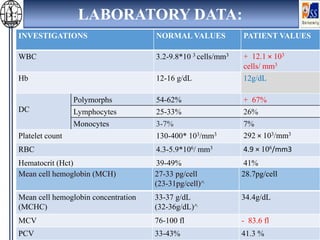
INVESTIGATIONS NORMAL VALUES PATIENT VALUES
WBC 3.2-9.8*10 3 cells/mm3 + 12.1 × 10³
cells/ mm3
Hb 12-16 g/dL 12g/dL
DC
Polymorphs 54-62% + 67%
Lymphocytes 25-33% 26%
Monocytes 3-7% 7%
Platelet count 130-400* 103/mm3 292 × 103/mm3
RBC 4.3-5.9*106/ mm3 4.9 × 10⁶/mm3
Hematocrit (Hct) 39-49% 41%
LABORATORY DATA:
Mean cell hemoglobin (MCH) 27-33 pg/cell
(23-31pg/cell)^
28.7pg/cell
Mean cell hemoglobin concentration
(MCHC)
33-37 g/dL
(32-36g/dL)^
34.4g/dL
MCV 76-100 fl - 83.6 fl
PCV 33-43% 41.3 %
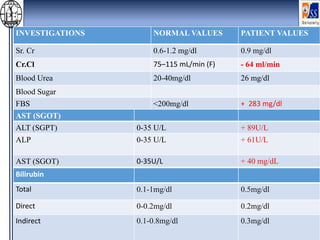
INVESTIGATIONS NORMAL VALUES PATIENT VALUES
Sr. Cr 0.6-1.2 mg/dl 0.9 mg/dl
Cr.Cl 75–115 mL/min (F) - 64 ml/min
Blood Urea 20-40mg/dl 26 mg/dl
Blood Sugar
FBS <200mg/dl + 283 mg/dl
AST (SGOT)
ALT (SGPT) 0-35 U/L + 89U/L
ALP 0-35 U/L + 61U/L
AST (SGOT) 0-35U/L + 40 mg/dL
Bilirubin
Total 0.1-1mg/dl 0.5mg/dl
Direct 0-0.2mg/dl 0.2mg/dl
Indirect 0.1-0.8mg/dl 0.3mg/dl
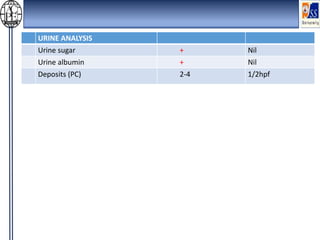
URINE ANALYSIS
Urine sugar + Nil
Urine albumin + Nil
Deposits (PC) 2-4 1/2hpf
Diagnos
• Anterior Wall (NSTEMI)
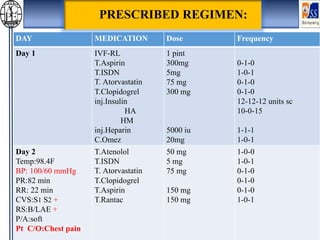
DAY MEDICATION Dose Frequency
Day 1 IVF-RL
T.Aspirin
T.ISDN
T. Atorvastatin
T.Clopidogrel
inj.Insulin
HA
HM
inj.Heparin
C.Omez
1 pint
300mg
5mg
75 mg
300 mg
5000 iu
20mg
0-1-0
1-0-1
0-1-0
0-1-0
12-12-12 units sc
10-0-15
1-1-1
1-0-1
Day 2
Temp:98.4F
BP: 100/60 mmHg
PR:82 min
RR: 22 min
CVS:S1 S2 +
RS:B/LAE +
P/A:soft
Pt C/O:Chest pain
T.Atenolol
T.ISDN
T. Atorvastatin
T.Clopidogrel
T.Aspirin
T.Rantac
50 mg
5 mg
75 mg
150 mg
150 mg
1-0-0
1-0-1
0-1-0
0-1-0
0-1-0
1-0-1
PRESCRIBED REGIMEN:
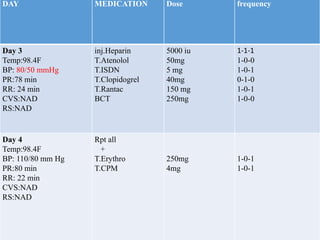
DAY MEDICATION Dose frequency
Day 3
Temp:98.4F
BP: 80/50 mmHg
PR:78 min
RR: 24 min
CVS:NAD
RS:NAD
inj.Heparin
T.Atenolol
T.ISDN
T.Clopidogrel
T.Rantac
BCT
5000 iu
50mg
5 mg
40mg
150 mg
250mg
1-1-1
1-0-0
1-0-1
0-1-0
1-0-1
1-0-0
Day 4
Temp:98.4F
BP: 110/80 mm Hg
PR:80 min
RR: 22 min
CVS:NAD
RS:NAD
Rpt all
+
T.Erythro
T.CPM
250mg
4mg
1-0-1
1-0-1
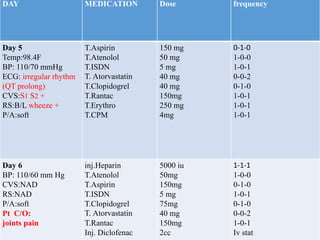
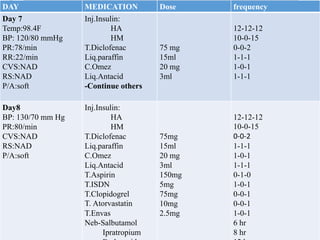
DAY MEDICATION Dose frequency
Day 5
Temp:98.4F
BP: 110/70 mmHg
ECG: irregular rhythm
(QT prolong)
CVS:S1 S2 +
RS:B/L wheeze +
P/A:soft
T.Aspirin
T.Atenolol
T.ISDN
T. Atorvastatin
T.Clopidogrel
T.Rantac
T.Erythro
T.CPM
150 mg
50 mg
5 mg
40 mg
40 mg
150mg
250 mg
4mg
0-1-0
1-0-0
1-0-1
0-0-2
0-1-0
1-0-1
1-0-1
1-0-1
Day 6
BP: 110/60 mm Hg
CVS:NAD
RS:NAD
P/A:soft
Pt C/O:
joints pain
inj.Heparin
T.Atenolol
T.Aspirin
T.ISDN
T.Clopidogrel
T. Atorvastatin
T.Rantac
Inj. Diclofenac
5000 iu
50mg
150mg
5 mg
75mg
40 mg
150mg
2cc
1-1-1
1-0-0
0-1-0
1-0-1
0-1-0
0-0-2
1-0-1
Iv stat
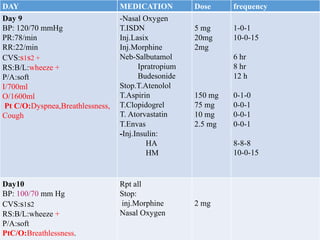
DAY MEDICATION Dose frequency
Day 7
Temp:98.4F
BP: 120/80 mmHg
PR:78/min
RR:22/min
CVS:NAD
RS:NAD
P/A:soft
Inj.Insulin:
HA
HM
T.Diclofenac
Liq.paraffin
C.Omez
Liq.Antacid
-Continue others
75 mg
15ml
20 mg
3ml
12-12-12
10-0-15
0-0-2
1-1-1
1-0-1
1-1-1
Day8
BP: 130/70 mm Hg
PR:80/min
CVS:NAD
RS:NAD
P/A:soft
Inj.Insulin:
HA
HM
T.Diclofenac
Liq.paraffin
C.Omez
Liq.Antacid
T.Aspirin
T.ISDN
T.Clopidogrel
T. Atorvastatin
T.Envas
Neb-Salbutamol
Ipratropium
75mg
15ml
20 mg
3ml
150mg
5mg
75mg
10mg
2.5mg
12-12-12
10-0-15
0-0-2
1-1-1
1-0-1
1-1-1
0-1-0
1-0-1
0-0-1
0-0-1
1-0-1
6 hr
8 hr
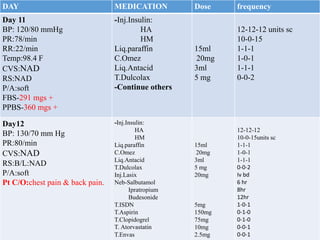
DAY MEDICATION Dose frequency
Day 9
BP: 120/70 mmHg
PR:78/min
RR:22/min
CVS:s1s2 +
RS:B/L:wheeze +
P/A:soft
I/700ml
O/1600ml
Pt C/O:Dyspnea,Breathlessness,
Cough
-Nasal Oxygen
T.ISDN
Inj.Lasix
Inj.Morphine
Neb-Salbutamol
Ipratropium
Budesonide
Stop.T.Atenolol
T.Aspirin
T.Clopidogrel
T. Atorvastatin
T.Envas
-Inj.Insulin:
HA
HM
5 mg
20mg
2mg
150 mg
75 mg
10 mg
2.5 mg
1-0-1
10-0-15
6 hr
8 hr
12 h
0-1-0
0-0-1
0-0-1
0-0-1
8-8-8
10-0-15
Day10
BP: 100/70 mm Hg
CVS:s1s2
RS:B/L:wheeze +
P/A:soft
PtC/O:Breathlessness.
Rpt all
Stop:
inj.Morphine
Nasal Oxygen
2 mg
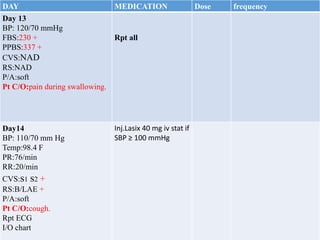
DAY MEDICATION Dose frequency
Day 11
BP: 120/80 mmHg
PR:78/min
RR:22/min
Temp:98.4 F
CVS:NAD
RS:NAD
P/A:soft
FBS-291 mgs +
PPBS-360 mgs +
-Inj.Insulin:
HA
HM
Liq.paraffin
C.Omez
Liq.Antacid
T.Dulcolax
-Continue others
15ml
20mg
3ml
5 mg
12-12-12 units sc
10-0-15
1-1-1
1-0-1
1-1-1
0-0-2
Day12
BP: 130/70 mm Hg
PR:80/min
CVS:NAD
RS:B/L:NAD
P/A:soft
Pt C/O:chest pain & back pain.
-Inj.Insulin:
HA
HM
Liq.paraffin
C.Omez
Liq.Antacid
T.Dulcolax
Inj.Lasix
Neb-Salbutamol
Ipratropium
Budesonide
T.ISDN
T.Aspirin
T.Clopidogrel
T. Atorvastatin
T.Envas
15ml
20mg
3ml
5 mg
20mg
5mg
150mg
75mg
10mg
2.5mg
12-12-12
10-0-15units sc
1-1-1
1-0-1
1-1-1
0-0-2
Iv bd
6 hr
8hr
12hr
1-0-1
0-1-0
0-1-0
0-0-1
0-0-1
DAY MEDICATION Dose frequency
Day 13
BP: 120/70 mmHg
FBS:230 +
PPBS:337 +
CVS:NAD
RS:NAD
P/A:soft
Pt C/O:pain during swallowing.
Rpt all
Day14
BP: 110/70 mm Hg
Temp:98.4 F
PR:76/min
RR:20/min
CVS:s1 s2 +
RS:B/LAE +
P/A:soft
Pt C/O:cough.
Rpt ECG
I/O chart
Inj.Lasix 40 mg iv stat if
SBP ≥ 100 mmHg
• Dose adjustment in Mild renal insufficiency for medications required that.
• Prevent and Monitoring ADRs [ADRs are more common in elderly (20-25%
more then in the young) They are mostly dose related rather than idiosyncratic].
• Poly pharmacy may results in increased drug interaction and drug disease
interaction, ADRs and non compliance.
• Ensure reduce of poly-pharmacy.
• Consider potential drug interactions.
• Treating of only the disorder that need to be treated.
• QAL (quality adjusted lifetime).
• Patient counseling and advice.
• Evaluation and monitoring of therapy.
My Roles :
Assessment:
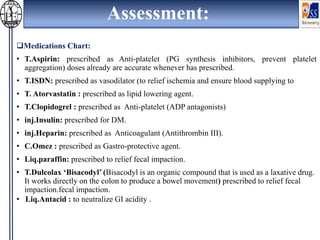
Medications Chart:
• T.Aspirin: prescribed as Anti-platelet (PG synthesis inhibitors, prevent platelet
aggregation) doses already are accurate whenever has prescribed.
• T.ISDN: prescribed as vasodilator (to relief ischemia and ensure blood supplying to
• T. Atorvastatin : prescribed as lipid lowering agent.
• T.Clopidogrel : prescribed as Anti-platelet (ADP antagonists)
• inj.Insulin: prescribed for DM.
• inj.Heparin: prescribed as Anticoagulant (Antithrombin III).
• C.Omez : prescribed as Gastro-protective agent.
• Liq.paraffin: prescribed to relief fecal impaction.
• T.Dulcolax ‘Bisacodyl’ (Bisacodyl is an organic compound that is used as a laxative drug.
It works directly on the colon to produce a bowel movement) prescribed to relief fecal
impaction.fecal impaction.
• Liq.Antacid : to neutralize GI acidity .
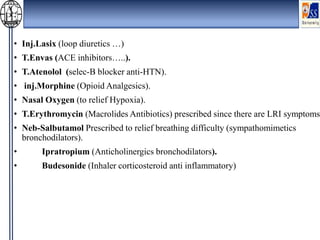
• Inj.Lasix (loop diuretics …)
• T.Envas (ACE inhibitors…..).
• T.Atenolol (selec-B blocker anti-HTN).
• inj.Morphine (Opioid Analgesics).
• Nasal Oxygen (to relief Hypoxia).
• T.Erythromycin (Macrolides Antibiotics) prescribed since there are LRI symptoms.
• Neb-Salbutamol Prescribed to relief breathing difficulty (sympathomimetics
bronchodilators).
• Ipratropium (Anticholinergics bronchodilators).
• Budesonide (Inhaler corticosteroid anti inflammatory)
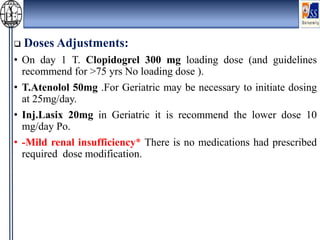
 Doses Adjustments:
• On day 1 T. Clopidogrel 300 mg loading dose (and guidelines
recommend for >75 yrs No loading dose ).
• T.Atenolol 50mg .For Geriatric may be necessary to initiate dosing
at 25mg/day.
• Inj.Lasix 20mg in Geriatric it is recommend the lower dose 10
mg/day Po.
• -Mild renal insufficiency* There is no medications had prescribed
required dose modification.
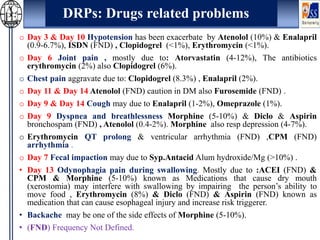
o Day 3 & Day 10 Hypotension has been exacerbate by Atenolol (10%) & Enalapril
(0.9-6.7%), ISDN (FND) , Clopidogrel (<1%), Erythromycin (<1%).
o Day 6 Joint pain , mostly due to: Atorvastatin (4-12%), The antibiotics
erythromycin (2%) also Clopidogrel (6%).
o Chest pain aggravate due to: Clopidogrel (8.3%) , Enalapril (2%).
o Day 11 & Day 14 Atenolol (FND) caution in DM also Furosemide (FND) .
o Day 9 & Day 14 Cough may due to Enalapril (1-2%), Omeprazole (1%).
o Day 9 Dyspnea and breathlessness Morphine (5-10%) & Diclo & Aspirin
bronchospam (FND) , Atenolol (0.4-2%). Morphine also resp depression (4-7%).
o Erythromycin QT prolong & ventricular arrhythmia (FND) ,CPM (FND)
arrhythmia .
o Day 7 Fecal impaction may due to Syp.Antacid Alum hydroxide/Mg (>10%) .
• Day 13 Odynophagia pain during swallowing. Mostly due to :ACEI (FND) &
CPM & Morphine (5-10%) known as Medications that cause dry mouth
(xerostomia) may interfere with swallowing by impairing the person’s ability to
move food , Erythromycin (8%) & Diclo (FND) & Aspirin (FND) known as
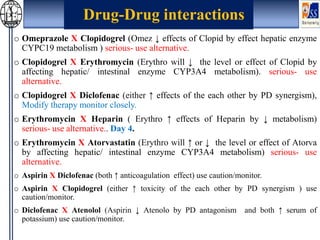
medication that can cause esophageal injury and increase risk triggerer.
• Backache may be one of the side effects of Morphine (5-10%).
• (FND) Frequency Not Defined.
DRPs: Drugs related problems
o Omeprazole X Clopidogrel (Omez ↓ effects of Clopid by effect hepatic enzyme
CYPC19 metabolism ) serious- use alternative.
o Clopidogrel X Erythromycin (Erythro will ↓ the level or effect of Clopid by
affecting hepatic/ intestinal enzyme CYP3A4 metabolism). serious- use
alternative.
o Clopidogrel X Diclofenac (either ↑ effects of the each other by PD synergism),
Modify therapy monitor closely.
o Erythromycin X Heparin ( Erythro ↑ effects of Heparin by ↓ metabolism)
serious- use alternative.. Day 4.
o Erythromycin X Atorvastatin (Erythro will ↑ or ↓ the level or effect of Atorva
by affecting hepatic/ intestinal enzyme CYP3A4 metabolism) serious- use
alternative.
o Aspirin X Diclofenac (both ↑ anticoagulation effect) use caution/monitor.
o Aspirin X Clopidogrel (either ↑ toxicity of the each other by PD synergism ) use
caution/monitor.
o Diclofenac X Atenolol (Aspirin ↓ Atenolo by PD antagonism and both ↑ serum of
potassium) use caution/monitor.
Drug-Drug interactions
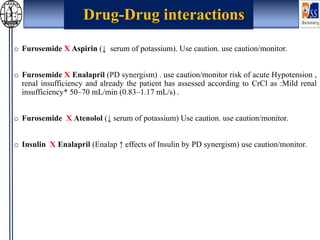
o Furosemide X Aspirin (↓ serum of potassium). Use caution. use caution/monitor.
o Furosemide X Enalapril (PD synergism) . use caution/monitor risk of acute Hypotension ,
renal insufficiency and already the patient has assessed according to CrCl as :Mild renal
insufficiency* 50–70 mL/min (0.83–1.17 mL/s) .
o Furosemide X Atenolol (↓ serum of potassium) Use caution. use caution/monitor.
o Insulin X Enalapril (Enalap ↑ effects of Insulin by PD synergism) use caution/monitor.
Drug-Drug interactions
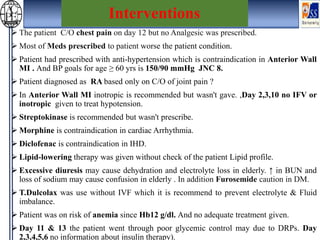
 The patient C/O chest pain on day 12 but no Analgesic was prescribed.
 Most of Meds prescribed to patient worse the patient condition.
 Patient had prescribed with anti-hypertension which is contraindication in Anterior Wall
MI . And BP goals for age ≥ 60 yrs is 150/90 mmHg JNC 8.
 Patient diagnosed as RA based only on C/O of joint pain ?
 In Anterior Wall MI inotropic is recommended but wasn't gave. ,Day 2,3,10 no IFV or
inotropic given to treat hypotension.
 Streptokinase is recommended but wasn't prescribe.
 Morphine is contraindication in cardiac Arrhythmia.
 Diclofenac is contraindication in IHD.
 Lipid-lowering therapy was given without check of the patient Lipid profile.
 Excessive diuresis may cause dehydration and electrolyte loss in elderly. ↑ in BUN and
loss of sodium may cause confusion in elderly . In addition Furosemide caution in DM.
 T.Dulcolax was use without IVF which it is recommend to prevent electrolyte & Fluid
imbalance.
 Patient was on risk of anemia since Hb12 g/dl. And no adequate treatment given.
 Day 11 & 13 the patient went through poor glycemic control may due to DRPs. Day
2,3,4,5,6 no information about insulin therapy).
Interventions
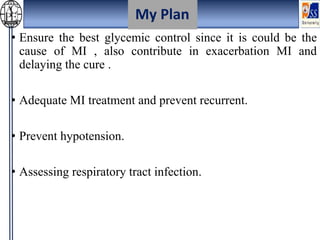
• Ensure the best glycemic control since it is could be the
cause of MI , also contribute in exacerbation MI and
delaying the cure .
• Adequate MI treatment and prevent recurrent.
• Prevent hypotension.
• Assessing respiratory tract infection.
My Plan
• T.Aspirin – 150 mg od (after checking aspirin sensitivity ).
• Oxygen: oxygen concentrations of 22% to 50% with flow rates from 1 to 6 L/min through the
nasal cannula.
• Inj.Tramadol 50 mg /1ml bd (MRP ₹ 13-22)
• Inj.Streptokinase 1.5 million units in 100 ml of saline as an IV infusion over 1 hour. The
drug may cause hypotension, which can be managed with fluids and restarting the infusion at
a slower rate.
• Sc. Heparin 5000 units twice daily for 7 days. If possible should be after checking the patient
INR.
• Inj.Insulin: HA 12-12-12 units sc, HM 10-0-15 units sc.
• Nicotinic Acid 100 mg ….. If LDL >130 mg/dL.
• Inj. Dobutamine 2-20 mcg/Kg/min if the patient BP ↓ 100/70 mmHg.
• IVF RL 1 pint infusion rate 125 ml/Hr.
• Inj.Rantac 2 cc iv bd.
• FST 100 mg twice a day.
• Liq.paraffin 15 ml sos.
• Amoxicillin/clav 125 mg twice a day if there is evidence of respiratory tract infection.
• Defibrillation therapy if necessary .
Discharged medications:
• T.Aspirin – 150mg od. After meals.
• Inj.Insulin: HA 12-12-12 units sc, HM 10-0-15 units sc.
• C.Omega-3 1 g once daily at bed time.(Omega 3-fatty acids will be
helpful to reduce triglycerides, what is more has anti-inflammatory , antiplatelet
aggregation , antiarrhythmic effects).
• Parameters that should be monitor for efficacy of MI therapy
include:
• (1) Relief of ischemic discomfort.
• (2) Return of ECG changes to baseline; and
• (3) Absence or resolution of heart failure signs.
• (4) HR, blood pressure.
• (5) Lipid profile.
• Adverse effects monitoring are dependent upon the individual
drugs used. In general, the most common adverse reactions from MI
therapies are bleeding.
Monitoring Parameters
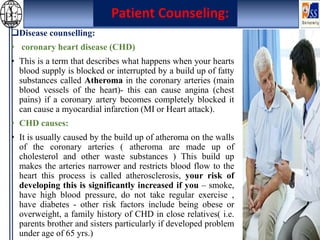
Disease counselling:
• coronary heart disease (CHD)
• This is a term that describes what happens when your hearts
blood supply is blocked or interrupted by a build up of fatty
substances called Atheroma in the coronary arteries (main
blood vessels of the heart)- this can cause angina (chest
pains) if a coronary artery becomes completely blocked it
can cause a myocardial infarction (MI or Heart attack).
• CHD causes:
• It is usually caused by the build up of atheroma on the walls
of the coronary arteries ( atheroma are made up of
cholesterol and other waste substances ) This build up
makes the arteries narrower and restricts blood flow to the
heart this process is called atherosclerosis, your risk of
developing this is significantly increased if you – smoke,
have high blood pressure, do not take regular exercise ,
have diabetes - other risk factors include being obese or
overweight, a family history of CHD in close relatives( i.e.
parents brother and sisters particularly if developed problem
under age of 65 yrs.)
Patient Counseling:
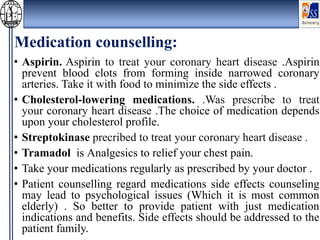
Medication counselling:
• Aspirin. Aspirin to treat your coronary heart disease .Aspirin
prevent blood clots from forming inside narrowed coronary
arteries. Take it with food to minimize the side effects .
• Cholesterol-lowering medications. .Was prescribe to treat
your coronary heart disease .The choice of medication depends
upon your cholesterol profile.
• Streptokinase precribed to treat your coronary heart disease .
• Tramadol is Analgesics to relief your chest pain.
• Take your medications regularly as prescribed by your doctor .
• Patient counselling regard medications side effects counseling
may lead to psychological issues (Which it is most common
elderly) . So better to provide patient with just medication
indications and benefits. Side effects should be addressed to the
patient family.
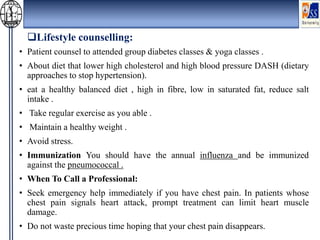
Lifestyle counselling:
• Patient counsel to attended group diabetes classes & yoga classes .
• About diet that lower high cholesterol and high blood pressure DASH (dietary
approaches to stop hypertension).
• eat a healthy balanced diet , high in fibre, low in saturated fat, reduce salt
intake .
• Take regular exercise as you able .
• Maintain a healthy weight .
• Avoid stress.
• Immunization You should have the annual influenza and be immunized
against the pneumococcal .
• When To Call a Professional:
• Seek emergency help immediately if you have chest pain. In patients whose
chest pain signals heart attack, prompt treatment can limit heart muscle
damage.
• Do not waste precious time hoping that your chest pain disappears.
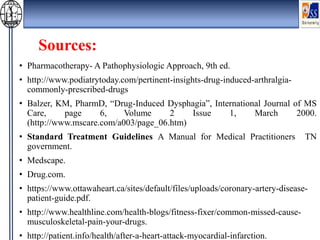
Sources:
• Pharmacotherapy- A Pathophysiologic Approach, 9th ed.
• http://www.podiatrytoday.com/pertinent-insights-drug-induced-arthralgia-
commonly-prescribed-drugs
• Balzer, KM, PharmD, “Drug-Induced Dysphagia”, International Journal of MS
Care, page 6, Volume 2 Issue 1, March 2000.
(http://www.mscare.com/a003/page_06.htm)
• Standard Treatment Guidelines A Manual for Medical Practitioners TN
government.
• Medscape.
• Drug.com.
• https://www.ottawaheart.ca/sites/default/files/uploads/coronary-artery-disease-
patient-guide.pdf.
• http://www.healthline.com/health-blogs/fitness-fixer/common-missed-cause-
musculoskeletal-pain-your-drugs.
• http://patient.info/health/after-a-heart-attack-myocardial-infarction.
 Myocardial infarction

Myocardial infarction

  • 1.
    Case Presentation onMyocardial infarction Pharm.D intern By: MAHDYALI AHMADOSMAN
  • 2.
  • 4.
  • 5.
    OBJECTIVE & SUBJECTIVE: •I.P No-6865 • DOA:30/8/2016 • Ward: ICU/FM • AGE-80 yrs • SEX-Female • C/O: chest pain since today morning , H/O sweating ,H/O giddiness. • PMH- K/C/O DM on regular Insulin use.
  • 6.
    • _ PhysicalExamination: • BP :140/90 mmHg. • P :- • RR :- • T :- • CVS:NAD • RS:NAD • P/A: soft • ECG:T ↓ I,avL,V4-V6 NSTEMI
  • 7.
    INVESTIGATIONS NORMAL VALUESPATIENT VALUES WBC 3.2-9.8*10 3 cells/mm3 + 12.1 × 10³ cells/ mm3 Hb 12-16 g/dL 12g/dL DC Polymorphs 54-62% + 67% Lymphocytes 25-33% 26% Monocytes 3-7% 7% Platelet count 130-400* 103/mm3 292 × 103/mm3 RBC 4.3-5.9*106/ mm3 4.9 × 10⁶/mm3 Hematocrit (Hct) 39-49% 41% LABORATORY DATA: Mean cell hemoglobin (MCH) 27-33 pg/cell (23-31pg/cell)^ 28.7pg/cell Mean cell hemoglobin concentration (MCHC) 33-37 g/dL (32-36g/dL)^ 34.4g/dL MCV 76-100 fl - 83.6 fl PCV 33-43% 41.3 %
  • 8.
    INVESTIGATIONS NORMAL VALUESPATIENT VALUES Sr. Cr 0.6-1.2 mg/dl 0.9 mg/dl Cr.Cl 75–115 mL/min (F) - 64 ml/min Blood Urea 20-40mg/dl 26 mg/dl Blood Sugar FBS <200mg/dl + 283 mg/dl AST (SGOT) ALT (SGPT) 0-35 U/L + 89U/L ALP 0-35 U/L + 61U/L AST (SGOT) 0-35U/L + 40 mg/dL Bilirubin Total 0.1-1mg/dl 0.5mg/dl Direct 0-0.2mg/dl 0.2mg/dl Indirect 0.1-0.8mg/dl 0.3mg/dl
  • 9.
    URINE ANALYSIS Urine sugar+ Nil Urine albumin + Nil Deposits (PC) 2-4 1/2hpf
  • 10.
  • 11.
    DAY MEDICATION DoseFrequency Day 1 IVF-RL T.Aspirin T.ISDN T. Atorvastatin T.Clopidogrel inj.Insulin HA HM inj.Heparin C.Omez 1 pint 300mg 5mg 75 mg 300 mg 5000 iu 20mg 0-1-0 1-0-1 0-1-0 0-1-0 12-12-12 units sc 10-0-15 1-1-1 1-0-1 Day 2 Temp:98.4F BP: 100/60 mmHg PR:82 min RR: 22 min CVS:S1 S2 + RS:B/LAE + P/A:soft Pt C/O:Chest pain T.Atenolol T.ISDN T. Atorvastatin T.Clopidogrel T.Aspirin T.Rantac 50 mg 5 mg 75 mg 150 mg 150 mg 1-0-0 1-0-1 0-1-0 0-1-0 0-1-0 1-0-1 PRESCRIBED REGIMEN:
  • 12.
    DAY MEDICATION Dosefrequency Day 3 Temp:98.4F BP: 80/50 mmHg PR:78 min RR: 24 min CVS:NAD RS:NAD inj.Heparin T.Atenolol T.ISDN T.Clopidogrel T.Rantac BCT 5000 iu 50mg 5 mg 40mg 150 mg 250mg 1-1-1 1-0-0 1-0-1 0-1-0 1-0-1 1-0-0 Day 4 Temp:98.4F BP: 110/80 mm Hg PR:80 min RR: 22 min CVS:NAD RS:NAD Rpt all + T.Erythro T.CPM 250mg 4mg 1-0-1 1-0-1
  • 13.
    DAY MEDICATION Dosefrequency Day 5 Temp:98.4F BP: 110/70 mmHg ECG: irregular rhythm (QT prolong) CVS:S1 S2 + RS:B/L wheeze + P/A:soft T.Aspirin T.Atenolol T.ISDN T. Atorvastatin T.Clopidogrel T.Rantac T.Erythro T.CPM 150 mg 50 mg 5 mg 40 mg 40 mg 150mg 250 mg 4mg 0-1-0 1-0-0 1-0-1 0-0-2 0-1-0 1-0-1 1-0-1 1-0-1 Day 6 BP: 110/60 mm Hg CVS:NAD RS:NAD P/A:soft Pt C/O: joints pain inj.Heparin T.Atenolol T.Aspirin T.ISDN T.Clopidogrel T. Atorvastatin T.Rantac Inj. Diclofenac 5000 iu 50mg 150mg 5 mg 75mg 40 mg 150mg 2cc 1-1-1 1-0-0 0-1-0 1-0-1 0-1-0 0-0-2 1-0-1 Iv stat
  • 14.
    DAY MEDICATION Dosefrequency Day 7 Temp:98.4F BP: 120/80 mmHg PR:78/min RR:22/min CVS:NAD RS:NAD P/A:soft Inj.Insulin: HA HM T.Diclofenac Liq.paraffin C.Omez Liq.Antacid -Continue others 75 mg 15ml 20 mg 3ml 12-12-12 10-0-15 0-0-2 1-1-1 1-0-1 1-1-1 Day8 BP: 130/70 mm Hg PR:80/min CVS:NAD RS:NAD P/A:soft Inj.Insulin: HA HM T.Diclofenac Liq.paraffin C.Omez Liq.Antacid T.Aspirin T.ISDN T.Clopidogrel T. Atorvastatin T.Envas Neb-Salbutamol Ipratropium 75mg 15ml 20 mg 3ml 150mg 5mg 75mg 10mg 2.5mg 12-12-12 10-0-15 0-0-2 1-1-1 1-0-1 1-1-1 0-1-0 1-0-1 0-0-1 0-0-1 1-0-1 6 hr 8 hr
  • 15.
    DAY MEDICATION Dosefrequency Day 9 BP: 120/70 mmHg PR:78/min RR:22/min CVS:s1s2 + RS:B/L:wheeze + P/A:soft I/700ml O/1600ml Pt C/O:Dyspnea,Breathlessness, Cough -Nasal Oxygen T.ISDN Inj.Lasix Inj.Morphine Neb-Salbutamol Ipratropium Budesonide Stop.T.Atenolol T.Aspirin T.Clopidogrel T. Atorvastatin T.Envas -Inj.Insulin: HA HM 5 mg 20mg 2mg 150 mg 75 mg 10 mg 2.5 mg 1-0-1 10-0-15 6 hr 8 hr 12 h 0-1-0 0-0-1 0-0-1 0-0-1 8-8-8 10-0-15 Day10 BP: 100/70 mm Hg CVS:s1s2 RS:B/L:wheeze + P/A:soft PtC/O:Breathlessness. Rpt all Stop: inj.Morphine Nasal Oxygen 2 mg
  • 16.
    DAY MEDICATION Dosefrequency Day 11 BP: 120/80 mmHg PR:78/min RR:22/min Temp:98.4 F CVS:NAD RS:NAD P/A:soft FBS-291 mgs + PPBS-360 mgs + -Inj.Insulin: HA HM Liq.paraffin C.Omez Liq.Antacid T.Dulcolax -Continue others 15ml 20mg 3ml 5 mg 12-12-12 units sc 10-0-15 1-1-1 1-0-1 1-1-1 0-0-2 Day12 BP: 130/70 mm Hg PR:80/min CVS:NAD RS:B/L:NAD P/A:soft Pt C/O:chest pain & back pain. -Inj.Insulin: HA HM Liq.paraffin C.Omez Liq.Antacid T.Dulcolax Inj.Lasix Neb-Salbutamol Ipratropium Budesonide T.ISDN T.Aspirin T.Clopidogrel T. Atorvastatin T.Envas 15ml 20mg 3ml 5 mg 20mg 5mg 150mg 75mg 10mg 2.5mg 12-12-12 10-0-15units sc 1-1-1 1-0-1 1-1-1 0-0-2 Iv bd 6 hr 8hr 12hr 1-0-1 0-1-0 0-1-0 0-0-1 0-0-1
  • 17.
    DAY MEDICATION Dosefrequency Day 13 BP: 120/70 mmHg FBS:230 + PPBS:337 + CVS:NAD RS:NAD P/A:soft Pt C/O:pain during swallowing. Rpt all Day14 BP: 110/70 mm Hg Temp:98.4 F PR:76/min RR:20/min CVS:s1 s2 + RS:B/LAE + P/A:soft Pt C/O:cough. Rpt ECG I/O chart Inj.Lasix 40 mg iv stat if SBP ≥ 100 mmHg
  • 18.
    • Dose adjustmentin Mild renal insufficiency for medications required that. • Prevent and Monitoring ADRs [ADRs are more common in elderly (20-25% more then in the young) They are mostly dose related rather than idiosyncratic]. • Poly pharmacy may results in increased drug interaction and drug disease interaction, ADRs and non compliance. • Ensure reduce of poly-pharmacy. • Consider potential drug interactions. • Treating of only the disorder that need to be treated. • QAL (quality adjusted lifetime). • Patient counseling and advice. • Evaluation and monitoring of therapy. My Roles :
  • 19.
    Assessment: Medications Chart: • T.Aspirin:prescribed as Anti-platelet (PG synthesis inhibitors, prevent platelet aggregation) doses already are accurate whenever has prescribed. • T.ISDN: prescribed as vasodilator (to relief ischemia and ensure blood supplying to • T. Atorvastatin : prescribed as lipid lowering agent. • T.Clopidogrel : prescribed as Anti-platelet (ADP antagonists) • inj.Insulin: prescribed for DM. • inj.Heparin: prescribed as Anticoagulant (Antithrombin III). • C.Omez : prescribed as Gastro-protective agent. • Liq.paraffin: prescribed to relief fecal impaction. • T.Dulcolax ‘Bisacodyl’ (Bisacodyl is an organic compound that is used as a laxative drug. It works directly on the colon to produce a bowel movement) prescribed to relief fecal impaction.fecal impaction. • Liq.Antacid : to neutralize GI acidity .
  • 20.
    • Inj.Lasix (loopdiuretics …) • T.Envas (ACE inhibitors…..). • T.Atenolol (selec-B blocker anti-HTN). • inj.Morphine (Opioid Analgesics). • Nasal Oxygen (to relief Hypoxia). • T.Erythromycin (Macrolides Antibiotics) prescribed since there are LRI symptoms. • Neb-Salbutamol Prescribed to relief breathing difficulty (sympathomimetics bronchodilators). • Ipratropium (Anticholinergics bronchodilators). • Budesonide (Inhaler corticosteroid anti inflammatory)
  • 21.
     Doses Adjustments: •On day 1 T. Clopidogrel 300 mg loading dose (and guidelines recommend for >75 yrs No loading dose ). • T.Atenolol 50mg .For Geriatric may be necessary to initiate dosing at 25mg/day. • Inj.Lasix 20mg in Geriatric it is recommend the lower dose 10 mg/day Po. • -Mild renal insufficiency* There is no medications had prescribed required dose modification.
  • 22.
    o Day 3& Day 10 Hypotension has been exacerbate by Atenolol (10%) & Enalapril (0.9-6.7%), ISDN (FND) , Clopidogrel (<1%), Erythromycin (<1%). o Day 6 Joint pain , mostly due to: Atorvastatin (4-12%), The antibiotics erythromycin (2%) also Clopidogrel (6%). o Chest pain aggravate due to: Clopidogrel (8.3%) , Enalapril (2%). o Day 11 & Day 14 Atenolol (FND) caution in DM also Furosemide (FND) . o Day 9 & Day 14 Cough may due to Enalapril (1-2%), Omeprazole (1%). o Day 9 Dyspnea and breathlessness Morphine (5-10%) & Diclo & Aspirin bronchospam (FND) , Atenolol (0.4-2%). Morphine also resp depression (4-7%). o Erythromycin QT prolong & ventricular arrhythmia (FND) ,CPM (FND) arrhythmia . o Day 7 Fecal impaction may due to Syp.Antacid Alum hydroxide/Mg (>10%) . • Day 13 Odynophagia pain during swallowing. Mostly due to :ACEI (FND) & CPM & Morphine (5-10%) known as Medications that cause dry mouth (xerostomia) may interfere with swallowing by impairing the person’s ability to move food , Erythromycin (8%) & Diclo (FND) & Aspirin (FND) known as medication that can cause esophageal injury and increase risk triggerer. • Backache may be one of the side effects of Morphine (5-10%). • (FND) Frequency Not Defined. DRPs: Drugs related problems
  • 23.
    o Omeprazole XClopidogrel (Omez ↓ effects of Clopid by effect hepatic enzyme CYPC19 metabolism ) serious- use alternative. o Clopidogrel X Erythromycin (Erythro will ↓ the level or effect of Clopid by affecting hepatic/ intestinal enzyme CYP3A4 metabolism). serious- use alternative. o Clopidogrel X Diclofenac (either ↑ effects of the each other by PD synergism), Modify therapy monitor closely. o Erythromycin X Heparin ( Erythro ↑ effects of Heparin by ↓ metabolism) serious- use alternative.. Day 4. o Erythromycin X Atorvastatin (Erythro will ↑ or ↓ the level or effect of Atorva by affecting hepatic/ intestinal enzyme CYP3A4 metabolism) serious- use alternative. o Aspirin X Diclofenac (both ↑ anticoagulation effect) use caution/monitor. o Aspirin X Clopidogrel (either ↑ toxicity of the each other by PD synergism ) use caution/monitor. o Diclofenac X Atenolol (Aspirin ↓ Atenolo by PD antagonism and both ↑ serum of potassium) use caution/monitor. Drug-Drug interactions
  • 24.
    o Furosemide XAspirin (↓ serum of potassium). Use caution. use caution/monitor. o Furosemide X Enalapril (PD synergism) . use caution/monitor risk of acute Hypotension , renal insufficiency and already the patient has assessed according to CrCl as :Mild renal insufficiency* 50–70 mL/min (0.83–1.17 mL/s) . o Furosemide X Atenolol (↓ serum of potassium) Use caution. use caution/monitor. o Insulin X Enalapril (Enalap ↑ effects of Insulin by PD synergism) use caution/monitor. Drug-Drug interactions
  • 25.
     The patientC/O chest pain on day 12 but no Analgesic was prescribed.  Most of Meds prescribed to patient worse the patient condition.  Patient had prescribed with anti-hypertension which is contraindication in Anterior Wall MI . And BP goals for age ≥ 60 yrs is 150/90 mmHg JNC 8.  Patient diagnosed as RA based only on C/O of joint pain ?  In Anterior Wall MI inotropic is recommended but wasn't gave. ,Day 2,3,10 no IFV or inotropic given to treat hypotension.  Streptokinase is recommended but wasn't prescribe.  Morphine is contraindication in cardiac Arrhythmia.  Diclofenac is contraindication in IHD.  Lipid-lowering therapy was given without check of the patient Lipid profile.  Excessive diuresis may cause dehydration and electrolyte loss in elderly. ↑ in BUN and loss of sodium may cause confusion in elderly . In addition Furosemide caution in DM.  T.Dulcolax was use without IVF which it is recommend to prevent electrolyte & Fluid imbalance.  Patient was on risk of anemia since Hb12 g/dl. And no adequate treatment given.  Day 11 & 13 the patient went through poor glycemic control may due to DRPs. Day 2,3,4,5,6 no information about insulin therapy). Interventions
  • 26.
    • Ensure thebest glycemic control since it is could be the cause of MI , also contribute in exacerbation MI and delaying the cure . • Adequate MI treatment and prevent recurrent. • Prevent hypotension. • Assessing respiratory tract infection. My Plan
  • 27.
    • T.Aspirin –150 mg od (after checking aspirin sensitivity ). • Oxygen: oxygen concentrations of 22% to 50% with flow rates from 1 to 6 L/min through the nasal cannula. • Inj.Tramadol 50 mg /1ml bd (MRP ₹ 13-22) • Inj.Streptokinase 1.5 million units in 100 ml of saline as an IV infusion over 1 hour. The drug may cause hypotension, which can be managed with fluids and restarting the infusion at a slower rate. • Sc. Heparin 5000 units twice daily for 7 days. If possible should be after checking the patient INR. • Inj.Insulin: HA 12-12-12 units sc, HM 10-0-15 units sc. • Nicotinic Acid 100 mg ….. If LDL >130 mg/dL. • Inj. Dobutamine 2-20 mcg/Kg/min if the patient BP ↓ 100/70 mmHg. • IVF RL 1 pint infusion rate 125 ml/Hr. • Inj.Rantac 2 cc iv bd. • FST 100 mg twice a day. • Liq.paraffin 15 ml sos. • Amoxicillin/clav 125 mg twice a day if there is evidence of respiratory tract infection. • Defibrillation therapy if necessary .
  • 28.
    Discharged medications: • T.Aspirin– 150mg od. After meals. • Inj.Insulin: HA 12-12-12 units sc, HM 10-0-15 units sc. • C.Omega-3 1 g once daily at bed time.(Omega 3-fatty acids will be helpful to reduce triglycerides, what is more has anti-inflammatory , antiplatelet aggregation , antiarrhythmic effects).
  • 29.
    • Parameters thatshould be monitor for efficacy of MI therapy include: • (1) Relief of ischemic discomfort. • (2) Return of ECG changes to baseline; and • (3) Absence or resolution of heart failure signs. • (4) HR, blood pressure. • (5) Lipid profile. • Adverse effects monitoring are dependent upon the individual drugs used. In general, the most common adverse reactions from MI therapies are bleeding. Monitoring Parameters
  • 30.
    Disease counselling: • coronaryheart disease (CHD) • This is a term that describes what happens when your hearts blood supply is blocked or interrupted by a build up of fatty substances called Atheroma in the coronary arteries (main blood vessels of the heart)- this can cause angina (chest pains) if a coronary artery becomes completely blocked it can cause a myocardial infarction (MI or Heart attack). • CHD causes: • It is usually caused by the build up of atheroma on the walls of the coronary arteries ( atheroma are made up of cholesterol and other waste substances ) This build up makes the arteries narrower and restricts blood flow to the heart this process is called atherosclerosis, your risk of developing this is significantly increased if you – smoke, have high blood pressure, do not take regular exercise , have diabetes - other risk factors include being obese or overweight, a family history of CHD in close relatives( i.e. parents brother and sisters particularly if developed problem under age of 65 yrs.) Patient Counseling:
  • 31.
    Medication counselling: • Aspirin.Aspirin to treat your coronary heart disease .Aspirin prevent blood clots from forming inside narrowed coronary arteries. Take it with food to minimize the side effects . • Cholesterol-lowering medications. .Was prescribe to treat your coronary heart disease .The choice of medication depends upon your cholesterol profile. • Streptokinase precribed to treat your coronary heart disease . • Tramadol is Analgesics to relief your chest pain. • Take your medications regularly as prescribed by your doctor . • Patient counselling regard medications side effects counseling may lead to psychological issues (Which it is most common elderly) . So better to provide patient with just medication indications and benefits. Side effects should be addressed to the patient family.
  • 32.
    Lifestyle counselling: • Patientcounsel to attended group diabetes classes & yoga classes . • About diet that lower high cholesterol and high blood pressure DASH (dietary approaches to stop hypertension). • eat a healthy balanced diet , high in fibre, low in saturated fat, reduce salt intake . • Take regular exercise as you able . • Maintain a healthy weight . • Avoid stress. • Immunization You should have the annual influenza and be immunized against the pneumococcal . • When To Call a Professional: • Seek emergency help immediately if you have chest pain. In patients whose chest pain signals heart attack, prompt treatment can limit heart muscle damage. • Do not waste precious time hoping that your chest pain disappears.
  • 33.
    Sources: • Pharmacotherapy- APathophysiologic Approach, 9th ed. • http://www.podiatrytoday.com/pertinent-insights-drug-induced-arthralgia- commonly-prescribed-drugs • Balzer, KM, PharmD, “Drug-Induced Dysphagia”, International Journal of MS Care, page 6, Volume 2 Issue 1, March 2000. (http://www.mscare.com/a003/page_06.htm) • Standard Treatment Guidelines A Manual for Medical Practitioners TN government. • Medscape. • Drug.com. • https://www.ottawaheart.ca/sites/default/files/uploads/coronary-artery-disease- patient-guide.pdf. • http://www.healthline.com/health-blogs/fitness-fixer/common-missed-cause- musculoskeletal-pain-your-drugs. • http://patient.info/health/after-a-heart-attack-myocardial-infarction.

Editor's Notes

  • #7 BP > 60 goal 150/90 mmhg
  • #9 -Mild renal insufficiency* 50–70 mL/min (0.83–1.17 mL/s).
  • #12 T. Atorvastatin 10,20,40,80 mg
  • #14 joints pain diagnostic tests ,
  • #16 Inj.Morphine duration 4hr Tramadol 9 hr
  • #17 Day 11 Poor gylacemic control
  • #18 Day 13 Poor gylacemic control
  • #23  Clopidogrel dose was high ADRs will increase. ADR are more common in elderly (20-25% more then in the young) They are mostly dose related rather than idiosyncratic Poly pharmacy results in increase drug interaction, ADR Increase in number of drugs predisposes the patients to drug disease interaction Syp.Antacid Alum hydro case fecal impaction high in elderly . Some medications can cause dysphagia because of injury to the esophagus caused by local irritation. This can happen because the person is in a reclining position shortly after taking the medication or because an inadequate amount of fluid is taken with the medication. In both instances, the medications remain in the esophagus too long, potentially causing damage and affecting swallowing. Clinical trials of several COX-2 selective and nonselective NSAIDs of up to three years duration have shown an increased risk of serious cardiovascular (CV) thrombotic events, myocardial infarction, and stroke, which can be fatal. All NSAIDs, both COX-2 selective and nonselective, may have a similar risk. Patients with known CV disease or risk factors for CV disease may be at greater risk. To minimize the potential risk for an adverse CV event in patients treated with an NSAID, the lowest effective dose should be used for the shortest duration possible. Physicians and patients should remain alert for the development of such events, even in the absence of previous CV symptoms. Patients should be informed about the signs and/or symptoms of serious CV events and the steps to take if they occur. Anaphylactic Reactions As with other NSAIDs, anaphylactic reactions may occur in patients with the aspirin triad and in patients without known sensitivity to NSAIDs or known prior exposure to Diclofenac Sodium Extended-release Tablets. Diclofenac Sodium Extended-release Tablets should not be given to patients with the aspirin triad. This symptom complex typically occurs in asthmatic patients who experience rhinitis with or without nasal polyps, or who exhibit severe, potentially fatal bronchospasm after taking aspirin or other NSAIDs (see CONTRAINDICATIONS and PRECAUTIONS, Preexisting Asthma). Anaphylaxis-type reactions have been reported with NSAID products, including with Diclofenac products, such as Diclofenac Sodium Extended-release Tablets. Emergency help should be sought in cases where an anaphylactic reaction occurs. Preexisting Asthma Patients with asthma may have aspirin-sensitive asthma. The use of aspirin in patients with aspirin-sensitive asthma has been associated with severe bronchospasm which can be fatal. Since cross-reactivity, including bronchospasm, between aspirin and other nonsteroidal anti-inflammatory drugs has been reported in such aspirin-sensitive patients, Diclofenac Sodium Extended-release Tablets should not be administered to patients with this form of aspirin sensitivity and should be used with caution in all patients with preexisting asthma.
  • #24 Long term > 1wk NSAID use . NSAID ↓ PG synthesis.
  • #27 1.zinc role in MI Hyperemic response can be blocked by metabolic blockers of adenosine
  • #28 Tramadol IV route to avoid GI side effects Streptokinase should be given within 6 hrs for 6 days Eryhtro QT prolong Ceftaxin Thrombocytosis Clopidogrel may be substituted for aspirin when aspirin is absolutely contraindicated
  • #29 At bed time to avoid kidney stone & incidence of MI in early morning .omega 3-fatty acids known to reduce triglcerides also have anti-inflammatory , antiplatelet aggregatory , antiarrhythmic effects. ACE inhibitors should be initiated in all patients after MI to reduce mortality, decrease reinfarction, and prevent the development of heart failure. Data suggest that most patients with CAD (not just those with ACS or heart failure) benefit from an ACE inhibitor.