Myers-Briggs Type Indicator Presenter : Mateen Yousuf Roll No :04 MBA 1 st  Sem
The  Myers-Briggs Type Indicator  ( MBTI ) assessment is a  psychometric  questionnaire designed to measure  psychological  preferences in how people perceive the world and make decisions. The original developers of the personality inventory were Katharine Cook Briggs and her daughter,  Isabel Briggs Myers . They began creating the indicator during  World War II , believing that a knowledge of personality preferences would help women who were entering the industrial workforce for the first time to identify the sort of war-time jobs where they would be "most comfortable and effective". The initial questionnaire grew into the Myers-Briggs Type Indicator, which was first published in 1962.
Published forms have been in existence since 1956. Since 1975, over 30 million people have taken the Indicator.  Today, the MBTI is one of the largest selling tools for self-awareness.  It has been translated into more than 30 languages and is used to help  people in career choices, marriage and family counseling, communication, leadership, learning, etc.
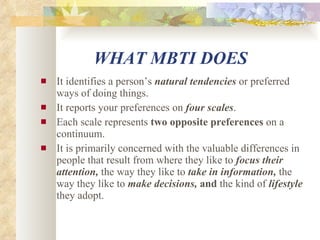
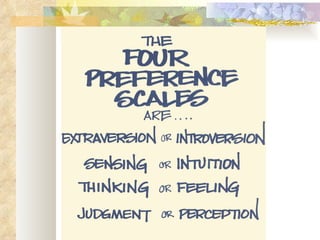
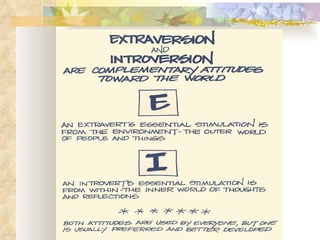
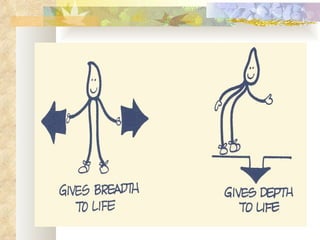
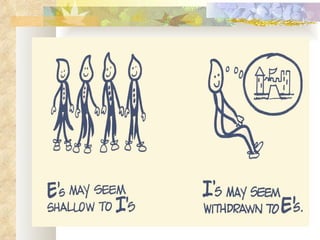
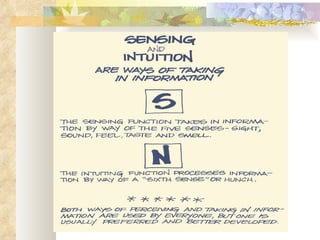
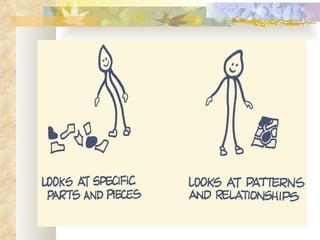
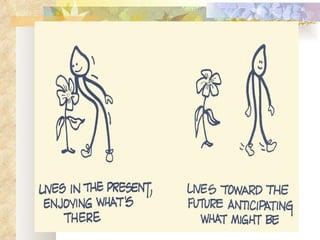
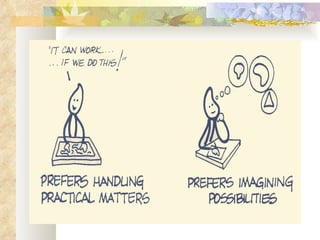
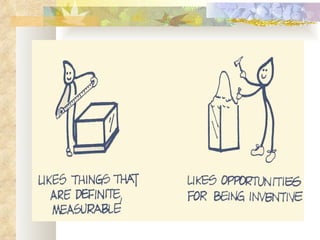
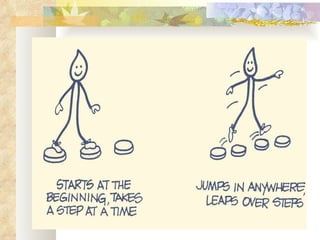
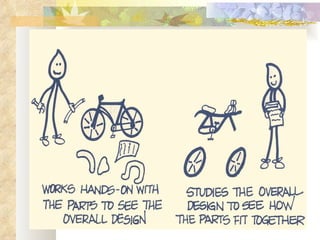
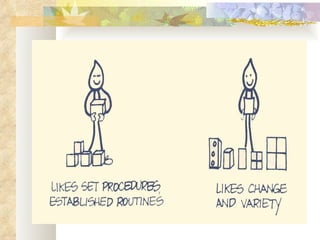
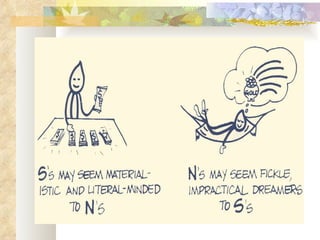
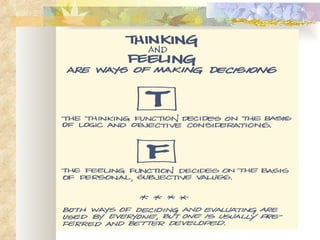
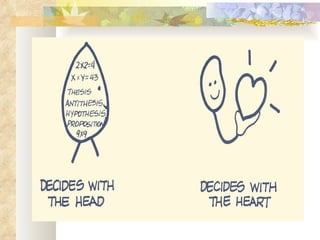
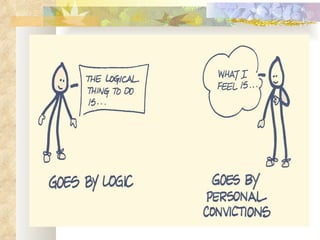
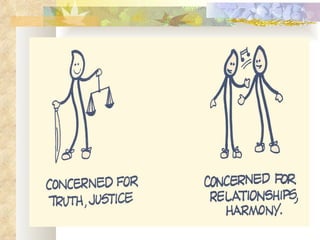
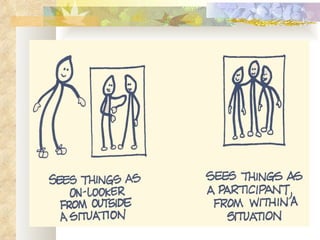
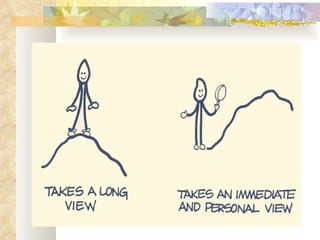
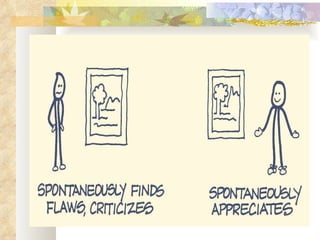
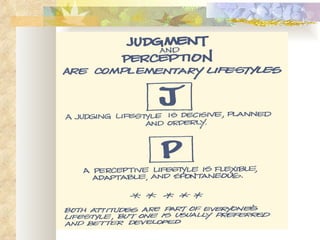
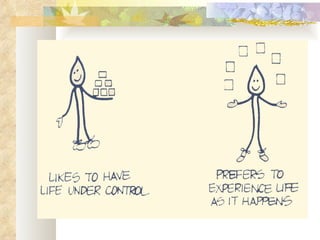
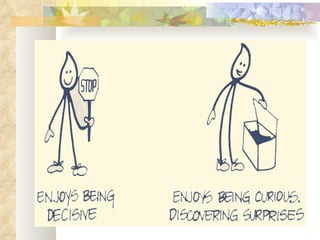
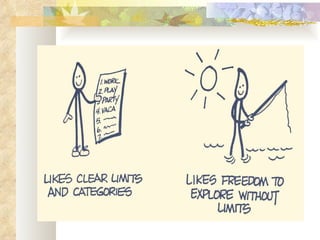
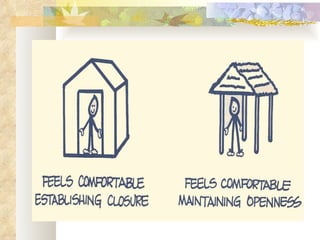
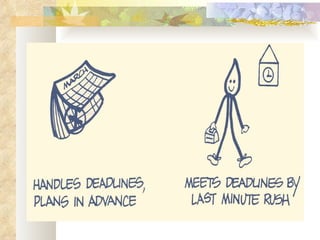
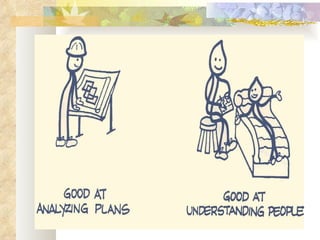
WHAT MBTI DOES It identifies a person’s  natural tendencies  or preferred ways of doing things. It reports your preferences on  four   scales . Each scale represents  two opposite preferences  on a continuum. It is primarily concerned with the valuable differences in people that result from where they like to  focus their attention,  the way they like to  take in information,  the way they like to  make decisions,  and  the kind of  lifestyle  they adopt.
 
TYPE DESCRIPTIONS
 
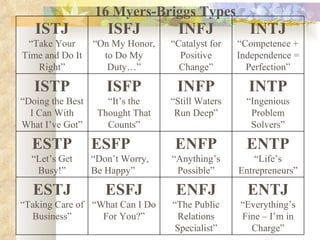
16 Myers-Briggs Types ISTJ “ Take Your Time and Do It Right” ISFJ “ On My Honor, to Do My Duty…” INFJ “ Catalyst for Positive Change” INTJ “ Competence + Independence = Perfection” ISTP “ Doing the Best I Can With What I’ve Got” ISFP “ It’s the Thought That Counts” INFP “ Still Waters Run Deep” INTP “ Ingenious Problem Solvers” ESTP “ Let’s Get Busy!” ESFP “ Don’t Worry, Be Happy” ENFP “ Anything’s Possible” ENTP “ Life’s Entrepreneurs” ESTJ “ Taking Care of Business” ESFJ “ What Can I Do For You?” ENFJ “ The Public Relations Specialist” ENTJ “ Everything’s Fine – I’m in Charge”


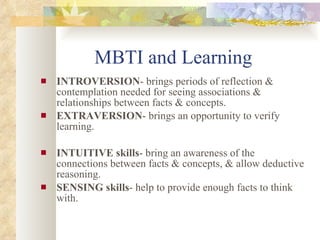
MBTI and Learning INTROVERSION - brings periods of reflection & contemplation needed for seeing associations & relationships between facts & concepts. EXTRAVERSION - brings an opportunity to verify learning.  INTUITIVE skills - bring an awareness of the connections between facts & concepts, & allow deductive reasoning. SENSING skills - help to provide enough facts to think with.
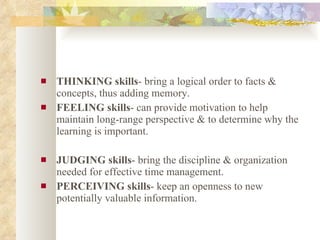
THINKING skills - bring a logical order to facts & concepts, thus adding memory. FEELING skills - can provide motivation to help maintain long-range perspective & to determine why the learning is important. JUDGING skills - bring the discipline & organization needed for effective time management. PERCEIVING skills - keep an openness to new potentially valuable information.
Your type has  potential strengths:  Develop your type + balance it by learning skills of your opposites Type does not describe limitations on your thinking: Tells you what kinds of learning will be harder and easier - you can’t CHANGE type  but  you  can LEARN  SKILLS.
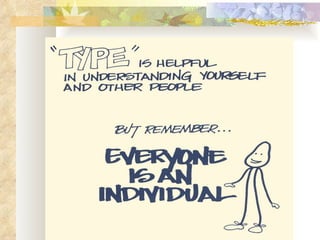
“ It’s not what type you are that’s  important, it’s what you do with  your type.” “ Type doesn’t confine you to act or  or learn in a certain way, but it frees you to draw on your strengths of your preferences and to strengthen your ability to use those opposite to yours”
Benefits of MBTI PM’s can benefit from knowing team members’ MBTI Profiles Adjust management style for each individual Get variety of personality types on project
Skeptical views of the MBTI Unscientific A Temptation to Pigeonhole It emphasizes each person  being  one specific type rather than each person  using  a certain type of thinking  most of the time .  Real people do not fit easily into one of sixteen types because they use different styles of thinking at different times

Myers Briggs Type Indicator

  • 1.
    Myers-Briggs Type IndicatorPresenter : Mateen Yousuf Roll No :04 MBA 1 st Sem
  • 2.
    The  Myers-Briggs TypeIndicator  ( MBTI ) assessment is a psychometric questionnaire designed to measure  psychological  preferences in how people perceive the world and make decisions. The original developers of the personality inventory were Katharine Cook Briggs and her daughter,  Isabel Briggs Myers . They began creating the indicator during  World War II , believing that a knowledge of personality preferences would help women who were entering the industrial workforce for the first time to identify the sort of war-time jobs where they would be "most comfortable and effective". The initial questionnaire grew into the Myers-Briggs Type Indicator, which was first published in 1962.
  • 3.
    Published forms havebeen in existence since 1956. Since 1975, over 30 million people have taken the Indicator. Today, the MBTI is one of the largest selling tools for self-awareness. It has been translated into more than 30 languages and is used to help people in career choices, marriage and family counseling, communication, leadership, learning, etc.
  • 4.
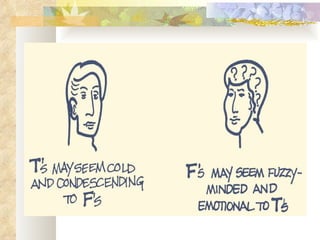
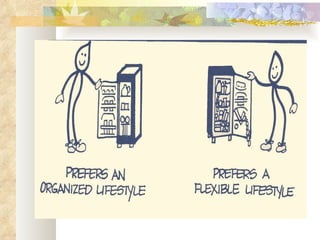
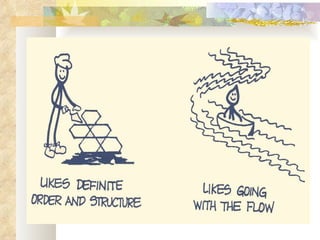
    WHAT MBTI DOESIt identifies a person’s natural tendencies or preferred ways of doing things. It reports your preferences on four scales . Each scale represents two opposite preferences on a continuum. It is primarily concerned with the valuable differences in people that result from where they like to focus their attention, the way they like to take in information, the way they like to make decisions, and the kind of lifestyle they adopt.
  • 5.
  • 6.
  • 7.
  • 8.
    16 Myers-Briggs TypesISTJ “ Take Your Time and Do It Right” ISFJ “ On My Honor, to Do My Duty…” INFJ “ Catalyst for Positive Change” INTJ “ Competence + Independence = Perfection” ISTP “ Doing the Best I Can With What I’ve Got” ISFP “ It’s the Thought That Counts” INFP “ Still Waters Run Deep” INTP “ Ingenious Problem Solvers” ESTP “ Let’s Get Busy!” ESFP “ Don’t Worry, Be Happy” ENFP “ Anything’s Possible” ENTP “ Life’s Entrepreneurs” ESTJ “ Taking Care of Business” ESFJ “ What Can I Do For You?” ENFJ “ The Public Relations Specialist” ENTJ “ Everything’s Fine – I’m in Charge”
  • 9.
  • 10.
  • 11.
  • 12.
  • 13.
  • 14.
  • 15.
  • 16.
  • 17.
  • 18.
  • 19.
  • 20.
  • 21.
  • 22.
  • 23.
  • 24.
  • 25.
  • 26.
  • 27.
  • 28.
  • 29.
  • 30.
  • 31.
  • 32.
  • 33.
  • 34.
  • 35.
  • 36.
  • 37.
  • 38.
  • 39.
  • 40.
  • 41.
  • 42.
  • 43.
  • 44.
  • 45.
  • 46.
    MBTI and LearningINTROVERSION - brings periods of reflection & contemplation needed for seeing associations & relationships between facts & concepts. EXTRAVERSION - brings an opportunity to verify learning. INTUITIVE skills - bring an awareness of the connections between facts & concepts, & allow deductive reasoning. SENSING skills - help to provide enough facts to think with.
  • 47.
    THINKING skills -bring a logical order to facts & concepts, thus adding memory. FEELING skills - can provide motivation to help maintain long-range perspective & to determine why the learning is important. JUDGING skills - bring the discipline & organization needed for effective time management. PERCEIVING skills - keep an openness to new potentially valuable information.
  • 48.
    Your type has potential strengths: Develop your type + balance it by learning skills of your opposites Type does not describe limitations on your thinking: Tells you what kinds of learning will be harder and easier - you can’t CHANGE type but you can LEARN SKILLS.
  • 49.
    “ It’s notwhat type you are that’s important, it’s what you do with your type.” “ Type doesn’t confine you to act or or learn in a certain way, but it frees you to draw on your strengths of your preferences and to strengthen your ability to use those opposite to yours”
  • 50.
    Benefits of MBTIPM’s can benefit from knowing team members’ MBTI Profiles Adjust management style for each individual Get variety of personality types on project
  • 51.
    Skeptical views ofthe MBTI Unscientific A Temptation to Pigeonhole It emphasizes each person being one specific type rather than each person using a certain type of thinking most of the time . Real people do not fit easily into one of sixteen types because they use different styles of thinking at different times