Occupational Health  By  Dr Hitesh Shah
Dr HItesh Shah Consultant Occupational health, Training & safety The OCCUPATIONAL HEALTH (OH) SERVICES we provide FOR CORPORATE are; 1) OH consultancy onsite as a visiting OH consultant. 2) Health Checks & Data Management; Pre employment & Health surveillance programmes (health checks) Clinical data use to identify and reduce workplace illness & accident. 3) OH consultancy programs; Health Risk Assessment (HRA) Self-sustaining programs Wellness Introduction Ergonomic work stations assessment. Ergonomic work-shop OHSAS 18001 & 18002 Remote Site Occupational health Survey. Medico-legal consultancy. CER (Carbon emissions reductions) advisory. 4) Capacity building & Onsite Training; Basic First Aid. Advanced First Aid Health Lectures on various related issues. Communication & Data Reporting HRA methodology orientation Health Surveillance orientation Infectious disease control For more details, please contact me on; Email;  [email_address] Please visit my Website;  www.drhiteshocchealth.blogspot.com Mobile; 0091-9820359731
Occupational health is a specialty in medicine, which deals with the effect of work on your health and about making sure that you are fit for the work that you do.  Occupational Health staff support the provision of safe and healthy working conditions by expert assessment and advice on the working environment and its potential for impact upon health and well-being.
Which Industries need this & Why? All, whether it is Oil & Gas, Manufacturing, Finance, Services, IT etc. Legislative requirements in the country. For Higher profits Better HealthCare facilities.
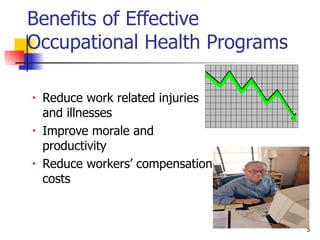
Benefits of Effective  Occupational Health Programs Reduce work related injuries and illnesses Improve morale and productivity Reduce workers’ compensation costs
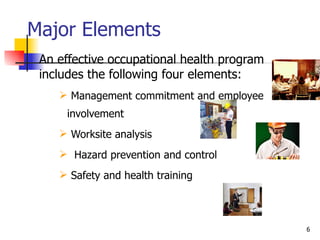
Major Elements An effective occupational health program includes the following four elements: Management commitment and employee involvement Worksite analysis Hazard prevention and control Safety and health training
Management Commitment and Employee Involvement These are complementary elements Management commitment  provides  motivation and resources  Employee involvement  allows  workers to develop and express  commitment to safety and health
Policy and Goals Clearly state a worksite safety and health policy. Establish and communicate a clear goal and objective for the safety and health program. Involve top management in implementing the program
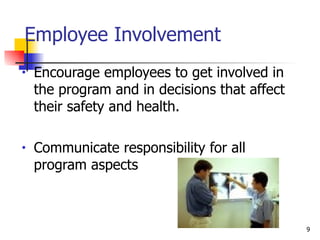
Employee Involvement Encourage employees to get involved in the program and in decisions that affect their safety and health. Communicate responsibility for all program aspects
Responsibility Parties responsible for the Occupational health program must have authority and resources. Managers, supervisors, and employees must be held accountable for meeting their responsibilities Program operations must be reviewed at least annually, to evaluate, identify deficiencies, and revise, as needed
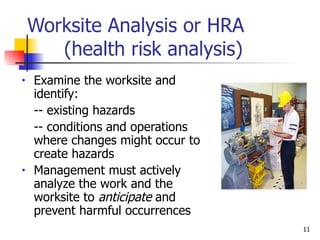
Worksite Analysis or HRA    (health risk analysis) Examine the worksite and identify: -- existing hazards -- conditions and operations where changes might occur to create hazards Management must actively analyze the work and the worksite to  anticipate  and prevent harmful occurrences
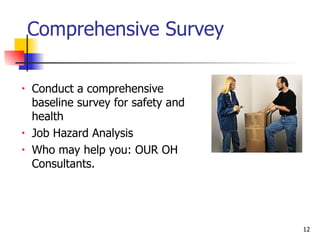
Comprehensive Survey Conduct a comprehensive baseline survey for safety and health  Job Hazard Analysis Who may help you: OUR OH Consultants.
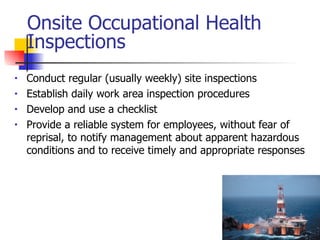
Onsite Occupational Health Inspections Conduct regular (usually weekly) site inspections  Establish daily work area inspection procedures  Develop and use a checklist Provide a reliable system for employees, without fear of reprisal, to notify management about apparent hazardous conditions and to receive timely and appropriate responses
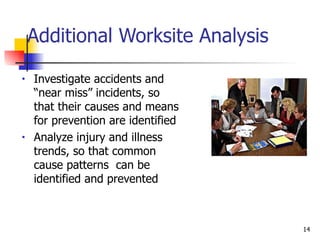
Additional Worksite Analysis Investigate accidents and “near miss” incidents, so that their causes and means for prevention are identified Analyze injury and illness trends, so that common cause patterns  can be identified and prevented
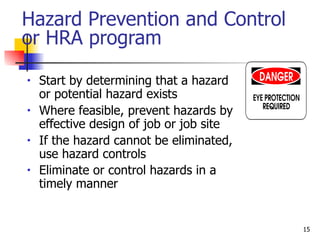
Hazard Prevention and Control or HRA program Start by determining that a hazard or potential hazard exists Where feasible, prevent hazards by effective design of job or job site  If the hazard cannot be eliminated, use hazard controls Eliminate or control hazards in a timely manner
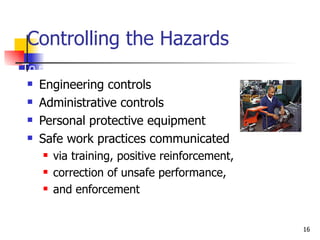
Controlling the Hazards Engineering controls Administrative controls Personal protective equipment Safe work practices communicated via training, positive reinforcement, correction of unsafe performance, and enforcement To prevent and control hazards:
Hazard Prevention Planning Maintain the facility and equipment  Emergency planning Training and drills, as needed Medical program First aid on site Physician and emergency care nearby
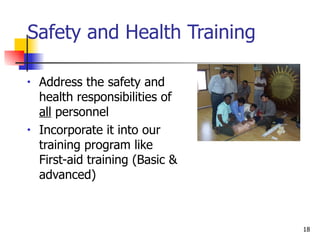
Safety and Health Training Address the safety and health responsibilities of  all  personnel Incorporate it into our training program like First-aid training (Basic & advanced)
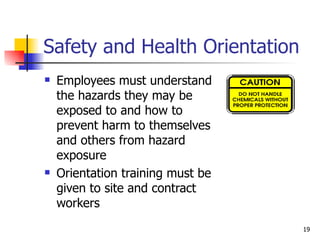
Safety and Health Orientation Employees must understand the hazards they may be exposed to and how to prevent harm to themselves and others from hazard exposure Orientation training must be given to site and contract workers
Your Supervisor’s Responsibilities Analyze work to identify potential hazards in area of responsibility Maintain physical protections in work areas Reinforce employee training through  performance feedback and, if needed, enforcement of safe work practices
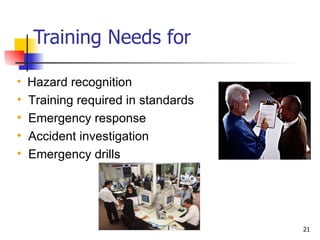
Training Needs for Hazard recognition Training required in standards Emergency response Accident investigation Emergency drills
Summary Reduce work related injuries and illnesses Improve morale and productivity Reduce workers’ compensation costs Include these four elements: Management commitment and employee  involvement Worksite analysis Hazard prevention and control Safety and health training Effective worker’s Occupational Health:
THANK-YOU  VERY  MUCH THANK-YOU VERY MUCH

Occupational Health Basics

  • 1.
    Occupational Health By Dr Hitesh Shah
  • 2.
    Dr HItesh ShahConsultant Occupational health, Training & safety The OCCUPATIONAL HEALTH (OH) SERVICES we provide FOR CORPORATE are; 1) OH consultancy onsite as a visiting OH consultant. 2) Health Checks & Data Management; Pre employment & Health surveillance programmes (health checks) Clinical data use to identify and reduce workplace illness & accident. 3) OH consultancy programs; Health Risk Assessment (HRA) Self-sustaining programs Wellness Introduction Ergonomic work stations assessment. Ergonomic work-shop OHSAS 18001 & 18002 Remote Site Occupational health Survey. Medico-legal consultancy. CER (Carbon emissions reductions) advisory. 4) Capacity building & Onsite Training; Basic First Aid. Advanced First Aid Health Lectures on various related issues. Communication & Data Reporting HRA methodology orientation Health Surveillance orientation Infectious disease control For more details, please contact me on; Email; [email_address] Please visit my Website; www.drhiteshocchealth.blogspot.com Mobile; 0091-9820359731
  • 3.
    Occupational health isa specialty in medicine, which deals with the effect of work on your health and about making sure that you are fit for the work that you do. Occupational Health staff support the provision of safe and healthy working conditions by expert assessment and advice on the working environment and its potential for impact upon health and well-being.
  • 4.
    Which Industries needthis & Why? All, whether it is Oil & Gas, Manufacturing, Finance, Services, IT etc. Legislative requirements in the country. For Higher profits Better HealthCare facilities.
  • 5.
    Benefits of Effective Occupational Health Programs Reduce work related injuries and illnesses Improve morale and productivity Reduce workers’ compensation costs
  • 6.
    Major Elements Aneffective occupational health program includes the following four elements: Management commitment and employee involvement Worksite analysis Hazard prevention and control Safety and health training
  • 7.
    Management Commitment andEmployee Involvement These are complementary elements Management commitment provides motivation and resources Employee involvement allows workers to develop and express commitment to safety and health
  • 8.
    Policy and GoalsClearly state a worksite safety and health policy. Establish and communicate a clear goal and objective for the safety and health program. Involve top management in implementing the program
  • 9.
    Employee Involvement Encourageemployees to get involved in the program and in decisions that affect their safety and health. Communicate responsibility for all program aspects
  • 10.
    Responsibility Parties responsiblefor the Occupational health program must have authority and resources. Managers, supervisors, and employees must be held accountable for meeting their responsibilities Program operations must be reviewed at least annually, to evaluate, identify deficiencies, and revise, as needed
  • 11.
    Worksite Analysis orHRA (health risk analysis) Examine the worksite and identify: -- existing hazards -- conditions and operations where changes might occur to create hazards Management must actively analyze the work and the worksite to anticipate and prevent harmful occurrences
  • 12.
    Comprehensive Survey Conducta comprehensive baseline survey for safety and health Job Hazard Analysis Who may help you: OUR OH Consultants.
  • 13.
    Onsite Occupational HealthInspections Conduct regular (usually weekly) site inspections Establish daily work area inspection procedures Develop and use a checklist Provide a reliable system for employees, without fear of reprisal, to notify management about apparent hazardous conditions and to receive timely and appropriate responses
  • 14.
    Additional Worksite AnalysisInvestigate accidents and “near miss” incidents, so that their causes and means for prevention are identified Analyze injury and illness trends, so that common cause patterns can be identified and prevented
  • 15.
    Hazard Prevention andControl or HRA program Start by determining that a hazard or potential hazard exists Where feasible, prevent hazards by effective design of job or job site If the hazard cannot be eliminated, use hazard controls Eliminate or control hazards in a timely manner
  • 16.
    Controlling the HazardsEngineering controls Administrative controls Personal protective equipment Safe work practices communicated via training, positive reinforcement, correction of unsafe performance, and enforcement To prevent and control hazards:
  • 17.
    Hazard Prevention PlanningMaintain the facility and equipment Emergency planning Training and drills, as needed Medical program First aid on site Physician and emergency care nearby
  • 18.
    Safety and HealthTraining Address the safety and health responsibilities of all personnel Incorporate it into our training program like First-aid training (Basic & advanced)
  • 19.
    Safety and HealthOrientation Employees must understand the hazards they may be exposed to and how to prevent harm to themselves and others from hazard exposure Orientation training must be given to site and contract workers
  • 20.
    Your Supervisor’s ResponsibilitiesAnalyze work to identify potential hazards in area of responsibility Maintain physical protections in work areas Reinforce employee training through performance feedback and, if needed, enforcement of safe work practices
  • 21.
    Training Needs forHazard recognition Training required in standards Emergency response Accident investigation Emergency drills
  • 22.
    Summary Reduce workrelated injuries and illnesses Improve morale and productivity Reduce workers’ compensation costs Include these four elements: Management commitment and employee involvement Worksite analysis Hazard prevention and control Safety and health training Effective worker’s Occupational Health:
  • 23.
    THANK-YOU VERY MUCH THANK-YOU VERY MUCH