
COURSE ASSIGNMENT:
Teaching of Basic Multiplication Facts.
INTRODUCTION
 Educational (Instructional) Technology influences the
mathematics that is taught and enhances students learning
by use of current technological strategies and software in
the classroom. Based on several theories from the
behaviorist (Directed, B. F. Skinner),constructivist or
Non- Directed (Stages of development, Jean Piaget) and
Technology Integration Strategies (combination of both
theoretical views).
http://tip.psychology.org/anchor.html
http://tip.psychology.org/bruner.html
http://www.e-learningguru.com/articles/art3_3.htm
http://en.wikipedia.org/wiki/Long_term_memory
INTRODUCTION
The integration of Instructional Technology within the
mathematical curriculum has proven to be an effective
device as it allows a large group of children to interact
with the teacher, the subject and one another (by use of a
projector).
( Teaching Mathematics in the Primary School 2005, Gill
Bottle)
Teaching of Basic Multiplication
Facts
 SUBJECT: Mathematics
 TOPIC: Multiplication Tables
 DURATION OF LESSON: 10-15 mins
 CLASS: Standard one
 AVERAGE AGE: 7 years
 NO. IN CLASS: 20
Teaching of Basic Multiplication
Facts
 SET INDUCTION: Students will be given a variety
of manipulatives and asked to pair them off in
groups of twos, therefore allowing them to
discover in a concrete manner that multiplication
is repeated addition by adding each group of twos
that they make.
Teaching of Basic Multiplication
Facts
 PREVIOUS KNOWLEDGE:
In previous classes Students should have
experienced the knowledge of basic addition thus
enhancing the students ability to empower
themselves to recognize that multiplication is
repeated addition.
Teaching of Basic Multiplication
Facts
 OBJECTIVES:
 By the end of the lesson:
 Cognitive: Students would be able to identify the
multiplication symbol and its purpose
 Affective: Appreciate the role of simple
multiplication tasks in everyday life
Teaching of Basic Multiplication
Facts
 TEACHING AIDS/RESOURCES: Students will be
using a variety of manipulatives (crown corks,
coins, marbles.) to identify the basic concept of
multiplication. Teacher will present the lesson
using a PowerPoint format with a projector.
A multiplication worksheet in the two times table
will be given to them.
Teaching of Basic Multiplication
Facts
 EVALUATION: Students will be required to
complete a simple evaluation at the end of the
class which is on the handout that they will be
given.
Standard One
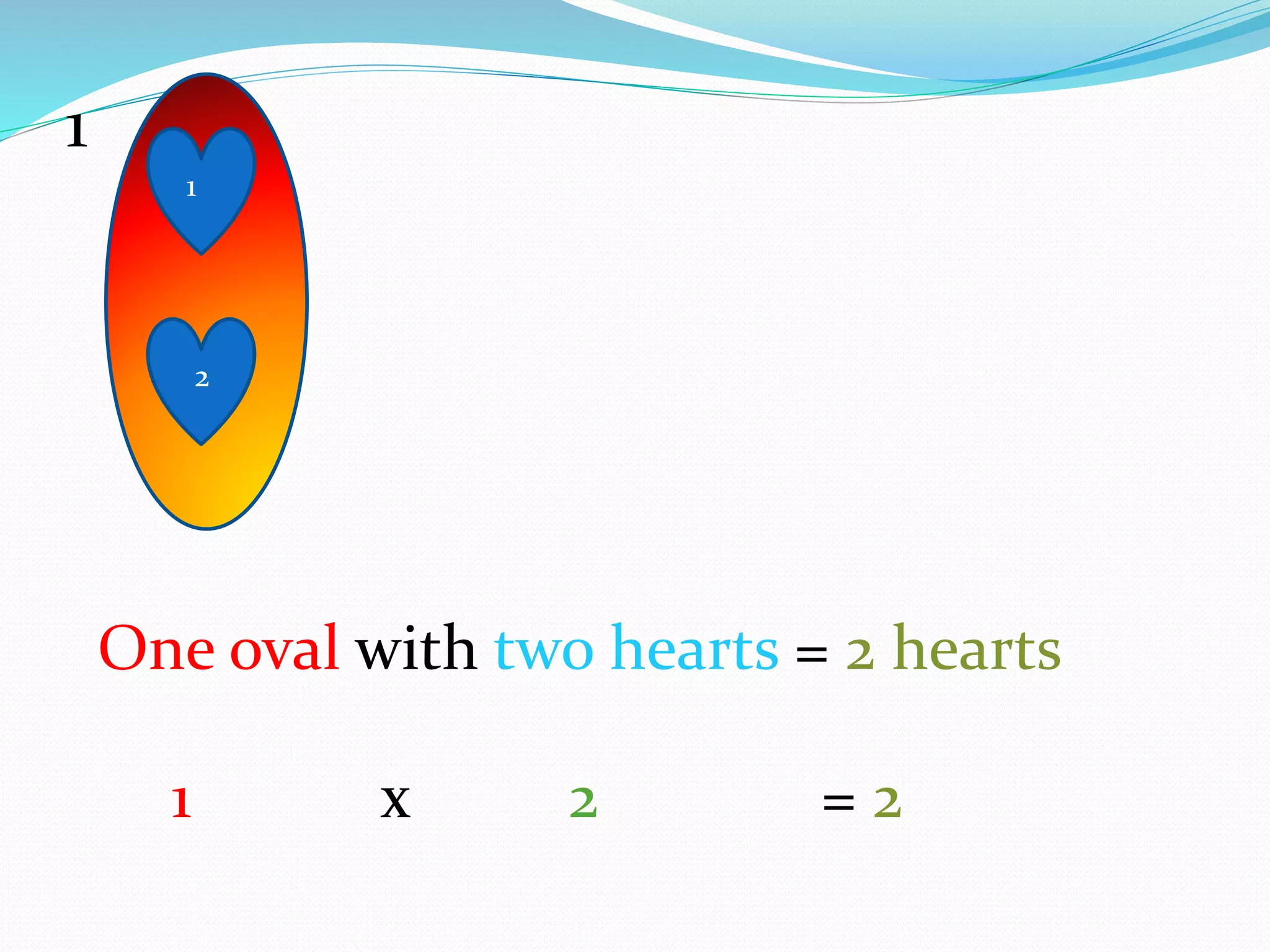
1
2
1
One oval with two hearts = 2 hearts
1 x 2 = 2
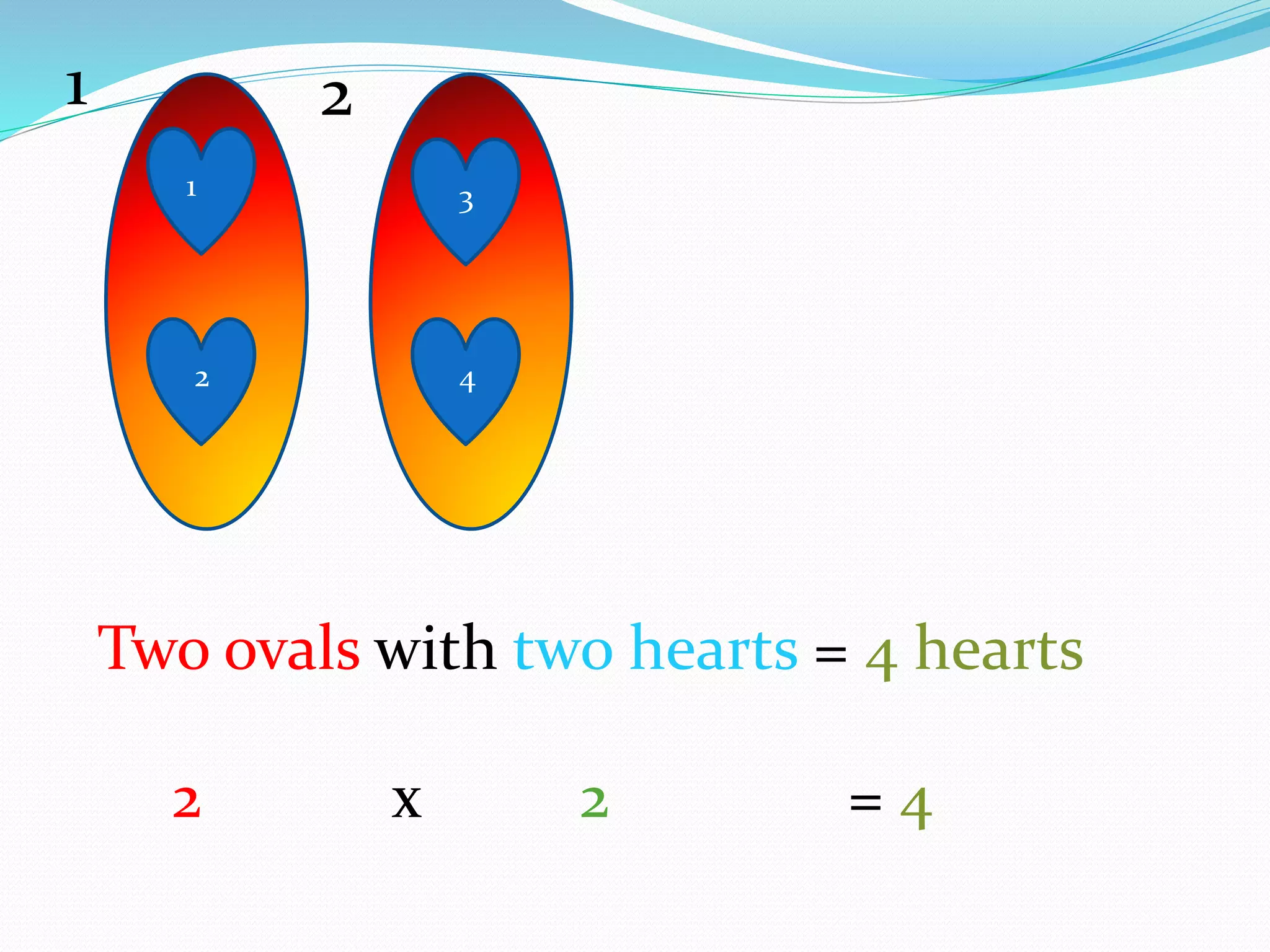
1
2 4
3
1 2
Two ovals with two hearts = 4 hearts
2 x 2 = 4
1
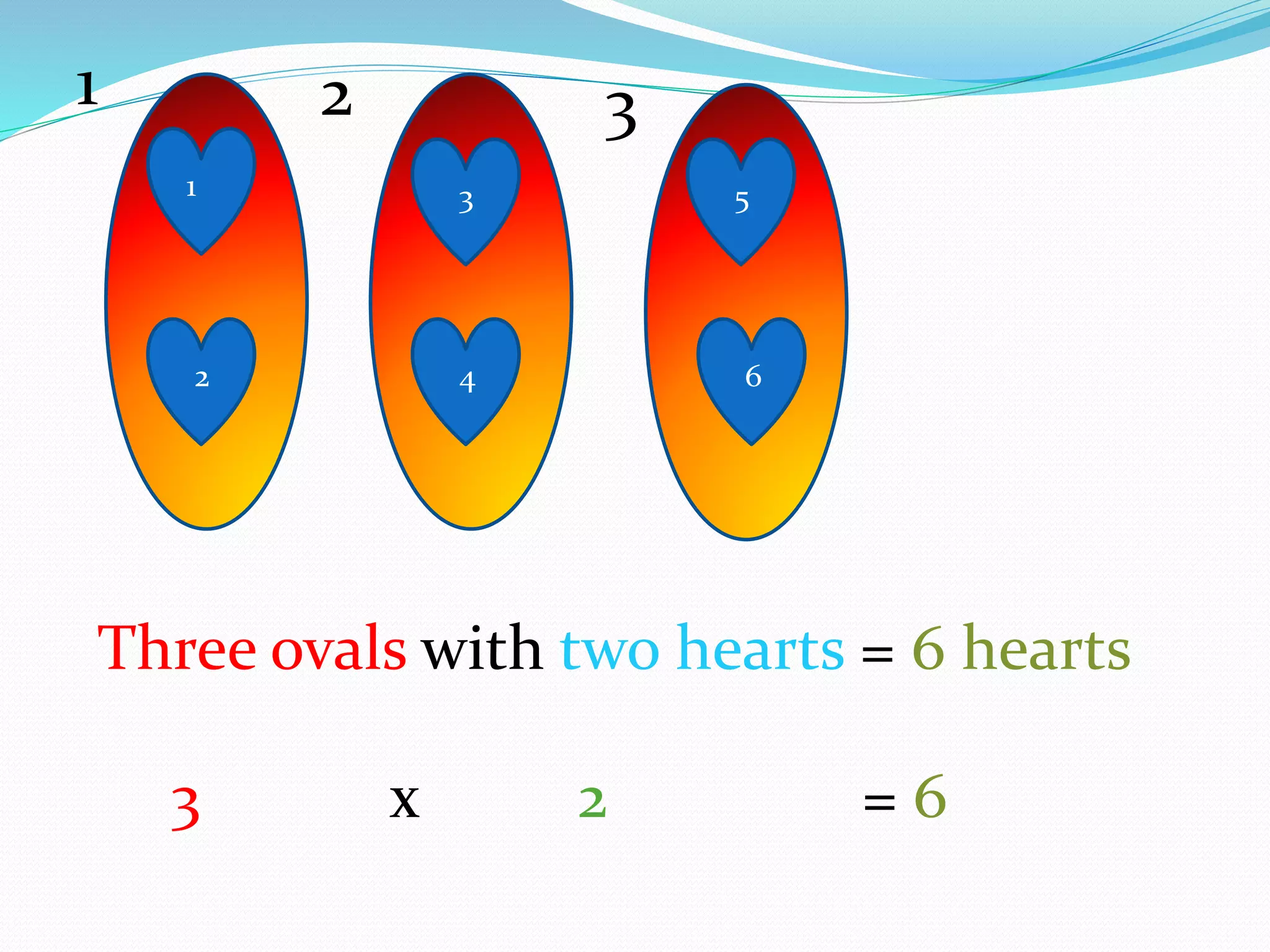
2 4 6
3 5
1 2 3
Three ovals with two hearts = 6 hearts
3 x 2 = 6
1
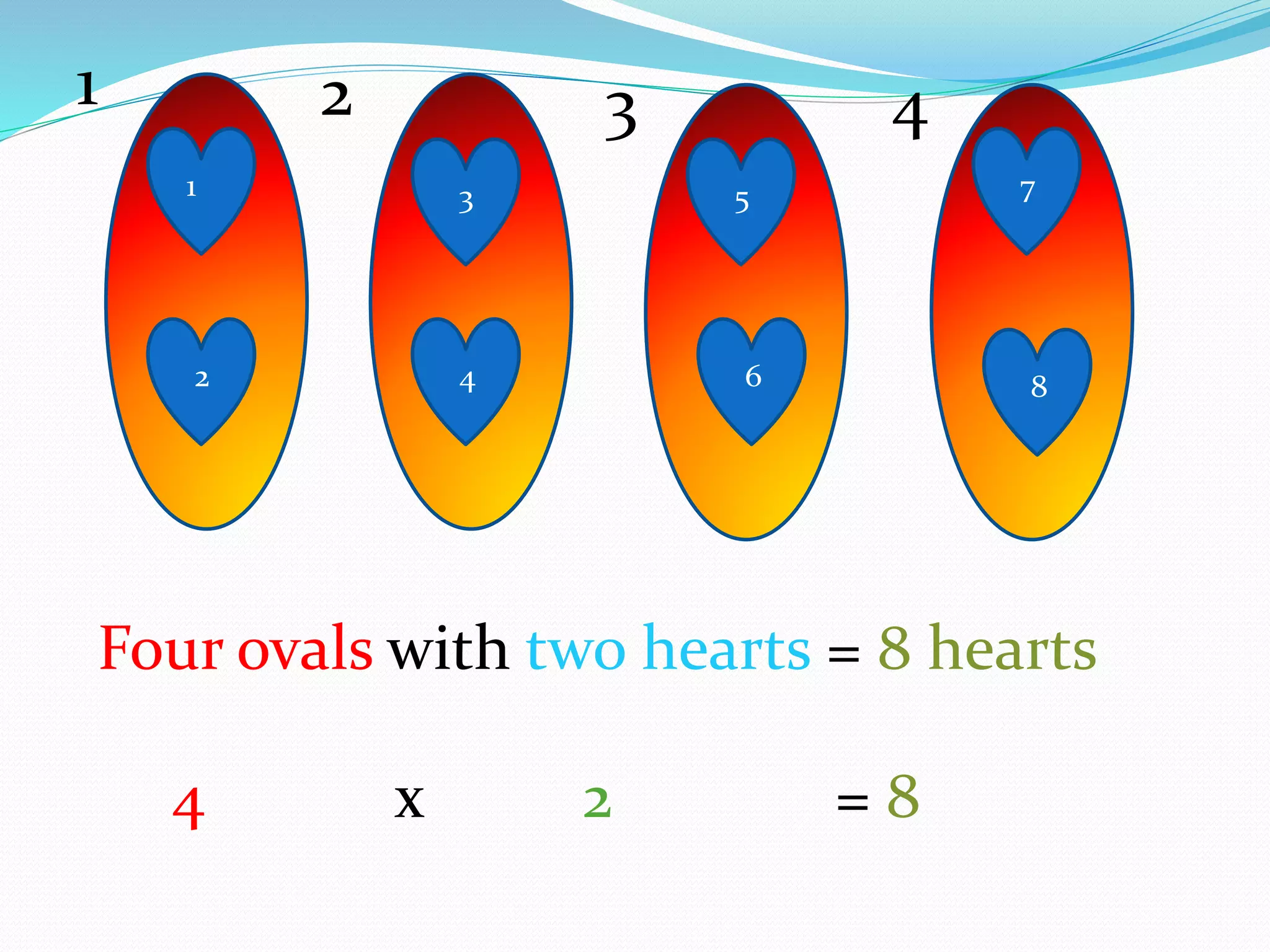
2 4 6 8
3 5 7
1 2 3 4
Four ovals with two hearts = 8 hearts
4 x 2 = 8
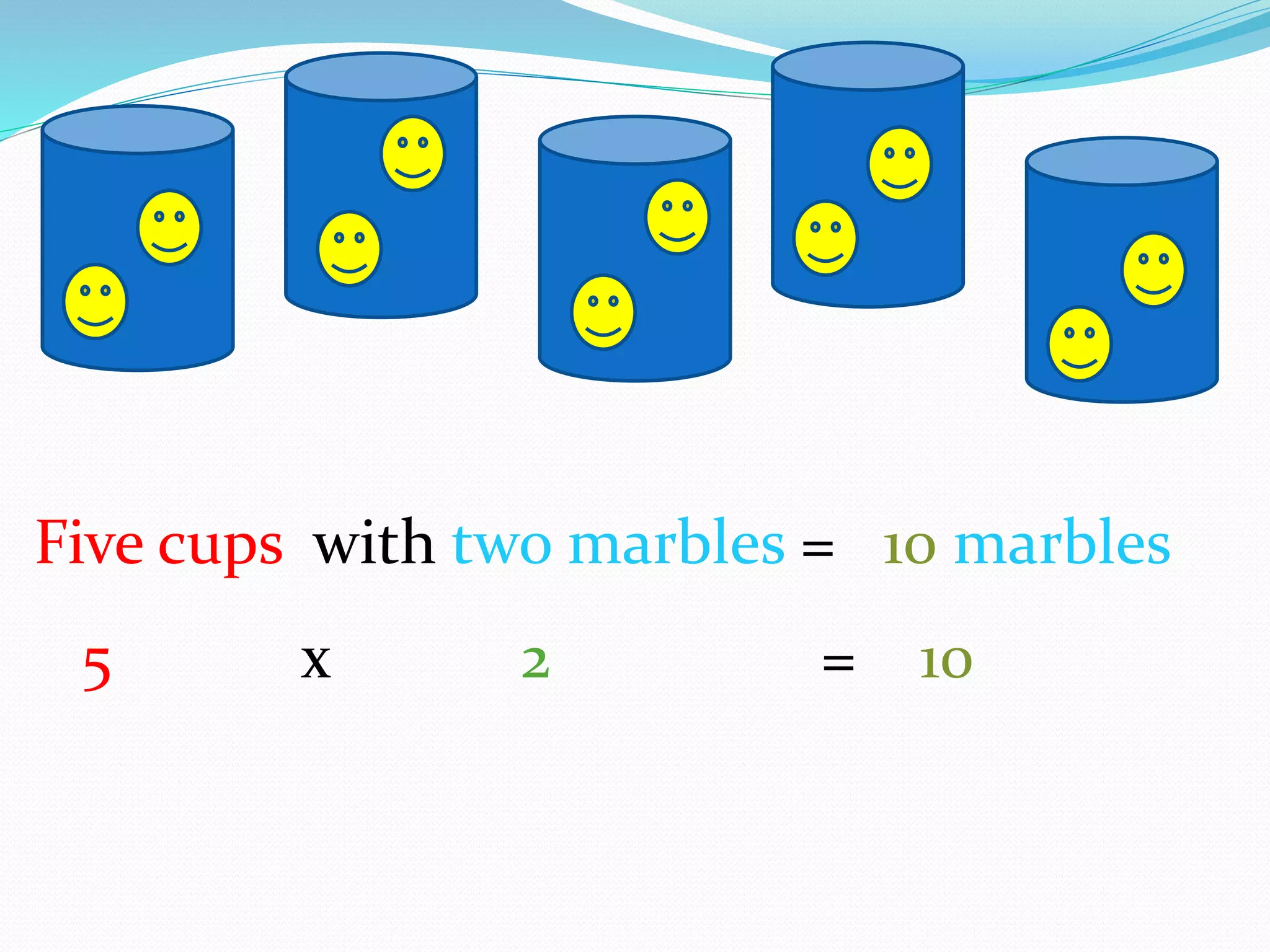
Five cups with two marbles = 10 marbles
5 x 2 = 10
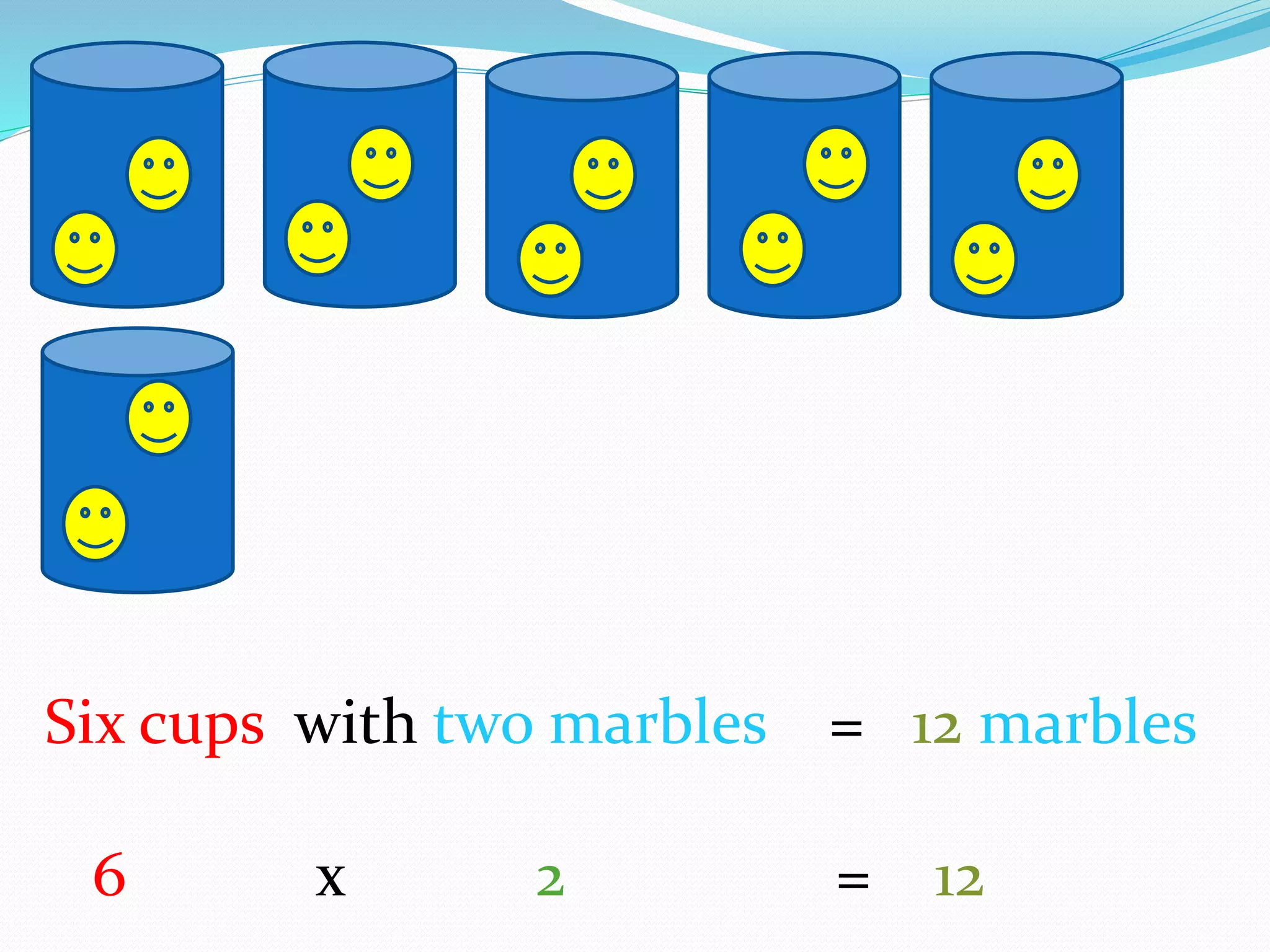
Six cups with two marbles = 12 marbles
6 x 2 = 12
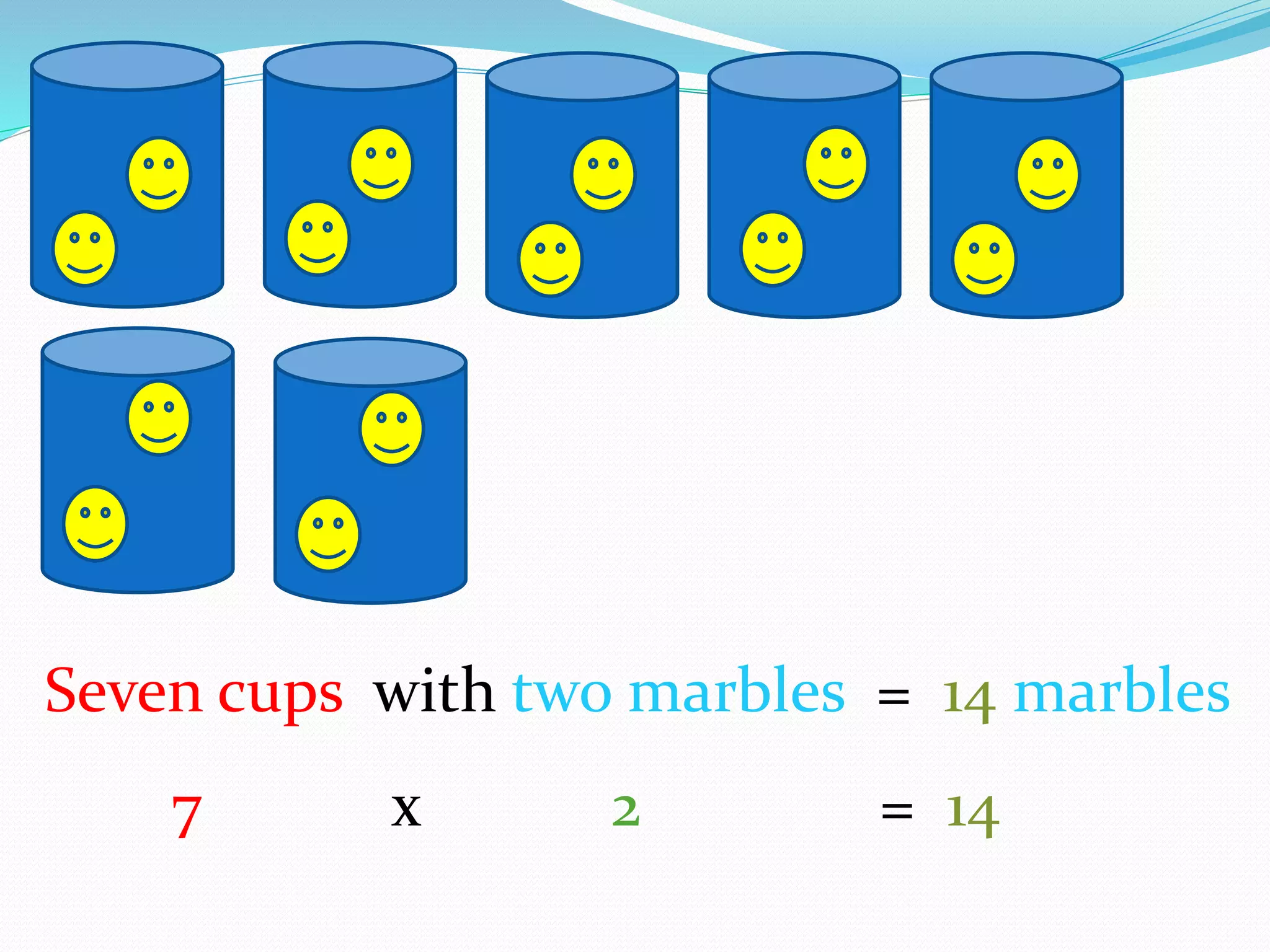
Seven cups with two marbles = 14 marbles
7 x 2 = 14
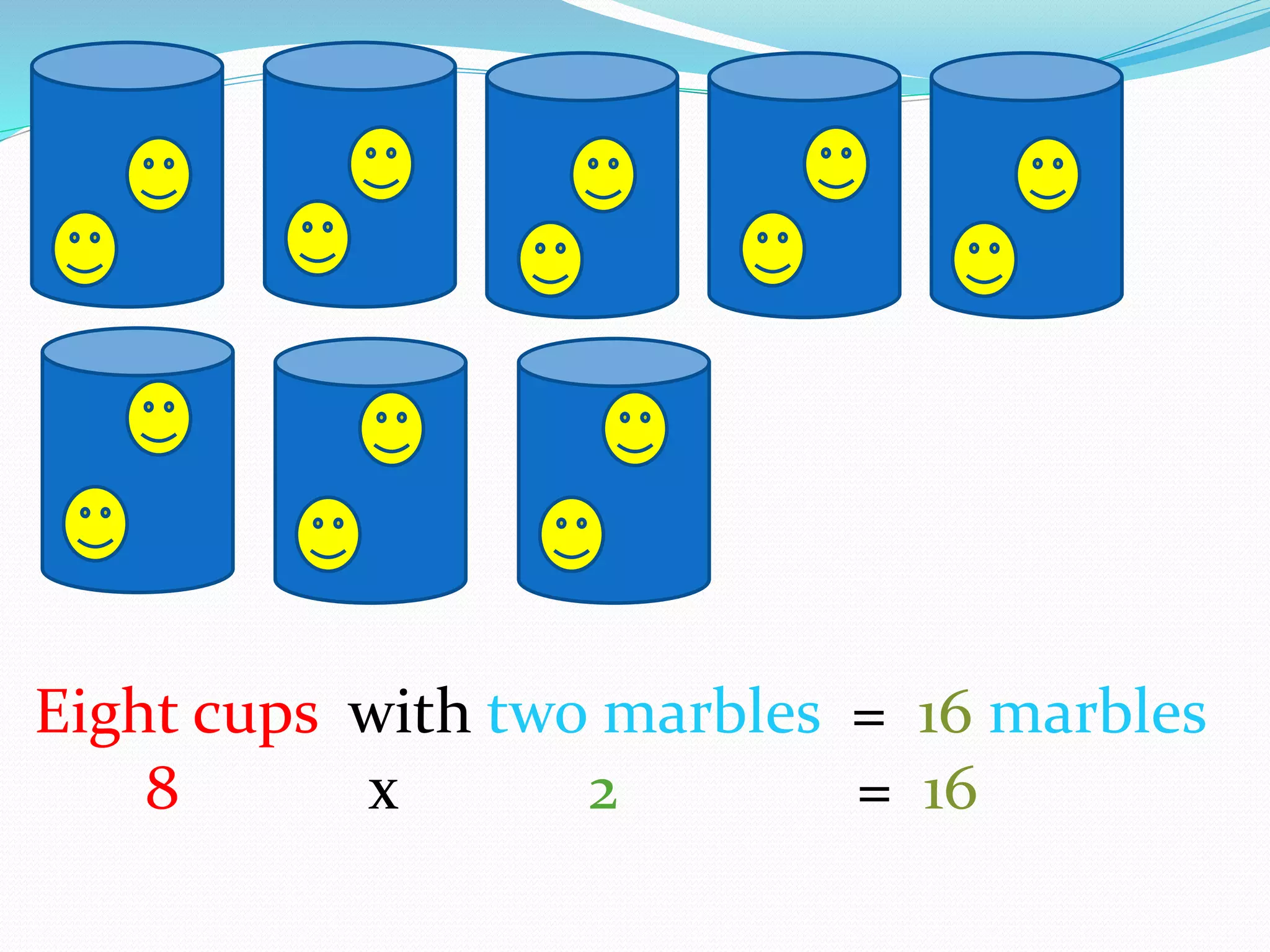
Eight cups with two marbles = 16 marbles
8 x 2 = 16
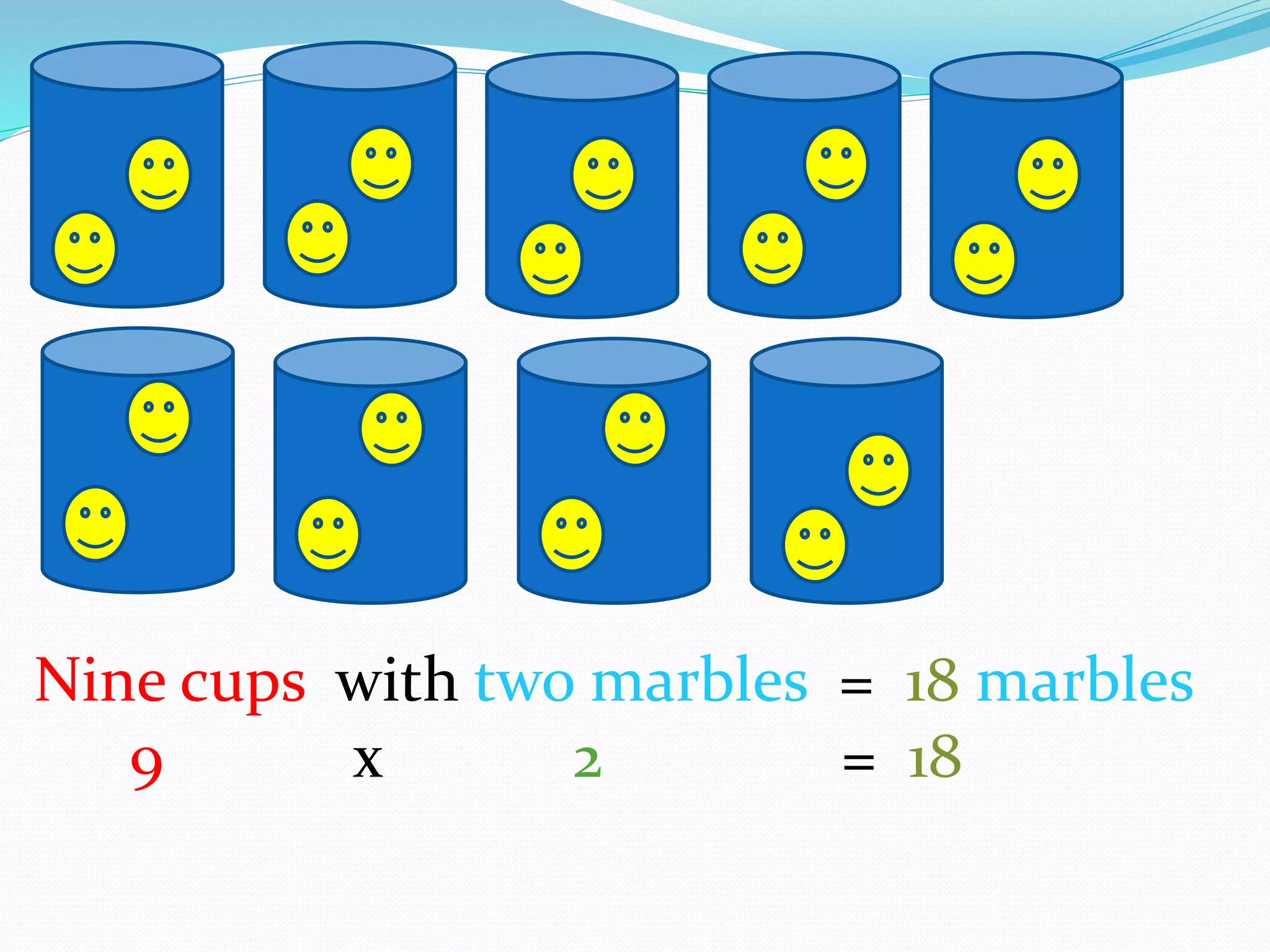
Nine cups with two marbles = 18 marbles
9 x 2 = 18
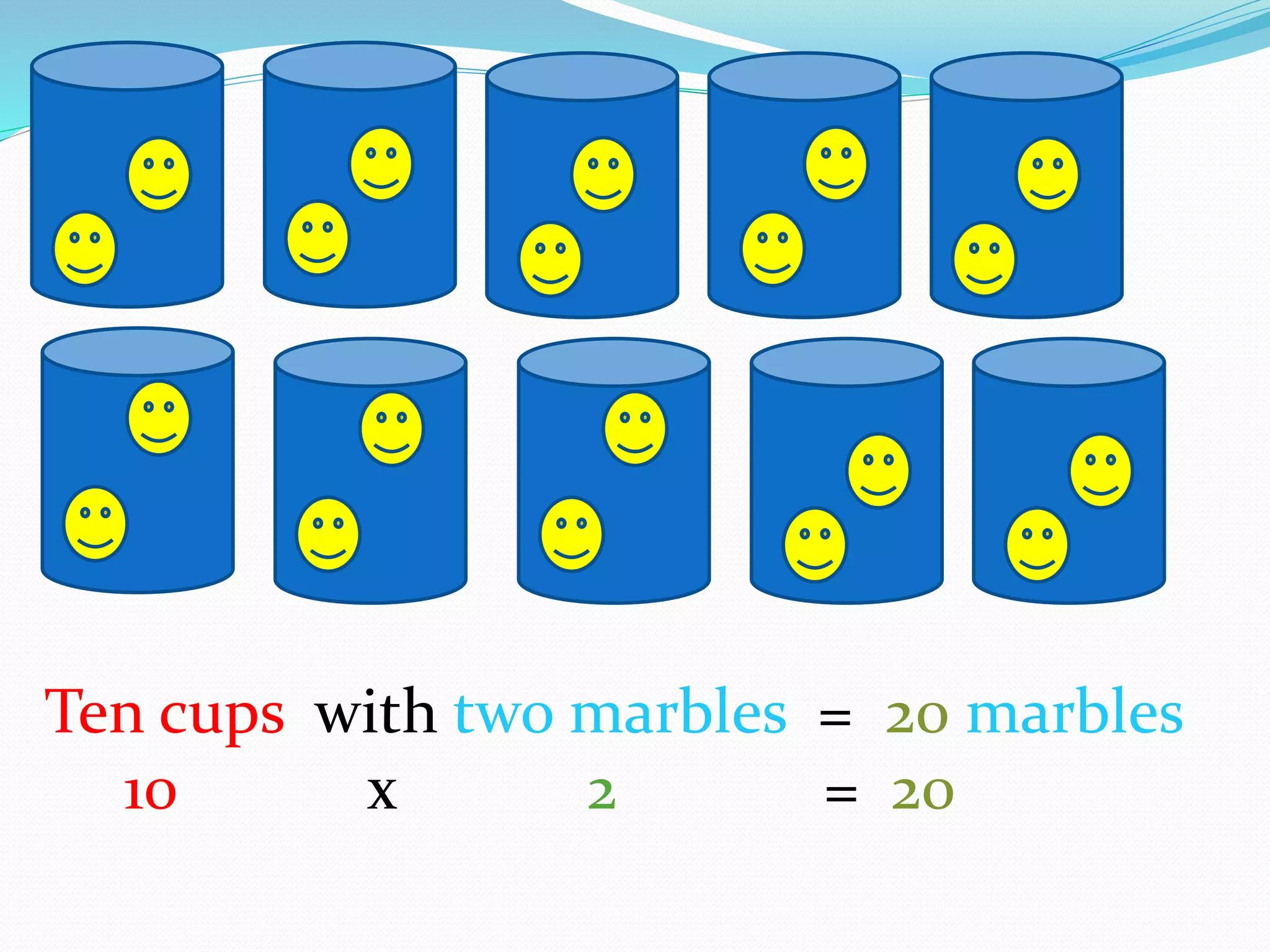
Ten cups with two marbles = 20 marbles
10 x 2 = 20
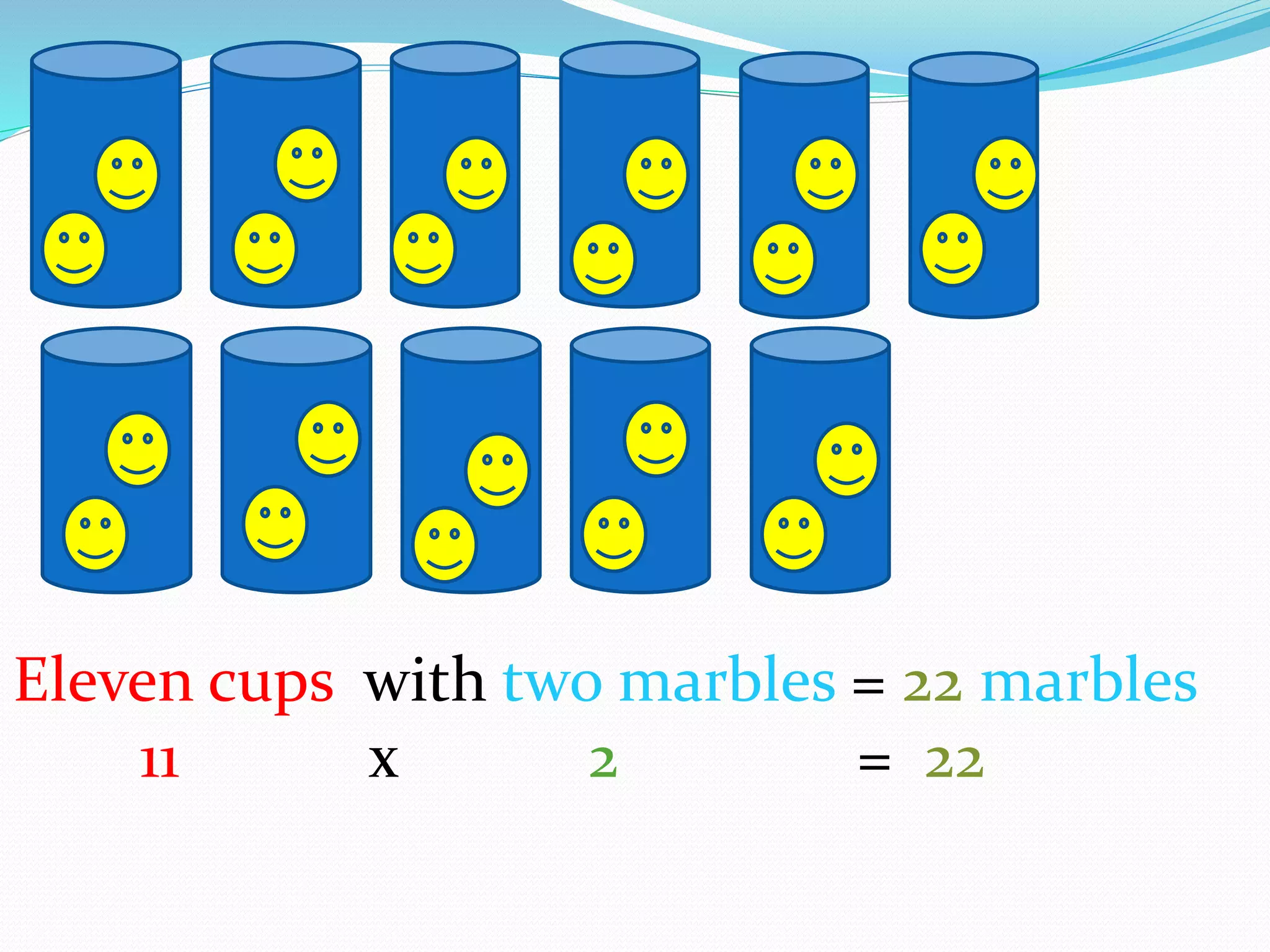
Eleven cups with two marbles = 22 marbles
11 x 2 = 22
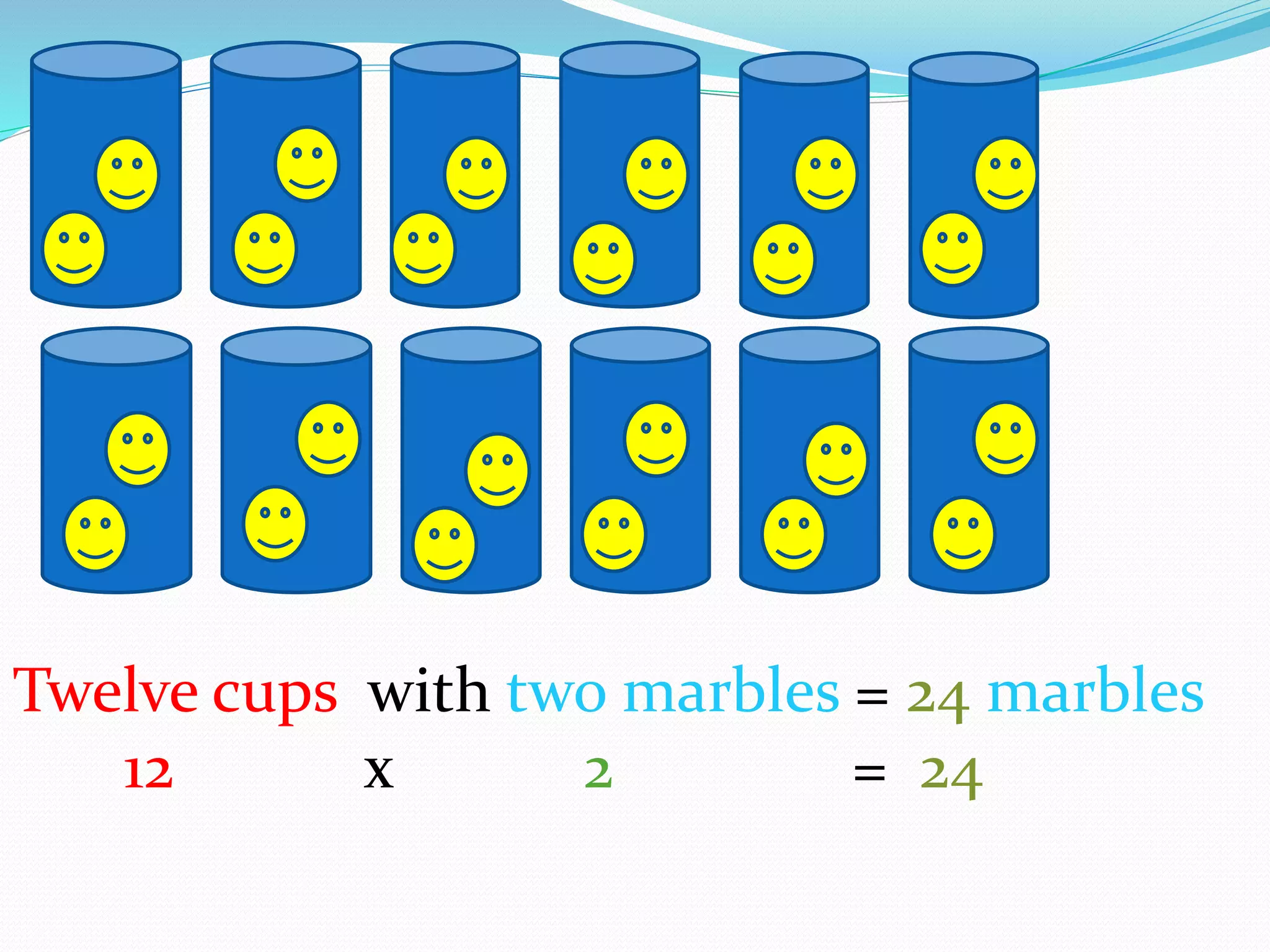
Twelve cups with two marbles = 24 marbles
12 x 2 = 24
Thank
you for
learning. !

Multiplication presentation

  • 1.
    COURSE ASSIGNMENT: Teaching ofBasic Multiplication Facts.
  • 2.
    INTRODUCTION  Educational (Instructional)Technology influences the mathematics that is taught and enhances students learning by use of current technological strategies and software in the classroom. Based on several theories from the behaviorist (Directed, B. F. Skinner),constructivist or Non- Directed (Stages of development, Jean Piaget) and Technology Integration Strategies (combination of both theoretical views). http://tip.psychology.org/anchor.html http://tip.psychology.org/bruner.html http://www.e-learningguru.com/articles/art3_3.htm http://en.wikipedia.org/wiki/Long_term_memory
  • 3.
    INTRODUCTION The integration ofInstructional Technology within the mathematical curriculum has proven to be an effective device as it allows a large group of children to interact with the teacher, the subject and one another (by use of a projector). ( Teaching Mathematics in the Primary School 2005, Gill Bottle)
  • 4.
    Teaching of BasicMultiplication Facts  SUBJECT: Mathematics  TOPIC: Multiplication Tables  DURATION OF LESSON: 10-15 mins  CLASS: Standard one  AVERAGE AGE: 7 years  NO. IN CLASS: 20
  • 5.
    Teaching of BasicMultiplication Facts  SET INDUCTION: Students will be given a variety of manipulatives and asked to pair them off in groups of twos, therefore allowing them to discover in a concrete manner that multiplication is repeated addition by adding each group of twos that they make.
  • 6.
    Teaching of BasicMultiplication Facts  PREVIOUS KNOWLEDGE: In previous classes Students should have experienced the knowledge of basic addition thus enhancing the students ability to empower themselves to recognize that multiplication is repeated addition.
  • 7.
    Teaching of BasicMultiplication Facts  OBJECTIVES:  By the end of the lesson:  Cognitive: Students would be able to identify the multiplication symbol and its purpose  Affective: Appreciate the role of simple multiplication tasks in everyday life
  • 8.
    Teaching of BasicMultiplication Facts  TEACHING AIDS/RESOURCES: Students will be using a variety of manipulatives (crown corks, coins, marbles.) to identify the basic concept of multiplication. Teacher will present the lesson using a PowerPoint format with a projector. A multiplication worksheet in the two times table will be given to them.
  • 9.
    Teaching of BasicMultiplication Facts  EVALUATION: Students will be required to complete a simple evaluation at the end of the class which is on the handout that they will be given.
  • 10.
  • 11.
    1 2 1 One oval withtwo hearts = 2 hearts 1 x 2 = 2
  • 12.
    1 2 4 3 1 2 Twoovals with two hearts = 4 hearts 2 x 2 = 4
  • 13.
    1 2 4 6 35 1 2 3 Three ovals with two hearts = 6 hearts 3 x 2 = 6
  • 14.
    1 2 4 68 3 5 7 1 2 3 4 Four ovals with two hearts = 8 hearts 4 x 2 = 8
  • 15.
    Five cups withtwo marbles = 10 marbles 5 x 2 = 10
  • 16.
    Six cups withtwo marbles = 12 marbles 6 x 2 = 12
  • 17.
    Seven cups withtwo marbles = 14 marbles 7 x 2 = 14
  • 18.
    Eight cups withtwo marbles = 16 marbles 8 x 2 = 16
  • 19.
    Nine cups withtwo marbles = 18 marbles 9 x 2 = 18
  • 20.
    Ten cups withtwo marbles = 20 marbles 10 x 2 = 20
  • 21.
    Eleven cups withtwo marbles = 22 marbles 11 x 2 = 22
  • 22.
    Twelve cups withtwo marbles = 24 marbles 12 x 2 = 24
  • 23.