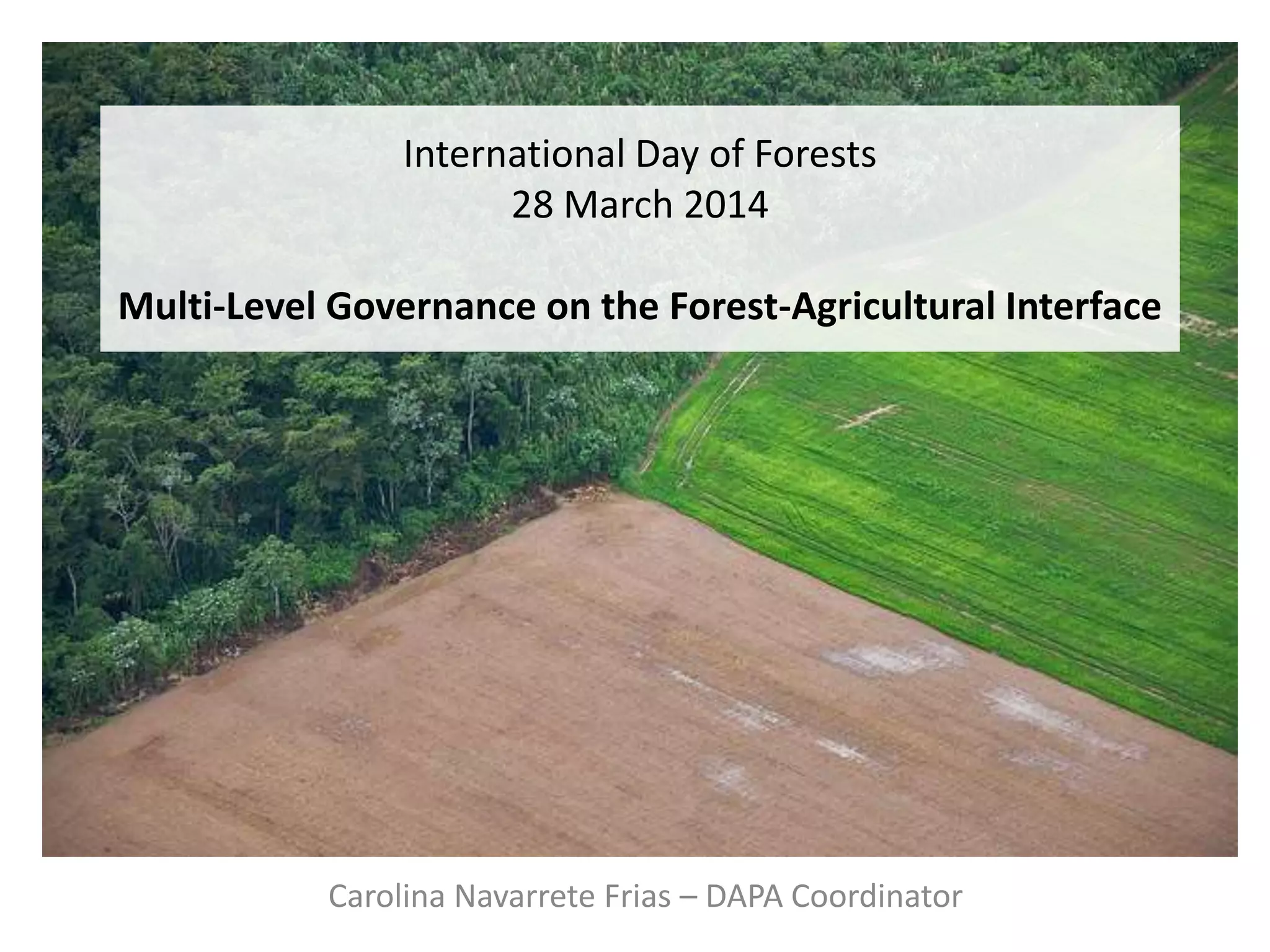
International Day of Forests
28 March 2014
Multi-Level Governance on the Forest-Agricultural Interface
Carolina Navarrete Frias – DAPA Coordinator
.
2
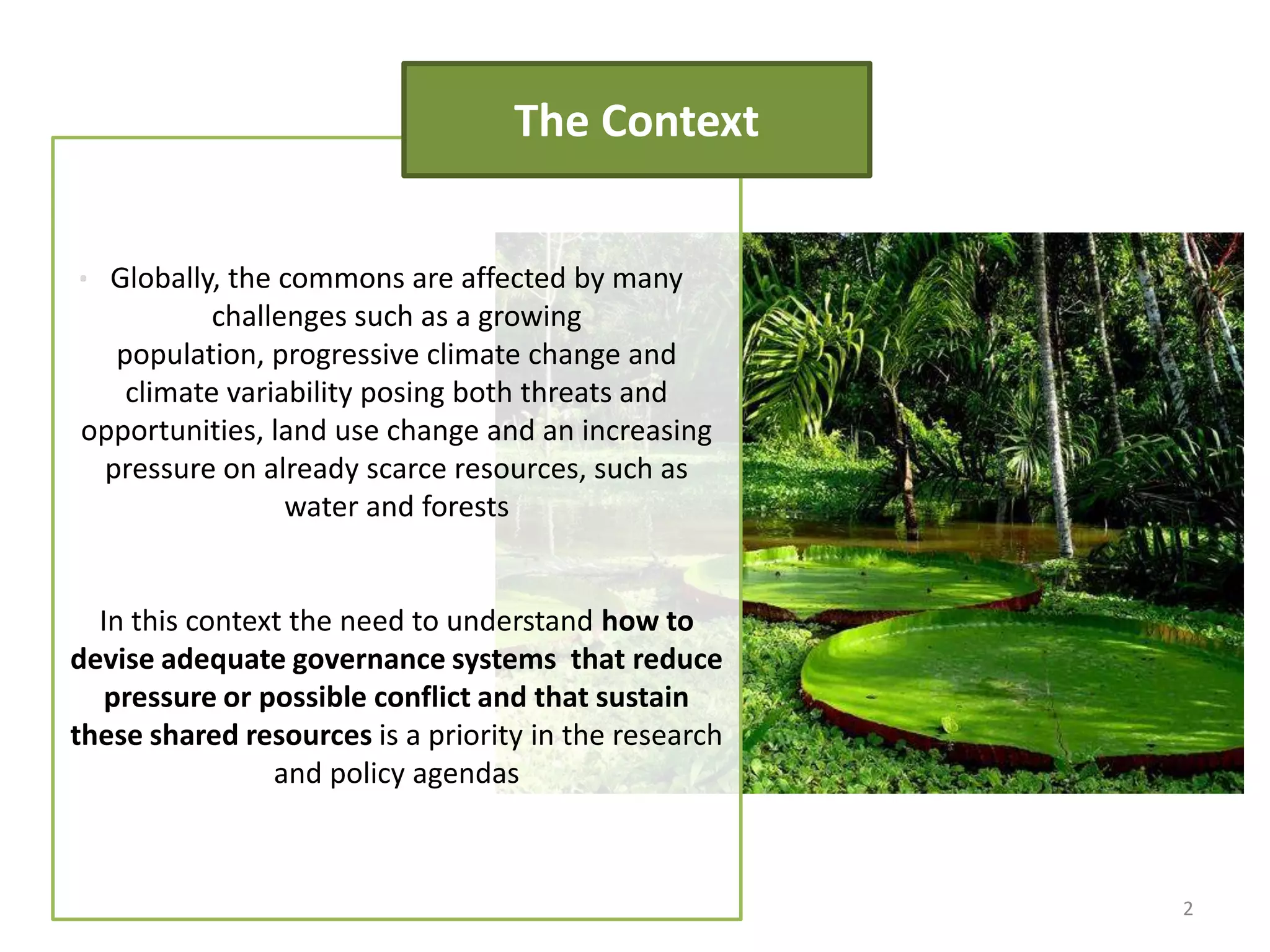
Globally, the commons are affected by many
challenges such as a growing
population, progressive climate change and
climate variability posing both threats and
opportunities, land use change and an increasing
pressure on already scarce resources, such as
water and forests
In this context the need to understand how to
devise adequate governance systems that reduce
pressure or possible conflict and that sustain
these shared resources is a priority in the research
and policy agendas
The Context
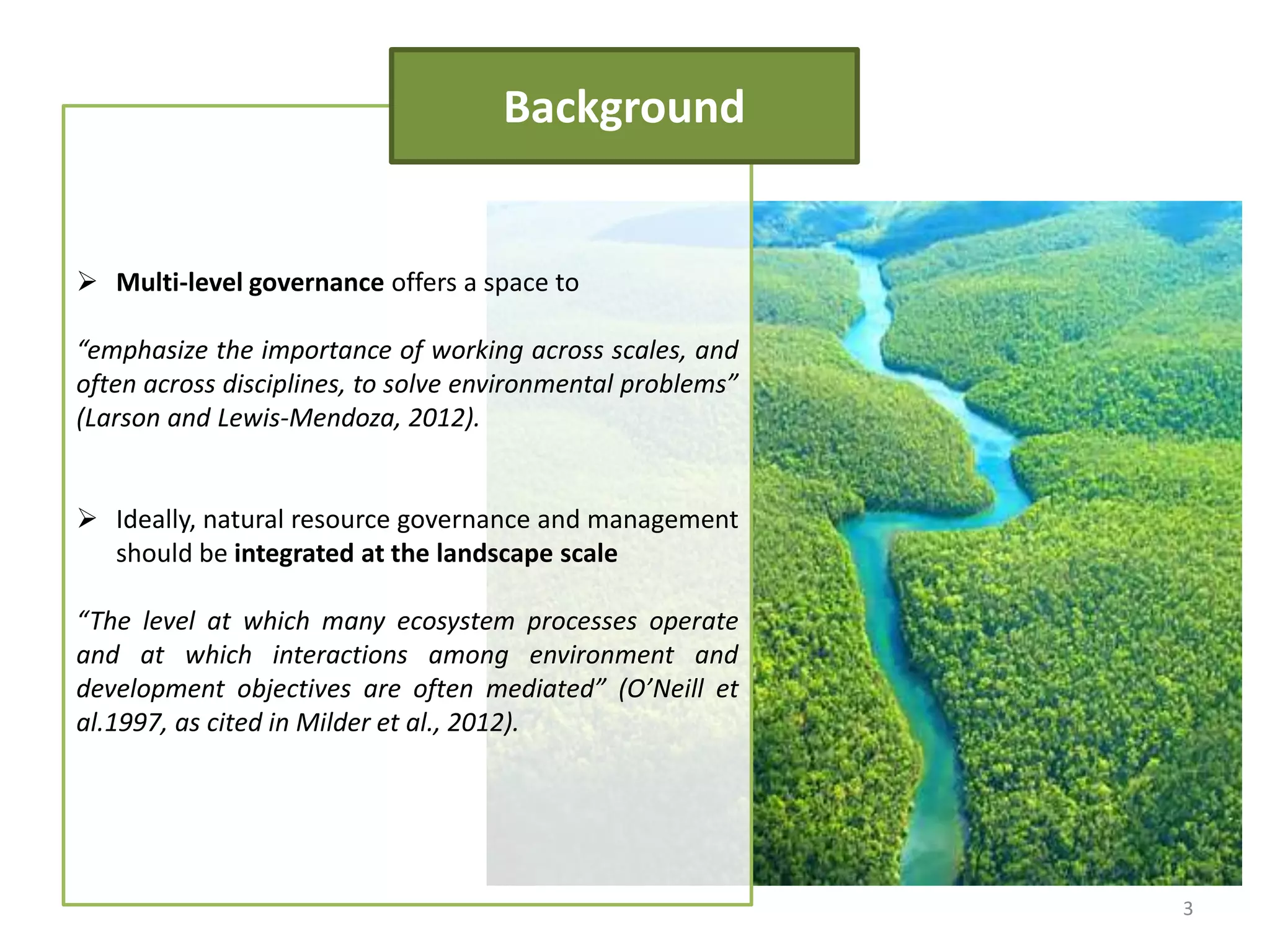
 Multi-level governance offers a space to
“emphasize the importance of working across scales, and
often across disciplines, to solve environmental problems”
(Larson and Lewis-Mendoza, 2012).
 Ideally, natural resource governance and management
should be integrated at the landscape scale
“The level at which many ecosystem processes operate
and at which interactions among environment and
development objectives are often mediated” (O’Neill et
al.1997, as cited in Milder et al., 2012).
Background
3
How do multi-level governance arrangements and
institutions support sustainable landscape level
natural resource management and livelihoods?
(discussion raised by Milder et al, (2012)
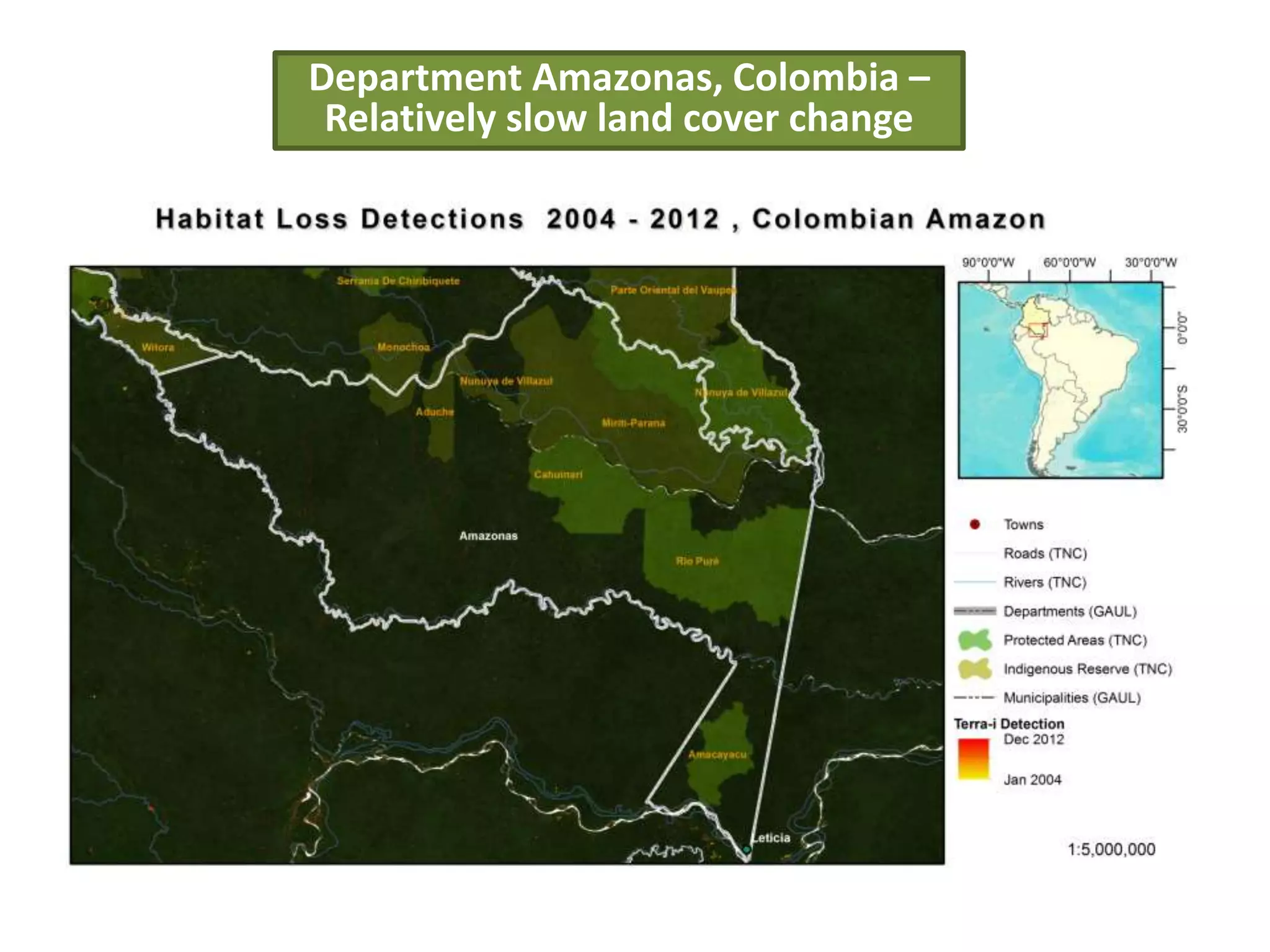
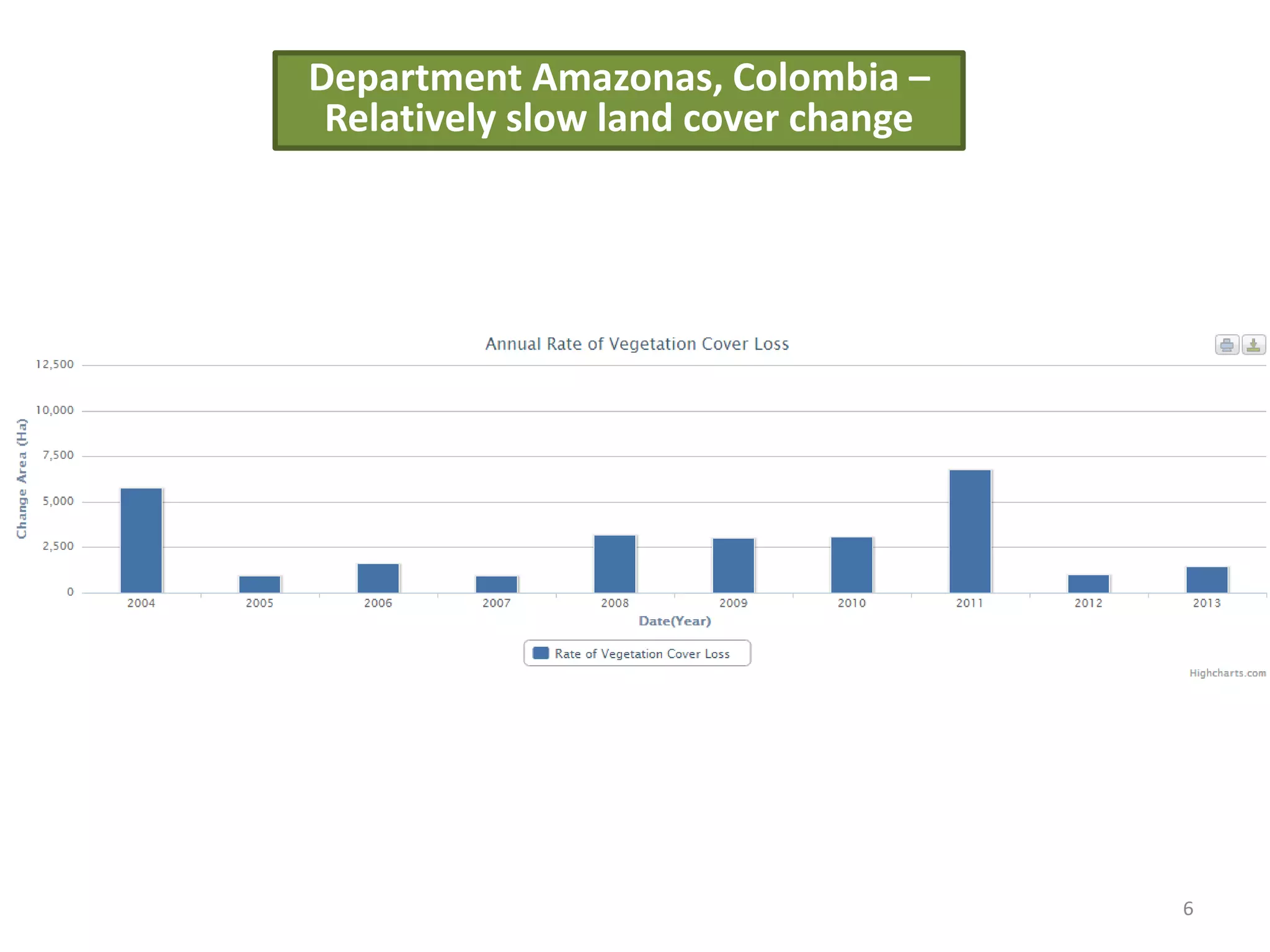
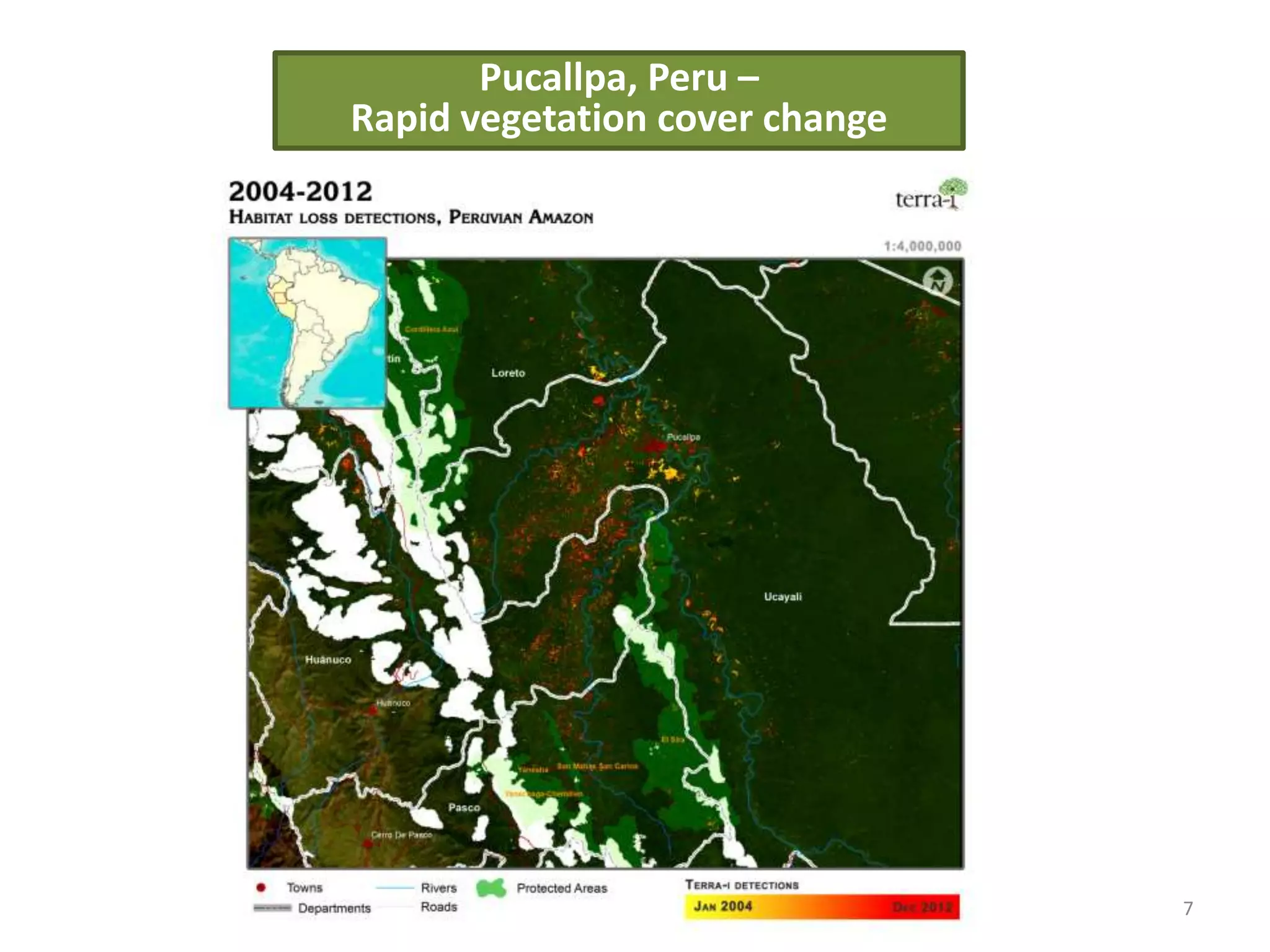
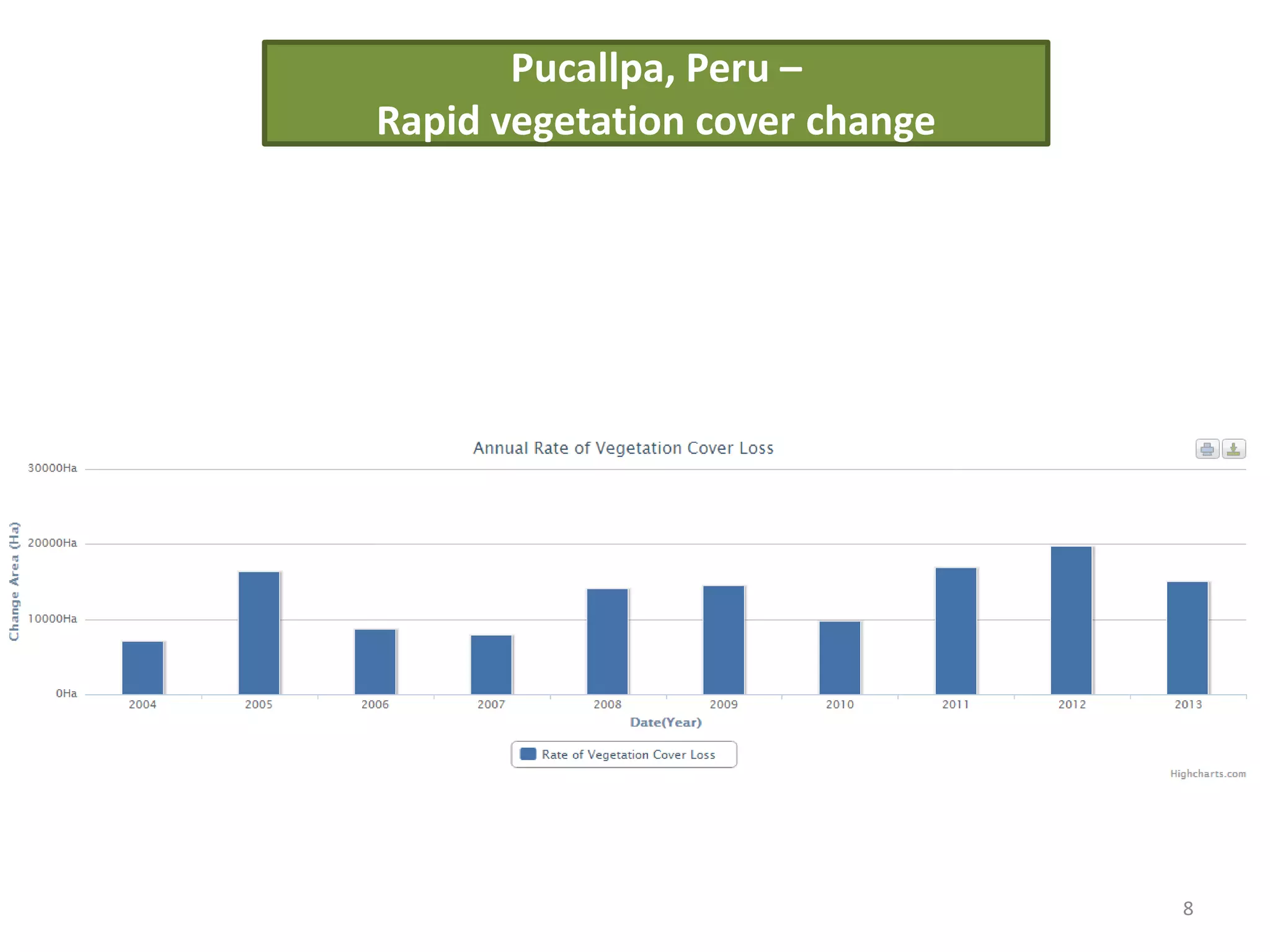
 In the context of two contrasting landscapes :
- Colombian Amazon
(relatively slow change)
- Peruvian Amazon
(shifting agricultural frontier - very rapid
change)
Aim
4
5
Department Amazonas, Colombia –
Relatively slow land cover change
6
Department Amazonas, Colombia –
Relatively slow land cover change
Pucallpa, Peru –
Rapid vegetation cover change
7
8
Pucallpa, Peru –
Rapid vegetation cover change
How do multi-level governance arrangements and
institutions support sustainable landscape level natural
resource management and livelihoods?
1. To define landscape level management in each case
study site. Identify key challenges in achieving
sustainable landscape level natural resource
management and challenges that are preventing
relevant institutions from supporting this outcome
(e.g. power relations within, how resource systems
interact with each other, resource competition).
2. To map and characterize the governance
arrangements relevant to landscape level natural
resource management (including vertical and
horizontal linkages). Special emphasis will be given to
identify and characterize meso-level institutions.
Subsidiary Objectives -1-
9
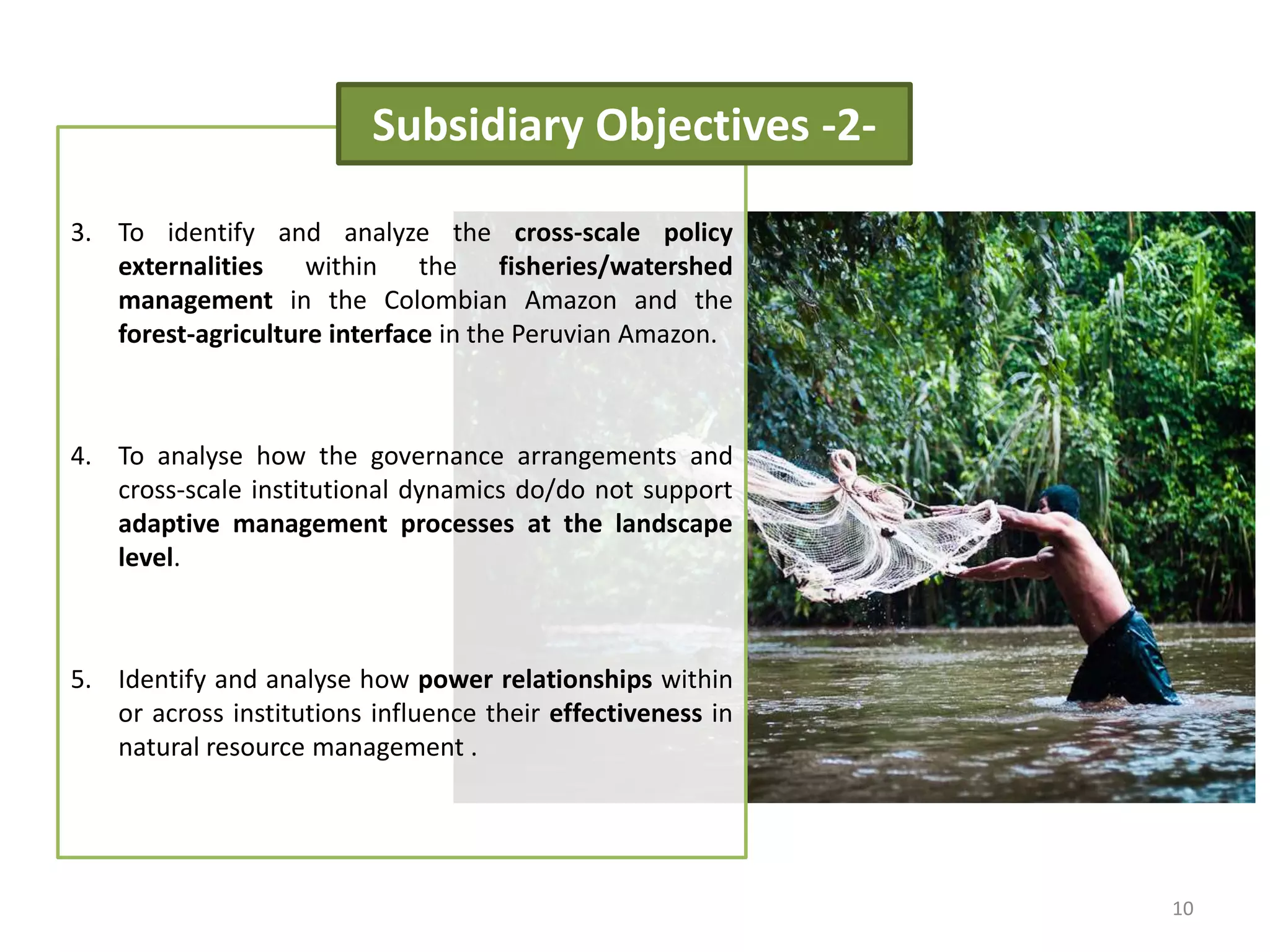
3. To identify and analyze the cross-scale policy
externalities within the fisheries/watershed
management in the Colombian Amazon and the
forest-agriculture interface in the Peruvian Amazon.
4. To analyse how the governance arrangements and
cross-scale institutional dynamics do/do not support
adaptive management processes at the landscape
level.
5. Identify and analyse how power relationships within
or across institutions influence their effectiveness in
natural resource management .
Subsidiary Objectives -2-
10
11
Main practical goal
Contribute with key insights/findings to:
 Design governance systems for natural resource
management that help to overcome conflicts
amongst resource users at the landscape level, as
well as support the opportunities for collective action
 Build effective institutions for cross-sector planning
 Support the establishment of sustainable multi-
functional (people-centered) landscapes
Who will benefit from this?
 Landscape stakeholders and resource users
 Institutions working across the landscape on natural
resource management
What is the expected outcome?
Thank you for your attention!
Any questions?
Any Questions?
12Contact: c.navarrete@cgiar.org

Multi-level Governance in Colombia

  • 1.
    International Day ofForests 28 March 2014 Multi-Level Governance on the Forest-Agricultural Interface Carolina Navarrete Frias – DAPA Coordinator
  • 2.
    . 2 Globally, the commonsare affected by many challenges such as a growing population, progressive climate change and climate variability posing both threats and opportunities, land use change and an increasing pressure on already scarce resources, such as water and forests In this context the need to understand how to devise adequate governance systems that reduce pressure or possible conflict and that sustain these shared resources is a priority in the research and policy agendas The Context
  • 3.
     Multi-level governanceoffers a space to “emphasize the importance of working across scales, and often across disciplines, to solve environmental problems” (Larson and Lewis-Mendoza, 2012).  Ideally, natural resource governance and management should be integrated at the landscape scale “The level at which many ecosystem processes operate and at which interactions among environment and development objectives are often mediated” (O’Neill et al.1997, as cited in Milder et al., 2012). Background 3
  • 4.
    How do multi-levelgovernance arrangements and institutions support sustainable landscape level natural resource management and livelihoods? (discussion raised by Milder et al, (2012)  In the context of two contrasting landscapes : - Colombian Amazon (relatively slow change) - Peruvian Amazon (shifting agricultural frontier - very rapid change) Aim 4
  • 5.
    5 Department Amazonas, Colombia– Relatively slow land cover change
  • 6.
    6 Department Amazonas, Colombia– Relatively slow land cover change
  • 7.
    Pucallpa, Peru – Rapidvegetation cover change 7
  • 8.
    8 Pucallpa, Peru – Rapidvegetation cover change
  • 9.
    How do multi-levelgovernance arrangements and institutions support sustainable landscape level natural resource management and livelihoods? 1. To define landscape level management in each case study site. Identify key challenges in achieving sustainable landscape level natural resource management and challenges that are preventing relevant institutions from supporting this outcome (e.g. power relations within, how resource systems interact with each other, resource competition). 2. To map and characterize the governance arrangements relevant to landscape level natural resource management (including vertical and horizontal linkages). Special emphasis will be given to identify and characterize meso-level institutions. Subsidiary Objectives -1- 9
  • 10.
    3. To identifyand analyze the cross-scale policy externalities within the fisheries/watershed management in the Colombian Amazon and the forest-agriculture interface in the Peruvian Amazon. 4. To analyse how the governance arrangements and cross-scale institutional dynamics do/do not support adaptive management processes at the landscape level. 5. Identify and analyse how power relationships within or across institutions influence their effectiveness in natural resource management . Subsidiary Objectives -2- 10
  • 11.
    11 Main practical goal Contributewith key insights/findings to:  Design governance systems for natural resource management that help to overcome conflicts amongst resource users at the landscape level, as well as support the opportunities for collective action  Build effective institutions for cross-sector planning  Support the establishment of sustainable multi- functional (people-centered) landscapes Who will benefit from this?  Landscape stakeholders and resource users  Institutions working across the landscape on natural resource management What is the expected outcome?
  • 12.
    Thank you foryour attention! Any questions? Any Questions? 12Contact: c.navarrete@cgiar.org