
Download to read offline



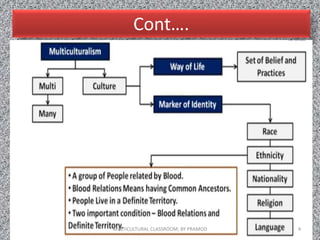
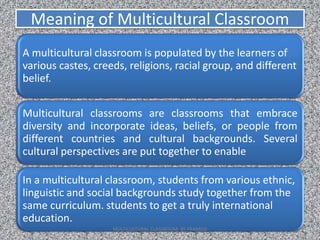
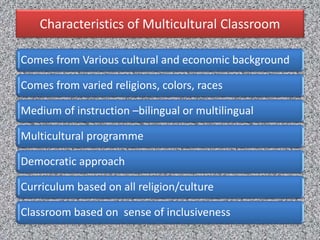


This document discusses multicultural classrooms. It begins by defining a classroom as a learning space for both children and adults, and defines culture as the beliefs and practices of a group. It then defines a multicultural classroom as one with students from various castes, creeds, religions, and cultural backgrounds. The characteristics of a multicultural classroom include students from varied cultural, economic, religious, racial, and linguistic backgrounds studying together from the same curriculum in a democratic and inclusive environment. The benefits include promoting multiculturalism, international citizenship, intercultural harmony, critical thinking, social skills, tolerance, open-mindedness, and international networks. The role of the teacher is to address multiculturalism through assignments and relationships while remaining


