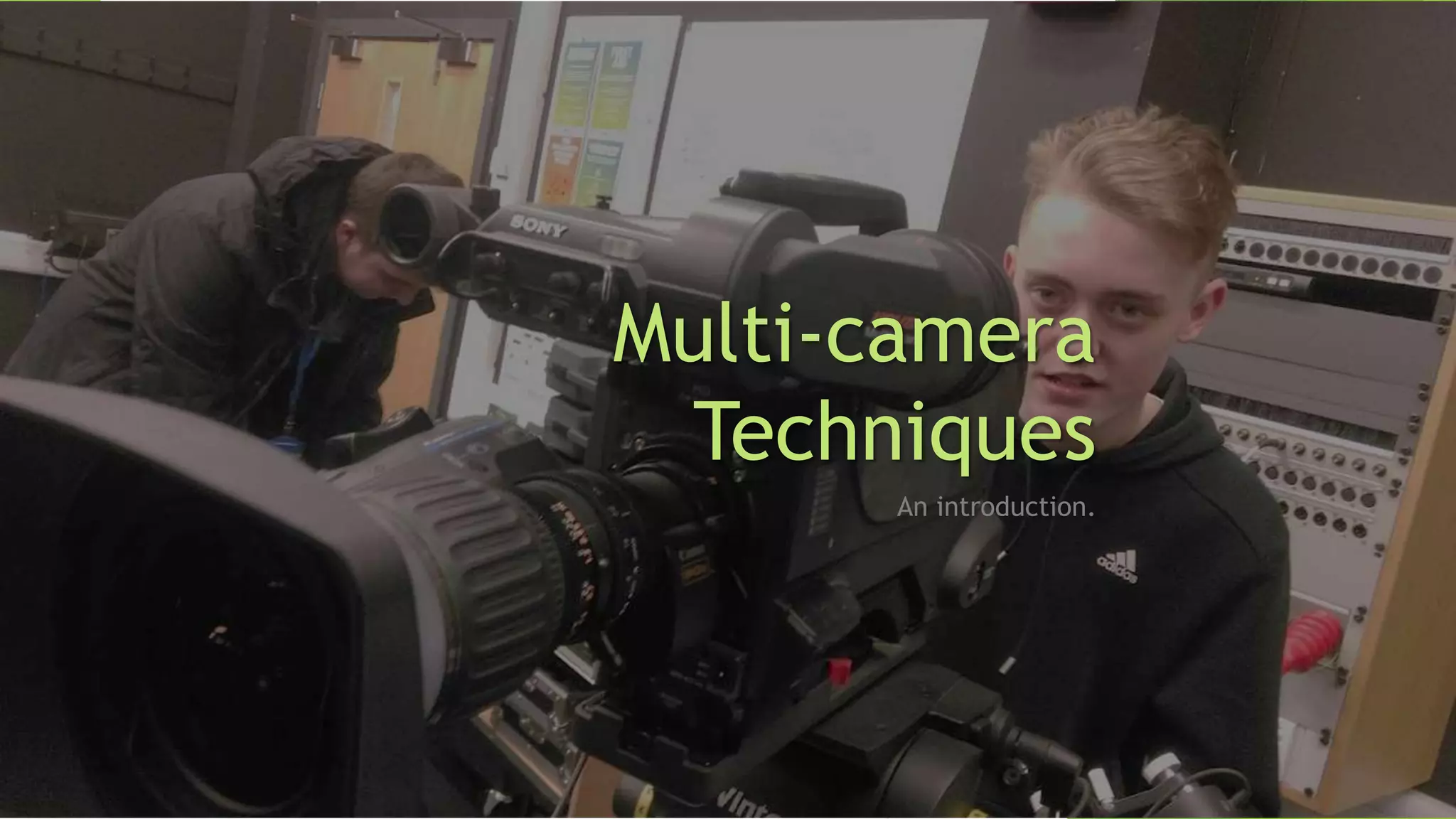


Multi-camera
Techniques
An introduction.
Today
You are going to begin your multi-camera filming
techniques unit.
We are going to begin by looking at what multicamera
filming is and why TV producers choose to shoot their
projects using a multicamera setup.
After break you will then begin to brainstorm ideas for
your own multicamera project in groups.
By the end of this lesson, you
 MUST understand the difference between single
and multi-camera filming.
 SHOULD explain what different formats producers
would use multi-camera filming techniques for.
 COULD evaluate why producers choose to film a
live event using multi-camera techniques.
There are 2 different ways we can
produce a video. What are they?
Hint: think of the 2 different styles of filming & editing.
1. Single camera
2. Multicamera
What is single camera technique?
 Film your video 1 angle or shot at a time, using a single camera.
 Every time you need to get a different angle (or shot) you
 stop filming,
 stop your actors or guests,
 reposition the camera
 Change your lighting
 Film your next shot
 Repeat
 Edit your project after you’ve finished filming, often over days, weeks or
months.
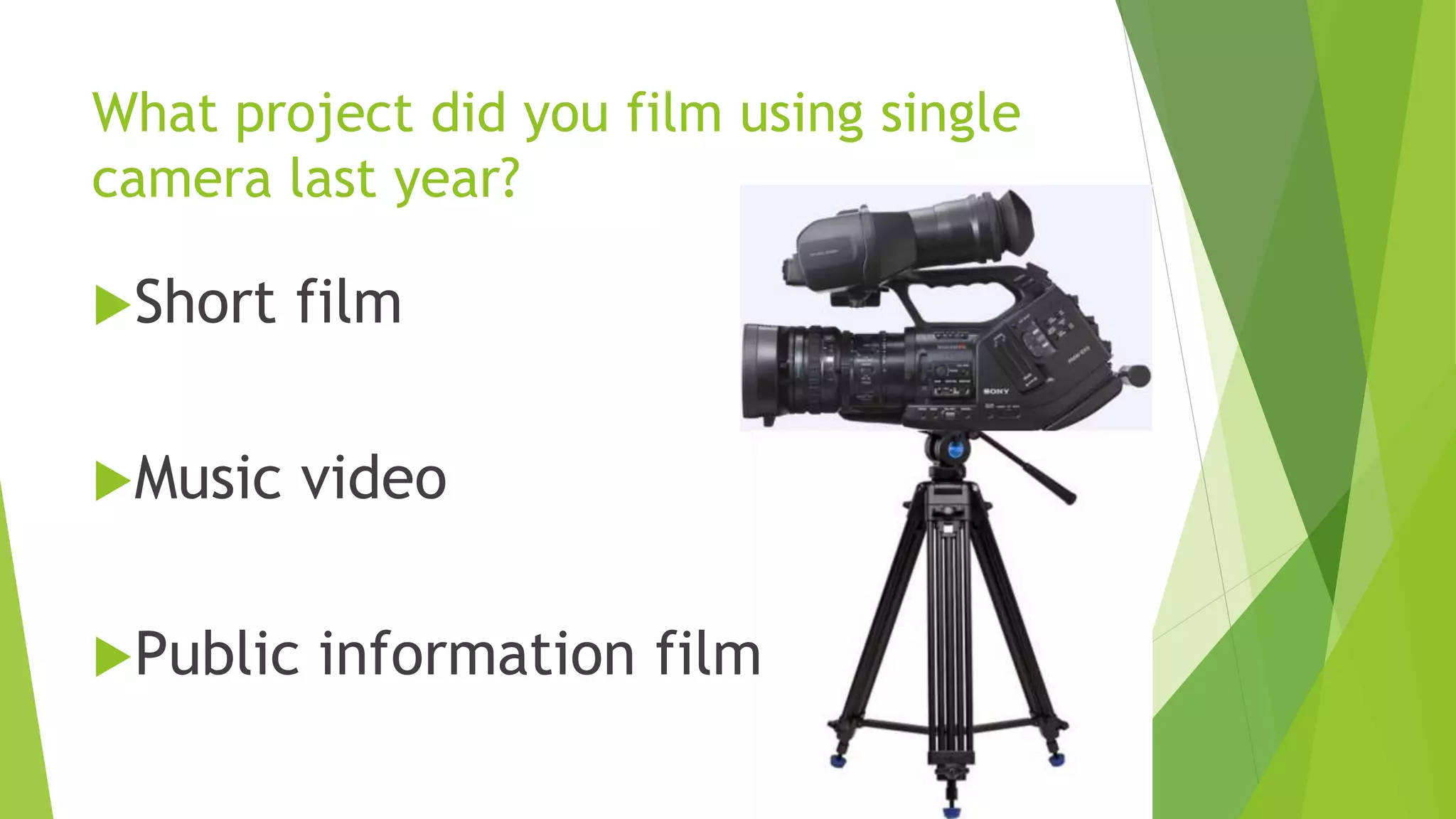
What project did you film using single
camera last year?
Short film
Music video
Public information film
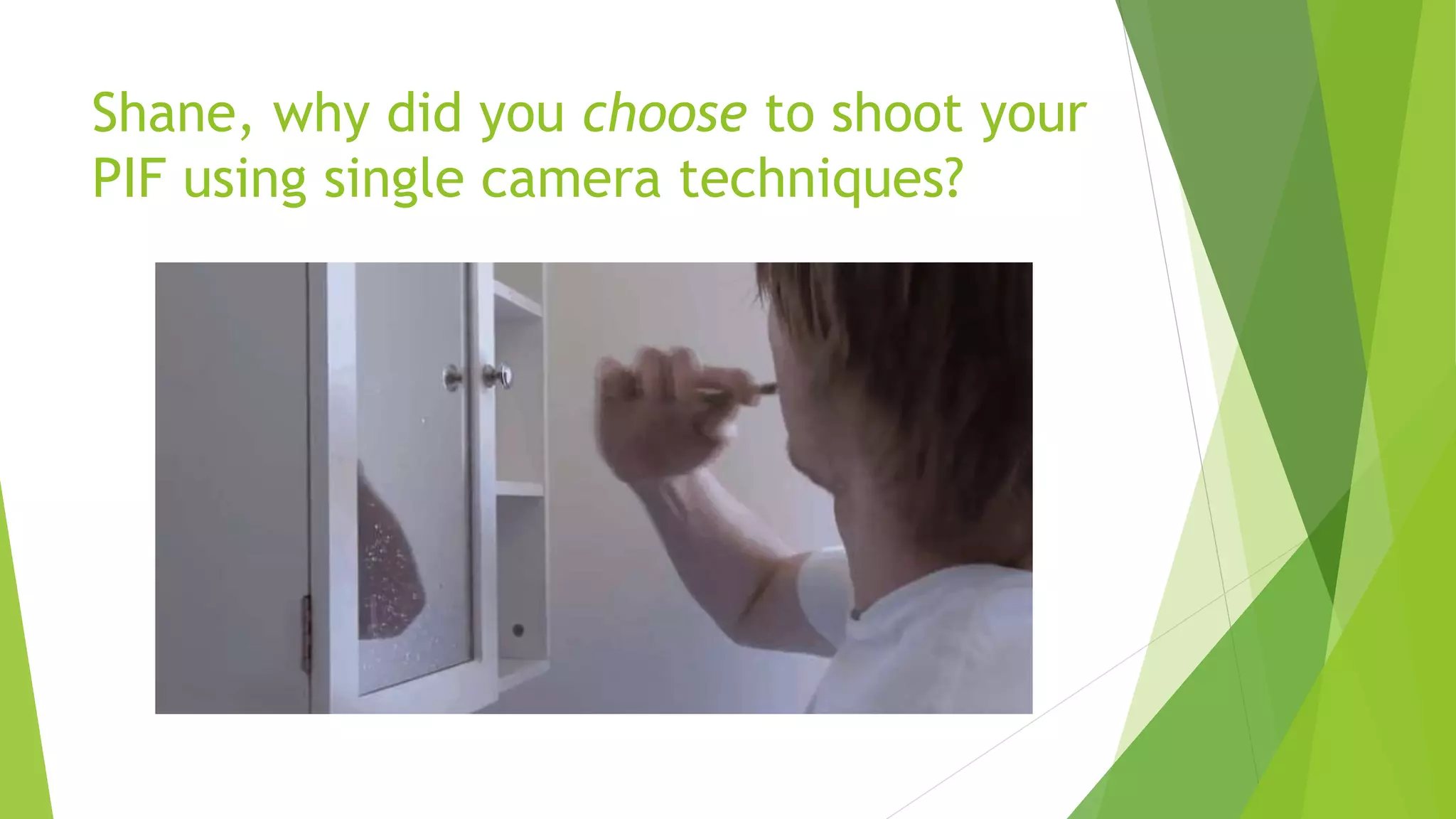
Shane, why did you choose to shoot your
PIF using single camera techniques?
Dan, what were the benefits of filming your
projects using single camera last year?
Josh, hat were the benefits of editing your
music video using single camera last year?
What were the problems of filming using
single camera?
Single camera filming is:
 Creative
 Allows us to get great shots
 We can spend a long time afterwards editing these together into
complicated narratives
 We can introduce special effects and colour correct our shots
 Very time consuming
 Stop / start style of film-making isn’t suitable for factual
programming/reality TV.
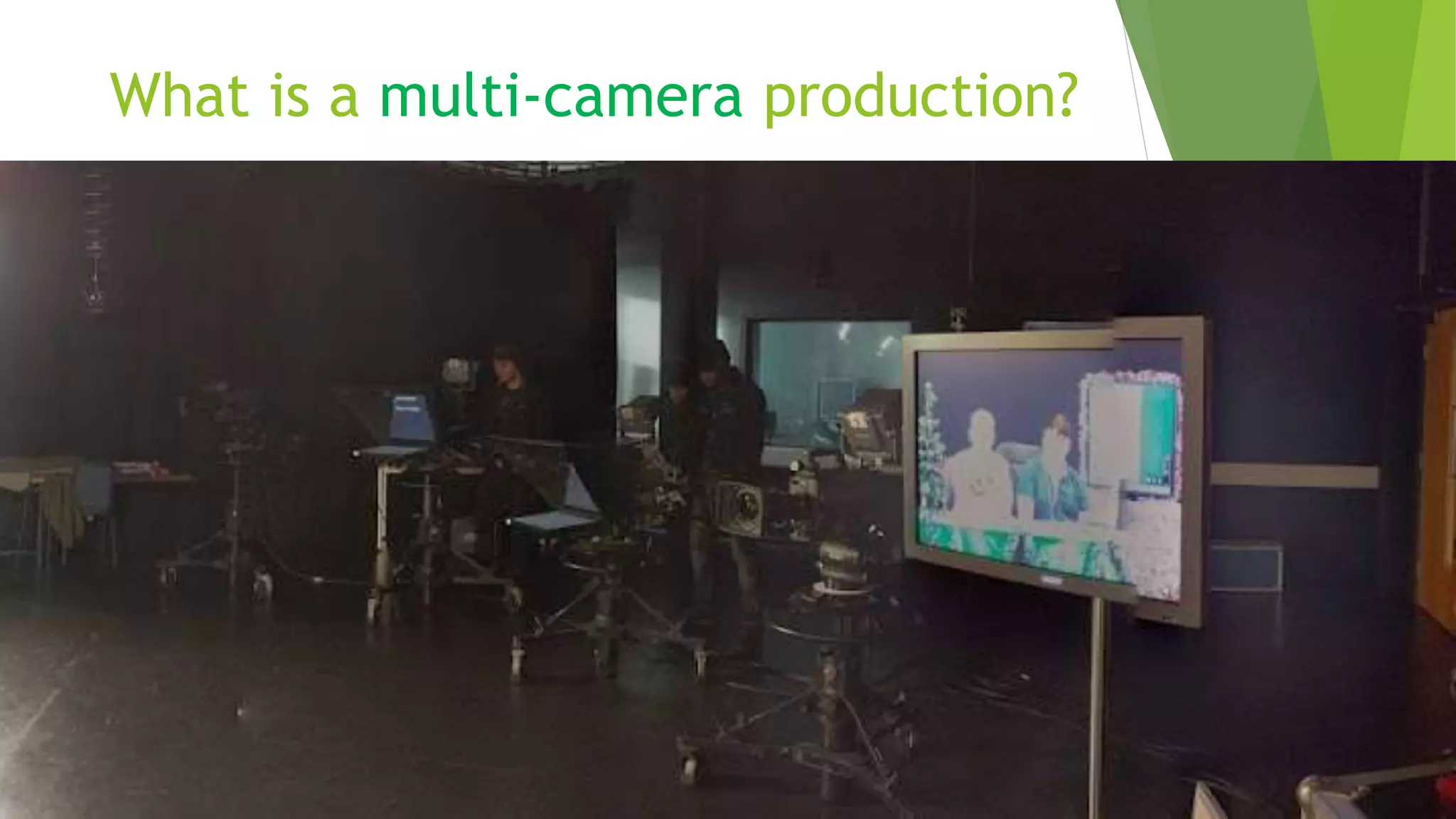
What is a multi-camera production?
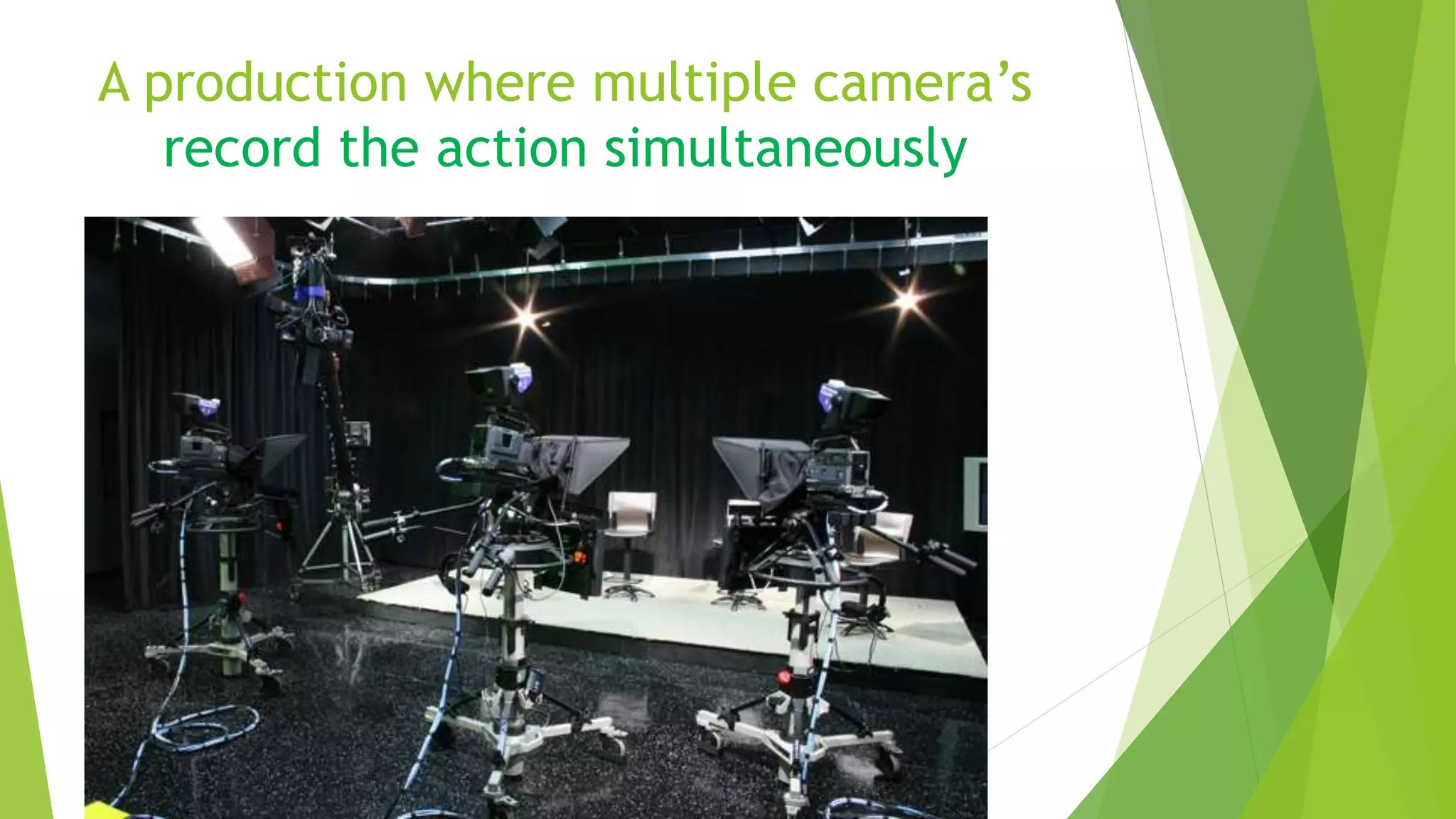
A production where multiple camera’s
record the action simultaneously
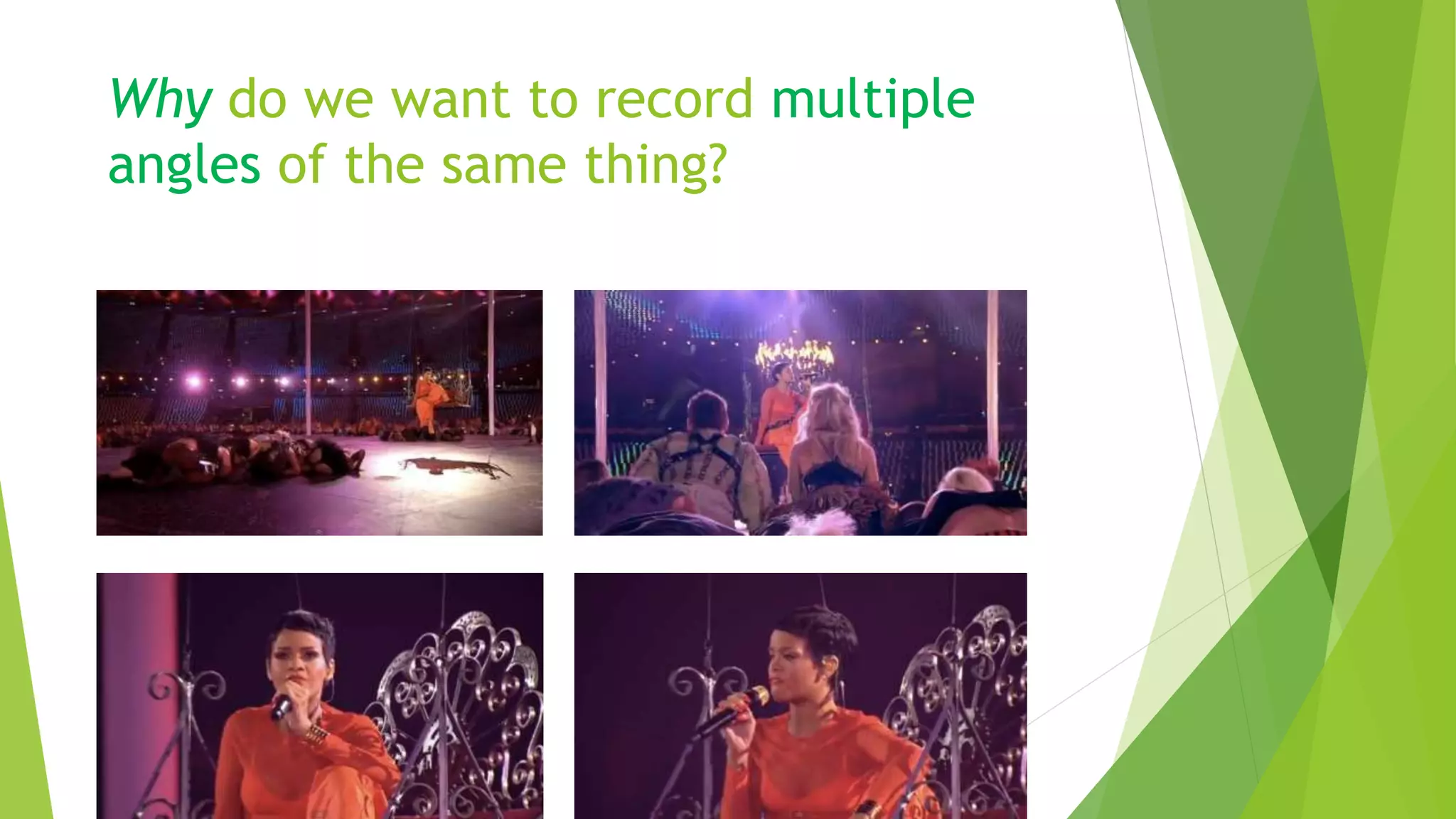
Why do we want to record multiple
angles of the same thing?
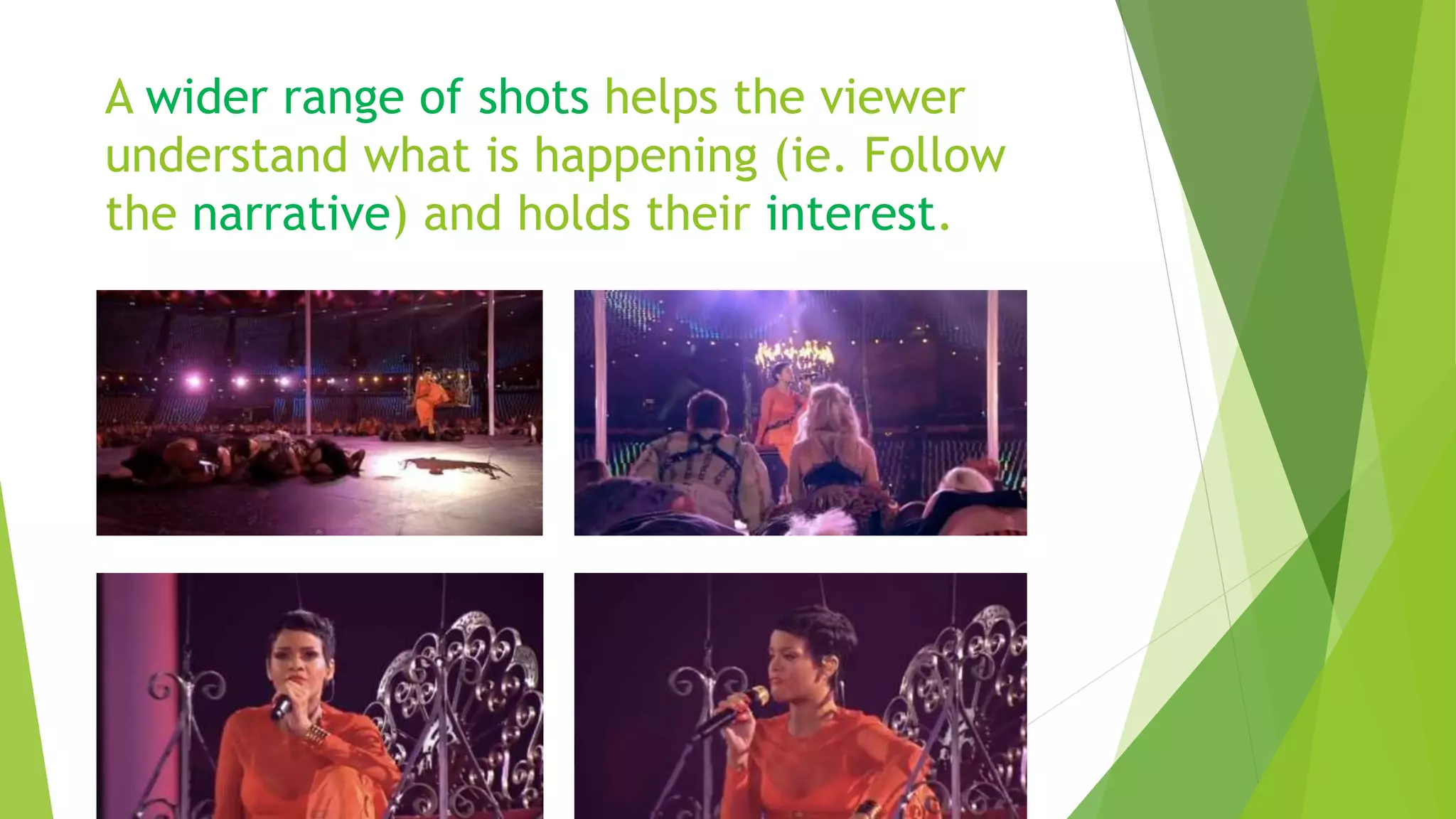
A wider range of shots helps the viewer
understand what is happening (ie. Follow
the narrative) and holds their interest.
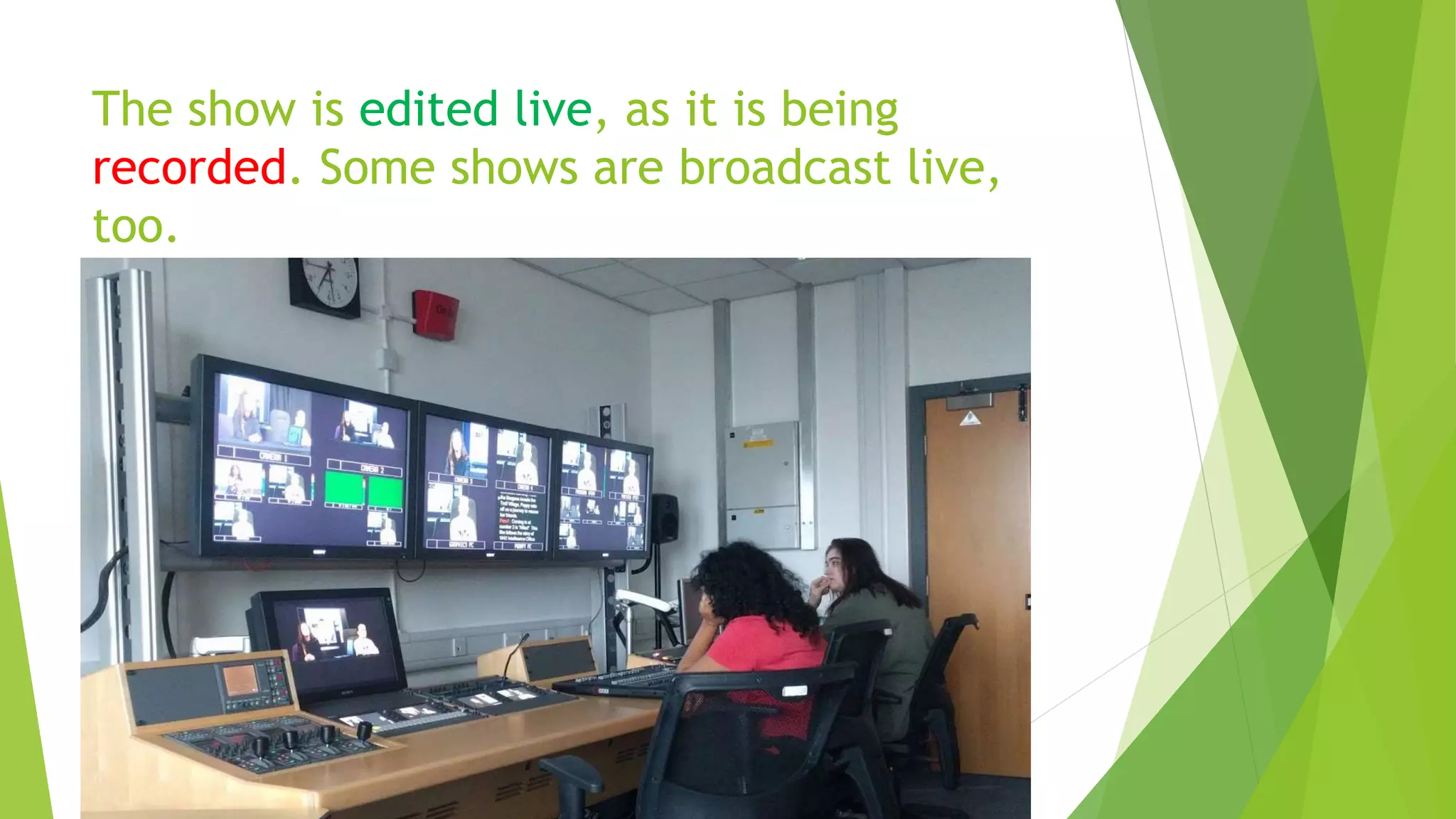
The show is edited live, as it is being
recorded. Some shows are broadcast live,
too.
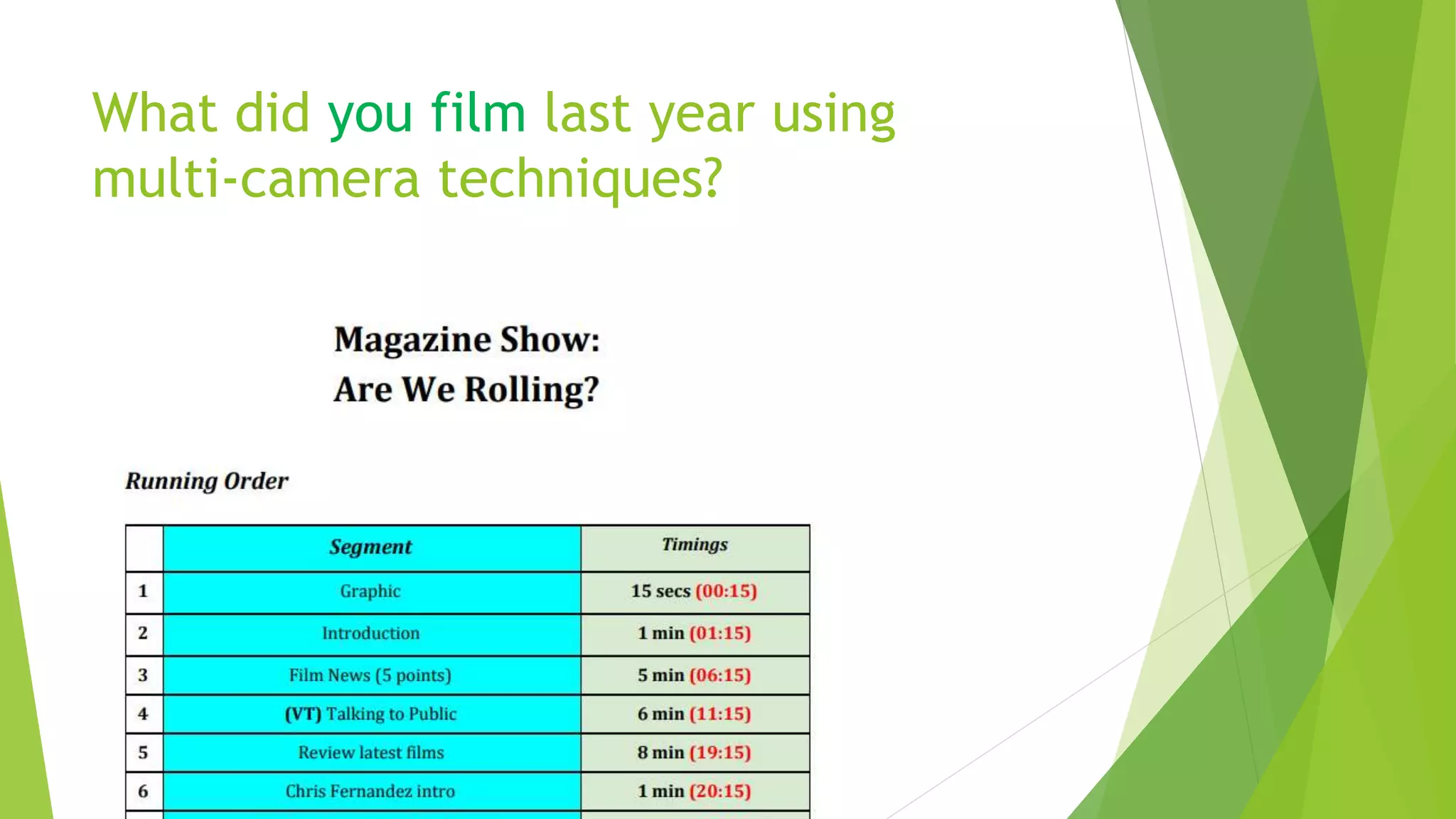
What did you film last year using
multi-camera techniques?
Let’s watch a clip…
What were the benefits of filming your
magazine show using a multi-camera setup?
 Camera Operators can get camera angles of everything happening on
set (both presenters, guests, fashion show area, interviews etc…),
meaning we miss nothing – we call this covering the action, or good
coverage.
 The more angles you have the more different shots the Vision Mixer
can cut between, keeping the show pacy and interesting to watch.
This helps to maintain our viewers interest.
 We can edit our show live, meaning that at the end of the show our
edit is complete and ready to be broadcast. Many programmes
broadcast Live with only a small delay between recording and
broadcast.
Why couldn’t you film your magazine
show using a single camera?
 Could you cover all of the action?
 How many angles would you have with 1 camera?
 Can you ask a guest / host to stop/start what they’re doing/saying in reality
TV?
 How long would it take to edit?
 Would the final edit look good?
 Would the final edit maintain the viewers interest?
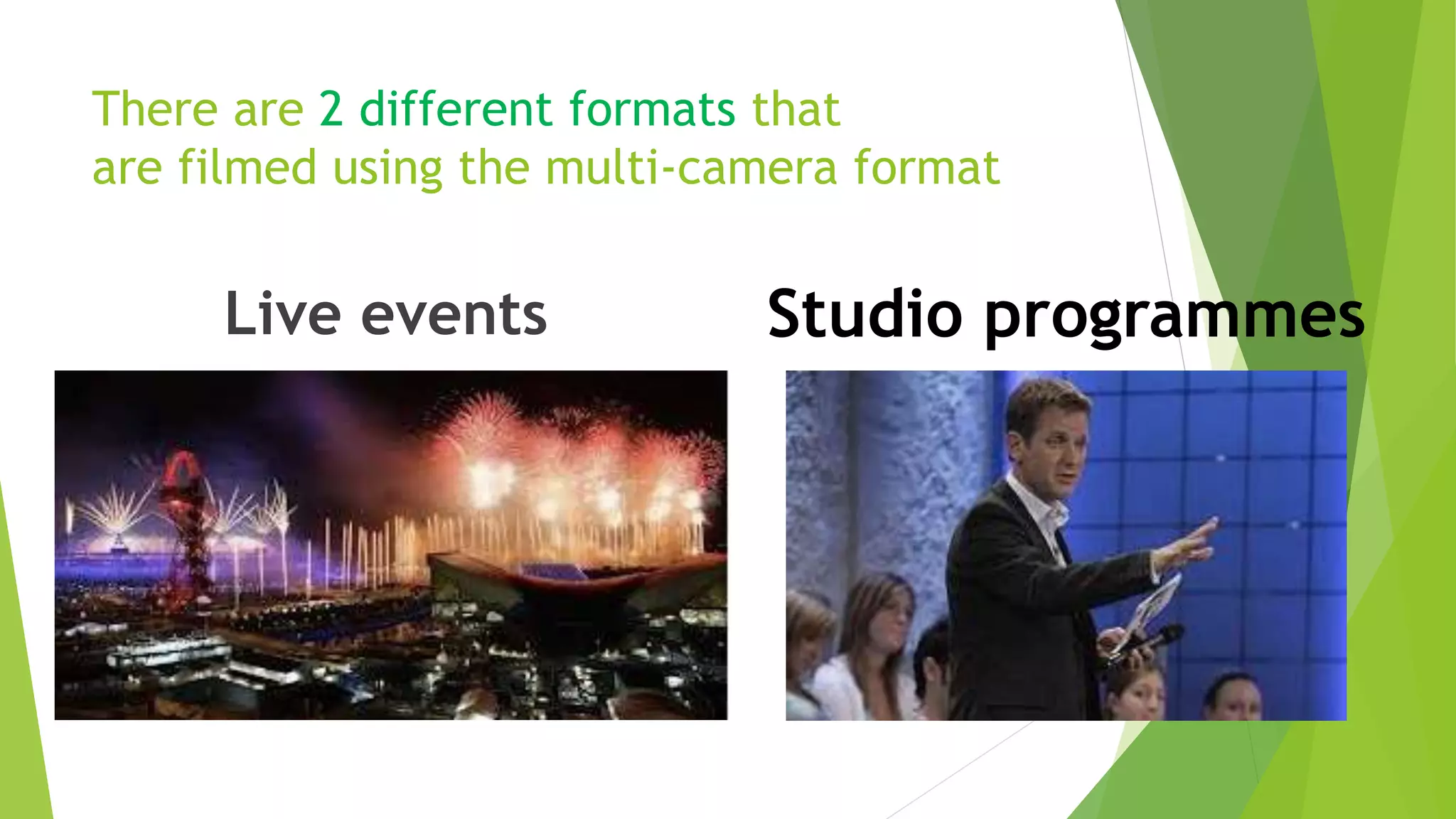
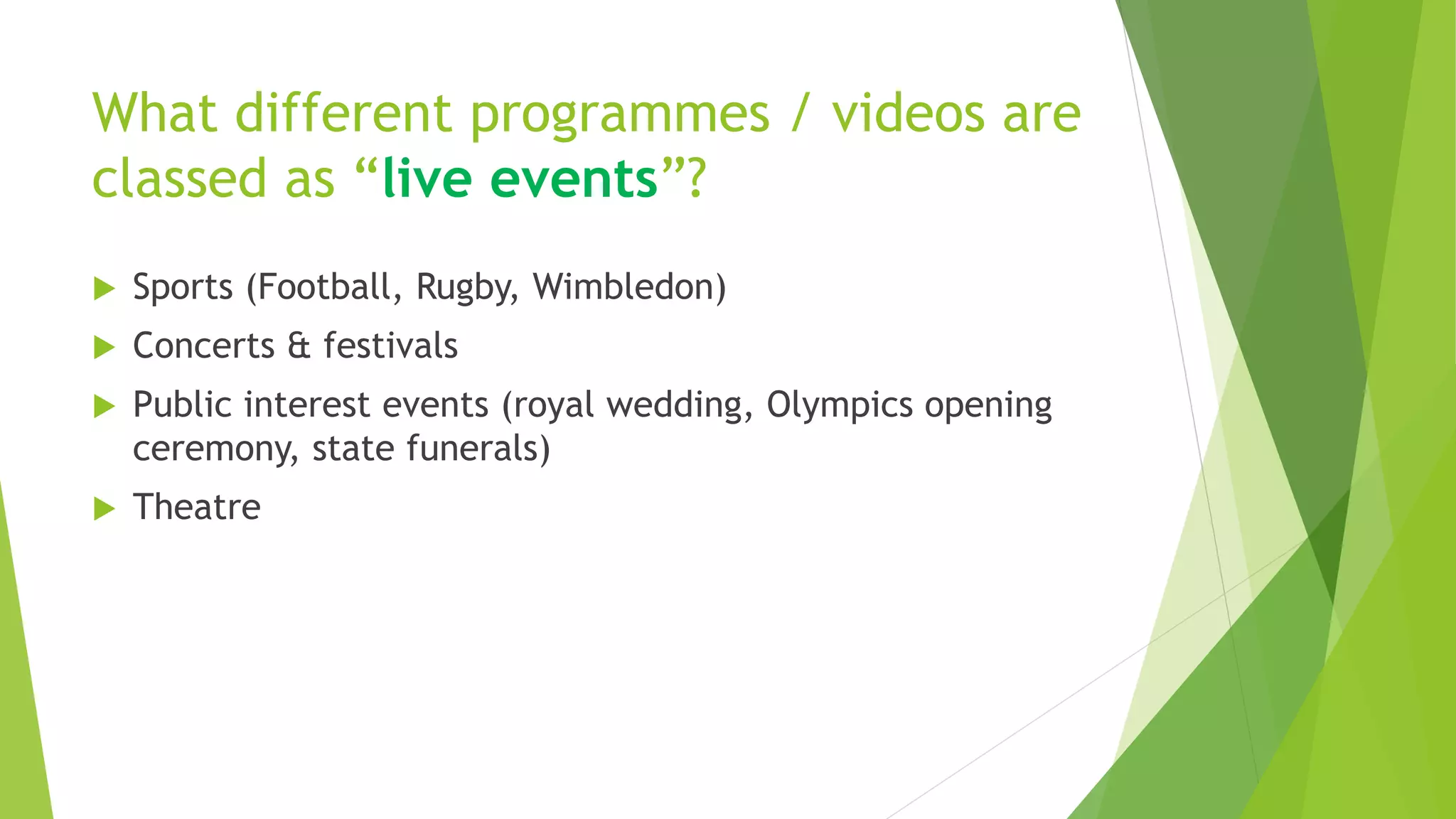
There are 2 different formats that
are filmed using the multi-camera format
Live events Studio programmes
What different programmes / videos are
classed as “live events”?
 Sports (Football, Rugby, Wimbledon)
 Concerts & festivals
 Public interest events (royal wedding, Olympics opening
ceremony, state funerals)
 Theatre
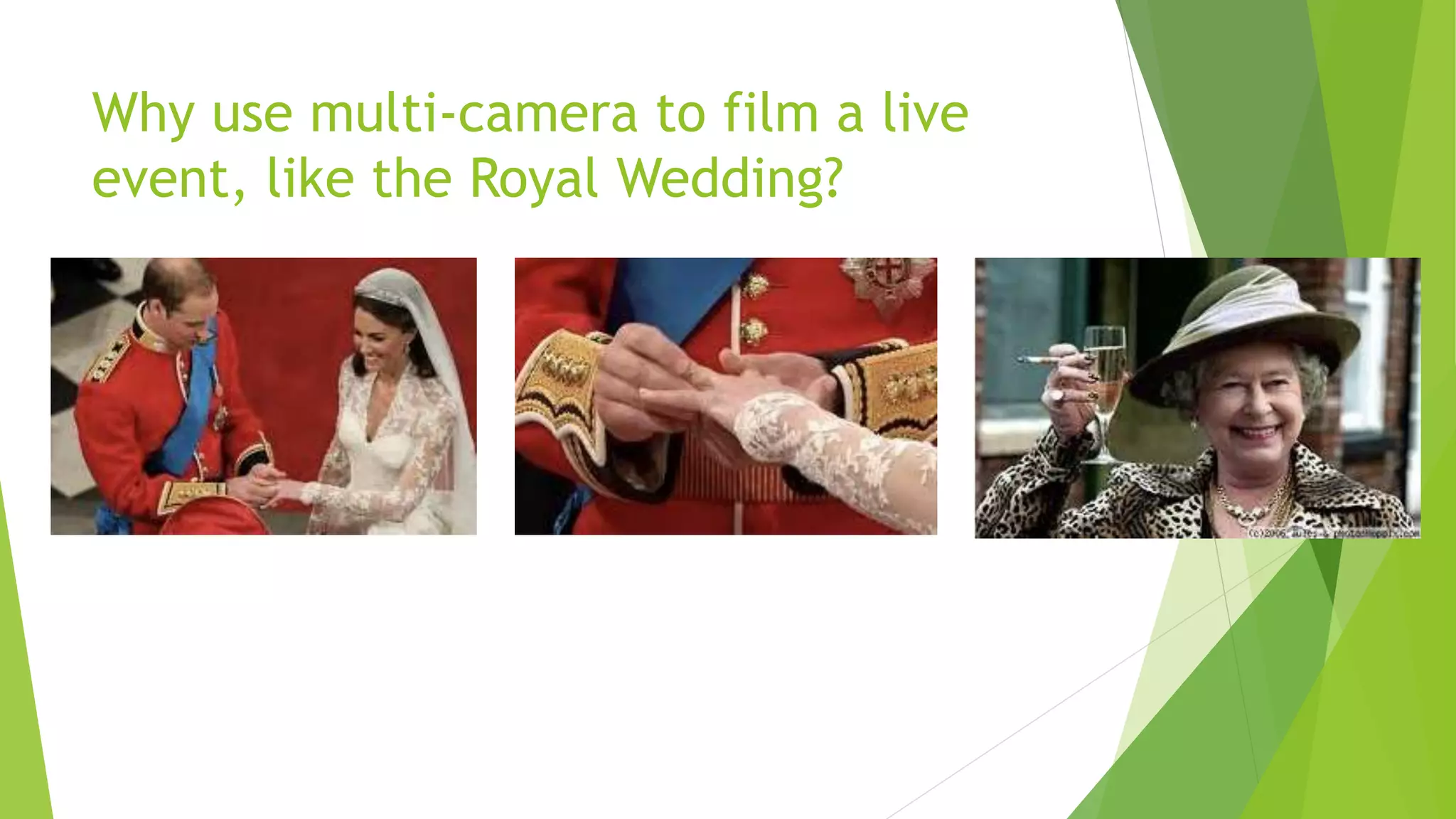
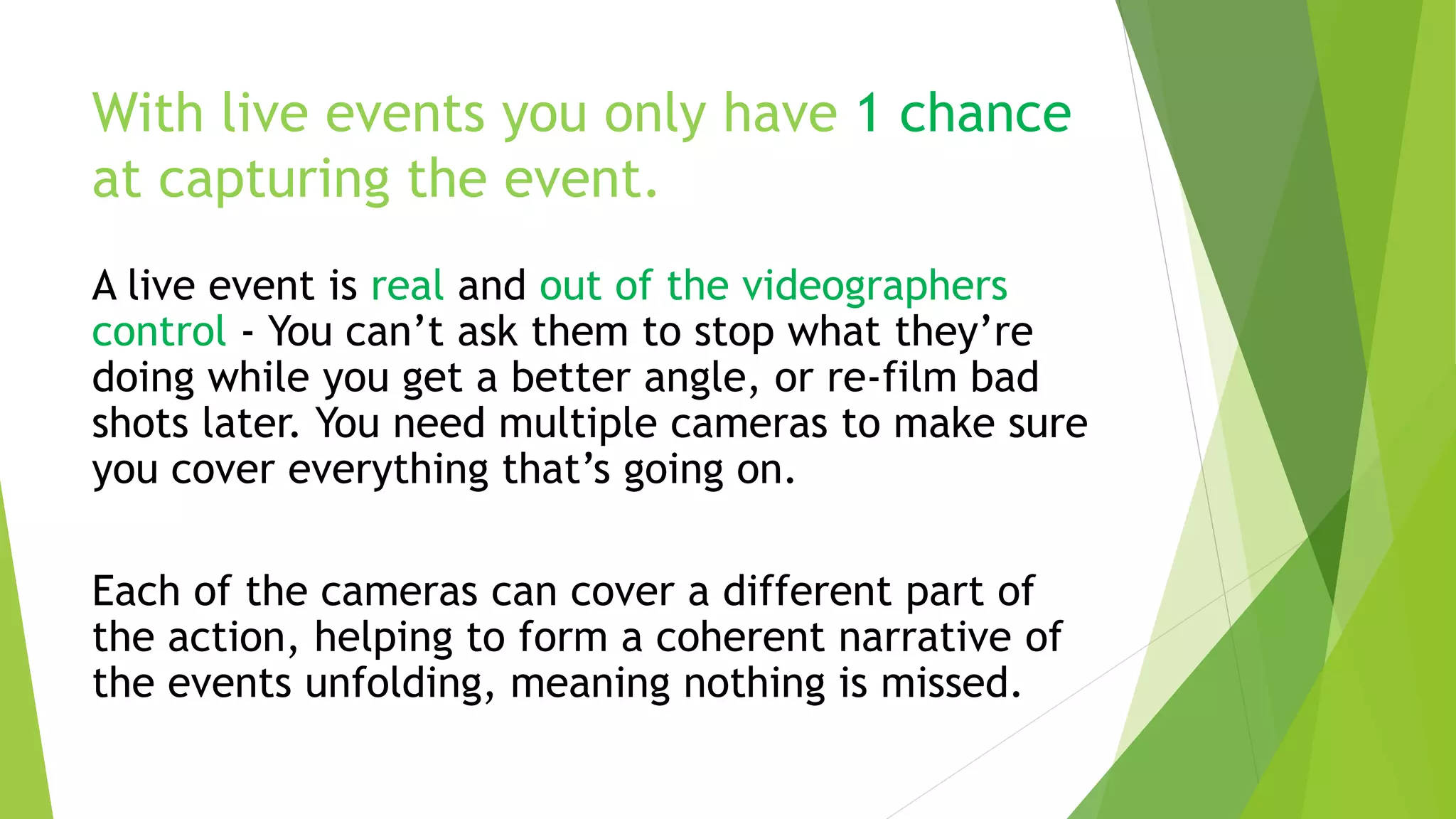
Why use multi-camera to film a live
event, like the Royal Wedding?
With live events you only have 1 chance
at capturing the event.
A live event is real and out of the videographers
control - You can’t ask them to stop what they’re
doing while you get a better angle, or re-film bad
shots later. You need multiple cameras to make sure
you cover everything that’s going on.
Each of the cameras can cover a different part of
the action, helping to form a coherent narrative of
the events unfolding, meaning nothing is missed.
Task 1: Live events
Logon to moodle and go to the multi-camera section.
Working alone, watch the start of the London Olympics
Opening Ceremony. I want to know why you think the
producers chose to shoot it using a multicamera setup.
How did multicamera filming:
 make the video more engaging for the viewer?
 capture the full scale of the event / action?
 broadcast it at the right time?
Feedback:
BBC Olympics Opening ceremony
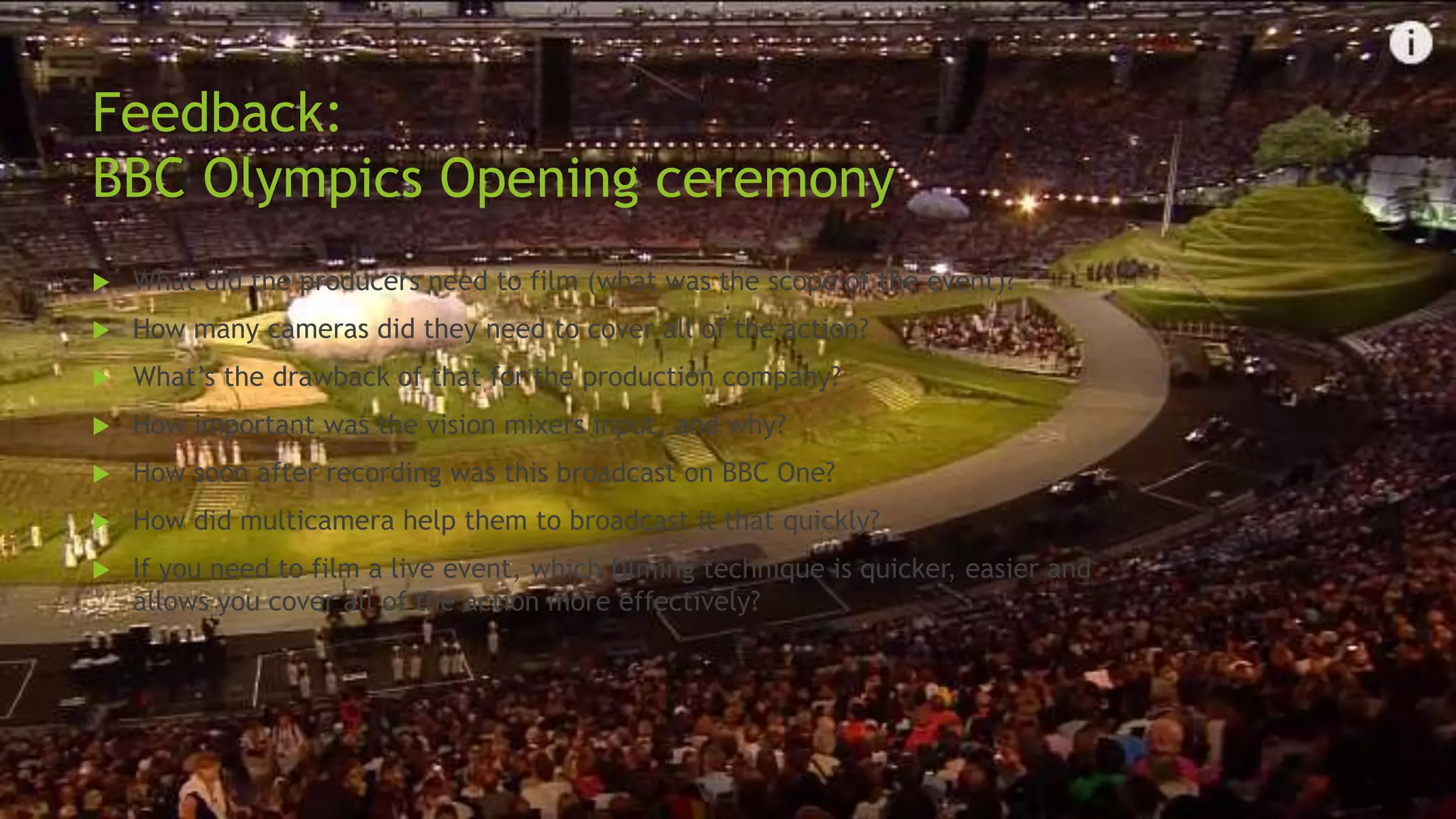
 What did the producers need to film (what was the scope of the event)?
 How many cameras did they need to cover all of the action?
 What’s the drawback of that for the production company?
 How important was the vision mixers input, and why?
 How soon after recording was this broadcast on BBC One?
 How did multicamera help them to broadcast it that quickly?
 If you need to film a live event, which filming technique is quicker, easier and
allows you cover all of the action more effectively?
Task 2: Live Event Plan
 You have decided to submit a pitch to Coventry Council, outlining why
they should hire you to film the Godiva Festival.
 You need to come up with a simple proposal outlining how you will
produce the videos, explaining your technical setup, crew and
equipment requirements, and any techniques you will use.
 Your pitch will need to persuade them that the filming techniques you
have chosen will allow you to create high quality, engaging videos of
all their headliners. You will need to outline when you will broadcast
the videos, and where.
 You will need to create a visual PPT that communicates your vision for
the videos to them.
 You have 20 minutes.
EXTENSION
 Pitch me an idea for a chat show
 Convince me that we should film it using a multi-camera setup.
 Why do we need multiple cameras? How many camera operators will
we need?
 Why should we edit it live? When and where will it be broadcast, and
how soon after recording?
 How will a multicam setup make it more interesting to watch?
 What will the set design be?
 What inserts or segments will we need to pre-record?
End of lesson quiz
 What is the difference between multi-camera and single
camera filming techniques?
 What formats of video would you shoot using single
camera? Why?
 What formats of video would you shoot using multi-
camera? Why?
 What are the benefits of using a multi-camera setup if you
need to film a live event?
BREAK
JOB ROLES
There are many different job roles in a
multi-camera studio.
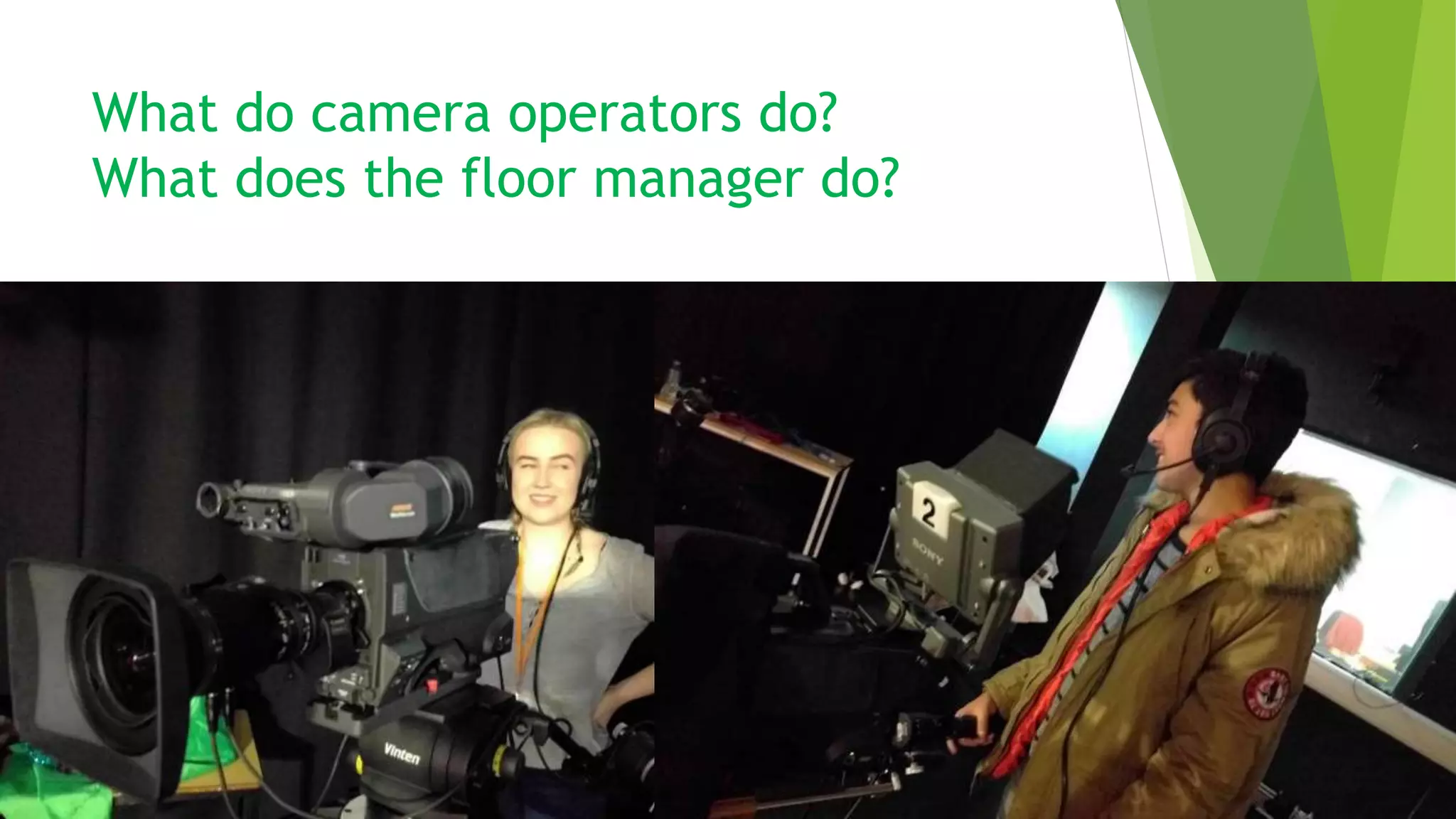
What do camera operators do?
What does the floor manager do?
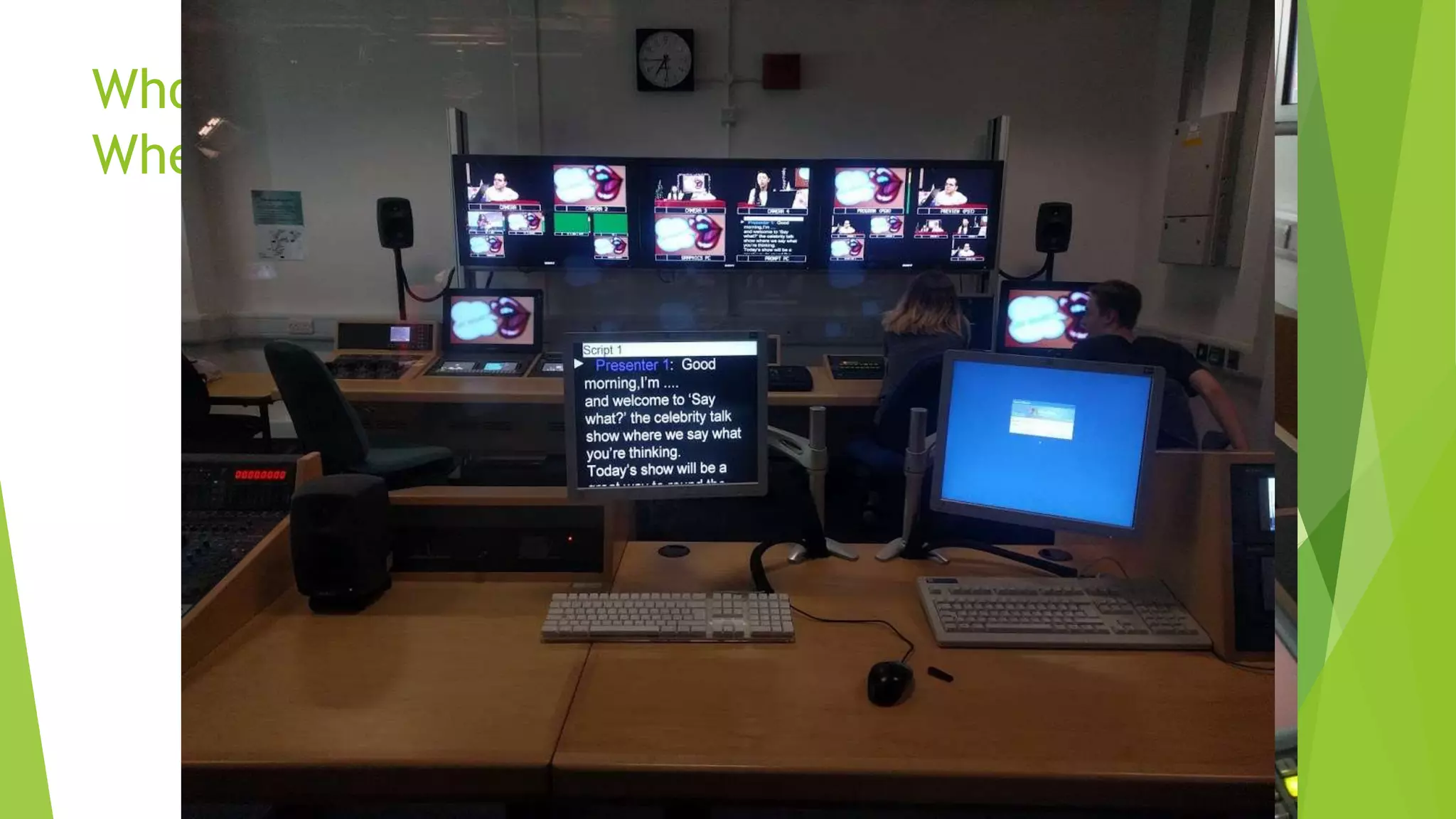
Who edits the show?
When is it edited?
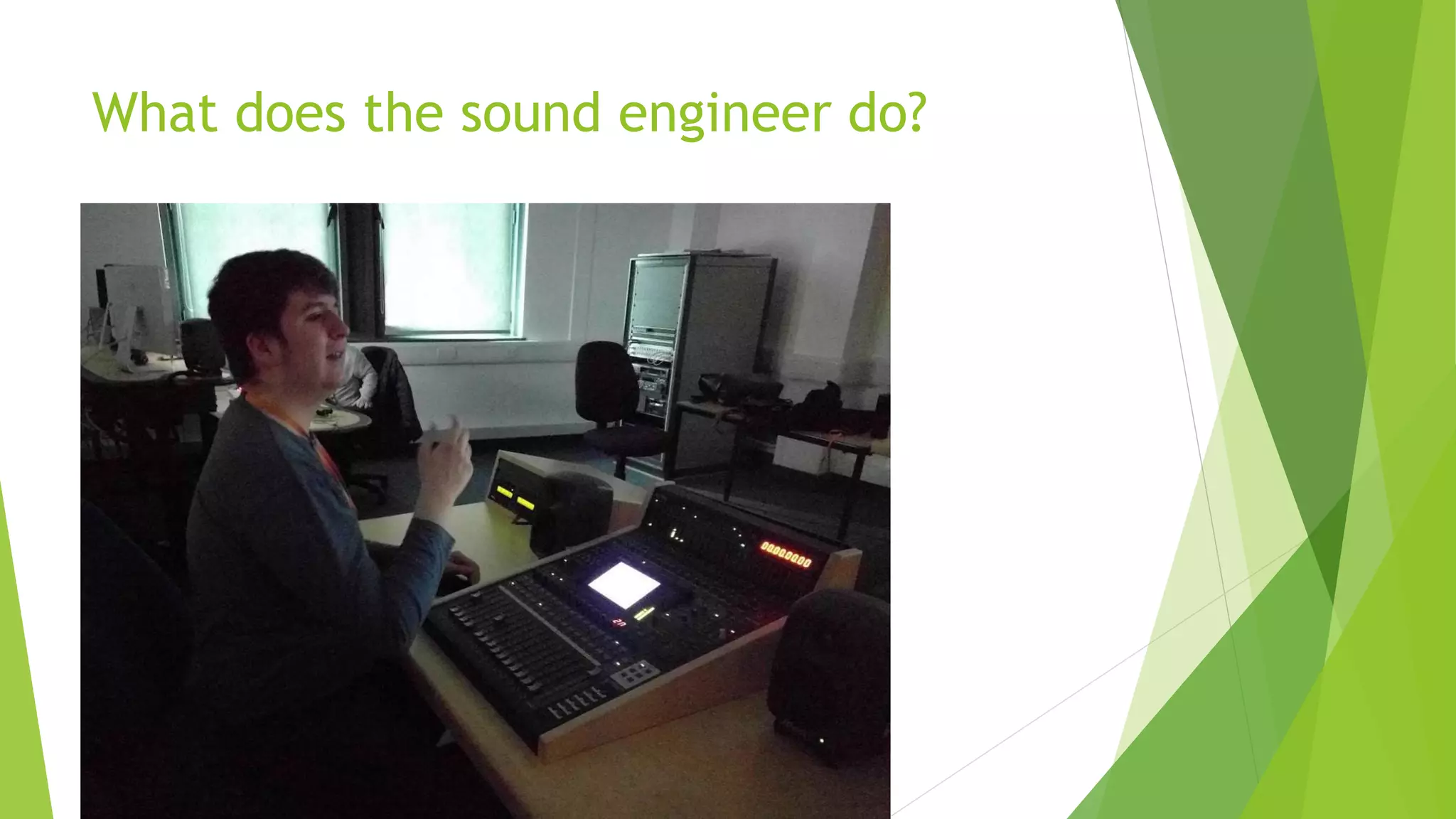
What does the sound engineer do?
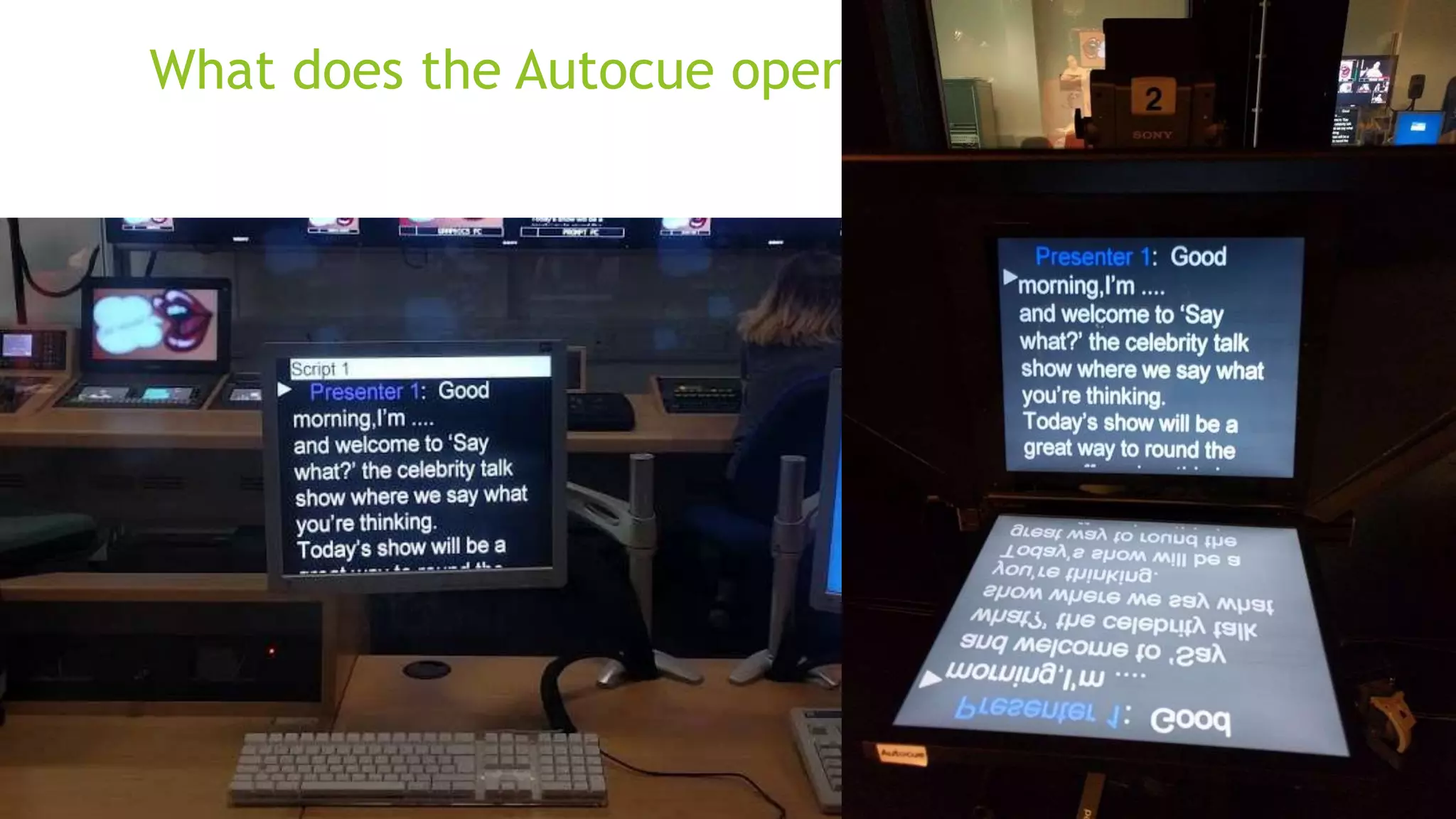
What does the Autocue operator do?

Multicamera lesson 1: intro, single cam versus multicam, live events

  • 1.
  • 2.
    Today You are goingto begin your multi-camera filming techniques unit. We are going to begin by looking at what multicamera filming is and why TV producers choose to shoot their projects using a multicamera setup. After break you will then begin to brainstorm ideas for your own multicamera project in groups.
  • 3.
    By the endof this lesson, you  MUST understand the difference between single and multi-camera filming.  SHOULD explain what different formats producers would use multi-camera filming techniques for.  COULD evaluate why producers choose to film a live event using multi-camera techniques.
  • 4.
    There are 2different ways we can produce a video. What are they? Hint: think of the 2 different styles of filming & editing. 1. Single camera 2. Multicamera
  • 5.
    What is singlecamera technique?  Film your video 1 angle or shot at a time, using a single camera.  Every time you need to get a different angle (or shot) you  stop filming,  stop your actors or guests,  reposition the camera  Change your lighting  Film your next shot  Repeat  Edit your project after you’ve finished filming, often over days, weeks or months.
  • 6.
    What project didyou film using single camera last year? Short film Music video Public information film
  • 7.
    Shane, why didyou choose to shoot your PIF using single camera techniques?
  • 8.
    Dan, what werethe benefits of filming your projects using single camera last year?
  • 9.
    Josh, hat werethe benefits of editing your music video using single camera last year?
  • 10.
    What were theproblems of filming using single camera?
  • 11.
    Single camera filmingis:  Creative  Allows us to get great shots  We can spend a long time afterwards editing these together into complicated narratives  We can introduce special effects and colour correct our shots  Very time consuming  Stop / start style of film-making isn’t suitable for factual programming/reality TV.
  • 12.
    What is amulti-camera production?
  • 13.
    A production wheremultiple camera’s record the action simultaneously
  • 14.
    Why do wewant to record multiple angles of the same thing?
  • 15.
    A wider rangeof shots helps the viewer understand what is happening (ie. Follow the narrative) and holds their interest.
  • 16.
    The show isedited live, as it is being recorded. Some shows are broadcast live, too.
  • 17.
    What did youfilm last year using multi-camera techniques?
  • 18.
  • 19.
    What were thebenefits of filming your magazine show using a multi-camera setup?  Camera Operators can get camera angles of everything happening on set (both presenters, guests, fashion show area, interviews etc…), meaning we miss nothing – we call this covering the action, or good coverage.  The more angles you have the more different shots the Vision Mixer can cut between, keeping the show pacy and interesting to watch. This helps to maintain our viewers interest.  We can edit our show live, meaning that at the end of the show our edit is complete and ready to be broadcast. Many programmes broadcast Live with only a small delay between recording and broadcast.
  • 20.
    Why couldn’t youfilm your magazine show using a single camera?  Could you cover all of the action?  How many angles would you have with 1 camera?  Can you ask a guest / host to stop/start what they’re doing/saying in reality TV?  How long would it take to edit?  Would the final edit look good?  Would the final edit maintain the viewers interest?
  • 21.
    There are 2different formats that are filmed using the multi-camera format Live events Studio programmes
  • 22.
    What different programmes/ videos are classed as “live events”?  Sports (Football, Rugby, Wimbledon)  Concerts & festivals  Public interest events (royal wedding, Olympics opening ceremony, state funerals)  Theatre
  • 23.
    Why use multi-camerato film a live event, like the Royal Wedding?
  • 24.
    With live eventsyou only have 1 chance at capturing the event. A live event is real and out of the videographers control - You can’t ask them to stop what they’re doing while you get a better angle, or re-film bad shots later. You need multiple cameras to make sure you cover everything that’s going on. Each of the cameras can cover a different part of the action, helping to form a coherent narrative of the events unfolding, meaning nothing is missed.
  • 25.
    Task 1: Liveevents Logon to moodle and go to the multi-camera section. Working alone, watch the start of the London Olympics Opening Ceremony. I want to know why you think the producers chose to shoot it using a multicamera setup. How did multicamera filming:  make the video more engaging for the viewer?  capture the full scale of the event / action?  broadcast it at the right time?
  • 26.
    Feedback: BBC Olympics Openingceremony  What did the producers need to film (what was the scope of the event)?  How many cameras did they need to cover all of the action?  What’s the drawback of that for the production company?  How important was the vision mixers input, and why?  How soon after recording was this broadcast on BBC One?  How did multicamera help them to broadcast it that quickly?  If you need to film a live event, which filming technique is quicker, easier and allows you cover all of the action more effectively?
  • 27.
    Task 2: LiveEvent Plan  You have decided to submit a pitch to Coventry Council, outlining why they should hire you to film the Godiva Festival.  You need to come up with a simple proposal outlining how you will produce the videos, explaining your technical setup, crew and equipment requirements, and any techniques you will use.  Your pitch will need to persuade them that the filming techniques you have chosen will allow you to create high quality, engaging videos of all their headliners. You will need to outline when you will broadcast the videos, and where.  You will need to create a visual PPT that communicates your vision for the videos to them.  You have 20 minutes.
  • 28.
    EXTENSION  Pitch mean idea for a chat show  Convince me that we should film it using a multi-camera setup.  Why do we need multiple cameras? How many camera operators will we need?  Why should we edit it live? When and where will it be broadcast, and how soon after recording?  How will a multicam setup make it more interesting to watch?  What will the set design be?  What inserts or segments will we need to pre-record?
  • 29.
    End of lessonquiz  What is the difference between multi-camera and single camera filming techniques?  What formats of video would you shoot using single camera? Why?  What formats of video would you shoot using multi- camera? Why?  What are the benefits of using a multi-camera setup if you need to film a live event?
  • 30.
  • 31.
  • 32.
    There are manydifferent job roles in a multi-camera studio.
  • 33.
    What do cameraoperators do? What does the floor manager do?
  • 34.
    Who edits theshow? When is it edited?
  • 35.
    What does thesound engineer do?
  • 36.
    What does theAutocue operator do?