
Risk Intelligence – Making the
Right Choices in Cyber Security
Mason Karrer, Principal GRC Strategist, RSΛ
2
Companies are struggling to obtain a holistic
view of risk and show risk management ROI
Risk Complexity
Risk Volatility
Volume of Risks
Resource Demands
Operational Risk Today
3
• IT risks – such as cyber,cloud,IoT
• Reputation and social media
• Third-partyrelationships
• Accountability to ensure effective oversightof
risks
• Strategic change management
• Increased Regulations(GDPR)
• Talent recruitment and retention
• Complexfinancial and operating models
• Resiliencyrisks
Emerging Risks
4
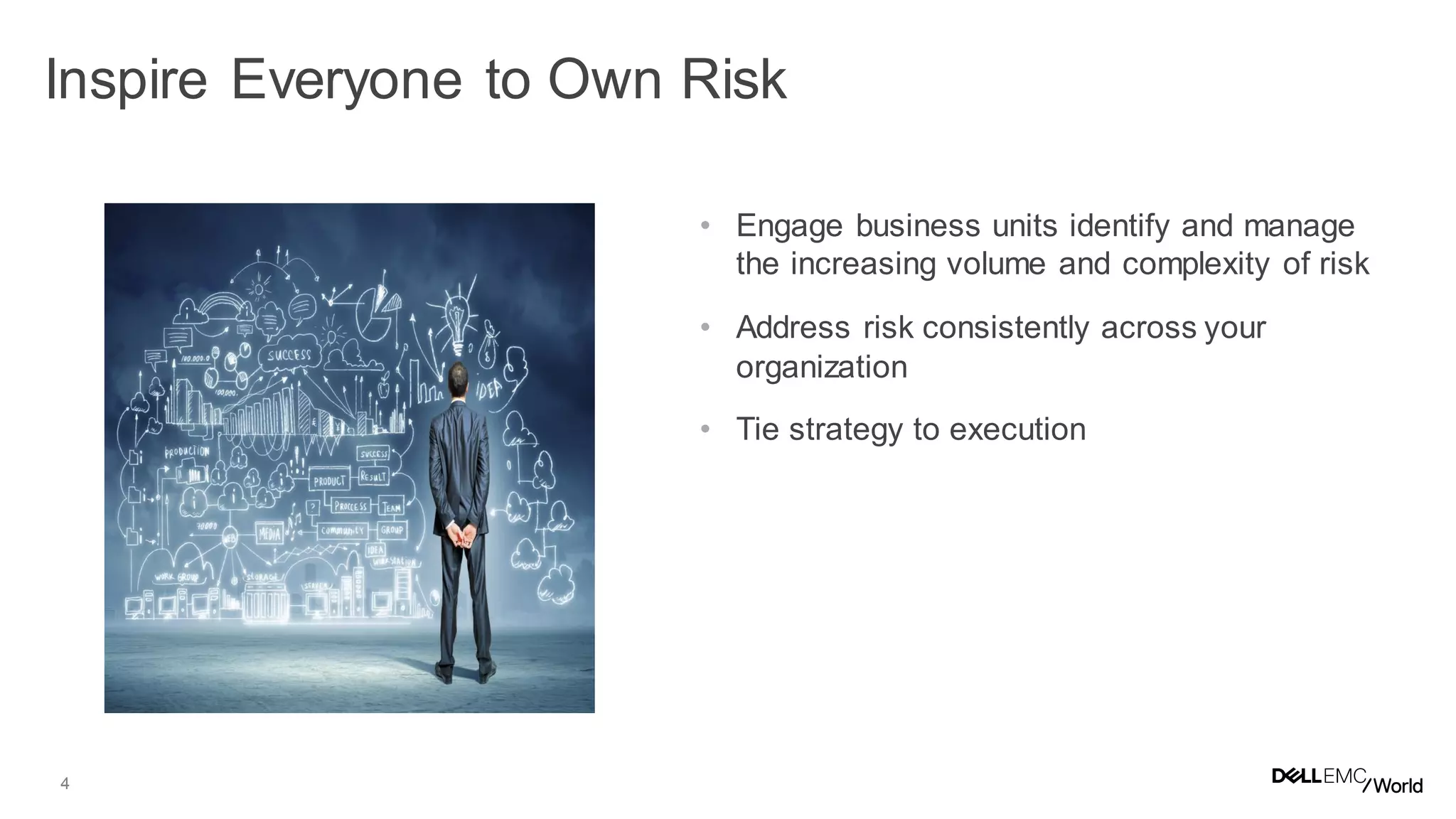
• Engage business units identify and manage
the increasing volume and complexity of risk
• Address risk consistently across your
organization
• Tie strategy to execution
Inspire Everyone to Own Risk
5
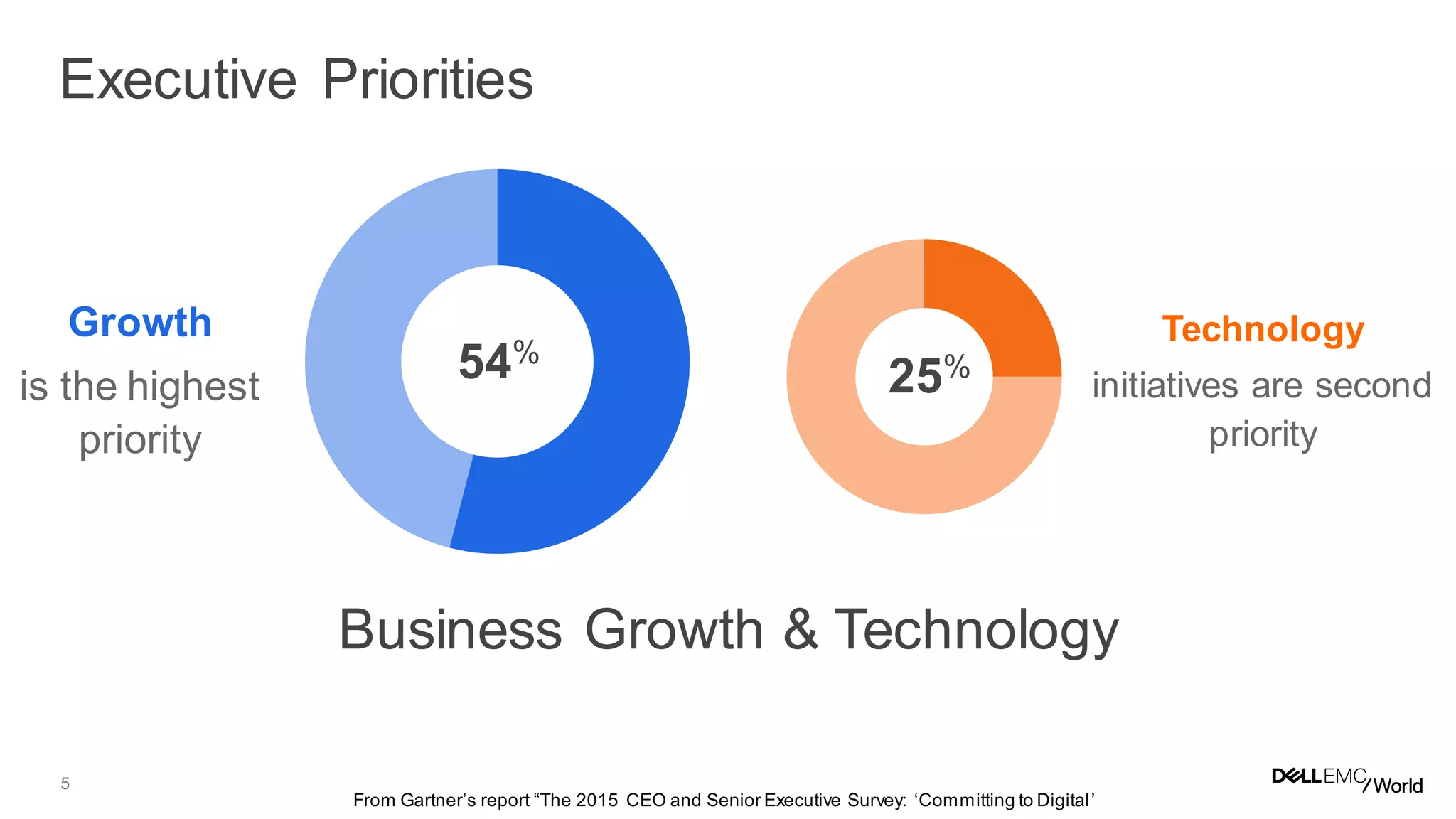
25%
Technology
initiatives are second
priority
Business Growth & Technology
Growth
is the highest
priority
54%
From Gartner’s report “The 2015 CEO and Senior Executive Survey: ‘Committing to Digital’
Executive Priorities
6
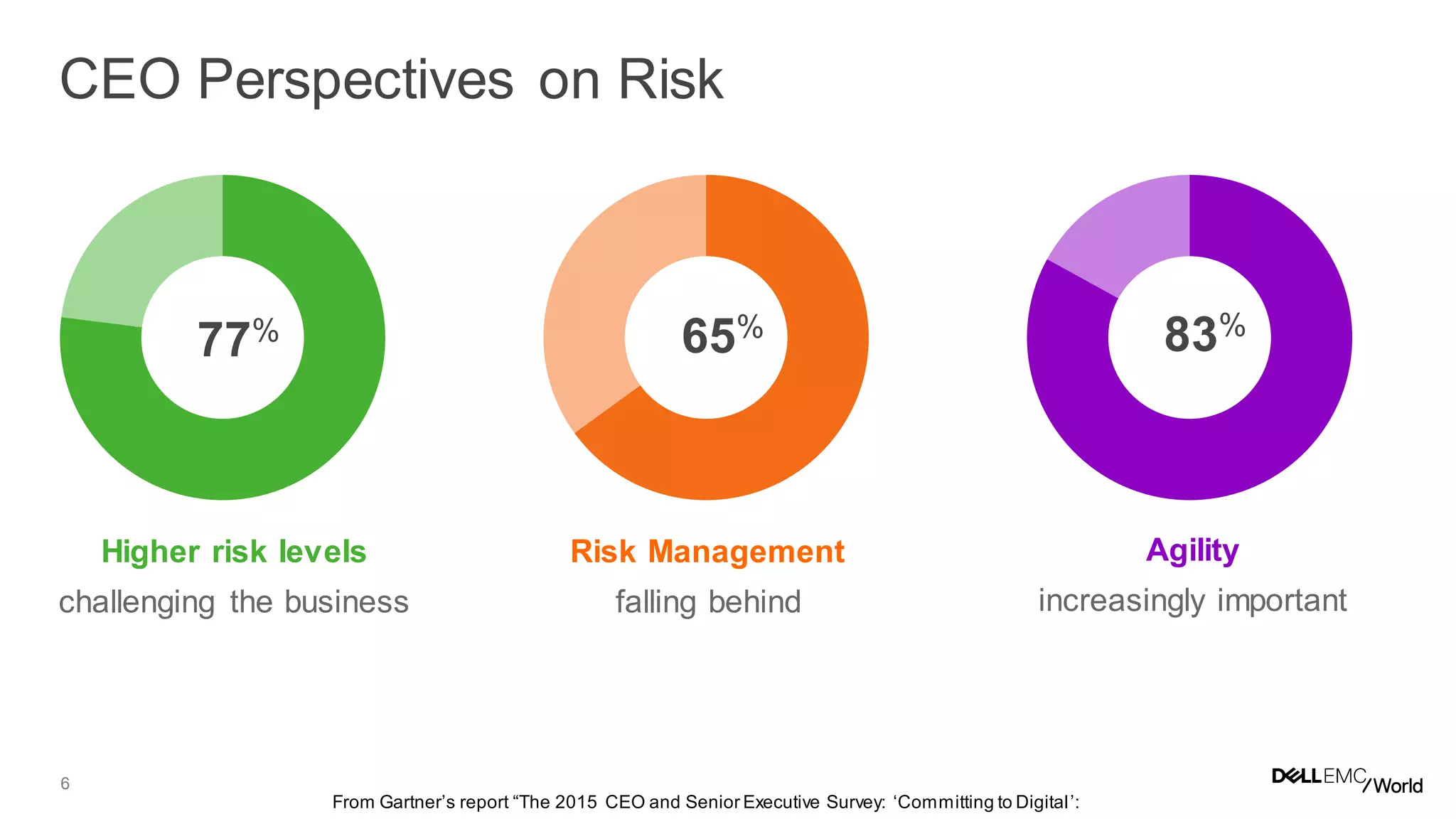
From Gartner’s report “The 2015 CEO and Senior Executive Survey: ‘Committing to Digital’:
77% 65% 83%
Higher risk levels
challenging the business
Risk Management
falling behind
Agility
increasingly important
CEO Perspectives on Risk
7
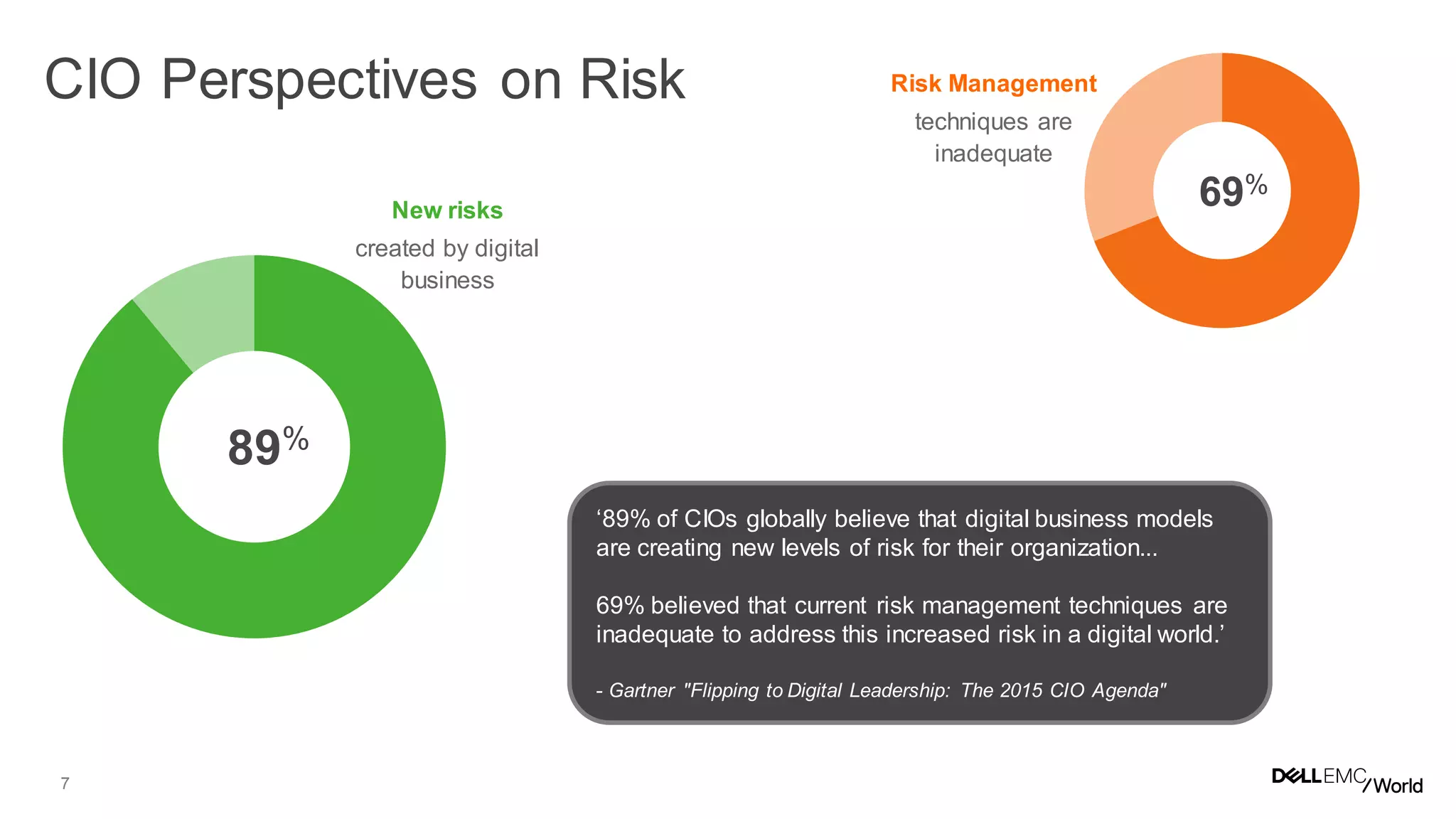
89%
69%
New risks
created by digital
business
Risk Management
techniques are
inadequate
‘89% of CIOs globally believe that digital business models
are creating new levels of risk for their organization...
69% believed that current risk management techniques are
inadequate to address this increased risk in a digital world.’
- Gartner "Flipping to Digital Leadership: The 2015 CIO Agenda"
CIO Perspectives on Risk
8
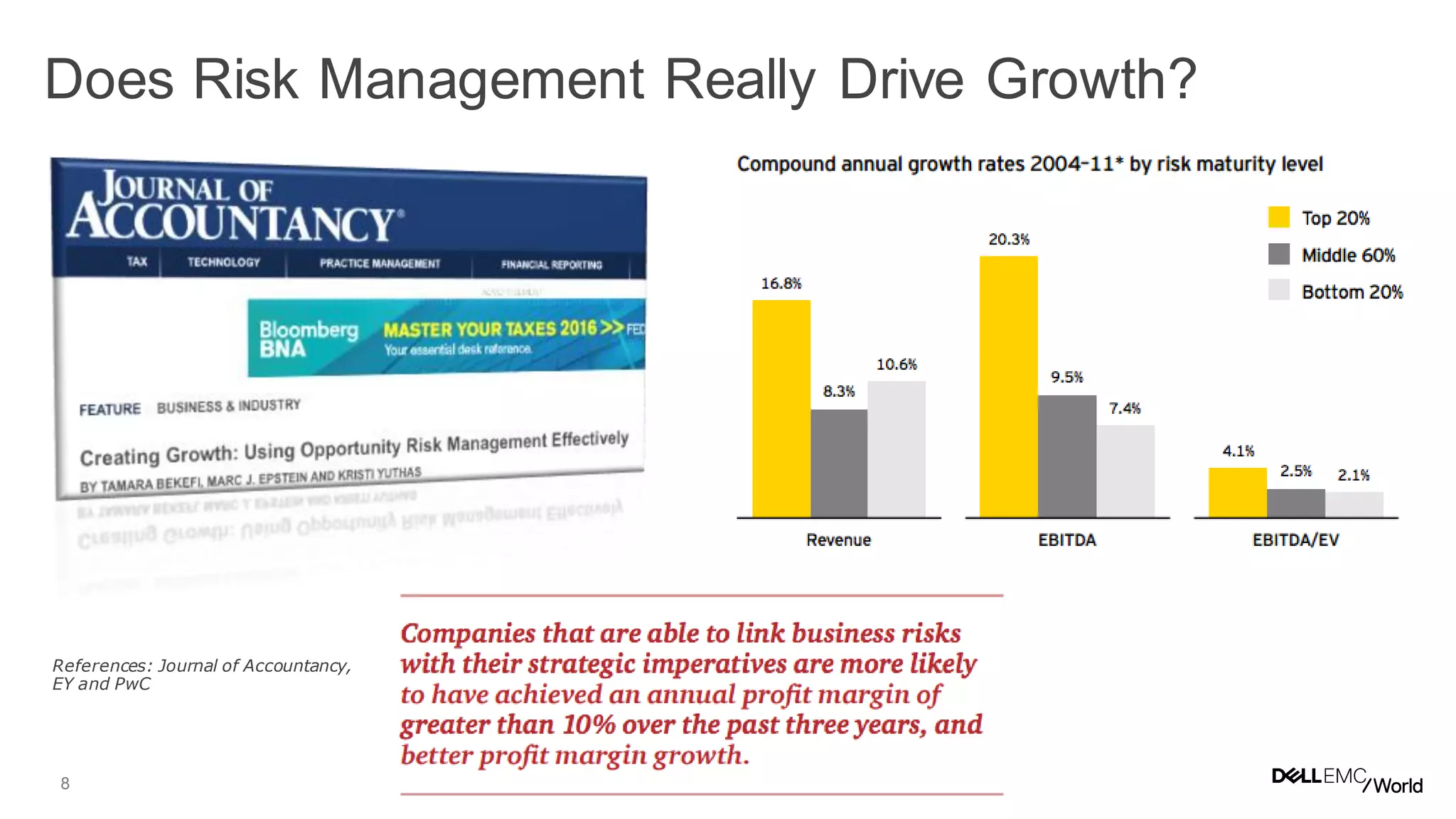
References: Journal of Accountancy,
EY and PwC
Does Risk Management Really Drive Growth?
9
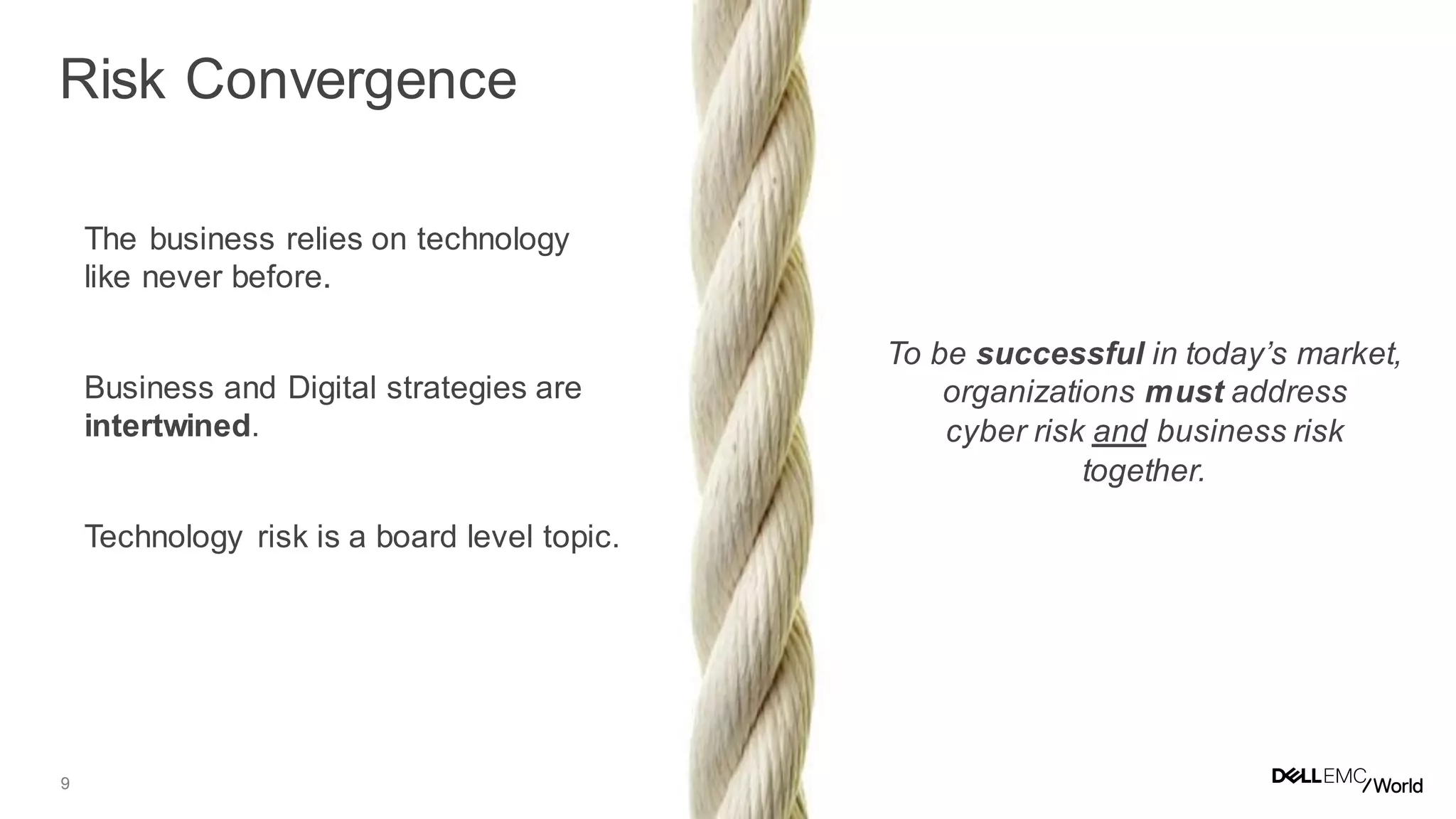
The business relies on technology
like never before.
Business and Digital strategies are
intertwined.
Technology risk is a board level topic.
To be successful in today’s market,
organizations must address
cyber risk and business risk
together.
Risk Convergence
10
12
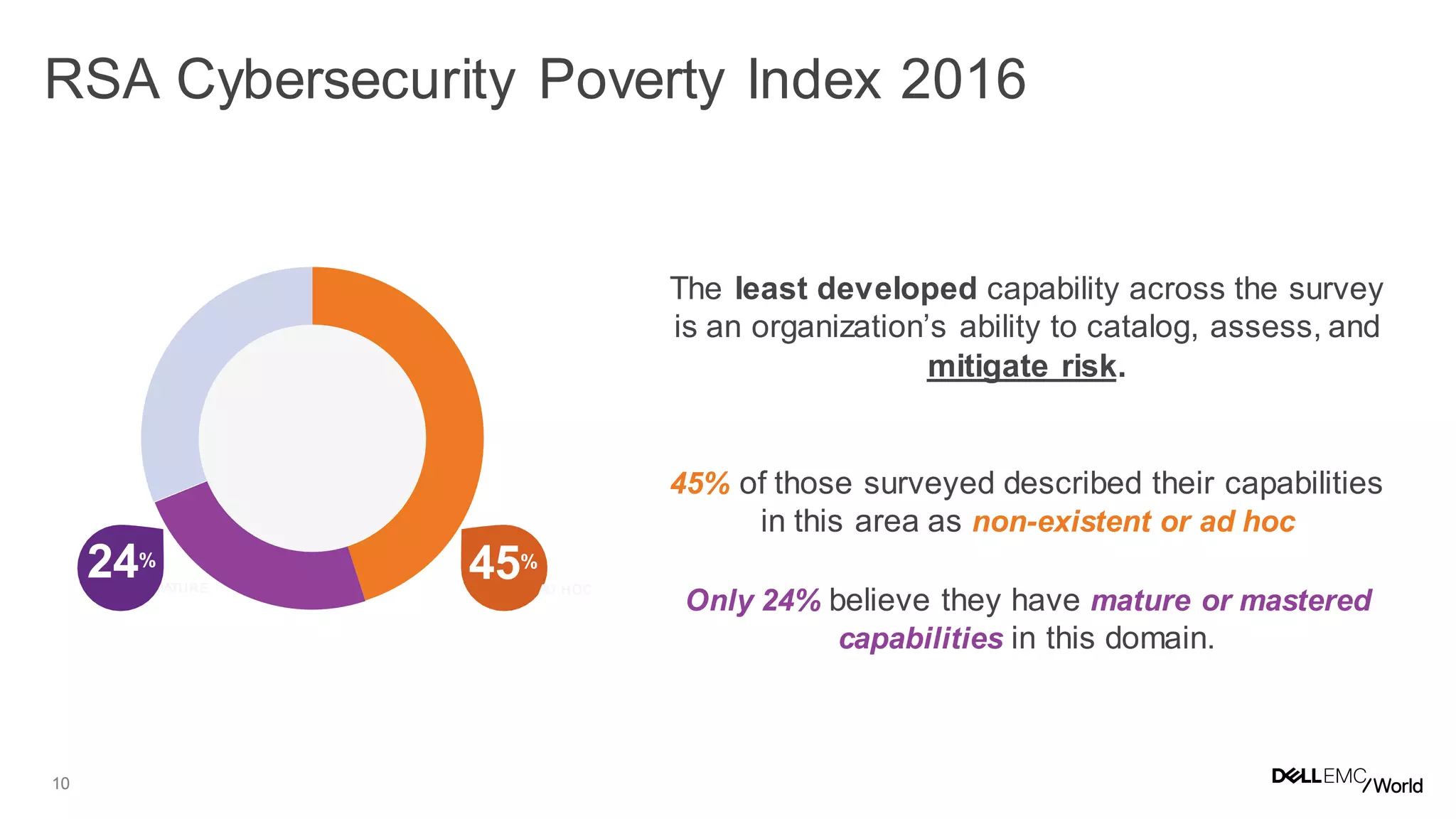
The least developed capability across the survey
is an organization’s ability to catalog, assess, and
mitigate risk.
45% of those surveyed described their capabilities
in this area as non-existent or ad hoc
Only 24% believe they have mature or mastered
capabilities in this domain.
MATURE
24%
45%
AD HOC
RSA Cybersecurity Poverty Index 2016
11
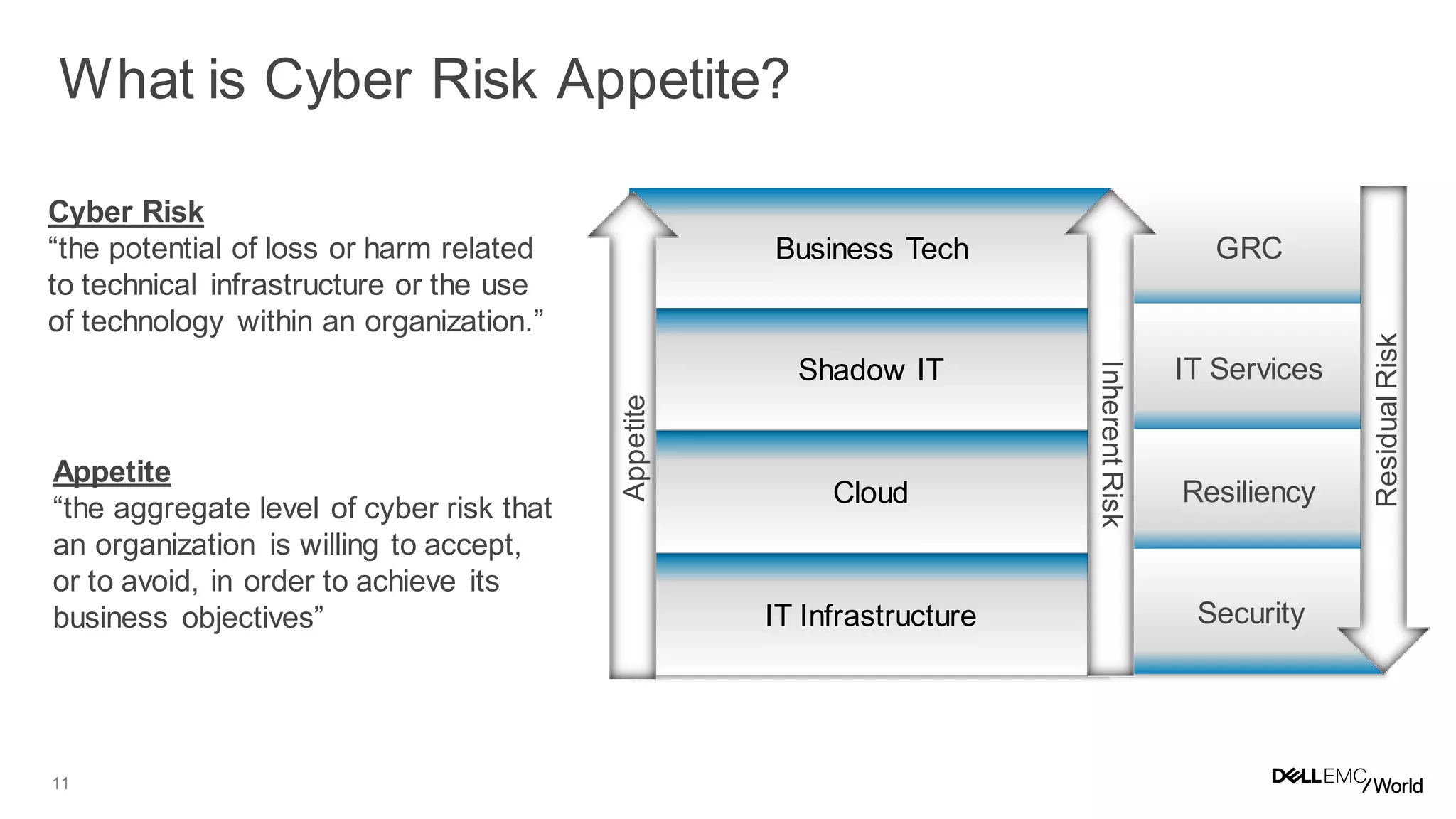
GRC
IT Services
Resiliency
Security
Cyber Risk
“the potential of loss or harm related
to technical infrastructure or the use
of technology within an organization.”
Appetite
“the aggregate level of cyber risk that
an organization is willing to accept,
or to avoid, in order to achieve its
business objectives” IT Infrastructure
Cloud
Shadow IT
Business Tech
Appetite
InherentRisk
ResidualRisk
What is Cyber Risk Appetite?
12
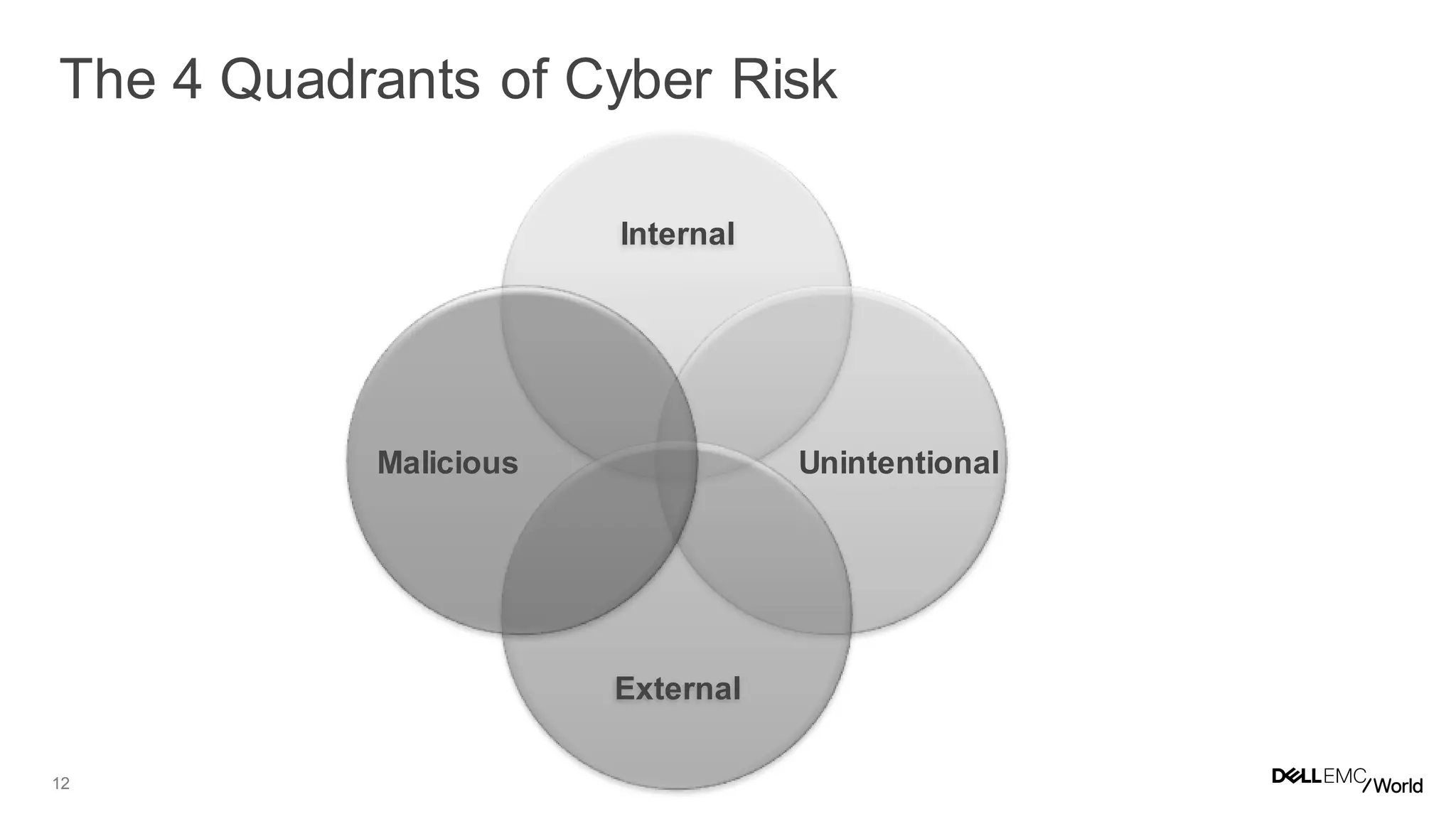
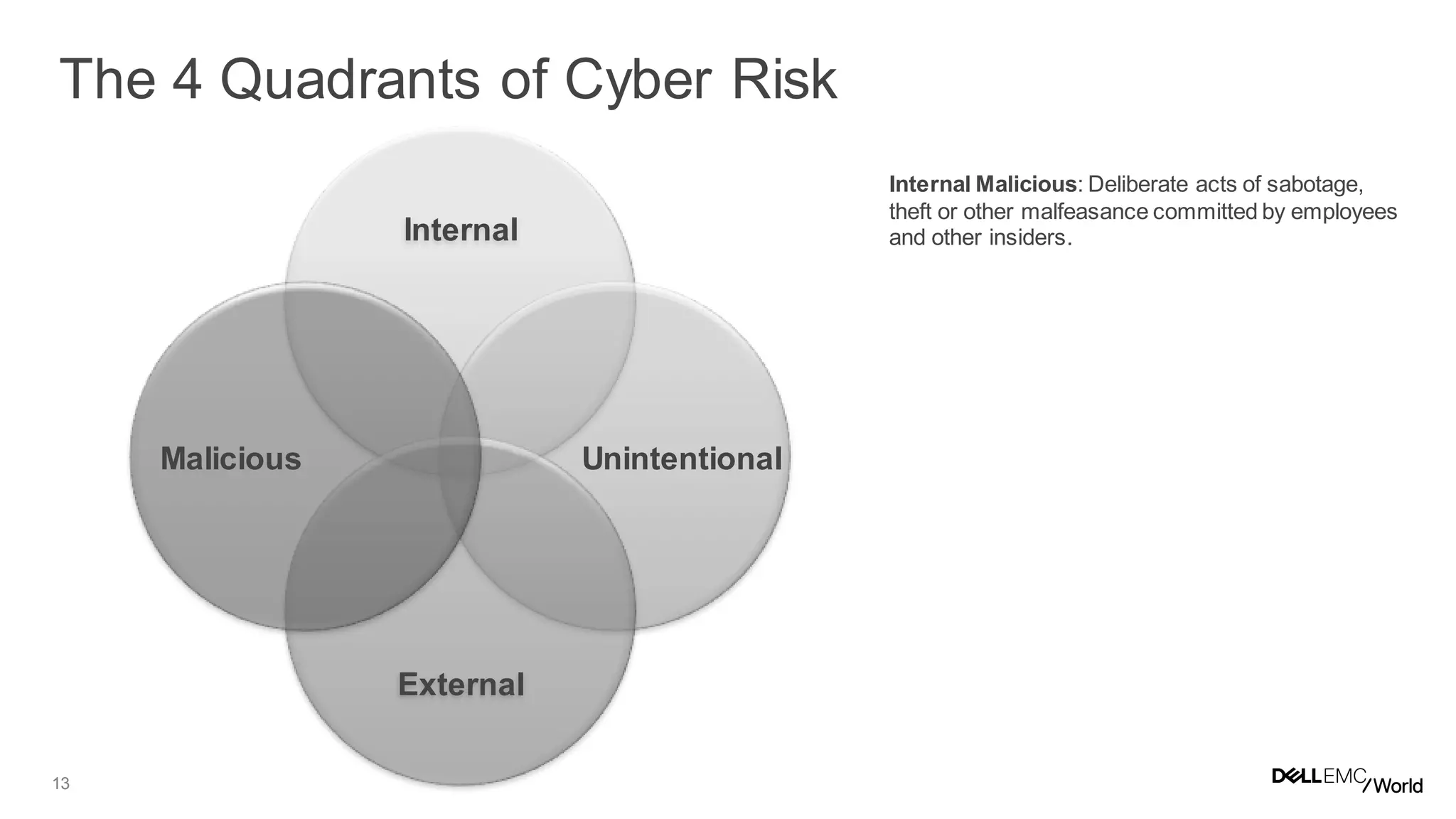
Internal
External
UnintentionalMalicious
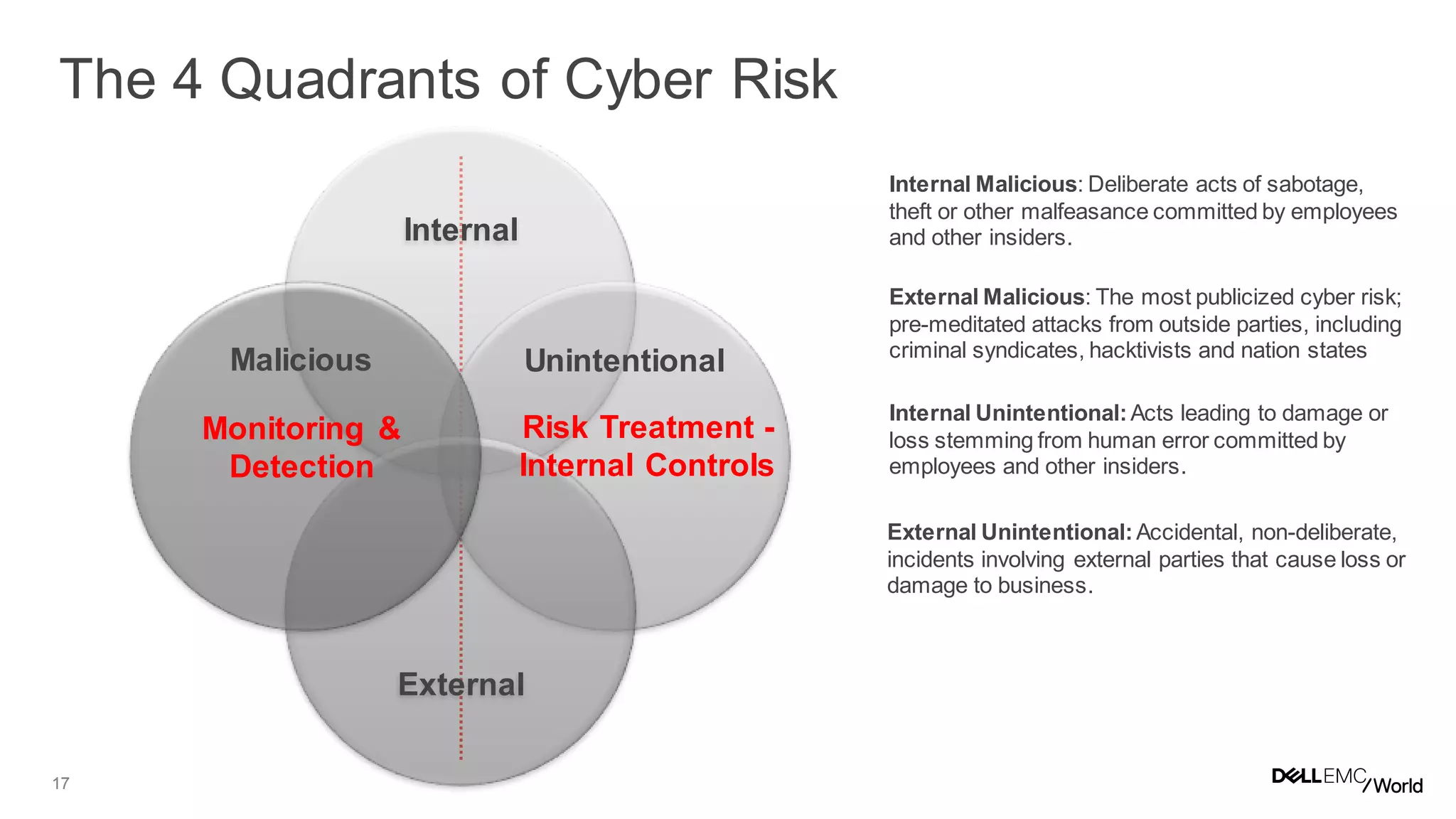
The 4 Quadrants of Cyber Risk
13
Internal
External
UnintentionalMalicious
Internal Malicious: Deliberate acts of sabotage,
theft or other malfeasance committed by employees
and other insiders.
The 4 Quadrants of Cyber Risk
14
Internal
External
UnintentionalMalicious
Internal Malicious: Deliberate acts of sabotage,
theft or other malfeasance committed by employees
and other insiders.
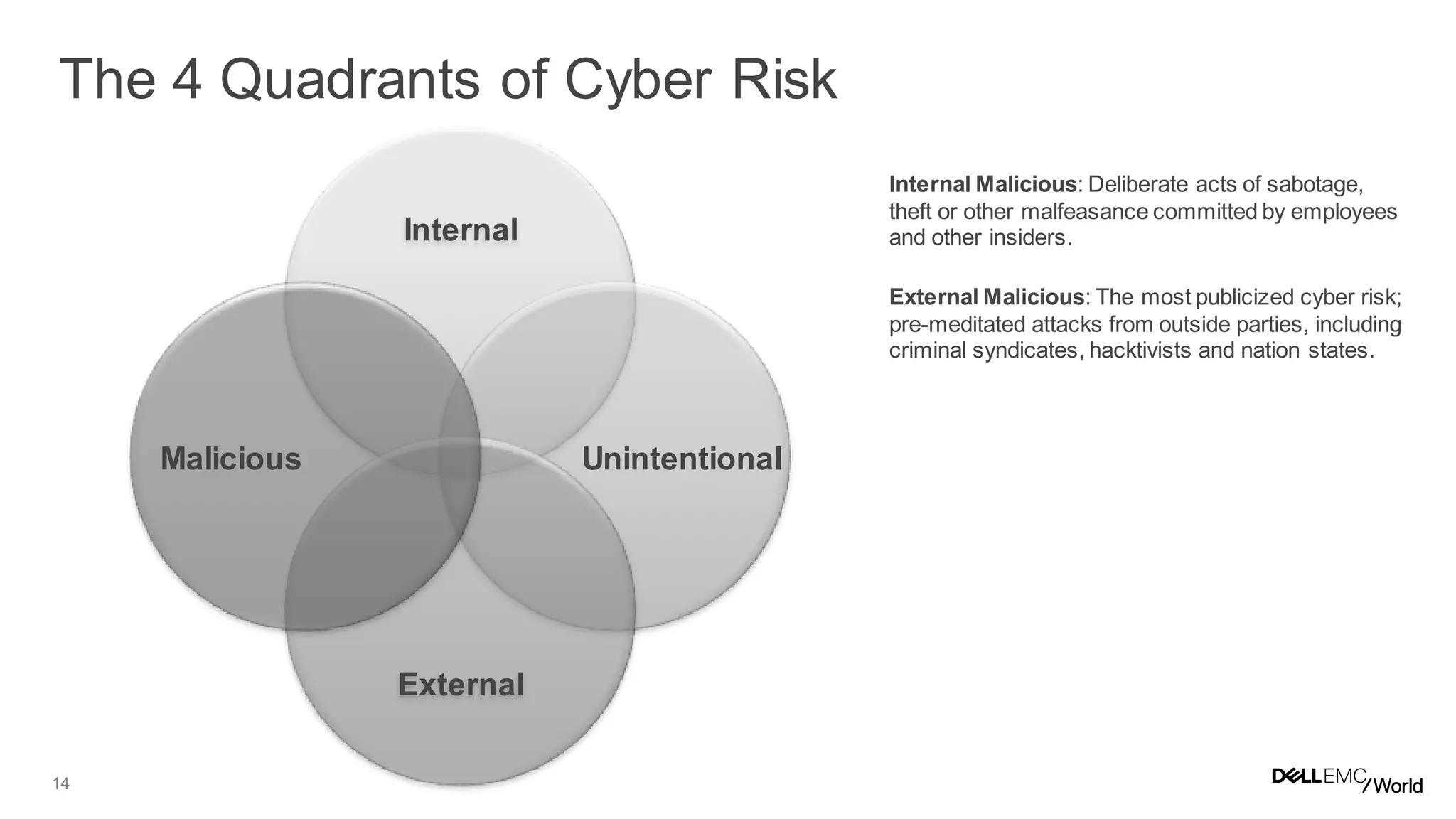
External Malicious: The most publicized cyber risk;
pre-meditated attacks from outside parties, including
criminal syndicates, hacktivists and nation states.
The 4 Quadrants of Cyber Risk
15
Internal
External
UnintentionalMalicious
Internal Malicious: Deliberate acts of sabotage,
theft or other malfeasance committed by employees
and other insiders.
External Malicious: The most publicized cyber risk;
pre-meditated attacks from outside parties, including
criminal syndicates, hacktivists and nation states
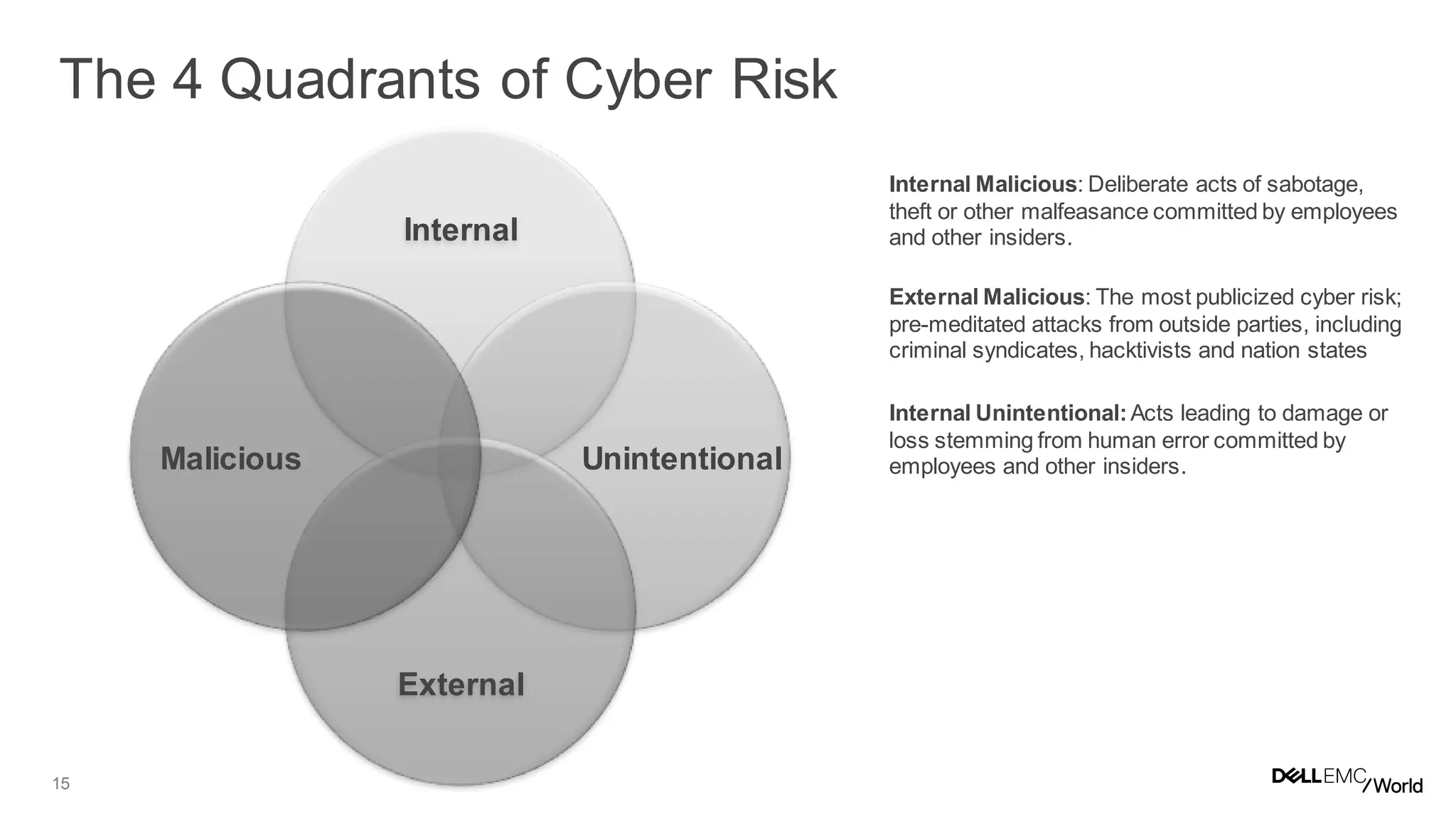
Internal Unintentional:Acts leading to damage or
loss stemming from human error committed by
employees and other insiders.
The 4 Quadrants of Cyber Risk
16
Internal
External
UnintentionalMalicious
Internal Malicious: Deliberate acts of sabotage,
theft or other malfeasance committed by employees
and other insiders.
External Malicious: The most publicized cyber risk;
pre-meditated attacks from outside parties, including
criminal syndicates, hacktivists and nation states
Internal Unintentional:Acts leading to damage or
loss stemming from human error committed by
employees and other insiders.
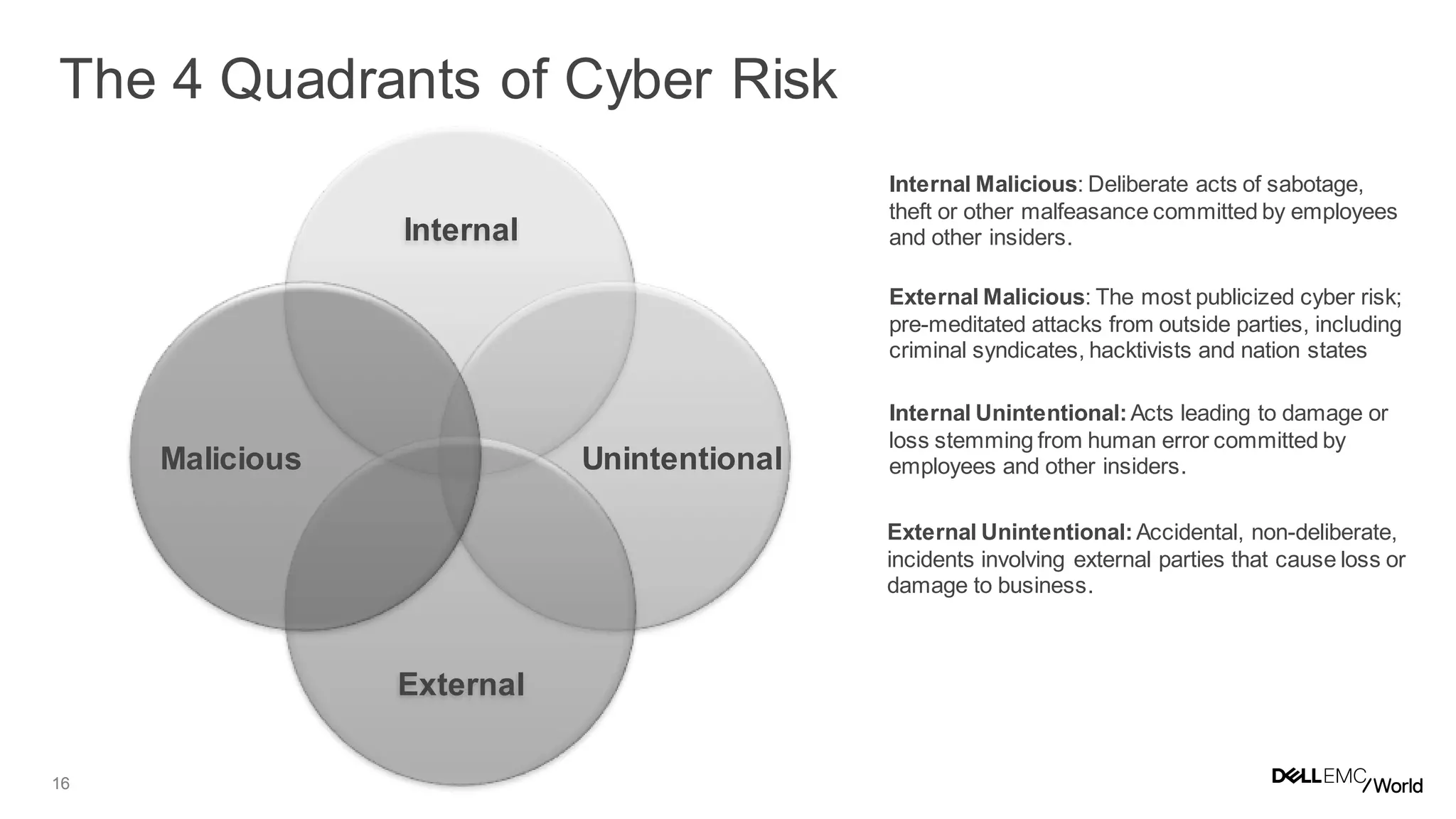
External Unintentional:Accidental, non-deliberate,
incidents involving external parties that cause loss or
damage to business.
The 4 Quadrants of Cyber Risk
17
Internal Malicious: Deliberate acts of sabotage,
theft or other malfeasance committed by employees
and other insiders.
External Malicious: The most publicized cyber risk;
pre-meditated attacks from outside parties, including
criminal syndicates, hacktivists and nation states
Internal Unintentional:Acts leading to damage or
loss stemming from human error committed by
employees and other insiders.
External Unintentional:Accidental, non-deliberate,
incidents involving external parties that cause loss or
damage to business.
Internal
External
Monitoring &
Detection
Risk Treatment -
Internal Controls
Malicious Unintentional
The 4 Quadrants of Cyber Risk
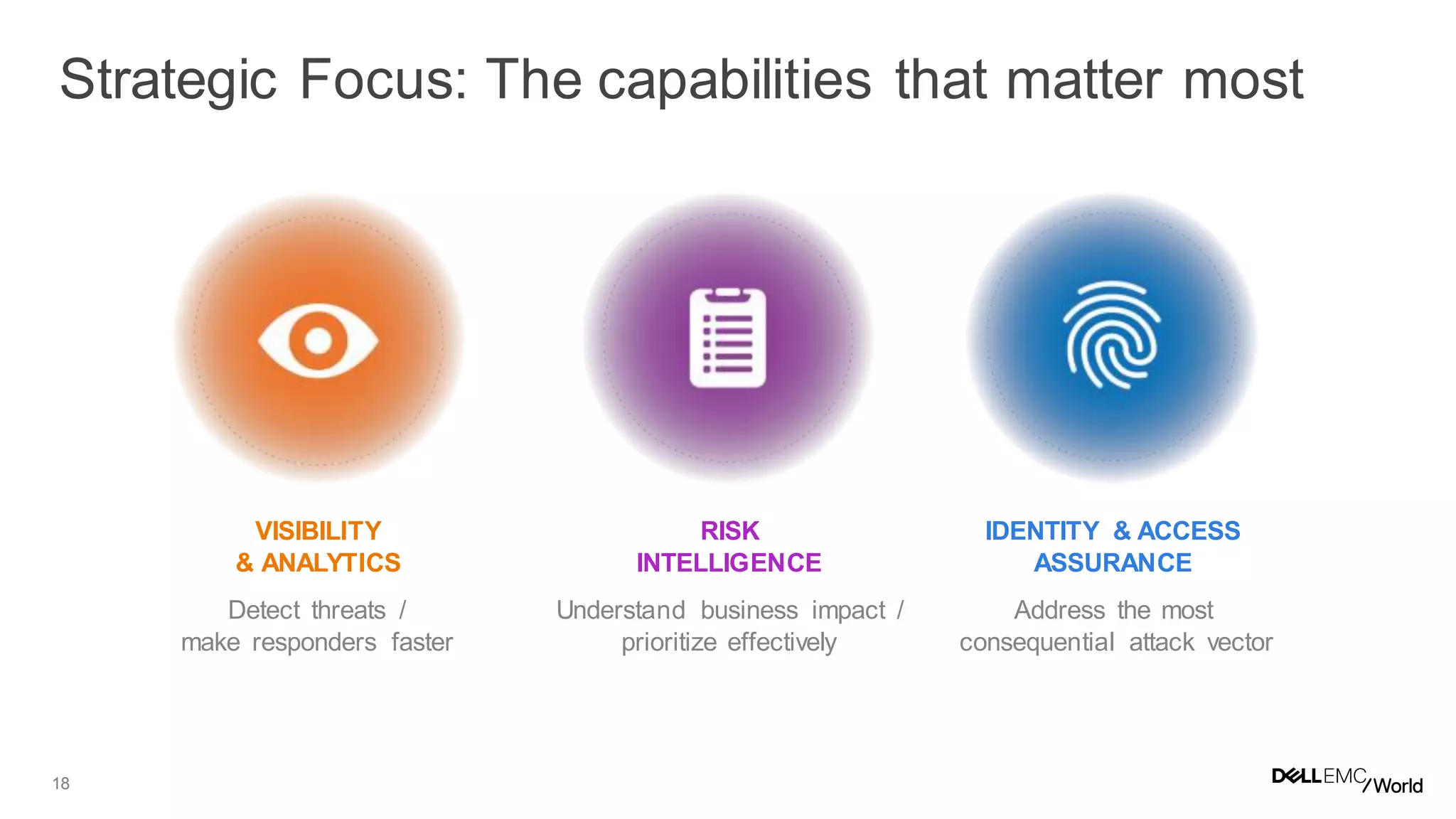
18
VISIBILITY
& ANALYTICS
Detect threats /
make responders faster
IDENTITY & ACCESS
ASSURANCE
Address the most
consequential attack vector
RISK
INTELLIGENCE
Understand business impact /
prioritize effectively
Strategic Focus: The capabilities that matter most
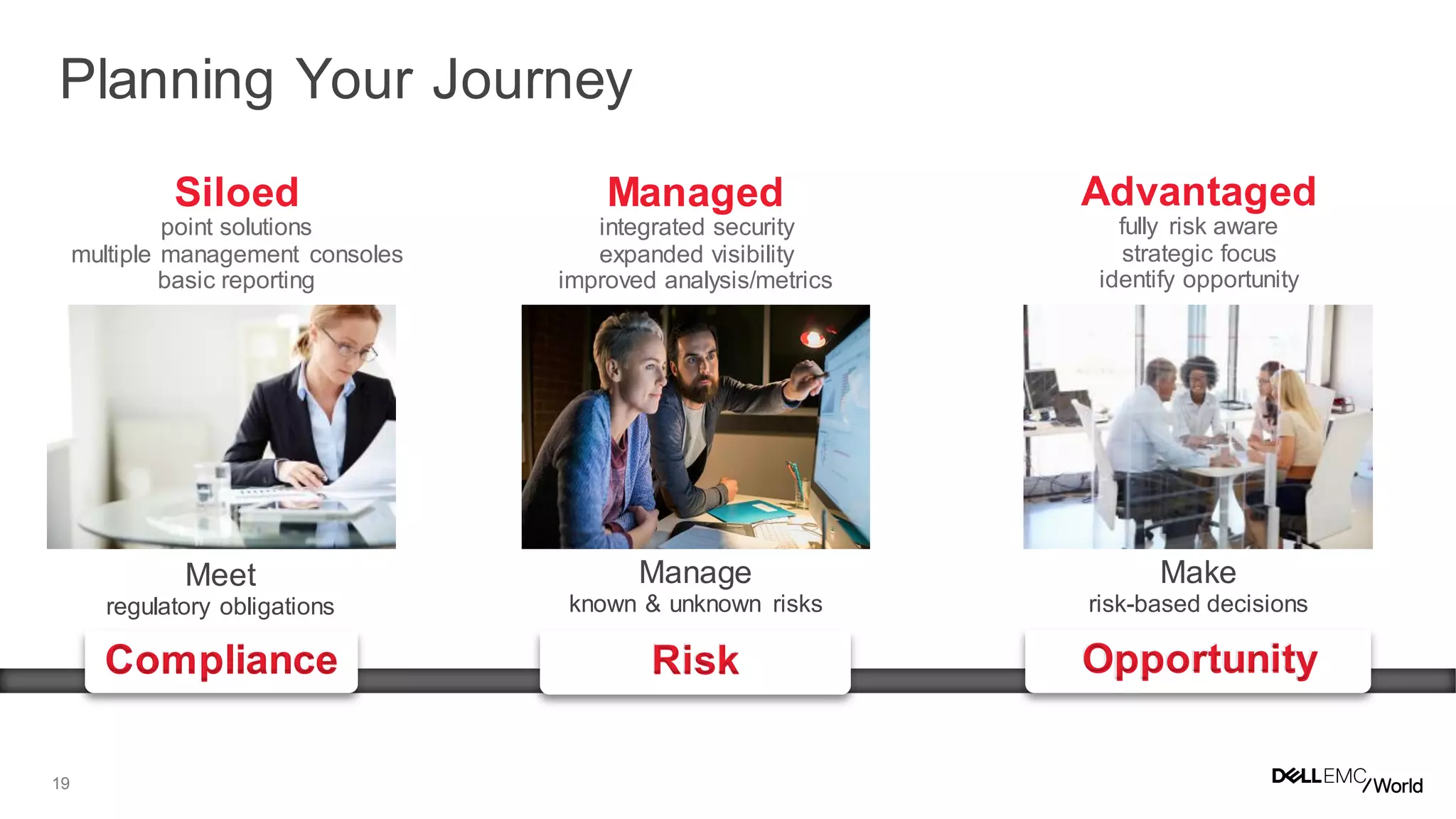
19
Manage
known & unknown risks
Compliance OpportunityRisk
Siloed
point solutions
multiple management consoles
basic reporting
Managed
integrated security
expanded visibility
improved analysis/metrics
Advantaged
fully risk aware
strategic focus
identify opportunity
Meet
regulatory obligations
Make
risk-based decisions
Planning Your Journey
FinalThoughts
• Discuss and define appetites and tolerances
• Understand and prioritize assets
• Plan your journey
MT118 Risk Intelligence - Making the Right Choices in Cybersecurity

MT118 Risk Intelligence - Making the Right Choices in Cybersecurity

  • 1.
    Risk Intelligence –Making the Right Choices in Cyber Security Mason Karrer, Principal GRC Strategist, RSΛ
  • 2.
    2 Companies are strugglingto obtain a holistic view of risk and show risk management ROI Risk Complexity Risk Volatility Volume of Risks Resource Demands Operational Risk Today
  • 3.
    3 • IT risks– such as cyber,cloud,IoT • Reputation and social media • Third-partyrelationships • Accountability to ensure effective oversightof risks • Strategic change management • Increased Regulations(GDPR) • Talent recruitment and retention • Complexfinancial and operating models • Resiliencyrisks Emerging Risks
  • 4.
    4 • Engage businessunits identify and manage the increasing volume and complexity of risk • Address risk consistently across your organization • Tie strategy to execution Inspire Everyone to Own Risk
  • 5.
    5 25% Technology initiatives are second priority BusinessGrowth & Technology Growth is the highest priority 54% From Gartner’s report “The 2015 CEO and Senior Executive Survey: ‘Committing to Digital’ Executive Priorities
  • 6.
    6 From Gartner’s report“The 2015 CEO and Senior Executive Survey: ‘Committing to Digital’: 77% 65% 83% Higher risk levels challenging the business Risk Management falling behind Agility increasingly important CEO Perspectives on Risk
  • 7.
    7 89% 69% New risks created bydigital business Risk Management techniques are inadequate ‘89% of CIOs globally believe that digital business models are creating new levels of risk for their organization... 69% believed that current risk management techniques are inadequate to address this increased risk in a digital world.’ - Gartner "Flipping to Digital Leadership: The 2015 CIO Agenda" CIO Perspectives on Risk
  • 8.
    8 References: Journal ofAccountancy, EY and PwC Does Risk Management Really Drive Growth?
  • 9.
    9 The business relieson technology like never before. Business and Digital strategies are intertwined. Technology risk is a board level topic. To be successful in today’s market, organizations must address cyber risk and business risk together. Risk Convergence
  • 10.
    10 12 The least developedcapability across the survey is an organization’s ability to catalog, assess, and mitigate risk. 45% of those surveyed described their capabilities in this area as non-existent or ad hoc Only 24% believe they have mature or mastered capabilities in this domain. MATURE 24% 45% AD HOC RSA Cybersecurity Poverty Index 2016
  • 11.
    11 GRC IT Services Resiliency Security Cyber Risk “thepotential of loss or harm related to technical infrastructure or the use of technology within an organization.” Appetite “the aggregate level of cyber risk that an organization is willing to accept, or to avoid, in order to achieve its business objectives” IT Infrastructure Cloud Shadow IT Business Tech Appetite InherentRisk ResidualRisk What is Cyber Risk Appetite?
  • 12.
  • 13.
    13 Internal External UnintentionalMalicious Internal Malicious: Deliberateacts of sabotage, theft or other malfeasance committed by employees and other insiders. The 4 Quadrants of Cyber Risk
  • 14.
    14 Internal External UnintentionalMalicious Internal Malicious: Deliberateacts of sabotage, theft or other malfeasance committed by employees and other insiders. External Malicious: The most publicized cyber risk; pre-meditated attacks from outside parties, including criminal syndicates, hacktivists and nation states. The 4 Quadrants of Cyber Risk
  • 15.
    15 Internal External UnintentionalMalicious Internal Malicious: Deliberateacts of sabotage, theft or other malfeasance committed by employees and other insiders. External Malicious: The most publicized cyber risk; pre-meditated attacks from outside parties, including criminal syndicates, hacktivists and nation states Internal Unintentional:Acts leading to damage or loss stemming from human error committed by employees and other insiders. The 4 Quadrants of Cyber Risk
  • 16.
    16 Internal External UnintentionalMalicious Internal Malicious: Deliberateacts of sabotage, theft or other malfeasance committed by employees and other insiders. External Malicious: The most publicized cyber risk; pre-meditated attacks from outside parties, including criminal syndicates, hacktivists and nation states Internal Unintentional:Acts leading to damage or loss stemming from human error committed by employees and other insiders. External Unintentional:Accidental, non-deliberate, incidents involving external parties that cause loss or damage to business. The 4 Quadrants of Cyber Risk
  • 17.
    17 Internal Malicious: Deliberateacts of sabotage, theft or other malfeasance committed by employees and other insiders. External Malicious: The most publicized cyber risk; pre-meditated attacks from outside parties, including criminal syndicates, hacktivists and nation states Internal Unintentional:Acts leading to damage or loss stemming from human error committed by employees and other insiders. External Unintentional:Accidental, non-deliberate, incidents involving external parties that cause loss or damage to business. Internal External Monitoring & Detection Risk Treatment - Internal Controls Malicious Unintentional The 4 Quadrants of Cyber Risk
  • 18.
    18 VISIBILITY & ANALYTICS Detect threats/ make responders faster IDENTITY & ACCESS ASSURANCE Address the most consequential attack vector RISK INTELLIGENCE Understand business impact / prioritize effectively Strategic Focus: The capabilities that matter most
  • 19.
    19 Manage known & unknownrisks Compliance OpportunityRisk Siloed point solutions multiple management consoles basic reporting Managed integrated security expanded visibility improved analysis/metrics Advantaged fully risk aware strategic focus identify opportunity Meet regulatory obligations Make risk-based decisions Planning Your Journey
  • 20.
    FinalThoughts • Discuss anddefine appetites and tolerances • Understand and prioritize assets • Plan your journey