
“MSME – SUPPORT SYSTEM OF INDIAN
ECONOMY AFTER
COVID – 2019”
SUBMITTED BY:-
*Author1 – Abinash Jena,
Lecturer in Commerce,
Kalinga College of Commerce,
Bhubaneswar,
Odisha
*Author2 – Jyoti Prakash Rath,
Lecturer in Commerce,
Government Jr. College,
Phulbani,
Odisha
INTRODUCTION
 In order to make our country globally challenged,
we need some industries and enterprises.
 Industries and enterprises are the backbone of our
countries economy.
 Our GDP gets improved due to the contribution of
various industries and enterprises.
 Of the total contribution towards GDP, around 30%
to 40% come from Micro, Small, and Medium
enterprises popularly termed as MSMEs in India.
INTRODUCTION
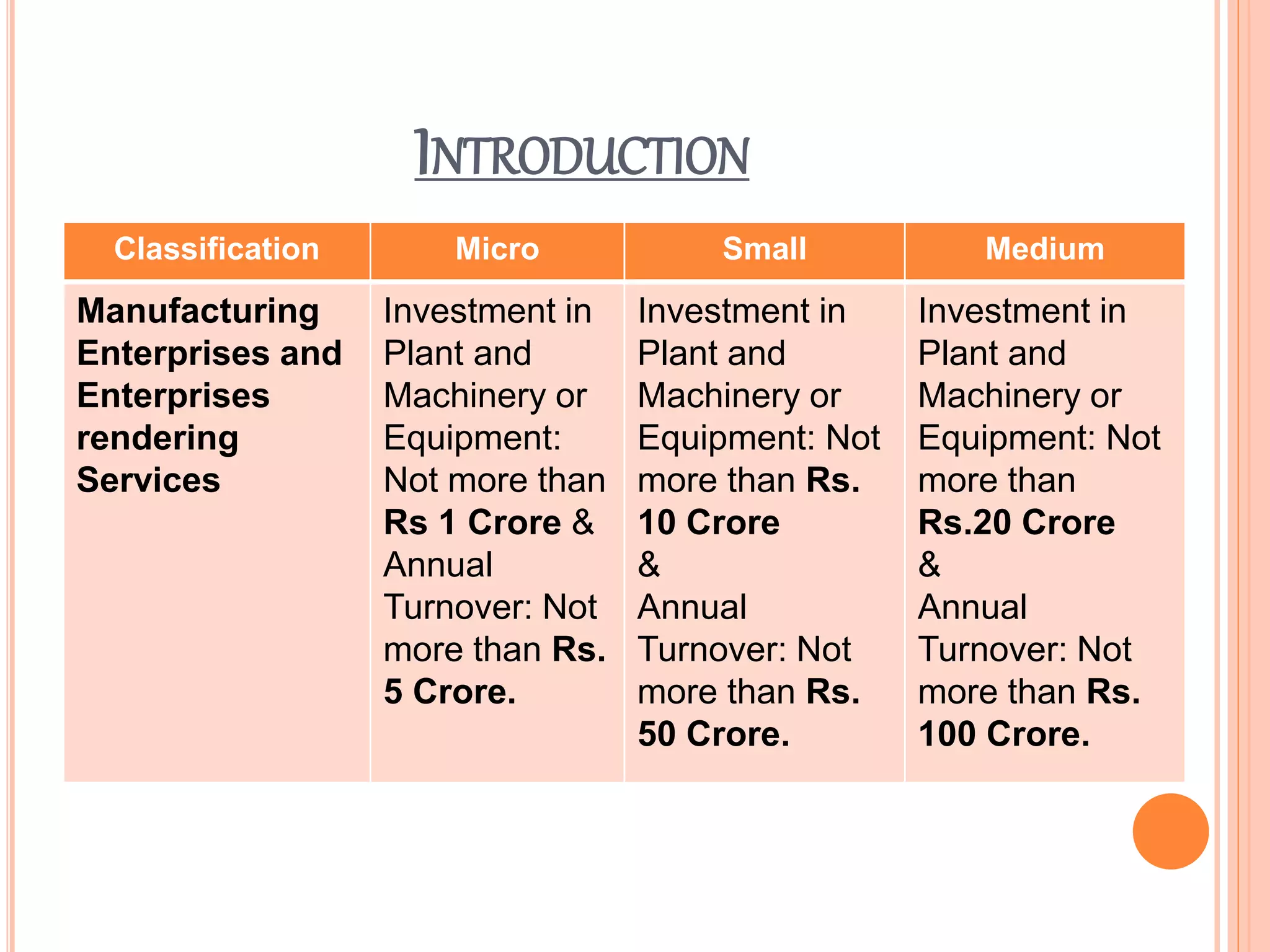
Classification Micro Small Medium
Manufacturing
Enterprises and
Enterprises
rendering
Services
Investment in
Plant and
Machinery or
Equipment:
Not more than
Rs 1 Crore &
Annual
Turnover: Not
more than Rs.
5 Crore.
Investment in
Plant and
Machinery or
Equipment: Not
more than Rs.
10 Crore
&
Annual
Turnover: Not
more than Rs.
50 Crore.
Investment in
Plant and
Machinery or
Equipment: Not
more than
Rs.20 Crore
&
Annual
Turnover: Not
more than Rs.
100 Crore.
INTRODUCTION
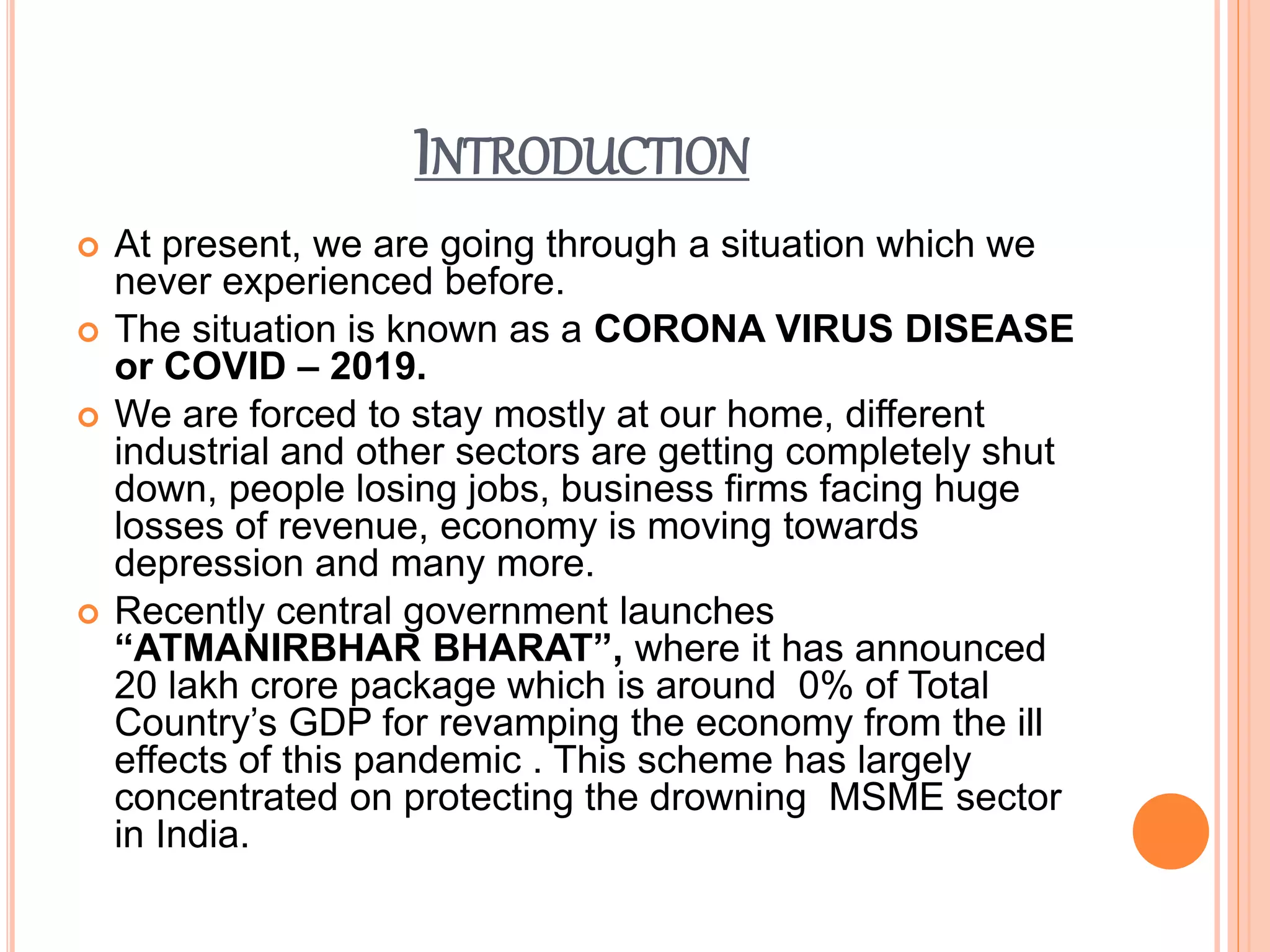
 At present, we are going through a situation which we
never experienced before.
 The situation is known as a CORONA VIRUS DISEASE
or COVID – 2019.
 We are forced to stay mostly at our home, different
industrial and other sectors are getting completely shut
down, people losing jobs, business firms facing huge
losses of revenue, economy is moving towards
depression and many more.
 Recently central government launches
“ATMANIRBHAR BHARAT”, where it has announced
20 lakh crore package which is around 0% of Total
Country’s GDP for revamping the economy from the ill
effects of this pandemic . This scheme has largely
concentrated on protecting the drowning MSME sector
in India.
OBJECTIVE
 The main objective of this paper is to study:
 The contribution of MSME sector
towards the development of Indian
economy before COVID – 2019
situation.
 The measures taken by Government of
India to protect MSME Sector and the
expected contribution from the MSME
sector towards recover the economy
from the greatest depressed situation
caused due to COVID – 2019 situation.
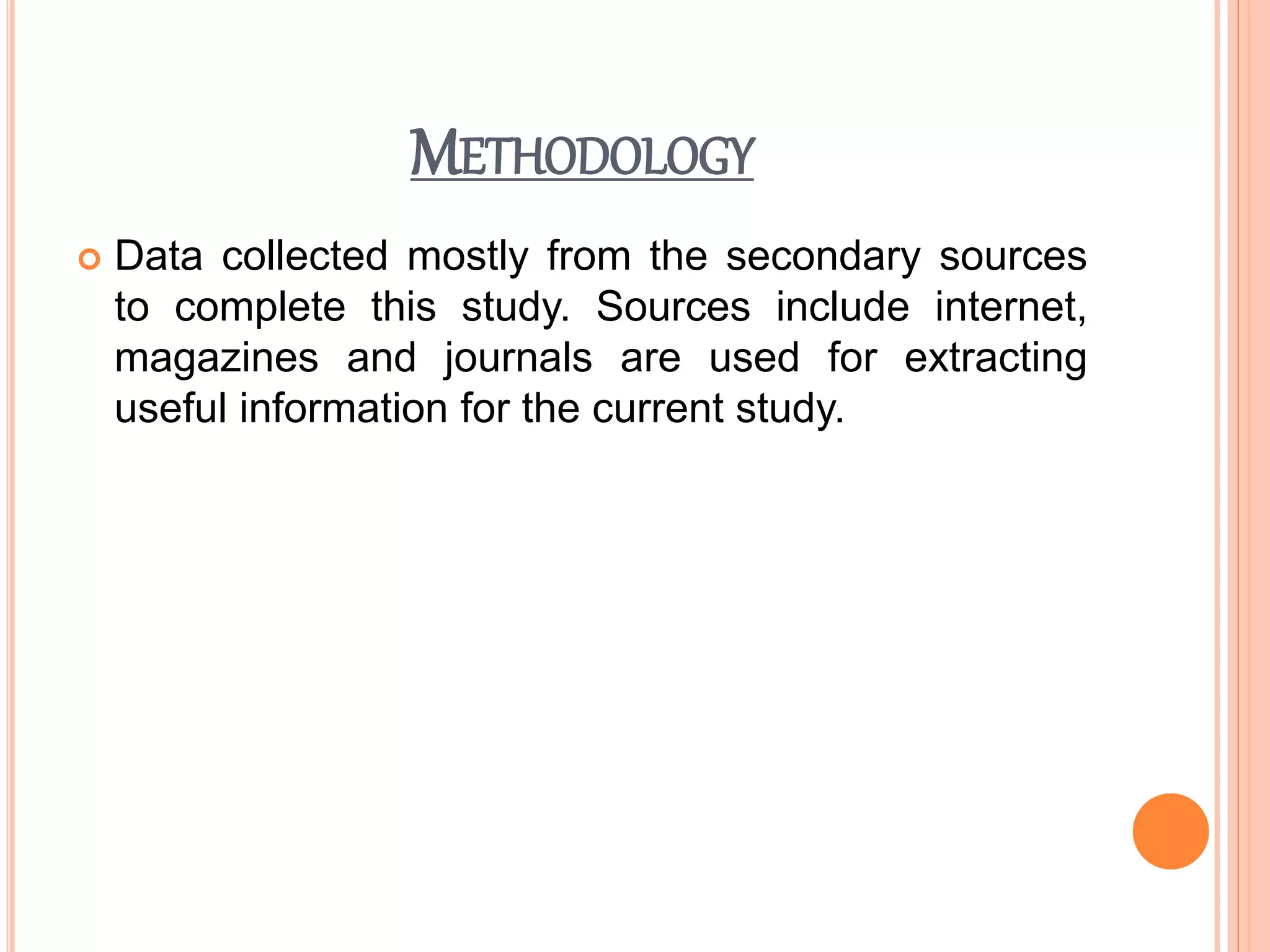
METHODOLOGY
 Data collected mostly from the secondary sources
to complete this study. Sources include internet,
magazines and journals are used for extracting
useful information for the current study.
DATA ANALYSIS & INTERPRETATIONS
 India as a developing nation gets around 30% to 40% of
GDP from MSME sector.
 MSME having 90% of total enterprises in most of the
country and are generating the highest rates of
employment growth and participate in industrial
production and exports.
 MSME contribute 45% of India’s manufacturing output
and 40% of total export from India.
 MSME sector growth can be seen as Indian
entrepreneurs are taking initiative in various industries
like manufacturing, engineering design, food processing,
pharmaceutical, textile and garments, information
technology, agro and service sector, etc.
 It also assures the equitable distribution of national
income and wealth.
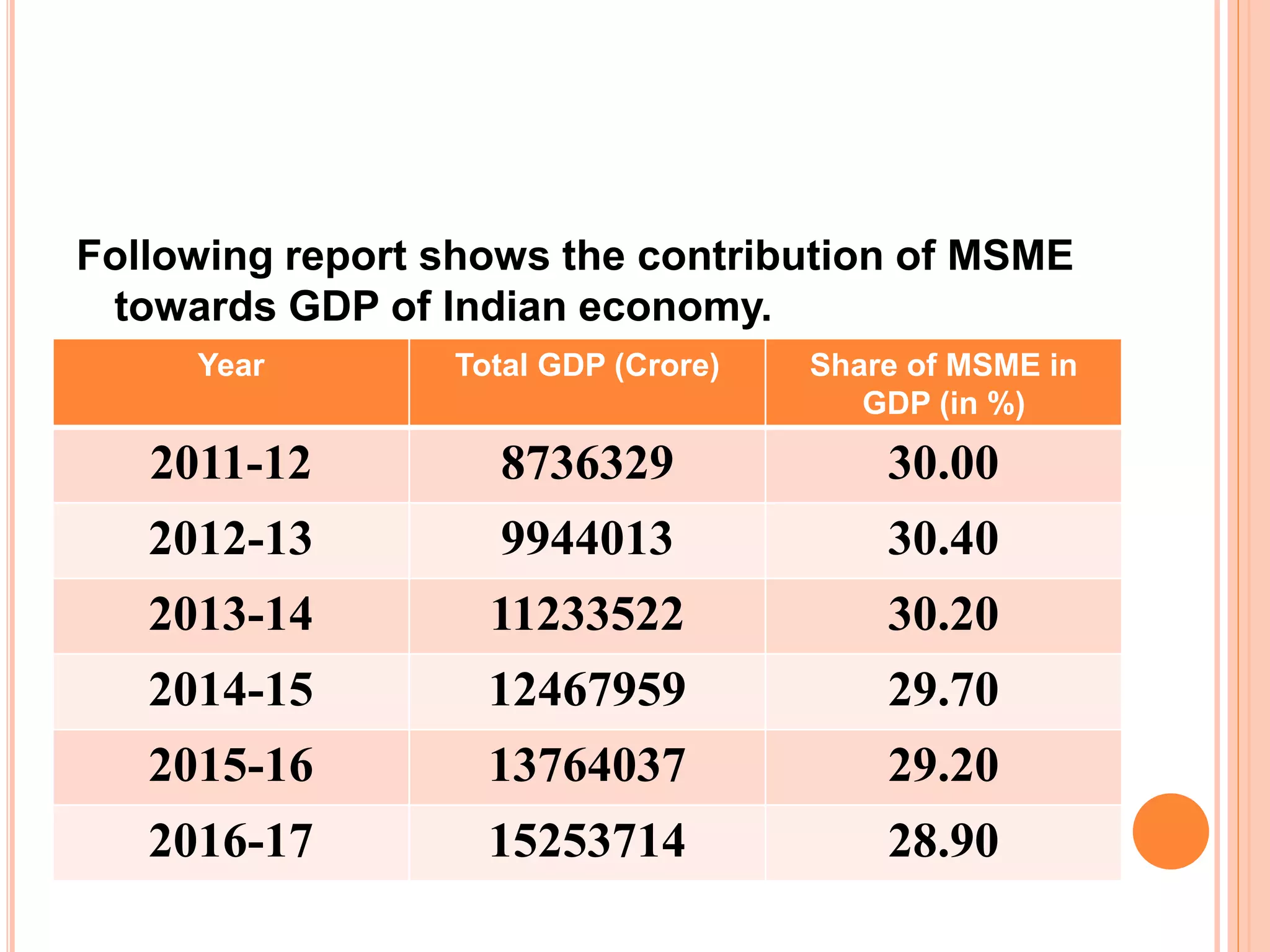
Following report shows the contribution of MSME
towards GDP of Indian economy.
Year Total GDP (Crore) Share of MSME in
GDP (in %)
2011-12 8736329 30.00
2012-13 9944013 30.40
2013-14 11233522 30.20
2014-15 12467959 29.70
2015-16 13764037 29.20
2016-17 15253714 28.90
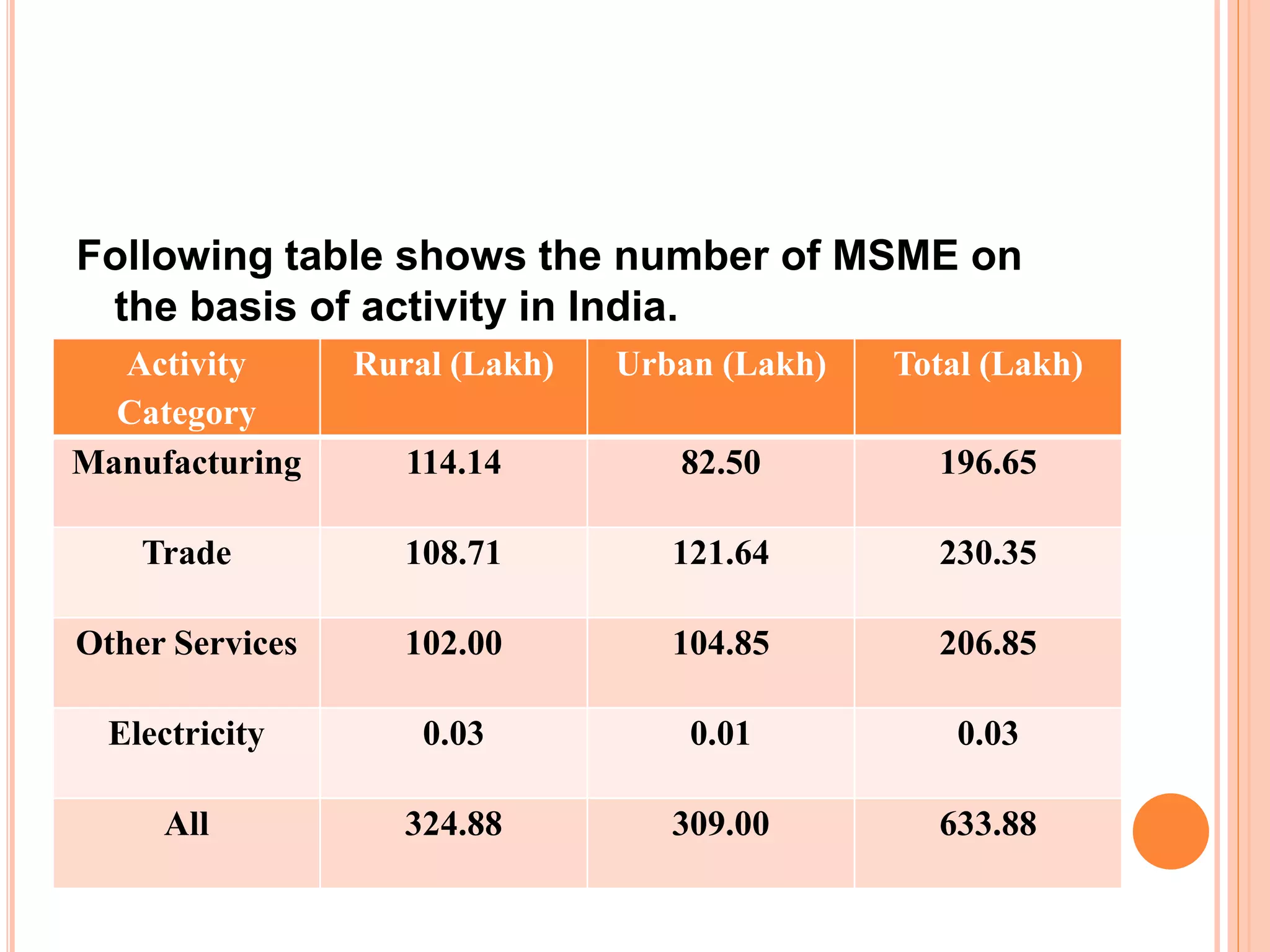
Following table shows the number of MSME on
the basis of activity in India.
Activity
Category
Rural (Lakh) Urban (Lakh) Total (Lakh)
Manufacturing 114.14 82.50 196.65
Trade 108.71 121.64 230.35
Other Services 102.00 104.85 206.85
Electricity 0.03 0.01 0.03
All 324.88 309.00 633.88
Manufacturing
31%
Trade
36%
Other services
33%
Electricity
0%
Distributionof MSMEon the basisof activity
Following are the number of MSME in rural and
urban area.
Sector Micro
(Lakh)
Small
(Lakh)
Medium
(Lakh)
Total
(Lakh)
Rural 324.09 0.78 0.01 324.88
Urban 306.43 2.53 0.04 309.00
All 630.52 3.31 0.05 633.88
Rural MSME
51%
Urban MSME
49%
Percentage share of rural and urbanMSMEin thecountry
Following are the number of employment in India
under MSME on the basis of activity.
Broad Activity
Category
Rural (Lakh) Urban (Lakh) Total (Lakh)
Manufacturing 186.56 173.86 360.41
Trade 160.64 226.54 387.18
Other Services 150.53 211.69 362.22
Electricity 0.06 0.02 0.07
All 497.78 612.10 1109.89
Manufacturing
32%
Trade
35%
Other services
33%
Electricity
0%
Employment in MSMEsectoron the basisof activity
Following are the number of employment in India
under MSME in rural and urban area.
Sector Micro
(Lakh)
Small
(Lakh)
Medium
(Lakh)
Total
(Lakh)
Rural 489.30 7.88 0.60 497.78
Urban 586.88 24.06 1.16 612.10
All 1076.19 31.95 1.75 1109.89
Rural
employment
45%Urban
employment
55%
Percentage share of employment underMSMEin rural and
urbanarea
Micro
Small
Medium
Distributionof micro, small andmediumenterprises
KEY FINDINGS
 MSME contributes around 30% of total GDP.
 It provides a great contribution towards export of coir, khadi
items.
 Due to this sector our dependency on other countries are
being less.
 Providing employment of 100 to 110 million people out of 130
billion.
 Helpful in eliminating the inequality of regional development.
 Focuses more on rural employment.
 Around 89.99 lakh MSME are there in the state of Uttar
Pardesh.
 Out of all MSME present in India 55% are from service and
45% are from manufacturing activity.
 Out of all MSME present in India 34, 88,624 are micro, 3,
91,804 are small and 15,317 are medium enterprises.
KEY FINDINGS
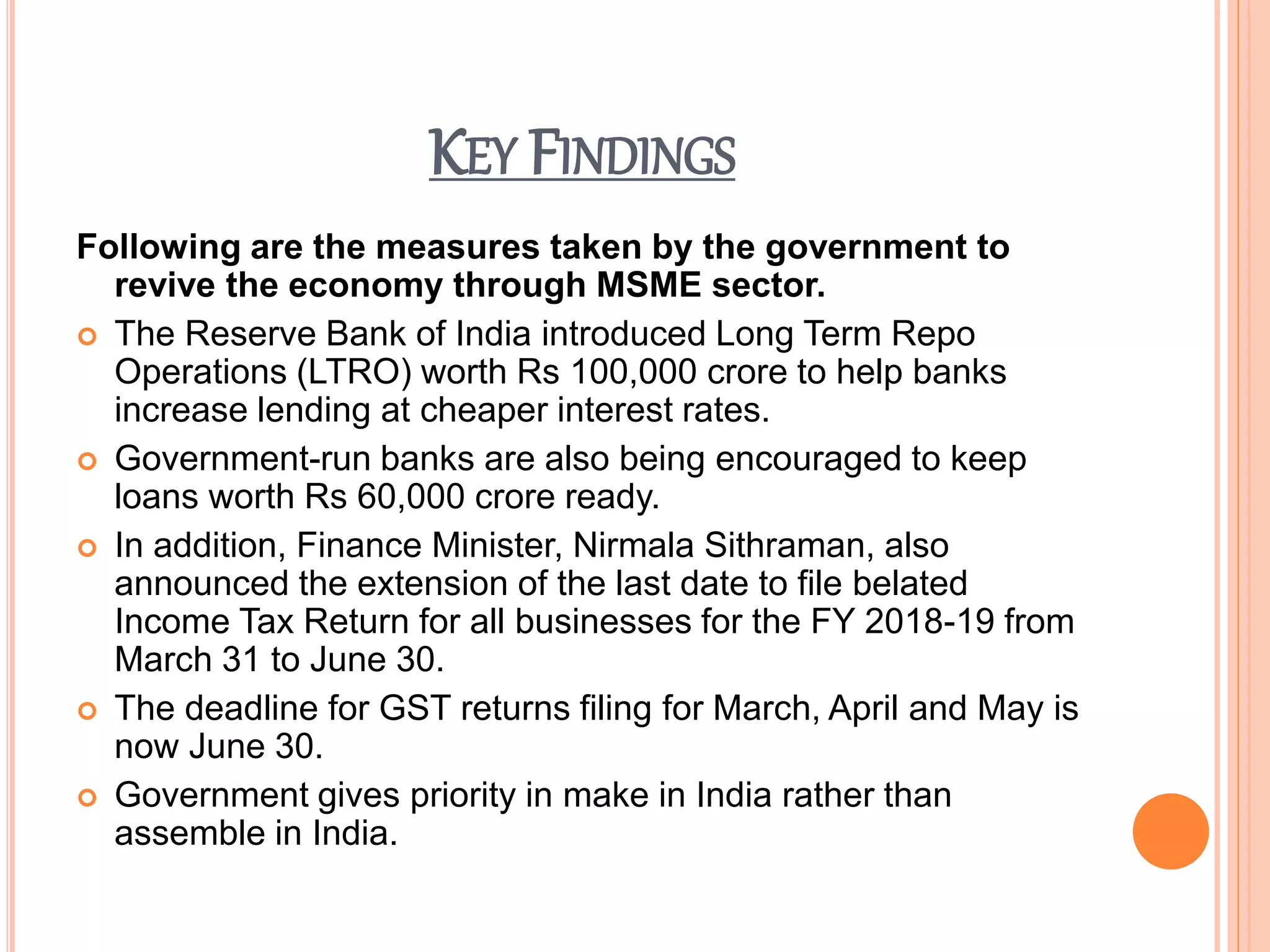
Following are the measures taken by the government to
revive the economy through MSME sector.
 The Reserve Bank of India introduced Long Term Repo
Operations (LTRO) worth Rs 100,000 crore to help banks
increase lending at cheaper interest rates.
 Government-run banks are also being encouraged to keep
loans worth Rs 60,000 crore ready.
 In addition, Finance Minister, Nirmala Sithraman, also
announced the extension of the last date to file belated
Income Tax Return for all businesses for the FY 2018-19 from
March 31 to June 30.
 The deadline for GST returns filing for March, April and May is
now June 30.
 Government gives priority in make in India rather than
assemble in India.
KEY FINDINGS
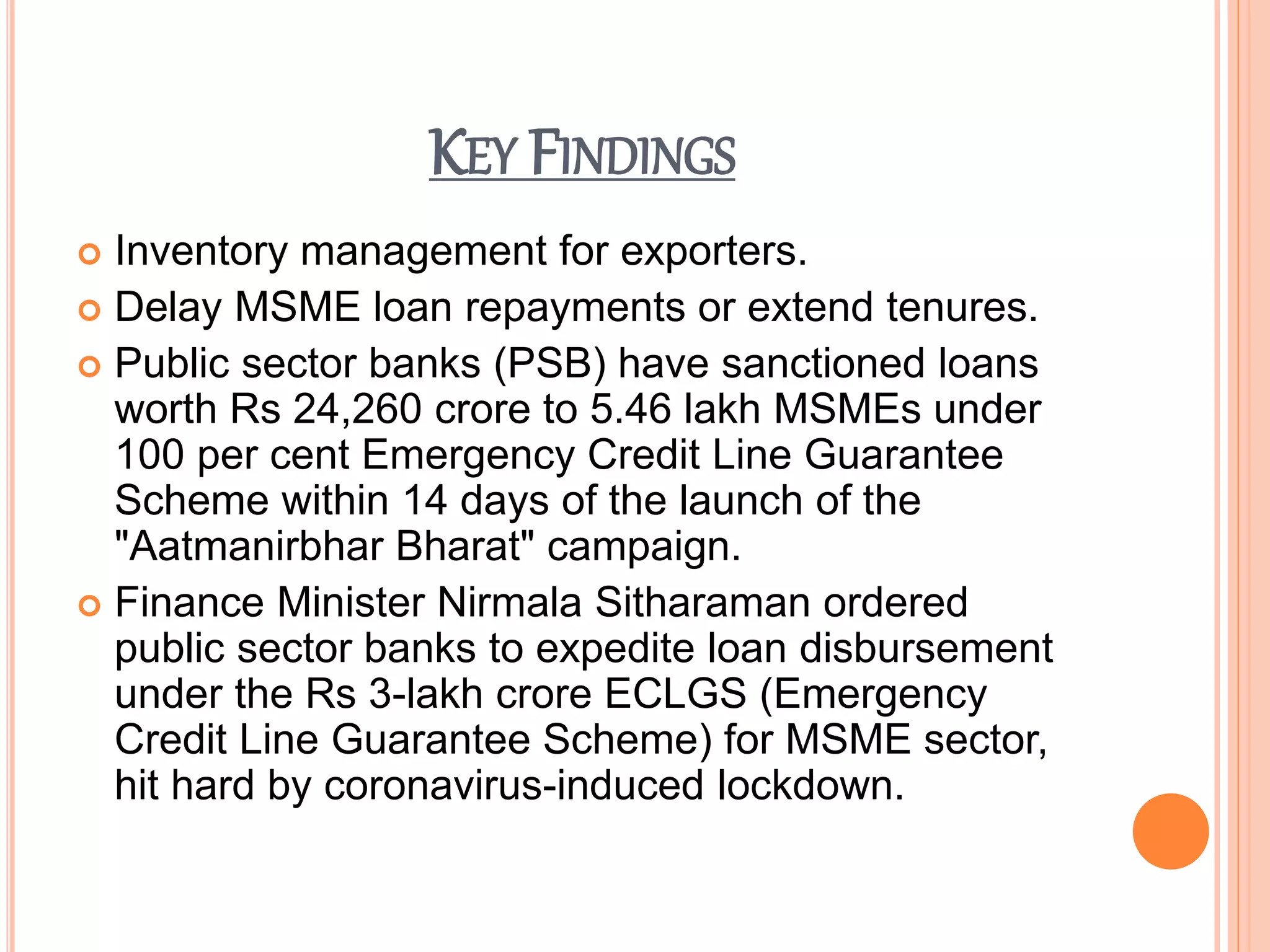
 Inventory management for exporters.
 Delay MSME loan repayments or extend tenures.
 Public sector banks (PSB) have sanctioned loans
worth Rs 24,260 crore to 5.46 lakh MSMEs under
100 per cent Emergency Credit Line Guarantee
Scheme within 14 days of the launch of the
"Aatmanirbhar Bharat" campaign.
 Finance Minister Nirmala Sitharaman ordered
public sector banks to expedite loan disbursement
under the Rs 3-lakh crore ECLGS (Emergency
Credit Line Guarantee Scheme) for MSME sector,
hit hard by coronavirus-induced lockdown.
KEY FINDINGS
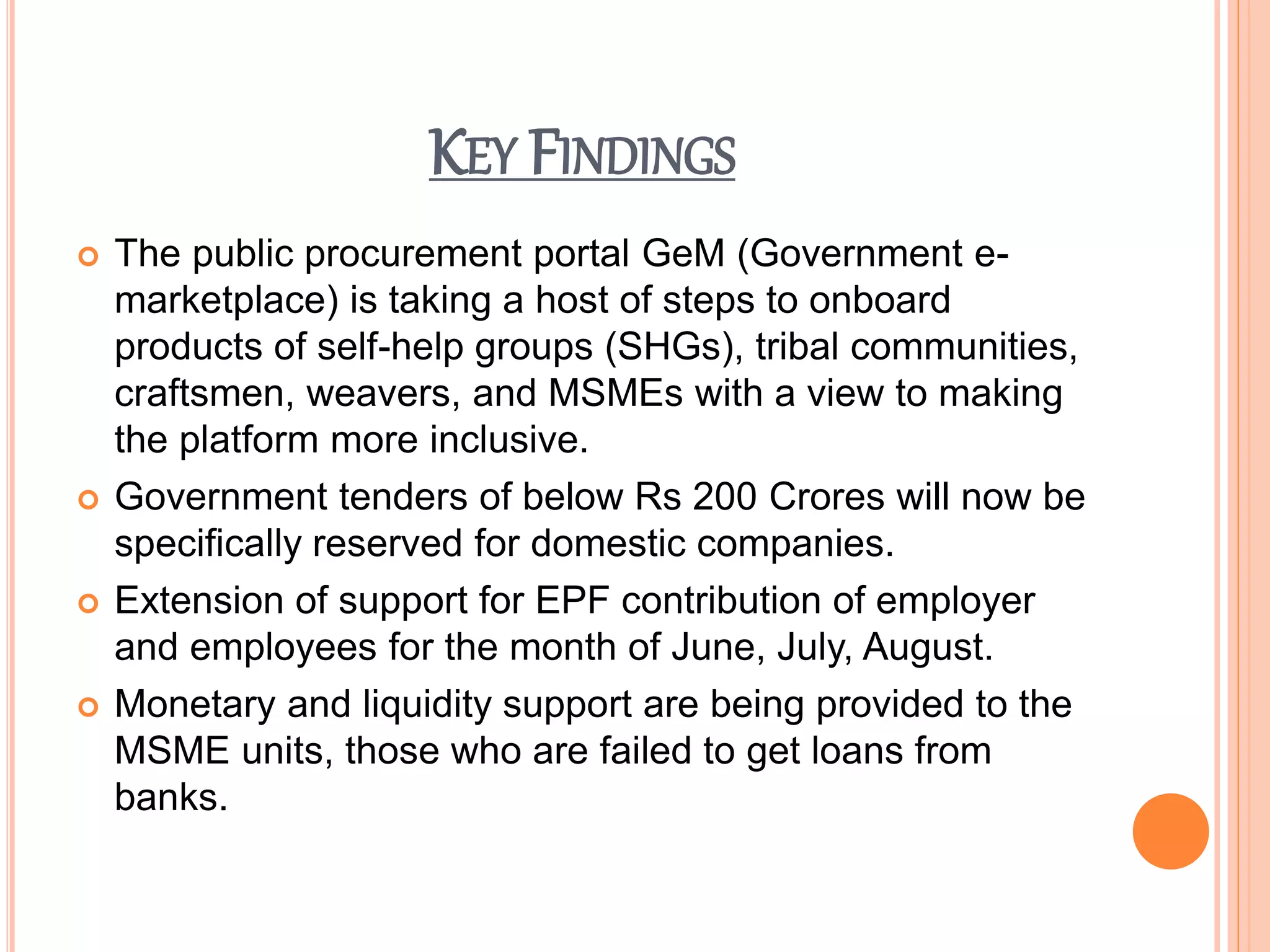
 The public procurement portal GeM (Government e-
marketplace) is taking a host of steps to onboard
products of self-help groups (SHGs), tribal communities,
craftsmen, weavers, and MSMEs with a view to making
the platform more inclusive.
 Government tenders of below Rs 200 Crores will now be
specifically reserved for domestic companies.
 Extension of support for EPF contribution of employer
and employees for the month of June, July, August.
 Monetary and liquidity support are being provided to the
MSME units, those who are failed to get loans from
banks.
KEY FINDINGS
We have the following expectation from the MSME
sector towards revamping the economy.
 Enhance the demand and supply chain.
 Give job or employment to jobless migrant worker
coming from different state.
 Create more demand for local product.
 Less dependent on imported product from various
country.
 Bring command over service sector in MSME chain.
 Establish more and more number of enterprises in rural
area.
 Relief package from government encourages in bringing
new innovative domestic product.
 More entrepreneurs will bring their idea to the reality.
KEY FINDINGS
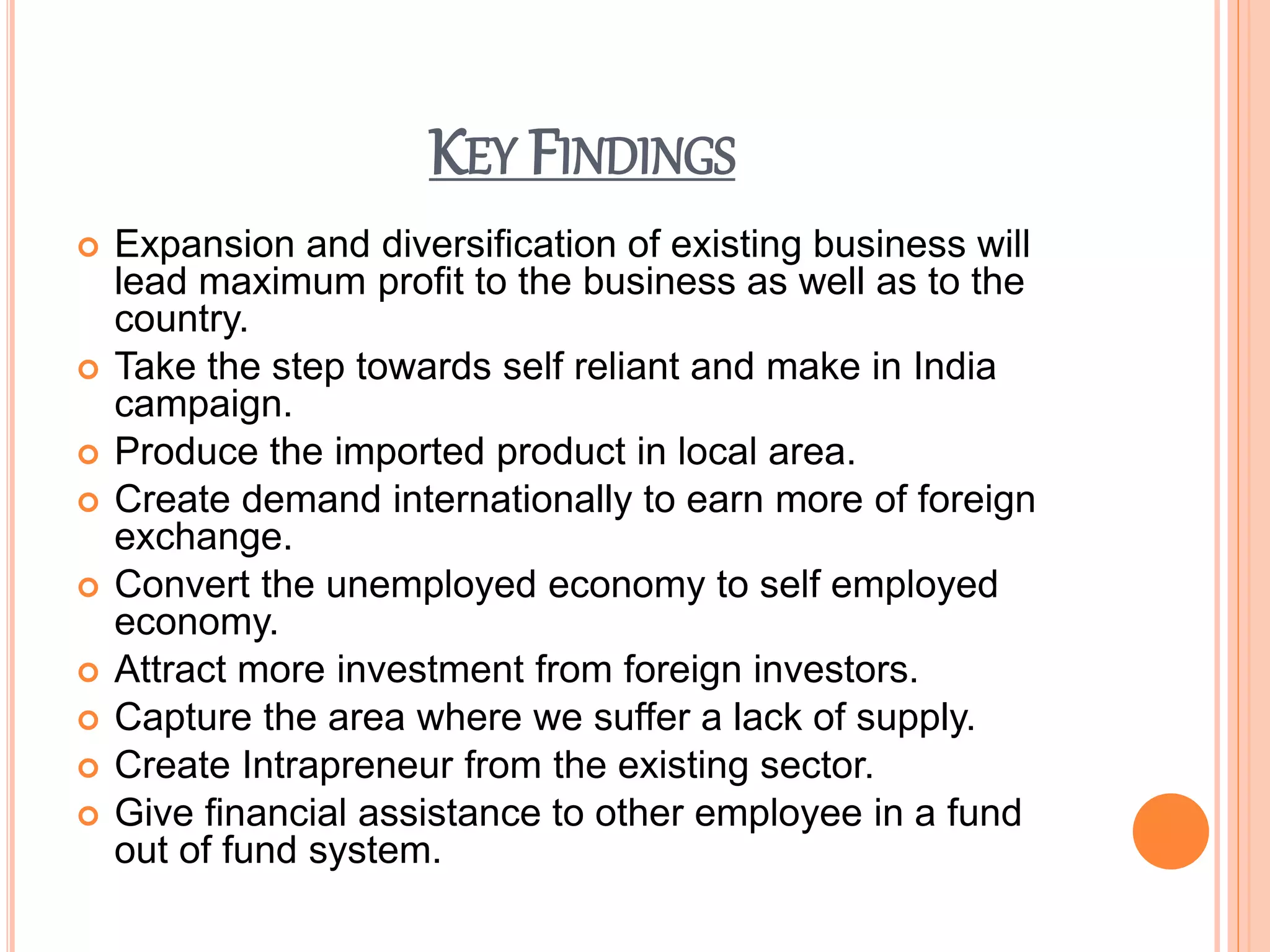
 Expansion and diversification of existing business will
lead maximum profit to the business as well as to the
country.
 Take the step towards self reliant and make in India
campaign.
 Produce the imported product in local area.
 Create demand internationally to earn more of foreign
exchange.
 Convert the unemployed economy to self employed
economy.
 Attract more investment from foreign investors.
 Capture the area where we suffer a lack of supply.
 Create Intrapreneur from the existing sector.
 Give financial assistance to other employee in a fund
out of fund system.
SUGGESTIONS
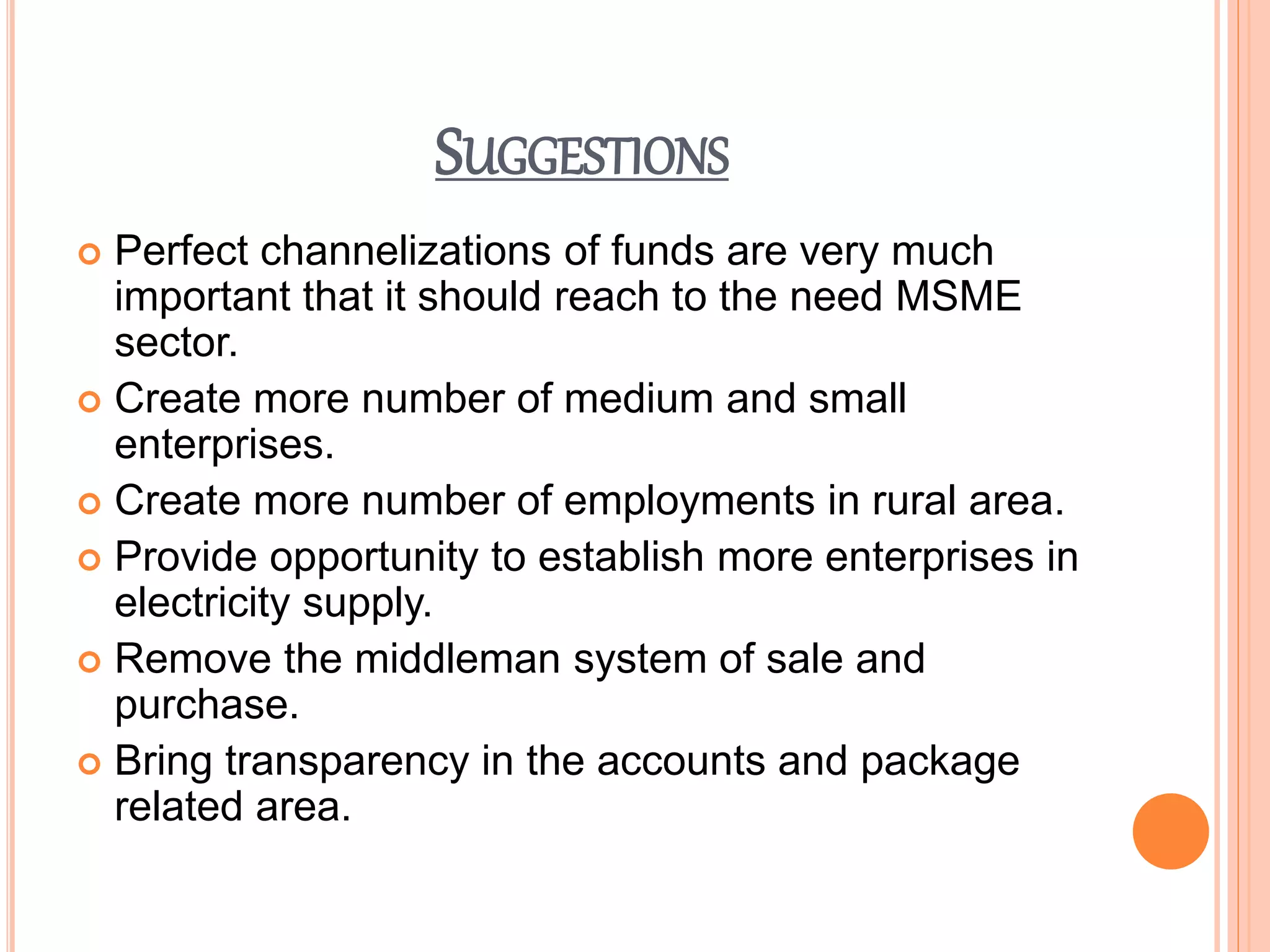
 Perfect channelizations of funds are very much
important that it should reach to the need MSME
sector.
 Create more number of medium and small
enterprises.
 Create more number of employments in rural area.
 Provide opportunity to establish more enterprises in
electricity supply.
 Remove the middleman system of sale and
purchase.
 Bring transparency in the accounts and package
related area.
SUGGESTIONS
 Focus must be given to the agro based industries.
 Promotion and marketing strategy for the local
product.
 Impose more import duty on the imported product.
 Export promotion for the MSME product.
 Remove all the restriction of exporting the local
product.
 Provide e-business or e-commerce site for the
marketing of the product.
SUGGESTIONS
 Impose barrier on heavily demanded imported
product and make them locally.
 Provide facility and opportunity for listing of the
MSME in the stock exchange.
 Initiate more foreign investment criteria to MSME
sector.
 Provide entrepreneur development programme to
the new and risk taking entrepreneur.
 Provide attractive investment scheme to the MSME,
so that they will expand their current production
unit.
 Establish more number of trades and other service
sector in the rural area.
SUGGESTIONS
 Provide maximum chances to the young innovative
mind.
 Change the definition of MSME, when it is required and
helpful.
 Provide maximum benefit and support to the sick MSME
sector.
 Convert the profit building objective to nation building
objective.
 Liberalized the process and procedure of incorporation
of MSME.
 First and foremost care should be given to domestic
product.
 Provide maximum support for working capital also.
CONCLUSIONS
 MSME has been affected by the COVID – 2019.
 They required relief packages to start their
resuming business.
 MSME is the power buster of economy as well as
standard of living of people.
 It is also a sector where investment is low and
employment is high.
 Due to disturbance in demand and supply chain, we
need to us the domestic product so as to stabilize
our economy.
 The system must be transparent to achieve the
stage of developed economy from developing one.
CONCLUSIONS
 Use the 20 lakh crore package wisely provided by
government to recover from financial crisis.
 We hope that the step taken by government will
lead the economy of India towards self reliant and
support Make in India campaign.
 We have to support our Government. Government
uses their “Brahmastra” of MSME to fight in the
‘MAHABHARAT’ of CORONA VIRUS DISEASE.
 If we are become vocal for our local product, then
our local product will be converted into global
product.
Msme ppt

Msme ppt

  • 1.
    “MSME – SUPPORTSYSTEM OF INDIAN ECONOMY AFTER COVID – 2019” SUBMITTED BY:- *Author1 – Abinash Jena, Lecturer in Commerce, Kalinga College of Commerce, Bhubaneswar, Odisha *Author2 – Jyoti Prakash Rath, Lecturer in Commerce, Government Jr. College, Phulbani, Odisha
  • 2.
    INTRODUCTION  In orderto make our country globally challenged, we need some industries and enterprises.  Industries and enterprises are the backbone of our countries economy.  Our GDP gets improved due to the contribution of various industries and enterprises.  Of the total contribution towards GDP, around 30% to 40% come from Micro, Small, and Medium enterprises popularly termed as MSMEs in India.
  • 3.
    INTRODUCTION Classification Micro SmallMedium Manufacturing Enterprises and Enterprises rendering Services Investment in Plant and Machinery or Equipment: Not more than Rs 1 Crore & Annual Turnover: Not more than Rs. 5 Crore. Investment in Plant and Machinery or Equipment: Not more than Rs. 10 Crore & Annual Turnover: Not more than Rs. 50 Crore. Investment in Plant and Machinery or Equipment: Not more than Rs.20 Crore & Annual Turnover: Not more than Rs. 100 Crore.
  • 4.
    INTRODUCTION  At present,we are going through a situation which we never experienced before.  The situation is known as a CORONA VIRUS DISEASE or COVID – 2019.  We are forced to stay mostly at our home, different industrial and other sectors are getting completely shut down, people losing jobs, business firms facing huge losses of revenue, economy is moving towards depression and many more.  Recently central government launches “ATMANIRBHAR BHARAT”, where it has announced 20 lakh crore package which is around 0% of Total Country’s GDP for revamping the economy from the ill effects of this pandemic . This scheme has largely concentrated on protecting the drowning MSME sector in India.
  • 5.
    OBJECTIVE  The mainobjective of this paper is to study:  The contribution of MSME sector towards the development of Indian economy before COVID – 2019 situation.  The measures taken by Government of India to protect MSME Sector and the expected contribution from the MSME sector towards recover the economy from the greatest depressed situation caused due to COVID – 2019 situation.
  • 6.
    METHODOLOGY  Data collectedmostly from the secondary sources to complete this study. Sources include internet, magazines and journals are used for extracting useful information for the current study.
  • 7.
    DATA ANALYSIS &INTERPRETATIONS  India as a developing nation gets around 30% to 40% of GDP from MSME sector.  MSME having 90% of total enterprises in most of the country and are generating the highest rates of employment growth and participate in industrial production and exports.  MSME contribute 45% of India’s manufacturing output and 40% of total export from India.  MSME sector growth can be seen as Indian entrepreneurs are taking initiative in various industries like manufacturing, engineering design, food processing, pharmaceutical, textile and garments, information technology, agro and service sector, etc.  It also assures the equitable distribution of national income and wealth.
  • 8.
    Following report showsthe contribution of MSME towards GDP of Indian economy. Year Total GDP (Crore) Share of MSME in GDP (in %) 2011-12 8736329 30.00 2012-13 9944013 30.40 2013-14 11233522 30.20 2014-15 12467959 29.70 2015-16 13764037 29.20 2016-17 15253714 28.90
  • 9.
    Following table showsthe number of MSME on the basis of activity in India. Activity Category Rural (Lakh) Urban (Lakh) Total (Lakh) Manufacturing 114.14 82.50 196.65 Trade 108.71 121.64 230.35 Other Services 102.00 104.85 206.85 Electricity 0.03 0.01 0.03 All 324.88 309.00 633.88
  • 10.
  • 11.
    Following are thenumber of MSME in rural and urban area. Sector Micro (Lakh) Small (Lakh) Medium (Lakh) Total (Lakh) Rural 324.09 0.78 0.01 324.88 Urban 306.43 2.53 0.04 309.00 All 630.52 3.31 0.05 633.88
  • 12.
    Rural MSME 51% Urban MSME 49% Percentageshare of rural and urbanMSMEin thecountry
  • 13.
    Following are thenumber of employment in India under MSME on the basis of activity. Broad Activity Category Rural (Lakh) Urban (Lakh) Total (Lakh) Manufacturing 186.56 173.86 360.41 Trade 160.64 226.54 387.18 Other Services 150.53 211.69 362.22 Electricity 0.06 0.02 0.07 All 497.78 612.10 1109.89
  • 14.
  • 15.
    Following are thenumber of employment in India under MSME in rural and urban area. Sector Micro (Lakh) Small (Lakh) Medium (Lakh) Total (Lakh) Rural 489.30 7.88 0.60 497.78 Urban 586.88 24.06 1.16 612.10 All 1076.19 31.95 1.75 1109.89
  • 16.
    Rural employment 45%Urban employment 55% Percentage share ofemployment underMSMEin rural and urbanarea
  • 17.
  • 18.
    KEY FINDINGS  MSMEcontributes around 30% of total GDP.  It provides a great contribution towards export of coir, khadi items.  Due to this sector our dependency on other countries are being less.  Providing employment of 100 to 110 million people out of 130 billion.  Helpful in eliminating the inequality of regional development.  Focuses more on rural employment.  Around 89.99 lakh MSME are there in the state of Uttar Pardesh.  Out of all MSME present in India 55% are from service and 45% are from manufacturing activity.  Out of all MSME present in India 34, 88,624 are micro, 3, 91,804 are small and 15,317 are medium enterprises.
  • 19.
    KEY FINDINGS Following arethe measures taken by the government to revive the economy through MSME sector.  The Reserve Bank of India introduced Long Term Repo Operations (LTRO) worth Rs 100,000 crore to help banks increase lending at cheaper interest rates.  Government-run banks are also being encouraged to keep loans worth Rs 60,000 crore ready.  In addition, Finance Minister, Nirmala Sithraman, also announced the extension of the last date to file belated Income Tax Return for all businesses for the FY 2018-19 from March 31 to June 30.  The deadline for GST returns filing for March, April and May is now June 30.  Government gives priority in make in India rather than assemble in India.
  • 20.
    KEY FINDINGS  Inventorymanagement for exporters.  Delay MSME loan repayments or extend tenures.  Public sector banks (PSB) have sanctioned loans worth Rs 24,260 crore to 5.46 lakh MSMEs under 100 per cent Emergency Credit Line Guarantee Scheme within 14 days of the launch of the "Aatmanirbhar Bharat" campaign.  Finance Minister Nirmala Sitharaman ordered public sector banks to expedite loan disbursement under the Rs 3-lakh crore ECLGS (Emergency Credit Line Guarantee Scheme) for MSME sector, hit hard by coronavirus-induced lockdown.
  • 21.
    KEY FINDINGS  Thepublic procurement portal GeM (Government e- marketplace) is taking a host of steps to onboard products of self-help groups (SHGs), tribal communities, craftsmen, weavers, and MSMEs with a view to making the platform more inclusive.  Government tenders of below Rs 200 Crores will now be specifically reserved for domestic companies.  Extension of support for EPF contribution of employer and employees for the month of June, July, August.  Monetary and liquidity support are being provided to the MSME units, those who are failed to get loans from banks.
  • 22.
    KEY FINDINGS We havethe following expectation from the MSME sector towards revamping the economy.  Enhance the demand and supply chain.  Give job or employment to jobless migrant worker coming from different state.  Create more demand for local product.  Less dependent on imported product from various country.  Bring command over service sector in MSME chain.  Establish more and more number of enterprises in rural area.  Relief package from government encourages in bringing new innovative domestic product.  More entrepreneurs will bring their idea to the reality.
  • 23.
    KEY FINDINGS  Expansionand diversification of existing business will lead maximum profit to the business as well as to the country.  Take the step towards self reliant and make in India campaign.  Produce the imported product in local area.  Create demand internationally to earn more of foreign exchange.  Convert the unemployed economy to self employed economy.  Attract more investment from foreign investors.  Capture the area where we suffer a lack of supply.  Create Intrapreneur from the existing sector.  Give financial assistance to other employee in a fund out of fund system.
  • 24.
    SUGGESTIONS  Perfect channelizationsof funds are very much important that it should reach to the need MSME sector.  Create more number of medium and small enterprises.  Create more number of employments in rural area.  Provide opportunity to establish more enterprises in electricity supply.  Remove the middleman system of sale and purchase.  Bring transparency in the accounts and package related area.
  • 25.
    SUGGESTIONS  Focus mustbe given to the agro based industries.  Promotion and marketing strategy for the local product.  Impose more import duty on the imported product.  Export promotion for the MSME product.  Remove all the restriction of exporting the local product.  Provide e-business or e-commerce site for the marketing of the product.
  • 26.
    SUGGESTIONS  Impose barrieron heavily demanded imported product and make them locally.  Provide facility and opportunity for listing of the MSME in the stock exchange.  Initiate more foreign investment criteria to MSME sector.  Provide entrepreneur development programme to the new and risk taking entrepreneur.  Provide attractive investment scheme to the MSME, so that they will expand their current production unit.  Establish more number of trades and other service sector in the rural area.
  • 27.
    SUGGESTIONS  Provide maximumchances to the young innovative mind.  Change the definition of MSME, when it is required and helpful.  Provide maximum benefit and support to the sick MSME sector.  Convert the profit building objective to nation building objective.  Liberalized the process and procedure of incorporation of MSME.  First and foremost care should be given to domestic product.  Provide maximum support for working capital also.
  • 28.
    CONCLUSIONS  MSME hasbeen affected by the COVID – 2019.  They required relief packages to start their resuming business.  MSME is the power buster of economy as well as standard of living of people.  It is also a sector where investment is low and employment is high.  Due to disturbance in demand and supply chain, we need to us the domestic product so as to stabilize our economy.  The system must be transparent to achieve the stage of developed economy from developing one.
  • 29.
    CONCLUSIONS  Use the20 lakh crore package wisely provided by government to recover from financial crisis.  We hope that the step taken by government will lead the economy of India towards self reliant and support Make in India campaign.  We have to support our Government. Government uses their “Brahmastra” of MSME to fight in the ‘MAHABHARAT’ of CORONA VIRUS DISEASE.  If we are become vocal for our local product, then our local product will be converted into global product.