ELECTRICAL PROJECTS USING MATLAB/SIMULINK
Gmail: asokatechnologies@gmail.com, Website: http://www.asokatechnologies.in
0-9347143789/9949240245
For Simulation Results of the project Contact Us
Gmail: asokatechnologies@gmail.com, Website: http://www.asokatechnologies.in
0-9347143789/9949240245
MPPT With Single DC–DC Converter and Inverter for
Grid-Connected Hybrid Wind-Driven PMSG–PV System
ABSTRACT:
A new topology of a hybrid distributed generator based on photovoltaic and wind-driven
permanent magnet synchronous generator is proposed. In this generator, the sources are
connected together to the grid with the help of only a single boost converter followed by an
inverter. Thus, compared to earlier schemes, the proposed scheme has fewer power converters. A
model of the proposed scheme in the d − q-axis reference frame is developed. Two low-cost
controllers are also proposed for the new hybrid scheme to separately trigger the dc–dc converter
and the inverter for tracking the maximum power from both sources. The integrated operations
of both proposed controllers for different conditions are demonstrated through simulation and
experimentation. The steady-state performance of the system and the transient response of the
controllers are also presented to demonstrate the successful operation of the new hybrid system.
Comparisons of experimental and simulation results are given to validate the simulation model.
KEYWORDS:
1. Grid-connected hybrid system
2. Hybrid distributed generators (DGs)
3. Smart grid
4. Wind-driven PMSG–PV
SOFTWARE: MATLAB/SIMULINK
ELECTRICAL PROJECTS USING MATLAB/SIMULINK
Gmail: asokatechnologies@gmail.com, Website: http://www.asokatechnologies.in
0-9347143789/9949240245
For Simulation Results of the project Contact Us
Gmail: asokatechnologies@gmail.com, Website: http://www.asokatechnologies.in
0-9347143789/9949240245
BLOCK DIAGRAM:
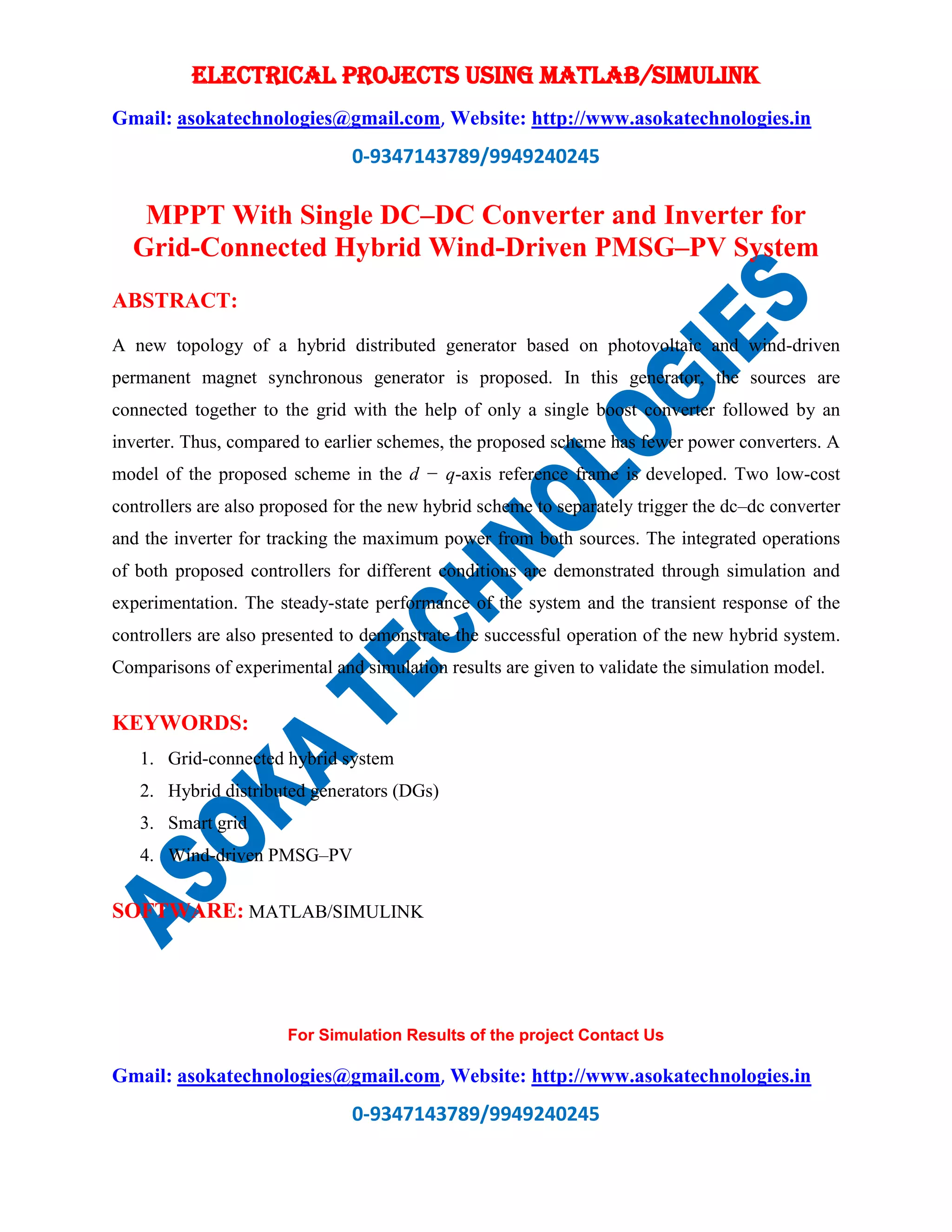
Fig. 1. Proposed DG system based on PMSG–PV sources.
ELECTRICAL PROJECTS USING MATLAB/SIMULINK
Gmail: asokatechnologies@gmail.com, Website: http://www.asokatechnologies.in
0-9347143789/9949240245
For Simulation Results of the project Contact Us
Gmail: asokatechnologies@gmail.com, Website: http://www.asokatechnologies.in
0-9347143789/9949240245
EXPECTED SIMULATION RESULTS:
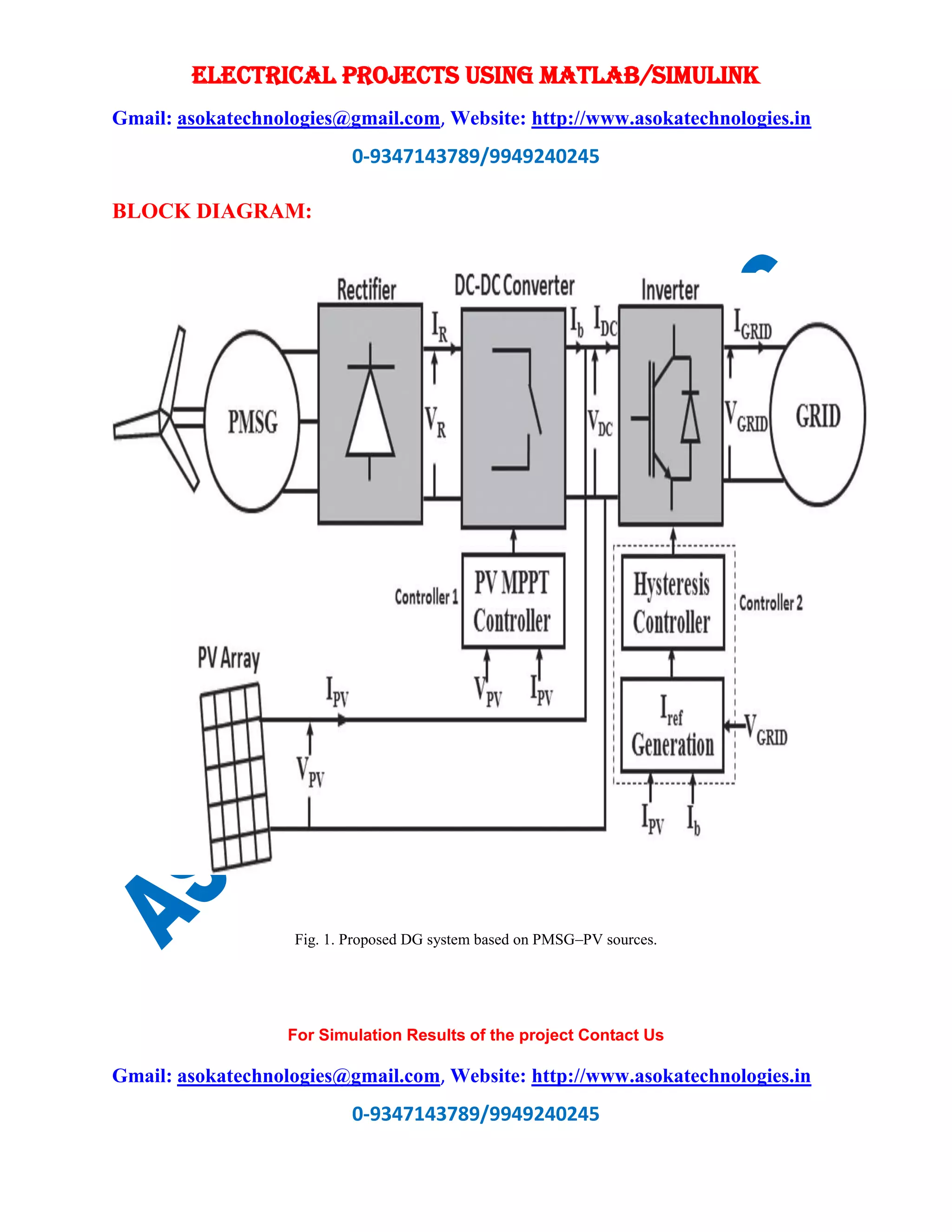
Fig. 2. DC link steady-state waveforms. (a) Experimental (voltage—50 V/div, current—10 A/div, and time—500
ms/div). (b) Simulated (voltage—20 V/div, current—5 A/div, and time—500 ms/div.
ELECTRICAL PROJECTS USING MATLAB/SIMULINK
Gmail: asokatechnologies@gmail.com, Website: http://www.asokatechnologies.in
0-9347143789/9949240245
For Simulation Results of the project Contact Us
Gmail: asokatechnologies@gmail.com, Website: http://www.asokatechnologies.in
0-9347143789/9949240245
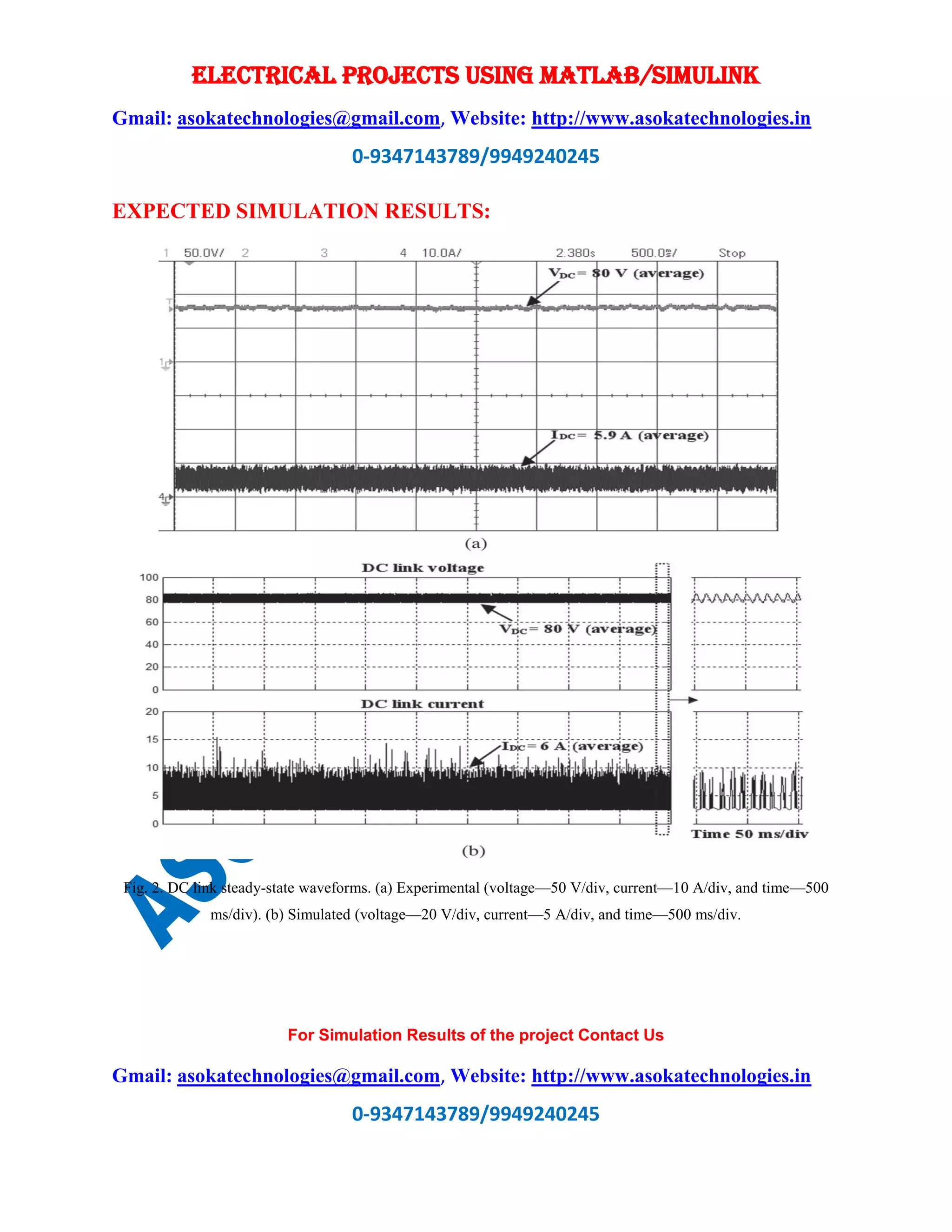
Fig. 3. Steady-state grid voltage and current waveforms. (a) Experimental (voltage—50 V/div, current—10 A/div,
and time—20 ms/div). (b) Simulated (voltage—50 V/div, current—5 A/div, and time— 20 ms/div).
ELECTRICAL PROJECTS USING MATLAB/SIMULINK
Gmail: asokatechnologies@gmail.com, Website: http://www.asokatechnologies.in
0-9347143789/9949240245
For Simulation Results of the project Contact Us
Gmail: asokatechnologies@gmail.com, Website: http://www.asokatechnologies.in
0-9347143789/9949240245
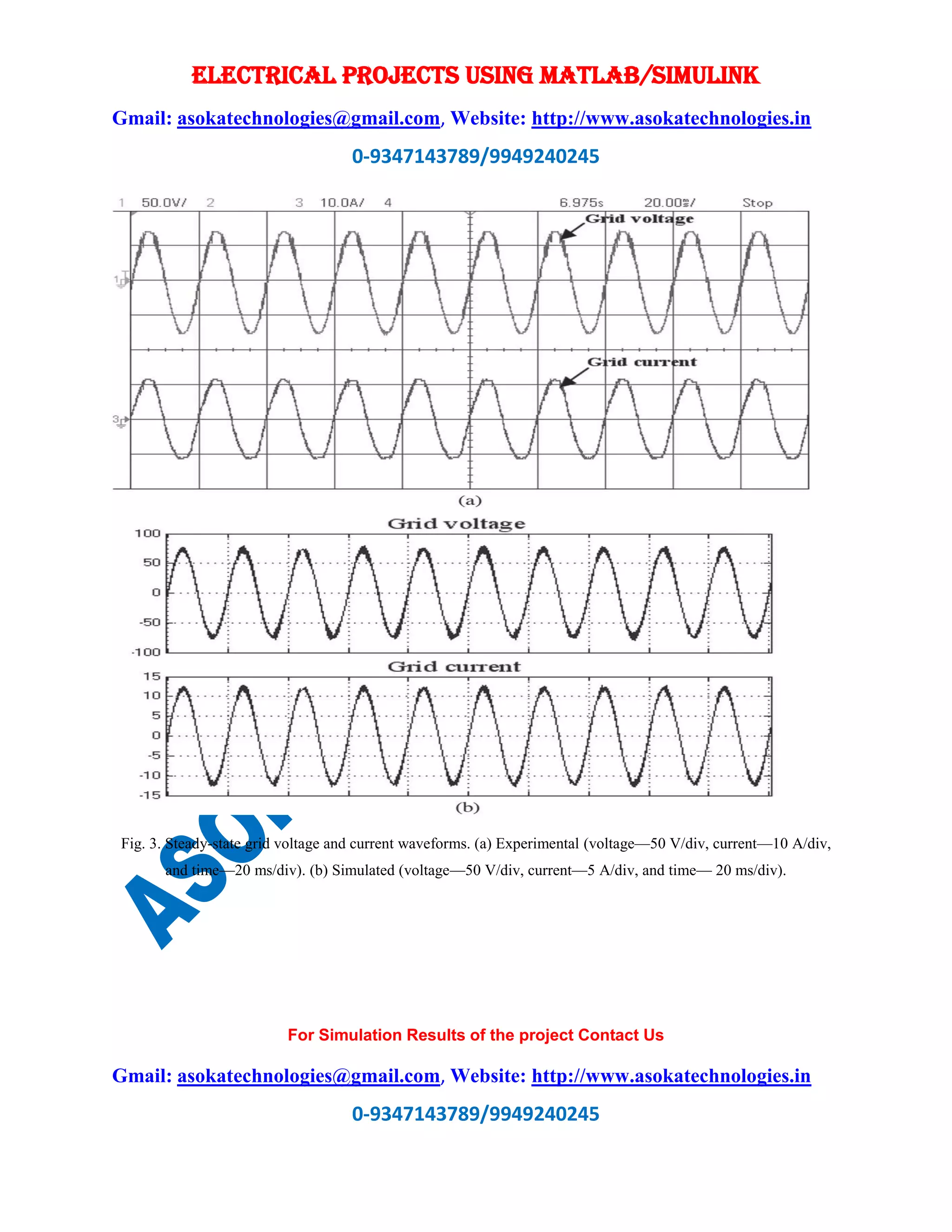
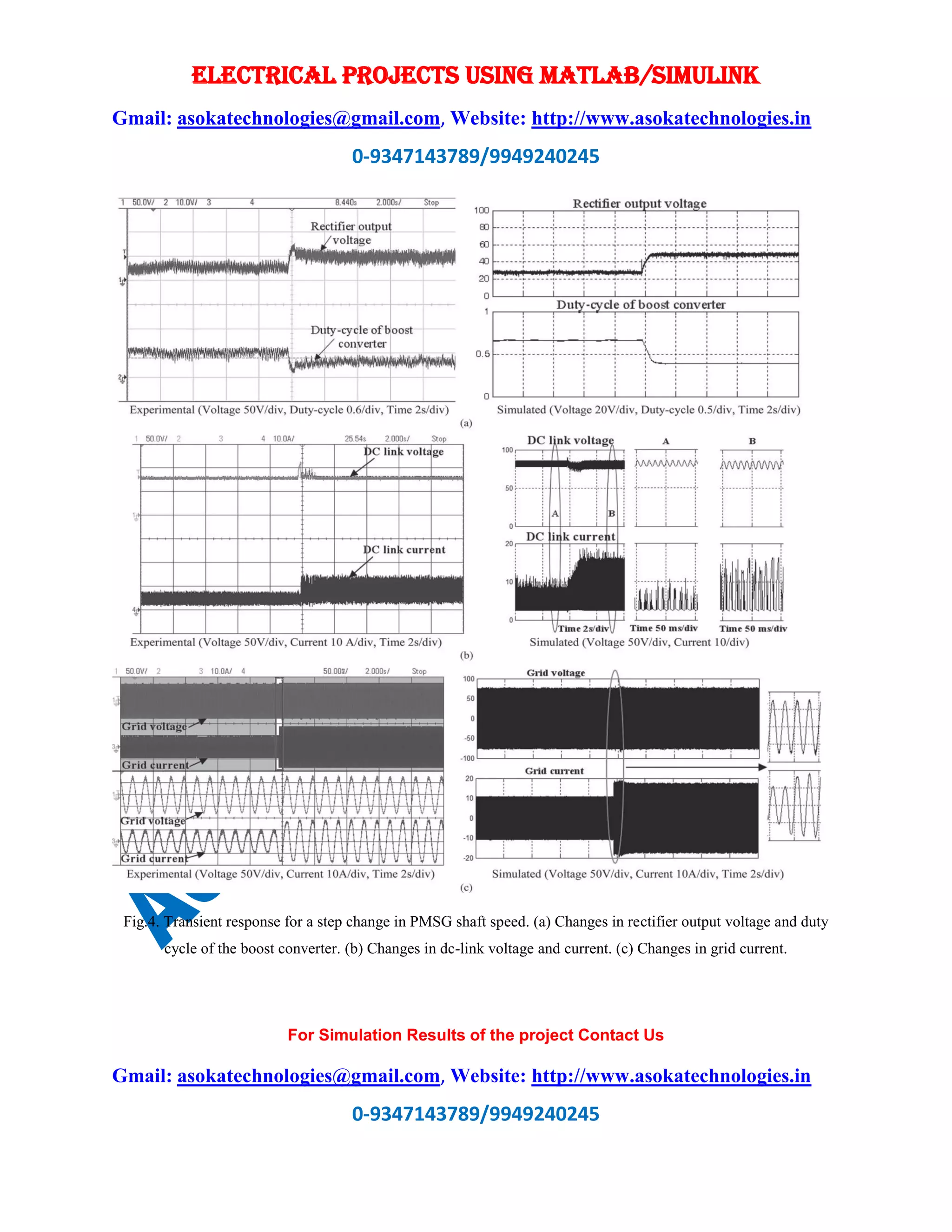
Fig.4. Transient response for a step change in PMSG shaft speed. (a) Changes in rectifier output voltage and duty
cycle of the boost converter. (b) Changes in dc-link voltage and current. (c) Changes in grid current.
ELECTRICAL PROJECTS USING MATLAB/SIMULINK
Gmail: asokatechnologies@gmail.com, Website: http://www.asokatechnologies.in
0-9347143789/9949240245
For Simulation Results of the project Contact Us
Gmail: asokatechnologies@gmail.com, Website: http://www.asokatechnologies.in
0-9347143789/9949240245
CONCLUSION:
A new reliable hybrid DG system based on PV and wind driven PMSG as sources, with only a
boost converter followed by an inverter stage, has been successfully implemented. The
mathematical model developed for the proposed DG scheme has been used to study the system
performance in MATLAB. The investigations carried out in a laboratory prototype for different
irradiations and PMSG shaft speeds amply confirm the utility of the proposed hybrid generator in
zero-net-energy buildings. In addition, it has been established through experimentation and
simulation that the two controllers, digital MPPT controller and hysteresis current controller,
which are designed specifically for the proposed system, have exactly tracked the maximum
powers from both sources. Maintenance-free operation, reliability, and low cost are the features
required for the DG employed in secondary distribution systems. It is for this reason that the
developed controllers employ very low cost microcontrollers and analog circuitry. Furthermore,
the results of the experimental investigations are found to be matching closely with the
simulation results, thereby validating the developed model. The steady state waveforms captured
at the grid side show that the power generated by the DG system is fed to the grid at unity power
factor. The voltage THD and the current THD of the generator meet the required power quality
norms recommended by IEEE. The proposed scheme easily finds application for erection at
domestic consumer sites in a smart grid scenario.
REFERENCES:
[1] J. Byun, S. Park, B. Kang, I. Hong, and S. Park, “Design and implementation of an intelligent
energy saving system based on standby power reduction for a future zero-energy home
environment,” IEEE Trans. Consum. Electron., vol. 59, no. 3, pp. 507–514, Oct. 2013.
[2] J. He, Y. W. Li, and F. Blaabjerg, “Flexible microgrid power quality enhancement using
adaptive hybrid voltage and current controller,” IEEE Trans. Ind. Electron., vol. 61, no. 6, pp.
2784–2794, Jun. 2014.
ELECTRICAL PROJECTS USING MATLAB/SIMULINK
Gmail: asokatechnologies@gmail.com, Website: http://www.asokatechnologies.in
0-9347143789/9949240245
For Simulation Results of the project Contact Us
Gmail: asokatechnologies@gmail.com, Website: http://www.asokatechnologies.in
0-9347143789/9949240245
[3] W. Li, X. Ruan, C. Bao, D. Pan, and X. Wang, “Grid synchronization systems of three-phase
grid-connected power converters: A complexvector- filter perspective,” IEEE Trans. Ind.
Electron., vol. 61, no. 4, pp. 1855–1870, Apr. 2014.
[4] C. Liu, K. T. Chau, and X. Zhang, “An efficient wind-photovoltaic hybrid generation system
using doubly excited permanent-magnet brushless machine,” IEEE Trans. Ind. Electron, vol. 57,
no. 3, pp. 831–839, Mar. 2010.
[5] S. A. Daniel and N. A. Gounden, “A novel hybrid isolated generating system based on PV
fed inverter-assisted wind-driven induction generators,” IEEE Trans. Energy Convers., vol. 19,
no. 2, pp. 416–422, Jun. 2004.

Mppt with single dc–dc converter and inverter for grid connected hybrid wind-driven pmsg–pv system

  • 1.
    ELECTRICAL PROJECTS USINGMATLAB/SIMULINK Gmail: asokatechnologies@gmail.com, Website: http://www.asokatechnologies.in 0-9347143789/9949240245 For Simulation Results of the project Contact Us Gmail: asokatechnologies@gmail.com, Website: http://www.asokatechnologies.in 0-9347143789/9949240245 MPPT With Single DC–DC Converter and Inverter for Grid-Connected Hybrid Wind-Driven PMSG–PV System ABSTRACT: A new topology of a hybrid distributed generator based on photovoltaic and wind-driven permanent magnet synchronous generator is proposed. In this generator, the sources are connected together to the grid with the help of only a single boost converter followed by an inverter. Thus, compared to earlier schemes, the proposed scheme has fewer power converters. A model of the proposed scheme in the d − q-axis reference frame is developed. Two low-cost controllers are also proposed for the new hybrid scheme to separately trigger the dc–dc converter and the inverter for tracking the maximum power from both sources. The integrated operations of both proposed controllers for different conditions are demonstrated through simulation and experimentation. The steady-state performance of the system and the transient response of the controllers are also presented to demonstrate the successful operation of the new hybrid system. Comparisons of experimental and simulation results are given to validate the simulation model. KEYWORDS: 1. Grid-connected hybrid system 2. Hybrid distributed generators (DGs) 3. Smart grid 4. Wind-driven PMSG–PV SOFTWARE: MATLAB/SIMULINK
  • 2.
    ELECTRICAL PROJECTS USINGMATLAB/SIMULINK Gmail: asokatechnologies@gmail.com, Website: http://www.asokatechnologies.in 0-9347143789/9949240245 For Simulation Results of the project Contact Us Gmail: asokatechnologies@gmail.com, Website: http://www.asokatechnologies.in 0-9347143789/9949240245 BLOCK DIAGRAM: Fig. 1. Proposed DG system based on PMSG–PV sources.
  • 3.
    ELECTRICAL PROJECTS USINGMATLAB/SIMULINK Gmail: asokatechnologies@gmail.com, Website: http://www.asokatechnologies.in 0-9347143789/9949240245 For Simulation Results of the project Contact Us Gmail: asokatechnologies@gmail.com, Website: http://www.asokatechnologies.in 0-9347143789/9949240245 EXPECTED SIMULATION RESULTS: Fig. 2. DC link steady-state waveforms. (a) Experimental (voltage—50 V/div, current—10 A/div, and time—500 ms/div). (b) Simulated (voltage—20 V/div, current—5 A/div, and time—500 ms/div.
  • 4.
    ELECTRICAL PROJECTS USINGMATLAB/SIMULINK Gmail: asokatechnologies@gmail.com, Website: http://www.asokatechnologies.in 0-9347143789/9949240245 For Simulation Results of the project Contact Us Gmail: asokatechnologies@gmail.com, Website: http://www.asokatechnologies.in 0-9347143789/9949240245 Fig. 3. Steady-state grid voltage and current waveforms. (a) Experimental (voltage—50 V/div, current—10 A/div, and time—20 ms/div). (b) Simulated (voltage—50 V/div, current—5 A/div, and time— 20 ms/div).
  • 5.
    ELECTRICAL PROJECTS USINGMATLAB/SIMULINK Gmail: asokatechnologies@gmail.com, Website: http://www.asokatechnologies.in 0-9347143789/9949240245 For Simulation Results of the project Contact Us Gmail: asokatechnologies@gmail.com, Website: http://www.asokatechnologies.in 0-9347143789/9949240245 Fig.4. Transient response for a step change in PMSG shaft speed. (a) Changes in rectifier output voltage and duty cycle of the boost converter. (b) Changes in dc-link voltage and current. (c) Changes in grid current.
  • 6.
    ELECTRICAL PROJECTS USINGMATLAB/SIMULINK Gmail: asokatechnologies@gmail.com, Website: http://www.asokatechnologies.in 0-9347143789/9949240245 For Simulation Results of the project Contact Us Gmail: asokatechnologies@gmail.com, Website: http://www.asokatechnologies.in 0-9347143789/9949240245 CONCLUSION: A new reliable hybrid DG system based on PV and wind driven PMSG as sources, with only a boost converter followed by an inverter stage, has been successfully implemented. The mathematical model developed for the proposed DG scheme has been used to study the system performance in MATLAB. The investigations carried out in a laboratory prototype for different irradiations and PMSG shaft speeds amply confirm the utility of the proposed hybrid generator in zero-net-energy buildings. In addition, it has been established through experimentation and simulation that the two controllers, digital MPPT controller and hysteresis current controller, which are designed specifically for the proposed system, have exactly tracked the maximum powers from both sources. Maintenance-free operation, reliability, and low cost are the features required for the DG employed in secondary distribution systems. It is for this reason that the developed controllers employ very low cost microcontrollers and analog circuitry. Furthermore, the results of the experimental investigations are found to be matching closely with the simulation results, thereby validating the developed model. The steady state waveforms captured at the grid side show that the power generated by the DG system is fed to the grid at unity power factor. The voltage THD and the current THD of the generator meet the required power quality norms recommended by IEEE. The proposed scheme easily finds application for erection at domestic consumer sites in a smart grid scenario. REFERENCES: [1] J. Byun, S. Park, B. Kang, I. Hong, and S. Park, “Design and implementation of an intelligent energy saving system based on standby power reduction for a future zero-energy home environment,” IEEE Trans. Consum. Electron., vol. 59, no. 3, pp. 507–514, Oct. 2013. [2] J. He, Y. W. Li, and F. Blaabjerg, “Flexible microgrid power quality enhancement using adaptive hybrid voltage and current controller,” IEEE Trans. Ind. Electron., vol. 61, no. 6, pp. 2784–2794, Jun. 2014.
  • 7.
    ELECTRICAL PROJECTS USINGMATLAB/SIMULINK Gmail: asokatechnologies@gmail.com, Website: http://www.asokatechnologies.in 0-9347143789/9949240245 For Simulation Results of the project Contact Us Gmail: asokatechnologies@gmail.com, Website: http://www.asokatechnologies.in 0-9347143789/9949240245 [3] W. Li, X. Ruan, C. Bao, D. Pan, and X. Wang, “Grid synchronization systems of three-phase grid-connected power converters: A complexvector- filter perspective,” IEEE Trans. Ind. Electron., vol. 61, no. 4, pp. 1855–1870, Apr. 2014. [4] C. Liu, K. T. Chau, and X. Zhang, “An efficient wind-photovoltaic hybrid generation system using doubly excited permanent-magnet brushless machine,” IEEE Trans. Ind. Electron, vol. 57, no. 3, pp. 831–839, Mar. 2010. [5] S. A. Daniel and N. A. Gounden, “A novel hybrid isolated generating system based on PV fed inverter-assisted wind-driven induction generators,” IEEE Trans. Energy Convers., vol. 19, no. 2, pp. 416–422, Jun. 2004.