

MOTIVATION, GOAL and the SELF 
Motivation, involvement strategies and practices 
Monalisa, Soumya, Prasanna
What is Motivation? 
 MOTIVATION refers to the needs, urges, wishes or desires which initiate a 
behavior 
 The psychological feature that arouses a man to action toward a desired GOAL 
Two general NEEDS according to Psychology: 
 Biogenic needs 
- Hunger, thirst, sex etc. 
 Psychological needs 
- Relation with others, psychological perspective
Psychological needs 
 Affectional needs: 
The need to form emotionally satisfying relations with others. 
 Ego-Bolstering needs: 
Need to enhance and promote ones personality 
 Ego-defensive needs: 
Need to protect the personality
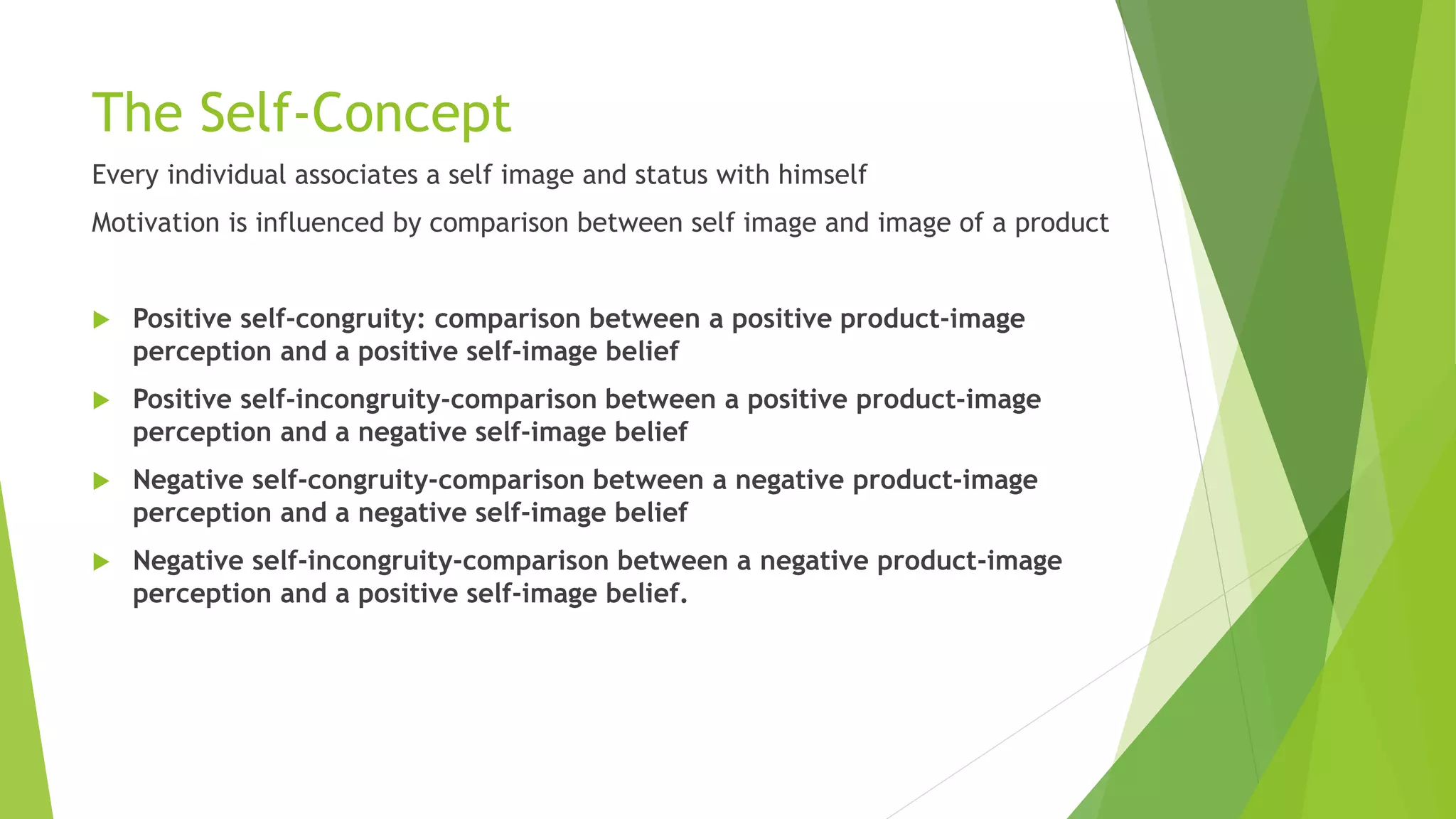
The Self-Concept 
Every individual associates a self image and status with himself 
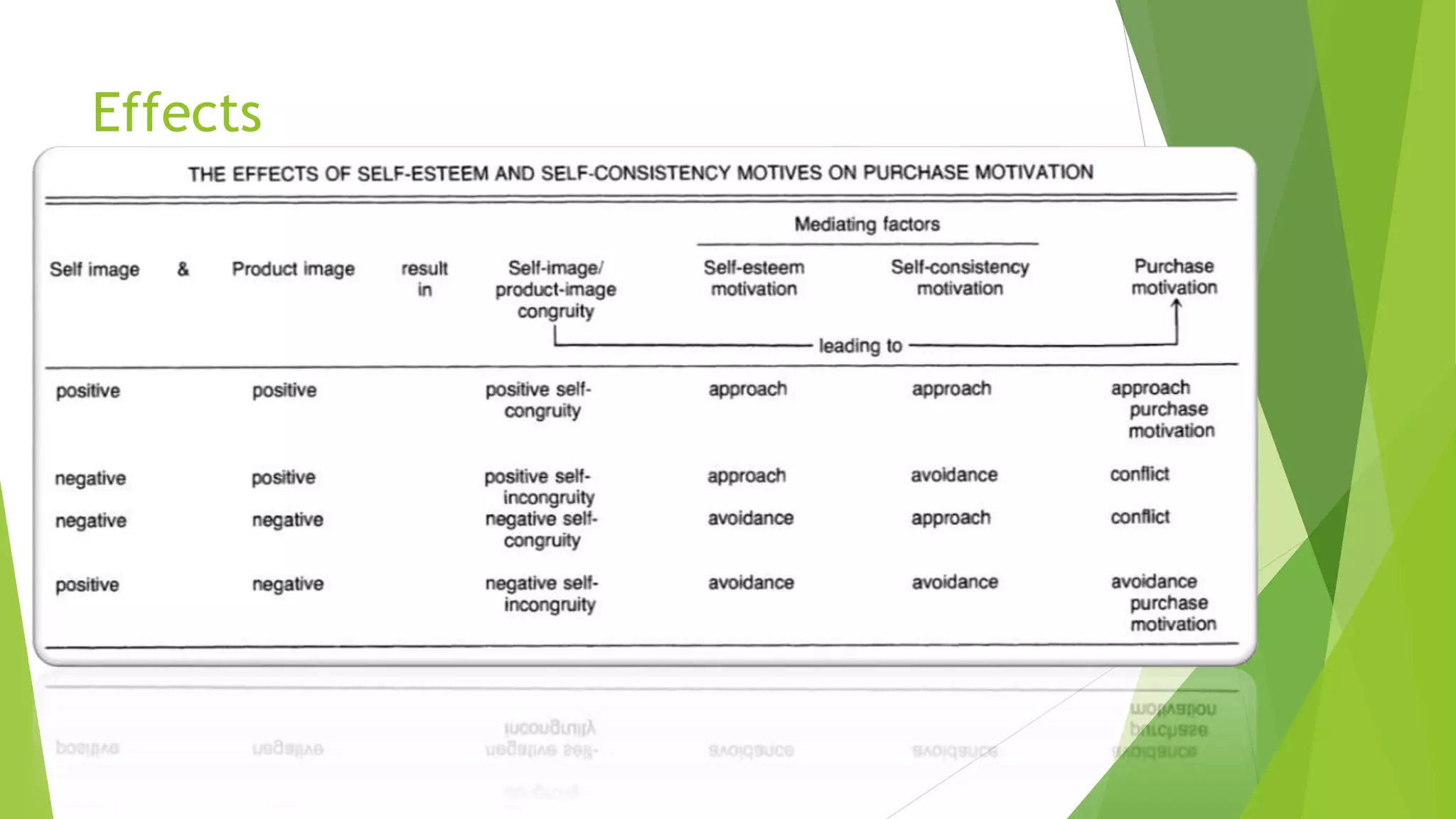
Motivation is influenced by comparison between self image and image of a product 
 Positive self-congruity: comparison between a positive product-image 
perception and a positive self-image belief 
 Positive self-incongruity-comparison between a positive product-image 
perception and a negative self-image belief 
 Negative self-congruity-comparison between a negative product-image 
perception and a negative self-image belief 
 Negative self-incongruity-comparison between a negative product-image 
perception and a positive self-image belief.
Effects
Motivation behind consumers’ online 
shopping cart use 
 On-ground shopping carts vs electronic carts 
 On-ground- utilitarian, assists customers in making an immediate purchase. Eg-grocery 
cart 
 Electronic- virtual space on shopping websites, lets customers store and make 
purchase at that shopping session 
 Objective- To determine what motivates shoppers to use their online shopping 
carts( beyond functional view) 
 Angeline G. Close and Monika Kukar-Kinney
Motivation 
 Utilitarian Motivation- functional benefits 
 Online shopping- price promotions, purchase intent 
 Hedonic Motivation- shopper’s judgment of the experience based benefits(fun 
, enjoyment) 
 Online shopping- gratification, adventure and value shopping 
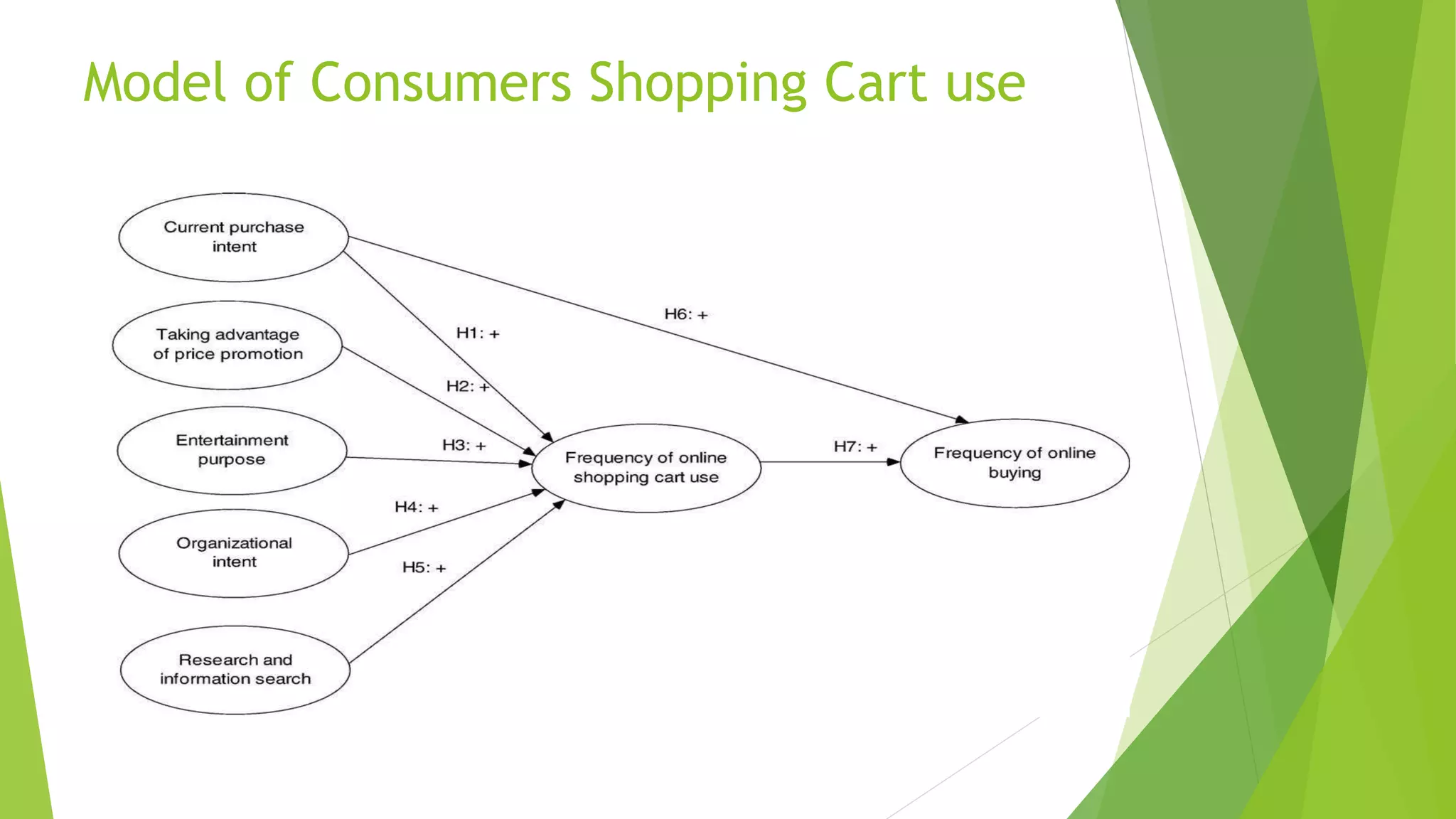
 Proposed model of study suggests that frequency of shopping cart use depends 
on 
 intent to make a current online purchase 
 seeking of an online price promotion 
 Perceived entertainment value of using the cart 
 intent to organize items of interest 
 information-seeking behaviors.
Hypotheses 
 Shopping and current online purchase intent 
 Intention to use his or her virtual cart as a means to purchase during current 
Internet session 
 H1: Current purchase intent will increase the frequency of consumers’ online 
shopping cart use 
 Price Promotions 
 Extent to which consumers use the online shopping cart as a means of gathering 
and researching information about the products of interest for a potential future 
purchase 
 H2: Desire to take advantage of price promotions will increase the frequency of 
cart use 
 Entertainment purpose 
 Extent to which consumers place items in the shopping cart out of boredom, for 
entertainment, or enjoyment-seeking 
 H3: Entertainment purpose will increase the frequency of consumers‘ online 
shopping cart use.
Hypotheses 
 Online shopping carts as a shopping organization tool 
 Extent to which consumers place items in their online shopping carts to create a 
wish list of desired items, bookmark the product for a potential future purchase, 
and narrow down items for further evaluation 
 H4: Organizational shopping intent will increase the frequency of consumers' online 
shopping cart use. 
 Shopping research and information search 
 extent to which consumers use the online shopping cart as a means of gathering 
and researching information about the products of interest for a potential future 
purchase 
 H5: Research and information search intent will increase the frequency of 
consumers' online shopping cart use. 
 Determinants of conversion rate from online shopping to online buying 
 H6: Current purchase intent will increase online buying 
 H7: The online shopping cart use will increase online buying.
Model of Consumers Shopping Cart use
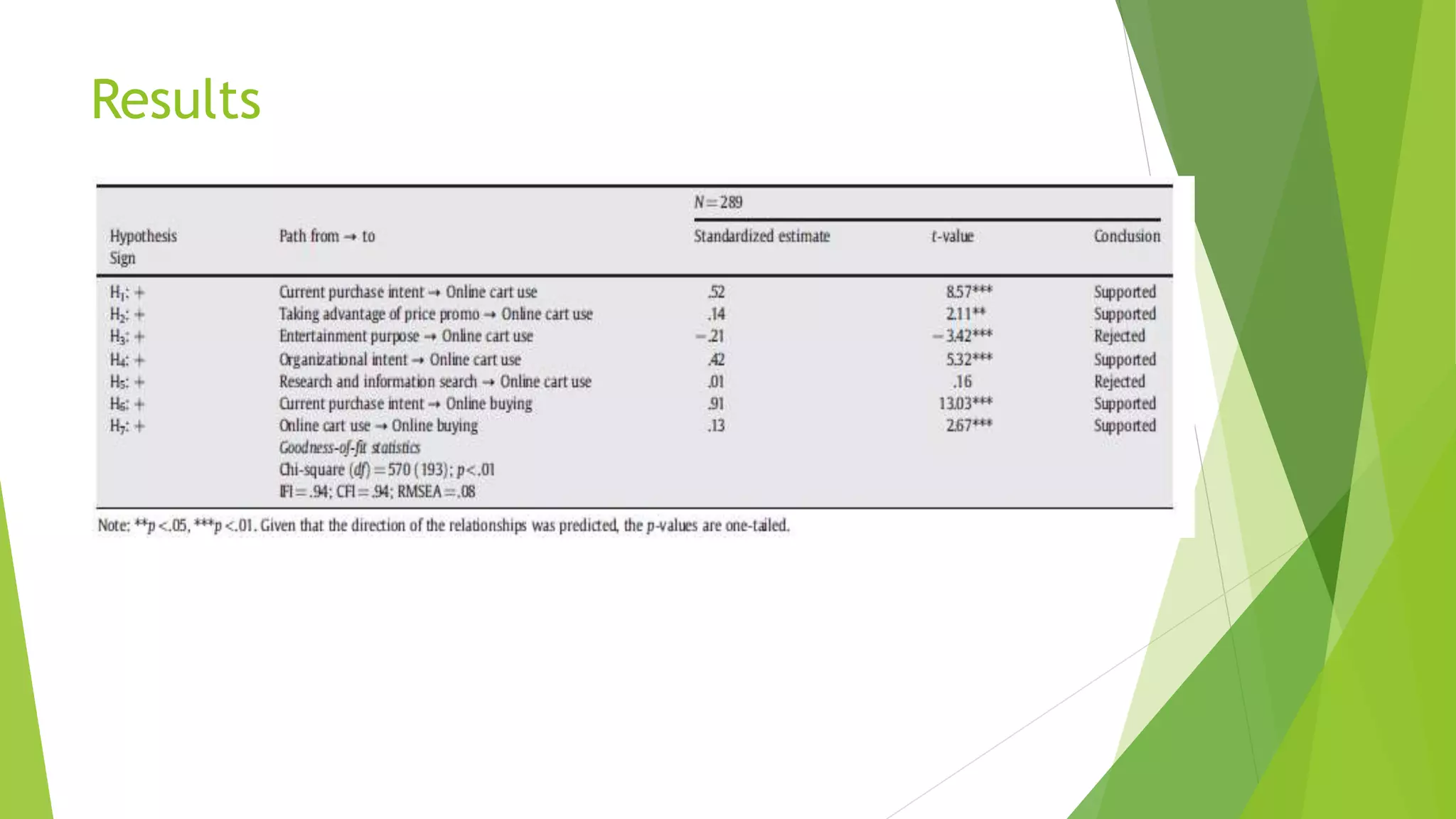
Results
Implications 
 Online retailers should maintain promotion programs in place to 
stimulate the consumers' online cart use and consequently, buying. 
 Make it convenient for shoppers to easily place items they intend 
to buy in their cart in order to enhance the conversion rate from 
online shopping to online buying. 
 E-tailers need to make sure that they provide their customers with 
“persistent” shopping carts, or carts that do not get emptied once 
the consumer leaves the website.
Thank you!

Motivation in consumer behavior

  • 1.
    MOTIVATION, GOAL andthe SELF Motivation, involvement strategies and practices Monalisa, Soumya, Prasanna
  • 2.
    What is Motivation?  MOTIVATION refers to the needs, urges, wishes or desires which initiate a behavior  The psychological feature that arouses a man to action toward a desired GOAL Two general NEEDS according to Psychology:  Biogenic needs - Hunger, thirst, sex etc.  Psychological needs - Relation with others, psychological perspective
  • 3.
    Psychological needs Affectional needs: The need to form emotionally satisfying relations with others.  Ego-Bolstering needs: Need to enhance and promote ones personality  Ego-defensive needs: Need to protect the personality
  • 4.
    The Self-Concept Everyindividual associates a self image and status with himself Motivation is influenced by comparison between self image and image of a product  Positive self-congruity: comparison between a positive product-image perception and a positive self-image belief  Positive self-incongruity-comparison between a positive product-image perception and a negative self-image belief  Negative self-congruity-comparison between a negative product-image perception and a negative self-image belief  Negative self-incongruity-comparison between a negative product-image perception and a positive self-image belief.
  • 5.
  • 6.
    Motivation behind consumers’online shopping cart use  On-ground shopping carts vs electronic carts  On-ground- utilitarian, assists customers in making an immediate purchase. Eg-grocery cart  Electronic- virtual space on shopping websites, lets customers store and make purchase at that shopping session  Objective- To determine what motivates shoppers to use their online shopping carts( beyond functional view)  Angeline G. Close and Monika Kukar-Kinney
  • 7.
    Motivation  UtilitarianMotivation- functional benefits  Online shopping- price promotions, purchase intent  Hedonic Motivation- shopper’s judgment of the experience based benefits(fun , enjoyment)  Online shopping- gratification, adventure and value shopping  Proposed model of study suggests that frequency of shopping cart use depends on  intent to make a current online purchase  seeking of an online price promotion  Perceived entertainment value of using the cart  intent to organize items of interest  information-seeking behaviors.
  • 8.
    Hypotheses  Shoppingand current online purchase intent  Intention to use his or her virtual cart as a means to purchase during current Internet session  H1: Current purchase intent will increase the frequency of consumers’ online shopping cart use  Price Promotions  Extent to which consumers use the online shopping cart as a means of gathering and researching information about the products of interest for a potential future purchase  H2: Desire to take advantage of price promotions will increase the frequency of cart use  Entertainment purpose  Extent to which consumers place items in the shopping cart out of boredom, for entertainment, or enjoyment-seeking  H3: Entertainment purpose will increase the frequency of consumers‘ online shopping cart use.
  • 9.
    Hypotheses  Onlineshopping carts as a shopping organization tool  Extent to which consumers place items in their online shopping carts to create a wish list of desired items, bookmark the product for a potential future purchase, and narrow down items for further evaluation  H4: Organizational shopping intent will increase the frequency of consumers' online shopping cart use.  Shopping research and information search  extent to which consumers use the online shopping cart as a means of gathering and researching information about the products of interest for a potential future purchase  H5: Research and information search intent will increase the frequency of consumers' online shopping cart use.  Determinants of conversion rate from online shopping to online buying  H6: Current purchase intent will increase online buying  H7: The online shopping cart use will increase online buying.
  • 10.
    Model of ConsumersShopping Cart use
  • 11.
  • 12.
    Implications  Onlineretailers should maintain promotion programs in place to stimulate the consumers' online cart use and consequently, buying.  Make it convenient for shoppers to easily place items they intend to buy in their cart in order to enhance the conversion rate from online shopping to online buying.  E-tailers need to make sure that they provide their customers with “persistent” shopping carts, or carts that do not get emptied once the consumer leaves the website.
  • 13.