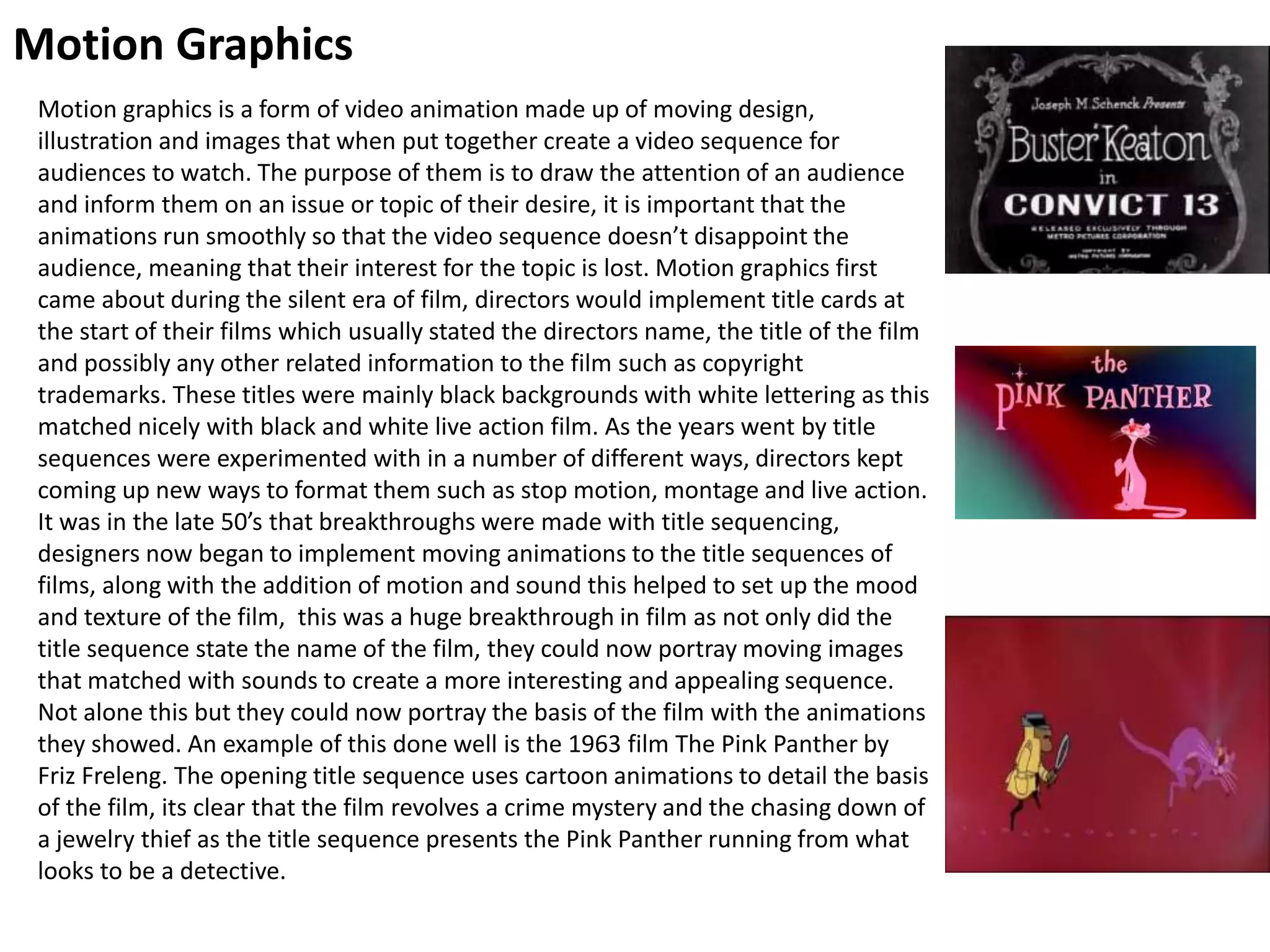
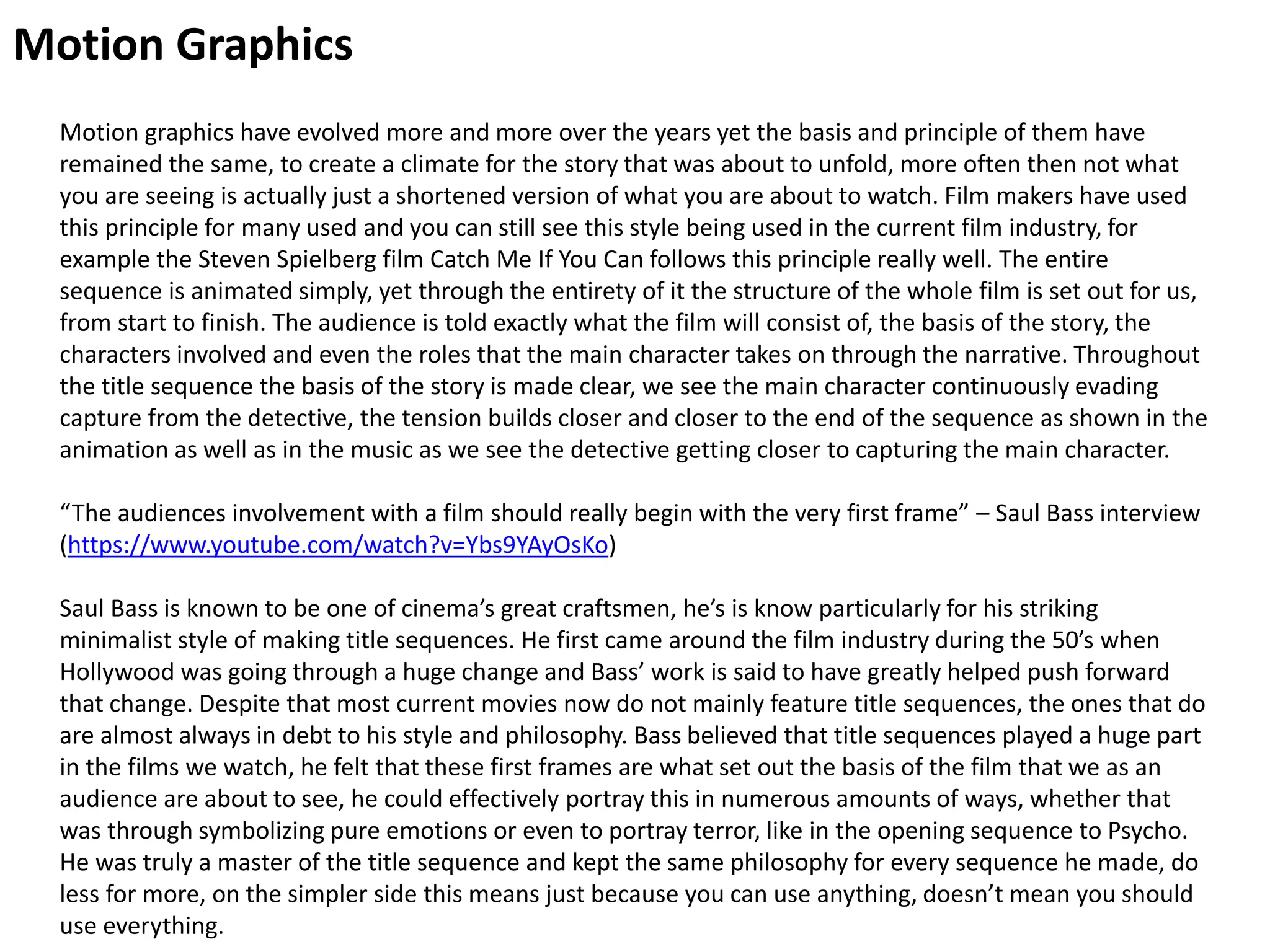
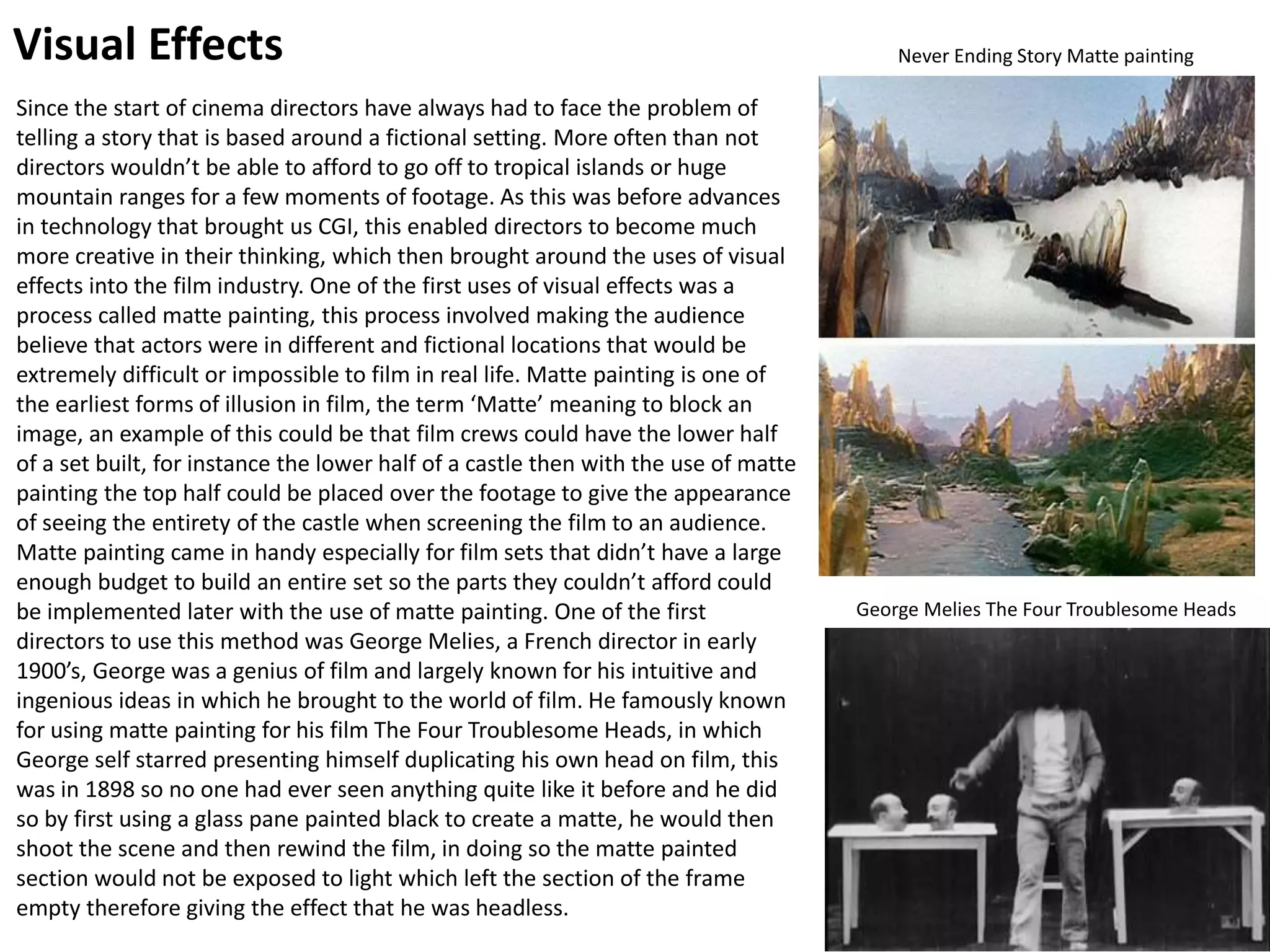
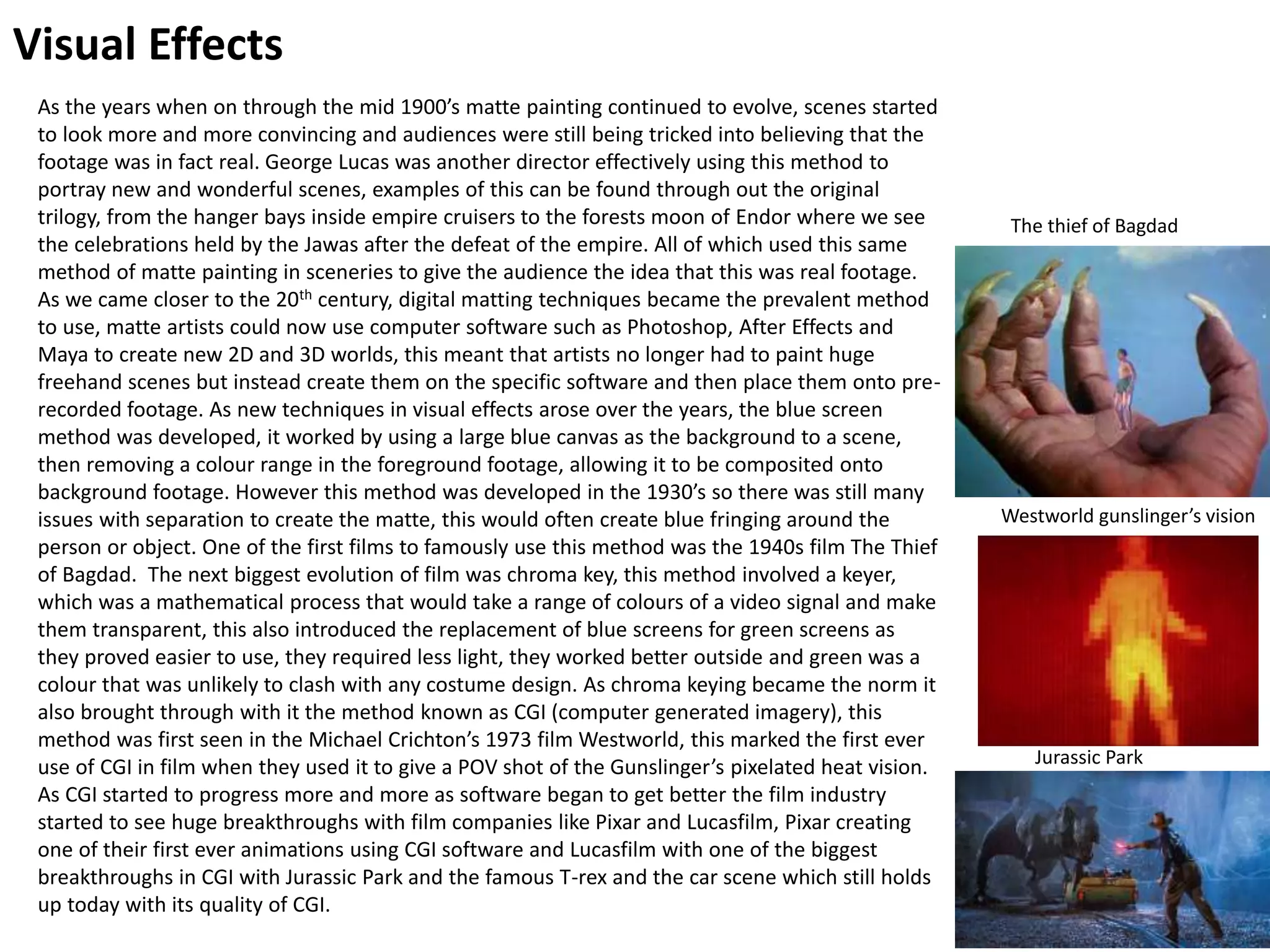
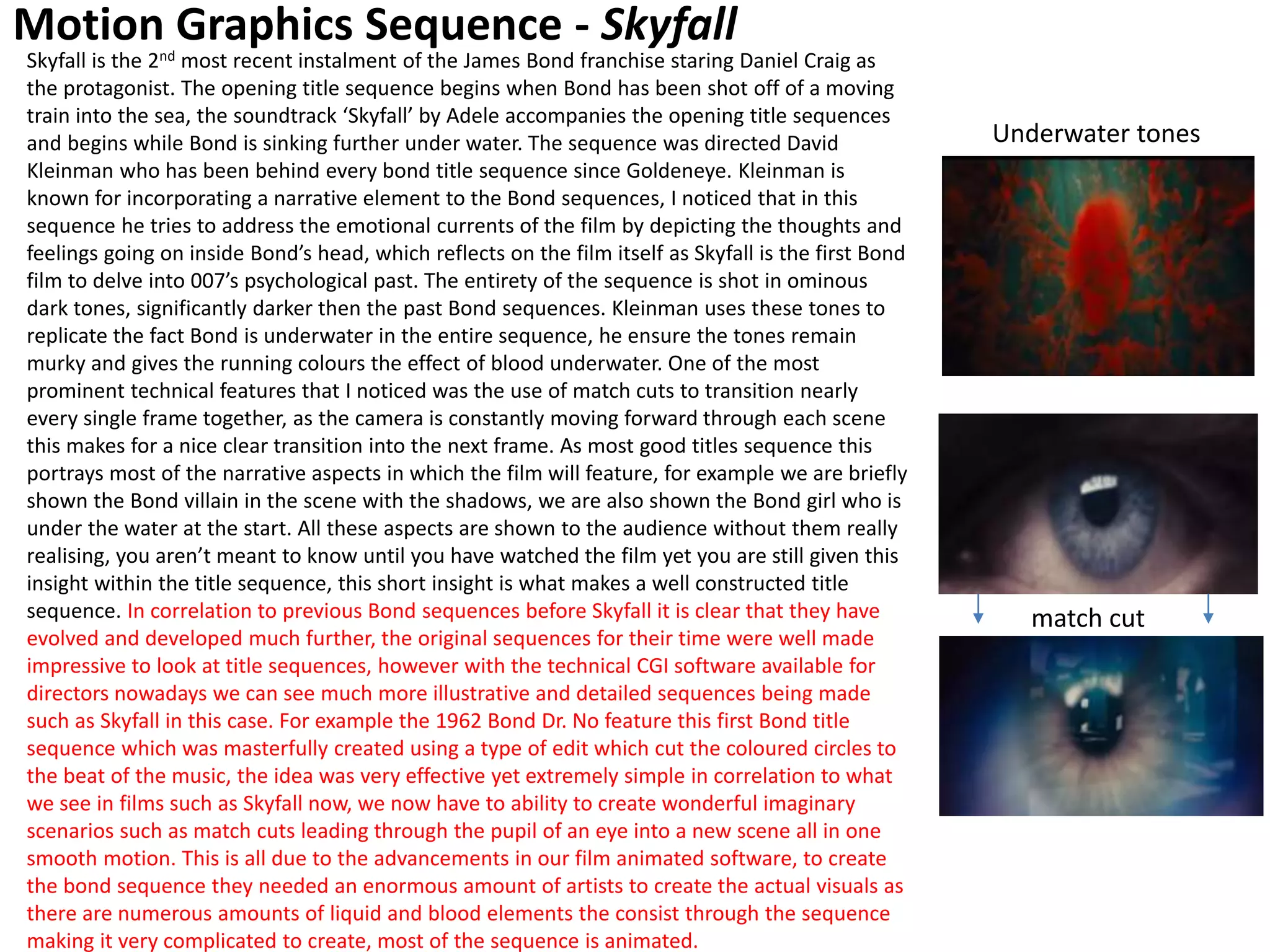
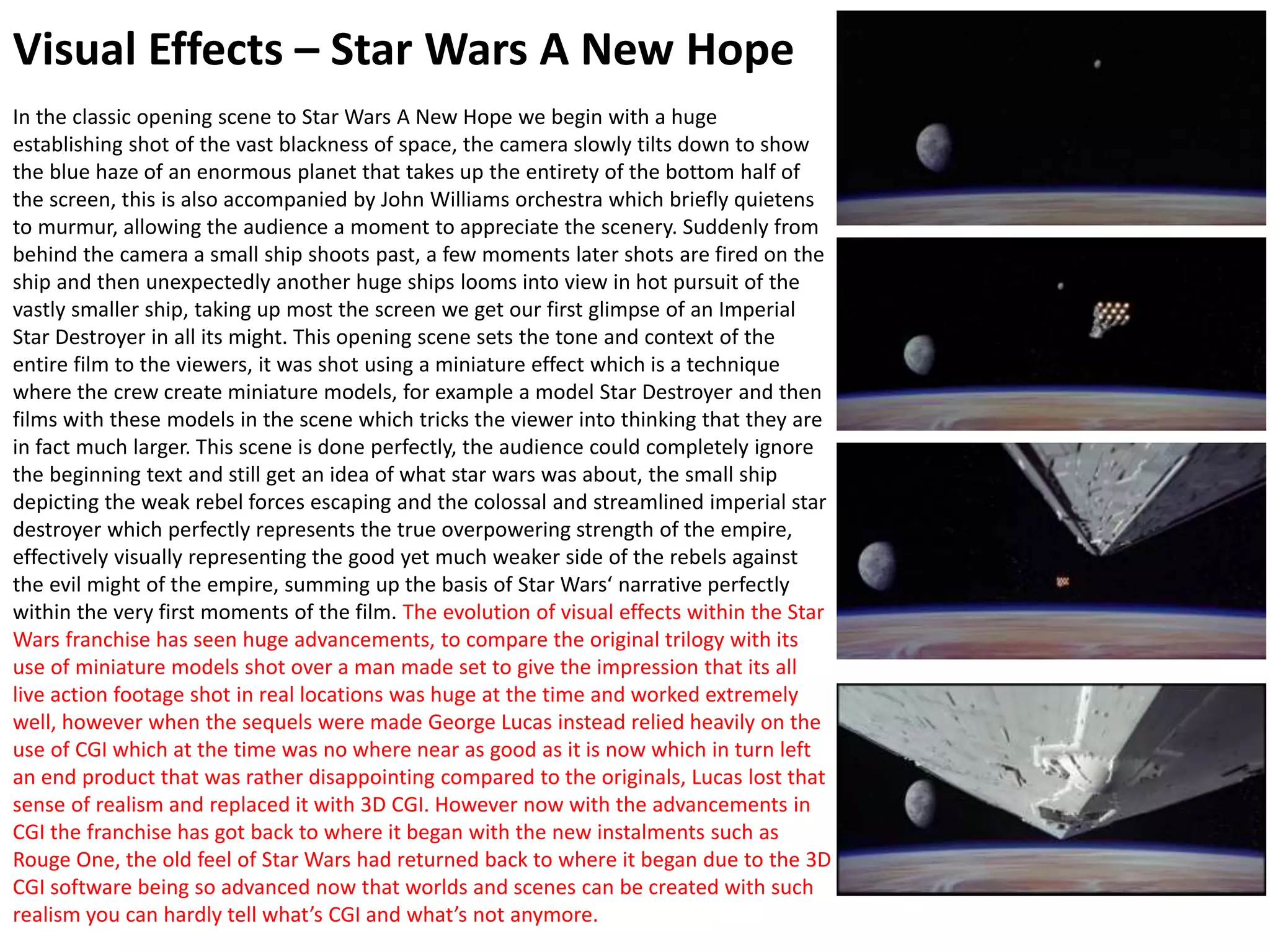
Motion graphics and visual effects have evolved significantly since their early uses in film. Motion graphics first appeared in title sequences during the silent film era to convey information about the film. By the 1950s, title sequences incorporated animation and sound to set the mood and portray the film's story. Pioneers like Saul Bass designed minimalist title sequences that effectively summarized the entire film for audiences. Visual effects techniques also advanced, starting with matte painting techniques used by directors like Georges Méliès to create fictional settings. As technology improved, matte painting transitioned to digital techniques and blue/green screen compositing, enabling more advanced CGI effects. Major breakthroughs included the first CGI in Westworld and realistic dinosaurs in Jurassic Park.






![[Pro forma] - mographics - case study](https://cdn.slidesharecdn.com/ss_thumbnails/pro-forma-mographics-casestudy11-171020180808-thumbnail.jpg?width=640&height=640&fit=bounds)
![[Pro forma] - mographics - case study(1) (1)](https://cdn.slidesharecdn.com/ss_thumbnails/pro-forma-mographics-casestudy11-171005103637-thumbnail.jpg?width=640&height=640&fit=bounds)
![[Pro forma] - mographics - case study(1)](https://cdn.slidesharecdn.com/ss_thumbnails/pro-forma-mographics-casestudy1-171106014155-thumbnail.jpg?width=640&height=640&fit=bounds)
![[Pro forma] - mographics - case study](https://cdn.slidesharecdn.com/ss_thumbnails/pro-forma-mographics-casestudy1-171008225404-thumbnail.jpg?width=640&height=640&fit=bounds)
![[Pro forma] - mographics - case study(1) (1)](https://cdn.slidesharecdn.com/ss_thumbnails/pro-forma-mographics-casestudy11-171018140841-thumbnail.jpg?width=640&height=640&fit=bounds)

![[Pro forma] - mographics - case study](https://cdn.slidesharecdn.com/ss_thumbnails/pro-forma-mographics-casestudy-171008214351-thumbnail.jpg?width=640&height=640&fit=bounds)
![[Pro forma] - mographics - case study(1)](https://cdn.slidesharecdn.com/ss_thumbnails/pro-forma-mographics-casestudy1-171002184310-thumbnail.jpg?width=640&height=640&fit=bounds)
![[Pro forma] - mographics - case study](https://cdn.slidesharecdn.com/ss_thumbnails/pro-forma-mographics-casestudy-171018184755-thumbnail.jpg?width=640&height=640&fit=bounds)
![[Pro forma] - mographics - case study](https://cdn.slidesharecdn.com/ss_thumbnails/pro-forma-mographics-casestudy-171023110131-thumbnail.jpg?width=640&height=640&fit=bounds)
![[Pro forma] - mographics - case study finished](https://cdn.slidesharecdn.com/ss_thumbnails/pro-forma-mographics-casestudyfinished-171012104827-thumbnail.jpg?width=640&height=640&fit=bounds)


![[Pro forma] - mographics - case study](https://cdn.slidesharecdn.com/ss_thumbnails/pro-forma-mographics-casestudy1-171002091044-thumbnail.jpg?width=640&height=640&fit=bounds)


![[Pro forma] corporate - live project evaluation-2](https://cdn.slidesharecdn.com/ss_thumbnails/pro-formacorporate-liveprojectevaluation-2-180419133325-thumbnail.jpg?width=640&height=640&fit=bounds)


![[Pro forma] - mographics - case study](https://cdn.slidesharecdn.com/ss_thumbnails/pro-forma-mographics-casestudy-171005104517-thumbnail.jpg?width=640&height=640&fit=bounds)


