Ethics, Morals and Morality
By
Syed Ali Muneeb
∗ The word Morals is derived from a Greek
word “Mos” which means custom. On the
other hand, if we talk about Ethics, it is also
derived from a Greek word “Ethikos” which
means character.
Moral and Ethics
∗ Simply, morals are the customs.
∗ Groups
∗ Society
∗ Religion
Moral
∗ Established by group of individuals whereas ethics
defines the character of an individual.
∗ Individual
∗ Everyone have Different
∗ For example my ethicals standered from my family
,friends etc
Ethics
Ethics
Good or bad
Our behavior is good or bad
Aristotle said that
Aik achy Tree ki bachan us ka Phal sy hoti hai…
Acha admi b usi tra apny Charter sy jana jata hai
∗ Ethics – A branch of philosophy concerned with
ways of thinking philosophically about morality,
and moral judgment.
∗ Morality – Human conduct and character
referring to “those acts which it makes sense to
describe as right or wrong, good or bad.”
∗ Moral Judgment – Judgments based on
considerations of how other people are to be
treated, and how others interests are to weigh
against their own.
Definitions
∗ Morals are the social, cultural and religious beliefs or
values of an individual or group which tells us what is
right or wrong. They are the rules and standards
made by the society or culture which is to be followed
by us while deciding what is right.
Definition of Morals
∗ Ethics is a branch of philosophy that deals with the
principles of conduct of an individual or group. It
works as a guiding principle as to decide what is good
or bad. They are the standards which govern the life
of a person.
Definition of Ethics
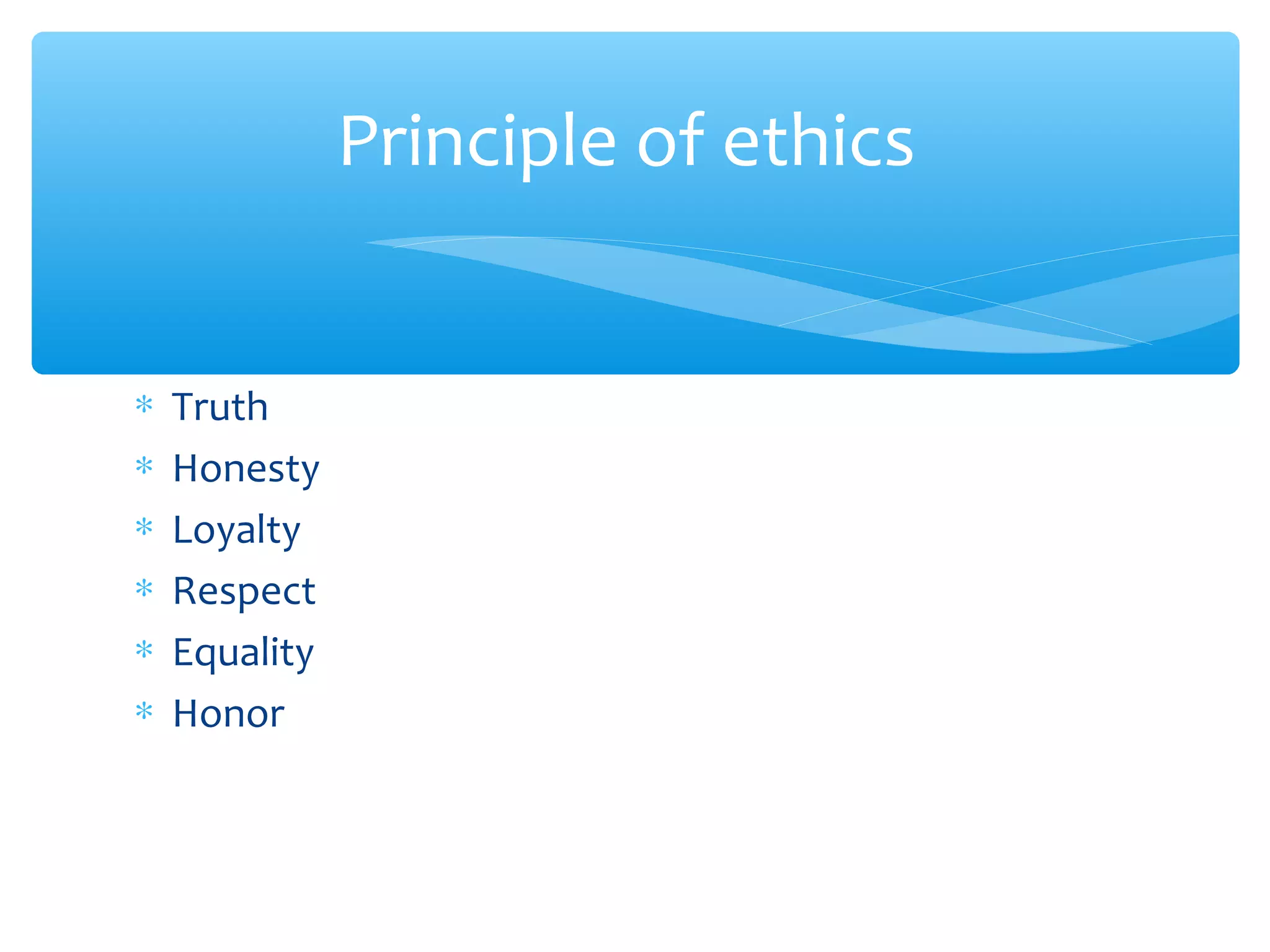
∗ Truth
∗ Honesty
∗ Loyalty
∗ Respect
∗ Equality
∗ Honor
Principle of ethics
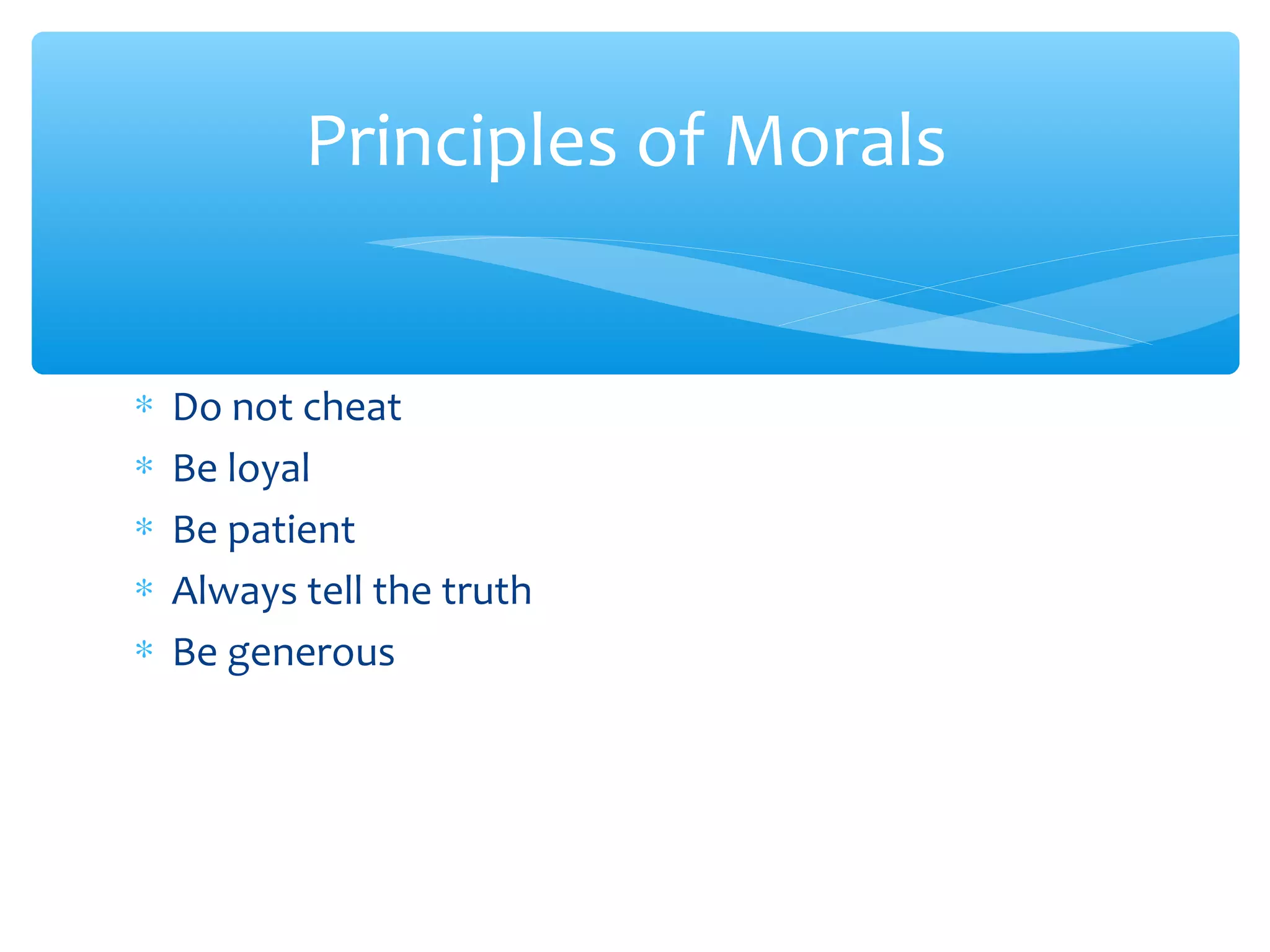
∗ Do not cheat
∗ Be loyal
∗ Be patient
∗ Always tell the truth
∗ Be generous
Principles of Morals
Morals refer to the beliefs what is not
objectively right, but what is considered right
for any situation, so it can be said that what is
morally correct may not be objectively correct.
∗ Meta -Ethics
Base on Reasons
Cognitive =Understand
Non Cognitive= Unintentionally
Emotion =Feeling
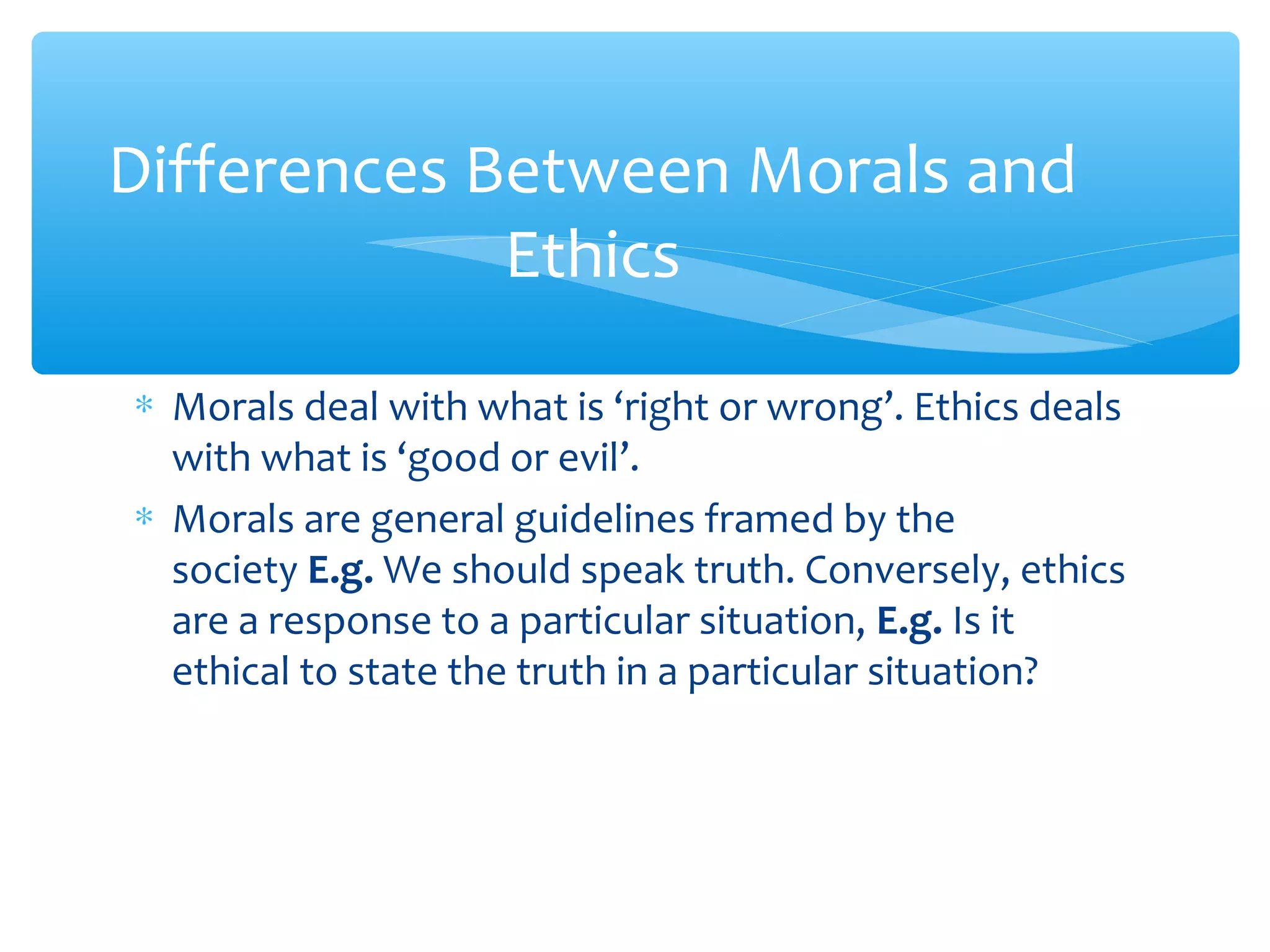
∗ Morals deal with what is ‘right or wrong’. Ethics deals
with what is ‘good or evil’.
∗ Morals are general guidelines framed by the
society E.g. We should speak truth. Conversely, ethics
are a response to a particular situation, E.g. Is it
ethical to state the truth in a particular situation?
Differences Between Morals and
Ethics
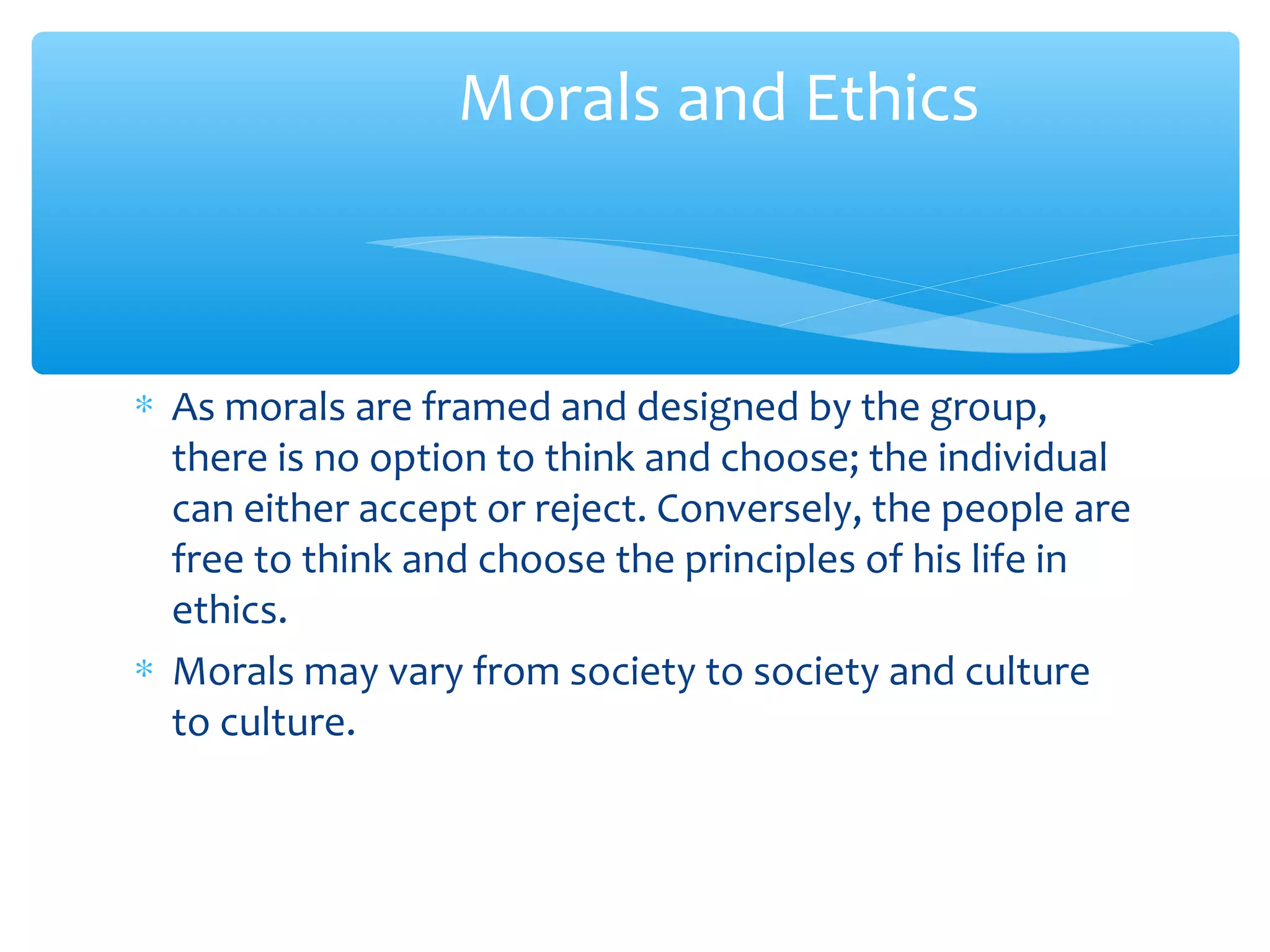
∗ As morals are framed and designed by the group,
there is no option to think and choose; the individual
can either accept or reject. Conversely, the people are
free to think and choose the principles of his life in
ethics.
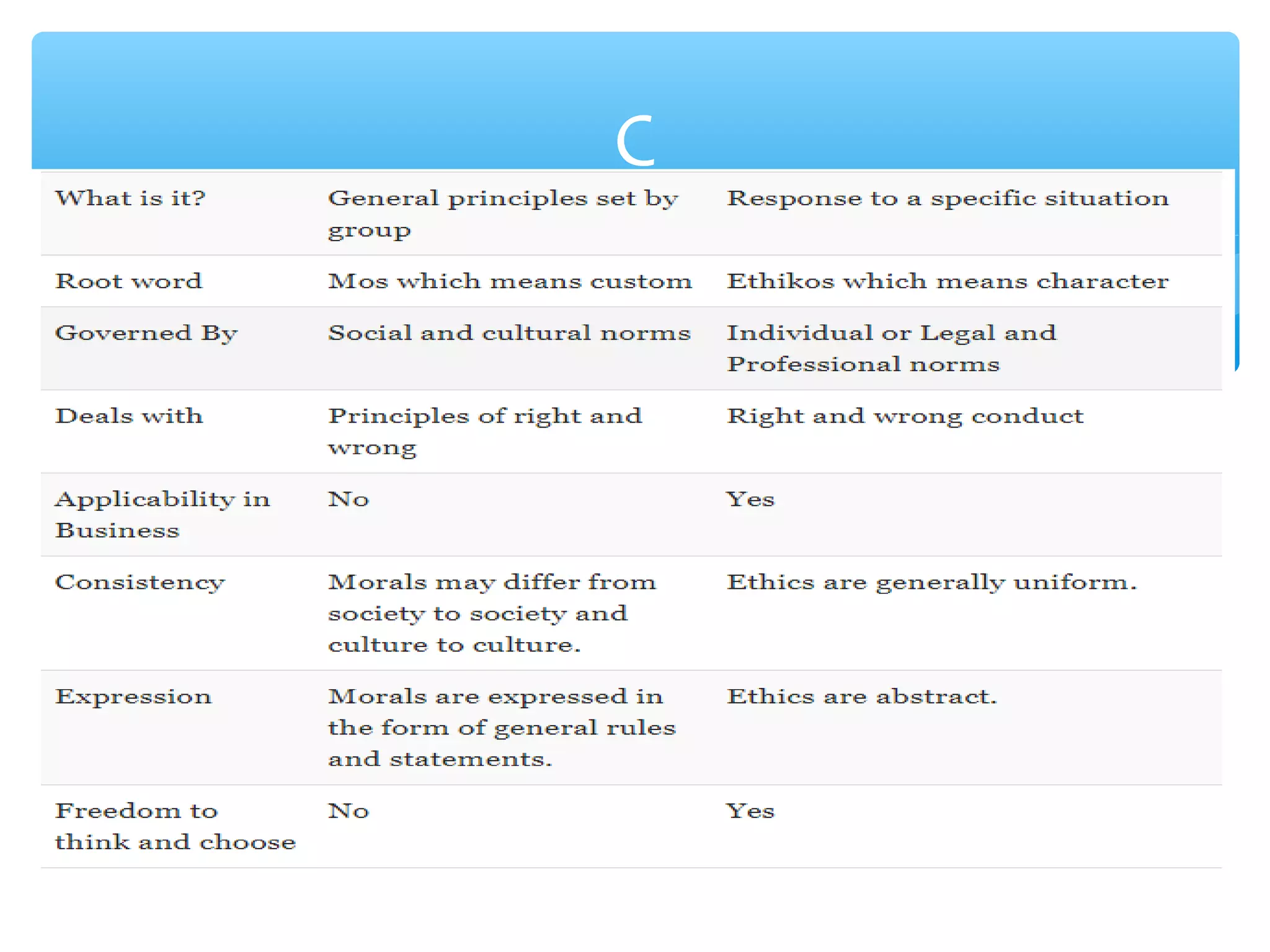
∗ Morals may vary from society to society and culture
to culture.
Morals and Ethics
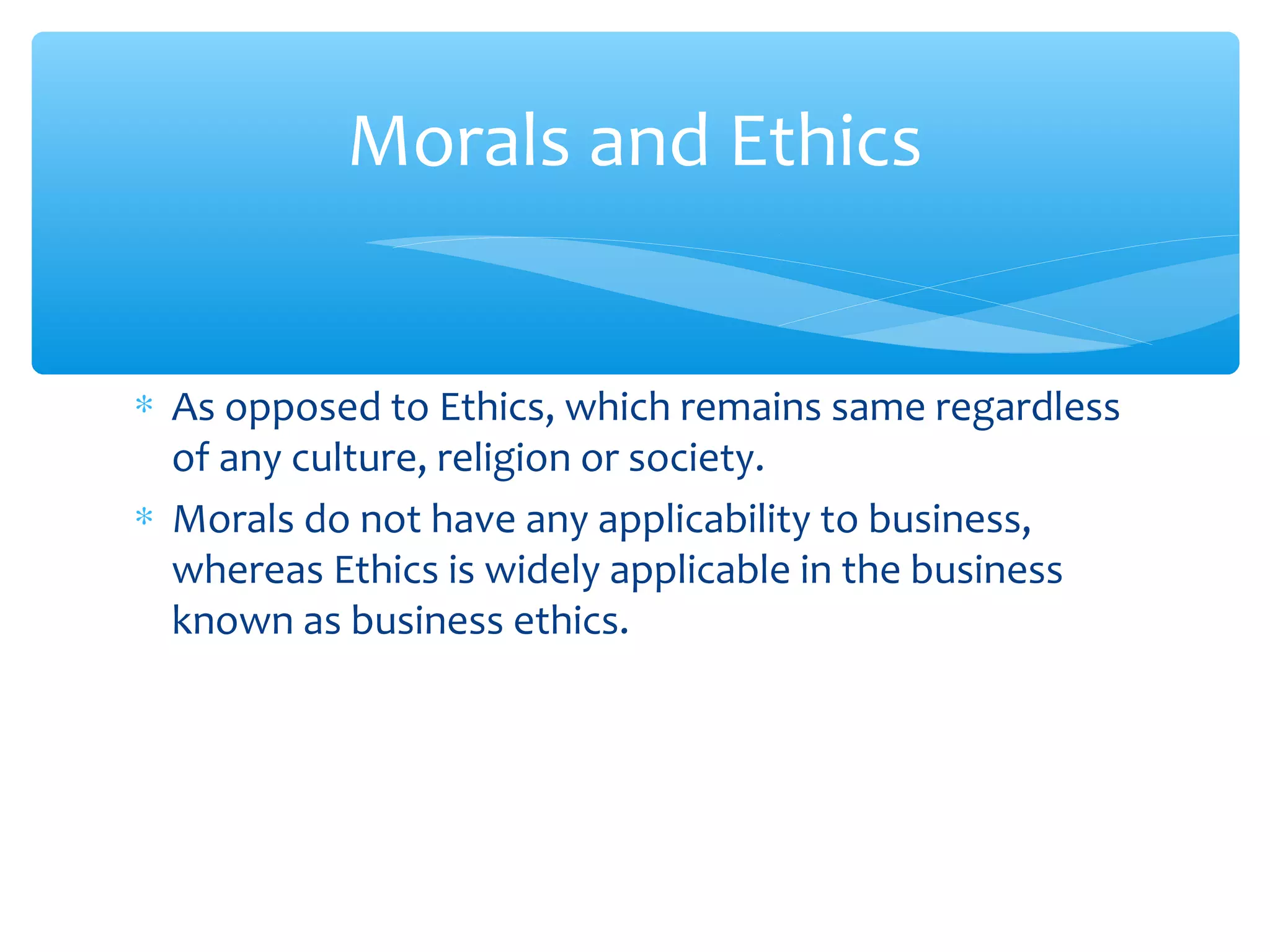
∗ As opposed to Ethics, which remains same regardless
of any culture, religion or society.
∗ Morals do not have any applicability to business,
whereas Ethics is widely applicable in the business
known as business ethics.
Morals and Ethics
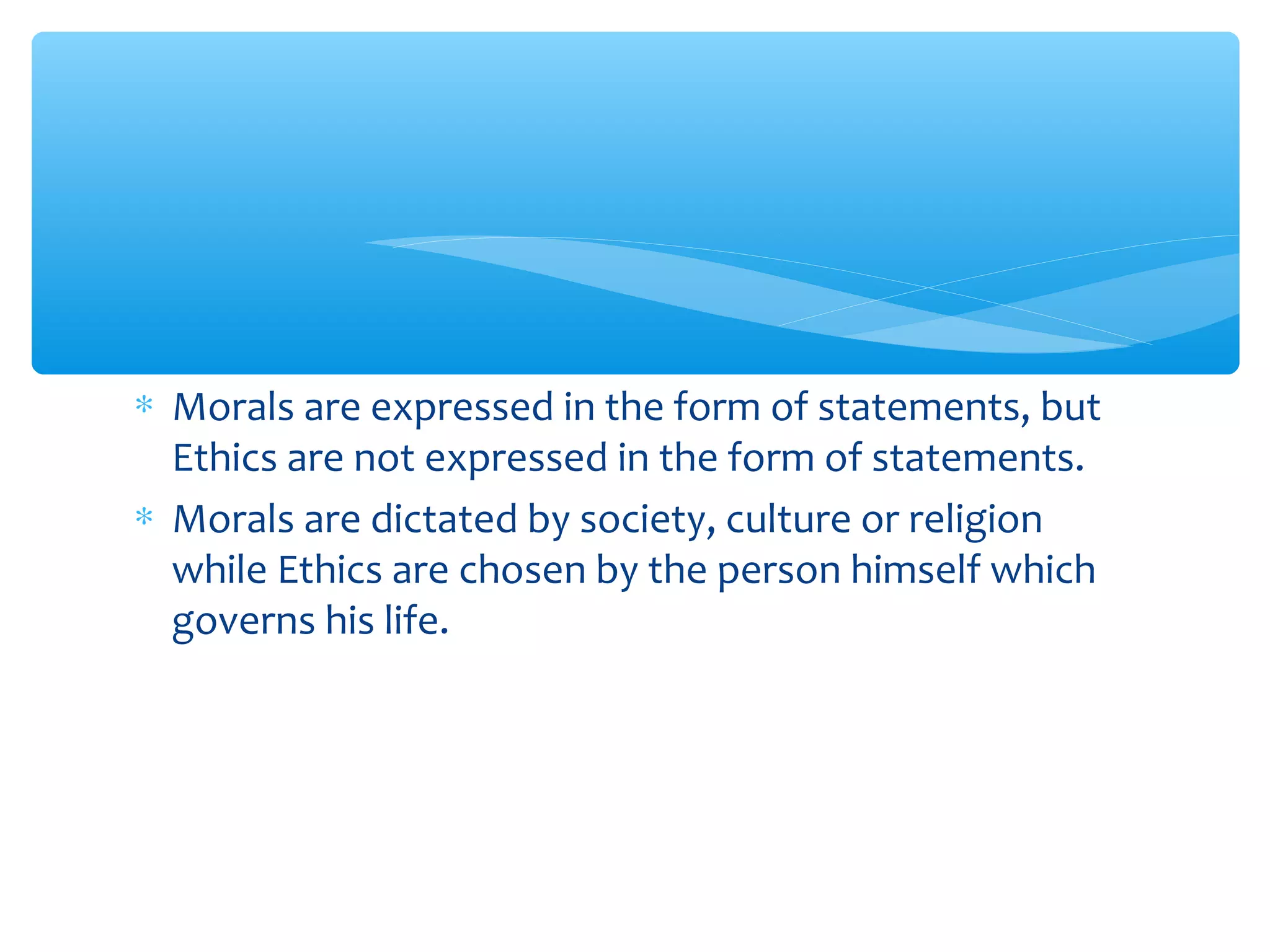
∗ Morals are expressed in the form of statements, but
Ethics are not expressed in the form of statements.
∗ Morals are dictated by society, culture or religion
while Ethics are chosen by the person himself which
governs his life.
∗ Morals are concerned with principles of right and
wrong. On the contrary, ethics stresses on right and
wrong conduct.
∗ As morals are framed and designed by the group, there
is no option to think and choose; the individual can
either accept or reject. Conversely, the people are free
to think and choose the principles of his life in ethics.
Morals and Ethics
C
∗ What are ethics?
∗ Are ethical decisions important?
∗ What happens without ethics?
∗ What is the relation between society – ethics – morals
– moral judgment?
Open-Ended Questions?
∗ Parents
∗ Religion
∗ Peers
∗ Technology
Where does morality come from?
∗ Parents instill ethics and morals in children. Example:
A child yells at their friend – calling them a name.
∗ How does the parent respond?
∗ Other ways?
Parents
∗ If the son of a big politician has committed a crime
and he uses his powers to free his son from legal
consequences. Then this act is immoral because the
politician is trying to save a culprit.
∗ A very close friend or relative of an interviewer comes
for an interview and.
Examples
∗ without asking a single question, he selects
him. This act is unethical because the selection
process must be transparent and unbiased.
∗ A grocer sells adulterated products to his
customers to earn more profit. This act is
neither moral nor ethical because he is
cheating his customers and profession at the
same time
∗ Drunk driving?
∗ Radar detectors
∗ Your father illegally dumping pollutants. What would
you do?
∗ Summary: Morals and Ethics, what are they?
What about these?
∗ Every single individual has some principles which help
him throughout his life to cope up with any adverse
situation; they are known as ethics. On the other
hand, Morals are not the hard and fast rules or very
rigid, but they are the rules which a majority of people
considered as right.
Conclusion
That is why the people widely
accept them. This is all for
differentiating Morals from Ethics.

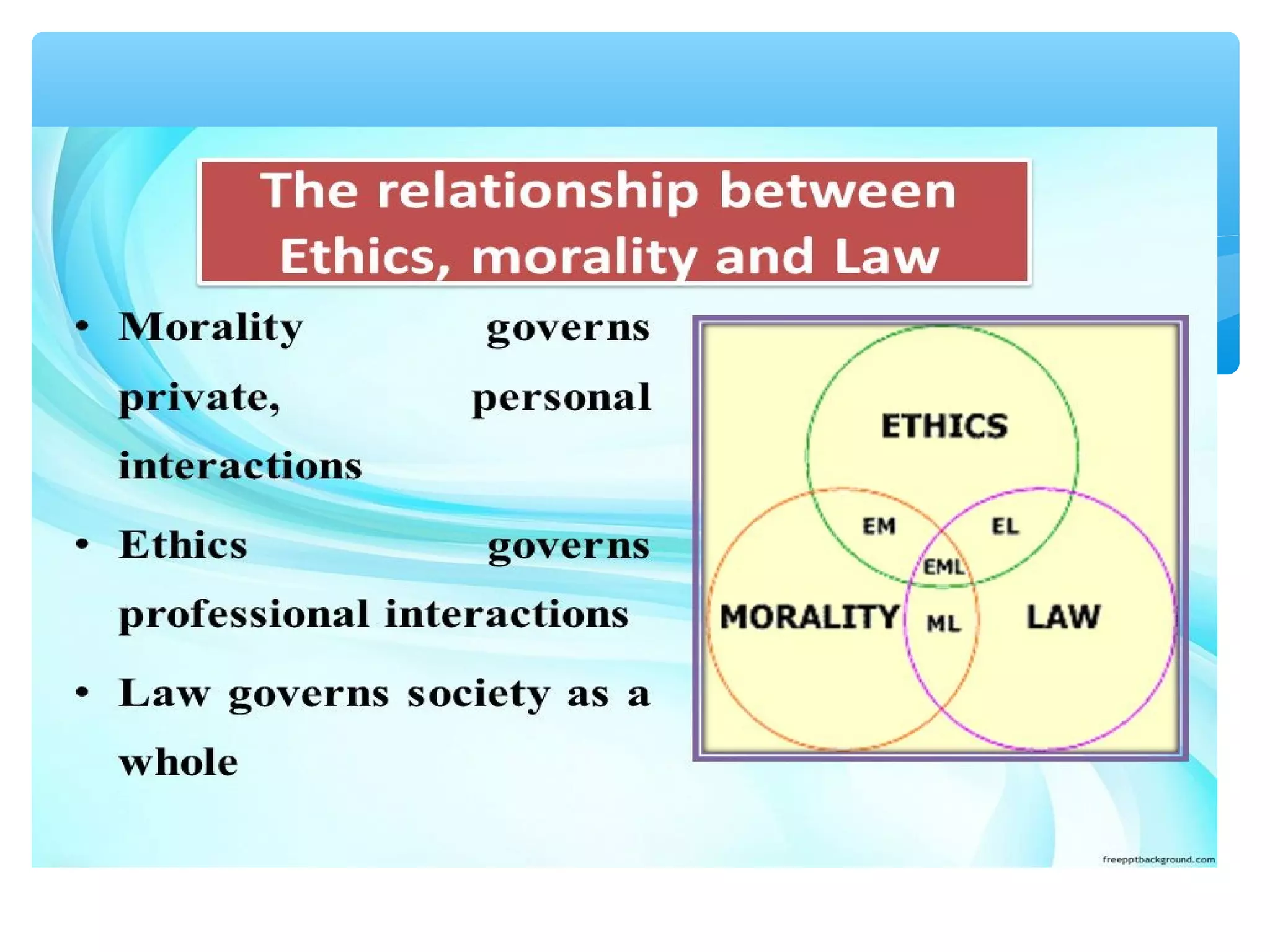
Ethics and morality

  • 1.
    Ethics, Morals andMorality By Syed Ali Muneeb
  • 3.
    ∗ The word Moralsis derived from a Greek word “Mos” which means custom. On the other hand, if we talk about Ethics, it is also derived from a Greek word “Ethikos” which means character. Moral and Ethics
  • 4.
    ∗ Simply, moralsare the customs. ∗ Groups ∗ Society ∗ Religion Moral
  • 5.
    ∗ Established bygroup of individuals whereas ethics defines the character of an individual. ∗ Individual ∗ Everyone have Different ∗ For example my ethicals standered from my family ,friends etc Ethics
  • 6.
    Ethics Good or bad Ourbehavior is good or bad Aristotle said that Aik achy Tree ki bachan us ka Phal sy hoti hai… Acha admi b usi tra apny Charter sy jana jata hai
  • 7.
    ∗ Ethics –A branch of philosophy concerned with ways of thinking philosophically about morality, and moral judgment. ∗ Morality – Human conduct and character referring to “those acts which it makes sense to describe as right or wrong, good or bad.” ∗ Moral Judgment – Judgments based on considerations of how other people are to be treated, and how others interests are to weigh against their own. Definitions
  • 8.
    ∗ Morals arethe social, cultural and religious beliefs or values of an individual or group which tells us what is right or wrong. They are the rules and standards made by the society or culture which is to be followed by us while deciding what is right. Definition of Morals
  • 9.
    ∗ Ethics isa branch of philosophy that deals with the principles of conduct of an individual or group. It works as a guiding principle as to decide what is good or bad. They are the standards which govern the life of a person. Definition of Ethics
  • 10.
    ∗ Truth ∗ Honesty ∗Loyalty ∗ Respect ∗ Equality ∗ Honor Principle of ethics
  • 11.
    ∗ Do notcheat ∗ Be loyal ∗ Be patient ∗ Always tell the truth ∗ Be generous Principles of Morals
  • 12.
    Morals refer tothe beliefs what is not objectively right, but what is considered right for any situation, so it can be said that what is morally correct may not be objectively correct.
  • 13.
    ∗ Meta -Ethics Baseon Reasons Cognitive =Understand Non Cognitive= Unintentionally Emotion =Feeling
  • 14.
    ∗ Morals dealwith what is ‘right or wrong’. Ethics deals with what is ‘good or evil’. ∗ Morals are general guidelines framed by the society E.g. We should speak truth. Conversely, ethics are a response to a particular situation, E.g. Is it ethical to state the truth in a particular situation? Differences Between Morals and Ethics
  • 15.
    ∗ As moralsare framed and designed by the group, there is no option to think and choose; the individual can either accept or reject. Conversely, the people are free to think and choose the principles of his life in ethics. ∗ Morals may vary from society to society and culture to culture. Morals and Ethics
  • 16.
    ∗ As opposedto Ethics, which remains same regardless of any culture, religion or society. ∗ Morals do not have any applicability to business, whereas Ethics is widely applicable in the business known as business ethics. Morals and Ethics
  • 17.
    ∗ Morals areexpressed in the form of statements, but Ethics are not expressed in the form of statements. ∗ Morals are dictated by society, culture or religion while Ethics are chosen by the person himself which governs his life.
  • 19.
    ∗ Morals areconcerned with principles of right and wrong. On the contrary, ethics stresses on right and wrong conduct. ∗ As morals are framed and designed by the group, there is no option to think and choose; the individual can either accept or reject. Conversely, the people are free to think and choose the principles of his life in ethics. Morals and Ethics
  • 20.
  • 26.
    ∗ What areethics? ∗ Are ethical decisions important? ∗ What happens without ethics? ∗ What is the relation between society – ethics – morals – moral judgment? Open-Ended Questions?
  • 27.
    ∗ Parents ∗ Religion ∗Peers ∗ Technology Where does morality come from?
  • 28.
    ∗ Parents instillethics and morals in children. Example: A child yells at their friend – calling them a name. ∗ How does the parent respond? ∗ Other ways? Parents
  • 29.
    ∗ If theson of a big politician has committed a crime and he uses his powers to free his son from legal consequences. Then this act is immoral because the politician is trying to save a culprit. ∗ A very close friend or relative of an interviewer comes for an interview and. Examples
  • 30.
    ∗ without askinga single question, he selects him. This act is unethical because the selection process must be transparent and unbiased. ∗ A grocer sells adulterated products to his customers to earn more profit. This act is neither moral nor ethical because he is cheating his customers and profession at the same time
  • 31.
    ∗ Drunk driving? ∗Radar detectors ∗ Your father illegally dumping pollutants. What would you do? ∗ Summary: Morals and Ethics, what are they? What about these?
  • 32.
    ∗ Every singleindividual has some principles which help him throughout his life to cope up with any adverse situation; they are known as ethics. On the other hand, Morals are not the hard and fast rules or very rigid, but they are the rules which a majority of people considered as right. Conclusion
  • 33.
    That is whythe people widely accept them. This is all for differentiating Morals from Ethics.