Moral Issue of Euthanasia


      Mevelle L Asuncion

 CENTRAL MINDANAO UNIVERSITY
     COLLEGE OF NURSING
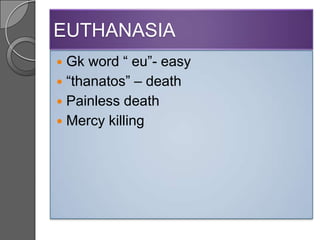
EUTHANASIA
 Gk word “ eu”- easy
 “thanatos” – death
 Painless death
 Mercy killing
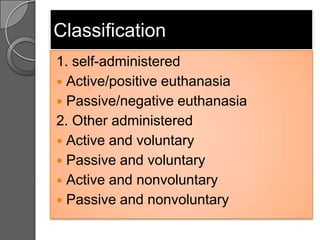
Classification
1. self-administered
 Active/positive euthanasia
 Passive/negative euthanasia
2. Other administered
 Active and voluntary
 Passive and voluntary
 Active and nonvoluntary
 Passive and nonvoluntary
Active euthanasia
 Act of commission
 Peron end his own life
Passive euthanasia
 Allowed to die without taking
  medications or refuse medical
  treatment
 Act of omission
Positive side
 Mercy killing
 Preserve human dignity


Negative side
 Hastens the death of the individual
 Does not prolong agony
Different views
   Garry Williams
    ◦ Wrong
    1. Argument from nature
    2. Argument from self-interest
    3. Argument from practical effects
       James Rachel
    ◦    Allows euthanasia to be humane, since
         it does not prolong agony
    ◦    Depends on motive and intentions
Different views
   Fillipa Foot
    ◦ Active and passive euthanasia
    ◦ But with patients consent
   Rachel Brandt
    ◦ Ross prima facie duty
    ◦ Active and voluntary
    ◦ If patient has instructions beforehand then
      it is our obligatio to fulfill his/her wish
Natural law ethics
 Condemns mercy killing
 Except for principle of double effect
 Ex:
    ◦ Giving of pain reliever with good intention
      but with indirect effect of shortening
      lifespan
Kant’s ethics
 Preserve human dignity
 Autonomous rational being
 Ok with active voluntary euthanasia
 Ok with active nonvoluntary if the
  patient is comatose
 Comatose
    ◦ No self-regulating will
Utilitarianism
 Greatest good for the greatest number
  of people
 If a patient is dying, it is better to
  donate organs

Moral issue of euthanasia

  • 1.
    Moral Issue ofEuthanasia Mevelle L Asuncion CENTRAL MINDANAO UNIVERSITY COLLEGE OF NURSING
  • 2.
    EUTHANASIA  Gk word“ eu”- easy  “thanatos” – death  Painless death  Mercy killing
  • 3.
    Classification 1. self-administered  Active/positiveeuthanasia  Passive/negative euthanasia 2. Other administered  Active and voluntary  Passive and voluntary  Active and nonvoluntary  Passive and nonvoluntary
  • 4.
    Active euthanasia  Actof commission  Peron end his own life
  • 5.
    Passive euthanasia  Allowedto die without taking medications or refuse medical treatment  Act of omission
  • 6.
    Positive side  Mercykilling  Preserve human dignity Negative side  Hastens the death of the individual  Does not prolong agony
  • 7.
    Different views  Garry Williams ◦ Wrong 1. Argument from nature 2. Argument from self-interest 3. Argument from practical effects  James Rachel ◦ Allows euthanasia to be humane, since it does not prolong agony ◦ Depends on motive and intentions
  • 8.
    Different views  Fillipa Foot ◦ Active and passive euthanasia ◦ But with patients consent  Rachel Brandt ◦ Ross prima facie duty ◦ Active and voluntary ◦ If patient has instructions beforehand then it is our obligatio to fulfill his/her wish
  • 9.
    Natural law ethics Condemns mercy killing  Except for principle of double effect  Ex: ◦ Giving of pain reliever with good intention but with indirect effect of shortening lifespan
  • 10.
    Kant’s ethics  Preservehuman dignity  Autonomous rational being  Ok with active voluntary euthanasia  Ok with active nonvoluntary if the patient is comatose  Comatose ◦ No self-regulating will
  • 11.
    Utilitarianism  Greatest goodfor the greatest number of people  If a patient is dying, it is better to donate organs