MONOPOLY 
1
Introduction 
MONO = means “One” 
+ 
POLY = means “ Sell” 
One Seller/ One Producer 
• Monopoly is the polar 
opposite of perfect 
competition. 
• Monopoly is a market 
structure in which a single 
firm makes up the entire 
market. 
2
Definition Of Monopoly 
• According to PROF. CHAMBERLAIN,” Monopoly refers to 
the control over supply.” 
PROF. CHAMBERLAIN 
• According to PROF.ROBERT TRIFFIN ,”Monopoly is a market 
situation in which the firm is independent of price changes in 
the product of each and every other firm.” 
PROF.ROBERT TRIFFIN 3
Monopoly 
4
Why Monopolies Arise? 
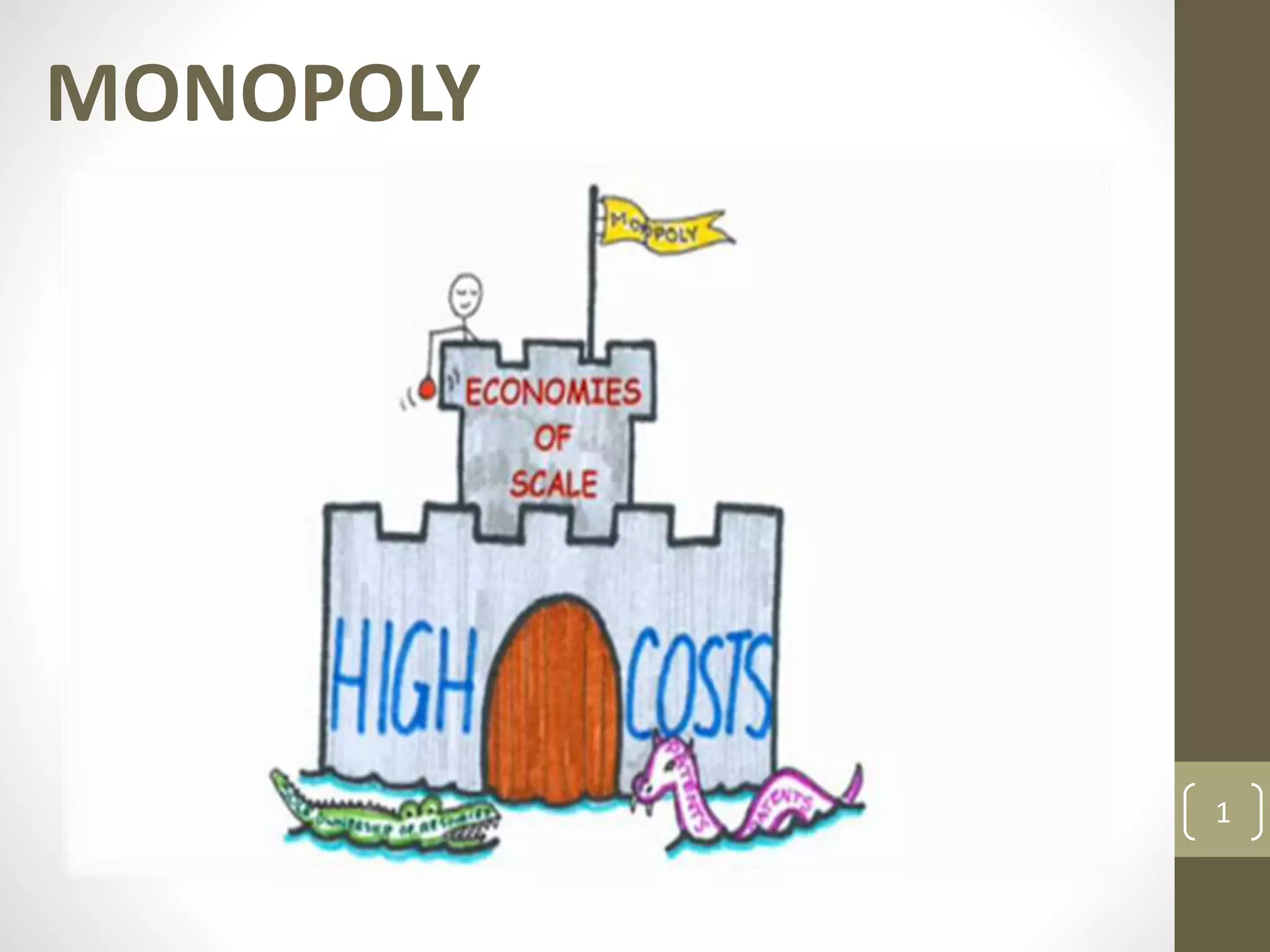
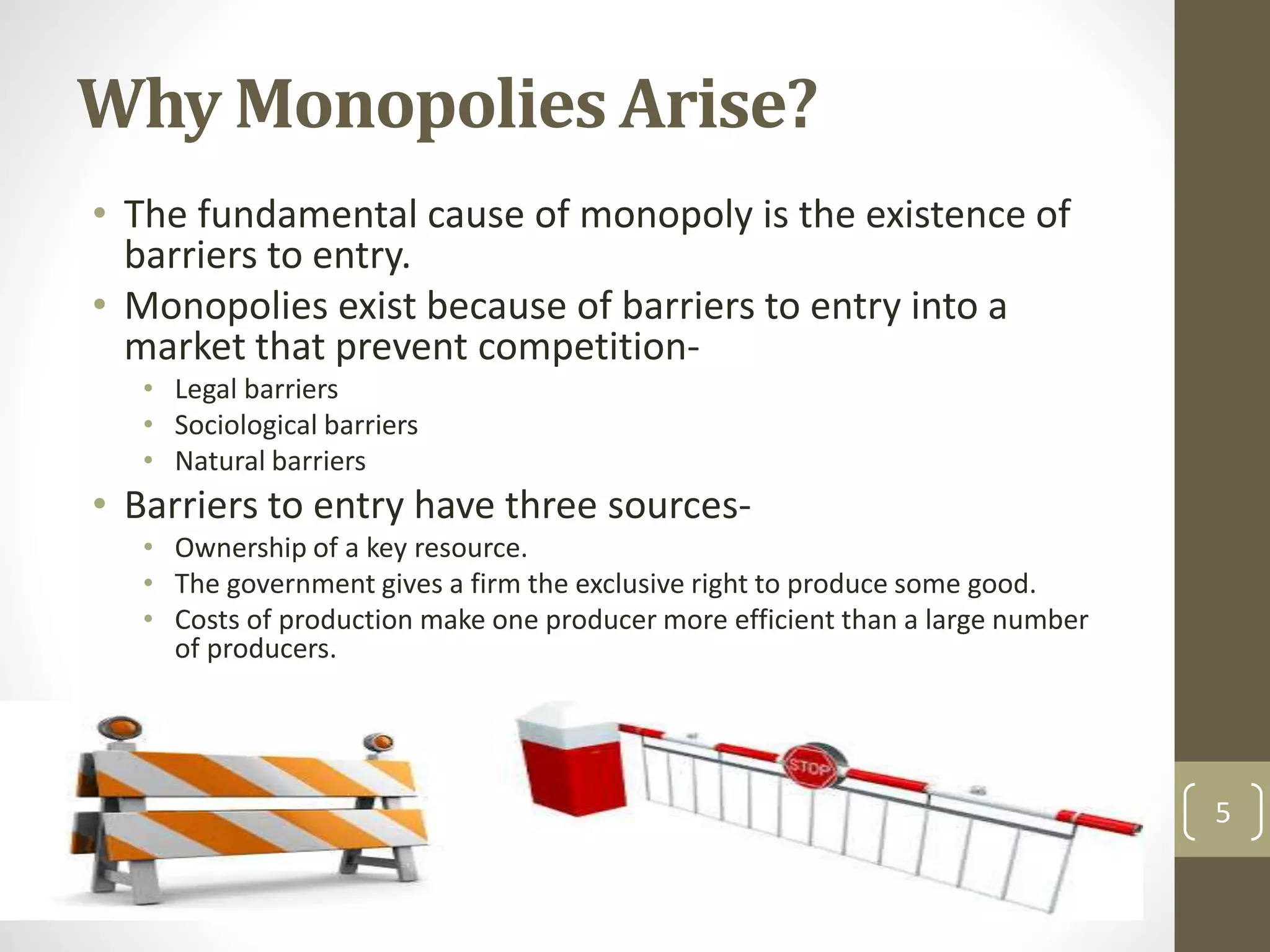
• The fundamental cause of monopoly is the existence of 
barriers to entry. 
• Monopolies exist because of barriers to entry into a 
market that prevent competition- 
• Legal barriers 
• Sociological barriers 
• Natural barriers 
• Barriers to entry have three sources- 
• Ownership of a key resource. 
• The government gives a firm the exclusive right to produce some good. 
• Costs of production make one producer more efficient than a large number 
of producers. 
5
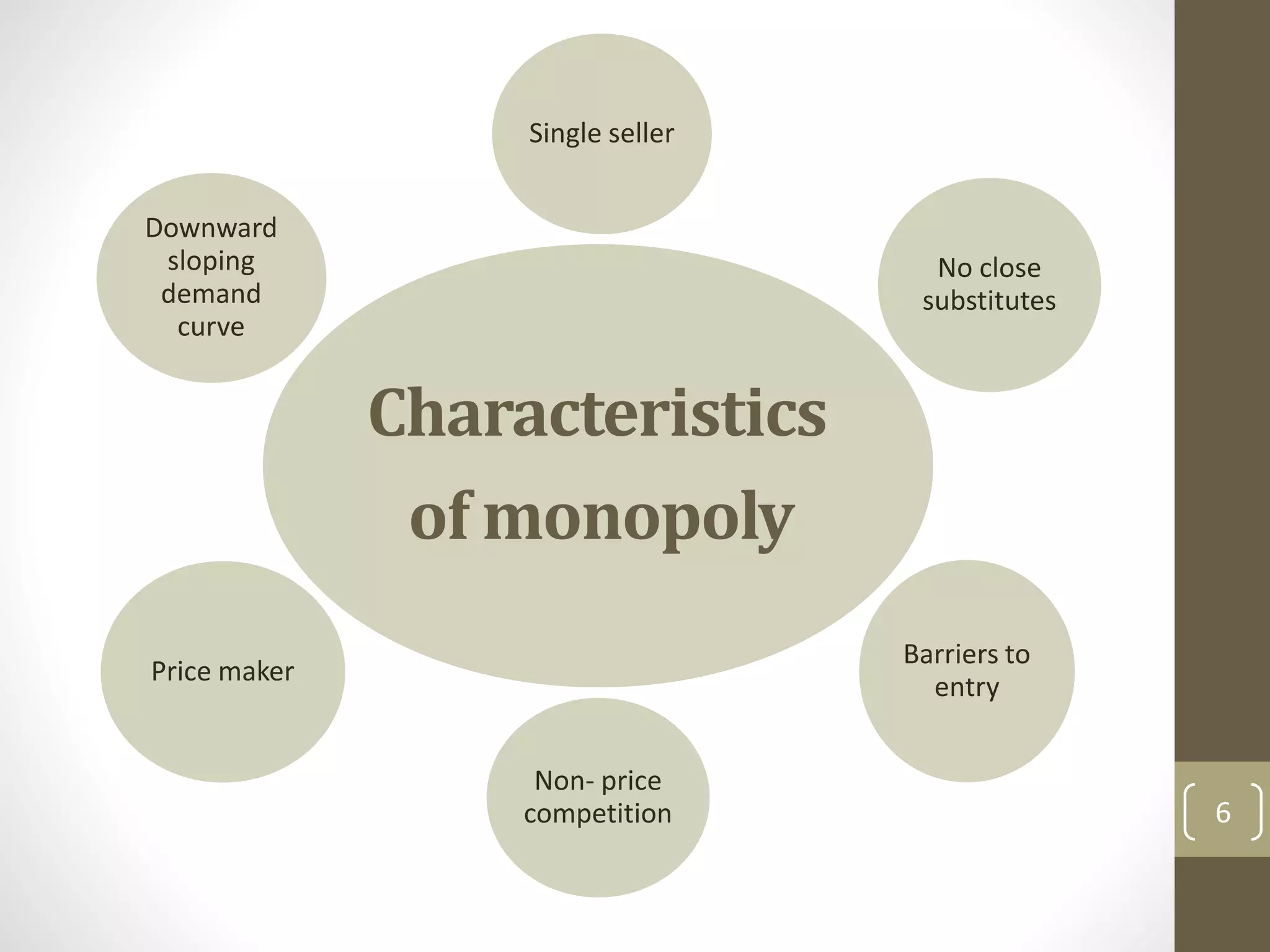
Single seller 
Characteristics 
of monopoly 
No close 
substitutes 
Barriers to 
entry 
Non- price 
competition 
Downward 
sloping 
demand 
curve 
Price maker 
6
Types of Monopolies 
7 
Perfect Monopoly 
Imperfect Monopoly 
Private Monopoly 
Public Monopoly 
Simple Monopoly 
Discriminating Monopoly 
Legal Monopoly 
Natural Monopoly 
Technological Monopoly 
Joint Monopoly
Demerits of monopoly 
• Consumer options are limited. 
• Profits do not signal firms to enter the industry. (They can’t get in 
because of the barriers to entry.) 
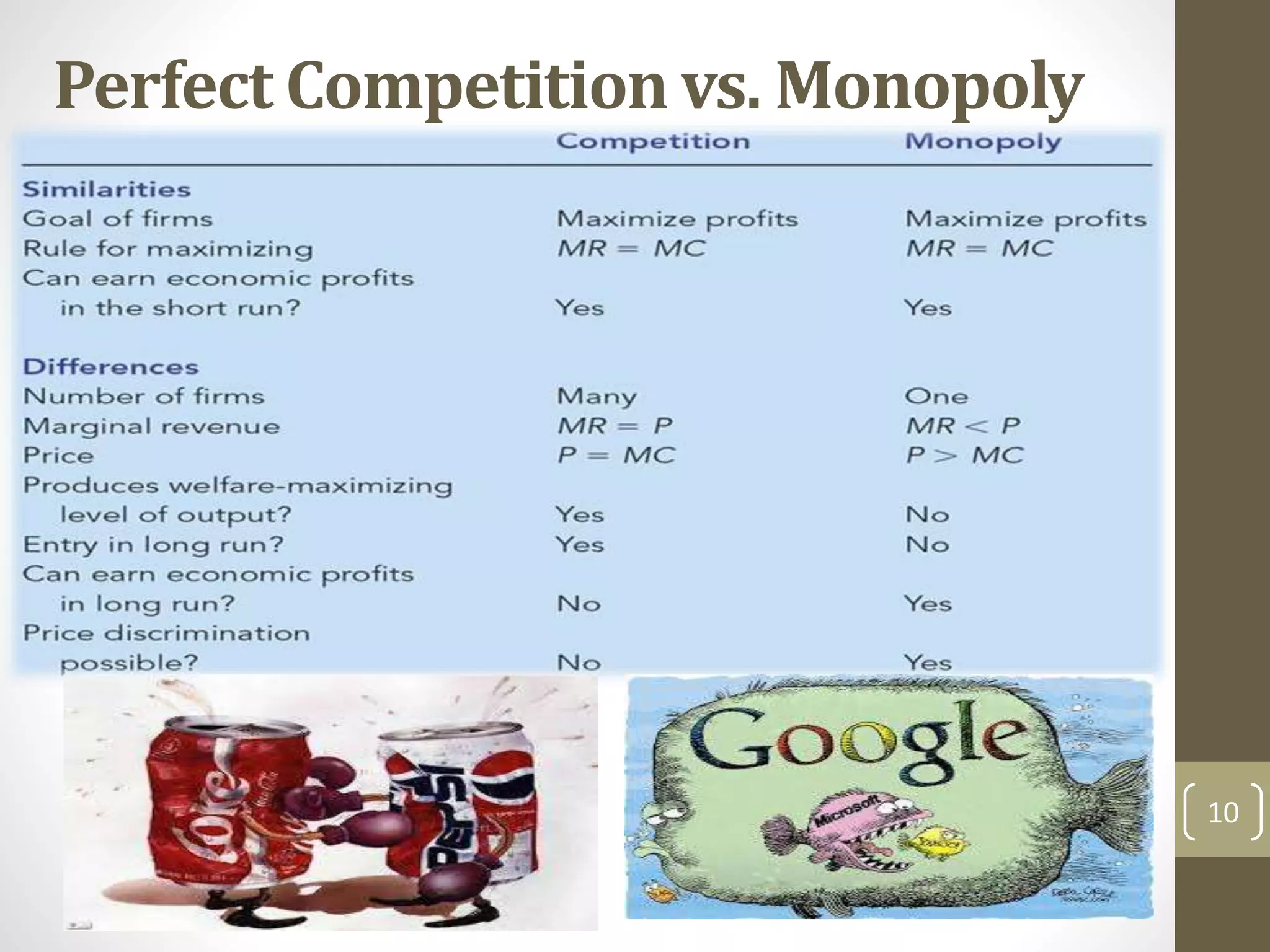
• There is allocate inefficiency. ( P > MC ) The monopolist does not 
produce all units that consumers value more than it costs to make 
them. 
8
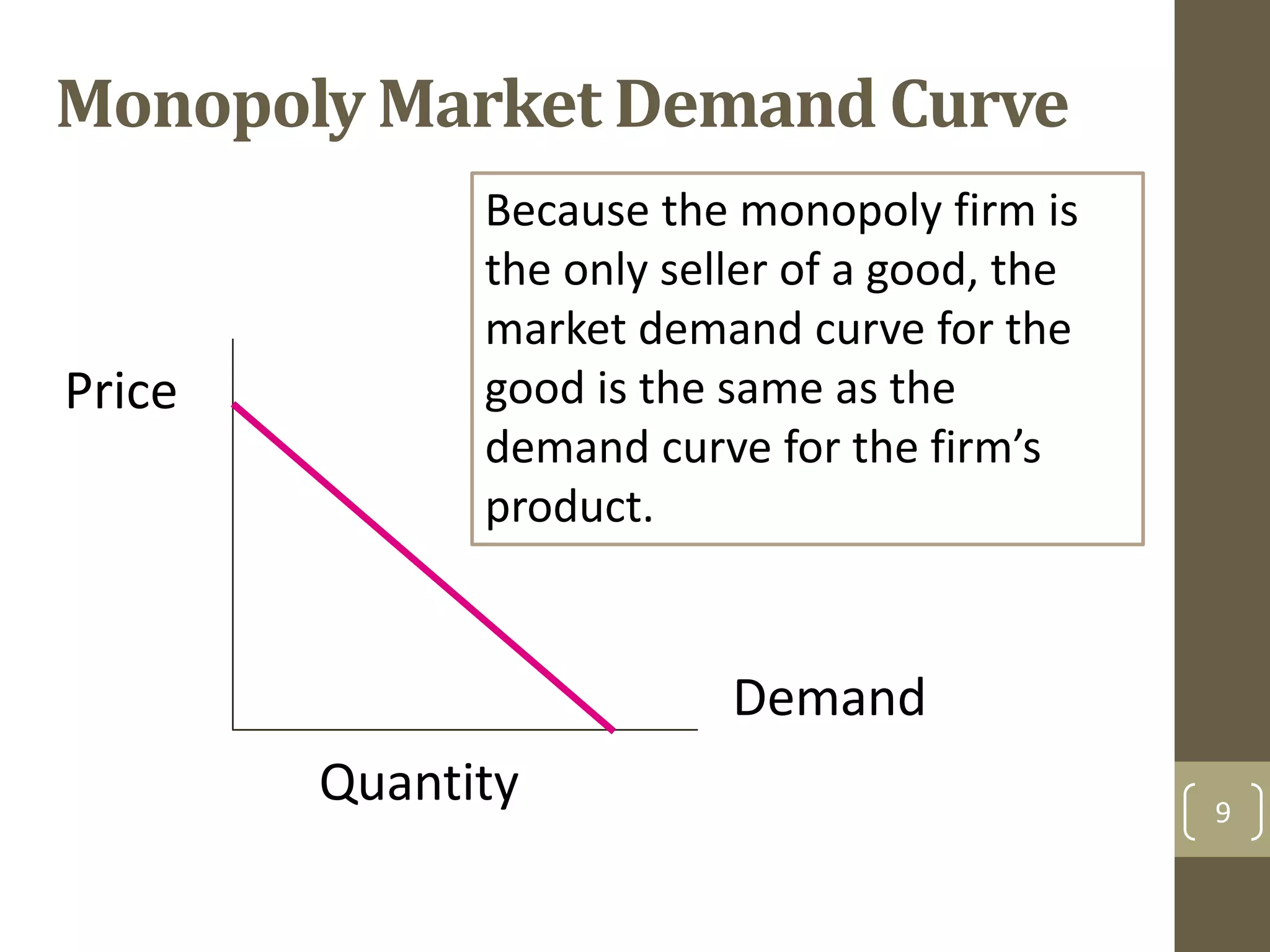
Monopoly Market Demand Curve 
Price 
Because the monopoly firm is 
the only seller of a good, the 
market demand curve for the 
good is the same as the 
demand curve for the firm’s 
product. 
Quantity 
Demand 
9
Perfect Competition vs. Monopoly 
10
Governments Role in Monopoly 
• Prevent Excess Price 
• Regulation of quality of service 
• Merger Policy 
• Breaking up a monopoly 
• Investigation of Abuse of Monopoly Power 
11
Price Discrimination 
• Price discrimination is the ability to charge different prices to 
different individuals or groups of individuals. 
• A price-discriminating monopolist can increase both output 
and profit. 
• It can charge customers with more inelastic demands a higher 
price. 
• It can charge customers with more elastic demands a lower 
price. 
12
The Early Bird Gets a Lower Price 
• Early Bird Specials—Restaurants 
charge special, lower prices for 
early diners. 
• Matinees—Theaters charge less 
for earlier shows. 
• Air Fares—Airlines charge less 
for flyers willing to fly “off 
peak,” i.e. early morning and 
late night. 
13
Case Study 
• TATA NANO 
• Monopoly in the lower economic segment 
• TATA, the only seller 
• No close substitutes for Nano in the market 
• Barriers to entry in the market(capital requirement, 
technology, etc.) 
14
Summary 
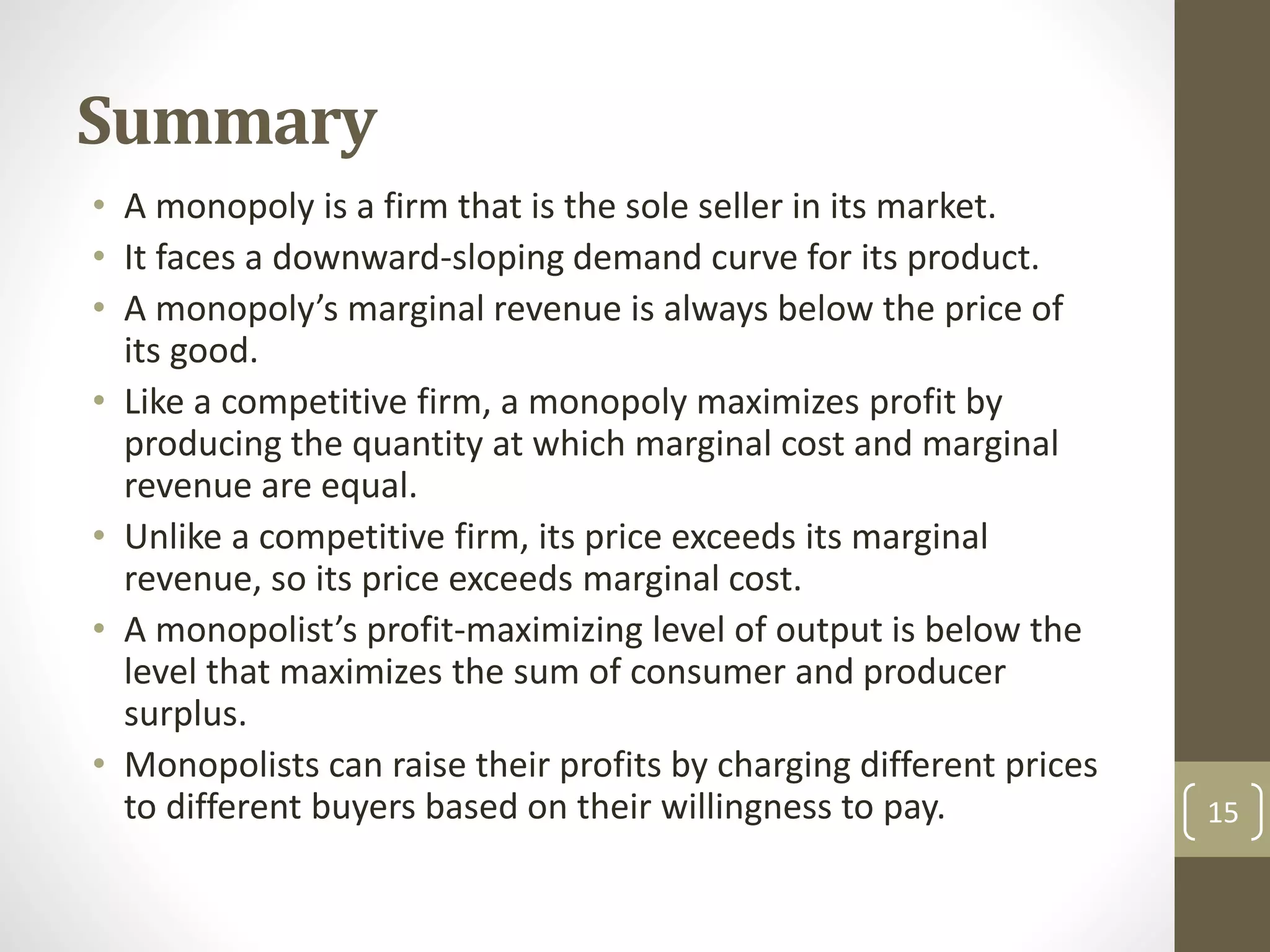
• A monopoly is a firm that is the sole seller in its market. 
• It faces a downward-sloping demand curve for its product. 
• A monopoly’s marginal revenue is always below the price of 
its good. 
• Like a competitive firm, a monopoly maximizes profit by 
producing the quantity at which marginal cost and marginal 
revenue are equal. 
• Unlike a competitive firm, its price exceeds its marginal 
revenue, so its price exceeds marginal cost. 
• A monopolist’s profit-maximizing level of output is below the 
level that maximizes the sum of consumer and producer 
surplus. 
• Monopolists can raise their profits by charging different prices 
to different buyers based on their willingness to pay. 15
Thank You 
16

Monopoly Market structure

  • 1.
  • 2.
    Introduction MONO =means “One” + POLY = means “ Sell” One Seller/ One Producer • Monopoly is the polar opposite of perfect competition. • Monopoly is a market structure in which a single firm makes up the entire market. 2
  • 3.
    Definition Of Monopoly • According to PROF. CHAMBERLAIN,” Monopoly refers to the control over supply.” PROF. CHAMBERLAIN • According to PROF.ROBERT TRIFFIN ,”Monopoly is a market situation in which the firm is independent of price changes in the product of each and every other firm.” PROF.ROBERT TRIFFIN 3
  • 4.
  • 5.
    Why Monopolies Arise? • The fundamental cause of monopoly is the existence of barriers to entry. • Monopolies exist because of barriers to entry into a market that prevent competition- • Legal barriers • Sociological barriers • Natural barriers • Barriers to entry have three sources- • Ownership of a key resource. • The government gives a firm the exclusive right to produce some good. • Costs of production make one producer more efficient than a large number of producers. 5
  • 6.
    Single seller Characteristics of monopoly No close substitutes Barriers to entry Non- price competition Downward sloping demand curve Price maker 6
  • 7.
    Types of Monopolies 7 Perfect Monopoly Imperfect Monopoly Private Monopoly Public Monopoly Simple Monopoly Discriminating Monopoly Legal Monopoly Natural Monopoly Technological Monopoly Joint Monopoly
  • 8.
    Demerits of monopoly • Consumer options are limited. • Profits do not signal firms to enter the industry. (They can’t get in because of the barriers to entry.) • There is allocate inefficiency. ( P > MC ) The monopolist does not produce all units that consumers value more than it costs to make them. 8
  • 9.
    Monopoly Market DemandCurve Price Because the monopoly firm is the only seller of a good, the market demand curve for the good is the same as the demand curve for the firm’s product. Quantity Demand 9
  • 10.
  • 11.
    Governments Role inMonopoly • Prevent Excess Price • Regulation of quality of service • Merger Policy • Breaking up a monopoly • Investigation of Abuse of Monopoly Power 11
  • 12.
    Price Discrimination •Price discrimination is the ability to charge different prices to different individuals or groups of individuals. • A price-discriminating monopolist can increase both output and profit. • It can charge customers with more inelastic demands a higher price. • It can charge customers with more elastic demands a lower price. 12
  • 13.
    The Early BirdGets a Lower Price • Early Bird Specials—Restaurants charge special, lower prices for early diners. • Matinees—Theaters charge less for earlier shows. • Air Fares—Airlines charge less for flyers willing to fly “off peak,” i.e. early morning and late night. 13
  • 14.
    Case Study •TATA NANO • Monopoly in the lower economic segment • TATA, the only seller • No close substitutes for Nano in the market • Barriers to entry in the market(capital requirement, technology, etc.) 14
  • 15.
    Summary • Amonopoly is a firm that is the sole seller in its market. • It faces a downward-sloping demand curve for its product. • A monopoly’s marginal revenue is always below the price of its good. • Like a competitive firm, a monopoly maximizes profit by producing the quantity at which marginal cost and marginal revenue are equal. • Unlike a competitive firm, its price exceeds its marginal revenue, so its price exceeds marginal cost. • A monopolist’s profit-maximizing level of output is below the level that maximizes the sum of consumer and producer surplus. • Monopolists can raise their profits by charging different prices to different buyers based on their willingness to pay. 15
  • 16.