Monitor, evaluate and
control IMC Program
Innovators
Abhijeet |Debasish |Phungshok |Pujarini| Shashank | Sourojit
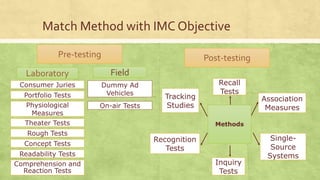
Match Method with IMC Objective

            Pre-testing                             Post-testing
   Laboratory               Field
 Consumer Juries          Dummy Ad                     Recall
  Portfolio Tests          Vehicles                    Tests
                                        Tracking                   Association
   Physiological      On-air Tests      Studies                     Measures
    Measures
  Theater Tests                                       Methods
   Rough Tests
                                      Recognition                    Single-
  Concept Tests
                                         Tests                       Source
 Readability Tests                                                  Systems
Comprehension and                                     Inquiry
  Reaction Tests                                       Tests
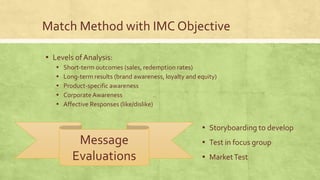
Match Method with IMC Objective

▪ Levels of Analysis:
   ▪   Short-term outcomes (sales, redemption rates)
   ▪   Long-term results (brand awareness, loyalty and equity)
   ▪   Product-specific awareness
   ▪   Corporate Awareness
   ▪   Affective Responses (like/dislike)


                                                        ▪ Storyboarding to develop
           Message                                      ▪ Test in focus group
          Evaluations                                   ▪ Market Test
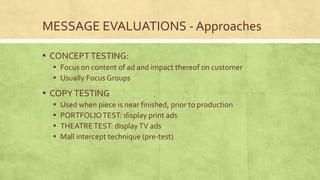
MESSAGE EVALUATIONS - Approaches

▪ CONCEPT TESTING:
  ▪ Focus on content of ad and impact thereof on customer
  ▪ Usually Focus Groups
▪ COPY TESTING
  ▪   Used when piece is near finished, prior to production
  ▪   PORTFOLIO TEST: display print ads
  ▪   THEATRE TEST: display TV ads
  ▪   Mall intercept technique (pre-test)
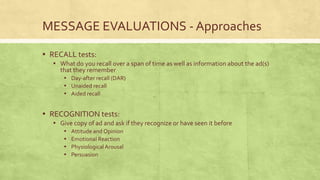
MESSAGE EVALUATIONS - Approaches

▪ RECALL tests:
  ▪ What do you recall over a span of time as well as information about the ad(s)
    that they remember
     ▪ Day-after recall (DAR)
     ▪ Unaided recall
     ▪ Aided recall


▪ RECOGNITION tests:
  ▪ Give copy of ad and ask if they recognize or have seen it before
      ▪   Attitude and Opinion
      ▪   Emotional Reaction
      ▪   Physiological Arousal
      ▪   Persuasion
EVALUATION CRITERIA
Establish Quality Evaluation Criteria
  such as PACT (positioning advertising copy-testing)

▪ Should be relevant to objectives being measured
▪ Agreement on how the results will be used
▪ Use multiple measures to evoke more precise evaluations
▪ Test should be based on some theory or model of human behaviour
▪ Consider multiple exposures
▪ Validity necessitates that comparative tested ads are in the same stage of their
  development process
▪ Adequate Controls to prevent biases and external factors
▪ Samples must be “representative”
▪ Tests should be Reliable and Valid (generalizable)
BEHAVIOURAL EVALUATIONS

▪ Sales and redemption rates
▪ Test Markets
▪ Purchase Simulation Tests
EVALUATING PR

▪ Count clippings (hits) – clipping services
 Δ of company name count in relation to news release
 activity

▪ Calculate number of impressions (hits) – subscriber count
 within medium

▪ Advertising equivalence technique – find every place
 company name mentioned in print and broadcast media
 divided into the cost to produce if it was planned advert.
EVALUATING THE OVERALL IMC PROGRAM

▪ Peter Drucker identified goals that define overall well-being of a
  company:
   ▪   Market Share
   ▪   Level of Innovation
   ▪   Productivity
   ▪   Physical and Financial Resources
   ▪   Profitability
   ▪   Manager performance and development
   ▪   Employee performance and attitudes
   ▪   Social Responsibility


▪ If these goals are being reached, the IMC plan is likely in good order.
Thank You!

Monitor, evaluate and control imc program

  • 1.
    Monitor, evaluate and controlIMC Program Innovators Abhijeet |Debasish |Phungshok |Pujarini| Shashank | Sourojit
  • 2.
    Match Method withIMC Objective Pre-testing Post-testing Laboratory Field Consumer Juries Dummy Ad Recall Portfolio Tests Vehicles Tests Tracking Association Physiological On-air Tests Studies Measures Measures Theater Tests Methods Rough Tests Recognition Single- Concept Tests Tests Source Readability Tests Systems Comprehension and Inquiry Reaction Tests Tests
  • 3.
    Match Method withIMC Objective ▪ Levels of Analysis: ▪ Short-term outcomes (sales, redemption rates) ▪ Long-term results (brand awareness, loyalty and equity) ▪ Product-specific awareness ▪ Corporate Awareness ▪ Affective Responses (like/dislike) ▪ Storyboarding to develop Message ▪ Test in focus group Evaluations ▪ Market Test
  • 4.
    MESSAGE EVALUATIONS -Approaches ▪ CONCEPT TESTING: ▪ Focus on content of ad and impact thereof on customer ▪ Usually Focus Groups ▪ COPY TESTING ▪ Used when piece is near finished, prior to production ▪ PORTFOLIO TEST: display print ads ▪ THEATRE TEST: display TV ads ▪ Mall intercept technique (pre-test)
  • 5.
    MESSAGE EVALUATIONS -Approaches ▪ RECALL tests: ▪ What do you recall over a span of time as well as information about the ad(s) that they remember ▪ Day-after recall (DAR) ▪ Unaided recall ▪ Aided recall ▪ RECOGNITION tests: ▪ Give copy of ad and ask if they recognize or have seen it before ▪ Attitude and Opinion ▪ Emotional Reaction ▪ Physiological Arousal ▪ Persuasion
  • 6.
    EVALUATION CRITERIA Establish QualityEvaluation Criteria such as PACT (positioning advertising copy-testing) ▪ Should be relevant to objectives being measured ▪ Agreement on how the results will be used ▪ Use multiple measures to evoke more precise evaluations ▪ Test should be based on some theory or model of human behaviour ▪ Consider multiple exposures ▪ Validity necessitates that comparative tested ads are in the same stage of their development process ▪ Adequate Controls to prevent biases and external factors ▪ Samples must be “representative” ▪ Tests should be Reliable and Valid (generalizable)
  • 7.
    BEHAVIOURAL EVALUATIONS ▪ Salesand redemption rates ▪ Test Markets ▪ Purchase Simulation Tests
  • 8.
    EVALUATING PR ▪ Countclippings (hits) – clipping services Δ of company name count in relation to news release activity ▪ Calculate number of impressions (hits) – subscriber count within medium ▪ Advertising equivalence technique – find every place company name mentioned in print and broadcast media divided into the cost to produce if it was planned advert.
  • 9.
    EVALUATING THE OVERALLIMC PROGRAM ▪ Peter Drucker identified goals that define overall well-being of a company: ▪ Market Share ▪ Level of Innovation ▪ Productivity ▪ Physical and Financial Resources ▪ Profitability ▪ Manager performance and development ▪ Employee performance and attitudes ▪ Social Responsibility ▪ If these goals are being reached, the IMC plan is likely in good order.
  • 10.