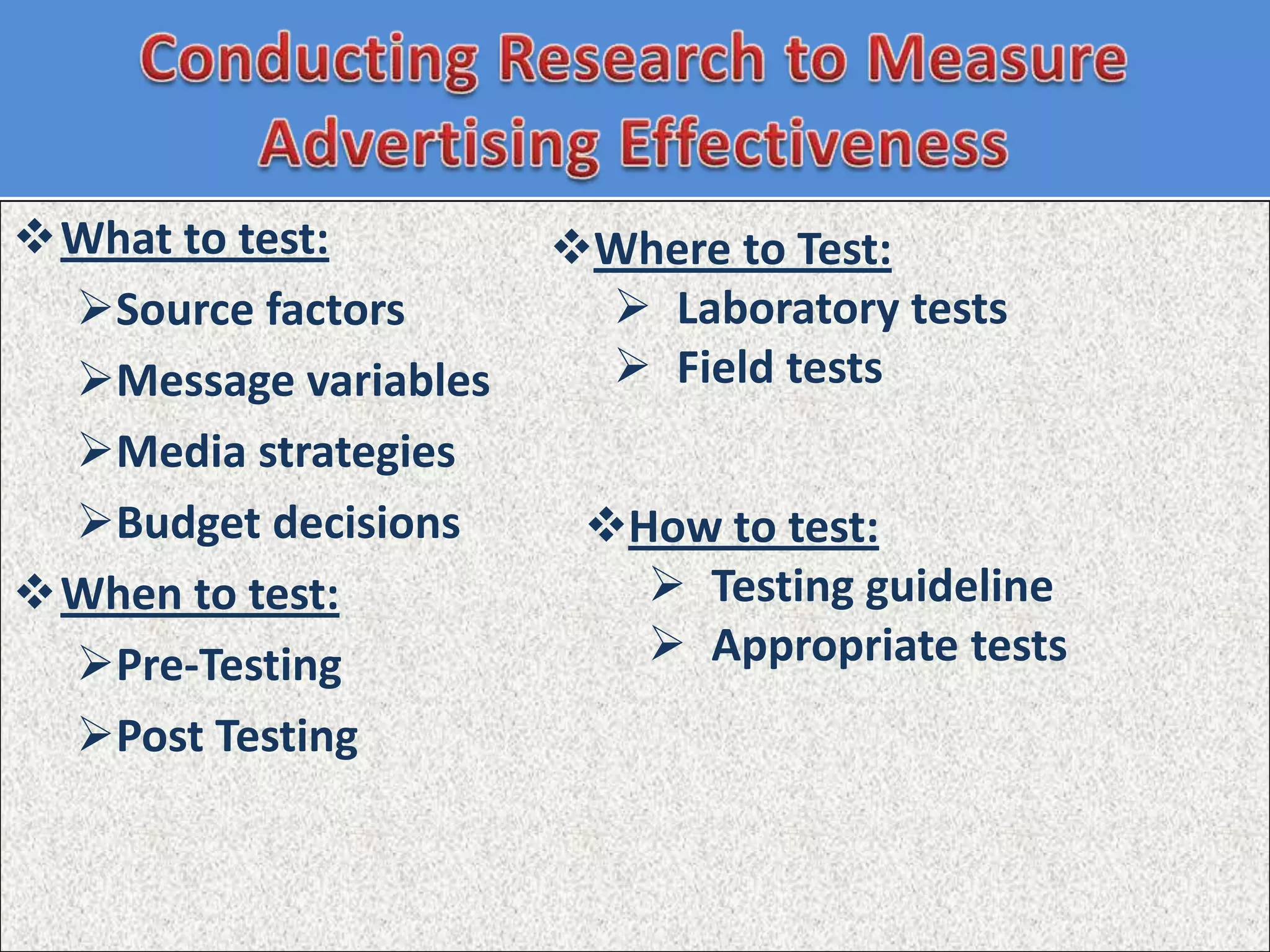

What to test:        Where to Test:
 Source factors        Laboratory tests
 Message variables     Field tests
 Media strategies
 Budget decisions     How to test:
When to test:            Testing guideline
 Pre-Testing             Appropriate tests
 Post Testing
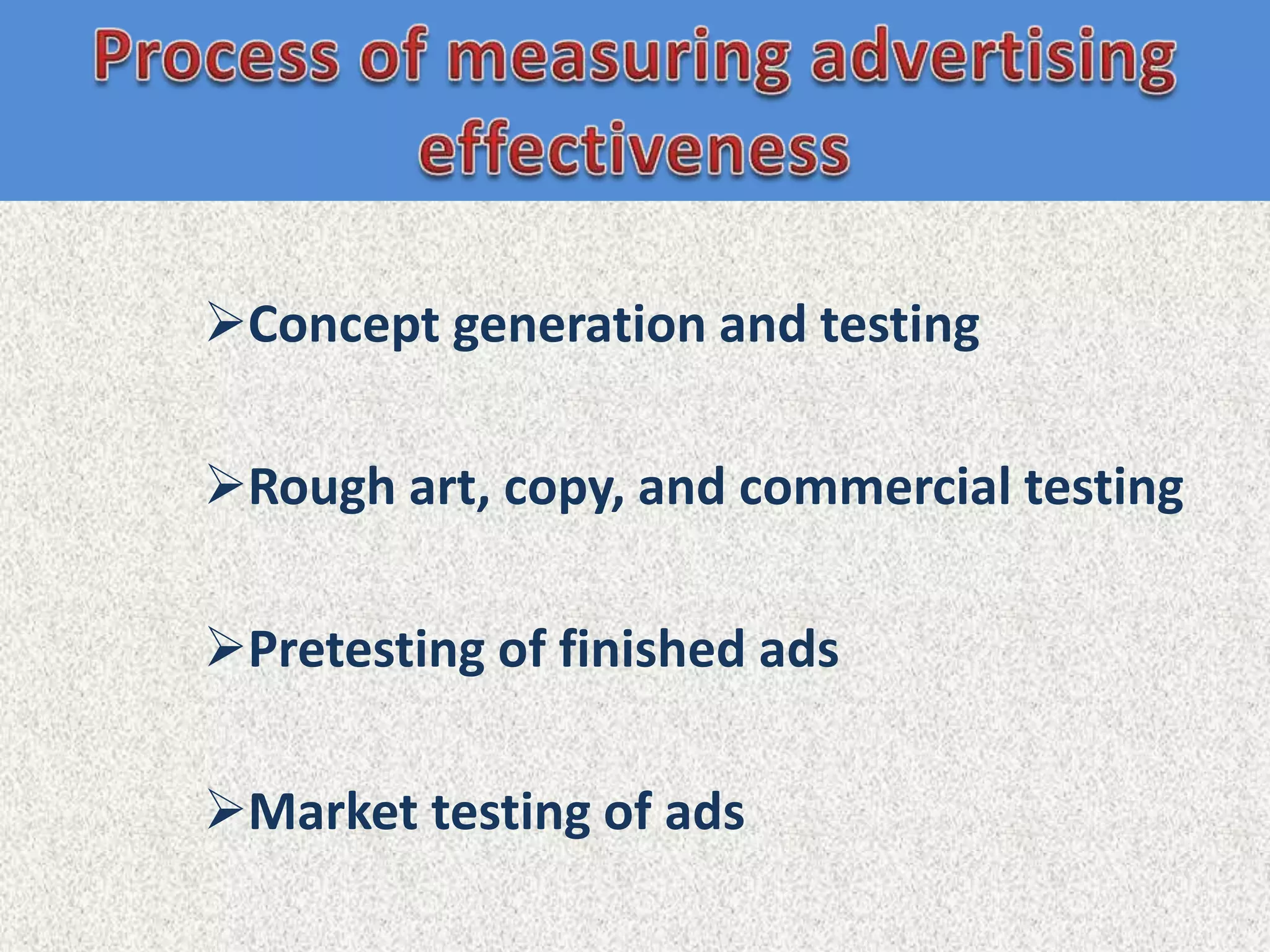
Concept generation and testing

Rough art, copy, and commercial testing

Pretesting of finished ads

Market testing of ads
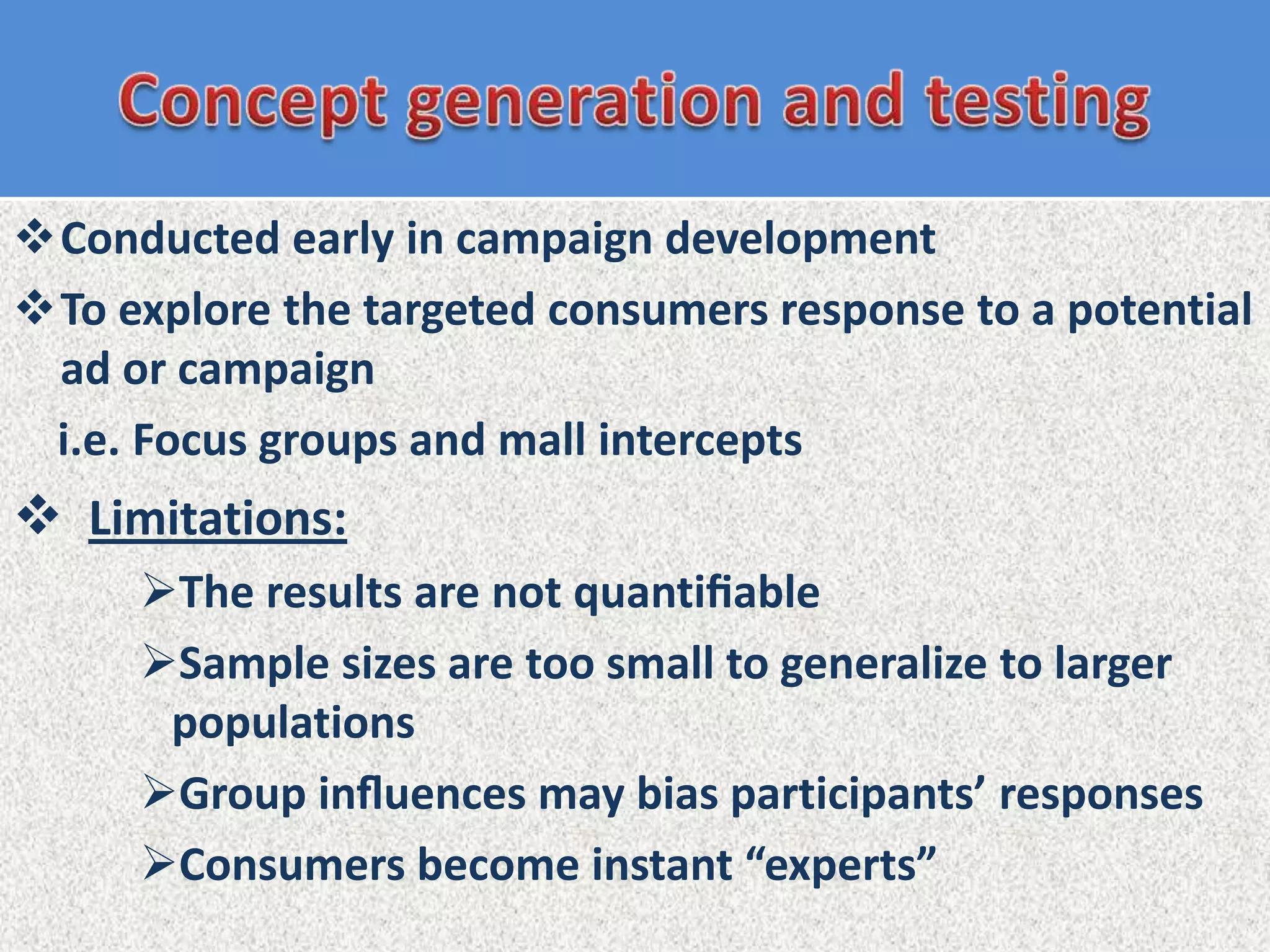
Conducted early in campaign development
To explore the targeted consumers response to a potential
 ad or campaign
 i.e. Focus groups and mall intercepts
 Limitations:
     The results are not quantifiable
     Sample sizes are too small to generalize to larger
      populations
     Group influences may bias participants’ responses
     Consumers become instant “experts”
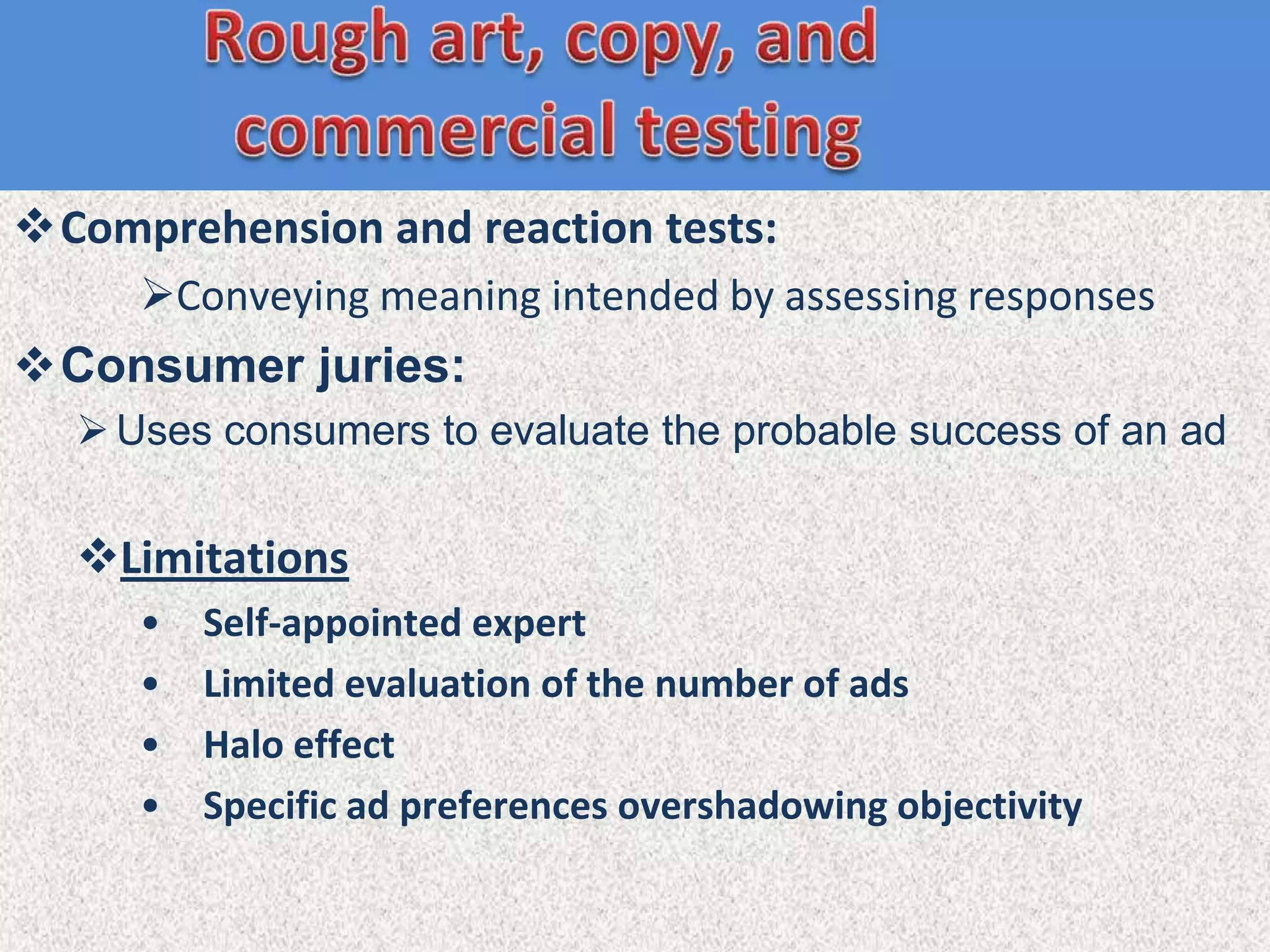
Comprehension and reaction tests:
     Conveying meaning intended by assessing responses
Consumer juries:
   Uses consumers to evaluate the probable success of an ad


  Limitations
     •   Self-appointed expert
     •   Limited evaluation of the number of ads
     •   Halo effect
     •   Specific ad preferences overshadowing objectivity
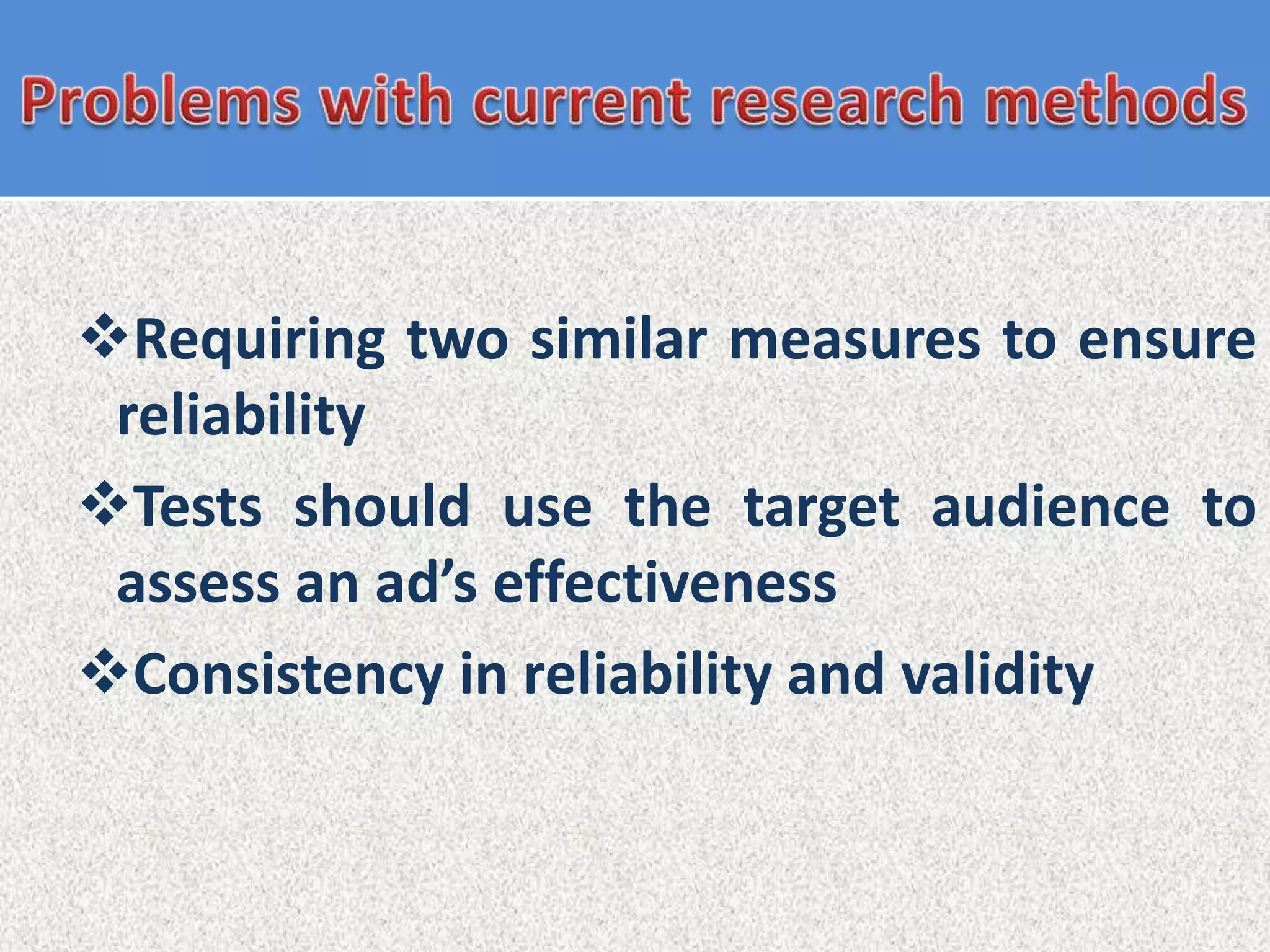
Requiring two similar measures to ensure
 reliability
Tests should use the target audience to
 assess an ad’s effectiveness
Consistency in reliability and validity
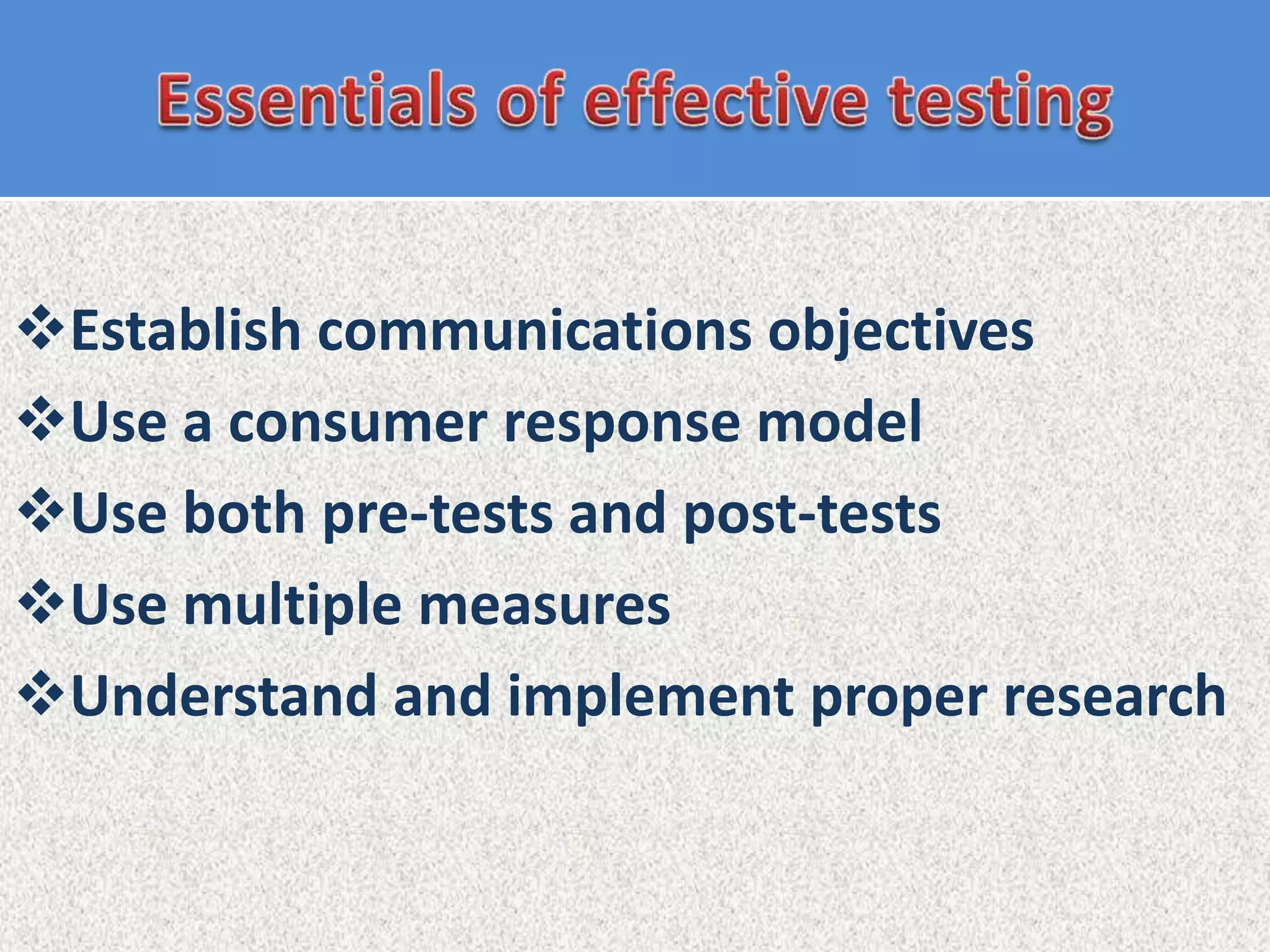
Establish communications objectives
Use a consumer response model
Use both pre-tests and post-tests
Use multiple measures
Understand and implement proper research
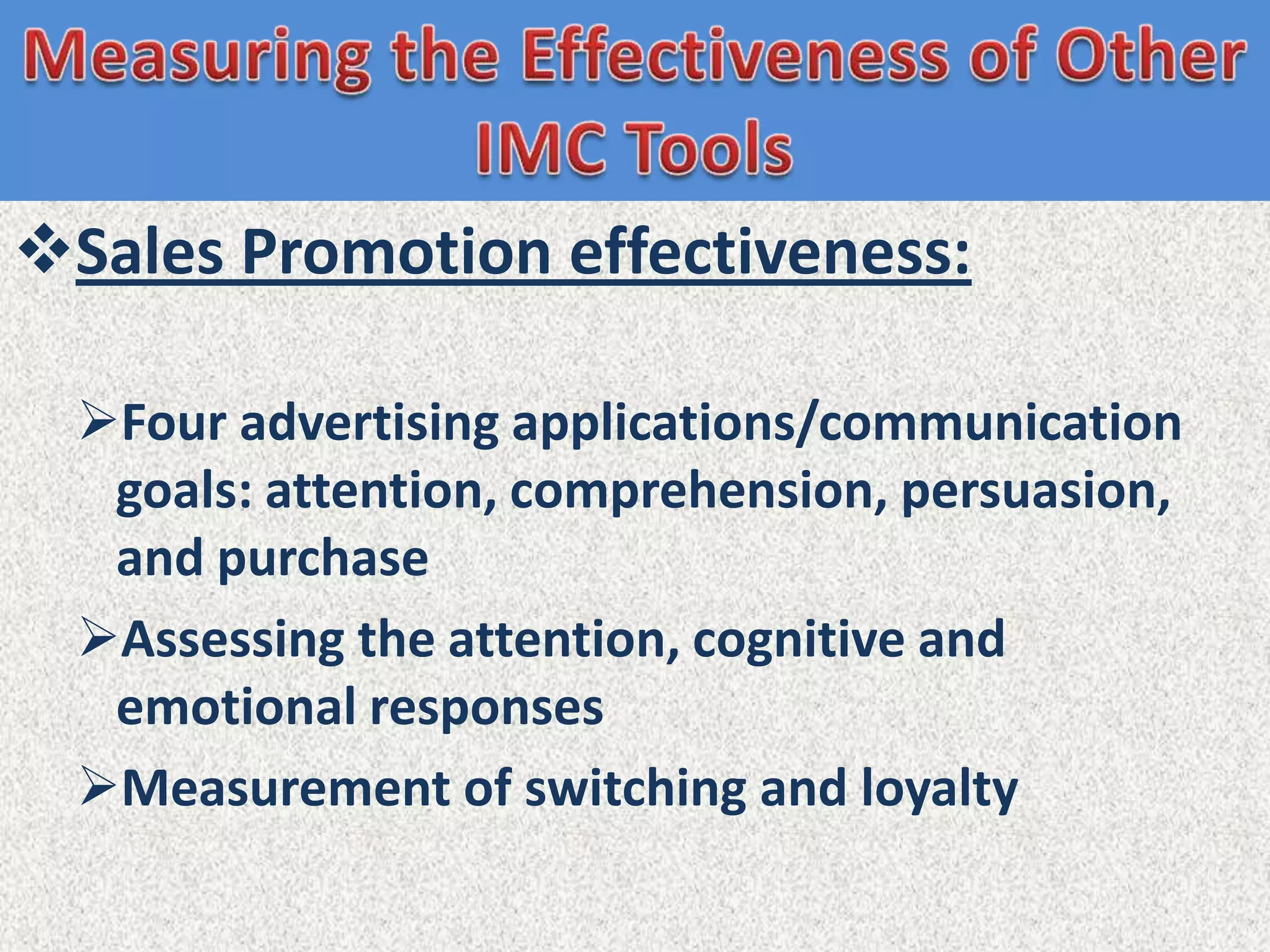
Sales Promotion effectiveness:

  Four advertising applications/communication
   goals: attention, comprehension, persuasion,
   and purchase
  Assessing the attention, cognitive and
   emotional responses
  Measurement of switching and loyalty
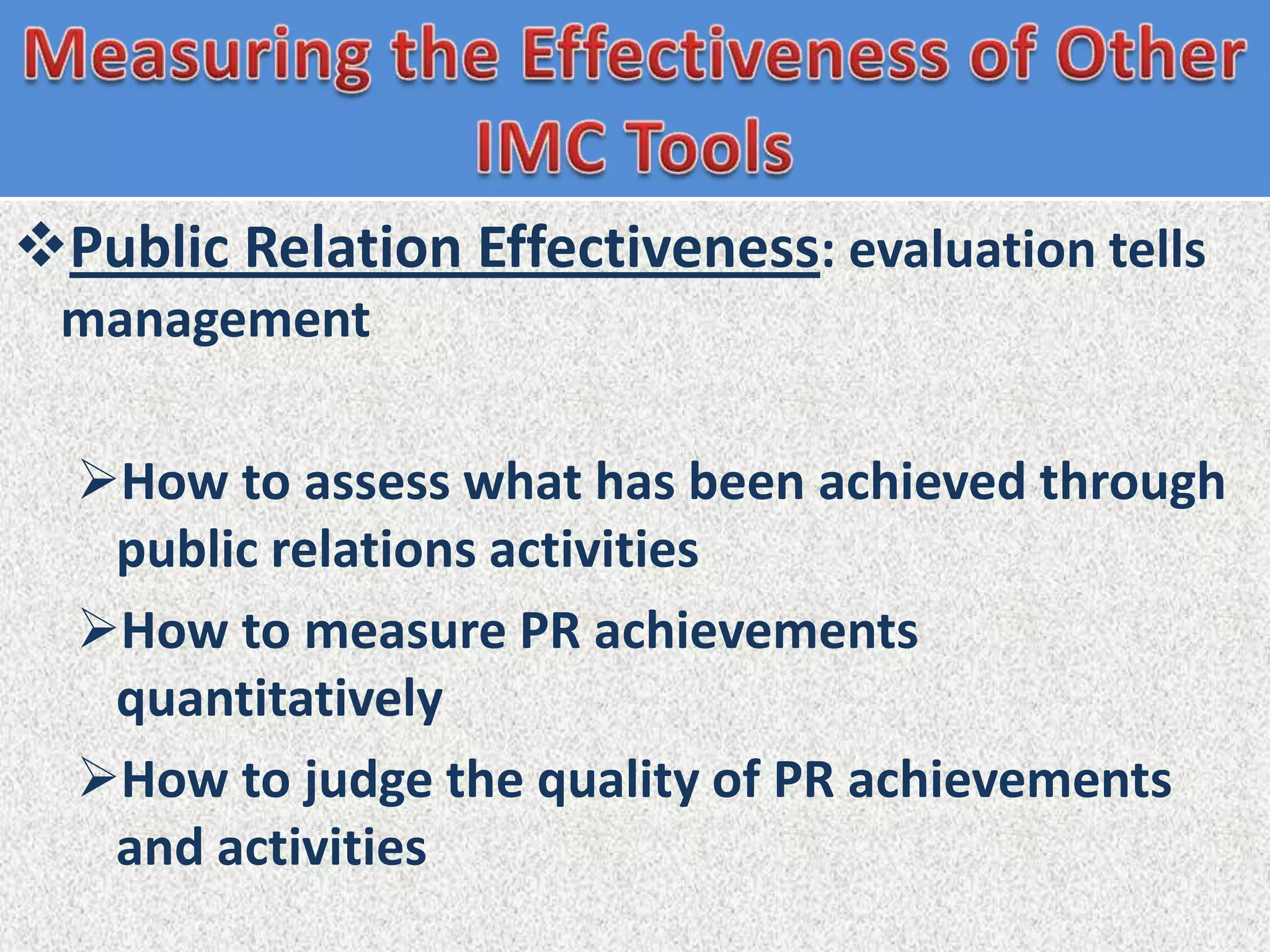
Public Relation Effectiveness: evaluation tells
 management

  How to assess what has been achieved through
   public relations activities
  How to measure PR achievements
   quantitatively
  How to judge the quality of PR achievements
   and activities
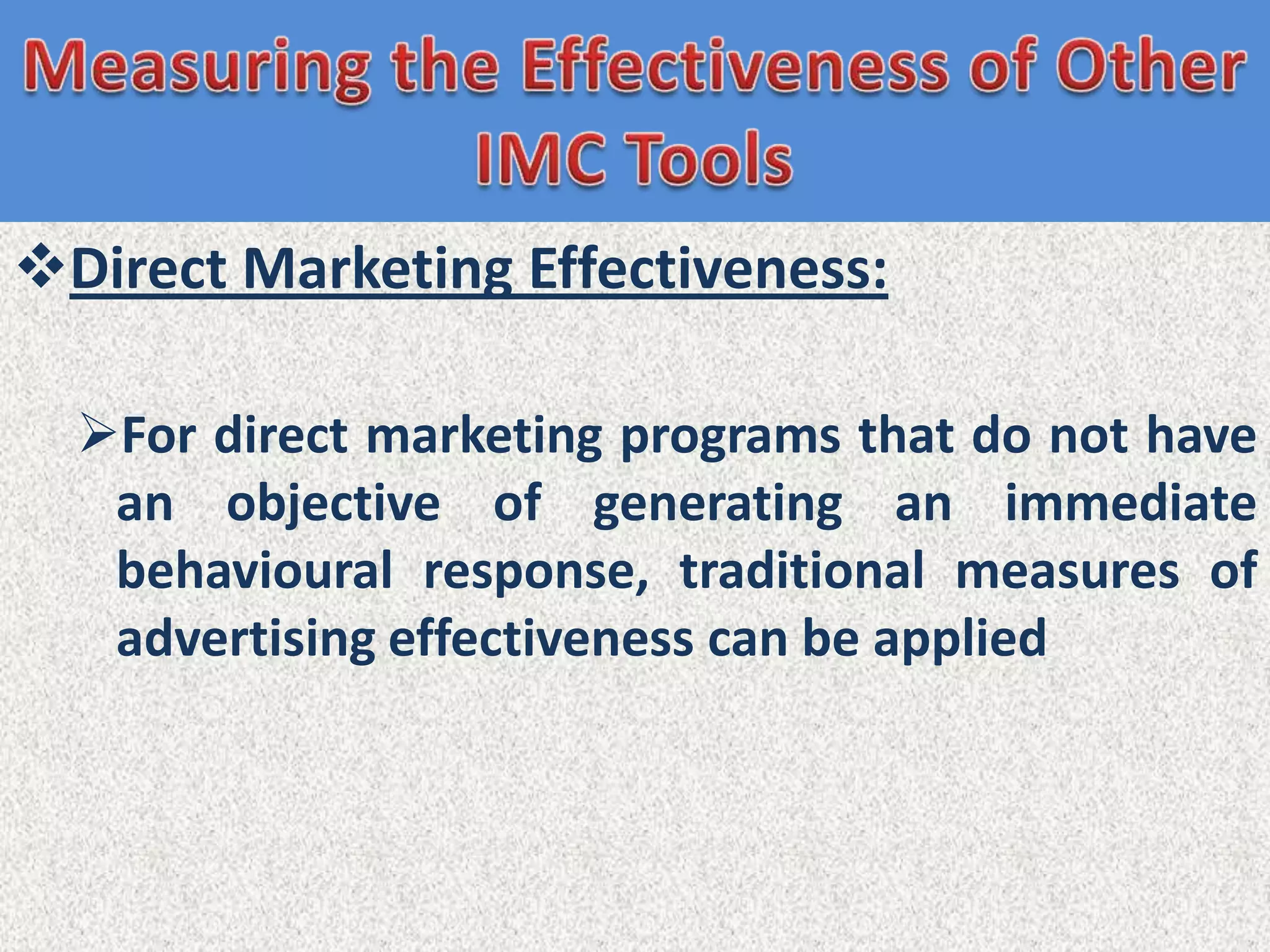
Direct Marketing Effectiveness:

  For direct marketing programs that do not have
   an objective of generating an immediate
   behavioural response, traditional measures of
   advertising effectiveness can be applied
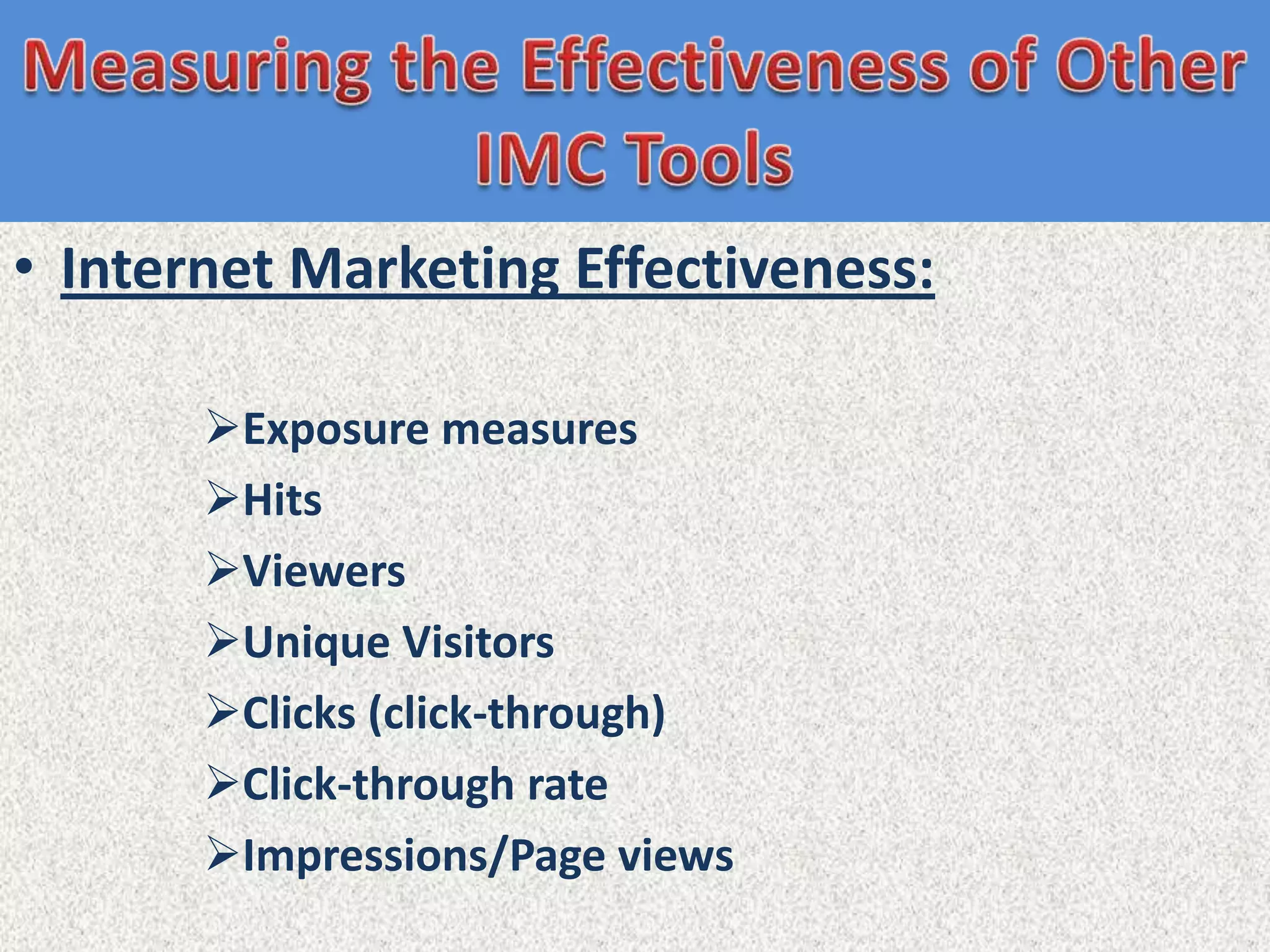
• Internet Marketing Effectiveness:

       Exposure measures
       Hits
       Viewers
       Unique Visitors
       Clicks (click-through)
       Click-through rate
       Impressions/Page views
Chapter 19   measuring the effectiveness of the promotional program

Chapter 19 measuring the effectiveness of the promotional program

  • 4.
    What to test: Where to Test: Source factors  Laboratory tests Message variables  Field tests Media strategies Budget decisions How to test: When to test:  Testing guideline Pre-Testing  Appropriate tests Post Testing
  • 5.
    Concept generation andtesting Rough art, copy, and commercial testing Pretesting of finished ads Market testing of ads
  • 6.
    Conducted early incampaign development To explore the targeted consumers response to a potential ad or campaign i.e. Focus groups and mall intercepts  Limitations: The results are not quantifiable Sample sizes are too small to generalize to larger populations Group influences may bias participants’ responses Consumers become instant “experts”
  • 7.
    Comprehension and reactiontests: Conveying meaning intended by assessing responses Consumer juries:  Uses consumers to evaluate the probable success of an ad Limitations • Self-appointed expert • Limited evaluation of the number of ads • Halo effect • Specific ad preferences overshadowing objectivity
  • 8.
    Requiring two similarmeasures to ensure reliability Tests should use the target audience to assess an ad’s effectiveness Consistency in reliability and validity
  • 9.
    Establish communications objectives Usea consumer response model Use both pre-tests and post-tests Use multiple measures Understand and implement proper research
  • 10.
    Sales Promotion effectiveness: Four advertising applications/communication goals: attention, comprehension, persuasion, and purchase Assessing the attention, cognitive and emotional responses Measurement of switching and loyalty
  • 11.
    Public Relation Effectiveness:evaluation tells management How to assess what has been achieved through public relations activities How to measure PR achievements quantitatively How to judge the quality of PR achievements and activities
  • 12.
    Direct Marketing Effectiveness: For direct marketing programs that do not have an objective of generating an immediate behavioural response, traditional measures of advertising effectiveness can be applied
  • 13.
    • Internet MarketingEffectiveness: Exposure measures Hits Viewers Unique Visitors Clicks (click-through) Click-through rate Impressions/Page views