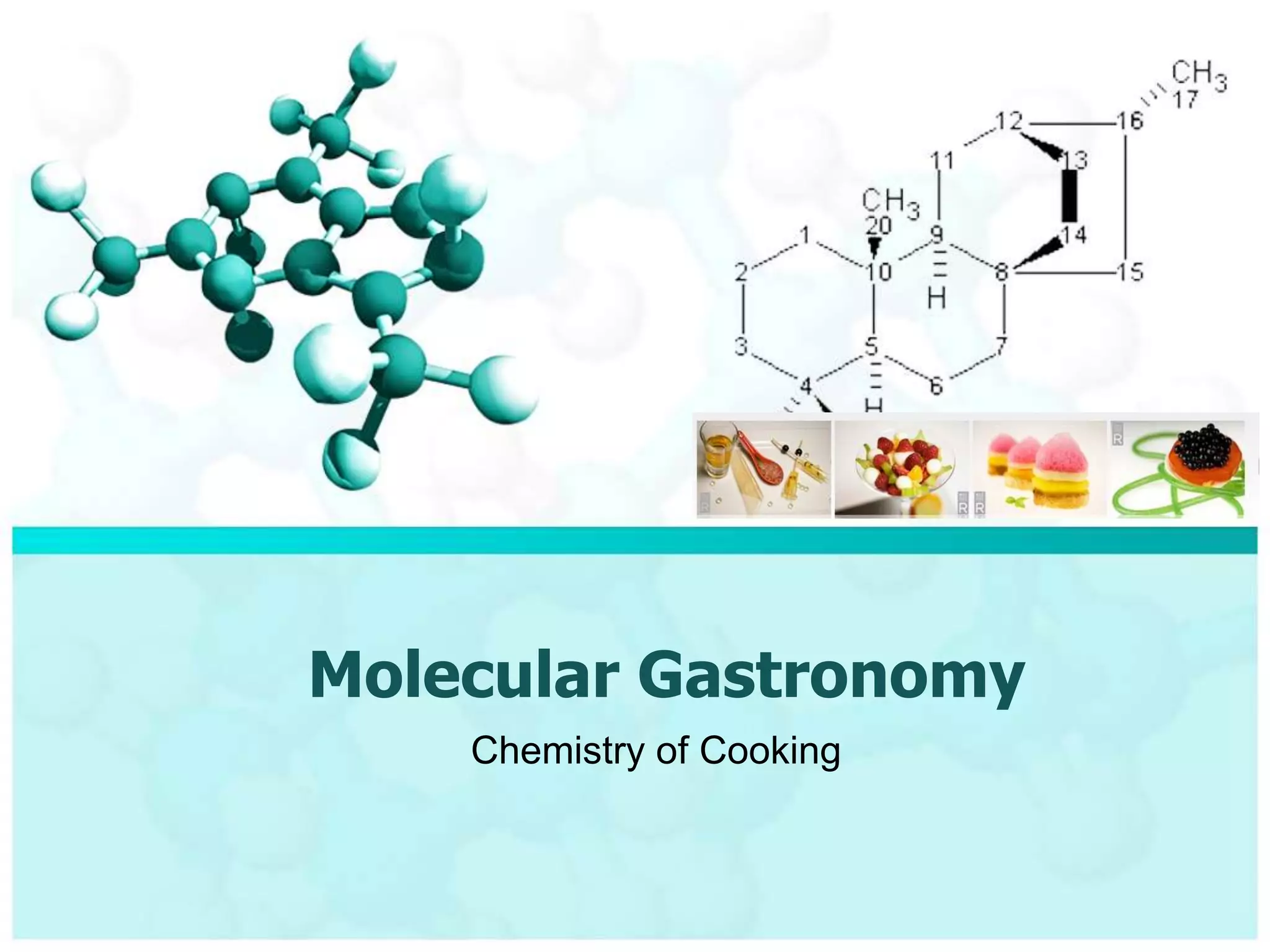
Molecular Gastronomy
    Chemistry of Cooking
Briefing

• Molecular gastronomy is a sub discipline of food science that
  seeks to investigate, explain and make practical use of the
  physical and chemical transformations of ingredients that
  occur while cooking.
• There are many branches of food science, all of which study
  different aspects of food such as safety, microbiology,
  preservation, chemistry, engineering, physics and the like.
  Molecular gastronomy, being the first formal scientific
  discipline among them is worth a quick look…
….
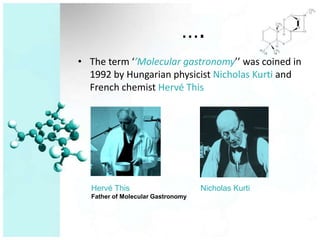
• The term ‘’Molecular gastronomy’’ was coined in
  1992 by Hungarian physicist Nicholas Kurti and
  French chemist Hervé This


  Hervé This                       Nicholas Kurti
  Father of Molecular Gastronomy
informally
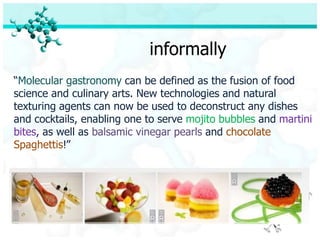
“Molecular gastronomy can be defined as the fusion of food
science and culinary arts. New technologies and natural
texturing agents can now be used to deconstruct any dishes
and cocktails, enabling one to serve mojito bubbles and martini
bites, as well as balsamic vinegar pearls and chocolate
Spaghettis!”
Techniques
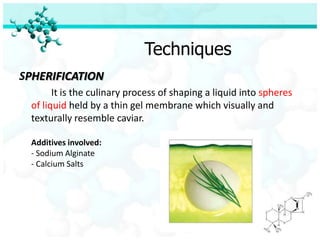
SPHERIFICATION
       It is the culinary process of shaping a liquid into spheres
 of liquid held by a thin gel membrane which visually and
 texturally resemble caviar.

 Additives involved:
 - Sodium Alginate
 - Calcium Salts
Techniques
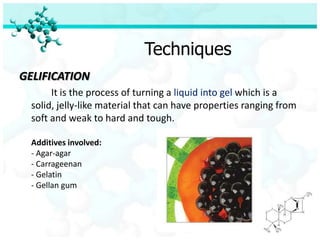
GELIFICATION
       It is the process of turning a liquid into gel which is a
  solid, jelly-like material that can have properties ranging from
  soft and weak to hard and tough.

  Additives involved:
  - Agar-agar
  - Carrageenan
  - Gelatin
  - Gellan gum
Techniques
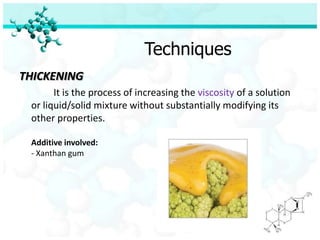
THICKENING
       It is the process of increasing the viscosity of a solution
 or liquid/solid mixture without substantially modifying its
 other properties.

 Additive involved:
 - Xanthan gum
Techniques
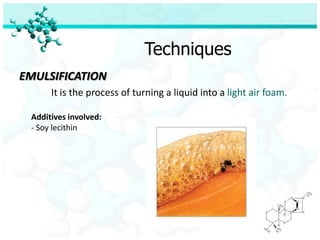
EMULSIFICATION
      It is the process of turning a liquid into a light air foam.

 Additives involved:
 - Soy lecithin
Techniques
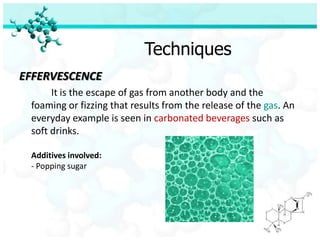
EFFERVESCENCE
      It is the escape of gas from another body and the
 foaming or fizzing that results from the release of the gas. An
 everyday example is seen in carbonated beverages such as
 soft drinks.

 Additives involved:
 - Popping sugar
Techniques
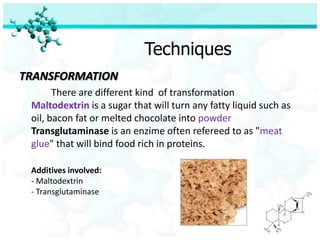
TRANSFORMATION
       There are different kind of transformation
 Maltodextrin is a sugar that will turn any fatty liquid such as
 oil, bacon fat or melted chocolate into powder
 Transglutaminase is an enzime often refereed to as "meat
 glue" that will bind food rich in proteins.

 Additives involved:
 - Maltodextrin
 - Transglutaminase
Future Aspects
The overall effect of any individual foodstuff, let alone a complete dish
Or meal, is influenced by a diverse and complex set of factors that start
With the production of the ingredients and via their processing ,both
physical and Chemical, to produce aroma and tastant molecules as well
as change the texture and colour end as the food is eaten and digested
with the sensations sent from All our senses to our brains, where we
decide whether or not we enjoyed the Experience and degree of
pleasure imparted.
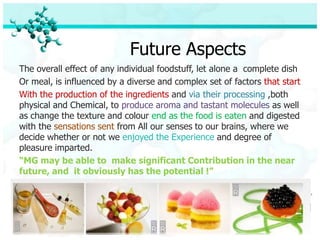
“MG may be able to make significant Contribution in the near
future, and it obviously has the potential !”
Reference
http://www.molecule-r.com
http://www.moleculargastronomynetwork.com
http://en.wikipedia.org/wiki/Molecular_gastronomy

Try yourself some molecular dishes
http://www.molecule-r.com/en/content/6-molecular-gastronomy-recipes
http://www.moleculargastronomynetwork.com/en/formations.html
Molecular Gastronomy

Molecular Gastronomy

  • 1.
    Molecular Gastronomy Chemistry of Cooking
  • 2.
    Briefing • Molecular gastronomyis a sub discipline of food science that seeks to investigate, explain and make practical use of the physical and chemical transformations of ingredients that occur while cooking. • There are many branches of food science, all of which study different aspects of food such as safety, microbiology, preservation, chemistry, engineering, physics and the like. Molecular gastronomy, being the first formal scientific discipline among them is worth a quick look…
  • 3.
    …. • The term‘’Molecular gastronomy’’ was coined in 1992 by Hungarian physicist Nicholas Kurti and French chemist Hervé This Hervé This Nicholas Kurti Father of Molecular Gastronomy
  • 4.
    informally “Molecular gastronomy canbe defined as the fusion of food science and culinary arts. New technologies and natural texturing agents can now be used to deconstruct any dishes and cocktails, enabling one to serve mojito bubbles and martini bites, as well as balsamic vinegar pearls and chocolate Spaghettis!”
  • 5.
    Techniques SPHERIFICATION It is the culinary process of shaping a liquid into spheres of liquid held by a thin gel membrane which visually and texturally resemble caviar. Additives involved: - Sodium Alginate - Calcium Salts
  • 6.
    Techniques GELIFICATION It is the process of turning a liquid into gel which is a solid, jelly-like material that can have properties ranging from soft and weak to hard and tough. Additives involved: - Agar-agar - Carrageenan - Gelatin - Gellan gum
  • 7.
    Techniques THICKENING It is the process of increasing the viscosity of a solution or liquid/solid mixture without substantially modifying its other properties. Additive involved: - Xanthan gum
  • 8.
    Techniques EMULSIFICATION It is the process of turning a liquid into a light air foam. Additives involved: - Soy lecithin
  • 9.
    Techniques EFFERVESCENCE It is the escape of gas from another body and the foaming or fizzing that results from the release of the gas. An everyday example is seen in carbonated beverages such as soft drinks. Additives involved: - Popping sugar
  • 10.
    Techniques TRANSFORMATION There are different kind of transformation Maltodextrin is a sugar that will turn any fatty liquid such as oil, bacon fat or melted chocolate into powder Transglutaminase is an enzime often refereed to as "meat glue" that will bind food rich in proteins. Additives involved: - Maltodextrin - Transglutaminase
  • 11.
    Future Aspects The overalleffect of any individual foodstuff, let alone a complete dish Or meal, is influenced by a diverse and complex set of factors that start With the production of the ingredients and via their processing ,both physical and Chemical, to produce aroma and tastant molecules as well as change the texture and colour end as the food is eaten and digested with the sensations sent from All our senses to our brains, where we decide whether or not we enjoyed the Experience and degree of pleasure imparted. “MG may be able to make significant Contribution in the near future, and it obviously has the potential !”
  • 12.
    Reference http://www.molecule-r.com http://www.moleculargastronomynetwork.com http://en.wikipedia.org/wiki/Molecular_gastronomy Try yourself somemolecular dishes http://www.molecule-r.com/en/content/6-molecular-gastronomy-recipes http://www.moleculargastronomynetwork.com/en/formations.html