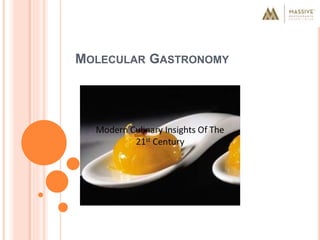
MOLECULAR GASTRONOMY
CONTENTS
 INTRODUCTION
 TECHNIQUES
 EQUIPMENTS
 CHEFS AND THEIR INNOVATIONS
 FARZI CAFÉ
 Q&A
INTRODUCTION
 “Molecular gastronomy is the study of physical and
chemical transformations of edible materials.
 With the help of Molecular Gastronomy Chefs
transform the tastes and textures of food.
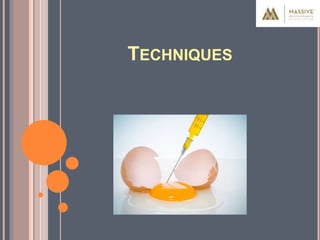
TECHNIQUES
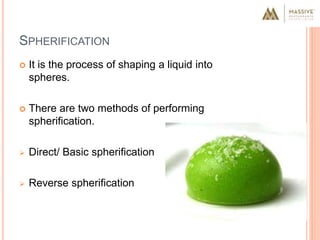
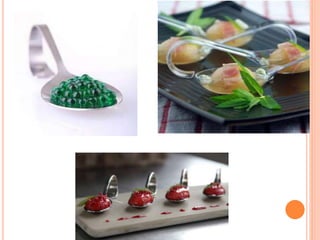
SPHERIFICATION
 It is the process of shaping a liquid into
spheres.
 There are two methods of performing
spherification.
 Direct/ Basic spherification
 Reverse spherification
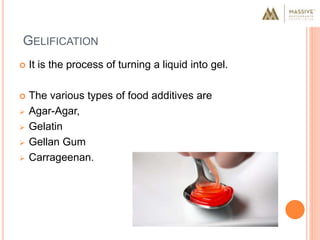
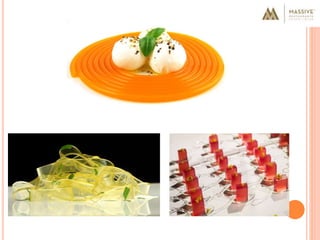
GELIFICATION
 It is the process of turning a liquid into gel.
 The various types of food additives are
 Agar-Agar,
 Gelatin
 Gellan Gum
 Carrageenan.
THICKENING
 It is the process of increasing the viscosity of a
liquid.
 It helps to have a more systematic and elegant
plates.
 The additive used can help to vary the thickness of
the products, thereby change the effect and usage
of an ingredient.
 Xanthan gum helps achieve the desired results
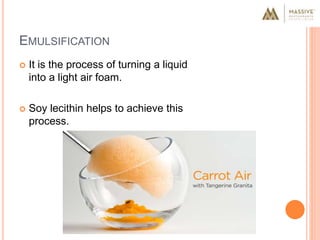
EMULSIFICATION
 It is the process of turning a liquid
into a light air foam.
 Soy lecithin helps to achieve this
process.
EQUIPMENT'S
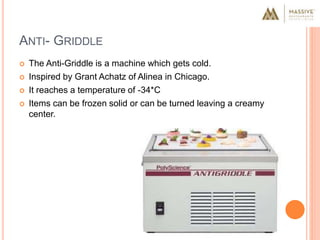
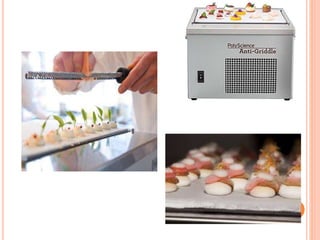
ANTI- GRIDDLE
 The Anti-Griddle is a machine which gets cold.
 Inspired by Grant Achatz of Alinea in Chicago.
 It reaches a temperature of -34*C
 Items can be frozen solid or can be turned leaving a creamy
center.
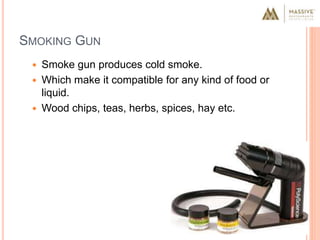
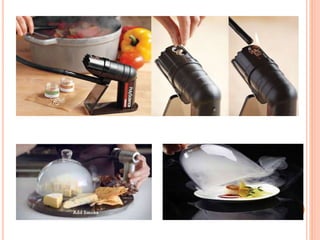
SMOKING GUN
 Smoke gun produces cold smoke.
 Which make it compatible for any kind of food or
liquid.
 Wood chips, teas, herbs, spices, hay etc.
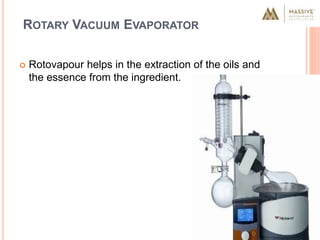
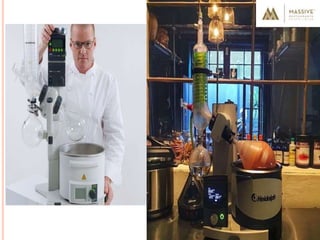
ROTARY VACUUM EVAPORATOR
 Rotovapour helps in the extraction of the oils and
the essence from the ingredient.
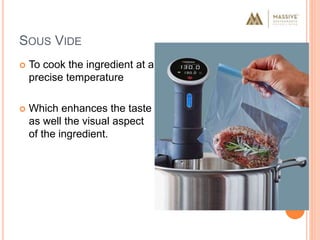
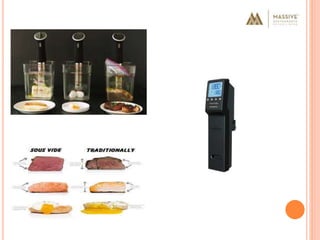
SOUS VIDE
 To cook the ingredient at a
precise temperature
 Which enhances the taste
as well the visual aspect
of the ingredient.
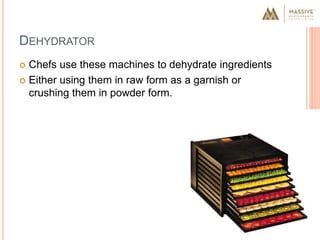
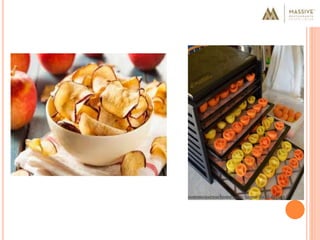
DEHYDRATOR
 Chefs use these machines to dehydrate ingredients
 Either using them in raw form as a garnish or
crushing them in powder form.
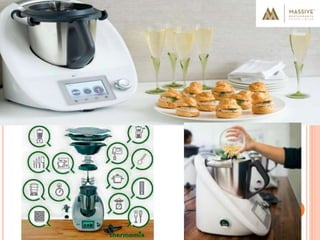
THERMO MIX
The Thermomix can:
 Cook pasta and rice
 Steam fruit and vegetables, meat and fish
 Stew meat, vegetables and fruit
 Boil and simmer liquids like sauces, soups and chowders
 Chop and mince up meat, nuts, herbs and vegetables
 Crush ice and frozen fruit
 Blend fruits, frostings, soups, sauces, smoothies, milkshakes
 Puree vegetables, fruits and special diets
 Grind coffee beans, sugar and nuts
 Mill into flour wheat, rice, nuts and grains
 Knead bread dough, pizza dough, pasta and pastry
 Whisk egg whites and yolks, frothy milk for coffee, and custards
 Grate hard cheese, chocolate and nuts
 Emulsify mayonnaise, salad dressings, body care products and cosmetics
 Weigh liquids and solids
 Keep heat at a certain temperature for yogurt, butter, cheese, baby food,
chocolate, delicate sauces and fondue
 It can be used to blend, stir the ingredient while heating it at once.
CHEFS AND THEIR INNOVATIONS
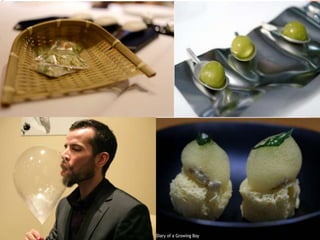
 Chef Ferran Adria, ElBulli; innovated olive spheres.
 Chef Grant Achatz, Alinea; innovated Edible Balloon.
 Chef Gaggan Anand, Gaggan; innovated nut bag and
idli samber.
 The potential of molecular gastronomy is enormous.
 It has transformed eating into a whole new emotional
and sensory experience.
CONCEPT
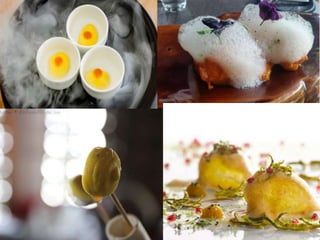
 Farzi Café aims to bring Indian cuisine back “in-
Vogue”.
 Farzi” can have many connotations, but at Farzi
Café, it has just one, “creating an illusion”.
 Combination of Indian influences and contemporary
presentations
 Transformation of modern presentations and
cooking techniques.
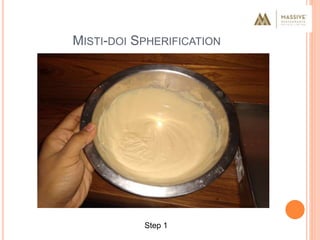
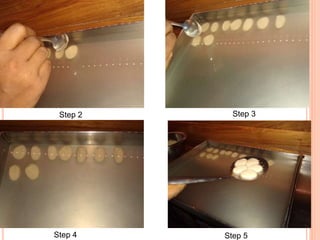
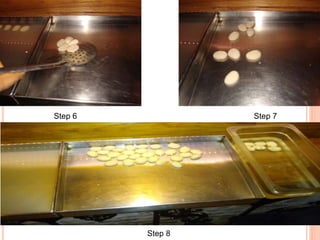
MISTI-DOI SPHERIFICATION
Step 1
Step 2 Step 3
Step 4 Step 5
Step 6 Step 7
Step 8
Molecular Gastronomy (1).pptx

Molecular Gastronomy (1).pptx

  • 1.
  • 2.
    CONTENTS  INTRODUCTION  TECHNIQUES EQUIPMENTS  CHEFS AND THEIR INNOVATIONS  FARZI CAFÉ  Q&A
  • 3.
    INTRODUCTION  “Molecular gastronomyis the study of physical and chemical transformations of edible materials.  With the help of Molecular Gastronomy Chefs transform the tastes and textures of food.
  • 4.
  • 5.
    SPHERIFICATION  It isthe process of shaping a liquid into spheres.  There are two methods of performing spherification.  Direct/ Basic spherification  Reverse spherification
  • 7.
    GELIFICATION  It isthe process of turning a liquid into gel.  The various types of food additives are  Agar-Agar,  Gelatin  Gellan Gum  Carrageenan.
  • 9.
    THICKENING  It isthe process of increasing the viscosity of a liquid.  It helps to have a more systematic and elegant plates.  The additive used can help to vary the thickness of the products, thereby change the effect and usage of an ingredient.  Xanthan gum helps achieve the desired results
  • 10.
    EMULSIFICATION  It isthe process of turning a liquid into a light air foam.  Soy lecithin helps to achieve this process.
  • 12.
  • 13.
    ANTI- GRIDDLE  TheAnti-Griddle is a machine which gets cold.  Inspired by Grant Achatz of Alinea in Chicago.  It reaches a temperature of -34*C  Items can be frozen solid or can be turned leaving a creamy center.
  • 15.
    SMOKING GUN  Smokegun produces cold smoke.  Which make it compatible for any kind of food or liquid.  Wood chips, teas, herbs, spices, hay etc.
  • 17.
    ROTARY VACUUM EVAPORATOR Rotovapour helps in the extraction of the oils and the essence from the ingredient.
  • 19.
    SOUS VIDE  Tocook the ingredient at a precise temperature  Which enhances the taste as well the visual aspect of the ingredient.
  • 21.
    DEHYDRATOR  Chefs usethese machines to dehydrate ingredients  Either using them in raw form as a garnish or crushing them in powder form.
  • 23.
    THERMO MIX The Thermomixcan:  Cook pasta and rice  Steam fruit and vegetables, meat and fish  Stew meat, vegetables and fruit  Boil and simmer liquids like sauces, soups and chowders  Chop and mince up meat, nuts, herbs and vegetables  Crush ice and frozen fruit  Blend fruits, frostings, soups, sauces, smoothies, milkshakes  Puree vegetables, fruits and special diets  Grind coffee beans, sugar and nuts  Mill into flour wheat, rice, nuts and grains  Knead bread dough, pizza dough, pasta and pastry  Whisk egg whites and yolks, frothy milk for coffee, and custards  Grate hard cheese, chocolate and nuts  Emulsify mayonnaise, salad dressings, body care products and cosmetics  Weigh liquids and solids  Keep heat at a certain temperature for yogurt, butter, cheese, baby food, chocolate, delicate sauces and fondue  It can be used to blend, stir the ingredient while heating it at once.
  • 25.
    CHEFS AND THEIRINNOVATIONS  Chef Ferran Adria, ElBulli; innovated olive spheres.  Chef Grant Achatz, Alinea; innovated Edible Balloon.  Chef Gaggan Anand, Gaggan; innovated nut bag and idli samber.  The potential of molecular gastronomy is enormous.  It has transformed eating into a whole new emotional and sensory experience.
  • 28.
    CONCEPT  Farzi Caféaims to bring Indian cuisine back “in- Vogue”.  Farzi” can have many connotations, but at Farzi Café, it has just one, “creating an illusion”.  Combination of Indian influences and contemporary presentations  Transformation of modern presentations and cooking techniques.
  • 30.
  • 31.
    Step 2 Step3 Step 4 Step 5
  • 32.
    Step 6 Step7 Step 8