Direct Object
Pronouns
Direct Object
  Pronouns
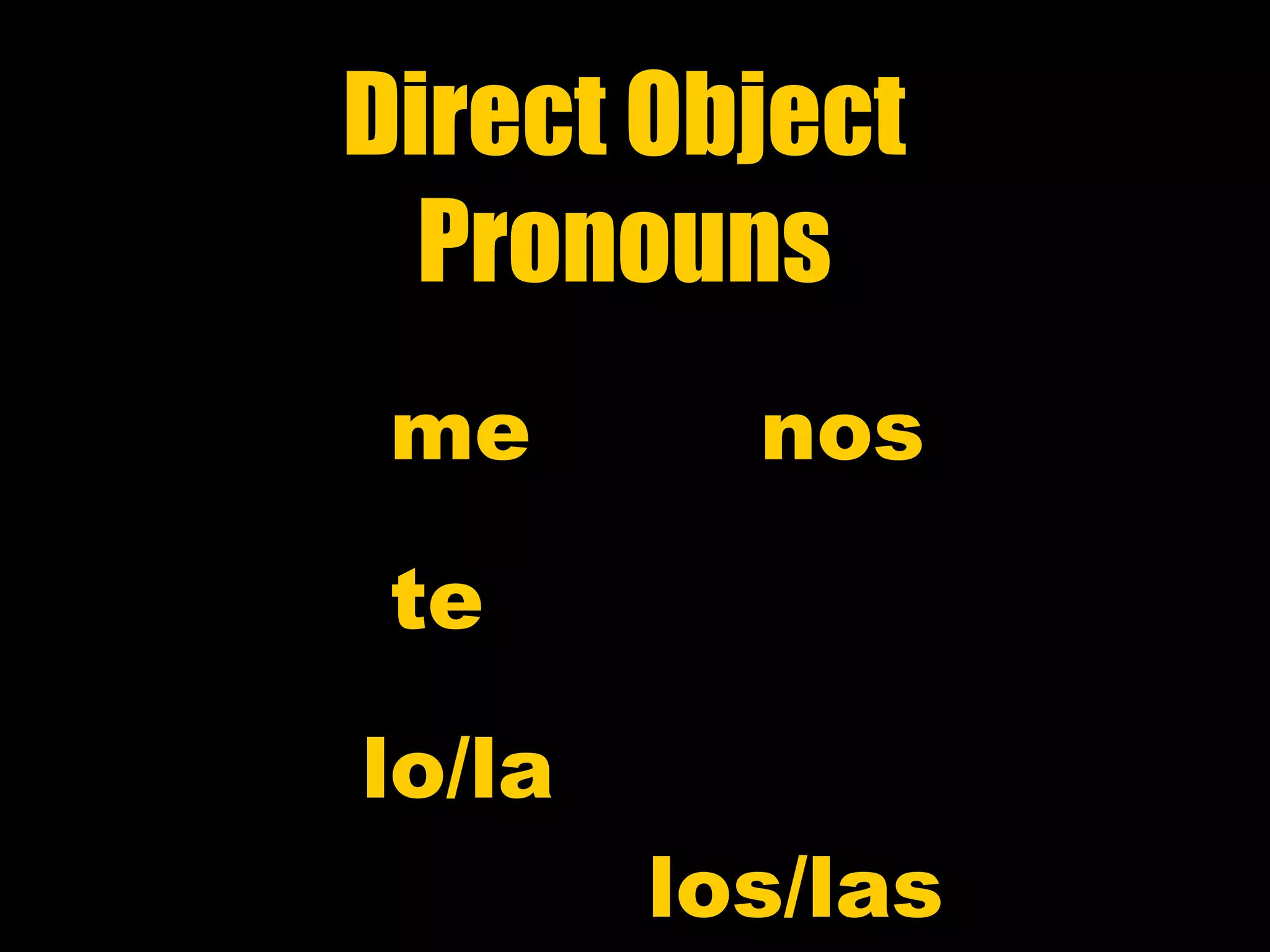
 me       nos
 te

lo/la
        los/las
Direct Objects
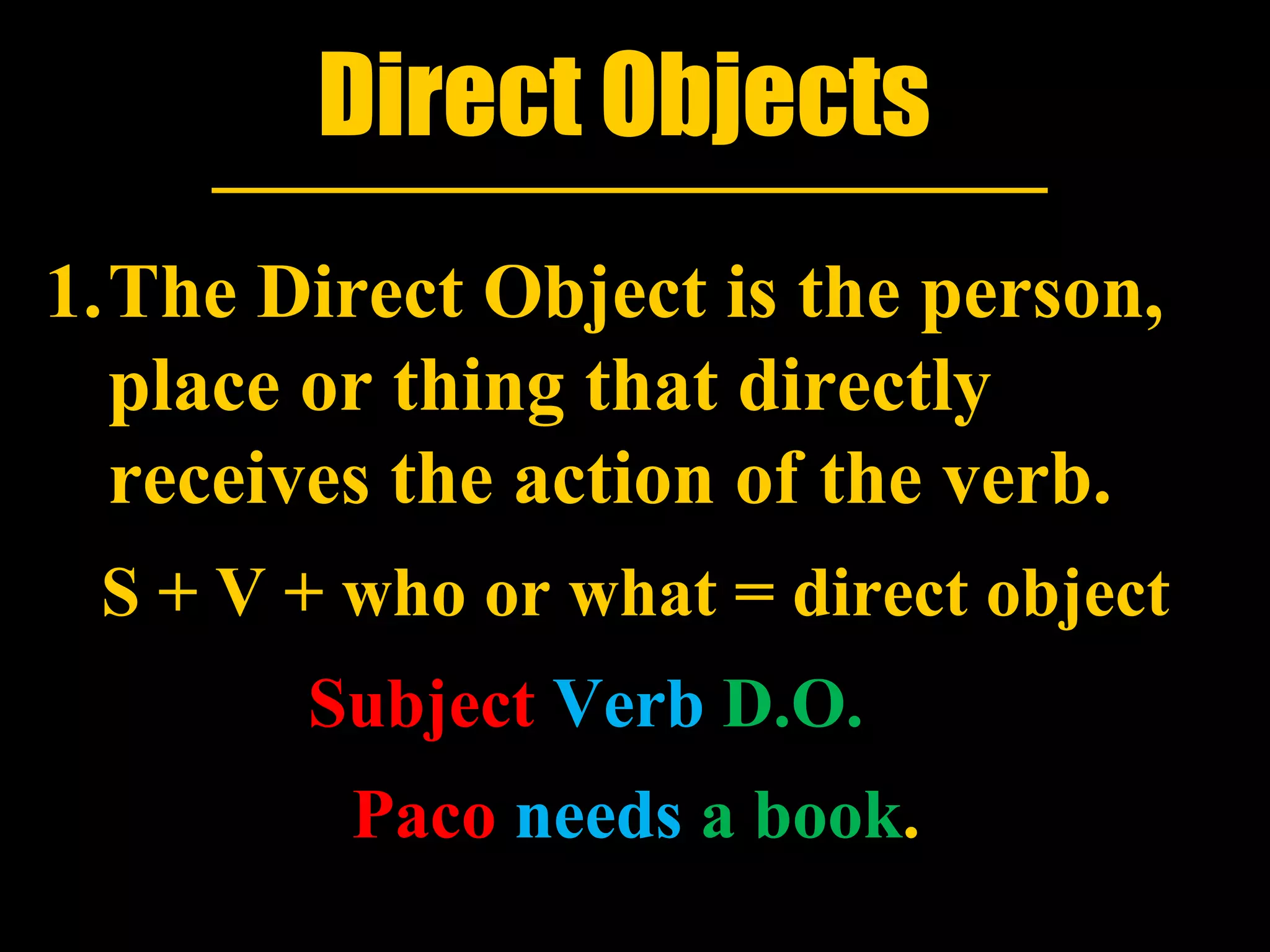
1.The Direct Object is the person,
  place or thing that directly
  receives the action of the verb.
 S + V + who or what = direct object
        Subject Verb D.O.
         Paco needs a book.
Direct Objects
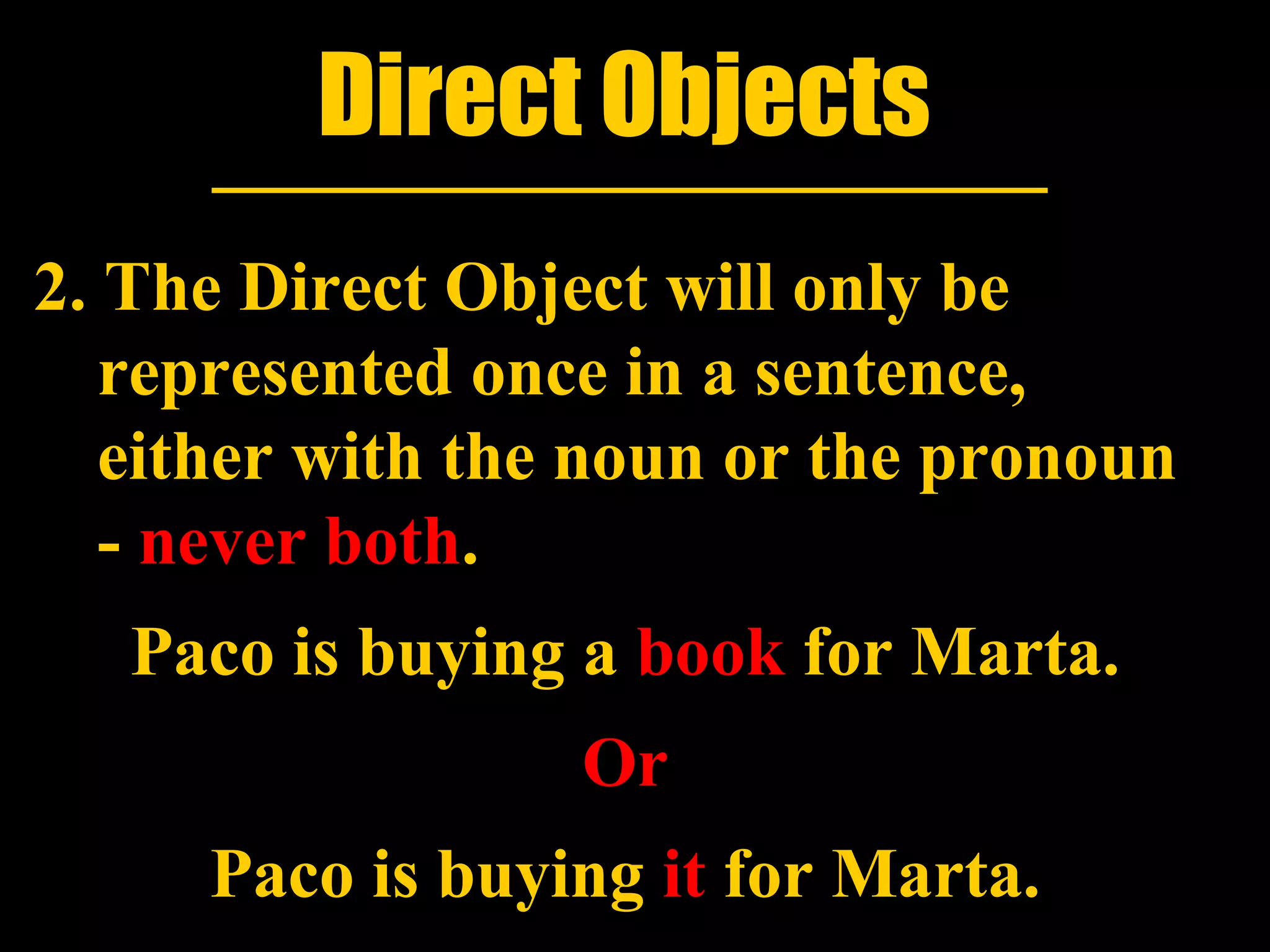
2. The Direct Object will only be
   represented once in a sentence,
   either with the noun or the pronoun
   - never both.
   Paco is buying a book for Marta.
                  Or
     Paco is buying it for Marta.
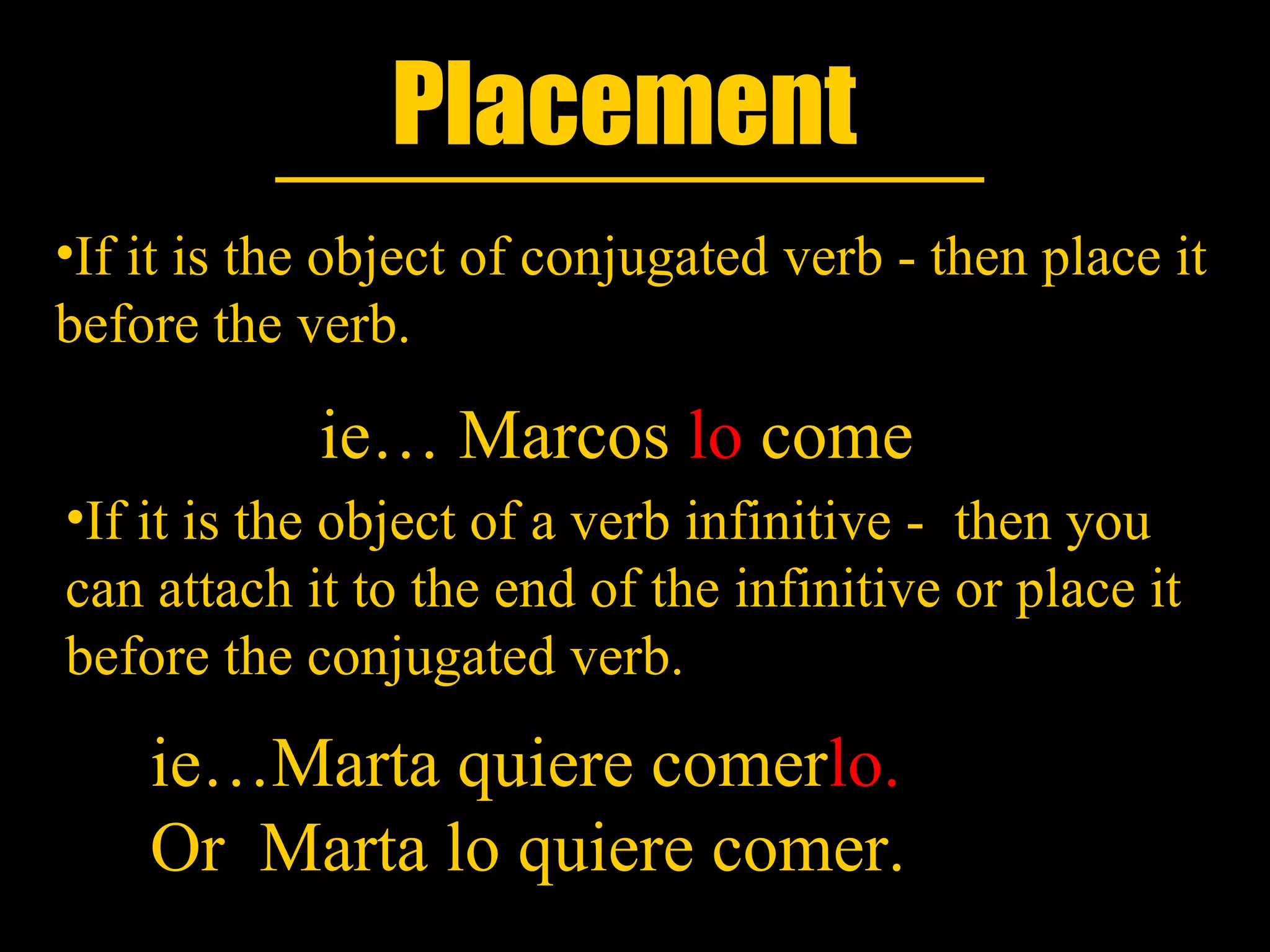
Placement
•If it is the object of conjugated verb - then place it
before the verb.

            ie… Marcos lo come
•If it is the object of a verb infinitive - then you
can attach it to the end of the infinitive or place it
before the conjugated verb.
    ie…Marta quiere comerlo.
    Or Marta lo quiere comer.
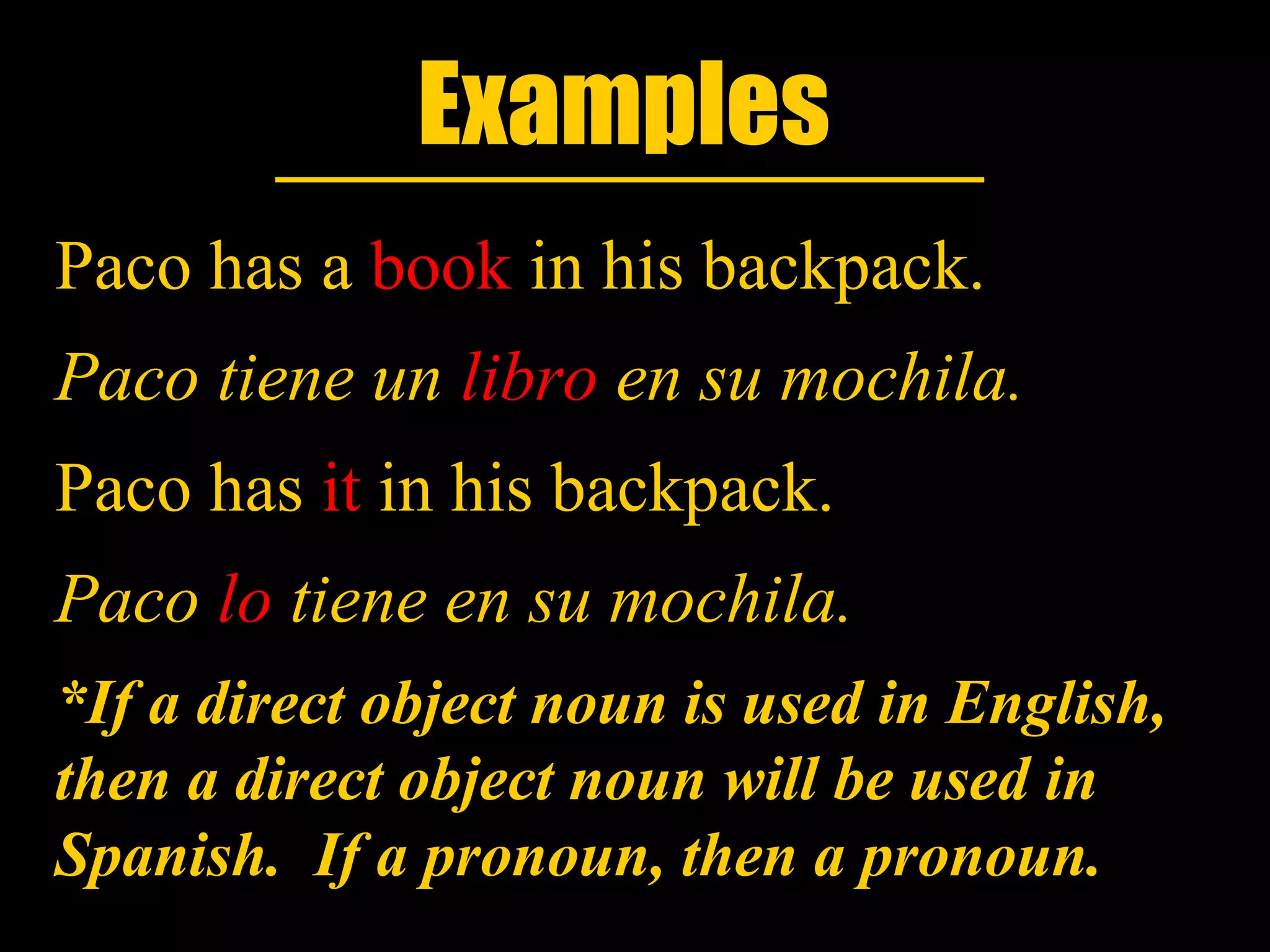
Examples
Paco has a book in his backpack.
Paco tiene un libro en su mochila.
Paco has it in his backpack.
Paco lo tiene en su mochila.
*If a direct object noun is used in English,
then a direct object noun will be used in
Spanish. If a pronoun, then a pronoun.
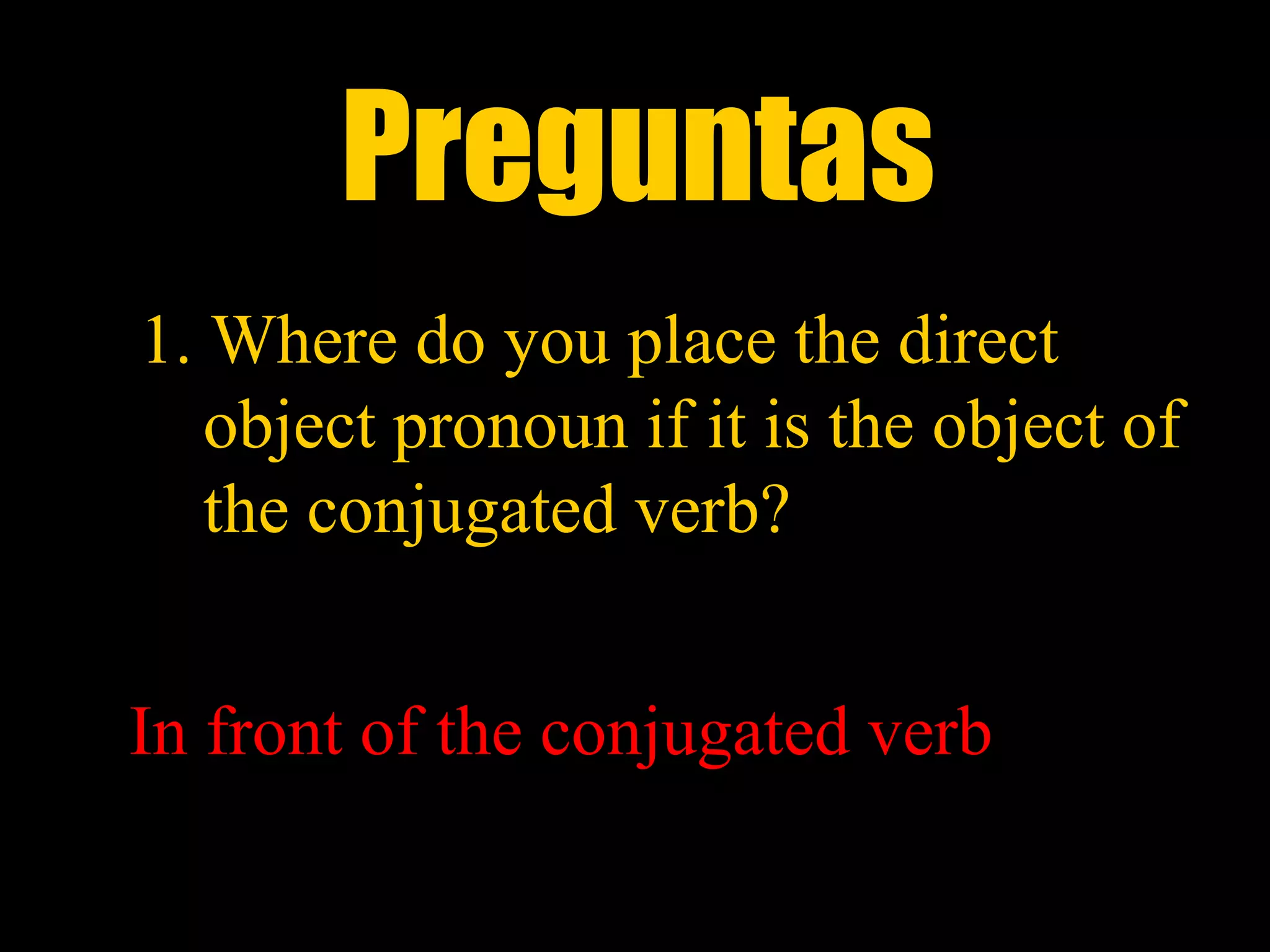
Preguntas
1. Where do you place the direct
   object pronoun if it is the object of
   the conjugated verb?


In front of the conjugated verb
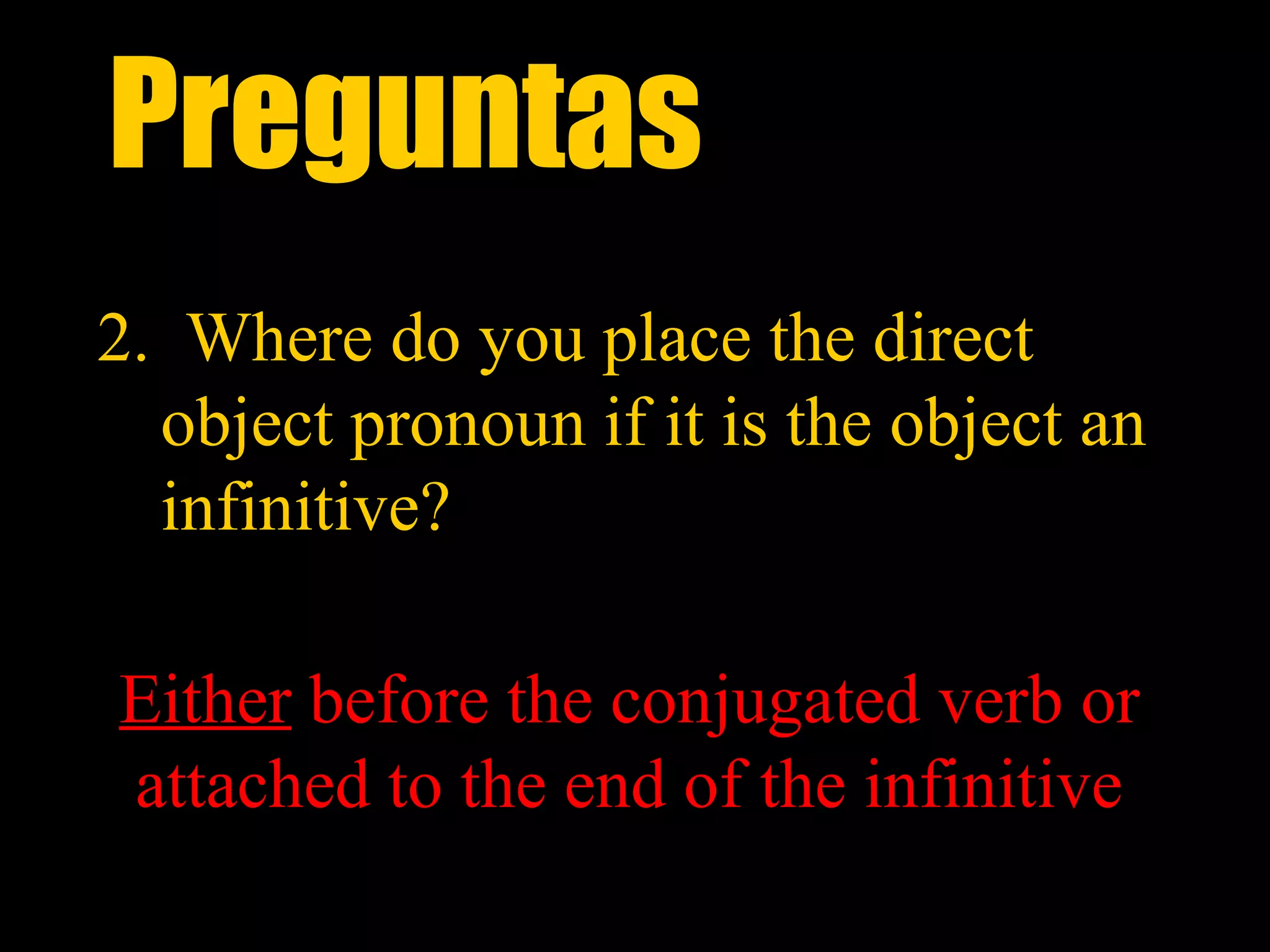
Preguntas
2. Where do you place the direct
  object pronoun if it is the object an
  infinitive?

Either before the conjugated verb or
attached to the end of the infinitive
El Fin
El Fin

Module 6 direct objects (d.o.)

  • 1.
  • 2.
    Direct Object Pronouns me nos te lo/la los/las
  • 3.
    Direct Objects 1.The DirectObject is the person, place or thing that directly receives the action of the verb. S + V + who or what = direct object Subject Verb D.O. Paco needs a book.
  • 4.
    Direct Objects 2. TheDirect Object will only be represented once in a sentence, either with the noun or the pronoun - never both. Paco is buying a book for Marta. Or Paco is buying it for Marta.
  • 5.
    Placement •If it isthe object of conjugated verb - then place it before the verb. ie… Marcos lo come •If it is the object of a verb infinitive - then you can attach it to the end of the infinitive or place it before the conjugated verb. ie…Marta quiere comerlo. Or Marta lo quiere comer.
  • 6.
    Examples Paco has abook in his backpack. Paco tiene un libro en su mochila. Paco has it in his backpack. Paco lo tiene en su mochila. *If a direct object noun is used in English, then a direct object noun will be used in Spanish. If a pronoun, then a pronoun.
  • 7.
    Preguntas 1. Where doyou place the direct object pronoun if it is the object of the conjugated verb? In front of the conjugated verb
  • 8.
    Preguntas 2. Where doyou place the direct object pronoun if it is the object an infinitive? Either before the conjugated verb or attached to the end of the infinitive
  • 9.
  • 10.

Editor's Notes

  • #4 Object of conjugated verb- before verb
  • #5 Object of conjugated verb- before verb
  • #6 Object of conjugated verb- before verb
  • #7 Object of conjugated verb- before verb