5

Requests: Can, Could,
Will, Would, Would you
mind

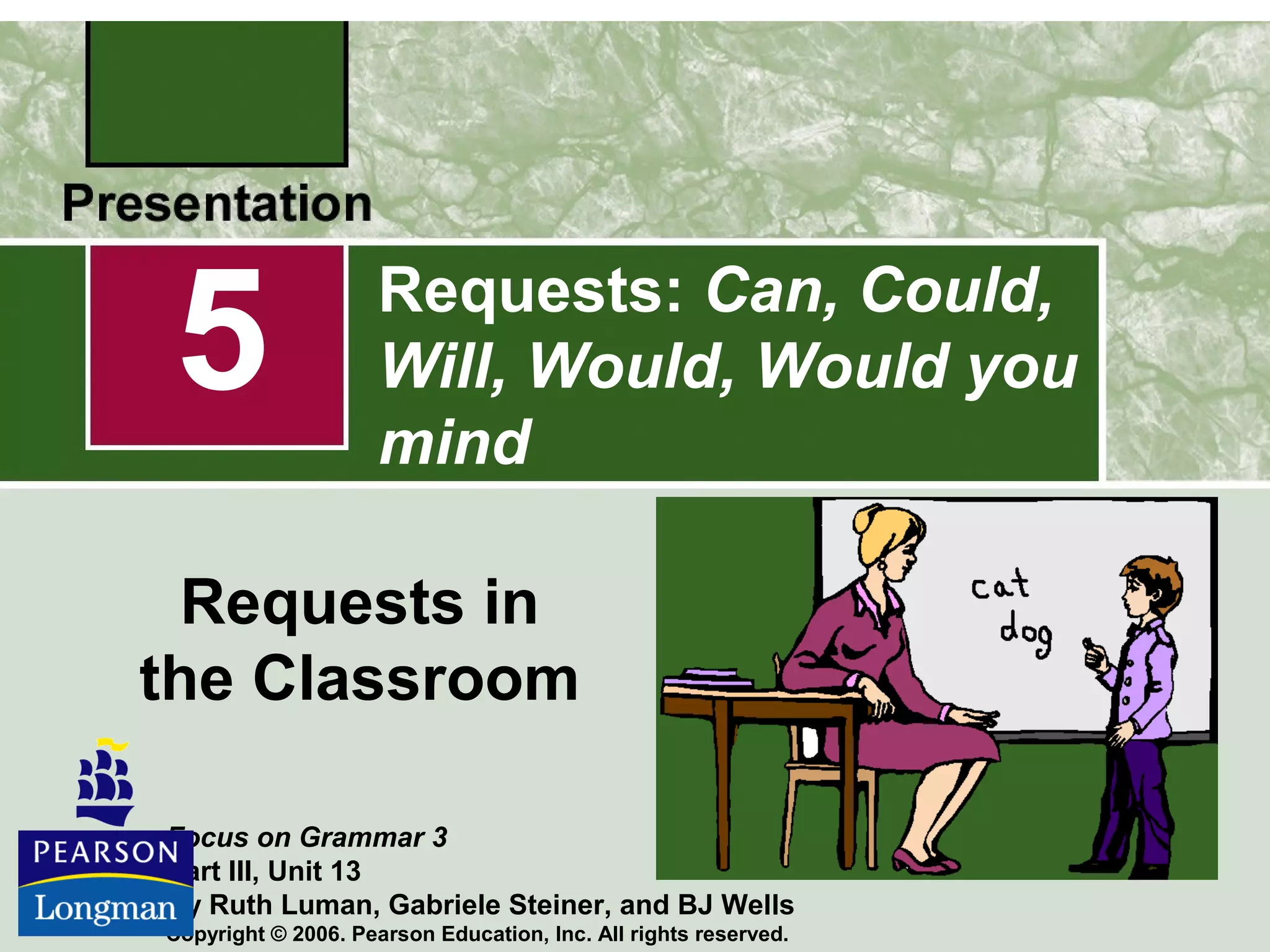
Requests in
the Classroom
Focus on Grammar 3
Part III, Unit 13
By Ruth Luman, Gabriele Steiner, and BJ Wells
Copyright © 2006. Pearson Education, Inc. All rights reserved.
Requests
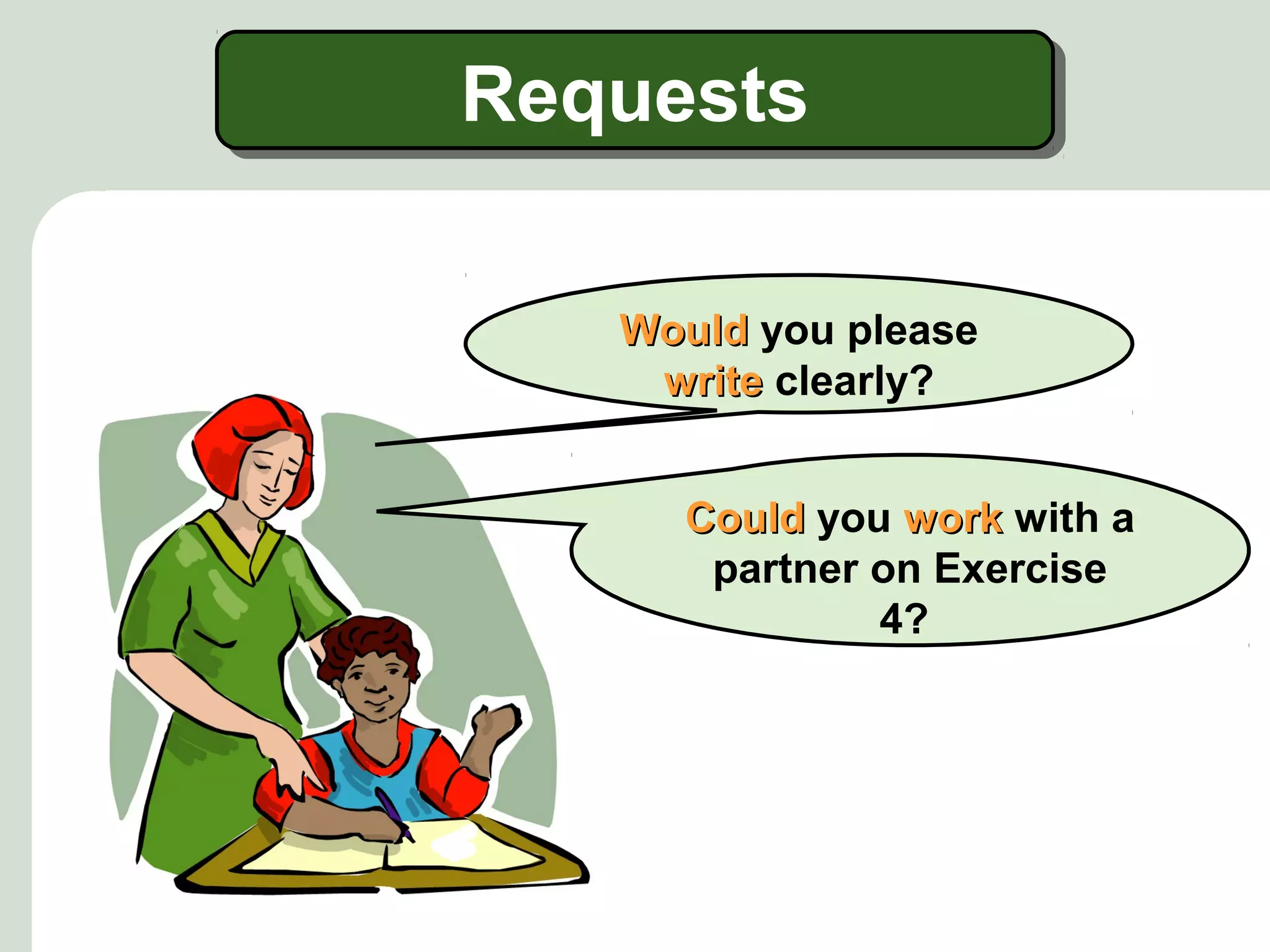
Would you please
write clearly?
Could you work with a
partner on Exercise
4?
More Requests
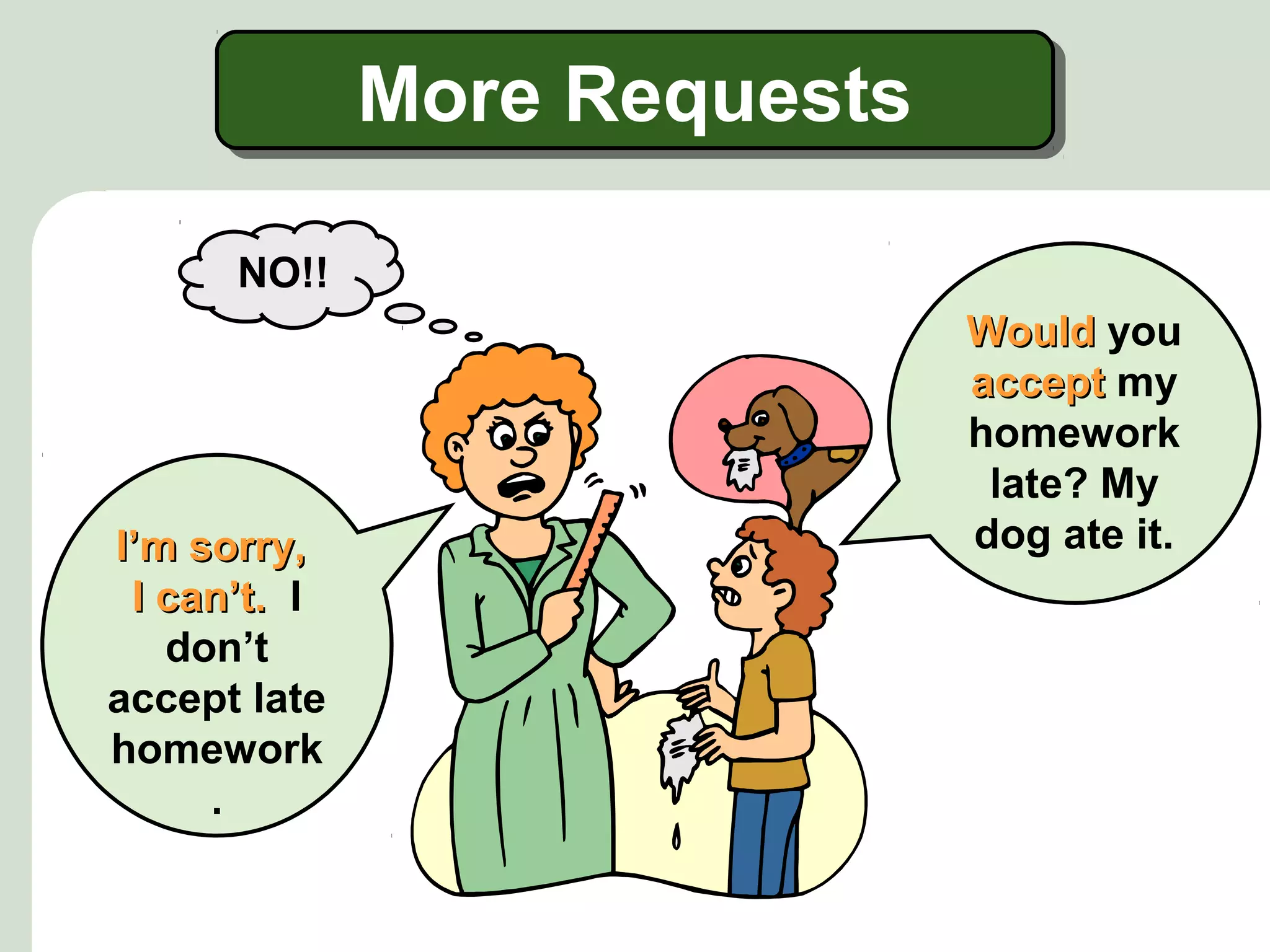
NO!!

I’m sorry,
I can’t. I
don’t
accept late
homework
.

Would you
accept my
homework
late? My
dog ate it.
And More Requests
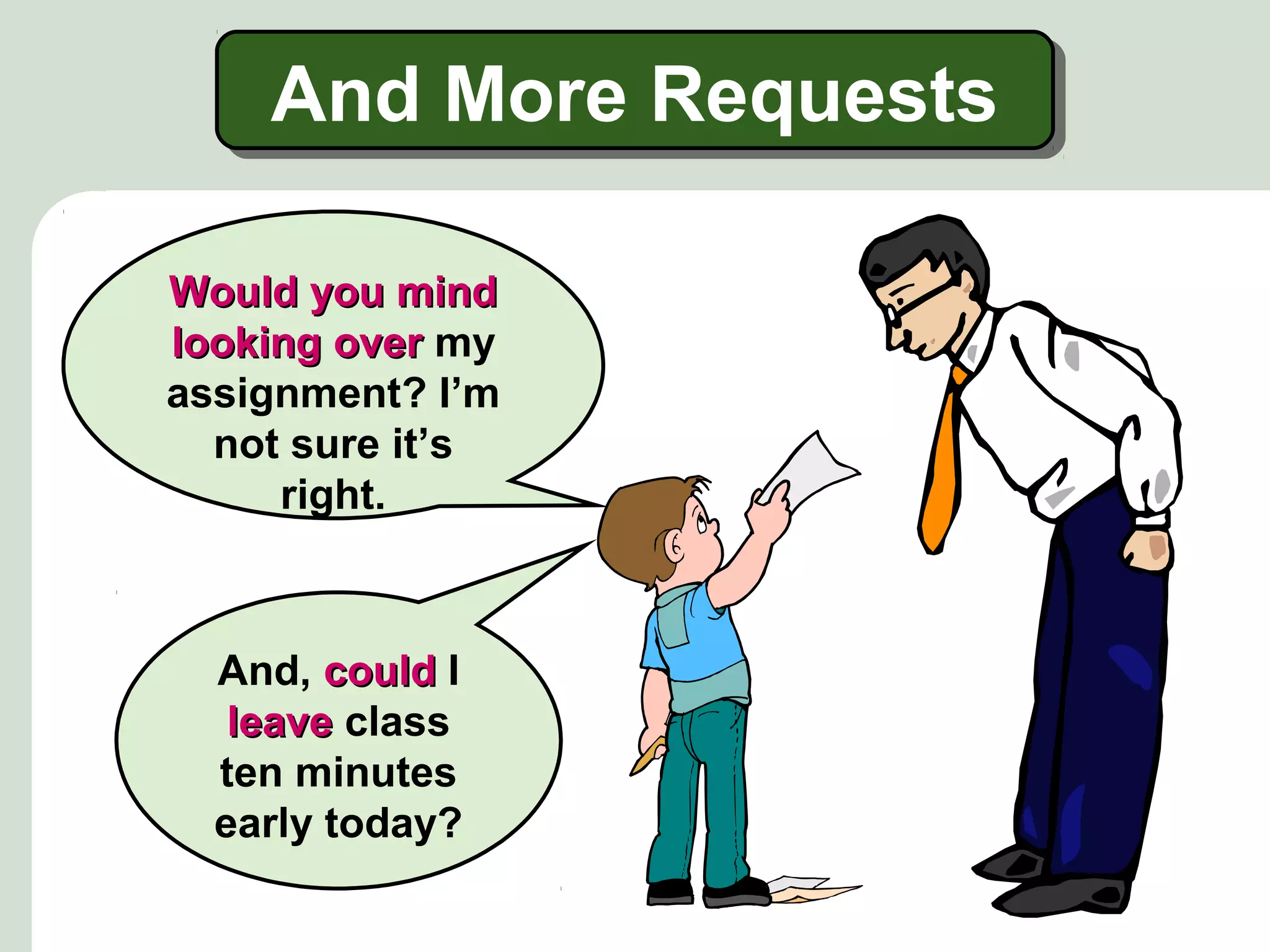
Would you mind
looking over my
assignment? I’m
not sure it’s
right.

And, could I
leave class
ten minutes
early today?
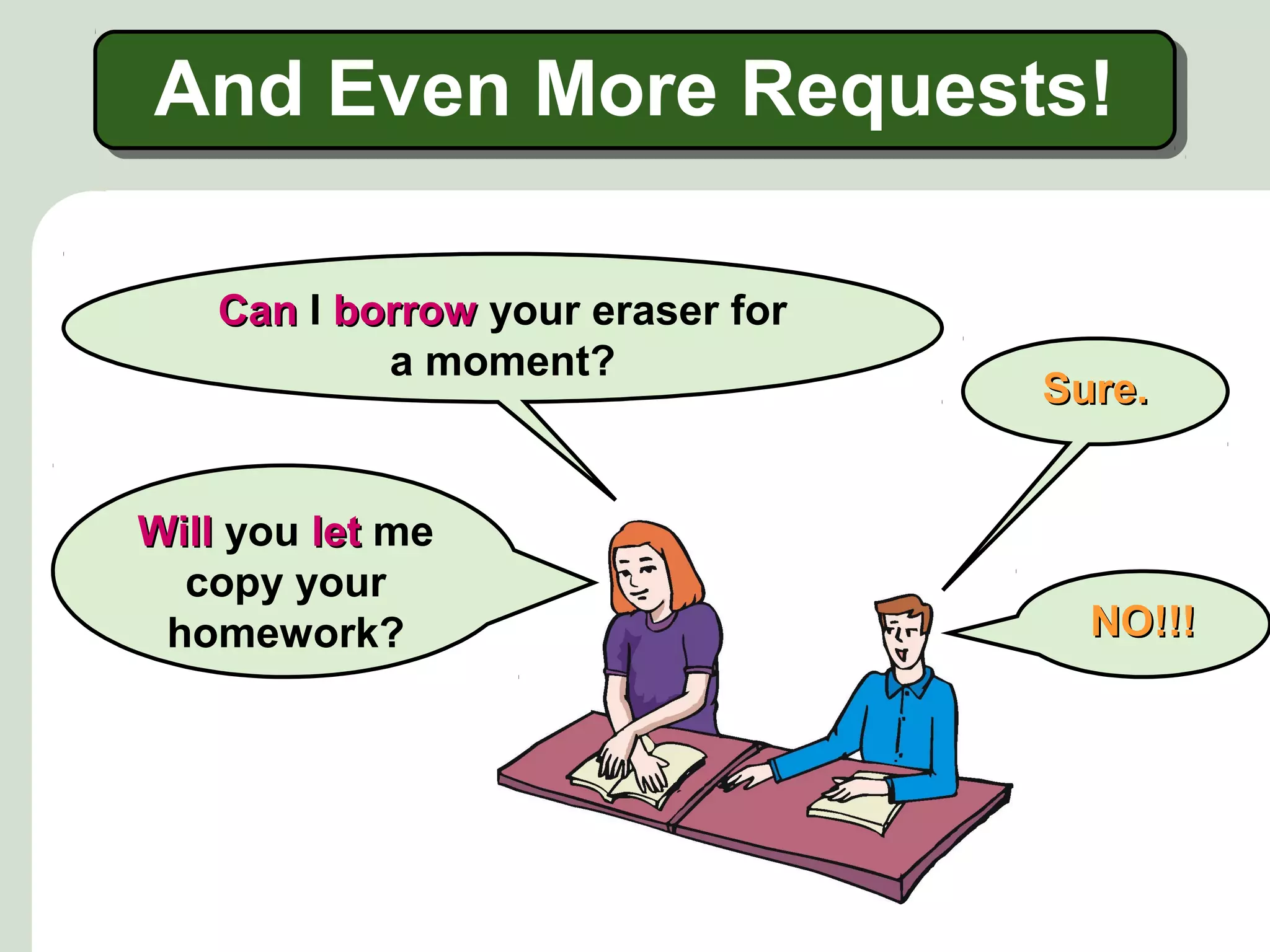
And Even More Requests!
Can I borrow your eraser for
a moment?

Will you let me
copy your
homework?

Sure.

NO!!!
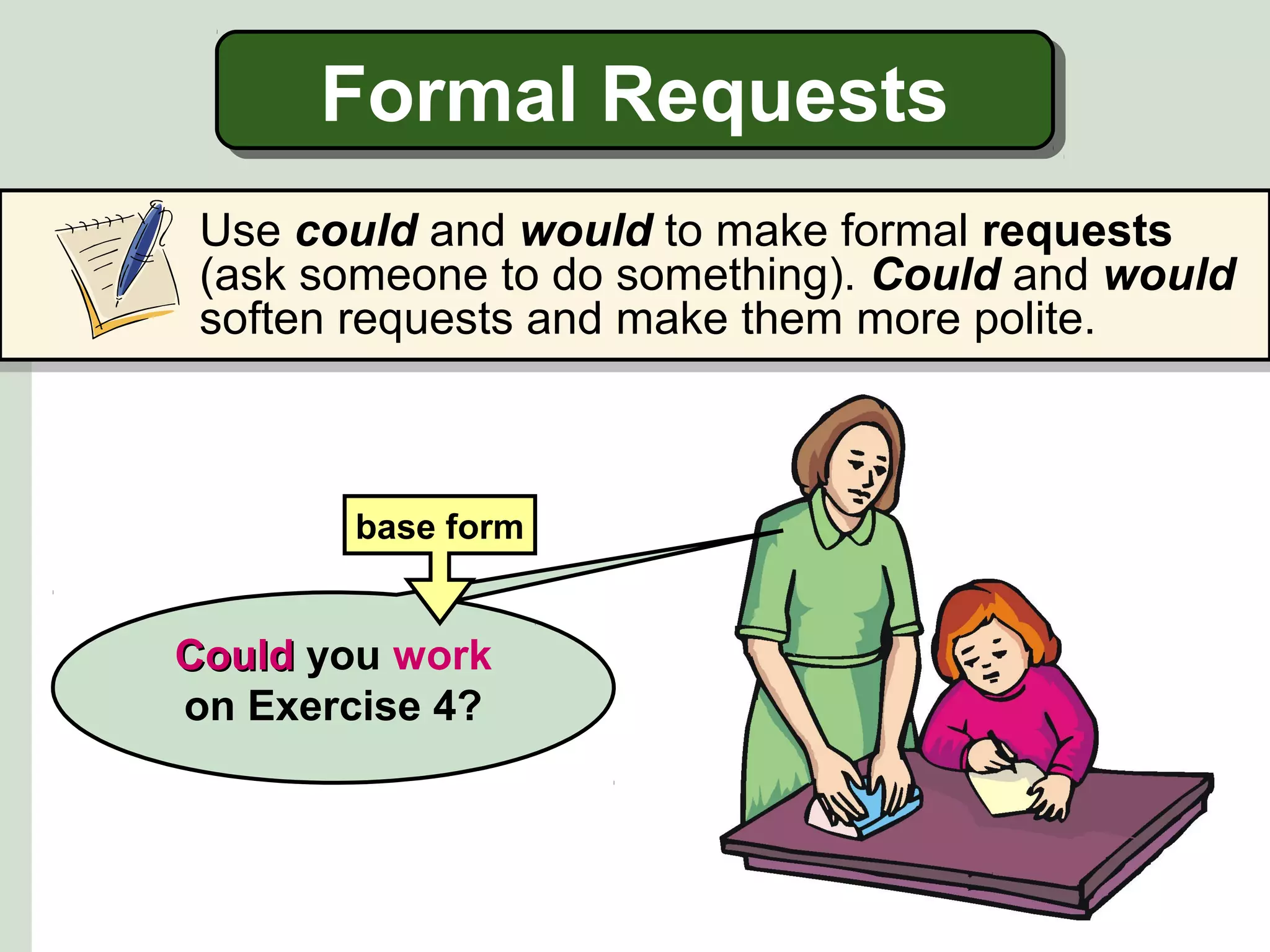
Formal Requests
Use could and would to make formal requests
(ask someone to do something). Could and would
soften requests and make them more polite.

base form

Could you work
on Exercise 4?
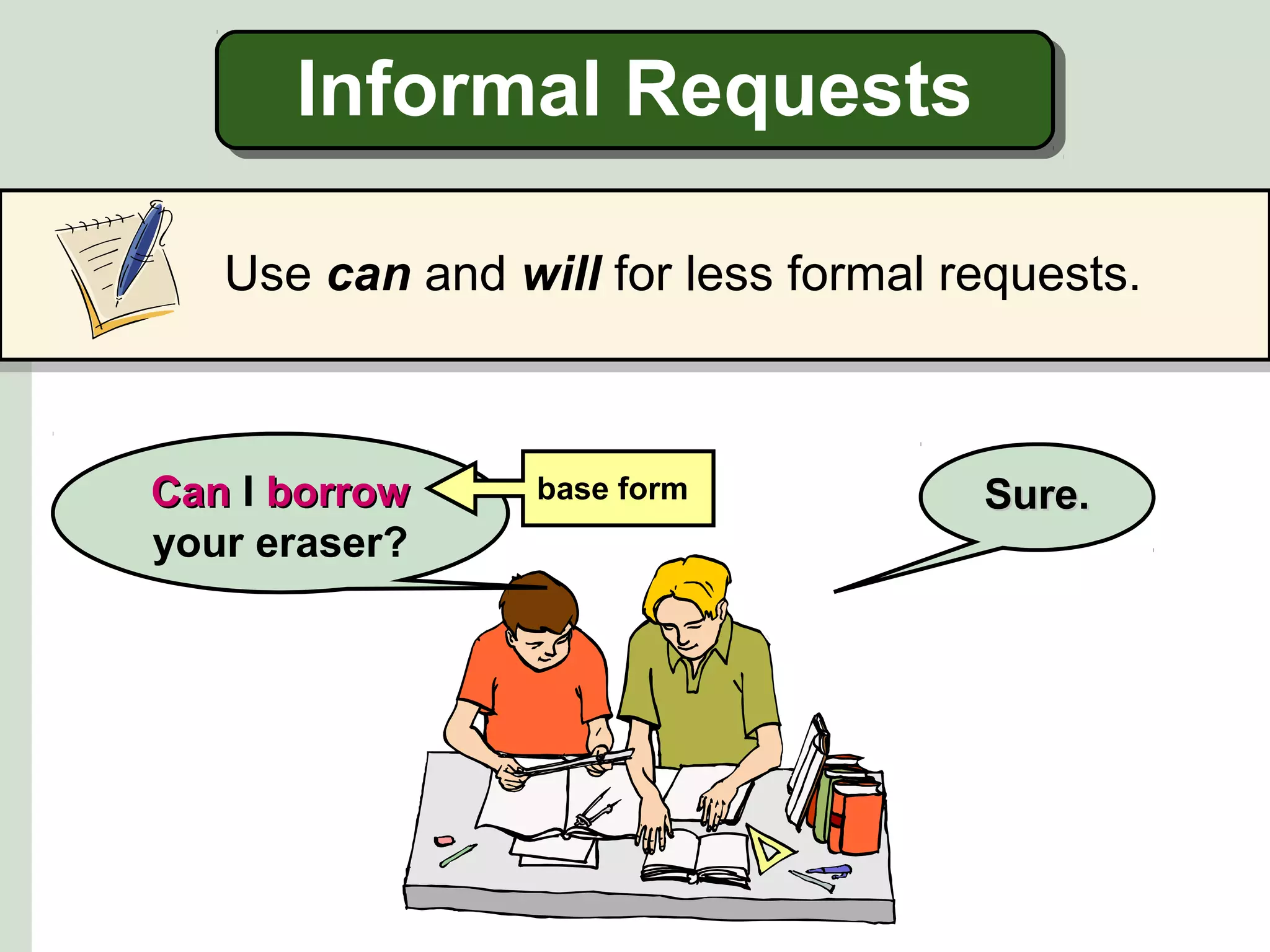
Informal Requests
Use can and will for less formal requests.

Can I borrow
your eraser?

base form

Sure.
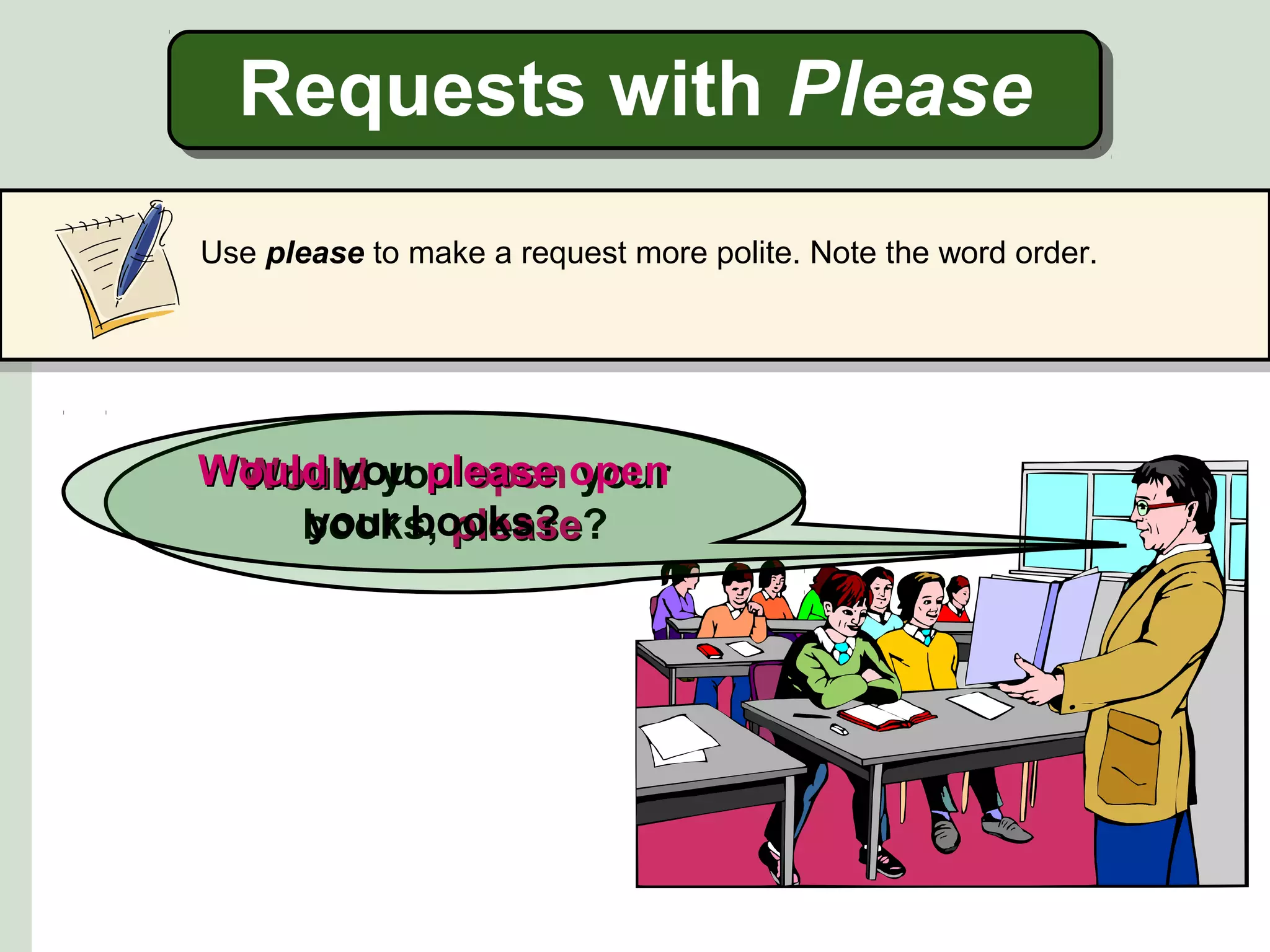
Requests with Please
Use please to make a request more polite. Note the word order.

Would you please open
Would you open your
your books?
books, please?
please
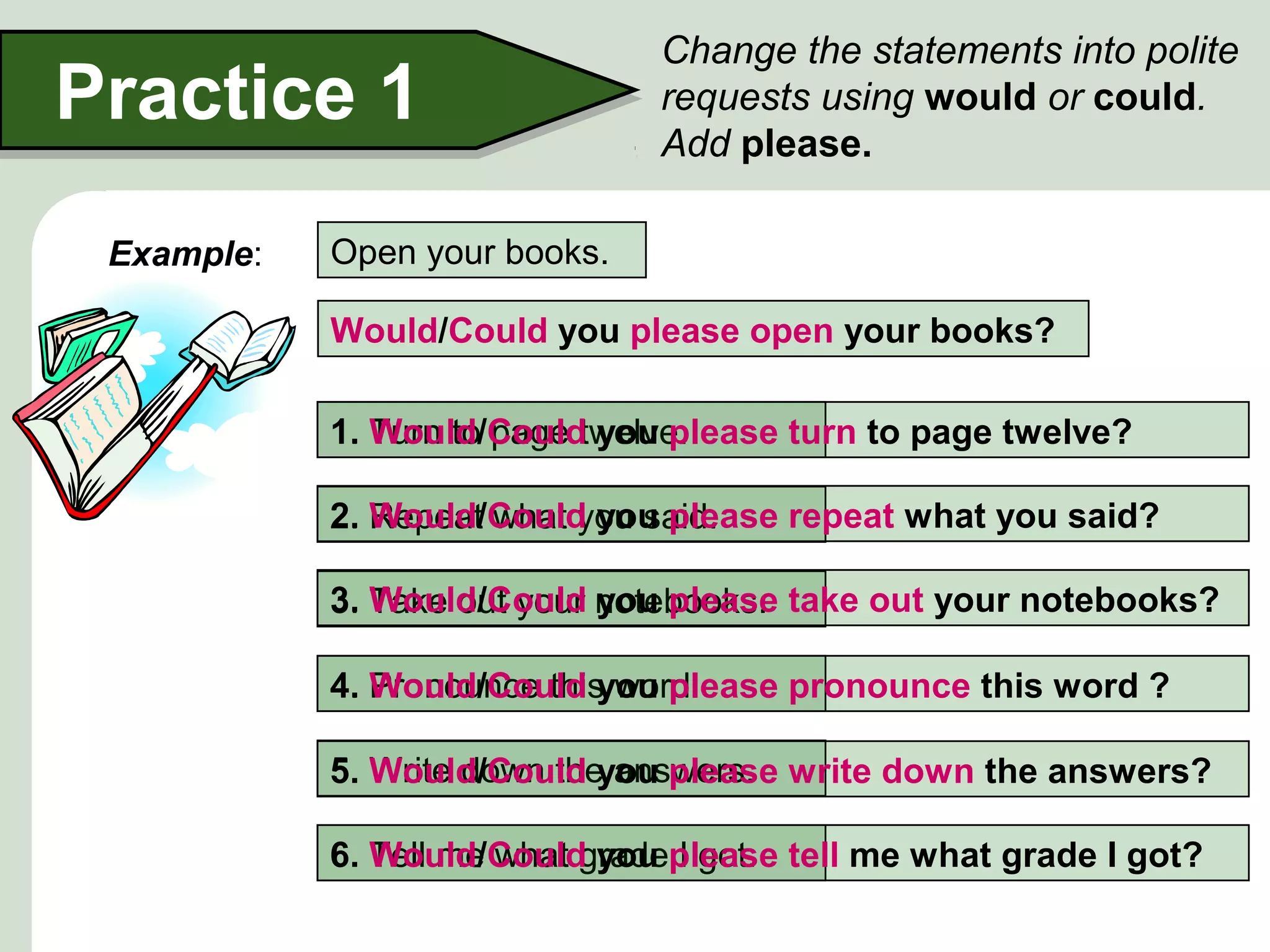
Practice 1
Example:

Change the statements into polite
requests using would or could.
Add please.

Open your books.
Would/Could you please open your books?
1. Turn to page twelve.
Would/Could you please turn to page twelve?
Would/Could you please repeat what you said?
2. Repeat what you said.
Would/Could you please
3. Take out your notebooks. take out your notebooks?
4. Pronounce this word.
Would/Could you please pronounce this word ?
5. Write down the answers. write down the answers?
Would/Could you please
6. Tell me what gradeplease tell me what grade I got?
Would/Could you I got.
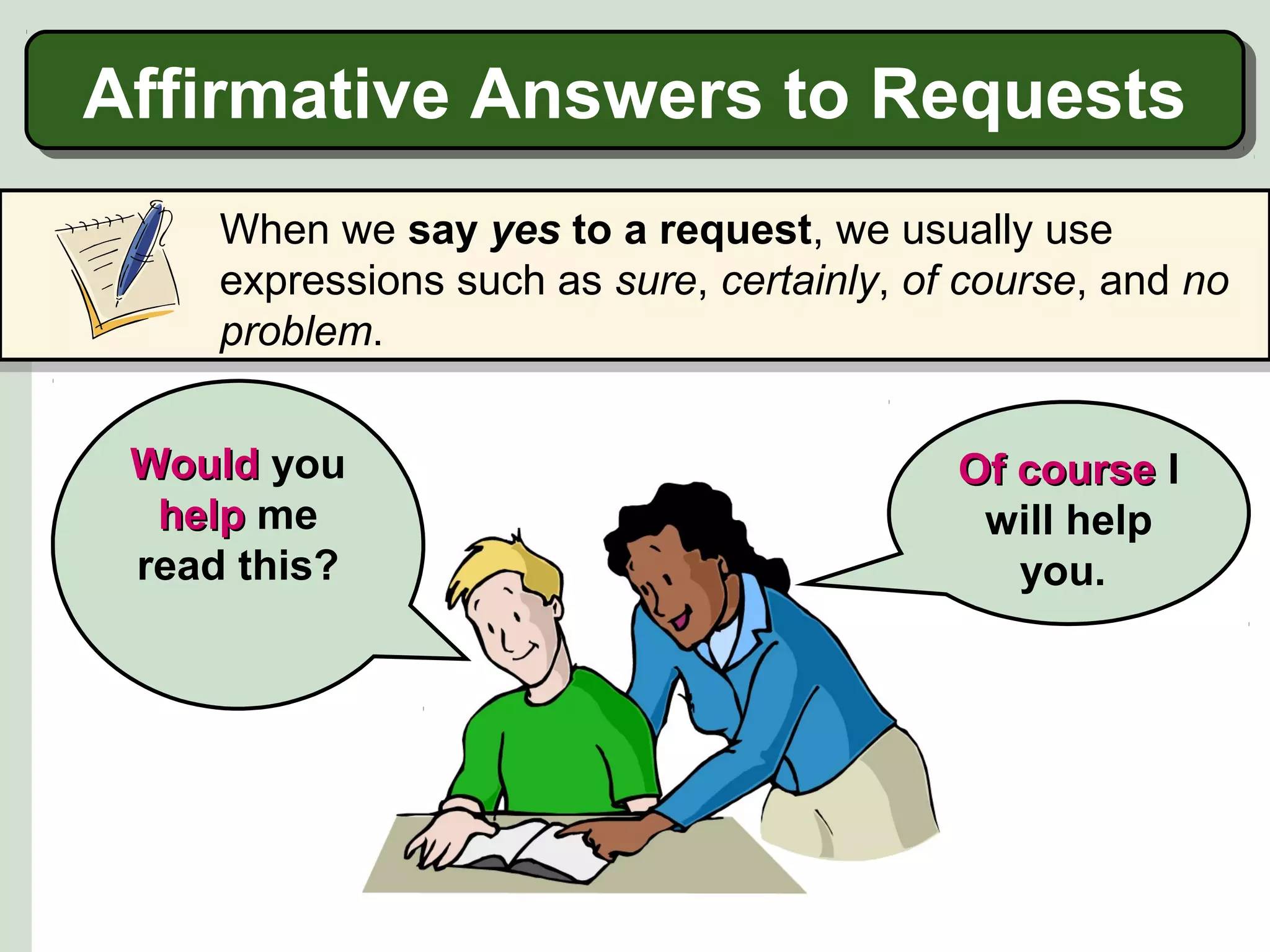
Affirmative Answers to Requests
When we say yes to a request, we usually use
expressions such as sure, certainly, of course, and no
problem.
Would you
help me
read this?

Of course I
will help
you.
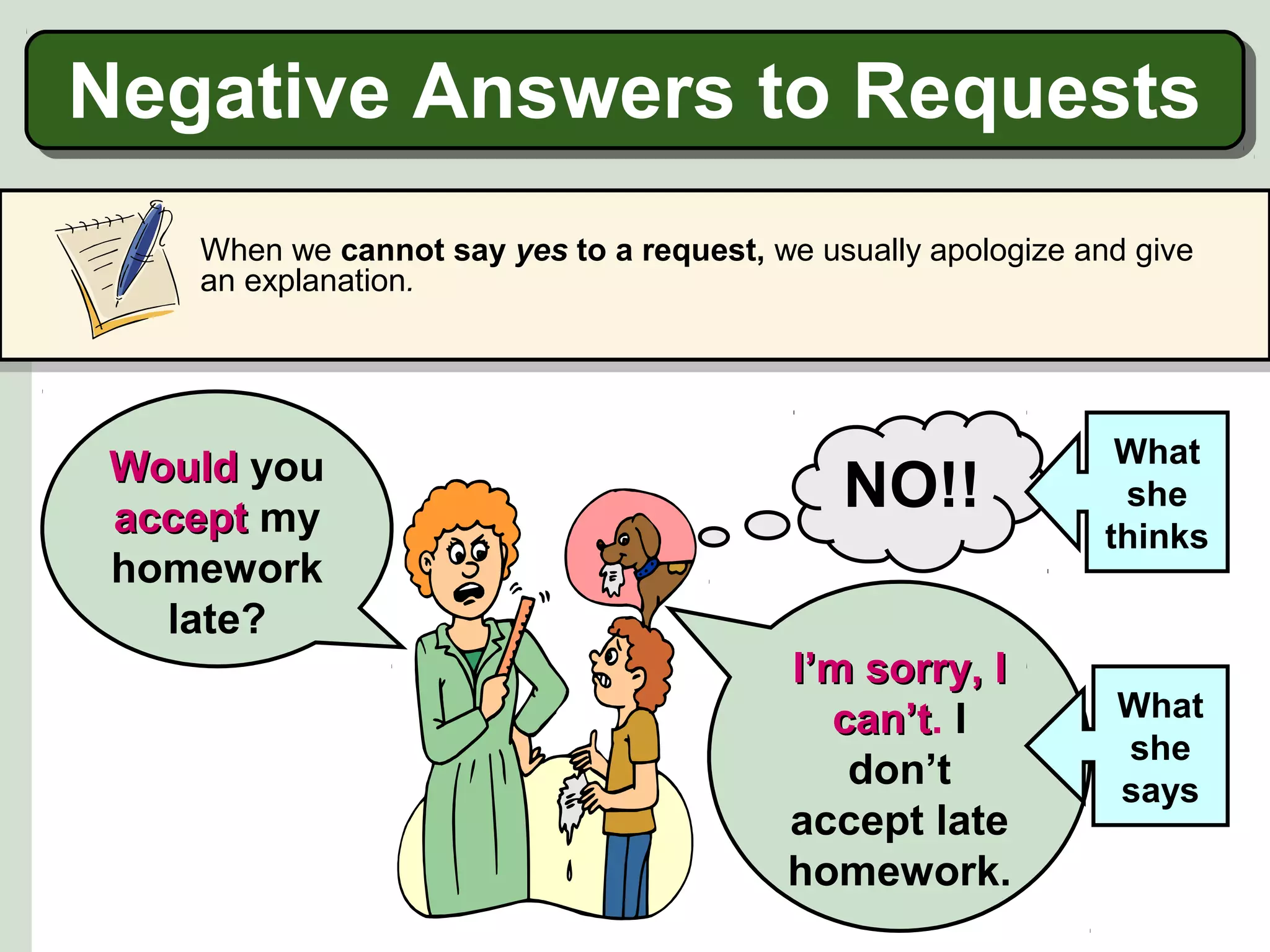
Negative Answers to Requests
When we cannot say yes to a request, we usually apologize and give
an explanation.

Would you
accept my
homework
late?

NO!!
I’m sorry, I
can’t. I
can’t
don’t
accept late
homework.

What
she
thinks

What
she
says
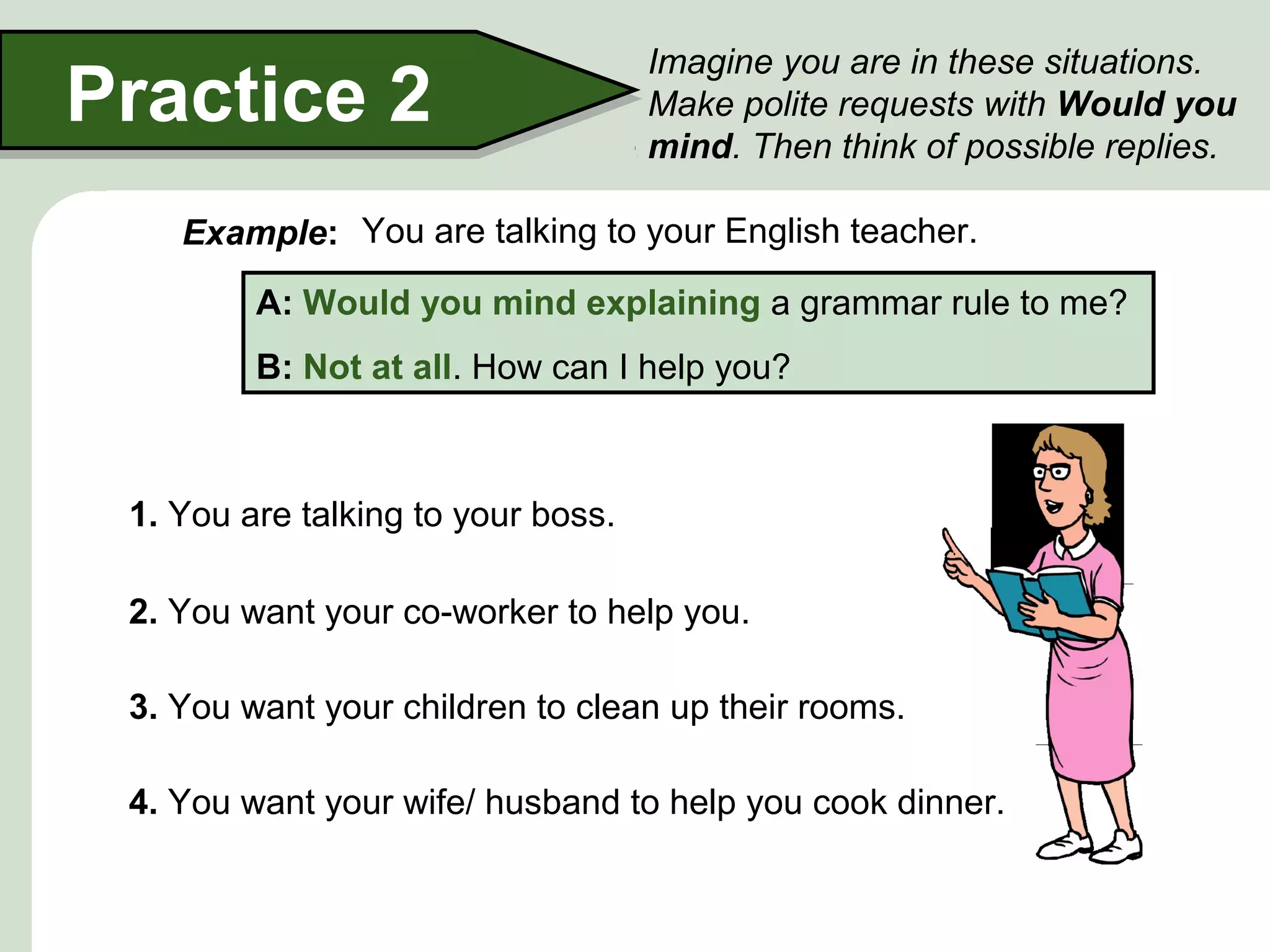
Practice 2

Imagine you are in these situations.
Make polite requests with Would you
mind. Then think of possible replies.

Example: You are talking to your English teacher.
A: Would you mind explaining a grammar rule to me?
B: Not at all. How can I help you?

1. You are talking to your boss.
2. You want your co-worker to help you.
3. You want your children to clean up their rooms.
4. You want your wife/ husband to help you cook dinner.
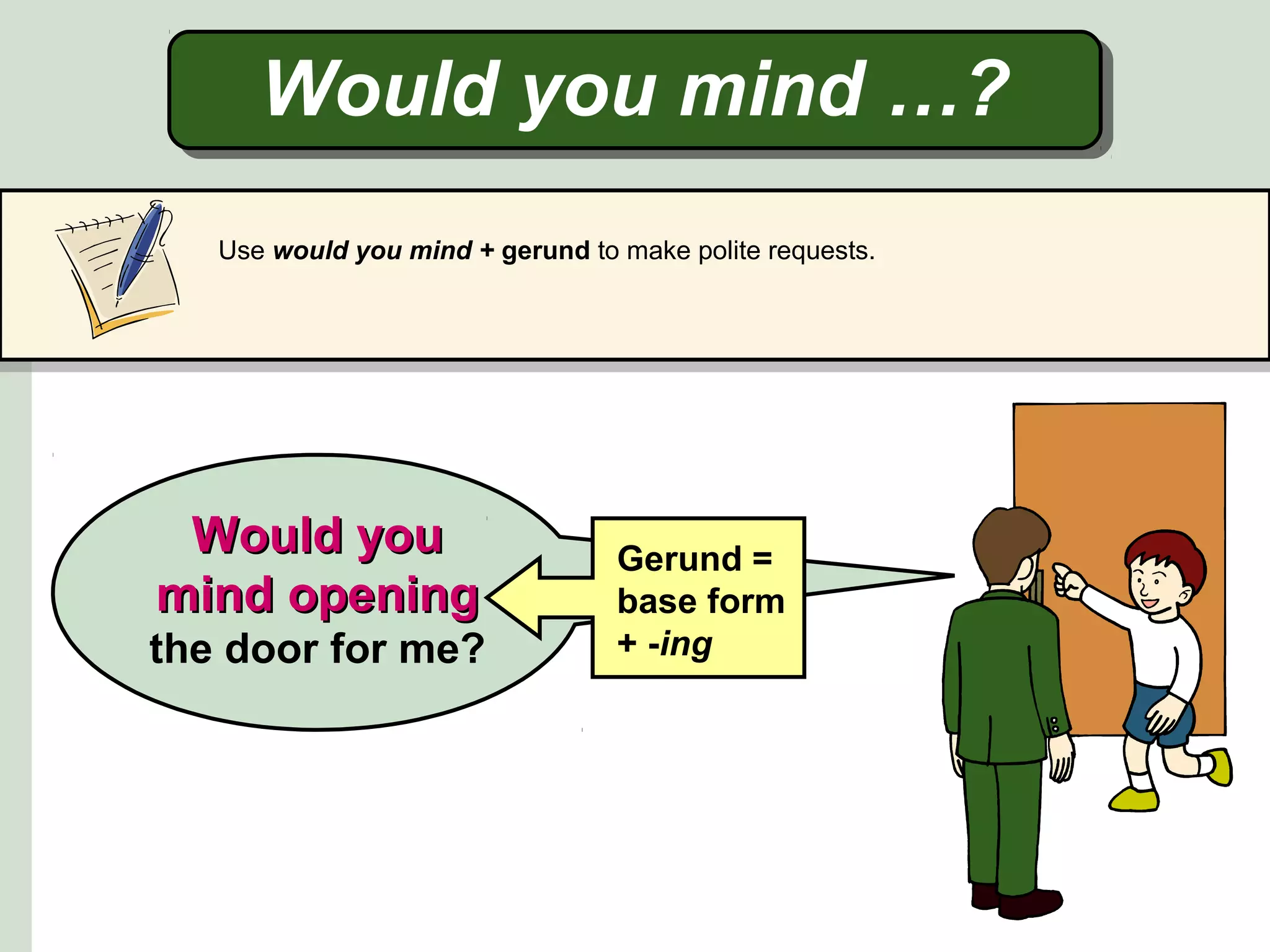
Would you mind …?
Use would you mind + gerund to make polite requests.

Would you
mind opening
the door for me?

Gerund =
base form
+ -ing
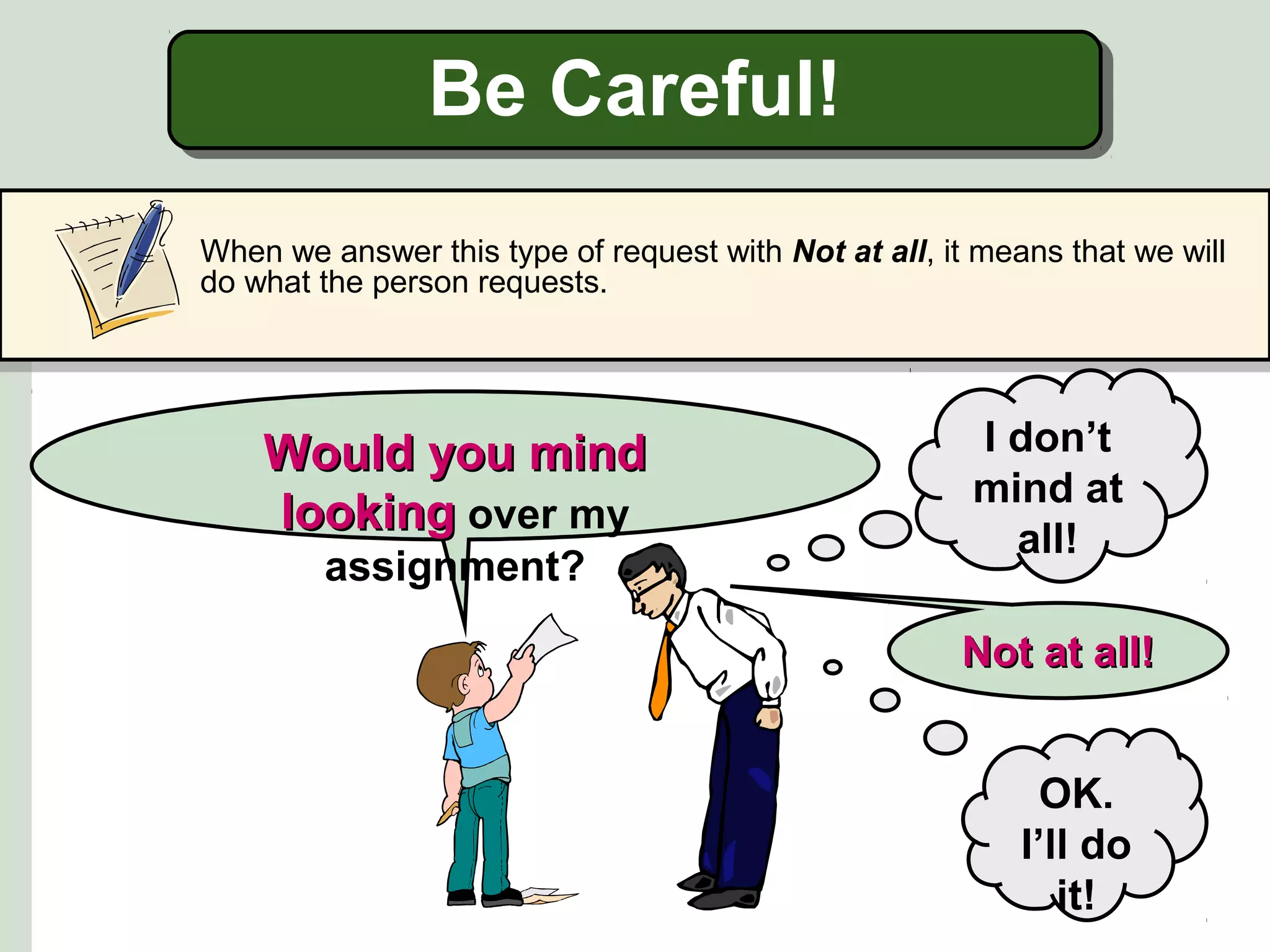
Be Careful!
When we answer this type of request with Not at all, it means that we will
do what the person requests.

Would you mind
looking over my
assignment?

I don’t
mind at
all!
Not at all!
OK.
I’ll do
it!
References
Copyright © 2006 Pearson Education and
its licensors. All rights reserved.

Modals 2

  • 1.
    5 Requests: Can, Could, Will,Would, Would you mind Requests in the Classroom Focus on Grammar 3 Part III, Unit 13 By Ruth Luman, Gabriele Steiner, and BJ Wells Copyright © 2006. Pearson Education, Inc. All rights reserved.
  • 2.
    Requests Would you please writeclearly? Could you work with a partner on Exercise 4?
  • 3.
    More Requests NO!! I’m sorry, Ican’t. I don’t accept late homework . Would you accept my homework late? My dog ate it.
  • 4.
    And More Requests Wouldyou mind looking over my assignment? I’m not sure it’s right. And, could I leave class ten minutes early today?
  • 5.
    And Even MoreRequests! Can I borrow your eraser for a moment? Will you let me copy your homework? Sure. NO!!!
  • 6.
    Formal Requests Use couldand would to make formal requests (ask someone to do something). Could and would soften requests and make them more polite. base form Could you work on Exercise 4?
  • 7.
    Informal Requests Use canand will for less formal requests. Can I borrow your eraser? base form Sure.
  • 8.
    Requests with Please Useplease to make a request more polite. Note the word order. Would you please open Would you open your your books? books, please? please
  • 9.
    Practice 1 Example: Change thestatements into polite requests using would or could. Add please. Open your books. Would/Could you please open your books? 1. Turn to page twelve. Would/Could you please turn to page twelve? Would/Could you please repeat what you said? 2. Repeat what you said. Would/Could you please 3. Take out your notebooks. take out your notebooks? 4. Pronounce this word. Would/Could you please pronounce this word ? 5. Write down the answers. write down the answers? Would/Could you please 6. Tell me what gradeplease tell me what grade I got? Would/Could you I got.
  • 10.
    Affirmative Answers toRequests Affirmative Answers to Requests When we say yes to a request, we usually use expressions such as sure, certainly, of course, and no problem. Would you help me read this? Of course I will help you.
  • 11.
    Negative Answers toRequests When we cannot say yes to a request, we usually apologize and give an explanation. Would you accept my homework late? NO!! I’m sorry, I can’t. I can’t don’t accept late homework. What she thinks What she says
  • 12.
    Practice 2 Imagine youare in these situations. Make polite requests with Would you mind. Then think of possible replies. Example: You are talking to your English teacher. A: Would you mind explaining a grammar rule to me? B: Not at all. How can I help you? 1. You are talking to your boss. 2. You want your co-worker to help you. 3. You want your children to clean up their rooms. 4. You want your wife/ husband to help you cook dinner.
  • 13.
    Would you mind…? Use would you mind + gerund to make polite requests. Would you mind opening the door for me? Gerund = base form + -ing
  • 14.
    Be Careful! When weanswer this type of request with Not at all, it means that we will do what the person requests. Would you mind looking over my assignment? I don’t mind at all! Not at all! OK. I’ll do it!
  • 15.
    References Copyright © 2006Pearson Education and its licensors. All rights reserved.