MODAL VERB
SHOULD
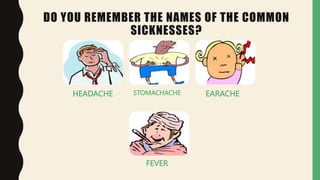
DO YOU REMEMBER THE NAMES OF THE COMMON
SICKNESSES?
HEADACHE STOMACHACHE EARACHE
FEVER
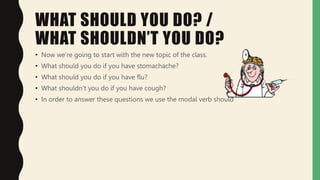
WHAT SHOULD YOU DO? /
WHAT SHOULDN’T YOU DO?
• Now we’re going to start with the new topic of the class.
• What should you do if you have stomachache?
• What should you do if you have flu?
• What shouldn’t you do if you have cough?
• In order to answer these questions we use the modal verb should
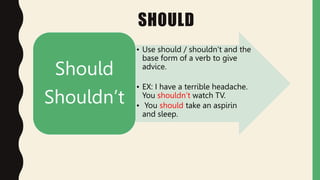
SHOULD
• Use should / shouldn’t and the
base form of a verb to give
advice.
• EX: I have a terrible headache.
You shouldn’t watch TV.
• You should take an aspirin
and sleep.
Should
Shouldn’t
WELL, LET’S PRACTICE THE MODAL
VERB SHOULD…
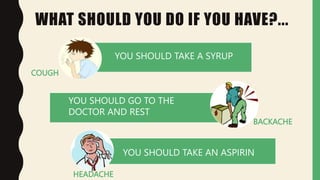
WHAT SHOULD YOU DO IF YOU HAVE?...
HEADACHE
BACKACHE
COUGH
YOU SHOULD TAKE A SYRUP
YOU SHOULD GO TO THE
DOCTOR AND REST
YOU SHOULD TAKE AN ASPIRIN
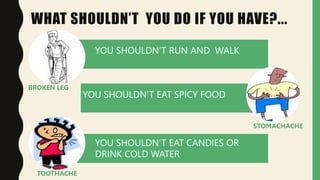
WHAT SHOULDN’T YOU DO IF YOU HAVE?...
YOU SHOULDN’T RUN AND WALK
YOU SHOULDN’T EAT SPICY FOOD
YOU SHOULDN’T EAT CANDIES OR
DRINK COLD WATER
BROKEN LEG
STOMACHACHE
TOOTHACHE
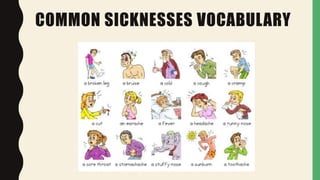
COMMON SICKNESSES VOCABULARY
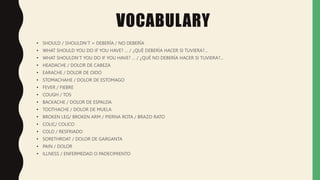
• SHOULD / SHOULDN’T = DEBERÍA / NO DEBERÍA
• WHAT SHOULD YOU DO IF YOU HAVE? … / ¿QUÉ DEBERÍA HACER SI TUVIERA?...
• WHAT SHOULDN’T YOU DO IF YOU HAVE? … / ¿QUÉ NO DEBERÍA HACER SI TUVIERA?...
• HEADACHE / DOLOR DE CABEZA
• EARACHE / DOLOR DE OIDO
• STOMACHAHE / DOLOR DE ESTOMAGO
• FEVER / FIEBRE
• COUGH / TOS
• BACKACHE / DOLOR DE ESPALDA
• TOOTHACHE / DOLOR DE MUELA
• BROKEN LEG/ BROKEN ARM / PIERNA ROTA / BRAZO RATO
• COLIC/ COLICO
• COLD / RESFRIADO
• SORETHROAT / DOLOR DE GARGANTA
• PAIN / DOLOR
• ILLNESS / ENFERMEDAD O PADECIMIENTO
VOCABULARY
TAREA
(DEBERÁS CONSULTAR EL VOCABULARIO)
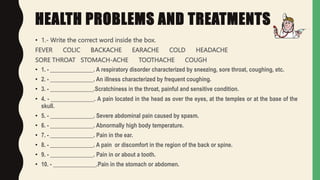
HEALTH PROBLEMS AND TREATMENTS
• 1.- Write the correct word inside the box.
FEVER COLIC BACKACHE EARACHE COLD HEADACHE
SORE THROAT STOMACH-ACHE TOOTHACHE COUGH
• 1. - _______________. A respiratory disorder characterized by sneezing, sore throat, coughing, etc.
• 2. - _______________. An illness characterized by frequent coughing.
• 3. - _______________.Scratchiness in the throat, painful and sensitive condition.
• 4. - _______________. A pain located in the head as over the eyes, at the temples or at the base of the
skull.
• 5. - _______________. Severe abdominal pain caused by spasm.
• 6. - _______________. Abnormally high body temperature.
• 7. - _______________. Pain in the ear.
• 8. - _______________. A pain or discomfort in the region of the back or spine.
• 9. - _______________. Pain in or about a tooth.
• 10. - _______________.Pain in the stomach or abdomen.
TAREA DEL LIBRO
• Libro 2: página 45: se debe de escribir sobre la línea lo que cada persona debería hacer
para cada caso planteado, por ejemplo:
– 1.My garden looks terrible! You should plant some flowers.
• Recuerden que depende del sujeto en cada caso ustedes deben usar los pronombres
correspondientes con el verbo should, por ejemplo:
– 2. Henry has cough. He should drink honey with lemon. (en la respuesta usamos HE porque
nos referimos a Él)
– 3. My brother and my cousin go to the beach. They should put sunscreen. (usamos They
porque nos referimos a 2 personas ELLOS)
TAREA DEL LIBRO
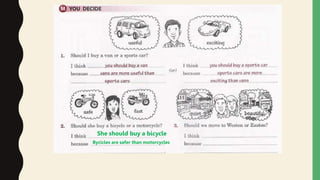
• Libro 2: pagina 46: de las dos imágenes que se les presentan deberán fijarse en los
ejemplo para responder los demás ejercicios.
• I think you should buy a van because vans are more useful than sports car
• Primero deben usar should y después usar comparativos, como en el ejemplo.
• En la siguiente diapositiva se pondrá un ejemplo gráfico
She should buy a bicycle
Bycicles are safer than motorcycles
ENVIAR POR INBOX LAS FOTOS DE LAS
ACTIVIDADES REALIZADAS EL DÍA JUEVES
21 DE MAYO

Modal verb should with common sickness.pptx

  • 1.
  • 2.
    DO YOU REMEMBERTHE NAMES OF THE COMMON SICKNESSES? HEADACHE STOMACHACHE EARACHE FEVER
  • 3.
    WHAT SHOULD YOUDO? / WHAT SHOULDN’T YOU DO? • Now we’re going to start with the new topic of the class. • What should you do if you have stomachache? • What should you do if you have flu? • What shouldn’t you do if you have cough? • In order to answer these questions we use the modal verb should
  • 4.
    SHOULD • Use should/ shouldn’t and the base form of a verb to give advice. • EX: I have a terrible headache. You shouldn’t watch TV. • You should take an aspirin and sleep. Should Shouldn’t
  • 5.
    WELL, LET’S PRACTICETHE MODAL VERB SHOULD…
  • 6.
    WHAT SHOULD YOUDO IF YOU HAVE?... HEADACHE BACKACHE COUGH YOU SHOULD TAKE A SYRUP YOU SHOULD GO TO THE DOCTOR AND REST YOU SHOULD TAKE AN ASPIRIN
  • 7.
    WHAT SHOULDN’T YOUDO IF YOU HAVE?... YOU SHOULDN’T RUN AND WALK YOU SHOULDN’T EAT SPICY FOOD YOU SHOULDN’T EAT CANDIES OR DRINK COLD WATER BROKEN LEG STOMACHACHE TOOTHACHE
  • 8.
  • 9.
    • SHOULD /SHOULDN’T = DEBERÍA / NO DEBERÍA • WHAT SHOULD YOU DO IF YOU HAVE? … / ¿QUÉ DEBERÍA HACER SI TUVIERA?... • WHAT SHOULDN’T YOU DO IF YOU HAVE? … / ¿QUÉ NO DEBERÍA HACER SI TUVIERA?... • HEADACHE / DOLOR DE CABEZA • EARACHE / DOLOR DE OIDO • STOMACHAHE / DOLOR DE ESTOMAGO • FEVER / FIEBRE • COUGH / TOS • BACKACHE / DOLOR DE ESPALDA • TOOTHACHE / DOLOR DE MUELA • BROKEN LEG/ BROKEN ARM / PIERNA ROTA / BRAZO RATO • COLIC/ COLICO • COLD / RESFRIADO • SORETHROAT / DOLOR DE GARGANTA • PAIN / DOLOR • ILLNESS / ENFERMEDAD O PADECIMIENTO VOCABULARY
  • 10.
  • 11.
    HEALTH PROBLEMS ANDTREATMENTS • 1.- Write the correct word inside the box. FEVER COLIC BACKACHE EARACHE COLD HEADACHE SORE THROAT STOMACH-ACHE TOOTHACHE COUGH • 1. - _______________. A respiratory disorder characterized by sneezing, sore throat, coughing, etc. • 2. - _______________. An illness characterized by frequent coughing. • 3. - _______________.Scratchiness in the throat, painful and sensitive condition. • 4. - _______________. A pain located in the head as over the eyes, at the temples or at the base of the skull. • 5. - _______________. Severe abdominal pain caused by spasm. • 6. - _______________. Abnormally high body temperature. • 7. - _______________. Pain in the ear. • 8. - _______________. A pain or discomfort in the region of the back or spine. • 9. - _______________. Pain in or about a tooth. • 10. - _______________.Pain in the stomach or abdomen.
  • 12.
    TAREA DEL LIBRO •Libro 2: página 45: se debe de escribir sobre la línea lo que cada persona debería hacer para cada caso planteado, por ejemplo: – 1.My garden looks terrible! You should plant some flowers. • Recuerden que depende del sujeto en cada caso ustedes deben usar los pronombres correspondientes con el verbo should, por ejemplo: – 2. Henry has cough. He should drink honey with lemon. (en la respuesta usamos HE porque nos referimos a Él) – 3. My brother and my cousin go to the beach. They should put sunscreen. (usamos They porque nos referimos a 2 personas ELLOS)
  • 13.
    TAREA DEL LIBRO •Libro 2: pagina 46: de las dos imágenes que se les presentan deberán fijarse en los ejemplo para responder los demás ejercicios. • I think you should buy a van because vans are more useful than sports car • Primero deben usar should y después usar comparativos, como en el ejemplo. • En la siguiente diapositiva se pondrá un ejemplo gráfico
  • 14.
    She should buya bicycle Bycicles are safer than motorcycles
  • 15.
    ENVIAR POR INBOXLAS FOTOS DE LAS ACTIVIDADES REALIZADAS EL DÍA JUEVES 21 DE MAYO