Mobile cecum syndrome
Introduction
• Embryological anatomic variation.
• Found in 10% of the population.
• More common in females
• 2% present as acute intestinal obstruction.
• Floppy cecum/mobile cecum syndrome/
Recurrent cecocolic torsion.
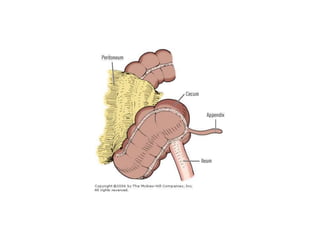
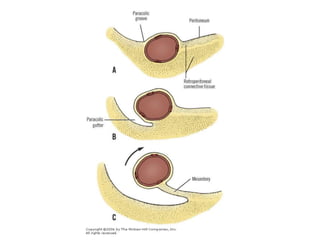
Embyrology
• Normal – Cecocolic fixation by mesocolon in
right paracolic gutter by 4 months of age.
• Improper cecal fixation to lateral wall.
• variable length of mesocolon leaves cecum
and ascending colon redundant.
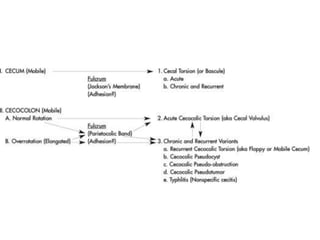
• Funicular jackson membrane acts as a fulcrum
for twisting.
Clinical features
• Often present with features of IBS.
• Right lower quadrant pain.
• Colicky pain
• Constipation
• Diarrhea.
• Abdominal distension.
• Dyspareunia
Treatment
• Caecopexy with lateral peritoneal flap
• Lateral cecocolopexy.
• Cecocolopexy with appendicectomy
• Resection of jackson membrane and
parietocolic bands that serve as fulcrum for
twisting of the cecum.

Mobile cecum syndrome

  • 1.
  • 2.
    Introduction • Embryological anatomicvariation. • Found in 10% of the population. • More common in females • 2% present as acute intestinal obstruction. • Floppy cecum/mobile cecum syndrome/ Recurrent cecocolic torsion.
  • 3.
    Embyrology • Normal –Cecocolic fixation by mesocolon in right paracolic gutter by 4 months of age. • Improper cecal fixation to lateral wall. • variable length of mesocolon leaves cecum and ascending colon redundant. • Funicular jackson membrane acts as a fulcrum for twisting.
  • 7.
    Clinical features • Oftenpresent with features of IBS. • Right lower quadrant pain. • Colicky pain • Constipation • Diarrhea. • Abdominal distension. • Dyspareunia
  • 9.
    Treatment • Caecopexy withlateral peritoneal flap • Lateral cecocolopexy. • Cecocolopexy with appendicectomy • Resection of jackson membrane and parietocolic bands that serve as fulcrum for twisting of the cecum.