


TOPIC:
Branding In Different Sectors:
Customer, Industrial,
Retail &Services
Presented by :
Shivi Mittal
Mba (a)
Branding in customers:
Building brand requires creating a
brand that consumers are aware of and
with which consumers are strong,
favorable and unique associations
depends upon.
For instance (1):
In beauty products women's prefer
Lakme,Oriflame& elee18 brand
product
mans in suits prefer “Raymond”
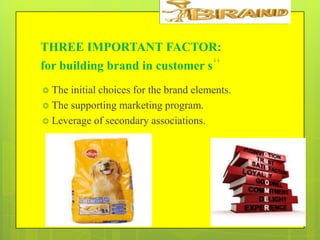
THREE IMPORTANT FACTOR:
for building brand in customer s“
 The

initial choices for the brand elements.
 The supporting marketing program.
 Leverage of secondary associations.
1. Choosing brand elements:
•
•
•
•

Memorability - recognition, recall
Meaningfulness - persuasive
Likability - fun, visually pleasing
Transferability - across products,
borders
• Adaptability - flexible, updatable
• Protectability - legal, competitive
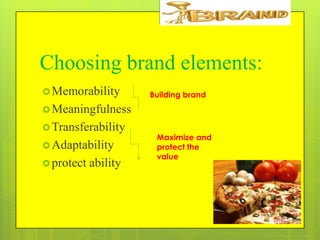
Choosing brand elements:
 Memorability

Building brand

 Meaningfulness
 Transferability
 Adaptability
 protect

ability

Maximize and
protect the
value
2.Integrating the brand into supporting
marketing program:
 Product strategy
 Price strategy
 Channel strategy communicating strategies
3.Leveraging secondary
association:
 There

are various ways to create brand
equity. Brand elements offer many
alternatives style, logo unique selling
proposition etc. Then there are marketing
strategies aimed at product, price and
distribution network. Here focus is on
product and its attributes, correct and
convincing price structure, and finally
choice of product reaches consumer.
Branding in
Industrial
Sector
BRANDING IN
INDUSTRIAL SECTOR

B2B branding has its specific features. First
of all, these features are related to the fact that
the commercial brand is working with the
professional audience. Requirements for the
professional audience are tougher, so the
emphasis in creating brand shifts from the
emotional angle to rational one. Requirements
for the B2B brand are the same as the
requirements for professionals - being
reliable, predictable and guaranteeing quality.
For
example:

Mechan designs and manufactures mechanical
handling equipment for the rail industry, but by
2005 its image was starting to look dated. At the
same time the company was faced with a static
UK market and growing competition from
abroad, so it needed stronger communications to
create impact with potential business customers.
Working with a designer the company
researched what the brand actually stood for (the
big idea) and then a branding consultancy
created a visual identity that is strong, clean and
simple and works across all the company’s
communications, including products, website,
trade stands and literature
Different Type Of Industrial Goods
 Raw material &Manufacture materials and
parts
 Long lasting capital installations &equipments
that facilitate developing or managing finished
products
 Short lasting supplies and services
 Regardless of the particular type of industrial
goods sold
Some branding guidelines are as
follows:
Regardless of particular type:
1. Adopt a corporate branding strategy & well –
defined brand hierarchy .
2. Link non-product related associations
3. Employ full range of marketing communication
option(personal selling,brouchers,sponserships)
4. Segment customers carefully
(it is important to achieve pop and of pod)
High tech products:
These products change so rapidly over time due to
tehnological innovations and R& D
1. Leverage secondary associations of quality
2. Link non –product related associations(brand
peersonality)
3. Carefully design and update brand portfolios
a) brand extension are a common hightech
startegy.
Branding
in service
sector
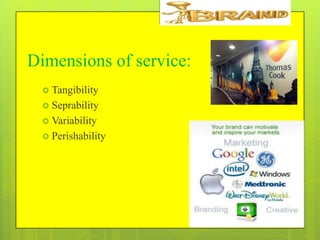
Dimensions of service:
 Tangibility
 Seprability
 Variability
 Perishability
Service Companies:
Whilst most companies and organizations are providing a
service of one type or another, for some businesses customer
service is the dominant part of the offer. For these companies
particular attention needs to be paid to how the brand (the
big idea and all its components) are reflected in the way the
service is provided and the way staff interact with
customers.
Service sector:
First Direct: service
First Direct was the first company to bring a 24-hour
banking service to the market and its level of service
was a key message in promoting the bank to potential
customers.
To ensure the delivery of high quality service, First
Direct recruits people with customer service skills
rather than those who are already in the banking
industry. This ensures that the company‟s service
delivery matches is brand „promise‟.
RECOMMENDATIONS FOR IMPROVING
SERVICE QUALITY:
Listening
Reliability
Basic services
Holistic view
Recovery
Quick and personal response
Surprises
Fairness
Teamwork
Employee research
Seervice leadership
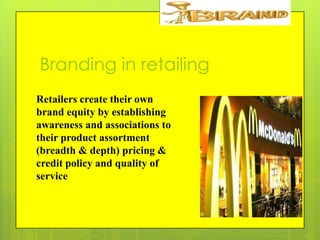
Branding in retailing
Retailers create their own
brand equity by establishing
awareness and associations to
their product assortment
(breadth & depth) pricing &
credit policy and quality of
service
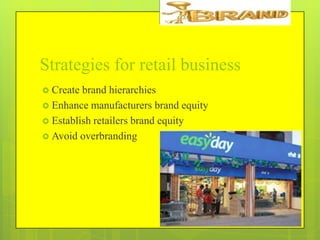
Strategies for retail business
 Create

brand hierarchies
 Enhance manufacturers brand equity
 Establish retailers brand equity
 Avoid overbranding
1

Mithoo

  • 1.
    TOPIC: Branding In DifferentSectors: Customer, Industrial, Retail &Services Presented by : Shivi Mittal Mba (a)
  • 3.
    Branding in customers: Buildingbrand requires creating a brand that consumers are aware of and with which consumers are strong, favorable and unique associations depends upon. For instance (1): In beauty products women's prefer Lakme,Oriflame& elee18 brand product mans in suits prefer “Raymond”
  • 4.
    THREE IMPORTANT FACTOR: forbuilding brand in customer s“  The initial choices for the brand elements.  The supporting marketing program.  Leverage of secondary associations.
  • 6.
    1. Choosing brandelements: • • • • Memorability - recognition, recall Meaningfulness - persuasive Likability - fun, visually pleasing Transferability - across products, borders • Adaptability - flexible, updatable • Protectability - legal, competitive
  • 7.
    Choosing brand elements: Memorability Building brand  Meaningfulness  Transferability  Adaptability  protect ability Maximize and protect the value
  • 8.
    2.Integrating the brandinto supporting marketing program:  Product strategy  Price strategy  Channel strategy communicating strategies
  • 9.
    3.Leveraging secondary association:  There arevarious ways to create brand equity. Brand elements offer many alternatives style, logo unique selling proposition etc. Then there are marketing strategies aimed at product, price and distribution network. Here focus is on product and its attributes, correct and convincing price structure, and finally choice of product reaches consumer.
  • 10.
  • 11.
    BRANDING IN INDUSTRIAL SECTOR B2Bbranding has its specific features. First of all, these features are related to the fact that the commercial brand is working with the professional audience. Requirements for the professional audience are tougher, so the emphasis in creating brand shifts from the emotional angle to rational one. Requirements for the B2B brand are the same as the requirements for professionals - being reliable, predictable and guaranteeing quality.
  • 12.
    For example: Mechan designs andmanufactures mechanical handling equipment for the rail industry, but by 2005 its image was starting to look dated. At the same time the company was faced with a static UK market and growing competition from abroad, so it needed stronger communications to create impact with potential business customers. Working with a designer the company researched what the brand actually stood for (the big idea) and then a branding consultancy created a visual identity that is strong, clean and simple and works across all the company’s communications, including products, website, trade stands and literature
  • 13.
    Different Type OfIndustrial Goods  Raw material &Manufacture materials and parts  Long lasting capital installations &equipments that facilitate developing or managing finished products  Short lasting supplies and services  Regardless of the particular type of industrial goods sold
  • 14.
    Some branding guidelinesare as follows: Regardless of particular type: 1. Adopt a corporate branding strategy & well – defined brand hierarchy . 2. Link non-product related associations 3. Employ full range of marketing communication option(personal selling,brouchers,sponserships) 4. Segment customers carefully (it is important to achieve pop and of pod)
  • 15.
    High tech products: Theseproducts change so rapidly over time due to tehnological innovations and R& D 1. Leverage secondary associations of quality 2. Link non –product related associations(brand peersonality) 3. Carefully design and update brand portfolios a) brand extension are a common hightech startegy.
  • 16.
  • 17.
    Dimensions of service: Tangibility  Seprability  Variability  Perishability
  • 18.
    Service Companies: Whilst mostcompanies and organizations are providing a service of one type or another, for some businesses customer service is the dominant part of the offer. For these companies particular attention needs to be paid to how the brand (the big idea and all its components) are reflected in the way the service is provided and the way staff interact with customers.
  • 19.
    Service sector: First Direct:service First Direct was the first company to bring a 24-hour banking service to the market and its level of service was a key message in promoting the bank to potential customers. To ensure the delivery of high quality service, First Direct recruits people with customer service skills rather than those who are already in the banking industry. This ensures that the company‟s service delivery matches is brand „promise‟.
  • 20.
    RECOMMENDATIONS FOR IMPROVING SERVICEQUALITY: Listening Reliability Basic services Holistic view Recovery Quick and personal response Surprises Fairness Teamwork Employee research Seervice leadership
  • 21.
    Branding in retailing Retailerscreate their own brand equity by establishing awareness and associations to their product assortment (breadth & depth) pricing & credit policy and quality of service
  • 22.
    Strategies for retailbusiness  Create brand hierarchies  Enhance manufacturers brand equity  Establish retailers brand equity  Avoid overbranding
  • 23.