Mining and Nuclear
Disaster
School of Environment and Earth Sciences
Presented by-
Anupama S Kate
M.Tech 1st year
Content
• Mining disaster
• Accidents
• Causes
• Safety
• Management
• Nuclear disaster
• Causes
• Effect
• Safety
• Management
• Referances
Mining disaster:
• an accident that occurs during the process of mining minerals.
• Thousands of miners die from mining accidents each year,
especially from
1. underground coal mining
2. hard rock mining
Common Accidents and Injuries in the Mining
Industry
• Methane and Coal Dust.
• Amidst the coal layers lies methane
• Highly explosive gas which can trigger explosions.
• Blasting Accidents.
• Blasting rocks with explosives
Its improper use may lead to
• workers getting injured or worse
• have fatal accidents.
• Respiratory Diseases.
Causes
• leaks of poisonous gases such as hydrogen sulfide
• explosive natural gases, especially firedamp or methane
• dust explosions
• collapsing of mine stopes
• mining-induced seismicity, flooding, or general mechanical
errors from improperly used or malfunctioning mining equipment
(such as safety lamps or electrical equipment).
• Use of improper explosives under ground can also cause methane
and coal dust explosions.
Classification of Mine Accidents[1]
• ELECTRICAL
• FALL OF FACE, RIB, SIDE OR HIGHWALL
• FIRE
• FALL OF ROOF OR BACK -HANDLING MATERIAL - (Lifting, pulling,
pushing, shoveling material.
• HOISTINGIGNITION OR EXPLOSION OF GAS OR DUST
• IGNITION OR EXPLOSION OF GAS OR DUST
• EXPLODING VESSELS UNDER PRESSURE –
• FALLING, ROLLING, OR SLIDING ROCK OR MATERIAL OF ANY KIND
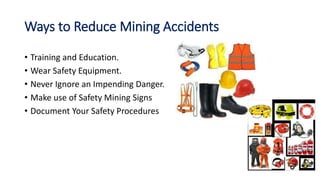
Ways to Reduce Mining Accidents
• Training and Education.
• Wear Safety Equipment.
• Never Ignore an Impending Danger.
• Make use of Safety Mining Signs
• Document Your Safety Procedures
Mining disaster managemnt
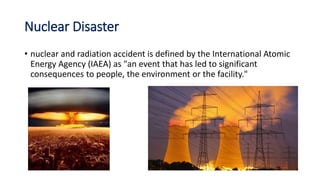
Nuclear Disaster
• nuclear and radiation accident is defined by the International Atomic
Energy Agency (IAEA) as "an event that has led to significant
consequences to people, the environment or the facility."
Causes
• 1. Design fault in RBMK reactor
• 2. A violation, of procedures
• 3. Breakdown of communication
• 4. Lack of a ‘Safety Culture’ in the power plant
Consequences of the Accident:
• Environmental consequences
• Health effects
• Psychological consequences
• Economic, political and social consequence
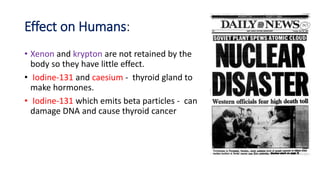
Effect on Humans:
• Xenon and krypton are not retained by the
body so they have little effect.
• Iodine-131 and caesium - thyroid gland to
make hormones.
• Iodine-131 which emits beta particles - can
damage DNA and cause thyroid cancer
The emergency response plans
The emergency response plans define two “emergency planning
zones.”
1. One zone covers an area within a 10-mile radius of the plant, where
it is possible that people could be harmed by direct radiation
exposure.
2. The second zone covers a broader area, usually up to a 50-mile
radius from the plant, where radioactive materials could
contaminate water supplies, food crops, and livestock
Situation for Nuclear safety :
As of 2011, nuclear safety considerations occur in a number of
situations, including:
1. Nuclear fission power used in nuclear power stations, and
nuclear submarines and ships.
2. Nuclear weapons
3. Fissionable fuels such as uranium and plutonium and their
extraction, storage and use
4. Radioactive materials used for medical, diagnostic, batteries
for some space projects, and research purposes
5. Nuclear waste, the radioactive waste residue of nuclear
materials
6. Nuclear fusion power, a technology under long-term
development
7. Unplanned entry of nuclear materials into the biosphere
and food chain (living plants, animals and humans) if
breathed or ingested.
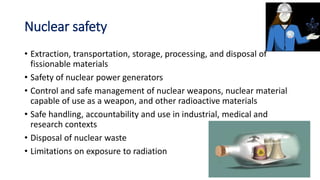
Nuclear safety
• Extraction, transportation, storage, processing, and disposal of
fissionable materials
• Safety of nuclear power generators
• Control and safe management of nuclear weapons, nuclear material
capable of use as a weapon, and other radioactive materials
• Safe handling, accountability and use in industrial, medical and
research contexts
• Disposal of nuclear waste
• Limitations on exposure to radiation
References
1. Accident/Illness Investigations Handbook
2. https://arlweb.msha.gov.in
3. https://www.iaea.org
4. Www.dol.gov
5. http://www.npcil.nic.in
Mining and Nuclear disaster.pptx

Mining and Nuclear disaster.pptx

  • 1.
    Mining and Nuclear Disaster Schoolof Environment and Earth Sciences Presented by- Anupama S Kate M.Tech 1st year
  • 2.
    Content • Mining disaster •Accidents • Causes • Safety • Management • Nuclear disaster • Causes • Effect • Safety • Management • Referances
  • 3.
    Mining disaster: • anaccident that occurs during the process of mining minerals. • Thousands of miners die from mining accidents each year, especially from 1. underground coal mining 2. hard rock mining
  • 4.
    Common Accidents andInjuries in the Mining Industry • Methane and Coal Dust. • Amidst the coal layers lies methane • Highly explosive gas which can trigger explosions. • Blasting Accidents. • Blasting rocks with explosives Its improper use may lead to • workers getting injured or worse • have fatal accidents. • Respiratory Diseases.
  • 5.
    Causes • leaks ofpoisonous gases such as hydrogen sulfide • explosive natural gases, especially firedamp or methane • dust explosions • collapsing of mine stopes • mining-induced seismicity, flooding, or general mechanical errors from improperly used or malfunctioning mining equipment (such as safety lamps or electrical equipment). • Use of improper explosives under ground can also cause methane and coal dust explosions.
  • 6.
    Classification of MineAccidents[1] • ELECTRICAL • FALL OF FACE, RIB, SIDE OR HIGHWALL • FIRE • FALL OF ROOF OR BACK -HANDLING MATERIAL - (Lifting, pulling, pushing, shoveling material. • HOISTINGIGNITION OR EXPLOSION OF GAS OR DUST • IGNITION OR EXPLOSION OF GAS OR DUST • EXPLODING VESSELS UNDER PRESSURE – • FALLING, ROLLING, OR SLIDING ROCK OR MATERIAL OF ANY KIND
  • 7.
    Ways to ReduceMining Accidents • Training and Education. • Wear Safety Equipment. • Never Ignore an Impending Danger. • Make use of Safety Mining Signs • Document Your Safety Procedures
  • 8.
  • 9.
    Nuclear Disaster • nuclearand radiation accident is defined by the International Atomic Energy Agency (IAEA) as "an event that has led to significant consequences to people, the environment or the facility."
  • 10.
    Causes • 1. Designfault in RBMK reactor • 2. A violation, of procedures • 3. Breakdown of communication • 4. Lack of a ‘Safety Culture’ in the power plant
  • 11.
    Consequences of theAccident: • Environmental consequences • Health effects • Psychological consequences • Psychological consequences • Economic, political and social consequence
  • 12.
    Effect on Humans: •Xenon and krypton are not retained by the body so they have little effect. • Iodine-131 and caesium - thyroid gland to make hormones. • Iodine-131 which emits beta particles - can damage DNA and cause thyroid cancer
  • 13.
    The emergency responseplans The emergency response plans define two “emergency planning zones.” 1. One zone covers an area within a 10-mile radius of the plant, where it is possible that people could be harmed by direct radiation exposure. 2. The second zone covers a broader area, usually up to a 50-mile radius from the plant, where radioactive materials could contaminate water supplies, food crops, and livestock
  • 14.
    Situation for Nuclearsafety : As of 2011, nuclear safety considerations occur in a number of situations, including: 1. Nuclear fission power used in nuclear power stations, and nuclear submarines and ships. 2. Nuclear weapons 3. Fissionable fuels such as uranium and plutonium and their extraction, storage and use 4. Radioactive materials used for medical, diagnostic, batteries for some space projects, and research purposes 5. Nuclear waste, the radioactive waste residue of nuclear materials 6. Nuclear fusion power, a technology under long-term development 7. Unplanned entry of nuclear materials into the biosphere and food chain (living plants, animals and humans) if breathed or ingested.
  • 15.
    Nuclear safety • Extraction,transportation, storage, processing, and disposal of fissionable materials • Safety of nuclear power generators • Control and safe management of nuclear weapons, nuclear material capable of use as a weapon, and other radioactive materials • Safe handling, accountability and use in industrial, medical and research contexts • Disposal of nuclear waste • Limitations on exposure to radiation
  • 17.
    References 1. Accident/Illness InvestigationsHandbook 2. https://arlweb.msha.gov.in 3. https://www.iaea.org 4. Www.dol.gov 5. http://www.npcil.nic.in