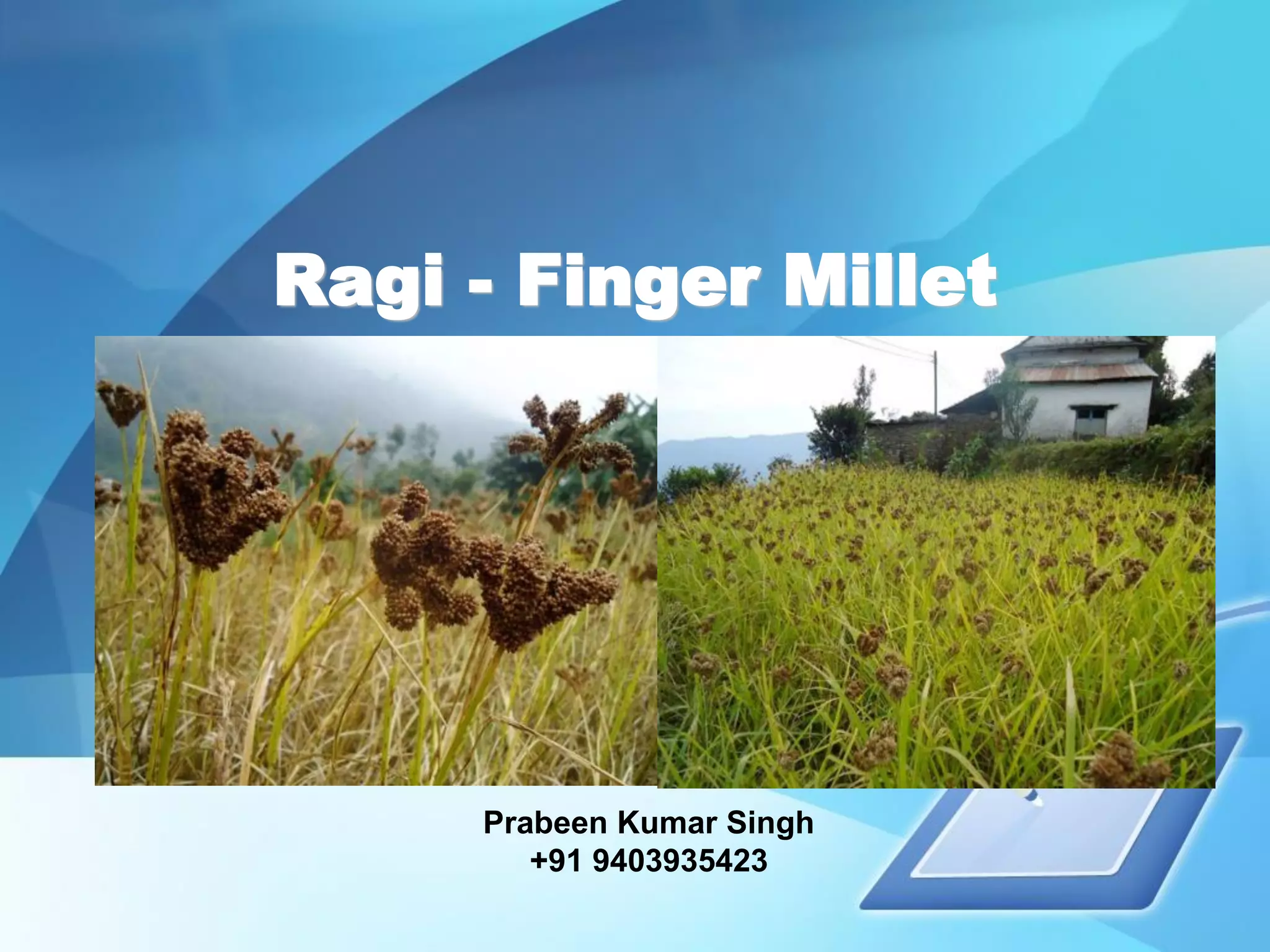
Ragi - Finger Millet
Prabeen Kumar Singh
+91 9403935423
Content
• Potential of production.
• Cost of cultivation.
• Value chain and supply chain of Ragi.
• Constraint and SWOT analysis of Ragi
cultivation.
• SHG based business model.
2
Potential of production
• Per acre productivity of Ragi is 10-12 quintal
(varies with input application).
• Every farmer cultivates Ragi for family
consumption.
• Farmer understands that Ragi and Porso
millet contain high amount of nutrient and
gives muscle strength.
3
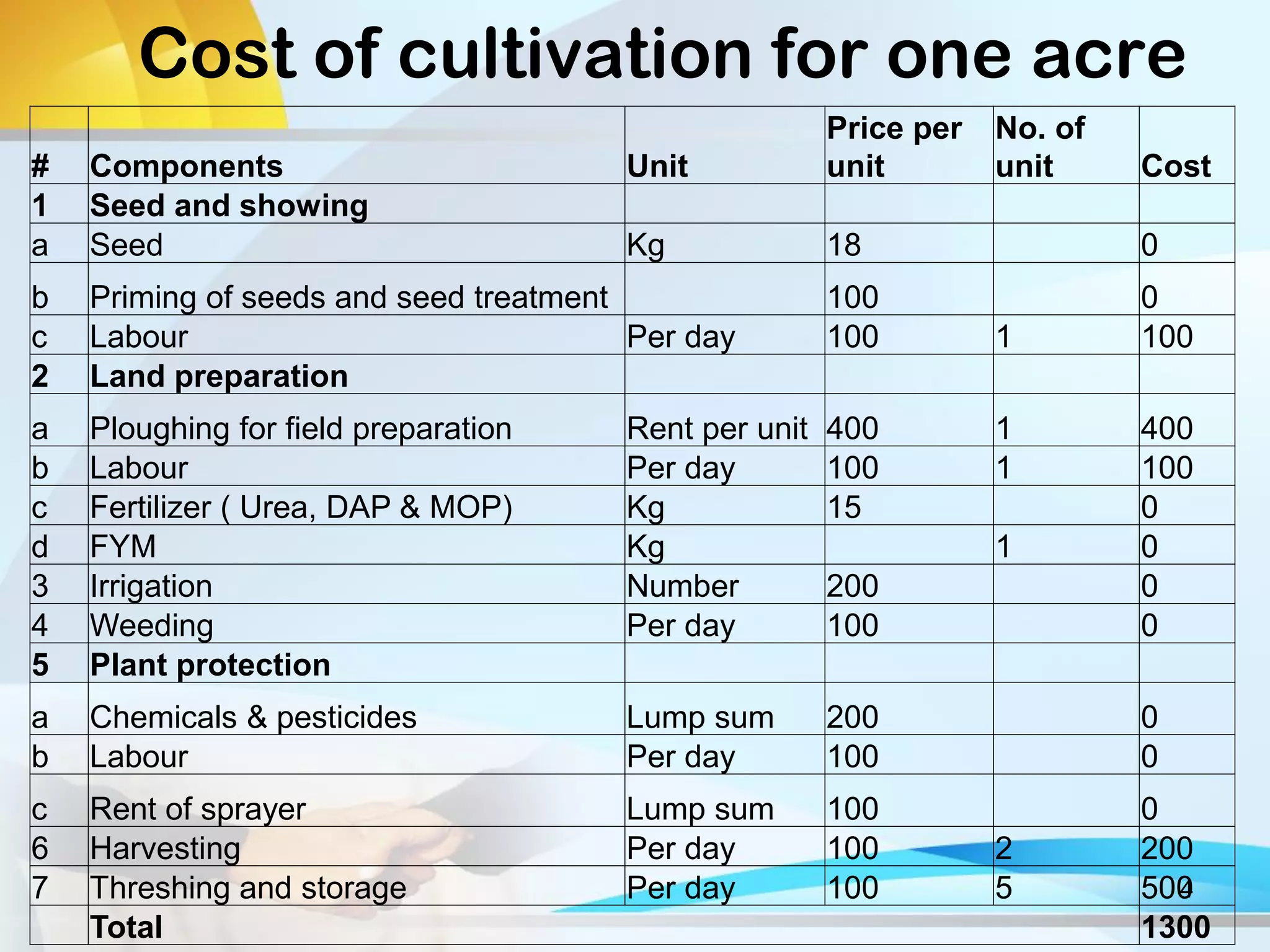
Cost of cultivation for one acre
# Components Unit
Price per
unit
No. of
unit Cost
1 Seed and showing
a Seed Kg 18 0
b Priming of seeds and seed treatment 100 0
c Labour Per day 100 1 100
2 Land preparation
a Ploughing for field preparation Rent per unit 400 1 400
b Labour Per day 100 1 100
c Fertilizer ( Urea, DAP & MOP) Kg 15 0
d FYM Kg 1 0
3 Irrigation Number 200 0
4 Weeding Per day 100 0
5 Plant protection
a Chemicals & pesticides Lump sum 200 0
b Labour Per day 100 0
c Rent of sprayer Lump sum 100 0
6 Harvesting Per day 100 2 200
7 Threshing and storage Per day 100 5 500
Total 1300
4
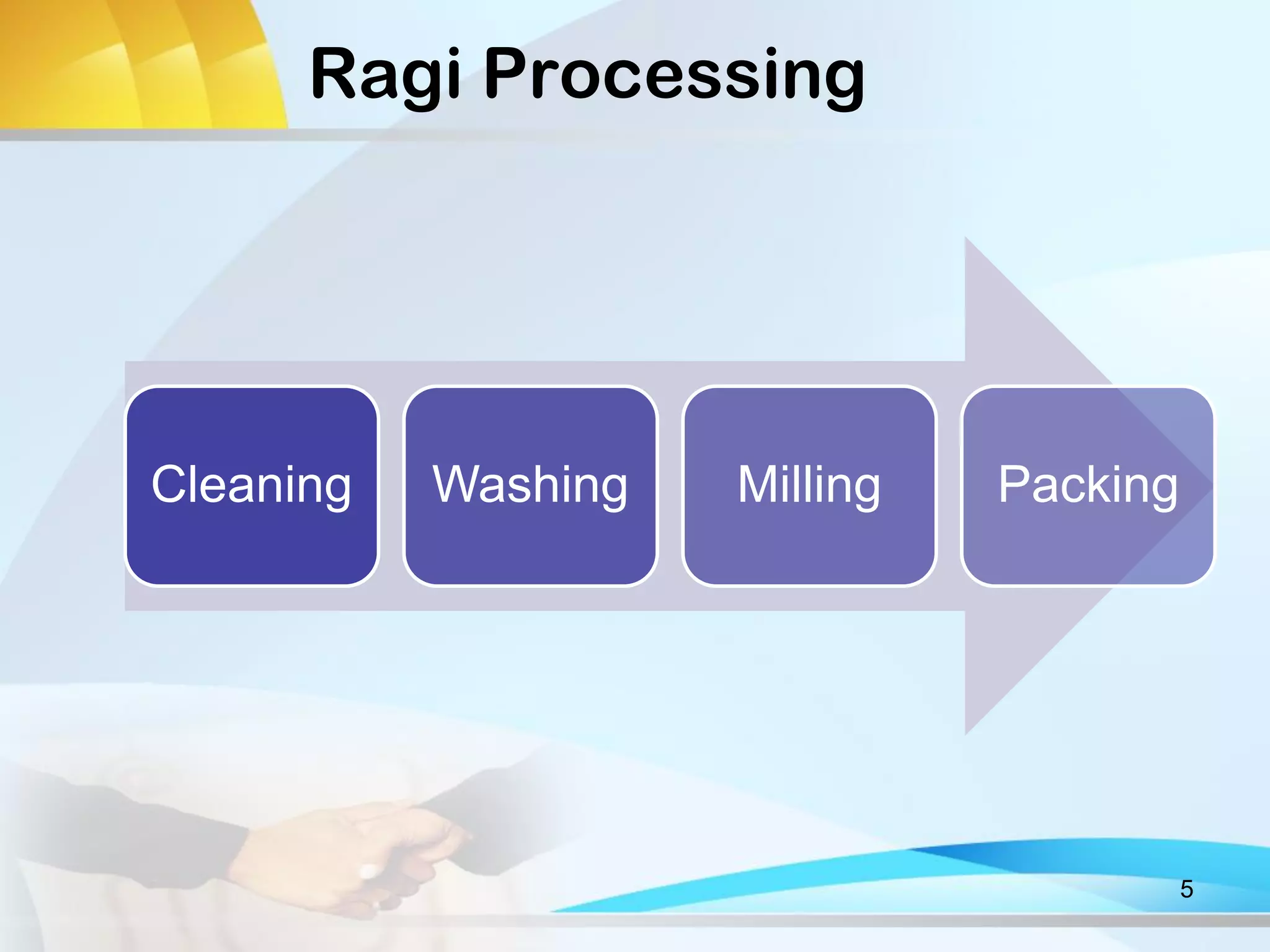
Ragi Processing
Cleaning Washing Milling Packing
5
Value chain of Ragi
L
o
c
a
l
p
r
o
d
u
c
e
r
Threshi
ng,
Winnowi
ng &
Drying
Mill
owner
(local)
Collecti
on,
Cleanin
g and
milling
Middlem
en (Local
&
Outsider)
Collection
&
Transport
ation
Retailer
&
Shopkee
per
Wholesal
er
Mill
owner
6
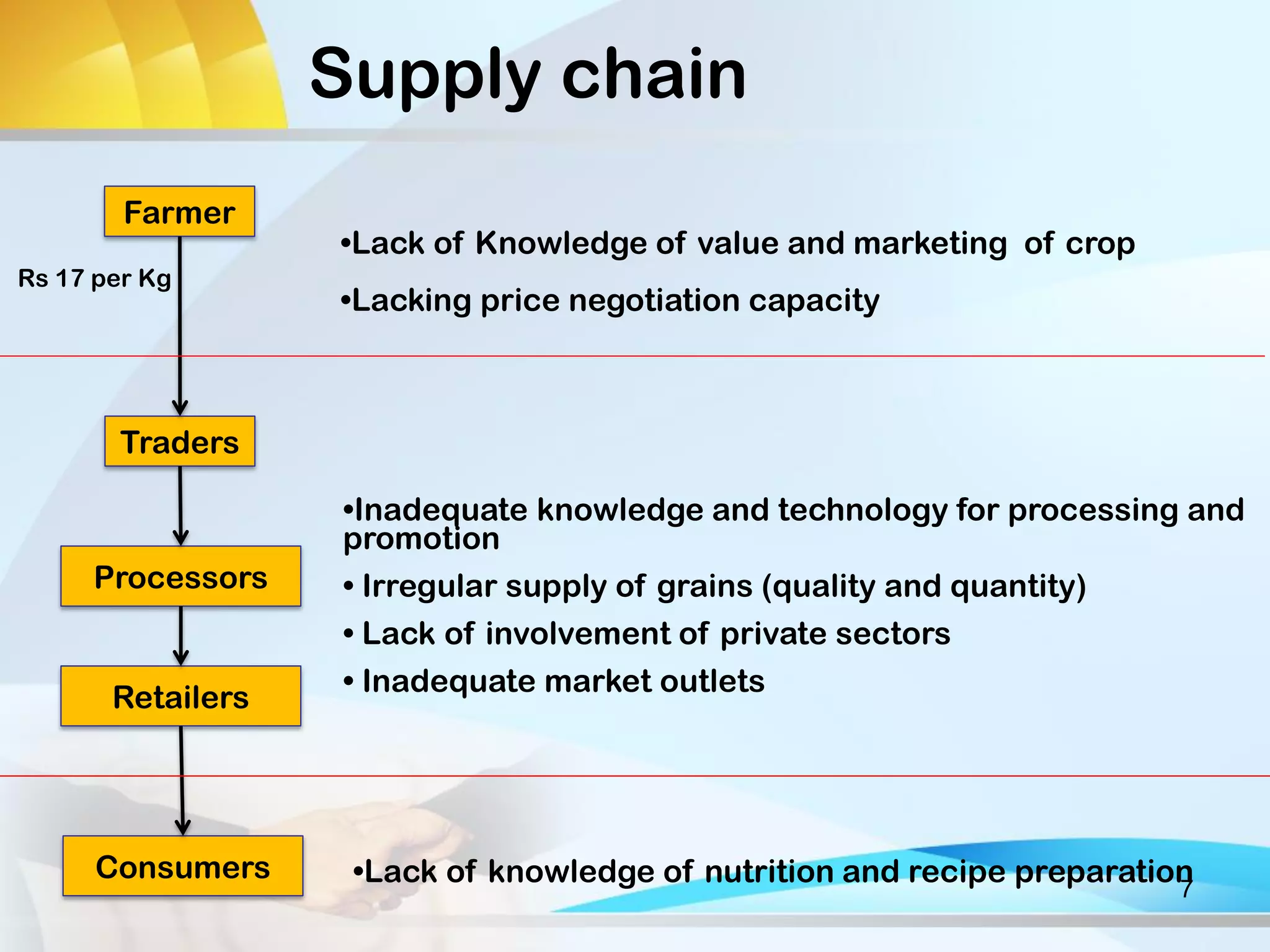
Supply chain
Farmer
Traders
Retailers
Processors
Consumers
Rs 17 per Kg
•Lack of knowledge of nutrition and recipe preparation
•Inadequate knowledge and technology for processing and
promotion
• Irregular supply of grains (quality and quantity)
• Lack of involvement of private sectors
• Inadequate market outlets
•Lack of Knowledge of value and marketing of crop
•Lacking price negotiation capacity
7
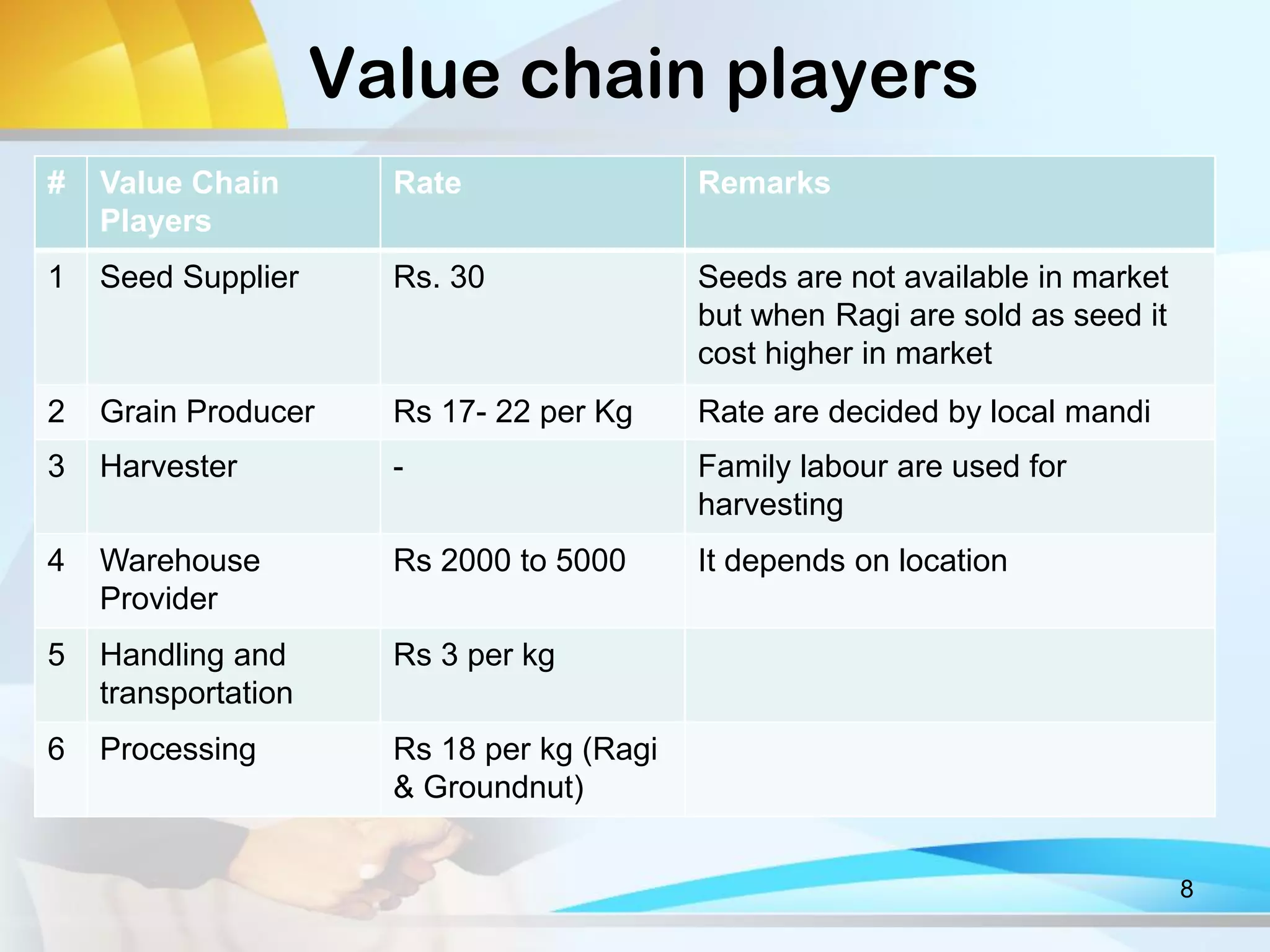
Value chain players
# Value Chain
Players
Rate Remarks
1 Seed Supplier Rs. 30 Seeds are not available in market
but when Ragi are sold as seed it
cost higher in market
2 Grain Producer Rs 17- 22 per Kg Rate are decided by local mandi
3 Harvester - Family labour are used for
harvesting
4 Warehouse
Provider
Rs 2000 to 5000 It depends on location
5 Handling and
transportation
Rs 3 per kg
6 Processing Rs 18 per kg (Ragi
& Groundnut)
8
Gender in Ragi cultivation
Activity Gender Difficulties
Ploughing Male Hard physical labour and arrangement
of bullock
Clod breaking Female Backache
Levelling Female & Male Backache
Weeding Female Backache, Snake bite, Work in bad
weather condition
Harvesting Female & Male Physical work
Threshing Female Hard physical work- Manual threshing
Winnowing Female Labour work & respiratory problem
Drying Female Physical work
Storing Female Physical work
Grinding Female Hard physical work- manual work
9
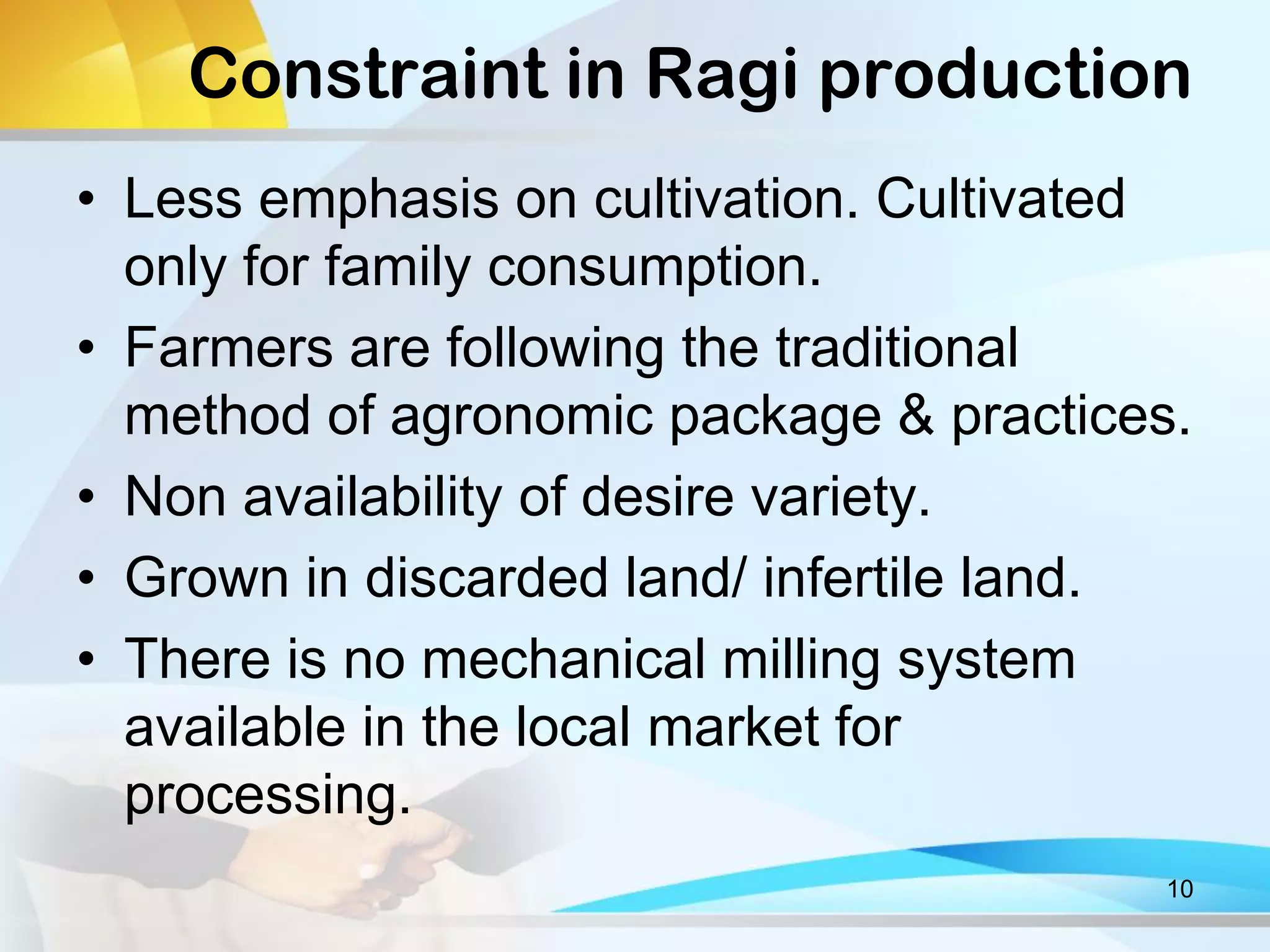
Constraint in Ragi production
• Less emphasis on cultivation. Cultivated
only for family consumption.
• Farmers are following the traditional
method of agronomic package & practices.
• Non availability of desire variety.
• Grown in discarded land/ infertile land.
• There is no mechanical milling system
available in the local market for
processing.
10
Constraint cont.…
• First stage milling is very labor intensive
since all work is manually done.
• There is no assured market for Ragi.
• Non- availability of desired varieties.
• Poor extension services
• Poor credit facilities
11
SWOT analysis
• High nutritional value (rich in
Iron, Calcium, and Phosphorus)
• Medicinal value (diabetic
patient lactating women)
• Organically grown
• Less attractive and coarse food
items(black color)
• Traditional food items only
• Product diversification
• Potential for marketing
• Non-interest of young and
urban people on Ragi
production
• Low priority for research and
development by formal sectors
• Changing food habit (thick
porridge to rice)
STRENGTHS WEAKNESES
OPPORTUNITY THREATS
12
Thank You

Millet value chain

  • 1.
    Ragi - FingerMillet Prabeen Kumar Singh +91 9403935423
  • 2.
    Content • Potential ofproduction. • Cost of cultivation. • Value chain and supply chain of Ragi. • Constraint and SWOT analysis of Ragi cultivation. • SHG based business model. 2
  • 3.
    Potential of production •Per acre productivity of Ragi is 10-12 quintal (varies with input application). • Every farmer cultivates Ragi for family consumption. • Farmer understands that Ragi and Porso millet contain high amount of nutrient and gives muscle strength. 3
  • 4.
    Cost of cultivationfor one acre # Components Unit Price per unit No. of unit Cost 1 Seed and showing a Seed Kg 18 0 b Priming of seeds and seed treatment 100 0 c Labour Per day 100 1 100 2 Land preparation a Ploughing for field preparation Rent per unit 400 1 400 b Labour Per day 100 1 100 c Fertilizer ( Urea, DAP & MOP) Kg 15 0 d FYM Kg 1 0 3 Irrigation Number 200 0 4 Weeding Per day 100 0 5 Plant protection a Chemicals & pesticides Lump sum 200 0 b Labour Per day 100 0 c Rent of sprayer Lump sum 100 0 6 Harvesting Per day 100 2 200 7 Threshing and storage Per day 100 5 500 Total 1300 4
  • 5.
  • 6.
    Value chain ofRagi L o c a l p r o d u c e r Threshi ng, Winnowi ng & Drying Mill owner (local) Collecti on, Cleanin g and milling Middlem en (Local & Outsider) Collection & Transport ation Retailer & Shopkee per Wholesal er Mill owner 6
  • 7.
    Supply chain Farmer Traders Retailers Processors Consumers Rs 17per Kg •Lack of knowledge of nutrition and recipe preparation •Inadequate knowledge and technology for processing and promotion • Irregular supply of grains (quality and quantity) • Lack of involvement of private sectors • Inadequate market outlets •Lack of Knowledge of value and marketing of crop •Lacking price negotiation capacity 7
  • 8.
    Value chain players #Value Chain Players Rate Remarks 1 Seed Supplier Rs. 30 Seeds are not available in market but when Ragi are sold as seed it cost higher in market 2 Grain Producer Rs 17- 22 per Kg Rate are decided by local mandi 3 Harvester - Family labour are used for harvesting 4 Warehouse Provider Rs 2000 to 5000 It depends on location 5 Handling and transportation Rs 3 per kg 6 Processing Rs 18 per kg (Ragi & Groundnut) 8
  • 9.
    Gender in Ragicultivation Activity Gender Difficulties Ploughing Male Hard physical labour and arrangement of bullock Clod breaking Female Backache Levelling Female & Male Backache Weeding Female Backache, Snake bite, Work in bad weather condition Harvesting Female & Male Physical work Threshing Female Hard physical work- Manual threshing Winnowing Female Labour work & respiratory problem Drying Female Physical work Storing Female Physical work Grinding Female Hard physical work- manual work 9
  • 10.
    Constraint in Ragiproduction • Less emphasis on cultivation. Cultivated only for family consumption. • Farmers are following the traditional method of agronomic package & practices. • Non availability of desire variety. • Grown in discarded land/ infertile land. • There is no mechanical milling system available in the local market for processing. 10
  • 11.
    Constraint cont.… • Firststage milling is very labor intensive since all work is manually done. • There is no assured market for Ragi. • Non- availability of desired varieties. • Poor extension services • Poor credit facilities 11
  • 12.
    SWOT analysis • Highnutritional value (rich in Iron, Calcium, and Phosphorus) • Medicinal value (diabetic patient lactating women) • Organically grown • Less attractive and coarse food items(black color) • Traditional food items only • Product diversification • Potential for marketing • Non-interest of young and urban people on Ragi production • Low priority for research and development by formal sectors • Changing food habit (thick porridge to rice) STRENGTHS WEAKNESES OPPORTUNITY THREATS 12
  • 13.