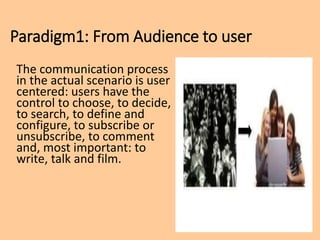
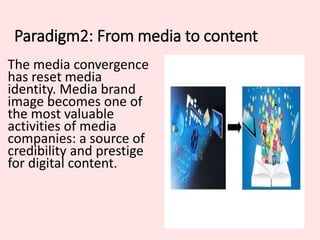
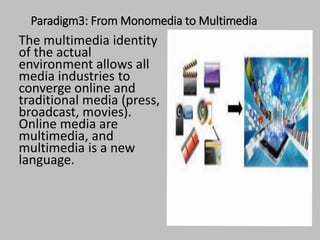
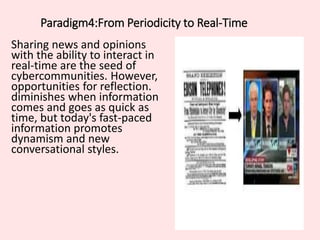
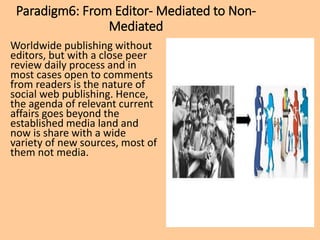
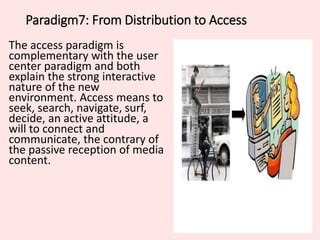
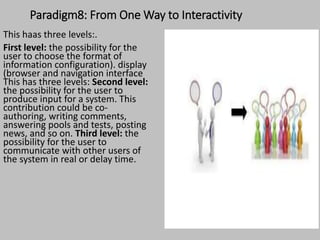
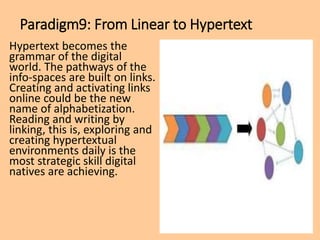
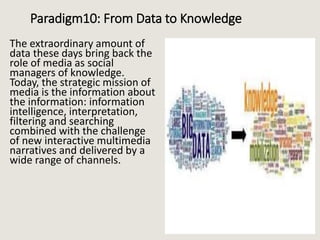
The document discusses 10 new paradigms of communication in the digital age. These include shifting from audiences to users, media to content, monomedia to multimedia, periodicity to real-time sharing, scarcity to abundance, editor-mediated to non-mediated, distribution to access, one-way communication to interactivity, linear formats to hypertext, and data to knowledge management. The paradigms reflect how digital technologies have empowered users, increased content availability and formats, enabled real-time sharing and interaction, and changed media's role in knowledge production and distribution.