
1
By- Dr. Prathamesh Fulsundar
Mid-face
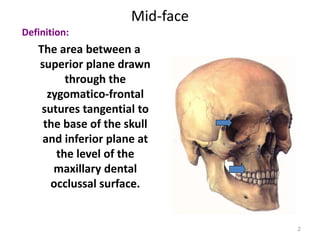
Definition:
The area between a
superior plane drawn
through the
zygomatico-frontal
sutures tangential to
the base of the skull
and inferior plane at
the level of the
maxillary dental
occlussal surface.
2
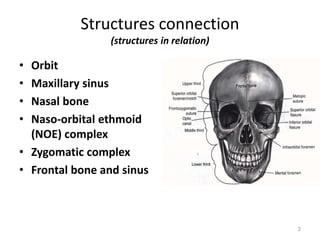
Structures connection
(structures in relation)
• Orbit
• Maxillary sinus
• Nasal bone
• Naso-orbital ethmoid
(NOE) complex
• Zygomatic complex
• Frontal bone and sinus
3
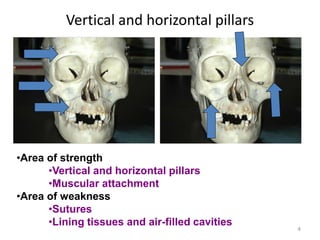
Vertical and horizontal pillars
4
•Area of strength
•Vertical and horizontal pillars
•Muscular attachment
•Area of weakness
•Sutures
•Lining tissues and air-filled cavities
Aims of treatment
• Relieve pain
• Restore function.
• Restore bone anatomy.
• Prevent infection
• Restore the dental occlusion
• Restore jaw movement at the earliest possible stage
• Restore normal nerve function
5
Factors affecting the risk
• Association with multiple injuries.
• Presence of uncontrolled haemorrhage
• Impairment of the airway.
• Presence of bone comminution
• Association with a dural tear.
• Association with a base of skull fracture.
• Presence of a pre-existing dentofacial deformity.
• Time elapsed since the injury.
• Presence of a medical or surgical factor which would delay general
anesthesia
• Presence of any factor which would delay healing. (eg nutritional
deficiency or alcoholism)
• Stage of dental development (deciduous, mixed or permanent
dentition) Presence of fractured teeth.
• Total absence of teeth (edentulous)
• Inability of the patient to co-operate with treatment.
• Association with fractures of the mandible especially bilateral
fractures of the condyles.
6
Principles of treatment
Closed reduction may be appropriate in cases
• Simple uncomplicated fractures
• Complex or comminuted fractures
• Medical or surgical contraindications to open
reduction
• Maxillary fractures in children
7
Open reduction may be appropriate where
• Immediate or early jaw function is desirable
• Difficulty is encountered in reducing the
fracture by a closed method
• The fracture is unstable
8
Definitive treatment
• Reduction
Manual manipulation
Use of dis-impaction forceps
9
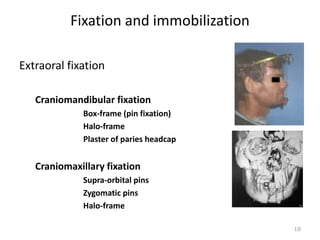
Fixation and immobilization
Extraoral fixation
Craniomandibular fixation
Box-frame (pin fixation)
Halo-frame
Plaster of paries headcap
Craniomaxillary fixation
Supra-orbital pins
Zygomatic pins
Halo-frame
10
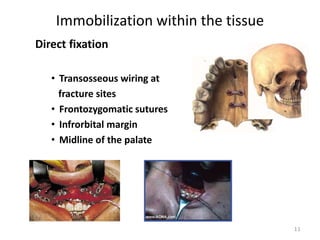
Immobilization within the tissue
Direct fixation
• Transosseous wiring at
fracture sites
• Frontozygomatic sutures
• Infrorbital margin
• Midline of the palate
11
Immobilization within the tissue
Internal-wire suspension
o Circumzygomatico-mandibular
o Infraorbital border-mandibular
o Frontomandibular
o Pyriform fossa-mandibular
Support via the maxillary sinus by filling materials
o Ribbon gauze
o Balloon
o Folly catheter
o Polyethylene material
12
Thank you!!
13

Mid face trauma

  • 1.
  • 2.
    Mid-face Definition: The area betweena superior plane drawn through the zygomatico-frontal sutures tangential to the base of the skull and inferior plane at the level of the maxillary dental occlussal surface. 2
  • 3.
    Structures connection (structures inrelation) • Orbit • Maxillary sinus • Nasal bone • Naso-orbital ethmoid (NOE) complex • Zygomatic complex • Frontal bone and sinus 3
  • 4.
    Vertical and horizontalpillars 4 •Area of strength •Vertical and horizontal pillars •Muscular attachment •Area of weakness •Sutures •Lining tissues and air-filled cavities
  • 5.
    Aims of treatment •Relieve pain • Restore function. • Restore bone anatomy. • Prevent infection • Restore the dental occlusion • Restore jaw movement at the earliest possible stage • Restore normal nerve function 5
  • 6.
    Factors affecting therisk • Association with multiple injuries. • Presence of uncontrolled haemorrhage • Impairment of the airway. • Presence of bone comminution • Association with a dural tear. • Association with a base of skull fracture. • Presence of a pre-existing dentofacial deformity. • Time elapsed since the injury. • Presence of a medical or surgical factor which would delay general anesthesia • Presence of any factor which would delay healing. (eg nutritional deficiency or alcoholism) • Stage of dental development (deciduous, mixed or permanent dentition) Presence of fractured teeth. • Total absence of teeth (edentulous) • Inability of the patient to co-operate with treatment. • Association with fractures of the mandible especially bilateral fractures of the condyles. 6
  • 7.
    Principles of treatment Closedreduction may be appropriate in cases • Simple uncomplicated fractures • Complex or comminuted fractures • Medical or surgical contraindications to open reduction • Maxillary fractures in children 7
  • 8.
    Open reduction maybe appropriate where • Immediate or early jaw function is desirable • Difficulty is encountered in reducing the fracture by a closed method • The fracture is unstable 8
  • 9.
    Definitive treatment • Reduction Manualmanipulation Use of dis-impaction forceps 9
  • 10.
    Fixation and immobilization Extraoralfixation Craniomandibular fixation Box-frame (pin fixation) Halo-frame Plaster of paries headcap Craniomaxillary fixation Supra-orbital pins Zygomatic pins Halo-frame 10
  • 11.
    Immobilization within thetissue Direct fixation • Transosseous wiring at fracture sites • Frontozygomatic sutures • Infrorbital margin • Midline of the palate 11
  • 12.
    Immobilization within thetissue Internal-wire suspension o Circumzygomatico-mandibular o Infraorbital border-mandibular o Frontomandibular o Pyriform fossa-mandibular Support via the maxillary sinus by filling materials o Ribbon gauze o Balloon o Folly catheter o Polyethylene material 12
  • 13.