EPA Guidelines
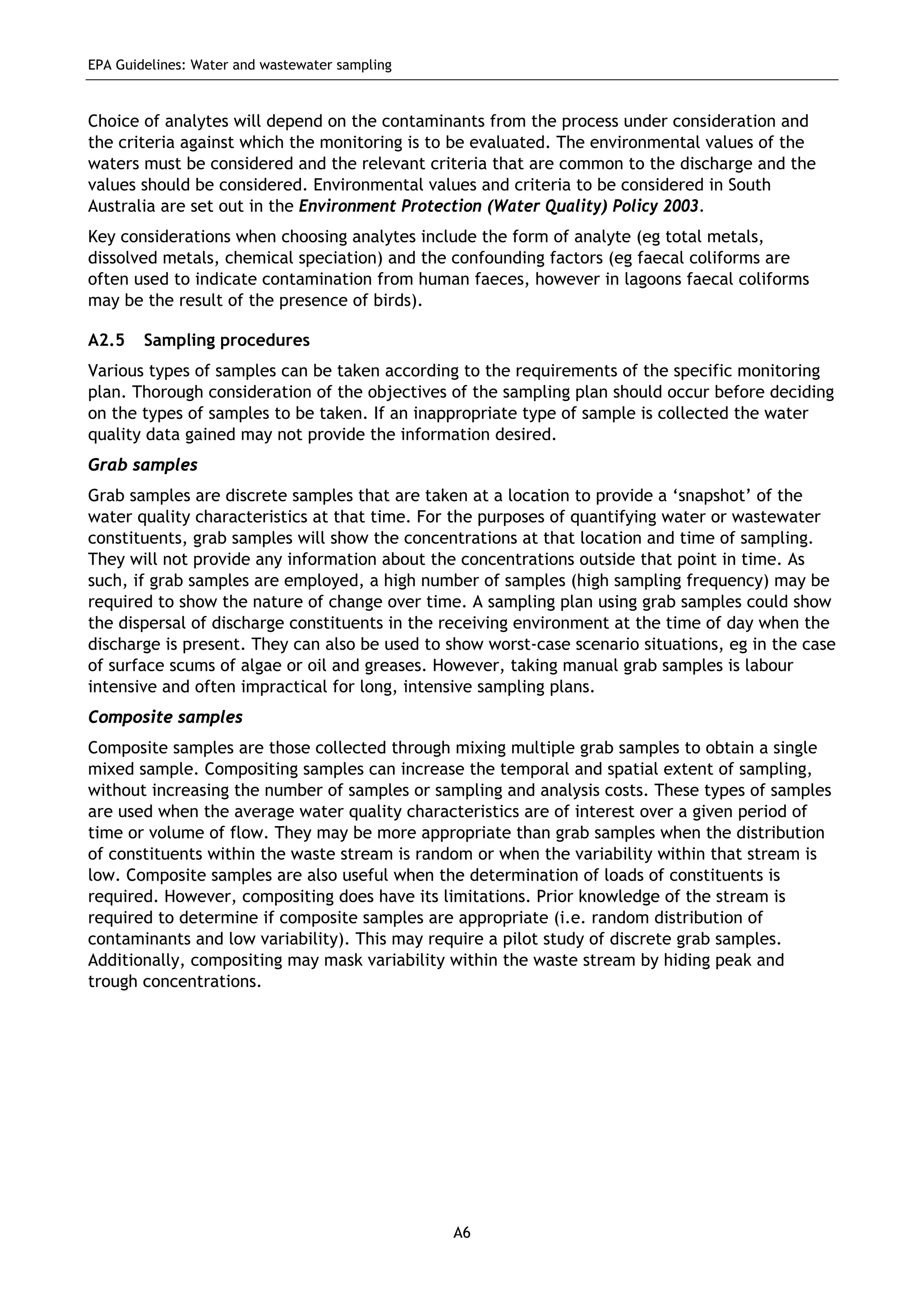
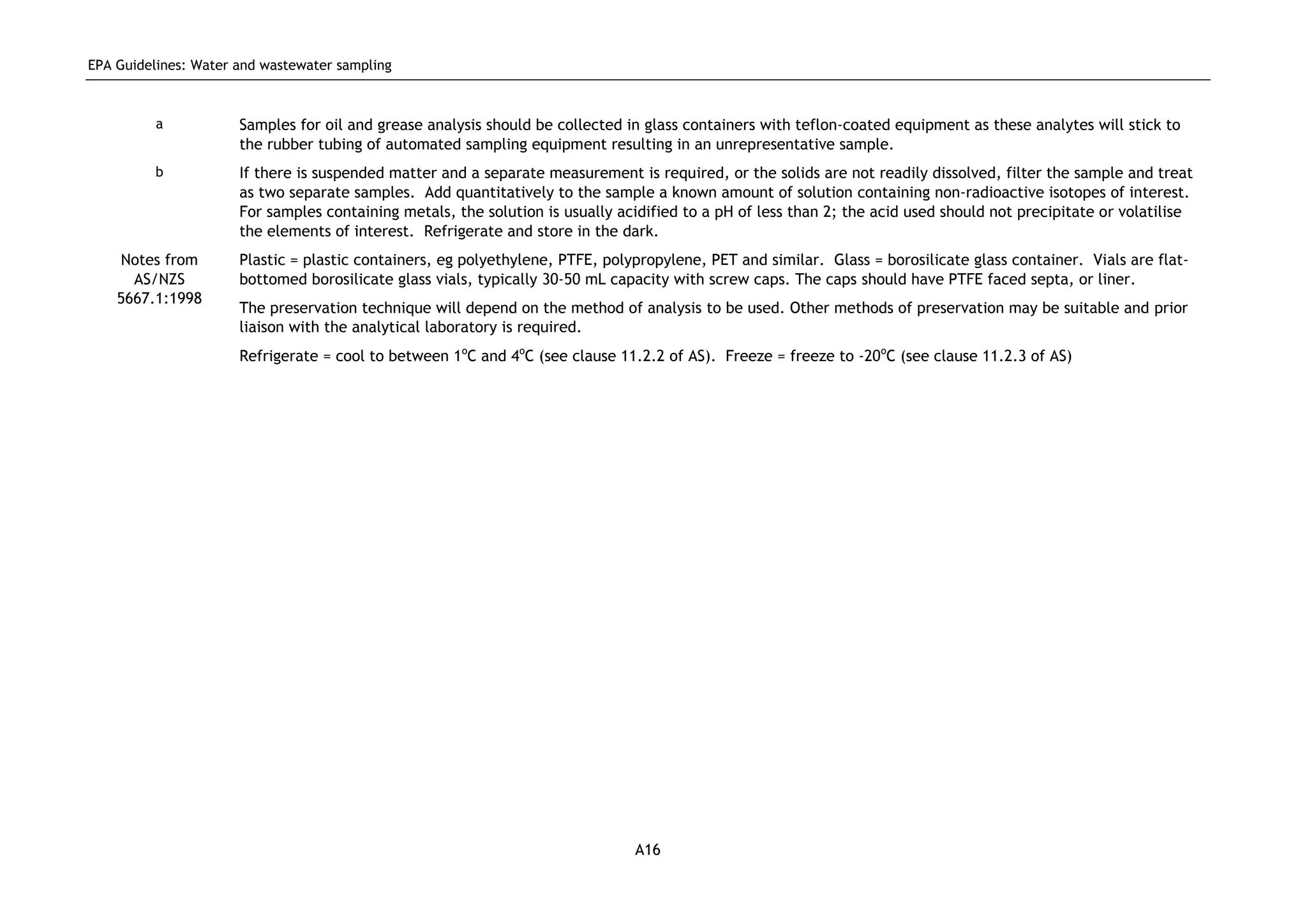
Regulatory monitoring and testing
Water and wastewater sampling
JUNE 2007
E N V I R O N M E N T P R O T E C T I O N A U T H O R I T Y
EPA Guidelines: Regulatory monitoring and testing
Water and wastewater sampling
Authors: David Duncan, Fiona Harvey, Michelle Walker and Australian Water Quality
Centre
The EPA would like to acknowledge the assistance of the Australian Water Quality Centre
in preparation of this document.
For further information please contact:
Information Officer
Environment Protection Authority
GPO Box 2607
Adelaide SA 5001
Telephone: (08) 8204 2004
Facsimile: (08) 8204 9393
Free call (country): 1800 623 445
Email: <epainfo@epa.sa.gov.au>
Website: <www.epa.sa.gov.au>
ISBN 978-1-921125-47-8
June 2007
© Environment Protection Authority
This document may be reproduced in whole or part for the purpose of study or training, subject to the inclusion of an
acknowledgment of the source and to its not being used for commercial purposes or sale. Reproduction for purposes other than
those given above requires the prior written permission of the Environment Protection Authority.
Printed on recycled paper
CONTENTS
1 INTRODUCTION ............................................................................ 1
1.1 Purpose..................................................................................... 1
1.2 Scope........................................................................................ 1
1.3 Intended users............................................................................ 1
1.4 Legal framework ......................................................................... 1
1.5 Further guidance......................................................................... 2
2 AN OVERVIEW OF MONITORING ........................................................ 3
2.1 Steps in the monitoring process ..................................................... 3
2.2 Integrity of samples..................................................................... 4
3 DEVELOPING A MONITORING PLAN .................................................... 7
4 PLANNING A SAMPLING EVENT ......................................................... 8
4.1 Logistics .................................................................................... 8
4.2 Communication........................................................................... 8
4.3 Equipment ................................................................................. 9
4.4 Occupational health, safety and welfare.........................................10
5 SAMPLE COLLECTION AND FIELD TESTING PROCEDURES.........................11
5.1 Field observations ......................................................................11
5.2 Field measurements....................................................................11
5.3 Collection of samples for analysis..................................................14
5.4 Specific considerations................................................................18
5.5 Field filtration ...........................................................................21
5.6 Decontamination........................................................................22
6 SAMPLE IDENTIFICATION, TRANSPORT AND STORAGE............................24
6.1 Labelling and identification..........................................................24
6.2 Chain of Custody ........................................................................24
6.3 Transport and storage .................................................................25
7 QUALITY ...................................................................................27
7.1 Quality assurance.......................................................................27
7.2 Quality control ..........................................................................27
8 ANALYSIS AND REPORTING .............................................................32
8.1 Data review ..............................................................................32
8.2 Reporting..................................................................................32
REFERENCES ...................................................................................33
GLOSSARY ......................................................................................34
APPENDIX 1 GUIDANCE ON DEVELOPING AN EFFECTIVE MONITORING PLAN ..... A1
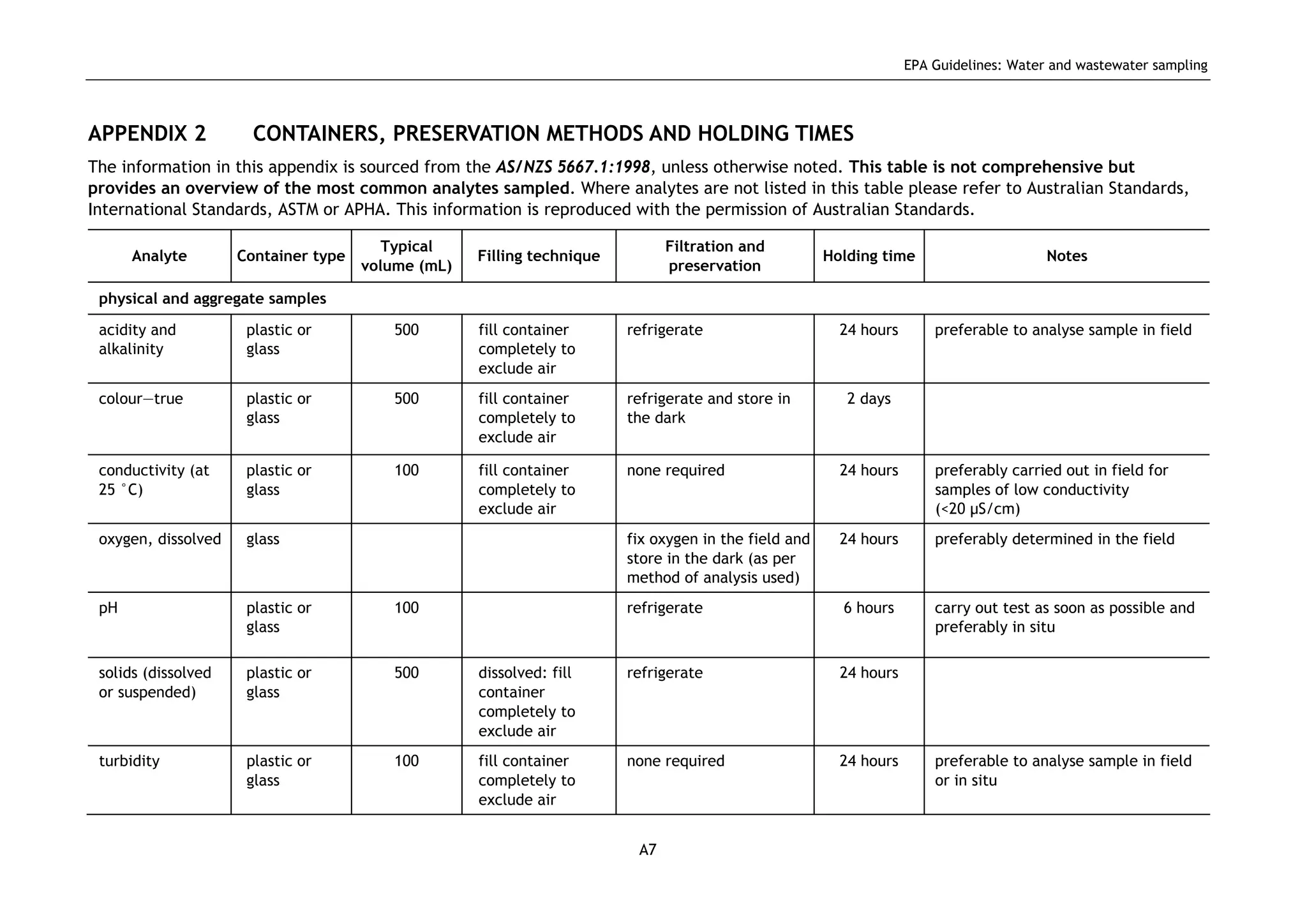
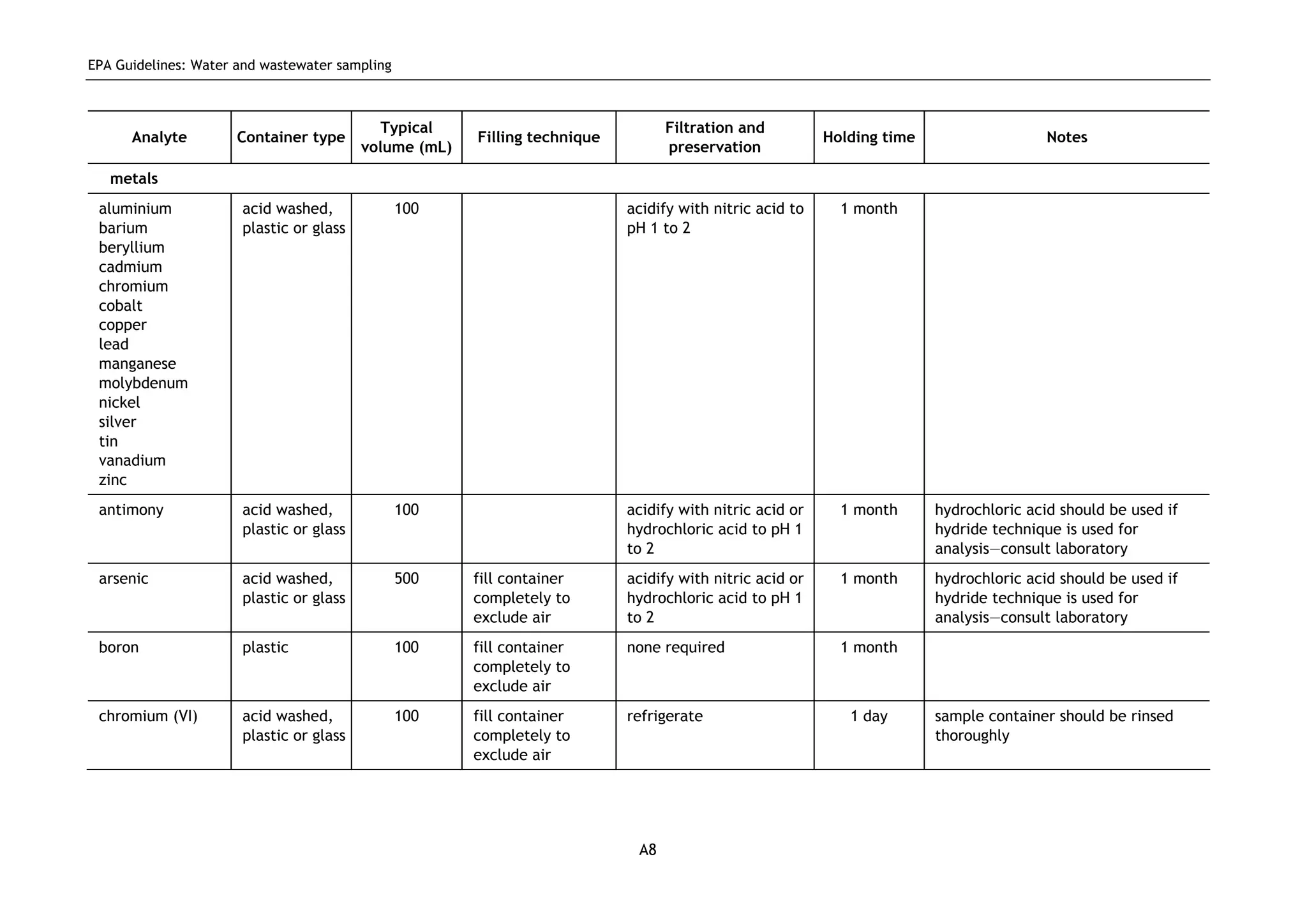
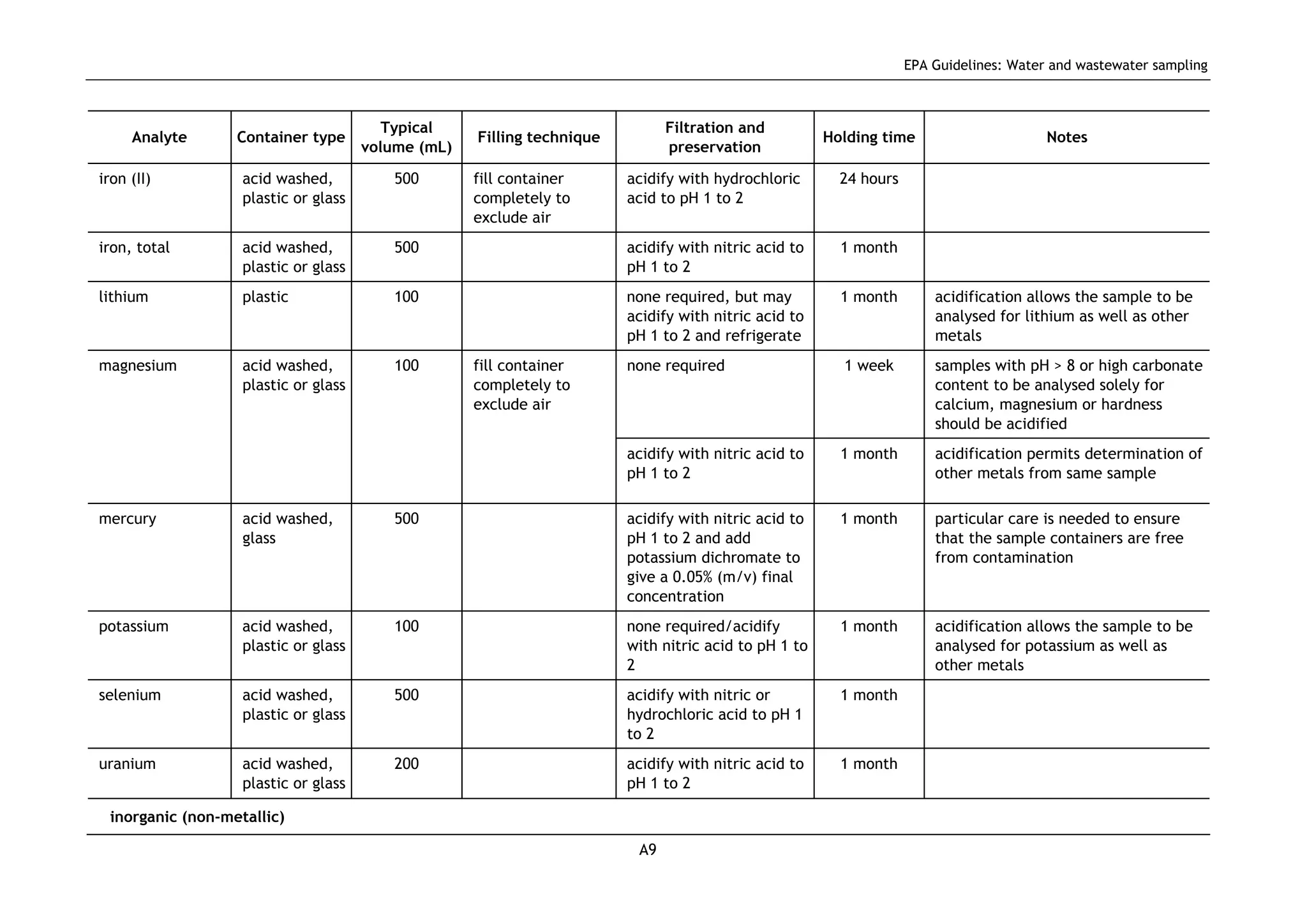
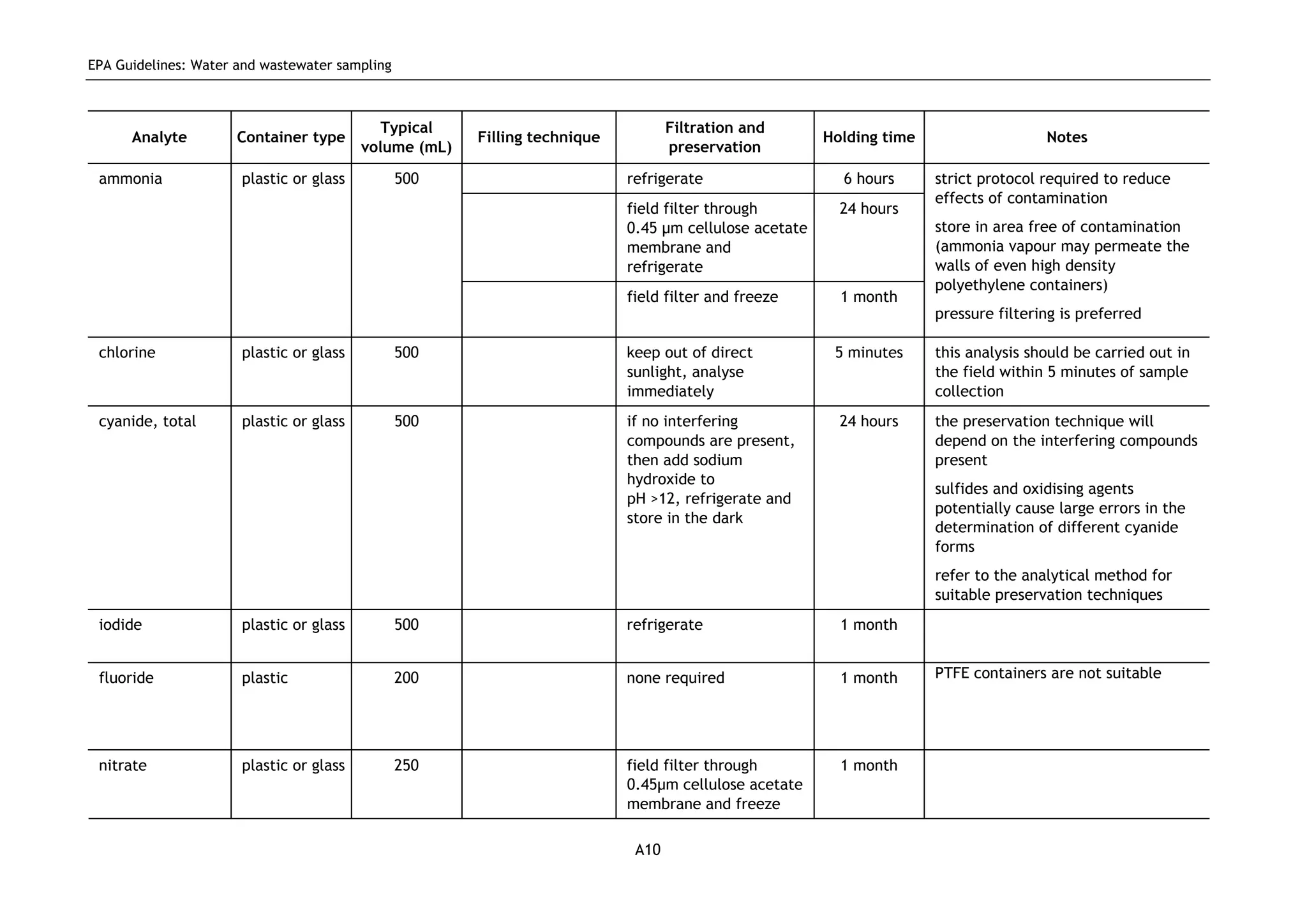
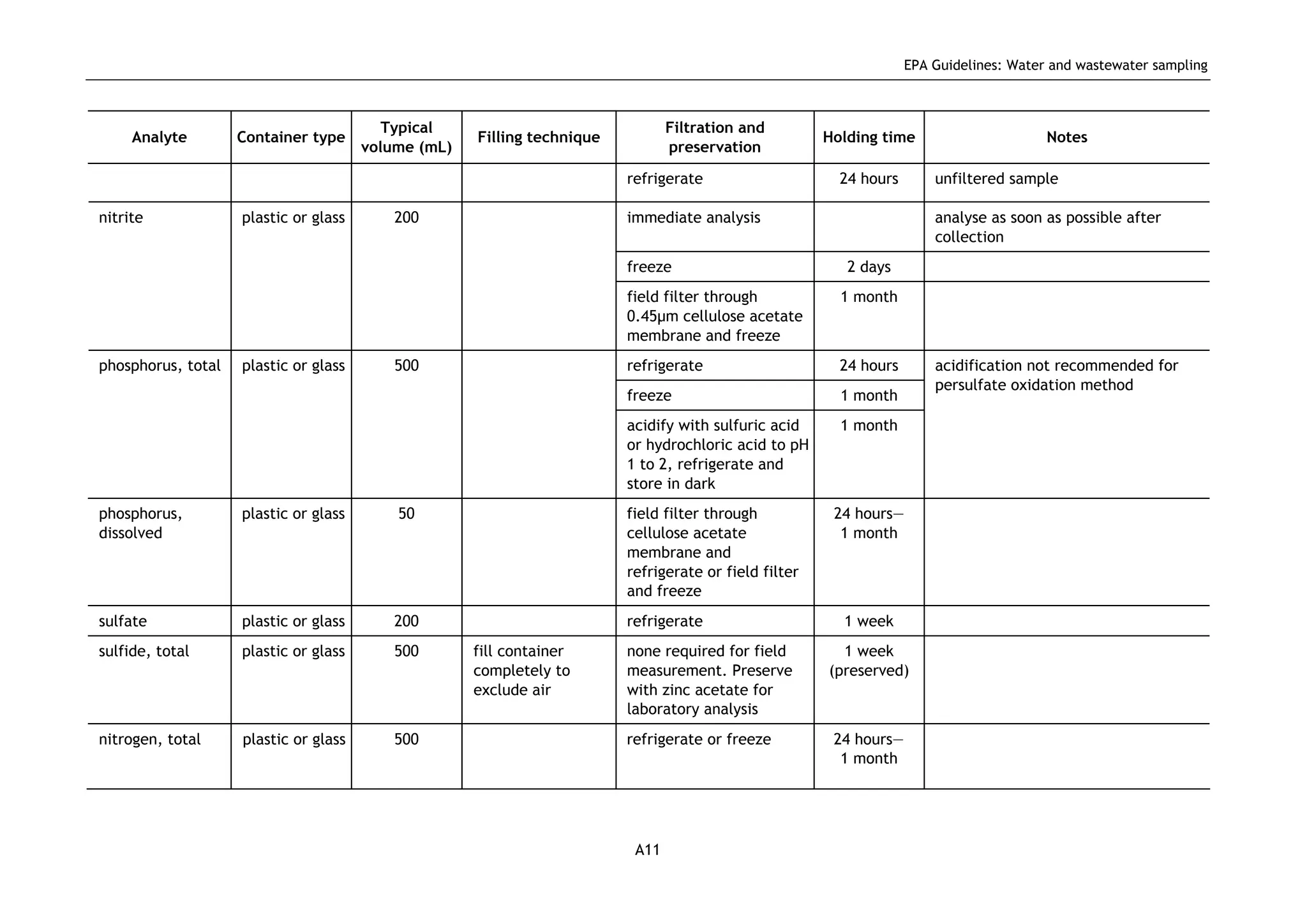
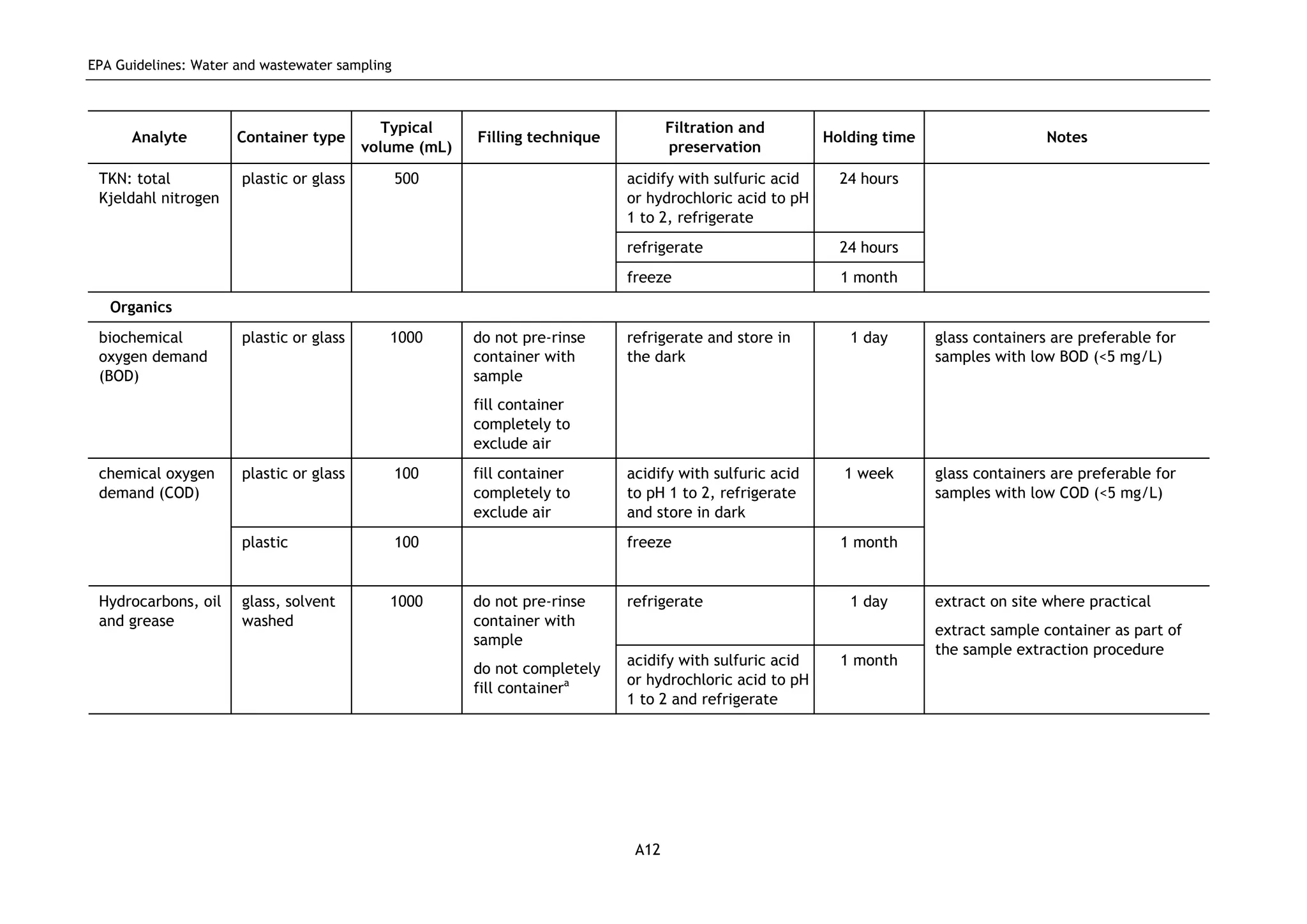
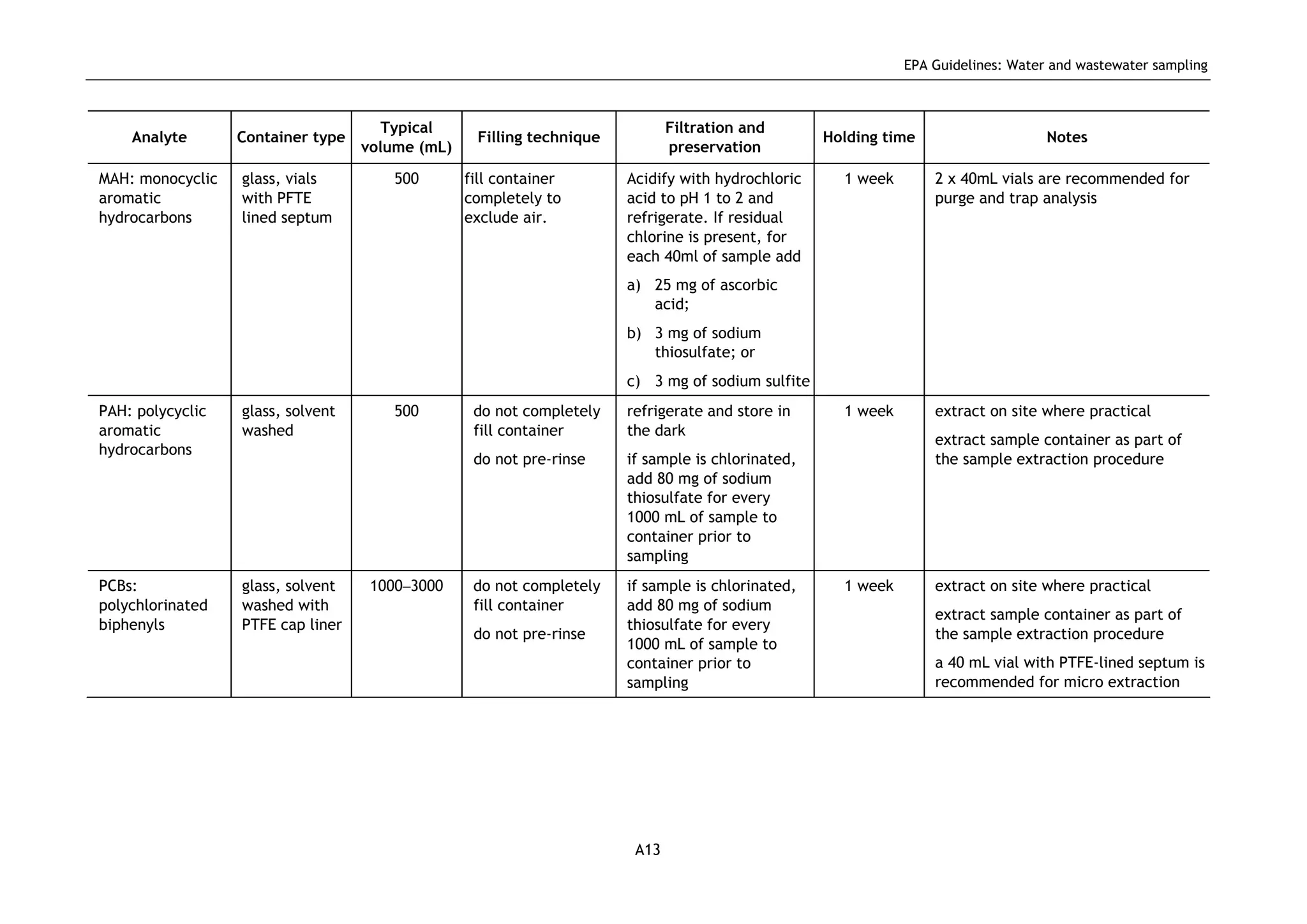
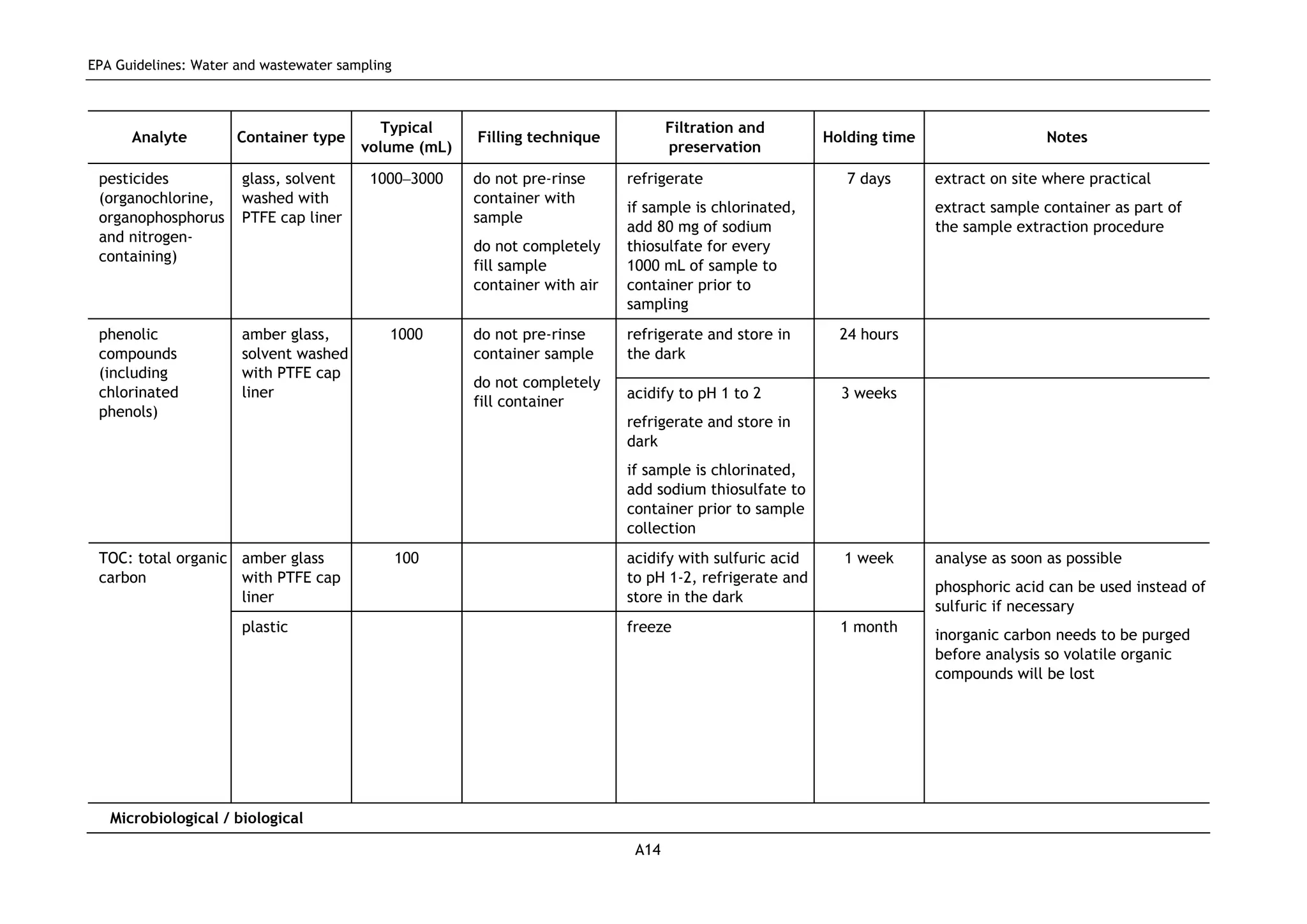
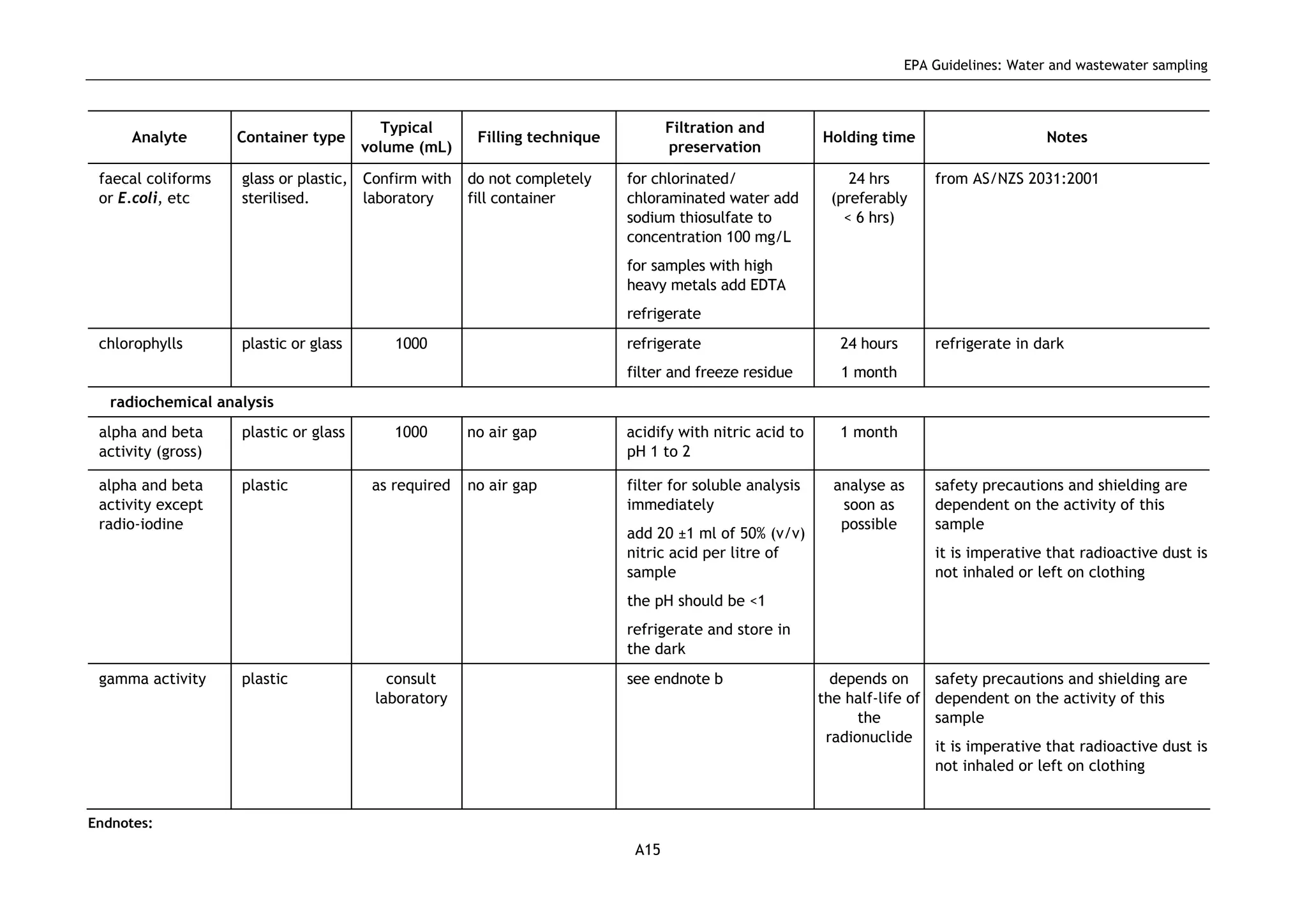
APPENDIX 2 CONTAINERS, PRESERVATION METHODS AND HOLDING TIMES....... A7
APPENDIX 3 FIELD EQUIPMENT CHECKLIST (EXAMPLE)..............................A17
APPENDIX 4 FIELD RECORD SHEET (EXAMPLE)........................................A18
APPENDIX 5 CHAIN OF CUSTODY FORM (EXAMPLE)..................................A19
List of Figures
Figure 1 Stages of monitoring ....................................................................... 3
Figure 2 Designing a monitoring plan .............................................................. 7
Figure 3 Examples of the various types of field meters available............................12
Figure 4 Sampling by hand..........................................................................16
Figure 5 Using sampling rod ........................................................................16
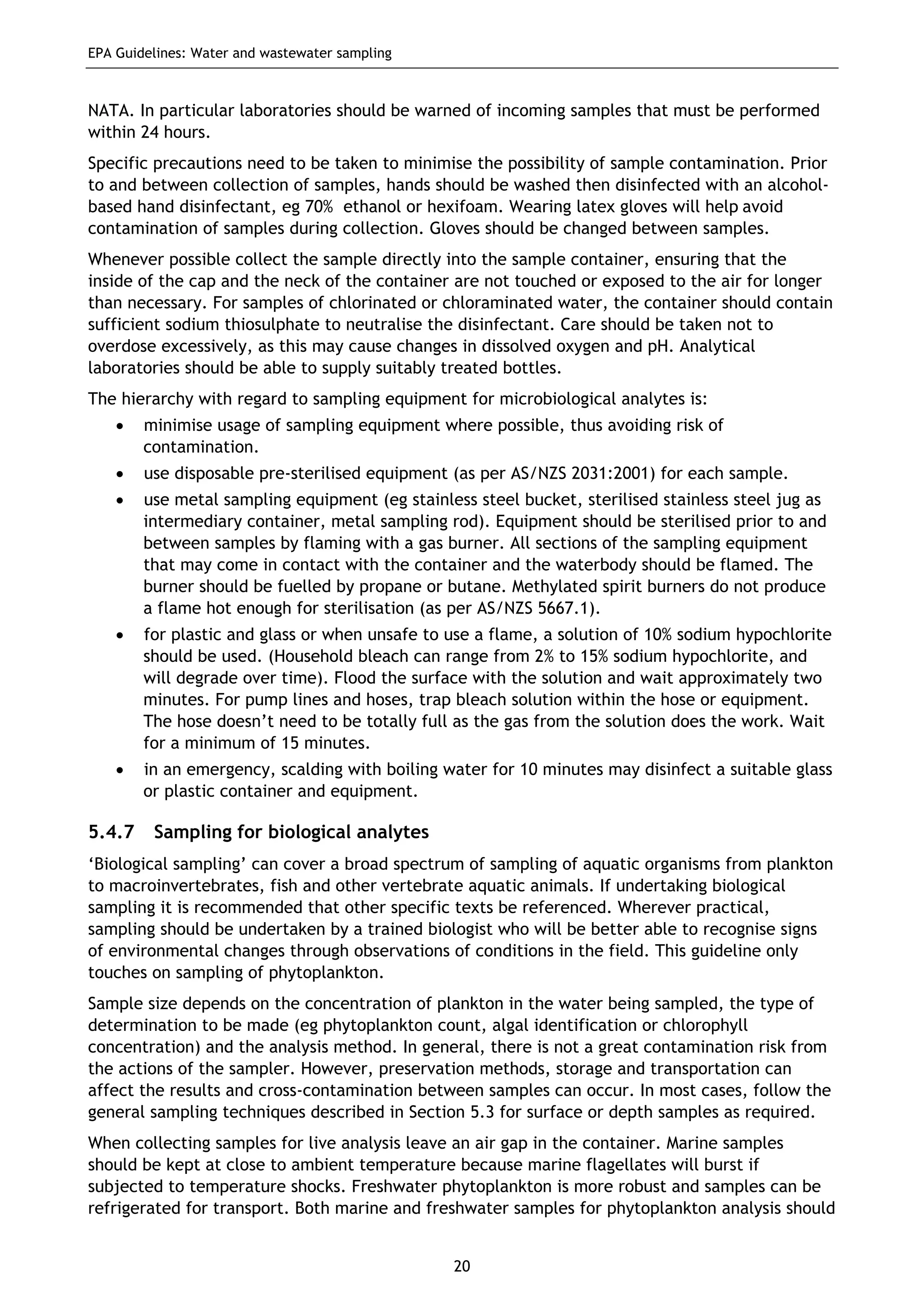
Figure 6 Van Dorn samplers with cup ends set open............................................17
Figure 7 Quality assurance framework (Puls & Barcelona, 1996).............................27
List of Tables
Table 1 Quality control in monitoring............................................................. 5
Table 2 Summary of blank and duplicate samples .............................................30
EPA Guidelines: Water and wastewater sampling
1
1 INTRODUCTION
1.1 Purpose
The purpose of this guideline is to set minimum standards and to provide practical guidance on
water and wastewater sampling for regulatory purposes in South Australia.
1.2 Scope
This guideline applies to the sampling of waters and wastewaters including:
• receiving waters such as oceans, rivers, creeks and estuaries
• end-of-pipe or channel effluents and industrial process waters, cooling waters or
wastewaters.
This guideline does not cover sampling of groundwaters. The EPA guidelines: Groundwater
sampling (2006a) should be consulted for advice on groundwater sampling.
For additional information not provided in the above guideline, we recommend that the
AS/NZS 5667 series of standards be consulted.
This guideline does not provide detailed guidance on analysis methods or interpretation of data.
1.3 Intended users
This guideline is primarily aimed at:
• sampling to determine compliance with environmental regulatory requirements, including
authorisations under the Environment Protection Act 1993 (EP Act)
• collecting and/or analysing samples for comparison with the Environment Protection
(Water Quality) Policy 2003 (Water Quality Policy) criteria.
However, given suitable justification, alternative methods may be approved for unique
circumstances upon written application to the Environment Protection Authority (EPA).
This guideline may also provide guidance for water sampling for non-regulatory reasons such as
collecting samples for ambient or hot spot monitoring. Any monitoring submitted to the EPA for
these purposes should also meet the requirements of this guideline.
1.4 Legal framework
The principal legislation dealing with pollution in South Australia is the EP Act. The EPA may
impose conditions on person(s) required to hold a licence or authorisation. In particular, under
Section 52 of the Act, the EPA can require holders of an authorisation to carry out
… specified tests and environmental monitoring relating to the activity undertaken pursuant
to the authorisation, or activities previously undertaken at the place to which the
authorisation relates, and to make specified reports to the Authority on the results of such
tests and monitoring … (in Section 52).
The requirement to undertake monitoring and testing can also be imposed under clause 44 of the
Water Quality Policy on any person granted an exemption under the Policy.
Monitoring and testing that is required under these powers is termed ‘regulatory monitoring and
testing’ (RMT).
EPA Guidelines: Water and wastewater sampling
2
1.5 Further guidance
The principles in this guideline are based on the following standards:
• AS/NZS 5667.1: 1998: Water quality—sampling—guidance on the design of sampling
programs, sampling techniques and the preservation and handling of samples (Standards
Australia 1998a)
• AS/NZS 5667.6: 1998: Water quality—sampling—guidance on sampling of rivers and
streams (Standards Australia 1998c)
• AS/NZS 5667.10: 1998: Water quality—sampling—guidance on sampling of waste waters
(Standards Australia 1998d)
• Australian guidelines for water quality monitoring and reporting (ANZECC 2000).
If this guideline does not provide enough direction or detail, the above references should be
consulted for further guidance.
The methods in this guideline were consistent with the requirements of the AS/NZS 5667 series
at the time of writing. These standards are reviewed and updated regularly and it is possible
that there will be discrepancies between future standards and this guideline. For the purposes of
regulatory monitoring and testing, this guideline takes precedence to the extent of the
inconsistency.
EPA Guidelines: Water and wastewater sampling
3
2 AN OVERVIEW OF MONITORING
2.1 Steps in the monitoring process
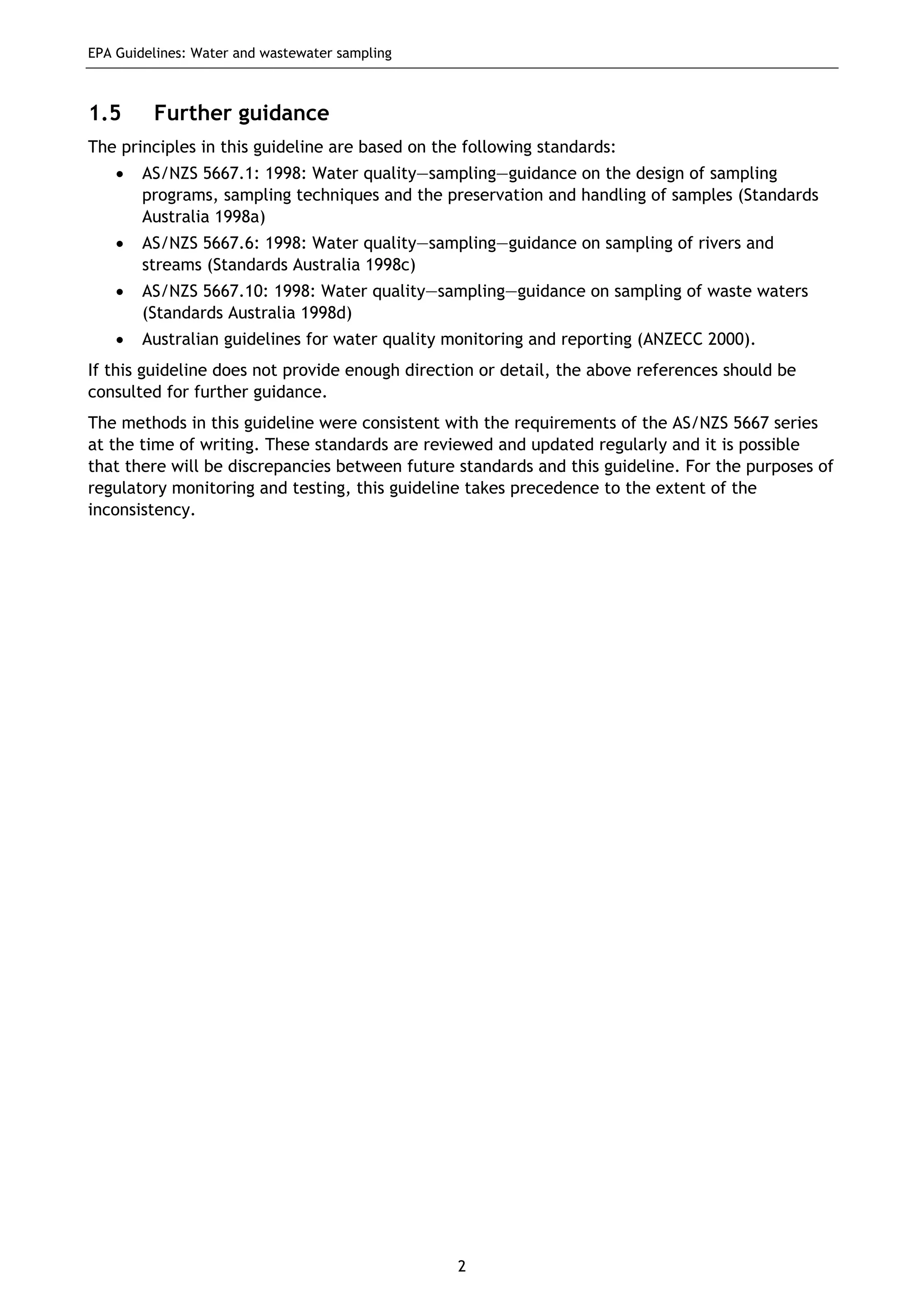
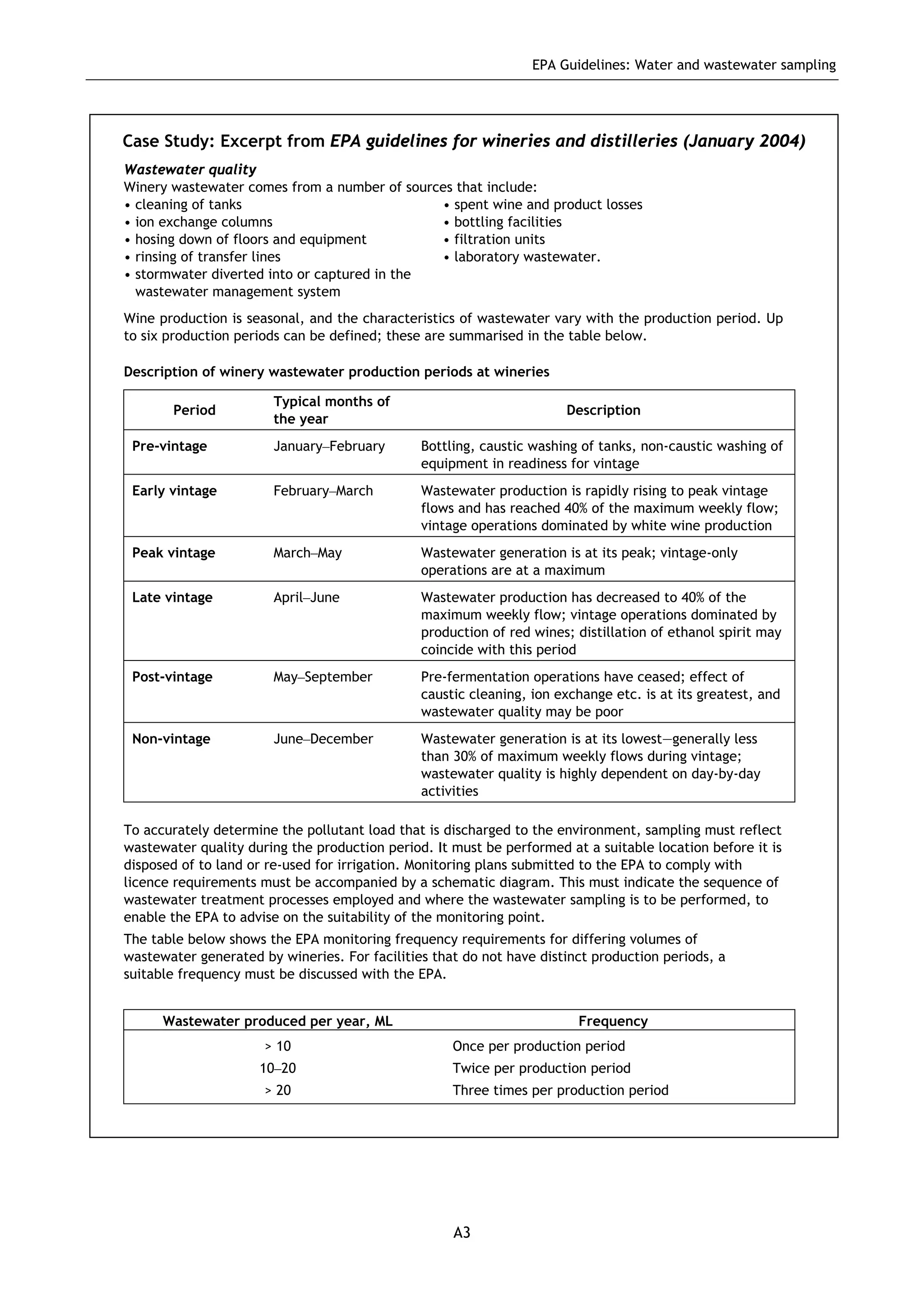
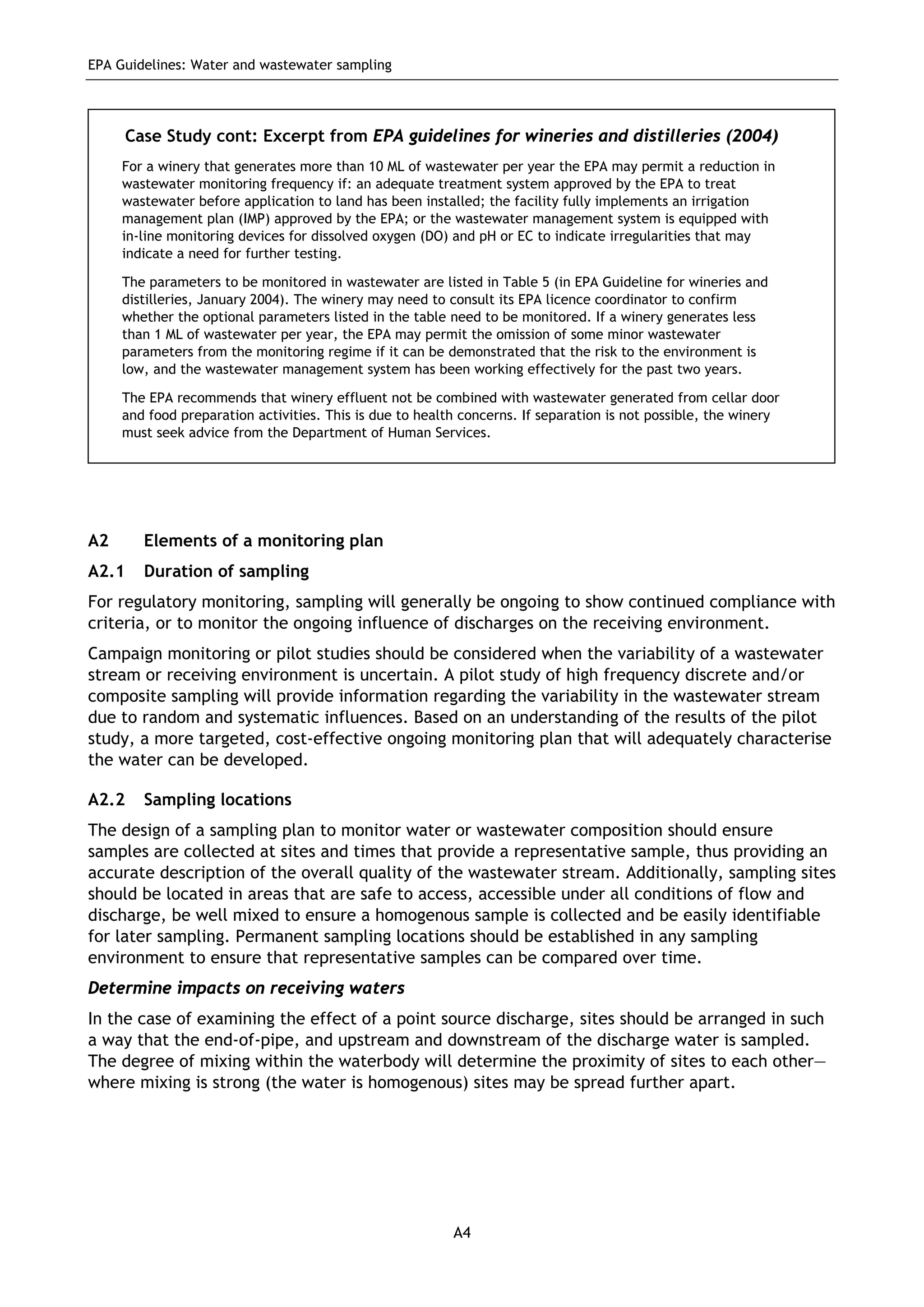
The main steps associated with monitoring are presented in Figure 1 below.
Figure 1 Stages of monitoring
Develop monitoring
plan:
why, what, how, when,
where, who
Prepare for
sampling
Review logistical issues,
organise sampling
equipment
Record site
conditions
See section 3 of this guideline
See section 4
See section 5
Decontaminate
equipment
Collect samples for
laboratory analysis
Collect and label
samples including QC
samples
Filter sample
where required
Preserve sample
Undertake field
tests
Calibrate equipment
Record results
Decontaminate
equipment See section 5.6
See section 5
See sections 5.5 & 6
See section 5.2
Review results and
report
Laboratory analysis
Transport samples See section 6.3
See sections 7 & 8
See section 8
EPA Guidelines: Water and wastewater sampling
4
2.2 Integrity of samples
To ensure that sampling is consistent, and of good quality and traceability, samples need to be
representative of the body from which they were taken. If the sample integrity is altered, the
information gained from analysis could be misleading and ultimately result in mismanagement of
water resources and/or polluting of the resource.
The main processes that have the potential to affect the integrity of a sample are listed below.
These processes are interlinked and a change in one thing may have a flow-on effect that will
influence another, eg a change in temperature can cause chemical changes.
Contamination
Contamination of a sample occurs when foreign substances are introduced into it. This will lead
to the sample having characteristics that are not representative of the in situ conditions.
Contamination of a sample can occur at any stage of the sampling process from the collection of
samples through to the final analysis, and will have a direct effect on the integrity of the
sample. As many results are reported in fractions of grams, even extremely small volumes of
contaminants can significantly affect results. Contamination can be very costly, especially if
decisions are based on unrepresentative data.
Physical changes
Any process that changes the physical nature of a sample may affect the integrity of that
sample. Examples of physical changes are listed below:
Temperature of water varies throughout the day and year. A change in temperature can alter
the chemical properties of a wide range of many parameters.
Volatilisation is the loss of dissolved compounds by evaporation. It is controlled by the vapour
pressure of the solute or solvent. Compounds most susceptible to volatilisation include volatile
organic compounds such as chlorinated hydrocarbons (eg TCE) and monocyclic aromatic
hydrocarbons (eg benzene).
Sorption is the attraction of dissolved substances to the surface of solid particles, sampling
equipment and sampling bottles. Any process or activity that increases suspended solids in
samples can change the measured concentrations of dissolved major ions, heavy metals and
hydrophobic organic compounds (eg organochlorinated pesticides).
Degassing is the loss of dissolved gas from a solution and can result from either an increase in
temperature, or a decrease in pressure. Parameters potentially affected by degassing are pH
(likely to increase through loss of carbon dioxide) and pH-sensitive parameters such as dissolved
heavy metals, alkalinity and ammonium. Total dissolved solids (TDS) and total organic carbon
(TOC) are also affected and are likely to decrease in concentration due to degassing.
Chemical changes
Precipitation is the formation of solids from dissolved constituents. It can be caused by a change
in conditions, such as temperature, pH, chemical concentration, or the presence of seed
particles to begin the process. For example, where a groundwater sample experiences loss of
carbon dioxide a rapid change in pH can occur, causing precipitation of metals such as iron.
Oxidation is caused by the introduction of oxygen (in air) to the sample. Oxidation results in
increased dissolved oxygen, pH and redox. These changes can lead to decreases in
concentrations of calcium ions, magnesium ions, heavy metals (particularly iron and manganese),
hydrogen sulphide and ammonium. Oxidation could also lower the concentrations of bulk organic
parameters, chemical oxygen demand (COD), biological oxygen demand (BOD) and TOC, due to
EPA Guidelines: Water and wastewater sampling
5
accelerating oxidation of organic constituents such as volatile fatty acids and semi-volatile
organic carbon.
Biological processes
Biological activity in a sample may affect both its physical and chemical characteristics.
Parameters such as nitrite and nitrate can be affected by bacterial activity, i.e. denitrification.
Biological activity may change the amount of dissolved oxygen, the pH and/or redox. Factors
influencing the biological activity of a sample may in turn be influenced by temperature,
available oxygen, pH and exposure to UV light.
The collection, equipment and preservation methods used for sampling should be chosen to
minimise the impacts of the above-mentioned factors. To minimise and to quantify the impact of
these processes on sample integrity, quality control protocols and procedures must be developed
and implemented at all stages of monitoring.
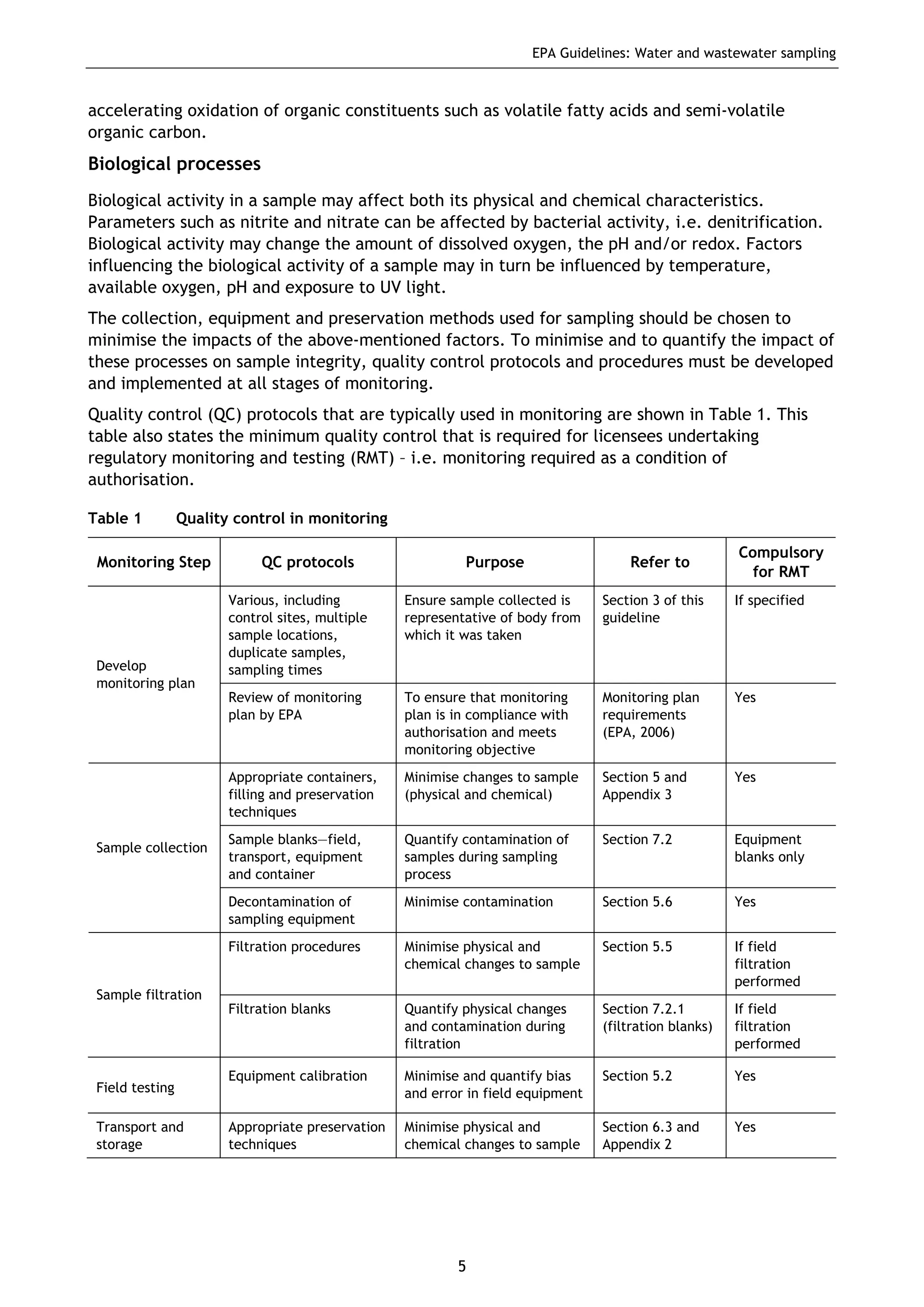
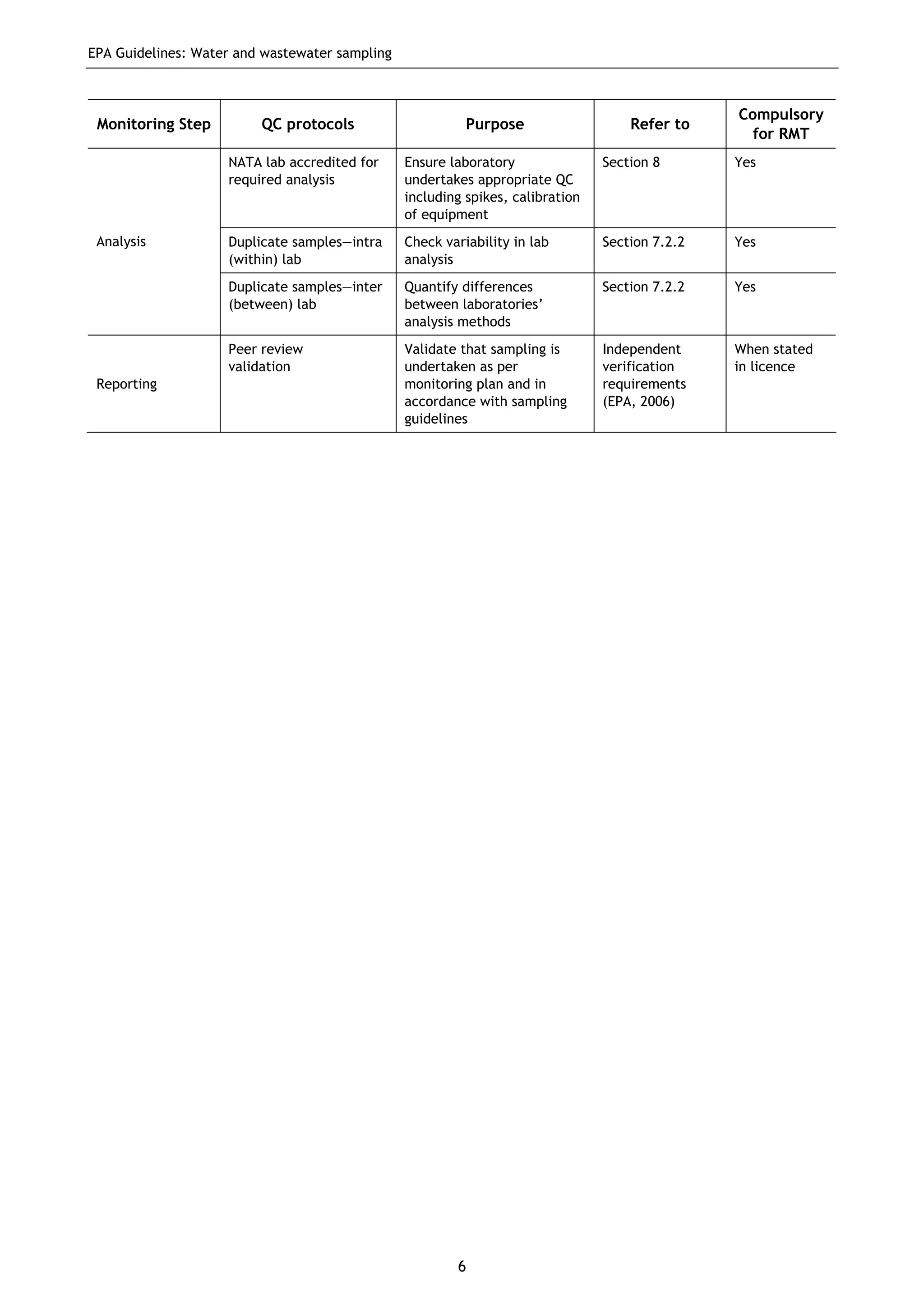
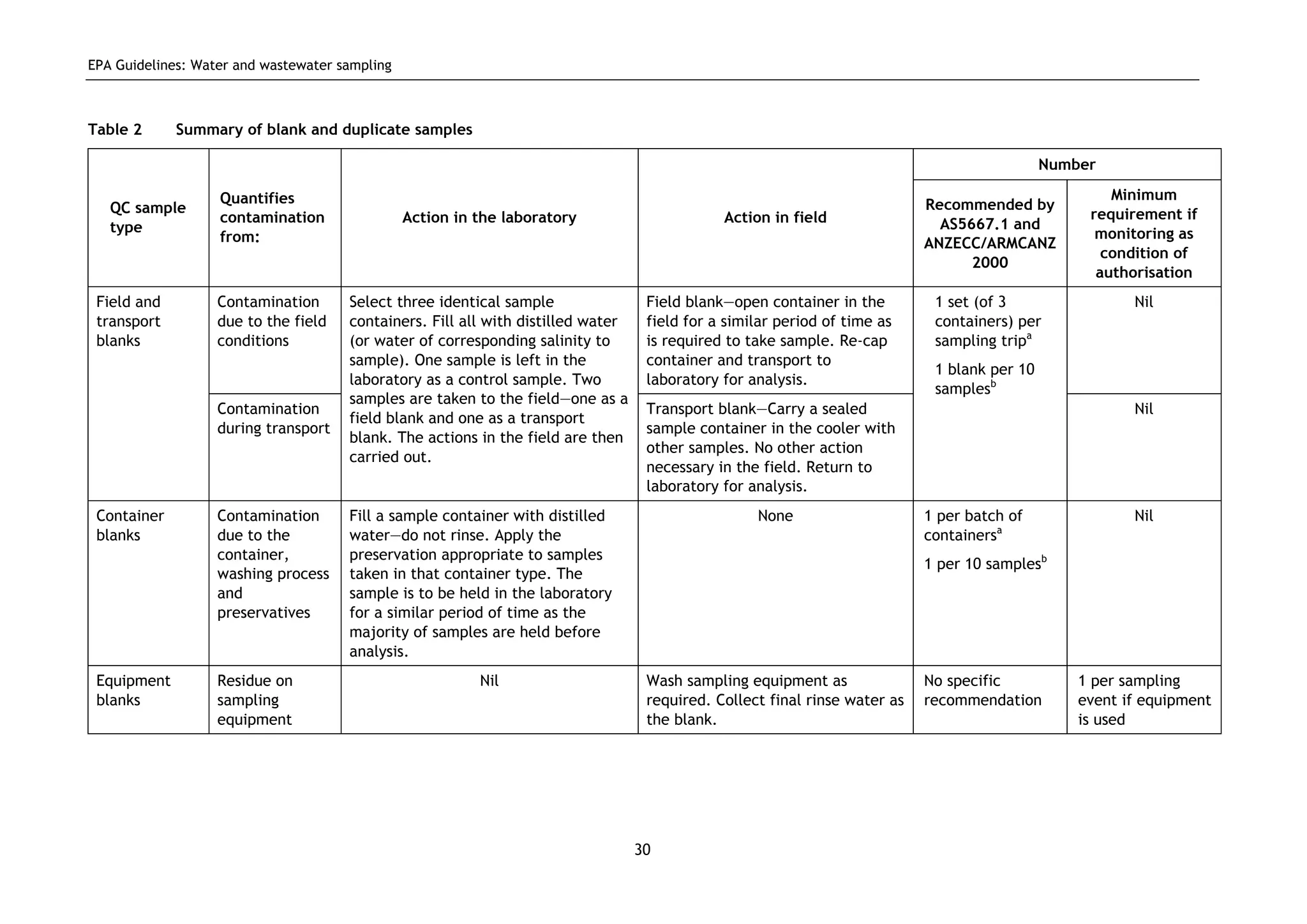
Quality control (QC) protocols that are typically used in monitoring are shown in Table 1. This
table also states the minimum quality control that is required for licensees undertaking
regulatory monitoring and testing (RMT) – i.e. monitoring required as a condition of
authorisation.
Table 1 Quality control in monitoring
Monitoring Step QC protocols Purpose Refer to
Compulsory
for RMT
Various, including
control sites, multiple
sample locations,
duplicate samples,
sampling times
Ensure sample collected is
representative of body from
which it was taken
Section 3 of this
guideline
If specified
Develop
monitoring plan
Review of monitoring
plan by EPA
To ensure that monitoring
plan is in compliance with
authorisation and meets
monitoring objective
Monitoring plan
requirements
(EPA, 2006)
Yes
Appropriate containers,
filling and preservation
techniques
Minimise changes to sample
(physical and chemical)
Section 5 and
Appendix 3
Yes
Sample blanks—field,
transport, equipment
and container
Quantify contamination of
samples during sampling
process
Section 7.2 Equipment
blanks only
Sample collection
Decontamination of
sampling equipment
Minimise contamination Section 5.6 Yes
Filtration procedures Minimise physical and
chemical changes to sample
Section 5.5 If field
filtration
performed
Sample filtration
Filtration blanks Quantify physical changes
and contamination during
filtration
Section 7.2.1
(filtration blanks)
If field
filtration
performed
Field testing
Equipment calibration Minimise and quantify bias
and error in field equipment
Section 5.2 Yes
Transport and
storage
Appropriate preservation
techniques
Minimise physical and
chemical changes to sample
Section 6.3 and
Appendix 2
Yes
EPA Guidelines: Water and wastewater sampling
6
Monitoring Step QC protocols Purpose Refer to
Compulsory
for RMT
NATA lab accredited for
required analysis
Ensure laboratory
undertakes appropriate QC
including spikes, calibration
of equipment
Section 8 Yes
Duplicate samples—intra
(within) lab
Check variability in lab
analysis
Section 7.2.2 YesAnalysis
Duplicate samples—inter
(between) lab
Quantify differences
between laboratories’
analysis methods
Section 7.2.2 Yes
Reporting
Peer review
validation
Validate that sampling is
undertaken as per
monitoring plan and in
accordance with sampling
guidelines
Independent
verification
requirements
(EPA, 2006)
When stated
in licence
EPA Guidelines: Water and wastewater sampling
7
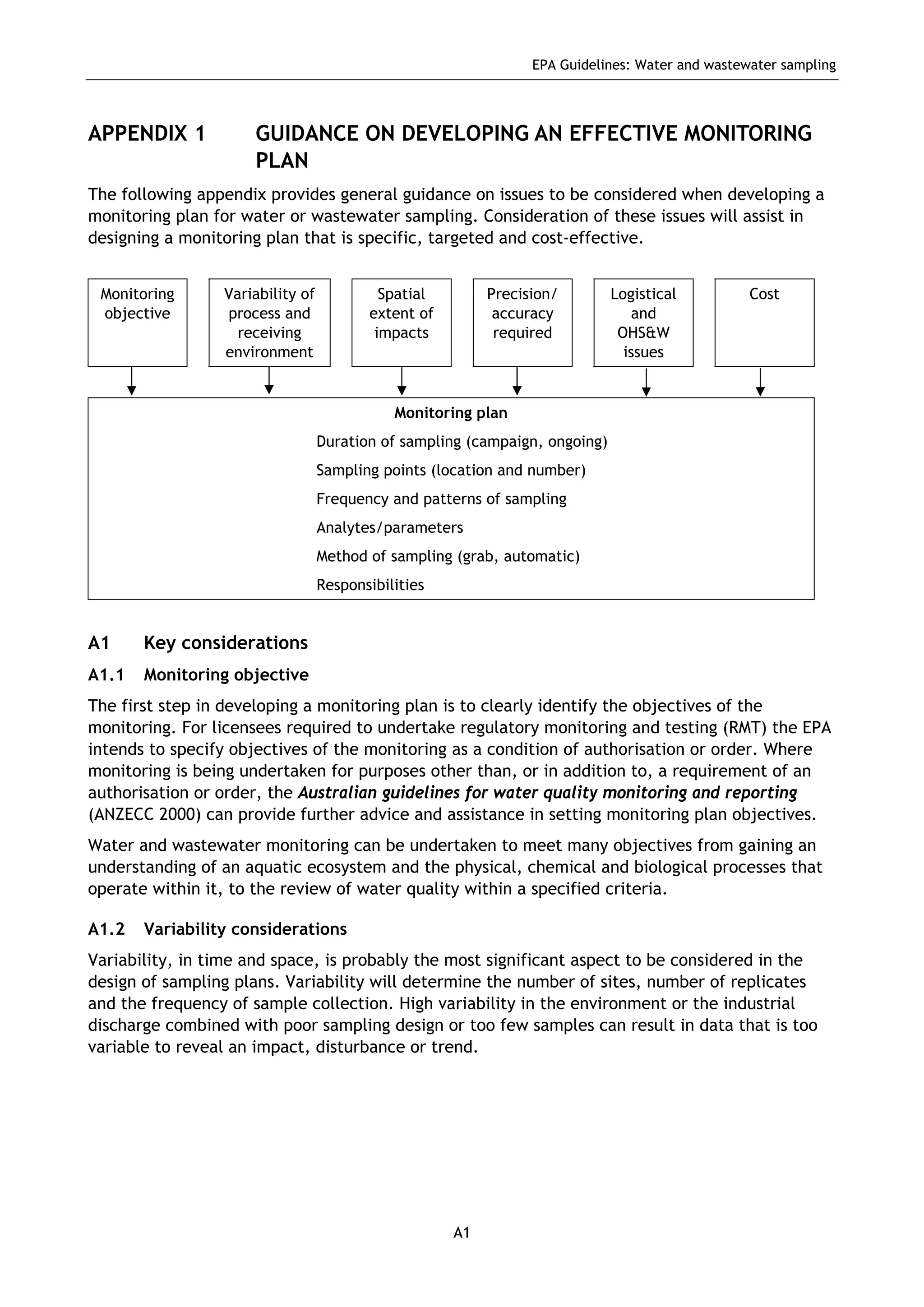
3 DEVELOPING A MONITORING PLAN
To ensure that monitoring is specific, targeted and cost effective, a monitoring plan should be
developed. A monitoring plan is the document that details the actions, responsibilities and
timeframes that will deliver monitoring that meets monitoring objectives.
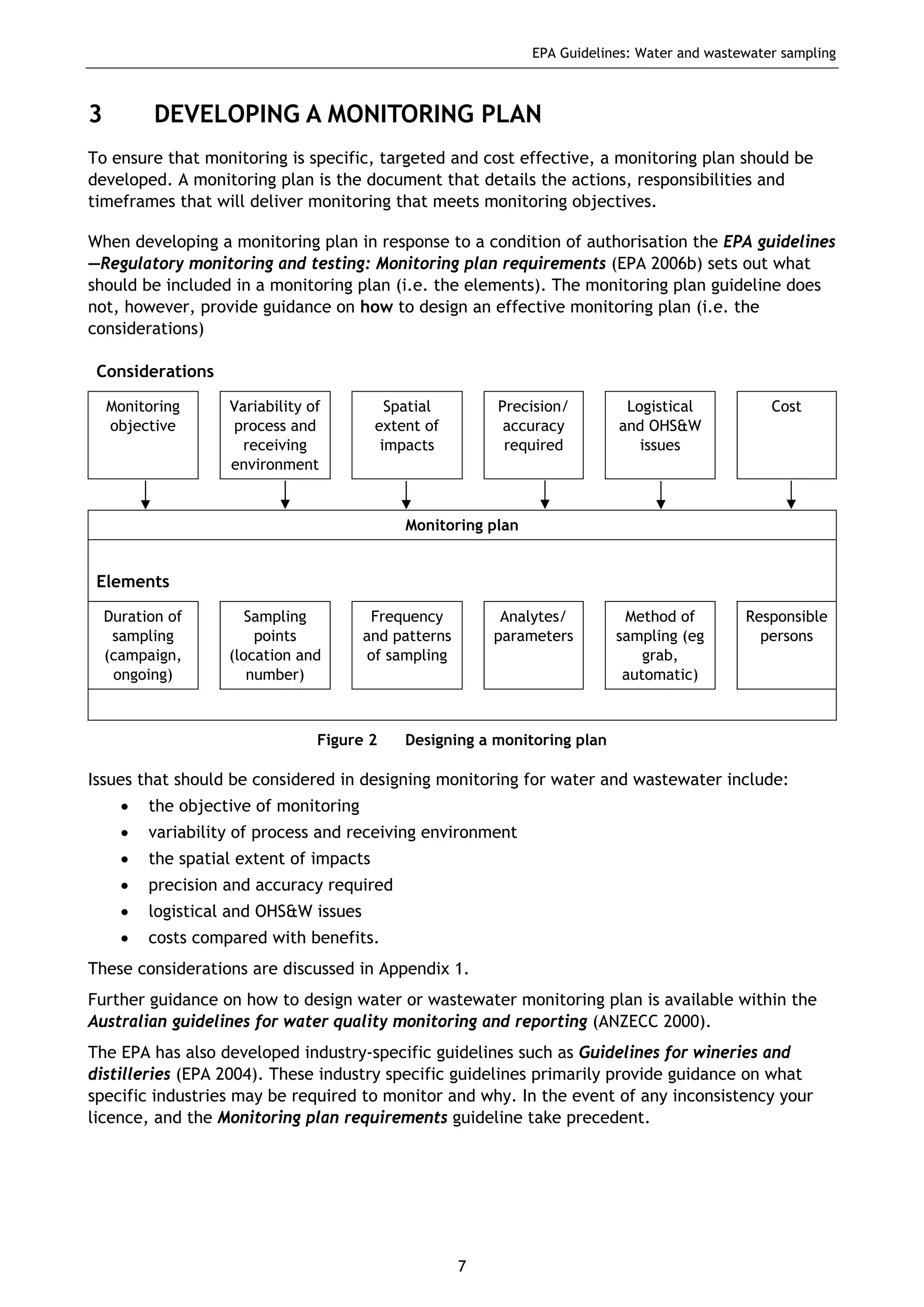
When developing a monitoring plan in response to a condition of authorisation the EPA guidelines
—Regulatory monitoring and testing: Monitoring plan requirements (EPA 2006b) sets out what
should be included in a monitoring plan (i.e. the elements). The monitoring plan guideline does
not, however, provide guidance on how to design an effective monitoring plan (i.e. the
considerations)
Considerations
Monitoring
objective
Variability of
process and
receiving
environment
Spatial
extent of
impacts
Precision/
accuracy
required
Logistical
and OHS&W
issues
Cost
Monitoring plan
Elements
Duration of
sampling
(campaign,
ongoing)
Sampling
points
(location and
number)
Frequency
and patterns
of sampling
Analytes/
parameters
Method of
sampling (eg
grab,
automatic)
Responsible
persons
Figure 2 Designing a monitoring plan
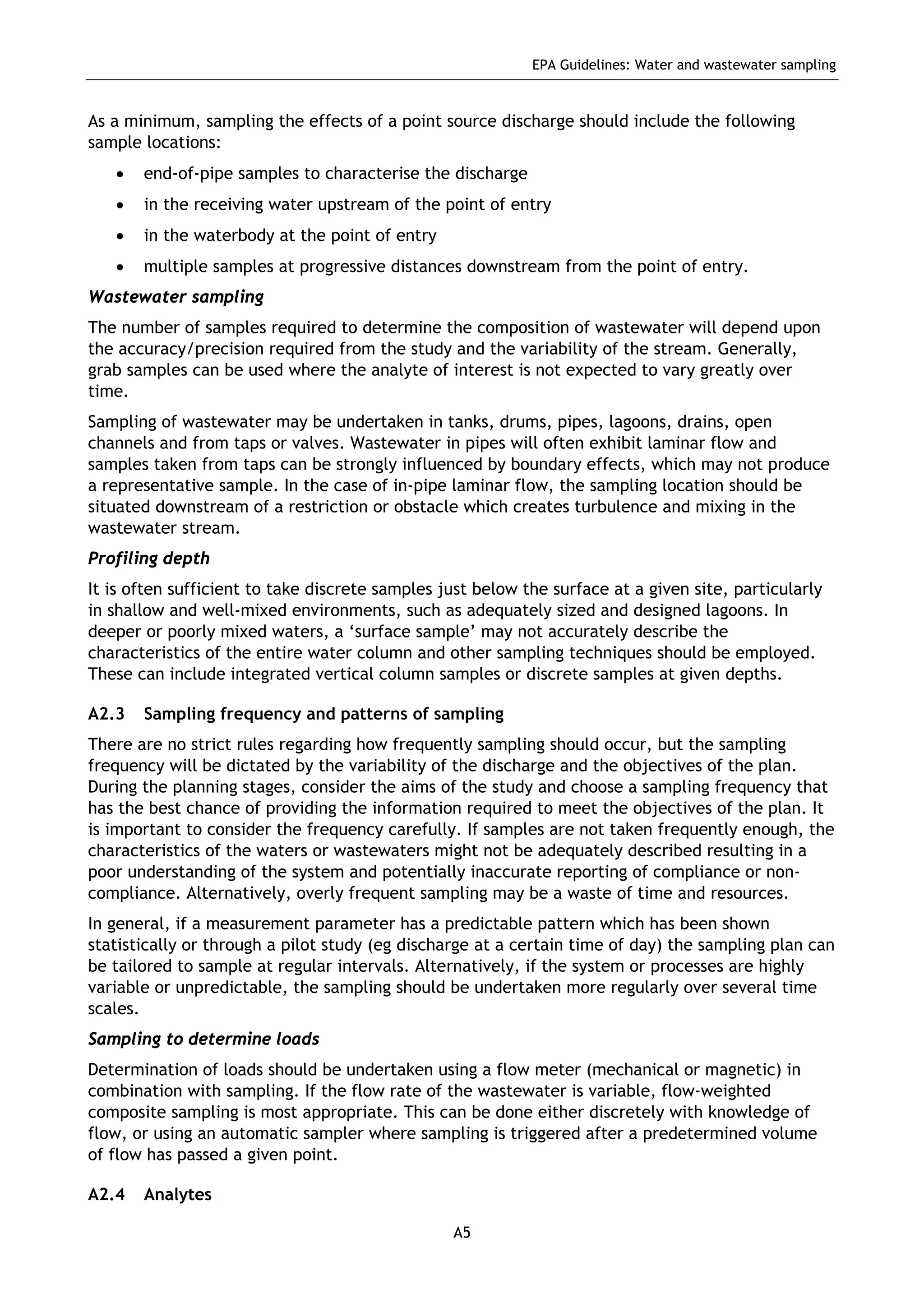
Issues that should be considered in designing monitoring for water and wastewater include:
• the objective of monitoring
• variability of process and receiving environment
• the spatial extent of impacts
• precision and accuracy required
• logistical and OHS&W issues
• costs compared with benefits.
These considerations are discussed in Appendix 1.
Further guidance on how to design water or wastewater monitoring plan is available within the
Australian guidelines for water quality monitoring and reporting (ANZECC 2000).
The EPA has also developed industry-specific guidelines such as Guidelines for wineries and
distilleries (EPA 2004). These industry specific guidelines primarily provide guidance on what
specific industries may be required to monitor and why. In the event of any inconsistency your
licence, and the Monitoring plan requirements guideline take precedent.
EPA Guidelines: Water and wastewater sampling
8
4 PLANNING A SAMPLING EVENT
Careful planning and preparation of a sampling event is important and will save time and reduce
the number of difficulties that commonly occur during sampling.
4.1 Logistics
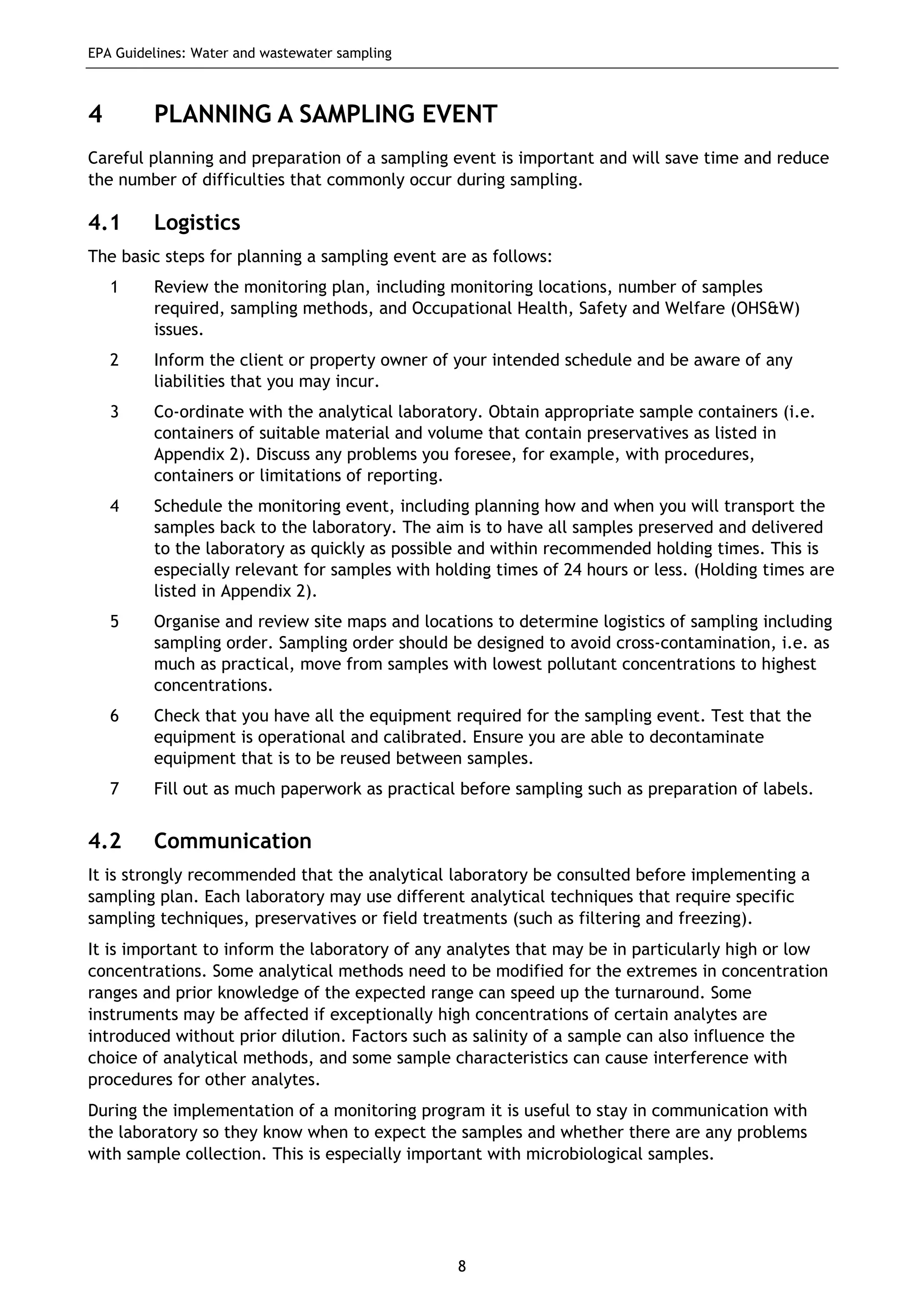
The basic steps for planning a sampling event are as follows:
1 Review the monitoring plan, including monitoring locations, number of samples
required, sampling methods, and Occupational Health, Safety and Welfare (OHS&W)
issues.
2 Inform the client or property owner of your intended schedule and be aware of any
liabilities that you may incur.
3 Co-ordinate with the analytical laboratory. Obtain appropriate sample containers (i.e.
containers of suitable material and volume that contain preservatives as listed in
Appendix 2). Discuss any problems you foresee, for example, with procedures,
containers or limitations of reporting.
4 Schedule the monitoring event, including planning how and when you will transport the
samples back to the laboratory. The aim is to have all samples preserved and delivered
to the laboratory as quickly as possible and within recommended holding times. This is
especially relevant for samples with holding times of 24 hours or less. (Holding times are
listed in Appendix 2).
5 Organise and review site maps and locations to determine logistics of sampling including
sampling order. Sampling order should be designed to avoid cross-contamination, i.e. as
much as practical, move from samples with lowest pollutant concentrations to highest
concentrations.
6 Check that you have all the equipment required for the sampling event. Test that the
equipment is operational and calibrated. Ensure you are able to decontaminate
equipment that is to be reused between samples.
7 Fill out as much paperwork as practical before sampling such as preparation of labels.
4.2 Communication
It is strongly recommended that the analytical laboratory be consulted before implementing a
sampling plan. Each laboratory may use different analytical techniques that require specific
sampling techniques, preservatives or field treatments (such as filtering and freezing).
It is important to inform the laboratory of any analytes that may be in particularly high or low
concentrations. Some analytical methods need to be modified for the extremes in concentration
ranges and prior knowledge of the expected range can speed up the turnaround. Some
instruments may be affected if exceptionally high concentrations of certain analytes are
introduced without prior dilution. Factors such as salinity of a sample can also influence the
choice of analytical methods, and some sample characteristics can cause interference with
procedures for other analytes.
During the implementation of a monitoring program it is useful to stay in communication with
the laboratory so they know when to expect the samples and whether there are any problems
with sample collection. This is especially important with microbiological samples.
EPA Guidelines: Water and wastewater sampling
9
4.3 Equipment
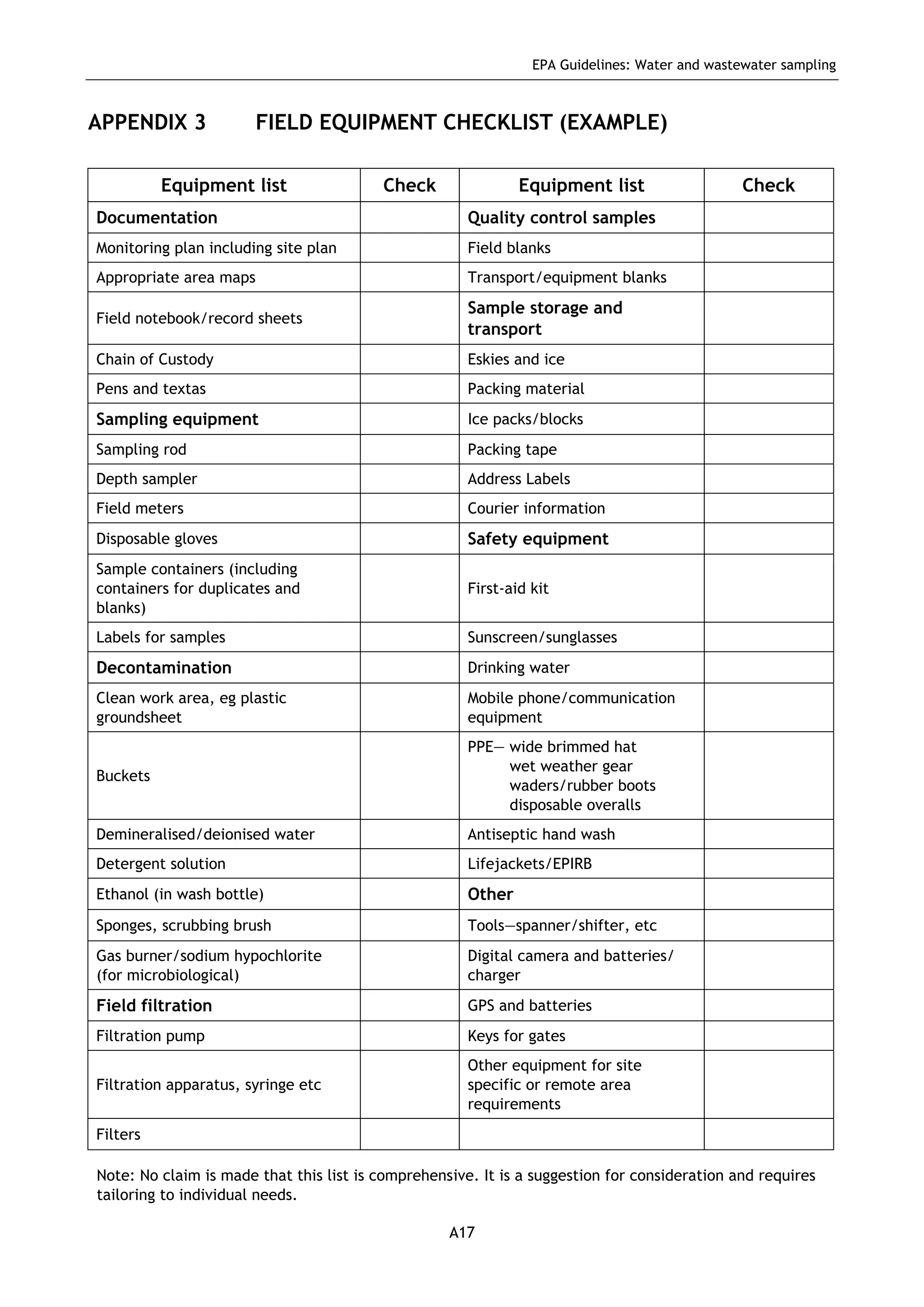
An example of an equipment checklist is included in Appendix 3. Major items of equipment likely
to be needed are discussed as follows:
Paper work and record keeping: Good planning and record keeping is imperative. The sampling
plan, or concise sampling schedule and map should provide all the required information such as
location of monitoring points, the number and type of samples that need to be collected and
container types. Records of observations and actions can be critical for future reference. A
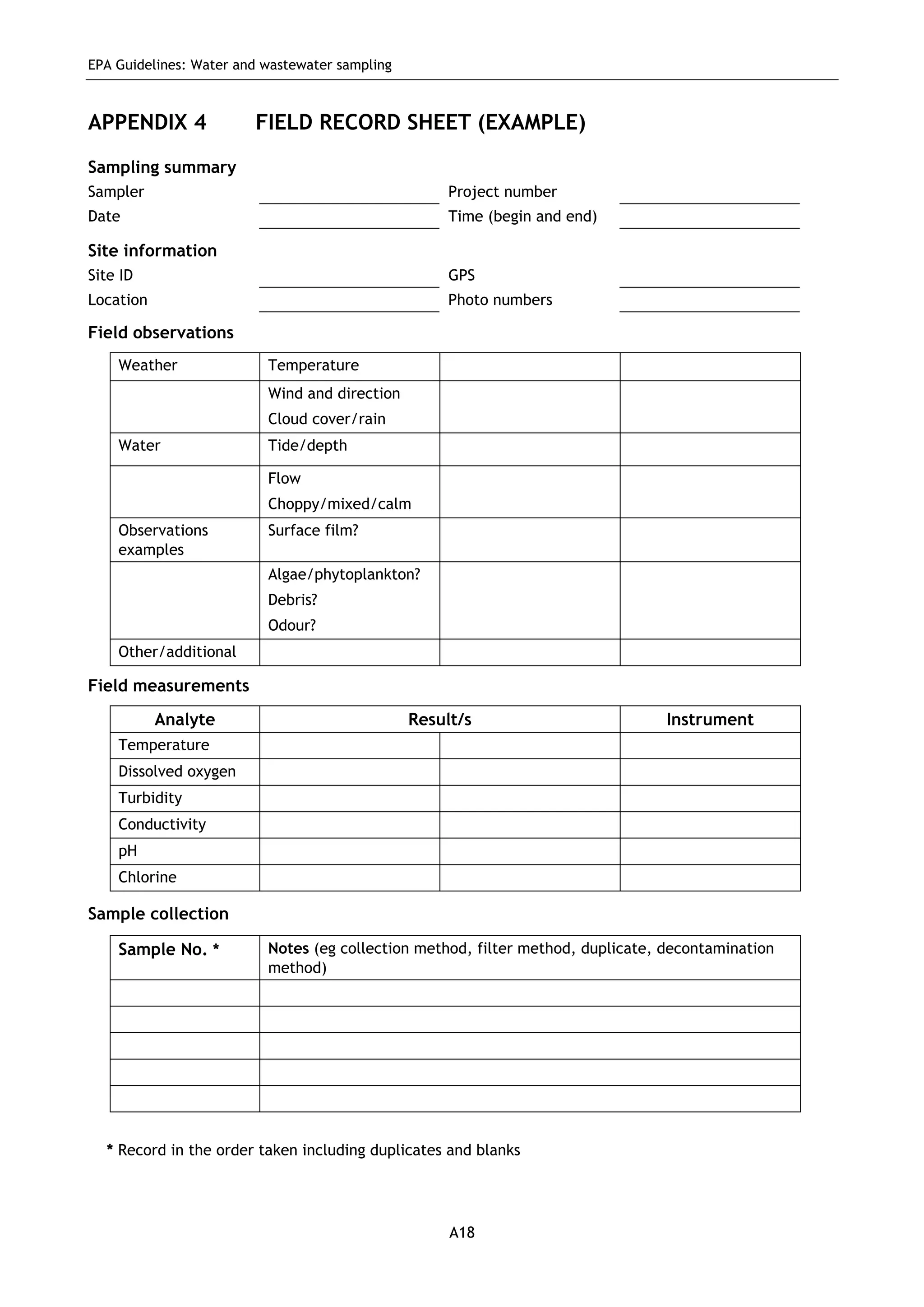
sampling data sheet similar to that in Appendix 4 is recommended to ensure that a complete
record of each sampling site and event is kept. Other required paperwork includes Chain of
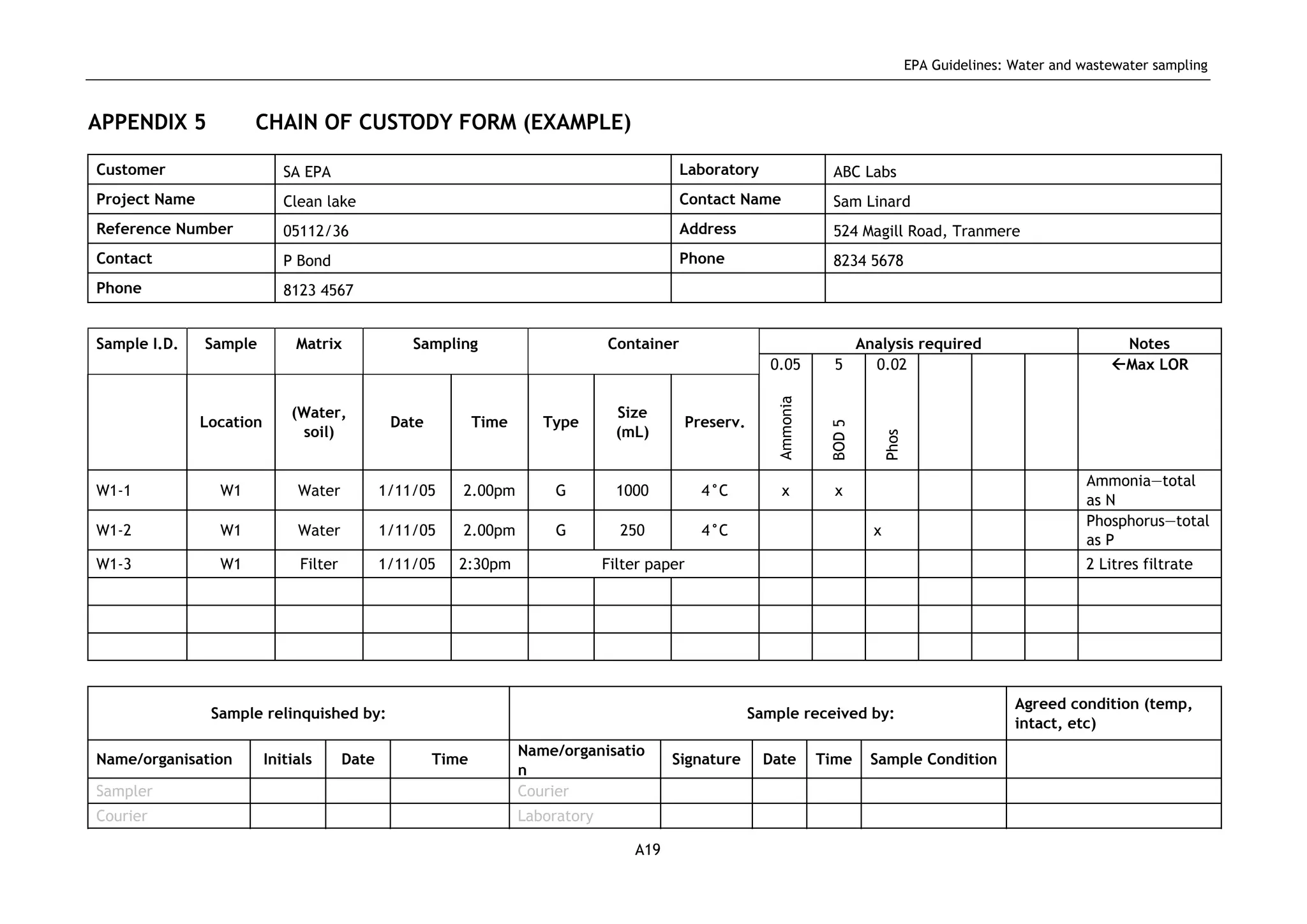
Custody forms (see Section 6.2 and Appendix 5) and labels.
Navigational aids: It is important to be able to accurately locate the sampling site for future
reference. A modern Global Positioning System (GPS) can be a useful aid in accurately locating a
sampling site. Before attempting to navigate using GPS the sampler should be trained and
competent in the use of these systems. The sampling locations should also be recorded on site
maps.
Field testing meters: Some analytes are most reliably determined at the point of sampling. See
Section 5.2 for further information.
Sampling containers: As the wrong sampling equipment can affect the integrity of the sample, it
is important to use appropriate sample containers for each of the various parameters.
Additionally, treatments are applied to the sampling containers for some parameters to ensure
sample integrity. Appropriate sample containers and preservation methods are listed in Appendix
2. Your analytical laboratory should be able to provide appropriate containers with required
treatments.
Other sampling equipment: Other forms of sampling equipment may include sampling rods,
bucket and rope (refer to Section 5.3), depth equipment (Section 5.3) or filtration equipment
(Section 5.5).
Decontamination of sampling equipment: All sampling equipment presents a risk of cross-
contamination and should be thoroughly cleaned between samples. Further information on
decontamination is outlined in Section 5.6. Decontamination equipment may include detergents,
ethanol, scrubbing brushes, tap water, distilled water and a receptacle for collecting waste
rinse. A burner or 10% sodium hypochlorite solution may be required for microbiological samples.
Esky or refrigerator: Most types of sample require chilling as a means of preservation. Samples
can be stored on ice in an esky or in a car refrigerator, and the temperature should be
maintained between 1°C and 4°C.
Camera: Photographs can show where the sample was taken and illustrate observations recorded
on the field datasheet. It is good practice to take photographs on the first visit to a sampling
location and when there are any unusual conditions at the site that may affect the sample.
EPA Guidelines: Water and wastewater sampling
10
4.4 Occupational health, safety and welfare
There are many hazards to be aware of when working in any field environment. It is
recommended that a specific safety plan be developed for each monitoring plan. The safety plan
should be developed to address risks and may include such things as:
• hazard identification, risk assessment and hazard control measures. Typical hazards in
sampling include:
— vehicle breakdown or accident, bogging in wet conditions
— exposure to hazardous substances eg decontamination chemicals, analytes, toxic
products formed from sample preparation or stabilisation (eg acidification) and toxic
gases such as hydrogen sulphide, bacteria in wellhead or groundwater
— temperature hazards, typically sunburn and heatstroke
— working in, over or adjacent to water
— poisonous animals (spiders, snakes) and plants
• actions to be undertaken to remove, reduce or control risk
• emergency procedures and information such as location of nearest medical facility.
When conducting a sampling event, the right safety equipment will make the task safer. This
equipment can be preventative or provide assistance in the case of an incident. The sampling
checklist (see Appendix 3) provides an example list of the type of personal protective equipment
(PPE) that may be required for sampling in the field. Additional protective equipment may be
necessary as required by the specialist nature of a particular sampling task or the OHS&W policy
of your employer.
EPA Guidelines: Water and wastewater sampling
11
5 SAMPLE COLLECTION AND FIELD TESTING PROCEDURES
Samples should only be collected by personnel who have proper training and adequate
experience.
5.1 Field observations
During every sampling event, observations of field conditions that could assist in the
interpretation of monitoring data are to be recorded. This can provide useful information about
the water being sampled, which can help diagnose the source and potential impact of pollutants
found by chemical analysis.
Examples of such field conditions are as follows:
• recent rain can wash potential pollutants from surrounding land into waterways
• winds may drive some constituents toward one side of the waterbody or create mixing
which might help dissipate them more quickly
• shading from cloud and vegetation can influence the level of dissolved oxygen.
Any abnormalities that may indicate pollution or affect water quality, such as absence of flow,
presence of surface scum, water colour or odours, excessive algal or plant growth, dead fish or
invertebrates should also be noted.
5.2 Field measurements
Analytes that quickly degrade after they are sampled must be tested in the field. Field testing
may also be used for other samples that can be reliably and cheaply measured in the field.
Where possible, field measurements should be undertaken in situ. AS/NZS 5667.1 recommends
the following analytes be measured in the field as concentrations of these analytes can be
significantly changed during transport and storage:
• dissolved oxygen (DO)
• temperature
• pH
• conductivity
• redox (reduction/oxidation potential)
• turbidity
• chlorine.
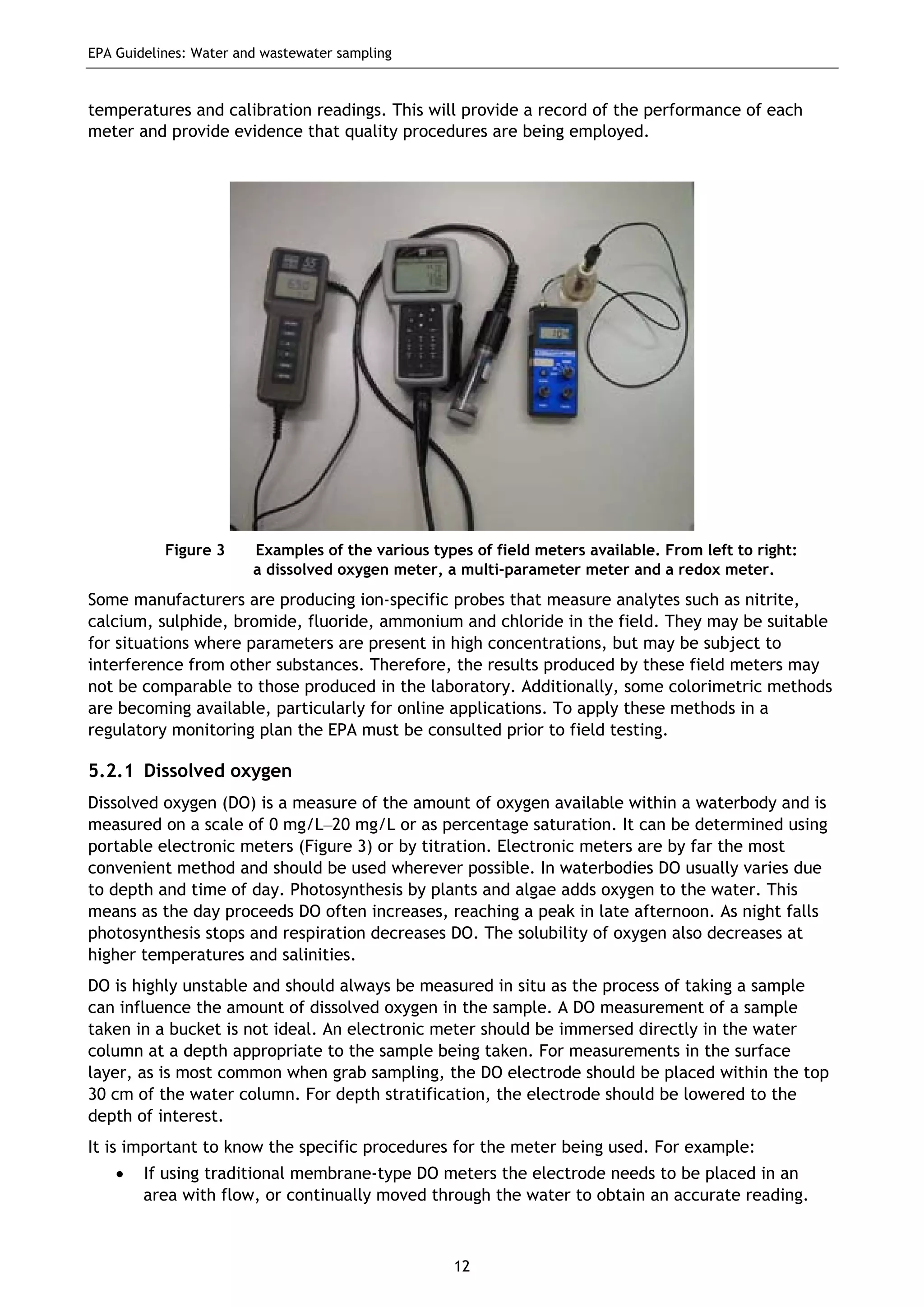
Many of these analytes can be reliably measured using multi-parameter meters—usually with an
electrode for each analyte (Figure 3). Field meters will not provide accurate results unless they
are calibrated before use. In particular, dissolved oxygen, pH and turbidity often drift from day
to day. Calibration requirements will vary between meters and manufacturers so it is important
to follow the instructions supplied with the equipment. It is recommended that meters be
calibrated prior to every sampling event as a minimum.
Most electrodes are calibrated using standard solutions of known properties. These can be
purchased from various laboratory supply companies or sourced from a National Association of
Testing Authorities (NATA) accredited analytical laboratory. Standard solutions have a limited
shelf life and can deteriorate if not stored correctly (away from light at 20°C for most solutions
is acceptable). The quality of standard solutions will directly influence the performance of the
meter so it is important that if there is any doubt, fresh standard solutions be obtained.
Calibration of all meters should be routinely recorded on a standard sheet including dates,
EPA Guidelines: Water and wastewater sampling
12
temperatures and calibration readings. This will provide a record of the performance of each
meter and provide evidence that quality procedures are being employed.
Figure 3 Examples of the various types of field meters available. From left to right:
a dissolved oxygen meter, a multi-parameter meter and a redox meter.
Some manufacturers are producing ion-specific probes that measure analytes such as nitrite,
calcium, sulphide, bromide, fluoride, ammonium and chloride in the field. They may be suitable
for situations where parameters are present in high concentrations, but may be subject to
interference from other substances. Therefore, the results produced by these field meters may
not be comparable to those produced in the laboratory. Additionally, some colorimetric methods
are becoming available, particularly for online applications. To apply these methods in a
regulatory monitoring plan the EPA must be consulted prior to field testing.
5.2.1 Dissolved oxygen
Dissolved oxygen (DO) is a measure of the amount of oxygen available within a waterbody and is
measured on a scale of 0 mg/L–20 mg/L or as percentage saturation. It can be determined using
portable electronic meters (Figure 3) or by titration. Electronic meters are by far the most
convenient method and should be used wherever possible. In waterbodies DO usually varies due
to depth and time of day. Photosynthesis by plants and algae adds oxygen to the water. This
means as the day proceeds DO often increases, reaching a peak in late afternoon. As night falls
photosynthesis stops and respiration decreases DO. The solubility of oxygen also decreases at
higher temperatures and salinities.
DO is highly unstable and should always be measured in situ as the process of taking a sample
can influence the amount of dissolved oxygen in the sample. A DO measurement of a sample
taken in a bucket is not ideal. An electronic meter should be immersed directly in the water
column at a depth appropriate to the sample being taken. For measurements in the surface
layer, as is most common when grab sampling, the DO electrode should be placed within the top
30 cm of the water column. For depth stratification, the electrode should be lowered to the
depth of interest.
It is important to know the specific procedures for the meter being used. For example:
• If using traditional membrane-type DO meters the electrode needs to be placed in an
area with flow, or continually moved through the water to obtain an accurate reading.
EPA Guidelines: Water and wastewater sampling
13
The reason for this is that membrane-type DO electrodes consume oxygen at the
water/membrane interface causing the DO reading to drift downwards. Care should be
taken to ensure that the movement is not rigorous enough to introduce more oxygen into
the water. However, some DO meters have mechanisms such as an inbuilt stirrer, a
vibrating probe or take short pulsed readings rather than continuous. These can deliver a
correct reading without the need to have water moving over the probe.
• Salinity and atmospheric pressure (and therefore altitude) can affect oxygen readings.
Many modern meters automatically correct for these variables and, therefore, the manual
should be checked to ensure this is the case. Meters without automatic correction may
require manual entry of this information.
5.2.2 Temperature
Temperature of a waterbody will vary throughout the day and at different depths. Water
temperature will move towards ambient temperature as soon as a sample is removed from the
waterbody. Thus, temperature should be measured in situ. Temperature can be measured using
a liquid-in-glass thermometer or a digital meter. However, multimeters, pH meters, conductivity
meters and DO meters will also often measure temperature, so it is unlikely you will need a
separate device. The probe or thermometer needs to be left fully immersed until a stable
reading is obtained. The time required for the thermometer to stabilise will vary according to
the temperature of the water and the individual thermometer or probe. Insufficient time can
lead to inaccurate readings.
5.2.3 pH
Field testing of pH can be achieved using a calibrated electronic meter or pH test strips. If pH
strips are available with the range and resolution required for sampling they can give a robust
and reliable measurement. Meters have a higher resolution but require careful calibration and
maintenance. Traditional pH meters have potassium chloride (KCl) solutions that need to be
topped up. The newer electrodes (including non-glass (ISFET), gel or liquid filled) are more
robust and reliable for field use.
As pH is temperature dependent, newer pH meters have been designed to automatically measure
temperature and adjust to give a correct pH reading. The user manual should be checked to
determine if this is the case. When calibrating a pH meter the temperature of standard solution
should be as close as possible to the sample solution to minimise the possibility of temperature
causing erroneous readings. Electrodes used for measuring pH are usually calibrated using a two
or three-point calibration with standard buffers of known pH. The buffers are commonly of
around pH 4 and 9, while the third would fall between the two to represent a neutral reading.
Buffer solutions for calibration should be either side of the range anticipated in the sampled
waters. This means that if it is anticipated that the sample will be strongly acidic or basic,
calibration standards that match the pH range to be worked within should be used.
5.2.4 Conductivity
Conductivity is easily measured in the field using a portable meter and electrode. This provides a
measure of the total ionic concentration of the sample solution in units of electrical conductivity
(EC), which can then be converted into total dissolved solids (TDS) by calculation.
EC can be converted to TDS using the equation:
TDS = (0.548 x EC) + (2.2 x 10⁻⁶
x EC2
)
where TDS = Total Dissolved Solids (mg/L)
EC = Electrical conductivity (μS/cm)
EPA Guidelines: Water and wastewater sampling
14
Many conductivity meters will automatically calculate TDS from EC. However, the equation
above was developed for a wide range of South Australian waters and is applicable for samples
within the conductivity range from 20 μS/cm to 60 000 μS/cm. This range covers the majority of
waters except for hypersaline environments. Any TDS calculated from conductivity
measurements outside this range should be treated with caution.
The conductivity of waters increases with temperature. Most modern portable conductivity
meters automatically compensate for small temperature variations from the calibration
temperature. However, if there is a large difference between the temperature of standard
solutions at the time of calibration and the sample solution at the time of measurement, a new
calibration may be required. For example, if a conductivity meter is calibrated early in the
morning and the temperature rises significantly through the course of the day, it is preferable to
recalibrate during the day. Similarly, standard solutions that have been refrigerated overnight
should be returned to room temperature before calibration.
5.2.5 Redox
Direct redox potential (or oxidation reduction potential) measurements determine the oxidising
or reducing capacity of waters. Redox must be measured in situ and it often varies substantially
in a waterbody, especially with depth. Redox potential can be measured using an electronic
meter or multimeter.
5.2.6 Turbidity
Turbidity meters are generally based on light attenuation principles. There is a large variation in
the reliability and accuracy of turbidity meters. It is therefore essential that turbidity meters are
regularly calibrated. When a reliable turbidity meter is not available, a representative sample
may be collected and turbidity measurement undertaken in a laboratory.
5.2.7 Chlorine
Chlorine dissipates quickly in solution and should be tested in the field.
It is important to determine what form of chlorine is required to be reported. Total chlorine
consists of free chlorine (chlorine gas, hypochlorite ion and hypochlorous acid) and combined
chlorine (eg chloramines). The most common forms required are total chlorine or free residual
chlorine. Free residual refers to the residual chlorine remaining at a certain location (eg outlet
of settling tank).
Chlorine can be tested in the field using a meter, a field titration or a pre-prepared chlorine kit.
Most of these methods are based upon colorimetry, where the reagent diethyl-p-phenylene
diamine (DPD) changes colour upon reaction with chlorine. Where tablets are provided it is
important that the tablets are current (not expired) and that contamination of the tablets prior
to use is avoided.
Where total chlorine is required to be measured chlorine meters or chlorine kits are
recommended, rather than field titrations. Field titrations can provide an accurate result and
differentiate between the different species of chlorine. However, they require specialised
equipment, are more easily contaminated and often impractical.
5.3 Collection of samples for analysis
5.3.1 Sampling equipment
It is important when undertaking sampling, particularly for trace analytes, that the sampling
equipment is inert, that is, it does not cause contamination or interference with the sample.
EPA Guidelines: Water and wastewater sampling
15
For example:
• Organics have a tendency to adsorb to plastic (including polyethylene, polypropylene and
polycarbonate). Therefore, stainless steel equipment such as buckets and sampling rods
should be used. Glass sample containers are preferred.
• When sampling for metal analytes the use of metal equipment, and some glasses such as
soda glass should be avoided. Rubber can also cause contamination when sampling for
trace concentrations. Plastic equipment should be used when possible when analysing for
metals.
• When sampling for analytes that are the major constituents of glass (eg sodium,
potassium, boron and silicon), glass equipment and containers should be avoided.
Appendix 2 provides information on the type of sampling container (eg glass, plastic), typical
required volume, filling technique and preservation requirements for common analytes. The
container type, as listed in Appendix 2, is a useful guide to the most appropriate material for
sample equipment. Where uncertainty exists as to whether the sampling equipment may cause
contamination or other effects, an equipment blank (as detailed in Section 7) should be
collected and analysed.
5.3.2 Surface samples—grab sampling
When the waterbody is shallow and well mixed, sub-surface water sampling is generally
adequate. Sub-surface samples should be taken from approximately 30 cm depth, with care
taken to ensure no floating films or organic material are collected unless they are of specific
interest. Stirring up and collection of bottom sediments will also compromise sample integrity.
Try and collect the sample a reasonable distance from the edge, unless specifically trying to
determine the water quality at the edge, as edge water quality is generally not typical of the
majority of the waterbody. When practical, collect the sample directly into the sample
container. Where this is not practical (such as when a sample cannot be collected without loss of
preservative) an intermediate container may be used.
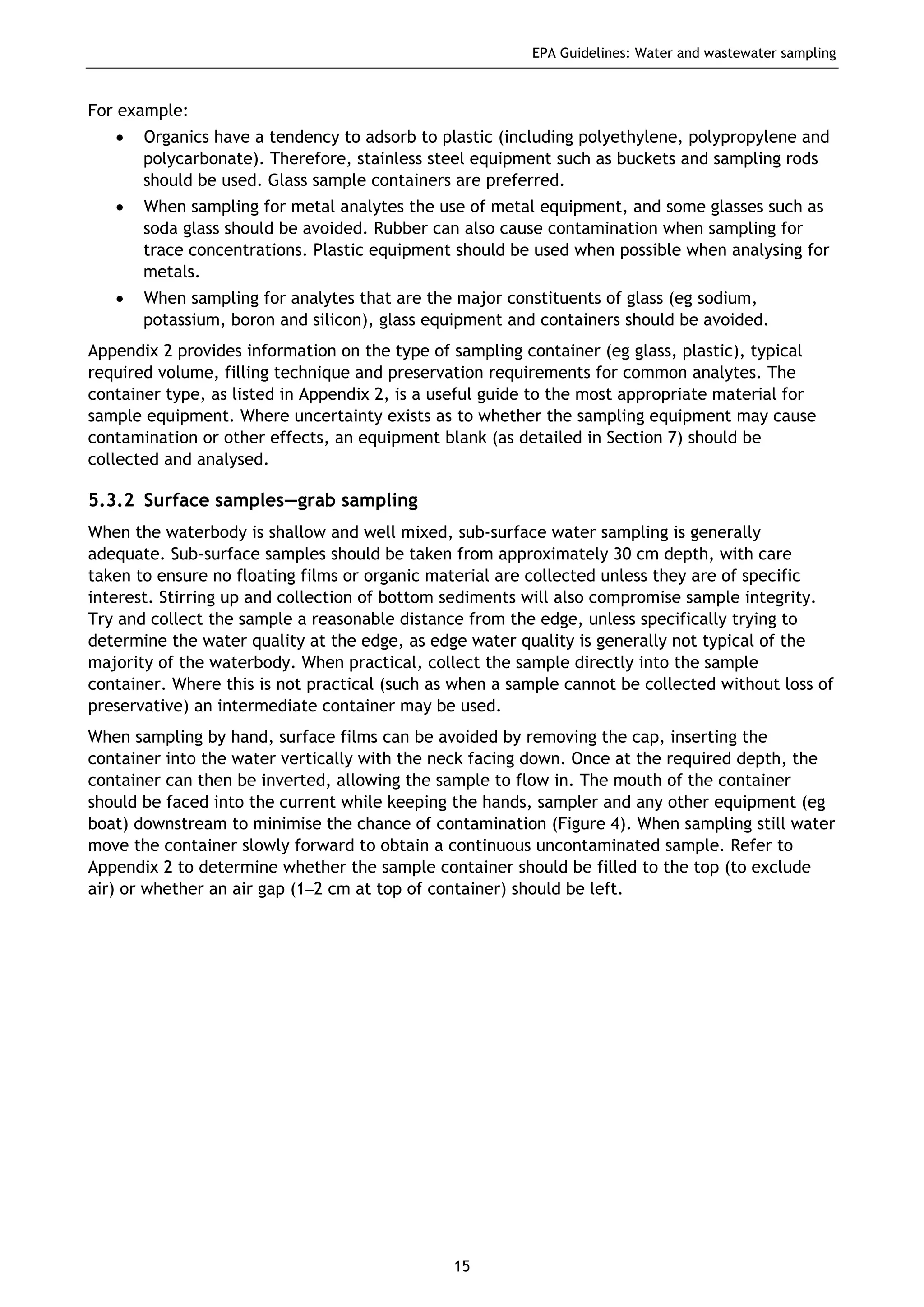
When sampling by hand, surface films can be avoided by removing the cap, inserting the
container into the water vertically with the neck facing down. Once at the required depth, the
container can then be inverted, allowing the sample to flow in. The mouth of the container
should be faced into the current while keeping the hands, sampler and any other equipment (eg
boat) downstream to minimise the chance of contamination (Figure 4). When sampling still water
move the container slowly forward to obtain a continuous uncontaminated sample. Refer to
Appendix 2 to determine whether the sample container should be filled to the top (to exclude
air) or whether an air gap (1–2 cm at top of container) should be left.
EPA Guidelines: Water and wastewater sampling
16
Figure 4 Sampling by hand
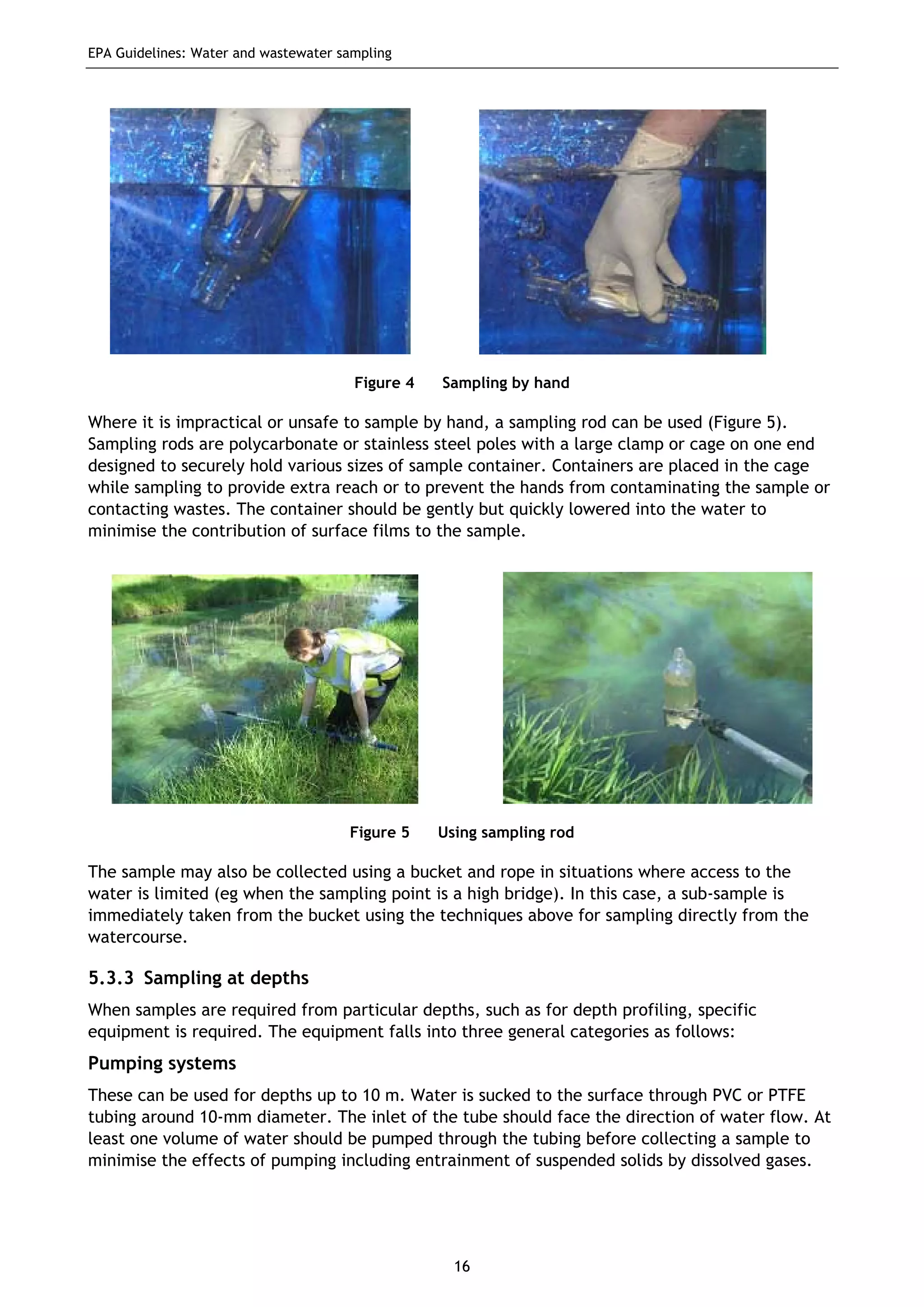
Where it is impractical or unsafe to sample by hand, a sampling rod can be used (Figure 5).
Sampling rods are polycarbonate or stainless steel poles with a large clamp or cage on one end
designed to securely hold various sizes of sample container. Containers are placed in the cage
while sampling to provide extra reach or to prevent the hands from contaminating the sample or
contacting wastes. The container should be gently but quickly lowered into the water to
minimise the contribution of surface films to the sample.
Figure 5 Using sampling rod
The sample may also be collected using a bucket and rope in situations where access to the
water is limited (eg when the sampling point is a high bridge). In this case, a sub-sample is
immediately taken from the bucket using the techniques above for sampling directly from the
watercourse.
5.3.3 Sampling at depths
When samples are required from particular depths, such as for depth profiling, specific
equipment is required. The equipment falls into three general categories as follows:
Pumping systems
These can be used for depths up to 10 m. Water is sucked to the surface through PVC or PTFE
tubing around 10-mm diameter. The inlet of the tube should face the direction of water flow. At
least one volume of water should be pumped through the tubing before collecting a sample to
minimise the effects of pumping including entrainment of suspended solids by dissolved gases.
EPA Guidelines: Water and wastewater sampling
17
Issues with pumping include the large surface area to volume of tubing that increases the chance
of absorption of analytes and increases the risk of contamination between samples taken at
different places or times. The pumping rate may also affect the sample. Ideally the velocity of
the water in the inlet should be at the same velocity as the water being sampled (i.e. isokinetic
sampling conditions). Where this is impractical the velocity of pumping should not be lower than
0.5 m/s (as this may reduce suspended solids within the sample) or greater than 3 m/s (as high
velocities may cause blockages by debris). For dissolved gases and organics, sealed immersion
devices or open tube devices are preferred over pumping systems.
Sealed immersion devices
These devices, also called ‘closed pipe’ or ‘air displacement’ devices, consist of sealed
containers filled with air that are lowered to the correct depth. A trigger mechanism then
releases the end caps and the device is filled with water.
Open tube or cylinder devices
Such devices are similar to sealed immersion devices, with the exception that the ends are left
open during the lowering of the device to the required depth. A trigger mechanism such as
weight, water pressure or electromagnetic signal seals both ends of the device capturing the
sample inside. Van Dorn samplers, shown in Figure 6, are an example of this type of device.
When sampling in fast-flowing waters, sampling devices that can be placed horizontally (such as
the Zukovsky) are preferred over vertical devices, as isokinetic sampling is more closely
obtained.
Figure 6 Van Dorn samplers with cup ends set open
(Photo courtesy of AWQC)
5.3.4 Automatic samplers
Automatic samplers can be used to take discrete, continuous or composite samples.
Issues that need to be considered when using automatic samplers include:
• where discrete samples are taken, the sampling lines should be decontaminated or
purged between samples.
• preservation, filling technique and holding times (Appendix 2) must be observed. It may
be necessary for the sampler to be able to keep samples cooled (to 4°C), to store the
samples in the dark and/or to add or maintain preservative in the sample containers.
• the inlet velocity of the sampler may affect the sample. Ideal sampling conditions are
isokinetic (the velocity of the water in the inlet should be the same velocity as the water
EPA Guidelines: Water and wastewater sampling
18
being sampled). The inlet velocity should be a minimum of 0.5 m/s and maximum of 3
m/s.
• the materials of an automatic sampler may affect the sample, eg organics can adhere to
plastic inlet tubing.
5.3.5 Composite samples
A composite sample is a sample consisting of two or more sub-samples mixed together in known
proportions. Composite samples may be collected manually (by combining grab samples), or by
an automatic sampler.
Composite samples are not appropriate for analytes that degrade during sampling or transport
(eg dissolved oxygen, chlorine) or for easily contaminated samples such as microbiological
sampling.
There are two basic types of composite samples in water sampling:
• time-weighted samples
• flow-weighted samples.
Time-weighted samples are sub-samples of equal volume taken at constant intervals during the
sampling period. For example, four samples are taken six hours apart to create a 24-hour
composite sample.
In flow-weighted sampling, the sub-samples are proportional to the effluent flow or volume
during the sampling period. A flow-weighted sample can be created by taking samples at
constant intervals but with varying sample volumes that are proportional to the flow at the
sampling time; or by taking samples of equal volume that are taken at the time when fixed
amounts of effluent have passed the sampling point.
For both types of composites, the volume of the sub-samples should be able to be accurately
measured to ±5%, and the smallest sub-sample should be at least 50 mL in volume.
When undertaking composite samples it is important that holding times and preservation
requirements (refer Appendix 2) are adhered to. The holding time should be measured from the
collection of the first sub-sample. The composite sample needs to be appropriately preserved
between additions of the sub-samples.
5.4 Specific considerations
This section provides further guidance on issues associated with the sampling of different types
of analytes.
5.4.1 Sampling for physical characteristics
Many physical properties are best determined in situ by field measurements. If unable to
determine in this way, ensure that a representative sample is taken and that recommended
filling, preservation and holding times (as listed in Appendix 2) are met.
5.4.2 Sampling for dissolved gases
When collecting samples for dissolved gases, care should be taken to minimise aeration and
retain the gases within the sample. Gases are maintained within the sample by displacing water
rather than air when collecting the sample, eg by using open tube devices when sampling
depths. If sampling from a tap, insert a flexible inert tube from the tap to the bottom of the
sample container with water exiting within the container rather than to air.
EPA Guidelines: Water and wastewater sampling
19
5.4.3 Sampling for nutrients
When sampling for nutrients it is important to determine the nutrient form that is required and
to determine how that form is to be reported.
Forms of nitrogen (in order of decreasing oxidation state) include nitrate, nitrite, ammonia and
organic nitrogen. Oxidised nitrogen, or total oxidised nitrogen, includes nitrate and nitrite.
Kjeldahl nitrogen is a term that refers to ammonia and organic nitrogen, and a specific analytical
method that is used to determine the concentrations. All forms are generally reported as
‘nitrogen’.
There are also many forms of phosphorus and classifications of phosphorus according to how they
naturally occur in waterbodies (eg dissolved or suspended, organically bound, condensed or
orthophosphates). Phosphorus is further classified according to the analysis method used.
‘Reactive phosphorus’ relates to phosphates that respond to a particular colorimetric test and
mainly consist of orthophosphate but also may contain a fraction of condensed phosphate.
Reactive phosphate occurs in both dissolved and suspended forms. Criteria may be set as either
total phosphorus or soluble phosphorus.
If monitoring to compare results against a set of criteria, make sure that the sampling technique,
in particular the filter size and the nutrient form is the same as the criteria.
5.4.4 Sampling for metals
When sampling for metals care must be taken not to cause contamination during sampling. Avoid
metal (including stainless steel) sampling equipment, using plastic wherever possible. If
analysing for trace metals deionised water is recommended for decontamination rather than
distilled. Distilled water may contain trace metals such as mercury.
When sampling for metals it is important to determine prior to collection whether total or just
the soluble phase is required. This will determine the preservation and filtration requirements.
When soluble metals are required, samples may either be field filtered or sent to a laboratory
for filtering. If sending to the laboratory for filtering, samples must not be acidified, but be
cooled to 4°C, and filtered in the laboratory as soon as possible. Laboratory filtering is not
appropriate where there is a risk of increased precipitation or mobilisation of metals prior to
analysis. Field filtering procedures are discussed in Section 5.5. Both vacuum and pressure
filtration are suitable for metals.
5.4.5 Sampling for organics
Organics have a tendency to adsorb to plastic (polyethylene, polypropylene and polycarbonate).
Therefore, stainless steel buckets and sampling rods, and glass containers are recommended.
One of the most critical elements for organic analysis is the holding times, and some analyses (eg
BOD) having holding times of only 24 hours.
5.4.6 Sampling for microbiological analytes
Obtaining representative microbiological samples can take considerable care and timing.
Microbiological samples can often require large sample volumes and are easily contaminated, as
bacteria are present on most surfaces and in the air. They also have short holding times
(preferably less than six hours).
Communication with the laboratory is necessary to confirm the sample volumes and to ensure
that samples can be received and processed efficiently. A laboratory may have to arrange
staffing to meet processing needs, as the processing capacity of a laboratory may be set by
EPA Guidelines: Water and wastewater sampling
20
NATA. In particular laboratories should be warned of incoming samples that must be performed
within 24 hours.
Specific precautions need to be taken to minimise the possibility of sample contamination. Prior
to and between collection of samples, hands should be washed then disinfected with an alcohol-
based hand disinfectant, eg 70% ethanol or hexifoam. Wearing latex gloves will help avoid
contamination of samples during collection. Gloves should be changed between samples.
Whenever possible collect the sample directly into the sample container, ensuring that the
inside of the cap and the neck of the container are not touched or exposed to the air for longer
than necessary. For samples of chlorinated or chloraminated water, the container should contain
sufficient sodium thiosulphate to neutralise the disinfectant. Care should be taken not to
overdose excessively, as this may cause changes in dissolved oxygen and pH. Analytical
laboratories should be able to supply suitably treated bottles.
The hierarchy with regard to sampling equipment for microbiological analytes is:
• minimise usage of sampling equipment where possible, thus avoiding risk of
contamination.
• use disposable pre-sterilised equipment (as per AS/NZS 2031:2001) for each sample.
• use metal sampling equipment (eg stainless steel bucket, sterilised stainless steel jug as
intermediary container, metal sampling rod). Equipment should be sterilised prior to and
between samples by flaming with a gas burner. All sections of the sampling equipment
that may come in contact with the container and the waterbody should be flamed. The
burner should be fuelled by propane or butane. Methylated spirit burners do not produce
a flame hot enough for sterilisation (as per AS/NZS 5667.1).
• for plastic and glass or when unsafe to use a flame, a solution of 10% sodium hypochlorite
should be used. (Household bleach can range from 2% to 15% sodium hypochlorite, and
will degrade over time). Flood the surface with the solution and wait approximately two
minutes. For pump lines and hoses, trap bleach solution within the hose or equipment.
The hose doesn’t need to be totally full as the gas from the solution does the work. Wait
for a minimum of 15 minutes.
• in an emergency, scalding with boiling water for 10 minutes may disinfect a suitable glass
or plastic container and equipment.
5.4.7 Sampling for biological analytes
‘Biological sampling’ can cover a broad spectrum of sampling of aquatic organisms from plankton
to macroinvertebrates, fish and other vertebrate aquatic animals. If undertaking biological
sampling it is recommended that other specific texts be referenced. Wherever practical,
sampling should be undertaken by a trained biologist who will be better able to recognise signs
of environmental changes through observations of conditions in the field. This guideline only
touches on sampling of phytoplankton.
Sample size depends on the concentration of plankton in the water being sampled, the type of
determination to be made (eg phytoplankton count, algal identification or chlorophyll
concentration) and the analysis method. In general, there is not a great contamination risk from
the actions of the sampler. However, preservation methods, storage and transportation can
affect the results and cross-contamination between samples can occur. In most cases, follow the
general sampling techniques described in Section 5.3 for surface or depth samples as required.
When collecting samples for live analysis leave an air gap in the container. Marine samples
should be kept at close to ambient temperature because marine flagellates will burst if
subjected to temperature shocks. Freshwater phytoplankton is more robust and samples can be
refrigerated for transport. Both marine and freshwater samples for phytoplankton analysis should
EPA Guidelines: Water and wastewater sampling
21
be protected from exposure to direct sunlight. Samples should be examined as soon as possible
after collection (within 48 hours). If phytoplankton samples are to be counted much later, fill
the container completely, preserve samples and transport and store in the dark. The most
suitable preservative for phytoplankton is Lugol’s solution. Formalin, merthiolate and
glutaraldehyde are not recommended preservatives because of their toxicity to humans.
Recommendations for preservation and holding times of samples for chlorophyll determination
are included in Appendix 2. Sample containers can be wrapped in aluminium foil for protection
from light. Filter samples as soon as possible after collection. Guidance on field filtration,
including for chlorophylls is given in Section 5.5. Once filtered, opaque bottles are recommended
for storage of pigment extracts as even brief exposure to light can alter chlorophyll
concentrations. Labelling should identify the sampling technique to allow laboratory staff to
better interpret results.
5.4.8 Sampling for radiochemical analytes
For background radioactivity in surface waters, the procedures and techniques for sampling for
radiochemical analysis are the same as for general sampling. Sample storage, transport and pre-
treatment requirements vary depending on the type of radioactivity of interest although most
require acidification with nitric acid to pH 1–2. See Appendix 2 for details regarding sample
holding times, minimum volumes and other requirements of sampling for radiochemical analysis.
Radioactivity at background levels does not normally present a hazard to the sampler. There are
no additional decontamination procedures or personal protective equipment required when
sampling surface waters for radiochemical analyses at low levels. While it is unlikely that high
levels of radioactivity will be encountered in current or foreseeable situations in South Australia,
if the sampler has concerns, advice should be sought from a suitably qualified person with
experience in dealing with radioactive substances.
5.5 Field filtration
Field filtration can be undertaken for a number of purposes:
• to maximise a sample’s integrity during transport from the sampling site to the
laboratory—nutrients such as ammonia, nitrate and nitrite can have a short retention
period in a sample and filtering can extend this significantly
• to separate the total and the soluble portions of analytes (eg dissolved metals)—the
soluble portion of an analyte is generally more bio-available, and therefore can have
greater impact upon the ecosystem
• to extract filtered material for biological analytes such as chlorophyll and algae
• to separate biomass when undertaking wastewater analysis.
There are various methods and equipment available for field filtration from simple gravity or
syringe pressure systems to more complex pump operated pressure or vacuum systems. The best
method to use will depend upon the analysis to be performed.
Pressure filtration is preferable over vacuum filtration where the drawing off of volatiles may
compromise results. This is likely to be the case when analysing for nutrients and volatile
organics.
Vacuum filtration is recommended for chlorophyll samples. The pressure difference across the
filter should not exceed 40 mmHg to prevent rupture of cells. Vacuum filtration can be easier
than pressure filtration when large sample volumes are required.
Always follow the operating instructions of your filtering equipment. Factors to consider when
filtering include:
EPA Guidelines: Water and wastewater sampling
22
• filters may need to be decontaminated or preconditioned through washing or soaking
prior to use. Check the requirements during planning of the sampling event as some
decontamination/soaking procedures can take up to 24 hours.
• the type and pore size of the filter will affect the results. Select the right type and size
of filter for the job. A 0.45µm filter should be used, except where otherwise specified by
criteria (eg Water Quality Policy).
• be careful not to contaminate samples during the filtration process. When filtering
samples in the field minimise the chance of contamination with a clean work environment
and by replacing caps on sample containers immediately. A plastic sheet on the ground is
a good method of defining and maintaining a clean work area.
• samples with lots of suspended material can be difficult to filter in the field. Pre-filters
may be needed for pressure filtration. For vacuum filtration it may be necessary to
change the filters as they become clogged with sediment. Excessive force may rupture
clogged filters requiring recommencement of the sampling.
It is acknowledged that field filtering of very turbid samples may be problematic and it may be
more practical for filtering to occur in the laboratory. If samples are laboratory filtered this
should be annotated on your results appropriately. Contact your laboratory for instructions on
collecting samples for laboratory filtration (eg if sampling for dissolved metals analysis should
not be acidified as required in Appendix 2.)
For analysis of parameters such as chlorophyll and suspended solids retain the filter paper, not
the filtrate. Record the volume of sample filtered, as this will be used later to calculate the
concentration of the sample. When retaining the filter papers, fold the filters so the residue
surfaces are against themselves and place them in a sample tube or opaque bottle. Appropriate
preservation techniques must also be followed for filter paper such as dark storage or
refrigeration.
5.6 Decontamination
Decontamination is the cleaning of sampling equipment to remove trace analytes and avoid
cross-contamination of samples. Reliance should not be placed solely on decontamination
procedures. Minimise the chance and consequence of contamination with good sampling design
and equipment. When planning sampling consider:
• eliminating the need of multiple-use equipment eg collect sample directly into container
rather than using a bucket to collect and then transfer
• using disposable equipment instead of multiple-use equipment eg disposable syringes for
field filtration
• undertaking tasks within a sterile laboratory rather than in the field eg requesting that a
laboratory undertake filtration rather than attempt field filtration
• reducing the risk of contamination by, as much as practical, sampling from locations with
lowest concentration of analyte to highest concentrations
• dedicating a set of sampling equipment to different uses eg equipment used for
wastewater sampling should not be used for receiving environment sampling.
Multiple-use equipment must be decontaminated prior to sampling and between collection of
samples. Equipment should also be decontaminated at the end of each sampling trip (optional in
terms of sample integrity, but good practice to ensure contamination is not transported off-site).
Refer to operating manuals for specific decontamination instructions for equipment such as field
meters and automatic samplers. The following methods should be used when decontaminating
sampling equipment:
EPA Guidelines: Water and wastewater sampling
23
• Decontaminate equipment away from sampling site. Use plastic sheets to prevent
contamination from ground material.
• It is advisable to wear clean, sterile gloves and protective clothing when performing the
decontamination process.
• Prepare detergent solution1
in large container or bucket, place equipment into container
and scrub clean. Detergents should be phosphate free. To clean hoses/pumps, pump
decontamination solution through lines.
• Rinse equipment thoroughly (preferably triple rinse). Distilled or deionised water should
be used for rinsing.
• Clean equipment with further decontamination solutions if required. The cleaning
solution will depend on the contaminants being investigated, as follows:
— for oil and grease, hydrocarbons, pesticides, PCBs or PAHs a solvent should be used.
Rinse equipment with acetone then solvent such as methylated spirits.
— for metal analysis acid washing is recommended. Rinse equipment with 10% nitric
acid, followed by distilled or deionised water rinse.
— microbiological samples should be further sterilised as per Section 5.4.6
• If contamination is suspected, the wastewater resulting from the decontamination
process may require containment and disposal to a treatment facility. If this is the case,
the water must not be disposed to groundwater or local drainage.
The effectiveness of the decontamination procedure should be checked following determination
of the protocol and when concern or uncertainty about the effectiveness exists. Section 7.2
provides guidance on collection of an ‘equipment blank’ to check the decontamination process.
1
Except for determination of silicon, boron and surfactants where detergent should not be used
EPA Guidelines: Water and wastewater sampling
24
6 SAMPLE IDENTIFICATION, TRANSPORT AND STORAGE
6.1 Labelling and identification
Samples need to be labelled so they can be readily identified at all times. Sample containers
should be marked in such a way that they can be clearly identified and distinguished from other
samples in the laboratory. Without appropriate labelling, all samples may look alike. Labels will
need to be durable. Most samples will be preserved in ice so labels which will not come off when
wet need to be used and the ink used will need to be insoluble in water. It is important to take
care when packing samples, as samples are often subject to vibration during transport causing
identification to rub off or become illegible.
It should be noted that xylene in permanent markers can contaminate samples intended for
organic analysis. Biro or pencil should be used for organic samples.
Labelling on samples should contain as much information as practical. Sample labels must
specify a clear and unique identifying code that can be cross-referenced to the monitoring
location and time of sampling (eg via sampling record sheet – see Appendix 4).
Labels may also contain:
• date of sampling
• time of sampling
• location and name of sampling site (include GPS coordinates if available)
• job or project number
• name of sampler
• container pre-treatment and preservations added
• other observations that may affect the method or results of the analysis.
The information above should be recorded on the Field Record Sheet and retained as a
permanent record.
Hazardous or potentially hazardous samples (such as solvents) should be clearly marked as such.
Similarly, any samples that could reasonably be expected to have particularly high
concentrations of a particular analyte should be brought to the attention of the laboratory, as
this may affect the analytical technique.
6.2 Chain of Custody
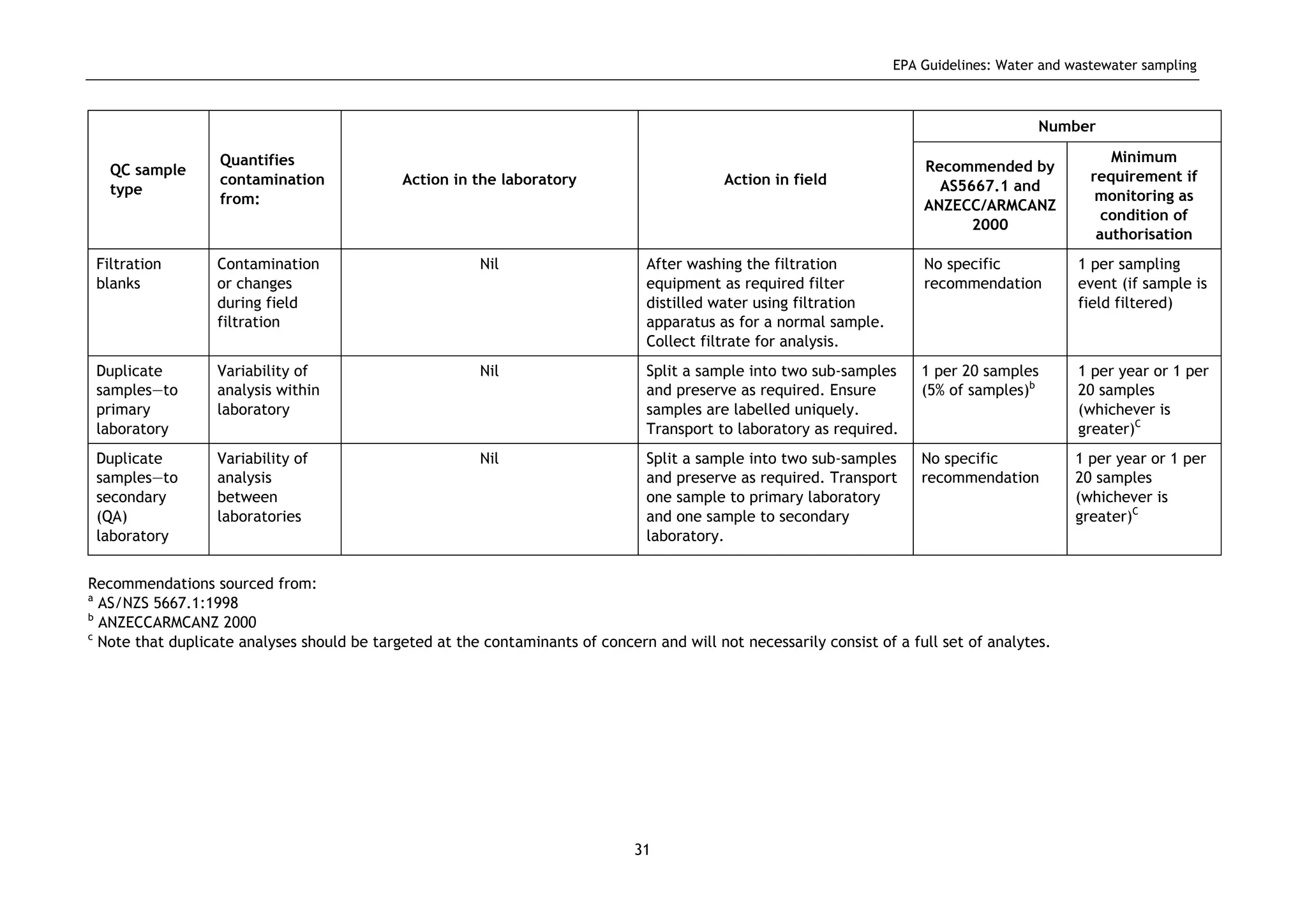
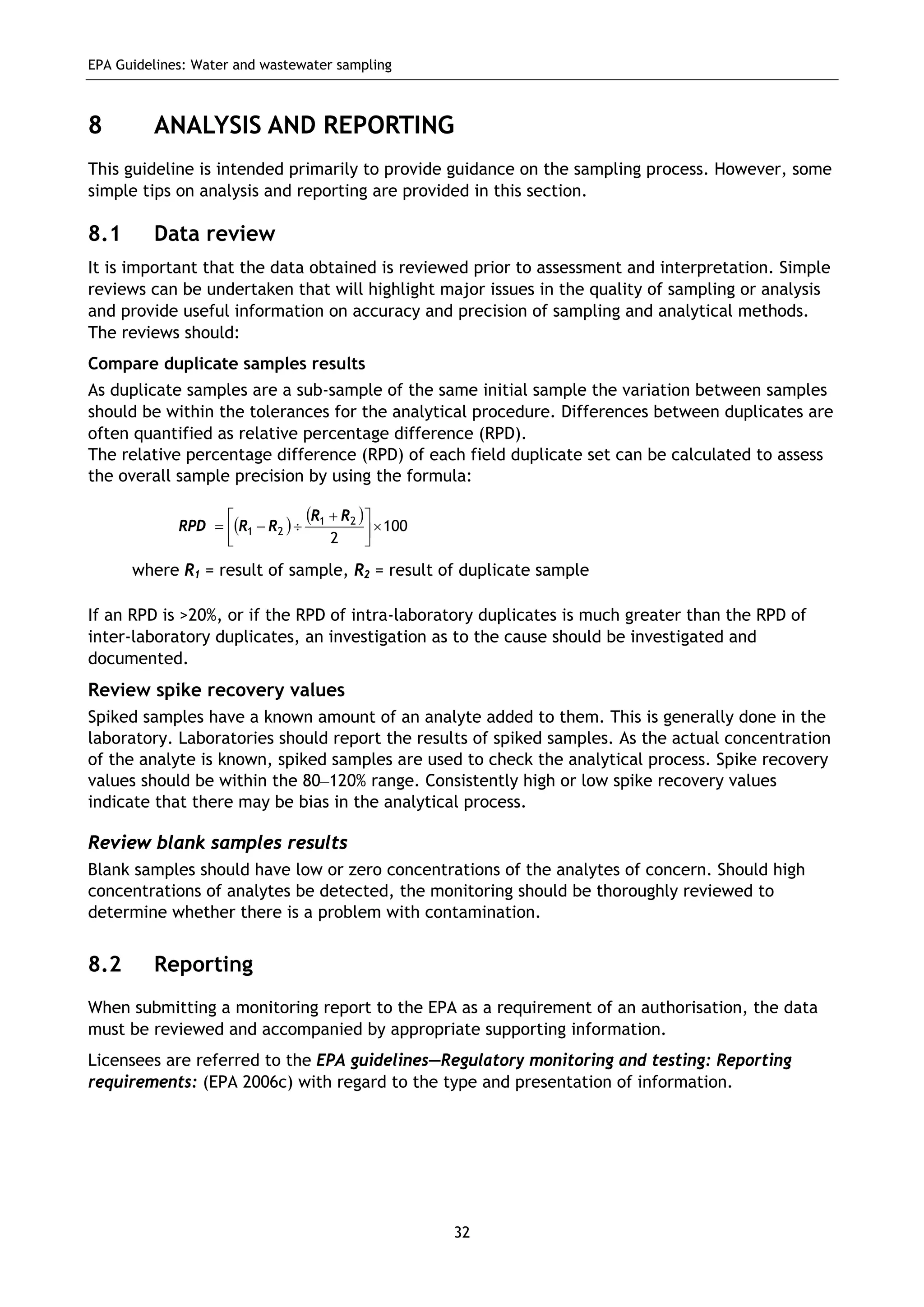
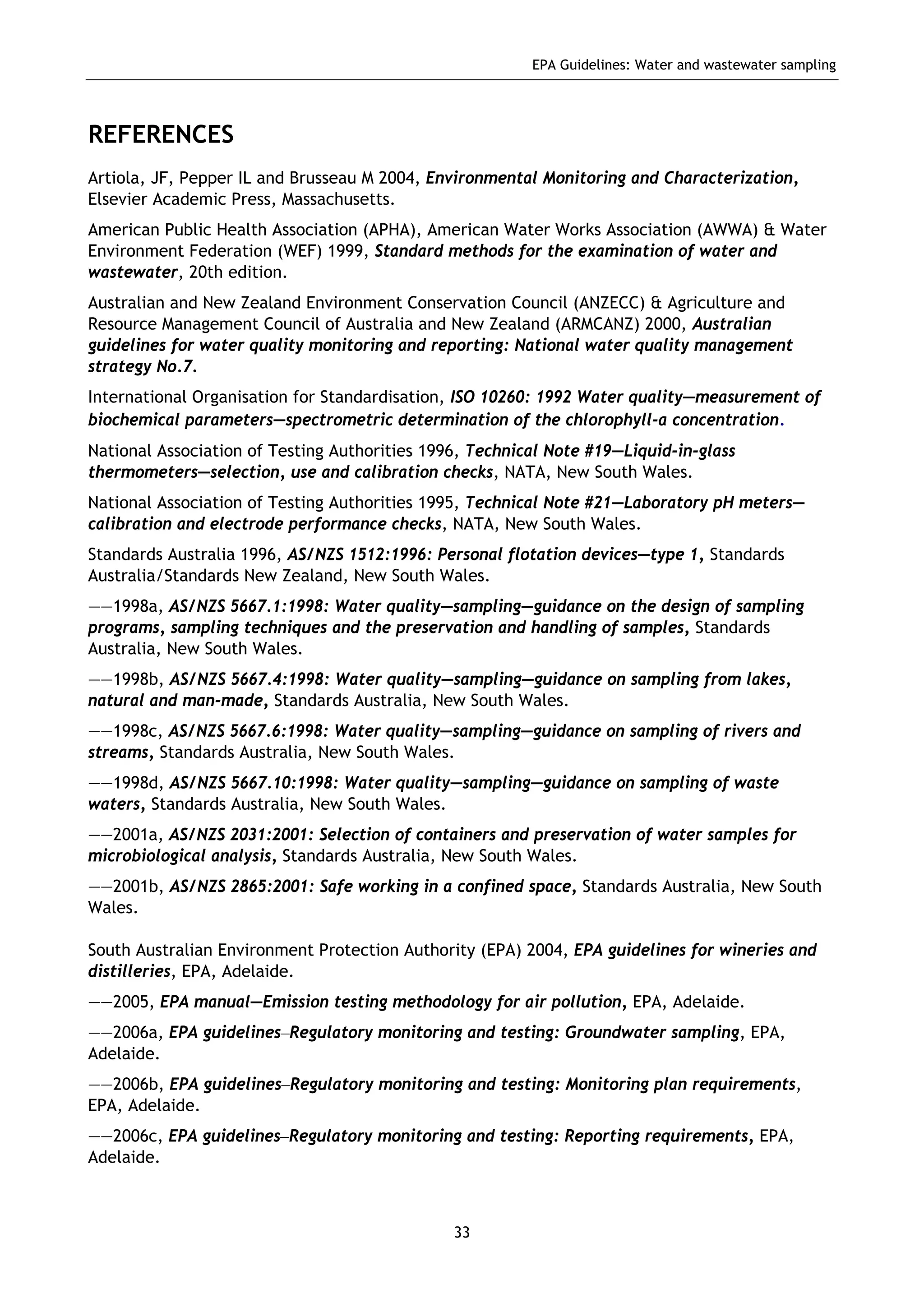
Chain of Custody procedures and documentation demonstrate sample control. This gives
confidence that the sample integrity has not been compromised and imperative if the samples
are to be used in legal proceedings or if there is any suspicion that the samples might be
tampered with at any stage of the process. The Chain of Custody documentation is a record used
to trace possession and handling of a sample from the time of collection through analysis,
reporting and disposal.
The basis of Chain of Custody control is that a sample is always in someone’s custody and as such
they are responsible for it. It is important to realise that couriers will often not recognise the
contents of a sample container, but only take responsibility for the container itself. As such, the
item (eg esky) should be secured with tape so that it would be obvious if the items had been
tampered with.
EPA Guidelines: Water and wastewater sampling
25
The sampler should complete the Chain of Custody forms prior to packing the samples. The
original Chain of Custody form must remain with the sample at all times to enable the
completion of custody details at each stage of progression through transportation, analysis and
reporting (see Appendix 5 for an example Chain of Custody form).
A copy of the final completed Chain of Custody form should be sought from the laboratory to
confirm receipt and appropriate transfer and handling. The analytical laboratory should also
include a copy of the completed chain of custody form as part of the analytical report.
6.3 Transport and storage
During sample transport and storage it is vital that all procedures are followed to ensure that
samples are not significantly altered in condition and are in a state fit for analysis at the
laboratory. Contamination of samples can easily occur during transport due to container cross-
contamination, packaging material or chilling products. During sample storage, degradation can
occur due to lack of appropriate preservation, inappropriate storage conditions, excessive
storage times and sample cross-contamination.
The key aspects of effective transport and storage are to:
• ensure samples are appropriately packed to avoid breakage and cross-contamination
• reduce sample degradation through appropriate preservation
• ensure time between sampling and analysing does not exceed holding time
• sample containers should be sealed, carefully packed with an appropriate packing
material, chilled or frozen (as required) and transported in an appropriate cooler (esky)
or fridge. It is sometimes necessary to take further action to prevent cross-
contamination, either between samples or from ice, during transport. This could include
placing sample containers in snap-lock bags or airtight, plastic tubes with screw caps
before transport.
If a courier is to be employed, sample security, Chain of Custody and refrigeration issues need to
be considered prior to transporting the samples. If a courier is not able to meet all the
requirements an alternative form of transport should be found.
A basic list of equipment required for sample transport and storage is listed in the Sampling
Checklist (see Appendix 3) and includes labels for sample containers (if not already on
containers), snap-lock bags or tubes if required, esky or fridge, ice bricks or crushed ice, packing
material (eg foam packing), packing tape, consignment note for external courier and Chain of
Custody forms.
6.3.1 Preservation techniques
Preservation techniques are vital to minimise changes to the sample following sampling. Changes
that may occur if poor or incorrect preservation occurs are summarised in Section 2.2. Required
preservation techniques for specific analytes are detailed in Appendix 2. Some common
preservatives are described below.
Refrigeration: Keeping samples between 1°C and 4°C will preserve the majority of physical,
chemical and biological characteristics in the short term (< 24 hours) and as such is
recommended for all samples between collection and delivery to the laboratory. It is
recommended that microbiological samples be refrigerated between 2°C and 10°C (as per
AS/NZS 2031:2001). Ice can be used to rapidly cool samples to 4°C before transport. Ice bricks
are preferred over loose ice or dry ice.
EPA Guidelines: Water and wastewater sampling
26
Freezing: In general, freezing at <–20°C will prolong the storage period. However, the freezing
process significantly alters some nutrients and biological analytes such as chlorophyll, and the
laboratory should be consulted before samples are frozen. Filtering samples in the field before
freezing may be required. This is usually done for soluble nutrients, particularly when same-day
delivery to the laboratory is not possible.
Chemical addition: The appropriate chemical preservative and dose rate can vary between
analytes and according to container size. The analytical laboratory should always be consulted to
establish which chemical preservative is appropriate for the analytical technique employed by
that laboratory. Preservatives include acidic and basic solutions, and biocides. It is important
these are used in the form of concentrated solutions so that the volume of preservatives
required is minimised. This will minimise the dilution effect the preservative has on the sample.
Chemical additives are normally added by the laboratory and supplied pre-prepared. When
sampling with pre-prepared additives, it is important that the bottle is not flushed during
sampling. It is also important to minimise the amount of spillage from the bottle during
collection.
All preservation procedures employed should be recorded such as on the field sheet or chain of
custody form. Some preservatives need to be removed or negated before analysis (eg pH
corrections) and are required to be considered by the laboratory before analysis. It is crucial
that a clear record of any sample treatments is available to the laboratory.
6.3.2 Holding times
While preservation techniques can reduce degradation rates they may not completely halt such
changes. All analytes therefore have a holding time, which is the maximum time that can elapse
between sampling and analysis, and where the sample is unlikely to be significantly modified
under the recommended preservation conditions. Holding times for each analyte are included in
Appendix 2. Samples must be delivered to the laboratory within the required holding times.
EPA Guidelines: Water and wastewater sampling
27
7 QUALITY
7.1 Quality assurance
Quality assurance (QA) is the policies, procedures and actions established to provide and
maintain a degree of confidence in data integrity and accuracy.
For a monitoring program to successfully meet its objectives, a rigorous and thorough program of
checks, comparisons and communication must be implemented. In order to achieve consistent
data collection, a QA system must be followed.
Figure 7 outlines a systematic approach to the development of a QA program for sampling.
Figure 7 Quality assurance framework (Puls & Barcelona, 1996)
To control errors in field sampling to a level acceptable to the data user, various aspects of a QA
program should be implemented from the monitoring program design stage through to delivery
at the laboratory. Table 1 outlines typical quality assurance protocols for monitoring.
7.2 Quality control
Quality control (QC) is a sample or procedure intended to verify performance characteristics of a
system. Water sampling quality control ensures that the monitoring data sufficiently represents
the condition of the target waters when the sample was collected. That is, that any significant
change in, or contamination to, the sample due to containers, handling and transportation is
identified through the incorporation of QC samples.
The type and number of QC samples collected should be based on data quality objectives. The
required confidence in results will be reflected in the quantity of QC samples. The greater the
number of QC samples the greater the degree of confidence in the reliability of results. The
most common types of QC samples are blanks, spikes and duplicates, which are described in the
following section.
Table 2 states the minimum type and number of sample blanks and duplicates that must be
taken for monitoring and testing required by the EPA (i.e. regulatory monitoring and testing;
RMT). When stricter or less stringent requirements are appropriate, the requirements may be
modified through licence conditions (EPA) or by approval of monitoring plan. Discussions must be
held with your licence coordinator prior to developing a monitoring plan with QC that does not
conform to the requirements within this guideline.
Site decisions
Define program objective
Establish data quality requirements
Apply protocols
Refine protocols
Continuous
improvement
Define sampling and analytical
protocols
EPA Guidelines: Water and wastewater sampling
28
7.2.1 Blanks
QC blank samples are typically made from high purity water. The extremely low level of all
analytes in high purity water enables identification of any contamination. If an elevated result of
a particular analyte is found in a blank, it is reasonable to assume that similar contamination
may have occurred in other samples.
Each type of blank is designed to assess the contamination from a particular part of the process
and together a system of blanks isolates contamination from the sampling, transport and
analytical process.
If elevated concentrations of target analytes are detected during the analysis of a blank sample,
a thorough review of the areas of the sampling plan that may be introducing the contamination
must be undertaken to determine the effect on the results and corresponding conclusions.
Field and transport blanks
Field blanks are designed to illustrate the effect of handling on sample integrity. They detect
contamination from sources such as dust and atmospheric fallout. To collect field and transport
blanks, high purity water is poured into three sample containers prior to going on site. If the
water to be sampled is known to be saline the blanks should be of corresponding salinity. Two of
the sample containers are taken to the site and one is sent to the laboratory. At the site, the cap
of the field blanks should be removed and replaced at the end of sampling. During transport and
storage the containers should be treated as if they hold a real sample. The transport blank need
not be opened but should be carried with the rest of the samples.
Container blanks
Container blanks show if there has been any contamination of the sample from the container
itself, the washing process or any preservation techniques. Containers are selected randomly,
filled with distilled water in the laboratory and the appropriate preservation applied. These
blanks should be held in the laboratory for the same time as the samples before analysis. They
are particularly important when the holding time is in the order of several days or weeks.
Equipment (rinsate) blanks
Contamination introduced into the sample through contact with sampling equipment is measured
using an equipment blank. Ideally, an equipment blank is prepared before sampling to show
contaminants have not been introduced and at the conclusion of sampling to show the
effectiveness of the decontamination procedure. The equipment should be decontaminated in
the usual manner. The final rinse with distilled water (or similar) in the decontamination process
has completed preparation of the equipment blank. If the washing process is cleaning the
equipment sufficiently, the equipment blanks should show no change in composition from the
rinse water.
Filtration blanks
Some parameters require a sample to be filtered in the field. A filtration blank allows
determination of contamination from the filtering process. This can be from dust and
atmospheric fallout during the filtration process or from the filter and filtration equipment.
After the filtration equipment has been decontaminated in the usual manner, process a blank of
high purity water through the filtration apparatus in the same way that the sample would be.
The filtrate should then be collected in a normal sample container, preserved as appropriate and
transported to the laboratory with the other samples.
EPA Guidelines: Water and wastewater sampling
29
7.2.2 Duplicates
Field duplicate samples are obtained by dividing a sample collected from a sampling point. They
can be used to measure the precision or repeatability of the analytical process in the laboratory.
Duplicate samples should be blind-coded so that the laboratory cannot tell which primary
samples they correspond to. Remember the corresponding sample to the duplicate needs to be
recorded on the field sheet. Note that duplicate analysis is generally targeted at the
contaminants of concern and will not necessarily consist of a full set of analytes.
There are two types of duplicate samples:
• intra-lab duplicates, where the duplicate sample is transported to the same laboratory
(primary laboratory) as the bulk of the samples—these duplicates measure the
precision/variation of the primary laboratory’s analytical methods
• inter-lab duplicates, where samples are sent to a different laboratory (often called
secondary or QA laboratory)—these duplicates give an indication of the variability
between laboratories which can provide a degree of confidence in the accuracy of the
laboratories.
The duplicate samples should produce identical results within the specific tolerances of the
analytical procedure.
7.2.3 ‘Spikes’ or sample spiking
Spiked samples have a known amount of a particular analyte added to a sub-sample. This is
generally done in the laboratory but can be undertaken in the field. Spikes are used to
determine the effectiveness of the overall sampling and analysis program including all of the QC
samples described earlier (as per AS/NZS 5667.1). As the final concentration of that analyte is
known, spiked samples can be used to check the analytical process. It is important that the
person analysing the spiked samples is not aware of the spiked value to ensure they are treated
in the same way as regular samples. They are usually prepared in the analytical laboratory by
trained personnel but can be prepared in the field if required.
If used, the concentration of the spiked samples should be within the general range of the
contaminant expected in the real water samples.
EPA Guidelines: Water and wastewater sampling
30
Table 2 Summary of blank and duplicate samples
Number
QC sample
type
Quantifies
contamination
from:
Action in the laboratory Action in field
Recommended by
AS5667.1 and
ANZECC/ARMCANZ
2000
Minimum
requirement if
monitoring as
condition of
authorisation
Contamination
due to the field
conditions
Field blank—open container in the
field for a similar period of time as
is required to take sample. Re-cap
container and transport to
laboratory for analysis.
NilField and
transport
blanks
Contamination
during transport
Select three identical sample
containers. Fill all with distilled water
(or water of corresponding salinity to
sample). One sample is left in the
laboratory as a control sample. Two
samples are taken to the field—one as a
field blank and one as a transport
blank. The actions in the field are then
carried out.
Transport blank—Carry a sealed
sample container in the cooler with
other samples. No other action
necessary in the field. Return to
laboratory for analysis.
1 set (of 3
containers) per
sampling tripa
1 blank per 10
samplesb
Nil
Container
blanks
Contamination
due to the
container,
washing process
and
preservatives
Fill a sample container with distilled
water—do not rinse. Apply the
preservation appropriate to samples
taken in that container type. The
sample is to be held in the laboratory
for a similar period of time as the
majority of samples are held before
analysis.
None 1 per batch of
containersa
1 per 10 samplesb
Nil
Equipment
blanks
Residue on
sampling
equipment
Nil Wash sampling equipment as
required. Collect final rinse water as
the blank.
No specific
recommendation
1 per sampling
event if equipment
is used
EPA Guidelines: Water and wastewater sampling
31
Number
QC sample
type
Quantifies
contamination
from:
Action in the laboratory Action in field
Recommended by
AS5667.1 and
ANZECC/ARMCANZ
2000
Minimum
requirement if
monitoring as
condition of
authorisation
Filtration
blanks
Contamination
or changes
during field
filtration
Nil After washing the filtration
equipment as required filter
distilled water using filtration
apparatus as for a normal sample.
Collect filtrate for analysis.
No specific
recommendation
1 per sampling
event (if sample is
field filtered)
Duplicate
samples—to
primary
laboratory
Variability of
analysis within
laboratory
Nil Split a sample into two sub-samples
and preserve as required. Ensure
samples are labelled uniquely.
Transport to laboratory as required.
1 per 20 samples
(5% of samples)b
1 per year or 1 per
20 samples
(whichever is
greater)C
Duplicate
samples—to
secondary
(QA)
laboratory
Variability of
analysis
between
laboratories
Nil Split a sample into two sub-samples
and preserve as required. Transport
one sample to primary laboratory
and one sample to secondary
laboratory.
No specific
recommendation
1 per year or 1 per
20 samples
(whichever is
greater)C
Recommendations sourced from:
a
AS/NZS 5667.1:1998
b
ANZECCARMCANZ 2000
c
Note that duplicate analyses should be targeted at the contaminants of concern and will not necessarily consist of a full set of analytes.
EPA Guidelines: Water and wastewater sampling
32
8 ANALYSIS AND REPORTING
This guideline is intended primarily to provide guidance on the sampling process. However, some
simple tips on analysis and reporting are provided in this section.
8.1 Data review
It is important that the data obtained is reviewed prior to assessment and interpretation. Simple
reviews can be undertaken that will highlight major issues in the quality of sampling or analysis
and provide useful information on accuracy and precision of sampling and analytical methods.
The reviews should:
Compare duplicate samples results
As duplicate samples are a sub-sample of the same initial sample the variation between samples
should be within the tolerances for the analytical procedure. Differences between duplicates are
often quantified as relative percentage difference (RPD).
The relative percentage difference (RPD) of each field duplicate set can be calculated to assess
the overall sample precision by using the formula:
( )
( )
100
2
21
21 ×⎥
⎦
⎤
⎢
⎣
⎡ +
÷−=
RR
RRRPD
where R1 = result of sample, R2 = result of duplicate sample
If an RPD is >20%, or if the RPD of intra-laboratory duplicates is much greater than the RPD of
inter-laboratory duplicates, an investigation as to the cause should be investigated and
documented.
Review spike recovery values
Spiked samples have a known amount of an analyte added to them. This is generally done in the
laboratory. Laboratories should report the results of spiked samples. As the actual concentration
of the analyte is known, spiked samples are used to check the analytical process. Spike recovery
values should be within the 80–120% range. Consistently high or low spike recovery values
indicate that there may be bias in the analytical process.
Review blank samples results
Blank samples should have low or zero concentrations of the analytes of concern. Should high
concentrations of analytes be detected, the monitoring should be thoroughly reviewed to
determine whether there is a problem with contamination.
8.2 Reporting
When submitting a monitoring report to the EPA as a requirement of an authorisation, the data
must be reviewed and accompanied by appropriate supporting information.
Licensees are referred to the EPA guidelines—Regulatory monitoring and testing: Reporting
requirements: (EPA 2006c) with regard to the type and presentation of information.
EPA Guidelines: Water and wastewater sampling
33
REFERENCES
Artiola, JF, Pepper IL and Brusseau M 2004, Environmental Monitoring and Characterization,
Elsevier Academic Press, Massachusetts.
American Public Health Association (APHA), American Water Works Association (AWWA) & Water
Environment Federation (WEF) 1999, Standard methods for the examination of water and
wastewater, 20th edition.
Australian and New Zealand Environment Conservation Council (ANZECC) & Agriculture and
Resource Management Council of Australia and New Zealand (ARMCANZ) 2000, Australian
guidelines for water quality monitoring and reporting: National water quality management
strategy No.7.
International Organisation for Standardisation, ISO 10260: 1992 Water quality—measurement of
biochemical parameters—spectrometric determination of the chlorophyll-a concentration.
National Association of Testing Authorities 1996, Technical Note #19—Liquid-in-glass
thermometers—selection, use and calibration checks, NATA, New South Wales.
National Association of Testing Authorities 1995, Technical Note #21—Laboratory pH meters—
calibration and electrode performance checks, NATA, New South Wales.
Standards Australia 1996, AS/NZS 1512:1996: Personal flotation devices—type 1, Standards
Australia/Standards New Zealand, New South Wales.
——1998a, AS/NZS 5667.1:1998: Water quality—sampling—guidance on the design of sampling
programs, sampling techniques and the preservation and handling of samples, Standards
Australia, New South Wales.
——1998b, AS/NZS 5667.4:1998: Water quality—sampling—guidance on sampling from lakes,
natural and man-made, Standards Australia, New South Wales.
——1998c, AS/NZS 5667.6:1998: Water quality—sampling—guidance on sampling of rivers and
streams, Standards Australia, New South Wales.
——1998d, AS/NZS 5667.10:1998: Water quality—sampling—guidance on sampling of waste
waters, Standards Australia, New South Wales.
——2001a, AS/NZS 2031:2001: Selection of containers and preservation of water samples for
microbiological analysis, Standards Australia, New South Wales.
——2001b, AS/NZS 2865:2001: Safe working in a confined space, Standards Australia, New South
Wales.
South Australian Environment Protection Authority (EPA) 2004, EPA guidelines for wineries and
distilleries, EPA, Adelaide.
——2005, EPA manual—Emission testing methodology for air pollution, EPA, Adelaide.
——2006a, EPA guidelines–Regulatory monitoring and testing: Groundwater sampling, EPA,
Adelaide.
——2006b, EPA guidelines–Regulatory monitoring and testing: Monitoring plan requirements,
EPA, Adelaide.
——2006c, EPA guidelines–Regulatory monitoring and testing: Reporting requirements, EPA,
Adelaide.
EPA Guidelines: Water and wastewater sampling
34
GLOSSARY
AS Australian Standard
Analyte Refers to any chemical compound, element or other parameter as a subject
for analysis
ANZECC Australian and New Zealand Environment Conservation Council
BOD Biochemical or biological oxygen demand. A measure of the decrease in
oxygen content in a sample of water—usually over five days (BOD-5)
COD Chemical oxygen demand. The oxygen equivalent of the organic matter
content of a sample that is susceptible to oxidation by a strong chemical
oxidant
Criteria A value (numerical or relational) set through a condition of licence that
imposes a requirement on the licensee (eg that the licensee must meet or that
requires the licensee to report or take other action if exceeded)
Distilled water Distilled water has been used throughout this guideline for decontamination
and other purposes, where water that will not impact upon the results of
analysis is required. The water should have no detectable concentration of the
element to be analysed, and be free of substances that interfere with the
analytical method
The most common types used for this purpose are distilled, demineralised or
deionised water. Distilled or demineralised water is the most appropriate type
of water except where dissolved ionised gases are under investigation.
Deionised water may not be suitable when investigating dissolved organics,
particulates or bacteria
‘Spring’ water should not be used during sampling as in most cases no
contaminants have been removed and high levels of some analytes (such as
metals and inorganic non-metallics) will be present
Where uncertainty exists as to the suitability and impacts of the water used,
quality control blanks (as described in Section 7.2) should be employed
DO Dissolved oxygen
EC Electrical conductivity. The ability of water to conduct an electrical current;
commonly used as a measure of salinity or total dissolved salts
Entrainment Of a current or fluid, incorporating and sweeping along in its flow
Environmental values Particular values or uses of the environment that are important, such as
ecosystem, health or amenity that merit protection from the effects of
contaminants, waste discharges and deposits. Several environmental values
may be designated for a specific waterbody
EPA South Australian Environment Protection Authority
Filtrate The liquid portion of a sample after filtration
Holding time After taking a sample, the time by which the sample should be analysed.
Exceeding the recommended holding time is likely to cause deterioration of
the sample.
Isokinetic Same velocity; eg isokinetic sampling conditions occur when velocity of water
at sample inlet is the same velocity as the water being sampled
LOR The laboratory limit of reporting, also often referred to as limits of detection
Monitoring plan A documented plan detailing the actions, responsibilities and timeframes that
will deliver monitoring that meets the defined objectives
EPA Guidelines: Water and wastewater sampling
35
Monitoring program A system developed to achieve the monitoring objectives
NATA National Association of Testing Authorities (of Australia) <www.nata.com.au>
NEPM National Environment Protection Measure
Orthophosphate Form of phosphorus that is immediately accessible for plants and animals to
use
Plankton Microscopic plants (phytoplankton) or animals (zooplankton) found in the
water column of aquatic ecosystems
Protected
environmental value
In relation to waters or a particular body of water, means the beneficial
aspects or uses of water as are designated by the Environment Protection
(Water Quality) Policy 2003 in respect of those waters or that body of water
for protection from pollution
Pollutant Something that pollutes, such as sewage or mine waste, exhaust gases, etc
QA Quality assurance. The implementation of checks on the success of quality
control
QC Quality control. The implementation of procedures to maximise the integrity
of samples and data (eg cleaning procedures, contamination avoidance,
sample preservation methods)
RMT Regulatory monitoring and testing. Monitoring undertaken as a condition of
authorisation or in order to enable an environmental risk to be assessed, or to
assess the effectiveness of risk controls and management within the scope of
the EP Act.
RPD Relative percentage difference. Refer to Section 8 for equation and
description
Spike recovery value A percentage indicating the detected concentration of a known volume of
analyte over the known value
Titration A measured amount of a solution of unknown concentration is added to a
known volume of a second solution until the reaction between them is just
complete; the concentration of the unknown solution (the titer) can then be
calculated
Water quality
criteria
In relation to protecting a particular protected environmental value, means
the maximum concentrations of certain substances permitted by the
Environment Protection (Water Quality) Policy 2003 to be in water or the
minimum or maximum levels permitted for certain characteristics of water
EPA Guidelines: Water and wastewater sampling
A1
APPENDIX 1 GUIDANCE ON DEVELOPING AN EFFECTIVE MONITORING
PLAN
The following appendix provides general guidance on issues to be considered when developing a
monitoring plan for water or wastewater sampling. Consideration of these issues will assist in
designing a monitoring plan that is specific, targeted and cost-effective.
Monitoring
objective
Variability of
process and
receiving
environment
Spatial
extent of
impacts
Precision/
accuracy
required
Logistical
and
OHS&W
issues
Cost
Monitoring plan
Duration of sampling (campaign, ongoing)
Sampling points (location and number)
Frequency and patterns of sampling
Analytes/parameters
Method of sampling (grab, automatic)
Responsibilities
A1 Key considerations
A1.1 Monitoring objective
The first step in developing a monitoring plan is to clearly identify the objectives of the
monitoring. For licensees required to undertake regulatory monitoring and testing (RMT) the EPA
intends to specify objectives of the monitoring as a condition of authorisation or order. Where
monitoring is being undertaken for purposes other than, or in addition to, a requirement of an
authorisation or order, the Australian guidelines for water quality monitoring and reporting
(ANZECC 2000) can provide further advice and assistance in setting monitoring plan objectives.
Water and wastewater monitoring can be undertaken to meet many objectives from gaining an
understanding of an aquatic ecosystem and the physical, chemical and biological processes that
operate within it, to the review of water quality within a specified criteria.
A1.2 Variability considerations
Variability, in time and space, is probably the most significant aspect to be considered in the
design of sampling plans. Variability will determine the number of sites, number of replicates
and the frequency of sample collection. High variability in the environment or the industrial
discharge combined with poor sampling design or too few samples can result in data that is too
variable to reveal an impact, disturbance or trend.
EPA Guidelines: Water and wastewater sampling
A2
Industrial process variability
Examples of variation in wastewater due to process variability include:
• daily and weekly variation—particular processes such as scheduled cleaning might always
occur on the same day of the week leading to a consistent pattern of variation in the
quality of the discharge
• seasonal variation, such as that experienced in the wine industry, as shown in the case
study presented later in this section 2
• event variation—the influent (and effluent) from sewage treatment plants varies after a
rainfall event due to the infiltration and inflow into the sewage system diluting the
concentration but increasing the volume of wastewater.
How process variability considerations are taken into account in the design of a monitoring plan
will depend upon the objective of monitoring, eg to determine the maximum concentrations of a
pollutant, the variability of discharge or the average concentration.
Receiving environment variability
Variation in water quality can occur at different frequencies for varying reasons, including but
not limited to:
• diurnal variation—changes in dissolved oxygen and pH throughout the day due to
respiration and photosynthesis, changes in water temperature
• depth variation—stratification effects can occur in lagoons and lakes as well as in rivers,
creeks, marine water and estuaries
• seasonal and event variation—variations in flow and salinity due to rainfall and
temperature
• tidal variations—variation in flow direction and volume due to tide (in rivers and estuaries
as well as marine environment)
• spatial variation—occurs in the receiving environment due to a range of factors from
natural biological variability, wave action and turbulence through to flow and
concentration modifications around structures such as jetties and weirs.
Knowledge of the variations likely to affect monitoring results are important in selecting the
frequency and pattern of sampling as well as sampling points.
A1.3 Precision required
It is important when developing a monitoring plan that the amount and frequency of sampling is
sufficient to provide confidence in the interpretation of results. Most of the sampling undertaken
for regulatory purposes is a form of hypothesis testing—i.e. testing the hypothesis that
environmental harm has not occurred. In hypothesis testing there are two types of errors to aim
at avoiding: falsely detecting environmental harm when it has not occurred and not detecting
environmental harm when it has occurred. The probability of a false positive is called the level
of significance. The probability of a false negative (Type II error) is related to the power of the
test. Further information on determining the probabilities is provided in texts such as Australian
guidelines for water quality monitoring and reporting (ANZECC 2000). For regulatory purposes it
is important to minimise both of these probabilities.
2
This information has been taken from the EPA Winery and Distillery guideline that outlines the
monitoring requirements for the winery industry
EPA Guidelines: Water and wastewater sampling
A3
Case Study: Excerpt from EPA guidelines for wineries and distilleries (January 2004)
Wastewater quality
Winery wastewater comes from a number of sources that include:
• cleaning of tanks • spent wine and product losses
• ion exchange columns • bottling facilities
• hosing down of floors and equipment • filtration units
• rinsing of transfer lines • laboratory wastewater.
• stormwater diverted into or captured in the
wastewater management system
Wine production is seasonal, and the characteristics of wastewater vary with the production period. Up
to six production periods can be defined; these are summarised in the table below.
Description of winery wastewater production periods at wineries
Period
Typical months of
the year
Description
Pre-vintage January–February Bottling, caustic washing of tanks, non-caustic washing of
equipment in readiness for vintage
Early vintage February–March Wastewater production is rapidly rising to peak vintage
flows and has reached 40% of the maximum weekly flow;
vintage operations dominated by white wine production
Peak vintage March–May Wastewater generation is at its peak; vintage-only
operations are at a maximum
Late vintage April–June Wastewater production has decreased to 40% of the
maximum weekly flow; vintage operations dominated by
production of red wines; distillation of ethanol spirit may
coincide with this period
Post-vintage May–September Pre-fermentation operations have ceased; effect of
caustic cleaning, ion exchange etc. is at its greatest, and
wastewater quality may be poor
Non-vintage June–December Wastewater generation is at its lowest—generally less
than 30% of maximum weekly flows during vintage;
wastewater quality is highly dependent on day-by-day
activities
To accurately determine the pollutant load that is discharged to the environment, sampling must reflect
wastewater quality during the production period. It must be performed at a suitable location before it is
disposed of to land or re-used for irrigation. Monitoring plans submitted to the EPA to comply with
licence requirements must be accompanied by a schematic diagram. This must indicate the sequence of
wastewater treatment processes employed and where the wastewater sampling is to be performed, to
enable the EPA to advise on the suitability of the monitoring point.
The table below shows the EPA monitoring frequency requirements for differing volumes of
wastewater generated by wineries. For facilities that do not have distinct production periods, a
suitable frequency must be discussed with the EPA.
Wastewater produced per year, ML Frequency
> 10
10–20
> 20
Once per production period
Twice per production period
Three times per production period
EPA Guidelines: Water and wastewater sampling
A4
A2 Elements of a monitoring plan
A2.1 Duration of sampling
For regulatory monitoring, sampling will generally be ongoing to show continued compliance with
criteria, or to monitor the ongoing influence of discharges on the receiving environment.
Campaign monitoring or pilot studies should be considered when the variability of a wastewater
stream or receiving environment is uncertain. A pilot study of high frequency discrete and/or
composite sampling will provide information regarding the variability in the wastewater stream
due to random and systematic influences. Based on an understanding of the results of the pilot
study, a more targeted, cost-effective ongoing monitoring plan that will adequately characterise
the water can be developed.
A2.2 Sampling locations
The design of a sampling plan to monitor water or wastewater composition should ensure
samples are collected at sites and times that provide a representative sample, thus providing an
accurate description of the overall quality of the wastewater stream. Additionally, sampling sites
should be located in areas that are safe to access, accessible under all conditions of flow and
discharge, be well mixed to ensure a homogenous sample is collected and be easily identifiable
for later sampling. Permanent sampling locations should be established in any sampling
environment to ensure that representative samples can be compared over time.
Determine impacts on receiving waters
In the case of examining the effect of a point source discharge, sites should be arranged in such
a way that the end-of-pipe, and upstream and downstream of the discharge water is sampled.
The degree of mixing within the waterbody will determine the proximity of sites to each other—
where mixing is strong (the water is homogenous) sites may be spread further apart.
Case Study cont: Excerpt from EPA guidelines for wineries and distilleries (2004)
For a winery that generates more than 10 ML of wastewater per year the EPA may permit a reduction in
wastewater monitoring frequency if: an adequate treatment system approved by the EPA to treat
wastewater before application to land has been installed; the facility fully implements an irrigation
management plan (IMP) approved by the EPA; or the wastewater management system is equipped with
in-line monitoring devices for dissolved oxygen (DO) and pH or EC to indicate irregularities that may
indicate a need for further testing.
The parameters to be monitored in wastewater are listed in Table 5 (in EPA Guideline for wineries and
distilleries, January 2004). The winery may need to consult its EPA licence coordinator to confirm
whether the optional parameters listed in the table need to be monitored. If a winery generates less
than 1 ML of wastewater per year, the EPA may permit the omission of some minor wastewater
parameters from the monitoring regime if it can be demonstrated that the risk to the environment is
low, and the wastewater management system has been working effectively for the past two years.
The EPA recommends that winery effluent not be combined with wastewater generated from cellar door
and food preparation activities. This is due to health concerns. If separation is not possible, the winery
must seek advice from the Department of Human Services.
EPA Guidelines: Water and wastewater sampling
A5
As a minimum, sampling the effects of a point source discharge should include the following
sample locations:
• end-of-pipe samples to characterise the discharge
• in the receiving water upstream of the point of entry
• in the waterbody at the point of entry
• multiple samples at progressive distances downstream from the point of entry.
Wastewater sampling
The number of samples required to determine the composition of wastewater will depend upon
the accuracy/precision required from the study and the variability of the stream. Generally,
grab samples can be used where the analyte of interest is not expected to vary greatly over
time.
Sampling of wastewater may be undertaken in tanks, drums, pipes, lagoons, drains, open
channels and from taps or valves. Wastewater in pipes will often exhibit laminar flow and
samples taken from taps can be strongly influenced by boundary effects, which may not produce
a representative sample. In the case of in-pipe laminar flow, the sampling location should be
situated downstream of a restriction or obstacle which creates turbulence and mixing in the
wastewater stream.
Profiling depth
It is often sufficient to take discrete samples just below the surface at a given site, particularly
in shallow and well-mixed environments, such as adequately sized and designed lagoons. In
deeper or poorly mixed waters, a ‘surface sample’ may not accurately describe the
characteristics of the entire water column and other sampling techniques should be employed.
These can include integrated vertical column samples or discrete samples at given depths.
A2.3 Sampling frequency and patterns of sampling
There are no strict rules regarding how frequently sampling should occur, but the sampling
frequency will be dictated by the variability of the discharge and the objectives of the plan.
During the planning stages, consider the aims of the study and choose a sampling frequency that
has the best chance of providing the information required to meet the objectives of the plan. It
is important to consider the frequency carefully. If samples are not taken frequently enough, the
characteristics of the waters or wastewaters might not be adequately described resulting in a
poor understanding of the system and potentially inaccurate reporting of compliance or non-
compliance. Alternatively, overly frequent sampling may be a waste of time and resources.
In general, if a measurement parameter has a predictable pattern which has been shown
statistically or through a pilot study (eg discharge at a certain time of day) the sampling plan can
be tailored to sample at regular intervals. Alternatively, if the system or processes are highly
variable or unpredictable, the sampling should be undertaken more regularly over several time
scales.
Sampling to determine loads
Determination of loads should be undertaken using a flow meter (mechanical or magnetic) in
combination with sampling. If the flow rate of the wastewater is variable, flow-weighted
composite sampling is most appropriate. This can be done either discretely with knowledge of
flow, or using an automatic sampler where sampling is triggered after a predetermined volume
of flow has passed a given point.
A2.4 Analytes
EPA Guidelines: Water and wastewater sampling
A6
Choice of analytes will depend on the contaminants from the process under consideration and
the criteria against which the monitoring is to be evaluated. The environmental values of the
waters must be considered and the relevant criteria that are common to the discharge and the
values should be considered. Environmental values and criteria to be considered in South
Australia are set out in the Environment Protection (Water Quality) Policy 2003.
Key considerations when choosing analytes include the form of analyte (eg total metals,
dissolved metals, chemical speciation) and the confounding factors (eg faecal coliforms are
often used to indicate contamination from human faeces, however in lagoons faecal coliforms
may be the result of the presence of birds).
A2.5 Sampling procedures
Various types of samples can be taken according to the requirements of the specific monitoring
plan. Thorough consideration of the objectives of the sampling plan should occur before deciding
on the types of samples to be taken. If an inappropriate type of sample is collected the water
quality data gained may not provide the information desired.
Grab samples
Grab samples are discrete samples that are taken at a location to provide a ‘snapshot’ of the
water quality characteristics at that time. For the purposes of quantifying water or wastewater
constituents, grab samples will show the concentrations at that location and time of sampling.
They will not provide any information about the concentrations outside that point in time. As
such, if grab samples are employed, a high number of samples (high sampling frequency) may be
required to show the nature of change over time. A sampling plan using grab samples could show
the dispersal of discharge constituents in the receiving environment at the time of day when the
discharge is present. They can also be used to show worst-case scenario situations, eg in the case
of surface scums of algae or oil and greases. However, taking manual grab samples is labour
intensive and often impractical for long, intensive sampling plans.
Composite samples
Composite samples are those collected through mixing multiple grab samples to obtain a single
mixed sample. Compositing samples can increase the temporal and spatial extent of sampling,
without increasing the number of samples or sampling and analysis costs. These types of samples
are used when the average water quality characteristics are of interest over a given period of
time or volume of flow. They may be more appropriate than grab samples when the distribution
of constituents within the waste stream is random or when the variability within that stream is
low. Composite samples are also useful when the determination of loads of constituents is
required. However, compositing does have its limitations. Prior knowledge of the stream is
required to determine if composite samples are appropriate (i.e. random distribution of
contaminants and low variability). This may require a pilot study of discrete grab samples.
Additionally, compositing may mask variability within the waste stream by hiding peak and
trough concentrations.
EPA Guidelines: Water and wastewater sampling
A7
APPENDIX 2 CONTAINERS, PRESERVATION METHODS AND HOLDING TIMES
The information in this appendix is sourced from the AS/NZS 5667.1:1998, unless otherwise noted. This table is not comprehensive but
provides an overview of the most common analytes sampled. Where analytes are not listed in this table please refer to Australian Standards,
International Standards, ASTM or APHA. This information is reproduced with the permission of Australian Standards.
Analyte Container type
Typical
volume (mL)
Filling technique
Filtration and
preservation
Holding time Notes
physical and aggregate samples
acidity and
alkalinity
plastic or
glass
500 fill container
completely to
exclude air
refrigerate 24 hours preferable to analyse sample in field
colour—true plastic or
glass
500 fill container
completely to
exclude air
refrigerate and store in
the dark
2 days
conductivity (at
25 °C)
plastic or
glass
100 fill container
completely to
exclude air
none required 24 hours preferably carried out in field for
samples of low conductivity
(<20 μS/cm)
oxygen, dissolved glass fix oxygen in the field and
store in the dark (as per
method of analysis used)
24 hours preferably determined in the field
pH plastic or
glass
100 refrigerate 6 hours carry out test as soon as possible and
preferably in situ
solids (dissolved
or suspended)
plastic or
glass
500 dissolved: fill
container
completely to
exclude air
refrigerate 24 hours
turbidity plastic or
glass
100 fill container
completely to
exclude air
none required 24 hours preferable to analyse sample in field
or in situ
EPA Guidelines: Water and wastewater sampling
A8
Analyte Container type
Typical
volume (mL)
Filling technique
Filtration and
preservation
Holding time Notes
metals
aluminium
barium
beryllium
cadmium
chromium
cobalt
copper
lead
manganese
molybdenum
nickel
silver
tin
vanadium
zinc
acid washed,
plastic or glass
100 acidify with nitric acid to
pH 1 to 2
1 month
antimony acid washed,
plastic or glass
100 acidify with nitric acid or
hydrochloric acid to pH 1
to 2
1 month hydrochloric acid should be used if
hydride technique is used for
analysis—consult laboratory
arsenic acid washed,
plastic or glass
500 fill container
completely to
exclude air
acidify with nitric acid or
hydrochloric acid to pH 1
to 2
1 month hydrochloric acid should be used if
hydride technique is used for
analysis—consult laboratory
boron plastic 100 fill container
completely to
exclude air
none required 1 month
chromium (VI) acid washed,
plastic or glass
100 fill container
completely to
exclude air
refrigerate 1 day sample container should be rinsed
thoroughly
EPA Guidelines: Water and wastewater sampling
A9
Analyte Container type
Typical
volume (mL)
Filling technique
Filtration and
preservation
Holding time Notes
iron (II) acid washed,
plastic or glass
500 fill container
completely to
exclude air
acidify with hydrochloric
acid to pH 1 to 2
24 hours
iron, total acid washed,
plastic or glass
500 acidify with nitric acid to
pH 1 to 2
1 month
lithium plastic 100 none required, but may
acidify with nitric acid to
pH 1 to 2 and refrigerate
1 month acidification allows the sample to be
analysed for lithium as well as other
metals
none required 1 week samples with pH > 8 or high carbonate
content to be analysed solely for
calcium, magnesium or hardness
should be acidified
magnesium acid washed,
plastic or glass
100 fill container
completely to
exclude air
acidify with nitric acid to
pH 1 to 2
1 month acidification permits determination of
other metals from same sample
mercury acid washed,
glass
500 acidify with nitric acid to
pH 1 to 2 and add
potassium dichromate to
give a 0.05% (m/v) final
concentration
1 month particular care is needed to ensure
that the sample containers are free
from contamination
potassium acid washed,
plastic or glass
100 none required/acidify
with nitric acid to pH 1 to
2
1 month acidification allows the sample to be
analysed for potassium as well as
other metals
selenium acid washed,
plastic or glass
500 acidify with nitric or
hydrochloric acid to pH 1
to 2
1 month
uranium acid washed,
plastic or glass
200 acidify with nitric acid to
pH 1 to 2
1 month
inorganic (non-metallic)
EPA Guidelines: Water and wastewater sampling
A10
Analyte Container type
Typical
volume (mL)
Filling technique
Filtration and
preservation
Holding time Notes
refrigerate 6 hours
field filter through
0.45 μm cellulose acetate
membrane and
refrigerate
24 hours
ammonia plastic or glass 500
field filter and freeze 1 month
strict protocol required to reduce
effects of contamination
store in area free of contamination
(ammonia vapour may permeate the
walls of even high density
polyethylene containers)
pressure filtering is preferred
chlorine plastic or glass 500 keep out of direct
sunlight, analyse
immediately
5 minutes this analysis should be carried out in
the field within 5 minutes of sample
collection
cyanide, total plastic or glass 500 if no interfering
compounds are present,
then add sodium
hydroxide to
pH >12, refrigerate and
store in the dark
24 hours the preservation technique will
depend on the interfering compounds
present
sulfides and oxidising agents
potentially cause large errors in the
determination of different cyanide
forms
refer to the analytical method for
suitable preservation techniques
iodide plastic or glass 500 refrigerate 1 month
fluoride plastic 200 none required 1 month PTFE containers are not suitable
nitrate plastic or glass 250 field filter through
0.45μm cellulose acetate
membrane and freeze
1 month
EPA Guidelines: Water and wastewater sampling
A11
Analyte Container type
Typical
volume (mL)
Filling technique
Filtration and
preservation
Holding time Notes
refrigerate 24 hours unfiltered sample
immediate analysis analyse as soon as possible after
collection
freeze 2 days
nitrite plastic or glass 200
field filter through
0.45μm cellulose acetate
membrane and freeze
1 month
refrigerate 24 hours
freeze 1 month
phosphorus, total plastic or glass 500
acidify with sulfuric acid
or hydrochloric acid to pH
1 to 2, refrigerate and
store in dark
1 month
acidification not recommended for
persulfate oxidation method
phosphorus,
dissolved
plastic or glass 50 field filter through
cellulose acetate
membrane and
refrigerate or field filter
and freeze
24 hours—
1 month
sulfate plastic or glass 200 refrigerate 1 week
sulfide, total plastic or glass 500 fill container
completely to
exclude air
none required for field
measurement. Preserve
with zinc acetate for
laboratory analysis
1 week
(preserved)
nitrogen, total plastic or glass 500 refrigerate or freeze 24 hours—
1 month
EPA Guidelines: Water and wastewater sampling
A12
Analyte Container type
Typical
volume (mL)
Filling technique
Filtration and
preservation
Holding time Notes
acidify with sulfuric acid
or hydrochloric acid to pH
1 to 2, refrigerate
24 hours
refrigerate 24 hours
TKN: total
Kjeldahl nitrogen
plastic or glass 500
freeze 1 month
Organics
biochemical
oxygen demand
(BOD)
plastic or glass 1000 do not pre-rinse
container with
sample
fill container
completely to
exclude air
refrigerate and store in
the dark
1 day glass containers are preferable for
samples with low BOD (<5 mg/L)
plastic or glass 100 fill container
completely to
exclude air
acidify with sulfuric acid
to pH 1 to 2, refrigerate
and store in dark
1 weekchemical oxygen
demand (COD)
plastic 100 freeze 1 month
glass containers are preferable for
samples with low COD (<5 mg/L)
refrigerate 1 dayHydrocarbons, oil
and grease
glass, solvent
washed
1000 do not pre-rinse
container with
sample
do not completely
fill containera
acidify with sulfuric acid
or hydrochloric acid to pH
1 to 2 and refrigerate
1 month
extract on site where practical
extract sample container as part of
the sample extraction procedure
EPA Guidelines: Water and wastewater sampling
A13
Analyte Container type
Typical
volume (mL)
Filling technique
Filtration and
preservation
Holding time Notes
MAH: monocyclic
aromatic
hydrocarbons
glass, vials
with PFTE
lined septum
500 fill container
completely to
exclude air.
Acidify with hydrochloric
acid to pH 1 to 2 and
refrigerate. If residual
chlorine is present, for
each 40ml of sample add
a) 25 mg of ascorbic
acid;
b) 3 mg of sodium
thiosulfate; or
c) 3 mg of sodium sulfite
1 week 2 x 40mL vials are recommended for
purge and trap analysis
PAH: polycyclic
aromatic
hydrocarbons
glass, solvent
washed
500 do not completely
fill container
do not pre-rinse
refrigerate and store in
the dark
if sample is chlorinated,
add 80 mg of sodium
thiosulfate for every
1000 mL of sample to
container prior to
sampling
1 week extract on site where practical
extract sample container as part of
the sample extraction procedure
PCBs:
polychlorinated
biphenyls
glass, solvent
washed with
PTFE cap liner
1000–3000 do not completely
fill container
do not pre-rinse
if sample is chlorinated,
add 80 mg of sodium
thiosulfate for every
1000 mL of sample to
container prior to
sampling
1 week extract on site where practical
extract sample container as part of
the sample extraction procedure
a 40 mL vial with PTFE-lined septum is
recommended for micro extraction
EPA Guidelines: Water and wastewater sampling
A14
Analyte Container type
Typical
volume (mL)
Filling technique
Filtration and
preservation
Holding time Notes
pesticides
(organochlorine,
organophosphorus
and nitrogen-
containing)
glass, solvent
washed with
PTFE cap liner
1000–3000 do not pre-rinse
container with
sample
do not completely
fill sample
container with air
refrigerate
if sample is chlorinated,
add 80 mg of sodium
thiosulfate for every
1000 mL of sample to
container prior to
sampling
7 days extract on site where practical
extract sample container as part of
the sample extraction procedure
refrigerate and store in
the dark
24 hoursphenolic
compounds
(including
chlorinated
phenols)
amber glass,
solvent washed
with PTFE cap
liner
1000 do not pre-rinse
container sample
do not completely
fill container
acidify to pH 1 to 2
refrigerate and store in
dark
if sample is chlorinated,
add sodium thiosulfate to
container prior to sample
collection
3 weeks
amber glass
with PTFE cap
liner
100 acidify with sulfuric acid
to pH 1-2, refrigerate and
store in the dark
1 weekTOC: total organic
carbon
plastic freeze 1 month
analyse as soon as possible
phosphoric acid can be used instead of
sulfuric if necessary
inorganic carbon needs to be purged
before analysis so volatile organic
compounds will be lost
Microbiological / biological
EPA Guidelines: Water and wastewater sampling
A15
Analyte Container type
Typical
volume (mL)
Filling technique
Filtration and
preservation
Holding time Notes
faecal coliforms
or E.coli, etc
glass or plastic,
sterilised.
Confirm with
laboratory
do not completely
fill container
for chlorinated/
chloraminated water add
sodium thiosulfate to
concentration 100 mg/L
for samples with high
heavy metals add EDTA
refrigerate
24 hrs
(preferably
< 6 hrs)
from AS/NZS 2031:2001
chlorophylls plastic or glass 1000 refrigerate
filter and freeze residue
24 hours
1 month
refrigerate in dark
radiochemical analysis
alpha and beta
activity (gross)
plastic or glass 1000 no air gap acidify with nitric acid to
pH 1 to 2
1 month
alpha and beta
activity except
radio-iodine
plastic as required no air gap filter for soluble analysis
immediately
add 20 ±1 ml of 50% (v/v)
nitric acid per litre of
sample
the pH should be <1
refrigerate and store in
the dark
analyse as
soon as
possible
safety precautions and shielding are
dependent on the activity of this
sample
it is imperative that radioactive dust is
not inhaled or left on clothing
gamma activity plastic consult
laboratory
see endnote b depends on
the half-life of
the
radionuclide
safety precautions and shielding are
dependent on the activity of this
sample
it is imperative that radioactive dust is
not inhaled or left on clothing
Endnotes:
EPA Guidelines: Water and wastewater sampling
A16
a Samples for oil and grease analysis should be collected in glass containers with teflon-coated equipment as these analytes will stick to
the rubber tubing of automated sampling equipment resulting in an unrepresentative sample.
b If there is suspended matter and a separate measurement is required, or the solids are not readily dissolved, filter the sample and treat
as two separate samples. Add quantitatively to the sample a known amount of solution containing non-radioactive isotopes of interest.
For samples containing metals, the solution is usually acidified to a pH of less than 2; the acid used should not precipitate or volatilise
the elements of interest. Refrigerate and store in the dark.
Notes from
AS/NZS
5667.1:1998
Plastic = plastic containers, eg polyethylene, PTFE, polypropylene, PET and similar. Glass = borosilicate glass container. Vials are flat-
bottomed borosilicate glass vials, typically 30-50 mL capacity with screw caps. The caps should have PTFE faced septa, or liner.
The preservation technique will depend on the method of analysis to be used. Other methods of preservation may be suitable and prior
liaison with the analytical laboratory is required.
Refrigerate = cool to between 1o
C and 4o
C (see clause 11.2.2 of AS). Freeze = freeze to -20o
C (see clause 11.2.3 of AS)
EPA Guidelines: Water and wastewater sampling
A17
APPENDIX 3 FIELD EQUIPMENT CHECKLIST (EXAMPLE)
Equipment list Check Equipment list Check
Documentation Quality control samples
Monitoring plan including site plan Field blanks
Appropriate area maps Transport/equipment blanks
Field notebook/record sheets
Sample storage and
transport
Chain of Custody Eskies and ice
Pens and textas Packing material
Sampling equipment Ice packs/blocks
Sampling rod Packing tape
Depth sampler Address Labels
Field meters Courier information
Disposable gloves Safety equipment
Sample containers (including
containers for duplicates and
blanks)
First-aid kit
Labels for samples Sunscreen/sunglasses
Decontamination Drinking water
Clean work area, eg plastic
groundsheet
Mobile phone/communication
equipment
Buckets
PPE— wide brimmed hat
wet weather gear
waders/rubber boots
disposable overalls
Demineralised/deionised water Antiseptic hand wash
Detergent solution Lifejackets/EPIRB
Ethanol (in wash bottle) Other
Sponges, scrubbing brush Tools—spanner/shifter, etc
Gas burner/sodium hypochlorite
(for microbiological)
Digital camera and batteries/
charger
Field filtration GPS and batteries
Filtration pump Keys for gates
Filtration apparatus, syringe etc
Other equipment for site
specific or remote area
requirements
Filters
Note: No claim is made that this list is comprehensive. It is a suggestion for consideration and requires
tailoring to individual needs.
EPA Guidelines: Water and wastewater sampling
A18
APPENDIX 4 FIELD RECORD SHEET (EXAMPLE)
Sampling summary
Sampler Project number
Date Time (begin and end)
Site information
Site ID GPS
Location Photo numbers
Field observations
Weather Temperature
Wind and direction
Cloud cover/rain
Water Tide/depth
Flow
Choppy/mixed/calm
Observations
examples
Surface film?
Algae/phytoplankton?
Debris?
Odour?
Other/additional
Field measurements
Analyte Result/s Instrument
Temperature
Dissolved oxygen
Turbidity
Conductivity
pH
Chlorine
Sample collection
Sample No. * Notes (eg collection method, filter method, duplicate, decontamination
method)
* Record in the order taken including duplicates and blanks
EPA Guidelines: Water and wastewater sampling
A19
APPENDIX 5 CHAIN OF CUSTODY FORM (EXAMPLE)
Customer SA EPA Laboratory ABC Labs
Project Name Clean lake Contact Name Sam Linard
Reference Number 05112/36 Address 524 Magill Road, Tranmere
Contact P Bond Phone 8234 5678
Phone 8123 4567
Sample I.D. Sample Matrix Sampling Container Analysis required Notes
0.05 5 0.02 Max LOR
Location
(Water,
soil)
Date Time Type
Size
(mL)
Preserv.
Ammonia
BOD5
Phos
W1-1 W1 Water 1/11/05 2.00pm G 1000 4°C x x
Ammonia—total
as N
W1-2 W1 Water 1/11/05 2.00pm G 250 4°C x
Phosphorus—total
as P
W1-3 W1 Filter 1/11/05 2:30pm Filter paper 2 Litres filtrate
Sample relinquished by: Sample received by:
Agreed condition (temp,
intact, etc)
Name/organisation Initials Date Time
Name/organisatio
n
Signature Date Time Sample Condition
Sampler Courier
Courier Laboratory

EPA Water Sampling Guide

  • 1.
    EPA Guidelines Regulatory monitoringand testing Water and wastewater sampling JUNE 2007 E N V I R O N M E N T P R O T E C T I O N A U T H O R I T Y
  • 2.
    EPA Guidelines: Regulatorymonitoring and testing Water and wastewater sampling Authors: David Duncan, Fiona Harvey, Michelle Walker and Australian Water Quality Centre The EPA would like to acknowledge the assistance of the Australian Water Quality Centre in preparation of this document. For further information please contact: Information Officer Environment Protection Authority GPO Box 2607 Adelaide SA 5001 Telephone: (08) 8204 2004 Facsimile: (08) 8204 9393 Free call (country): 1800 623 445 Email: <epainfo@epa.sa.gov.au> Website: <www.epa.sa.gov.au> ISBN 978-1-921125-47-8 June 2007 © Environment Protection Authority This document may be reproduced in whole or part for the purpose of study or training, subject to the inclusion of an acknowledgment of the source and to its not being used for commercial purposes or sale. Reproduction for purposes other than those given above requires the prior written permission of the Environment Protection Authority. Printed on recycled paper
  • 3.
    CONTENTS 1 INTRODUCTION ............................................................................1 1.1 Purpose..................................................................................... 1 1.2 Scope........................................................................................ 1 1.3 Intended users............................................................................ 1 1.4 Legal framework ......................................................................... 1 1.5 Further guidance......................................................................... 2 2 AN OVERVIEW OF MONITORING ........................................................ 3 2.1 Steps in the monitoring process ..................................................... 3 2.2 Integrity of samples..................................................................... 4 3 DEVELOPING A MONITORING PLAN .................................................... 7 4 PLANNING A SAMPLING EVENT ......................................................... 8 4.1 Logistics .................................................................................... 8 4.2 Communication........................................................................... 8 4.3 Equipment ................................................................................. 9 4.4 Occupational health, safety and welfare.........................................10 5 SAMPLE COLLECTION AND FIELD TESTING PROCEDURES.........................11 5.1 Field observations ......................................................................11 5.2 Field measurements....................................................................11 5.3 Collection of samples for analysis..................................................14 5.4 Specific considerations................................................................18 5.5 Field filtration ...........................................................................21 5.6 Decontamination........................................................................22 6 SAMPLE IDENTIFICATION, TRANSPORT AND STORAGE............................24 6.1 Labelling and identification..........................................................24 6.2 Chain of Custody ........................................................................24 6.3 Transport and storage .................................................................25 7 QUALITY ...................................................................................27 7.1 Quality assurance.......................................................................27 7.2 Quality control ..........................................................................27 8 ANALYSIS AND REPORTING .............................................................32 8.1 Data review ..............................................................................32 8.2 Reporting..................................................................................32 REFERENCES ...................................................................................33 GLOSSARY ......................................................................................34
  • 4.
    APPENDIX 1 GUIDANCEON DEVELOPING AN EFFECTIVE MONITORING PLAN ..... A1 APPENDIX 2 CONTAINERS, PRESERVATION METHODS AND HOLDING TIMES....... A7 APPENDIX 3 FIELD EQUIPMENT CHECKLIST (EXAMPLE)..............................A17 APPENDIX 4 FIELD RECORD SHEET (EXAMPLE)........................................A18 APPENDIX 5 CHAIN OF CUSTODY FORM (EXAMPLE)..................................A19 List of Figures Figure 1 Stages of monitoring ....................................................................... 3 Figure 2 Designing a monitoring plan .............................................................. 7 Figure 3 Examples of the various types of field meters available............................12 Figure 4 Sampling by hand..........................................................................16 Figure 5 Using sampling rod ........................................................................16 Figure 6 Van Dorn samplers with cup ends set open............................................17 Figure 7 Quality assurance framework (Puls & Barcelona, 1996).............................27 List of Tables Table 1 Quality control in monitoring............................................................. 5 Table 2 Summary of blank and duplicate samples .............................................30
  • 5.
    EPA Guidelines: Waterand wastewater sampling 1 1 INTRODUCTION 1.1 Purpose The purpose of this guideline is to set minimum standards and to provide practical guidance on water and wastewater sampling for regulatory purposes in South Australia. 1.2 Scope This guideline applies to the sampling of waters and wastewaters including: • receiving waters such as oceans, rivers, creeks and estuaries • end-of-pipe or channel effluents and industrial process waters, cooling waters or wastewaters. This guideline does not cover sampling of groundwaters. The EPA guidelines: Groundwater sampling (2006a) should be consulted for advice on groundwater sampling. For additional information not provided in the above guideline, we recommend that the AS/NZS 5667 series of standards be consulted. This guideline does not provide detailed guidance on analysis methods or interpretation of data. 1.3 Intended users This guideline is primarily aimed at: • sampling to determine compliance with environmental regulatory requirements, including authorisations under the Environment Protection Act 1993 (EP Act) • collecting and/or analysing samples for comparison with the Environment Protection (Water Quality) Policy 2003 (Water Quality Policy) criteria. However, given suitable justification, alternative methods may be approved for unique circumstances upon written application to the Environment Protection Authority (EPA). This guideline may also provide guidance for water sampling for non-regulatory reasons such as collecting samples for ambient or hot spot monitoring. Any monitoring submitted to the EPA for these purposes should also meet the requirements of this guideline. 1.4 Legal framework The principal legislation dealing with pollution in South Australia is the EP Act. The EPA may impose conditions on person(s) required to hold a licence or authorisation. In particular, under Section 52 of the Act, the EPA can require holders of an authorisation to carry out … specified tests and environmental monitoring relating to the activity undertaken pursuant to the authorisation, or activities previously undertaken at the place to which the authorisation relates, and to make specified reports to the Authority on the results of such tests and monitoring … (in Section 52). The requirement to undertake monitoring and testing can also be imposed under clause 44 of the Water Quality Policy on any person granted an exemption under the Policy. Monitoring and testing that is required under these powers is termed ‘regulatory monitoring and testing’ (RMT).
  • 6.
    EPA Guidelines: Waterand wastewater sampling 2 1.5 Further guidance The principles in this guideline are based on the following standards: • AS/NZS 5667.1: 1998: Water quality—sampling—guidance on the design of sampling programs, sampling techniques and the preservation and handling of samples (Standards Australia 1998a) • AS/NZS 5667.6: 1998: Water quality—sampling—guidance on sampling of rivers and streams (Standards Australia 1998c) • AS/NZS 5667.10: 1998: Water quality—sampling—guidance on sampling of waste waters (Standards Australia 1998d) • Australian guidelines for water quality monitoring and reporting (ANZECC 2000). If this guideline does not provide enough direction or detail, the above references should be consulted for further guidance. The methods in this guideline were consistent with the requirements of the AS/NZS 5667 series at the time of writing. These standards are reviewed and updated regularly and it is possible that there will be discrepancies between future standards and this guideline. For the purposes of regulatory monitoring and testing, this guideline takes precedence to the extent of the inconsistency.
  • 7.
    EPA Guidelines: Waterand wastewater sampling 3 2 AN OVERVIEW OF MONITORING 2.1 Steps in the monitoring process The main steps associated with monitoring are presented in Figure 1 below. Figure 1 Stages of monitoring Develop monitoring plan: why, what, how, when, where, who Prepare for sampling Review logistical issues, organise sampling equipment Record site conditions See section 3 of this guideline See section 4 See section 5 Decontaminate equipment Collect samples for laboratory analysis Collect and label samples including QC samples Filter sample where required Preserve sample Undertake field tests Calibrate equipment Record results Decontaminate equipment See section 5.6 See section 5 See sections 5.5 & 6 See section 5.2 Review results and report Laboratory analysis Transport samples See section 6.3 See sections 7 & 8 See section 8
  • 8.
    EPA Guidelines: Waterand wastewater sampling 4 2.2 Integrity of samples To ensure that sampling is consistent, and of good quality and traceability, samples need to be representative of the body from which they were taken. If the sample integrity is altered, the information gained from analysis could be misleading and ultimately result in mismanagement of water resources and/or polluting of the resource. The main processes that have the potential to affect the integrity of a sample are listed below. These processes are interlinked and a change in one thing may have a flow-on effect that will influence another, eg a change in temperature can cause chemical changes. Contamination Contamination of a sample occurs when foreign substances are introduced into it. This will lead to the sample having characteristics that are not representative of the in situ conditions. Contamination of a sample can occur at any stage of the sampling process from the collection of samples through to the final analysis, and will have a direct effect on the integrity of the sample. As many results are reported in fractions of grams, even extremely small volumes of contaminants can significantly affect results. Contamination can be very costly, especially if decisions are based on unrepresentative data. Physical changes Any process that changes the physical nature of a sample may affect the integrity of that sample. Examples of physical changes are listed below: Temperature of water varies throughout the day and year. A change in temperature can alter the chemical properties of a wide range of many parameters. Volatilisation is the loss of dissolved compounds by evaporation. It is controlled by the vapour pressure of the solute or solvent. Compounds most susceptible to volatilisation include volatile organic compounds such as chlorinated hydrocarbons (eg TCE) and monocyclic aromatic hydrocarbons (eg benzene). Sorption is the attraction of dissolved substances to the surface of solid particles, sampling equipment and sampling bottles. Any process or activity that increases suspended solids in samples can change the measured concentrations of dissolved major ions, heavy metals and hydrophobic organic compounds (eg organochlorinated pesticides). Degassing is the loss of dissolved gas from a solution and can result from either an increase in temperature, or a decrease in pressure. Parameters potentially affected by degassing are pH (likely to increase through loss of carbon dioxide) and pH-sensitive parameters such as dissolved heavy metals, alkalinity and ammonium. Total dissolved solids (TDS) and total organic carbon (TOC) are also affected and are likely to decrease in concentration due to degassing. Chemical changes Precipitation is the formation of solids from dissolved constituents. It can be caused by a change in conditions, such as temperature, pH, chemical concentration, or the presence of seed particles to begin the process. For example, where a groundwater sample experiences loss of carbon dioxide a rapid change in pH can occur, causing precipitation of metals such as iron. Oxidation is caused by the introduction of oxygen (in air) to the sample. Oxidation results in increased dissolved oxygen, pH and redox. These changes can lead to decreases in concentrations of calcium ions, magnesium ions, heavy metals (particularly iron and manganese), hydrogen sulphide and ammonium. Oxidation could also lower the concentrations of bulk organic parameters, chemical oxygen demand (COD), biological oxygen demand (BOD) and TOC, due to
  • 9.
    EPA Guidelines: Waterand wastewater sampling 5 accelerating oxidation of organic constituents such as volatile fatty acids and semi-volatile organic carbon. Biological processes Biological activity in a sample may affect both its physical and chemical characteristics. Parameters such as nitrite and nitrate can be affected by bacterial activity, i.e. denitrification. Biological activity may change the amount of dissolved oxygen, the pH and/or redox. Factors influencing the biological activity of a sample may in turn be influenced by temperature, available oxygen, pH and exposure to UV light. The collection, equipment and preservation methods used for sampling should be chosen to minimise the impacts of the above-mentioned factors. To minimise and to quantify the impact of these processes on sample integrity, quality control protocols and procedures must be developed and implemented at all stages of monitoring. Quality control (QC) protocols that are typically used in monitoring are shown in Table 1. This table also states the minimum quality control that is required for licensees undertaking regulatory monitoring and testing (RMT) – i.e. monitoring required as a condition of authorisation. Table 1 Quality control in monitoring Monitoring Step QC protocols Purpose Refer to Compulsory for RMT Various, including control sites, multiple sample locations, duplicate samples, sampling times Ensure sample collected is representative of body from which it was taken Section 3 of this guideline If specified Develop monitoring plan Review of monitoring plan by EPA To ensure that monitoring plan is in compliance with authorisation and meets monitoring objective Monitoring plan requirements (EPA, 2006) Yes Appropriate containers, filling and preservation techniques Minimise changes to sample (physical and chemical) Section 5 and Appendix 3 Yes Sample blanks—field, transport, equipment and container Quantify contamination of samples during sampling process Section 7.2 Equipment blanks only Sample collection Decontamination of sampling equipment Minimise contamination Section 5.6 Yes Filtration procedures Minimise physical and chemical changes to sample Section 5.5 If field filtration performed Sample filtration Filtration blanks Quantify physical changes and contamination during filtration Section 7.2.1 (filtration blanks) If field filtration performed Field testing Equipment calibration Minimise and quantify bias and error in field equipment Section 5.2 Yes Transport and storage Appropriate preservation techniques Minimise physical and chemical changes to sample Section 6.3 and Appendix 2 Yes
  • 10.
    EPA Guidelines: Waterand wastewater sampling 6 Monitoring Step QC protocols Purpose Refer to Compulsory for RMT NATA lab accredited for required analysis Ensure laboratory undertakes appropriate QC including spikes, calibration of equipment Section 8 Yes Duplicate samples—intra (within) lab Check variability in lab analysis Section 7.2.2 YesAnalysis Duplicate samples—inter (between) lab Quantify differences between laboratories’ analysis methods Section 7.2.2 Yes Reporting Peer review validation Validate that sampling is undertaken as per monitoring plan and in accordance with sampling guidelines Independent verification requirements (EPA, 2006) When stated in licence
  • 11.
    EPA Guidelines: Waterand wastewater sampling 7 3 DEVELOPING A MONITORING PLAN To ensure that monitoring is specific, targeted and cost effective, a monitoring plan should be developed. A monitoring plan is the document that details the actions, responsibilities and timeframes that will deliver monitoring that meets monitoring objectives. When developing a monitoring plan in response to a condition of authorisation the EPA guidelines —Regulatory monitoring and testing: Monitoring plan requirements (EPA 2006b) sets out what should be included in a monitoring plan (i.e. the elements). The monitoring plan guideline does not, however, provide guidance on how to design an effective monitoring plan (i.e. the considerations) Considerations Monitoring objective Variability of process and receiving environment Spatial extent of impacts Precision/ accuracy required Logistical and OHS&W issues Cost Monitoring plan Elements Duration of sampling (campaign, ongoing) Sampling points (location and number) Frequency and patterns of sampling Analytes/ parameters Method of sampling (eg grab, automatic) Responsible persons Figure 2 Designing a monitoring plan Issues that should be considered in designing monitoring for water and wastewater include: • the objective of monitoring • variability of process and receiving environment • the spatial extent of impacts • precision and accuracy required • logistical and OHS&W issues • costs compared with benefits. These considerations are discussed in Appendix 1. Further guidance on how to design water or wastewater monitoring plan is available within the Australian guidelines for water quality monitoring and reporting (ANZECC 2000). The EPA has also developed industry-specific guidelines such as Guidelines for wineries and distilleries (EPA 2004). These industry specific guidelines primarily provide guidance on what specific industries may be required to monitor and why. In the event of any inconsistency your licence, and the Monitoring plan requirements guideline take precedent.
  • 12.
    EPA Guidelines: Waterand wastewater sampling 8 4 PLANNING A SAMPLING EVENT Careful planning and preparation of a sampling event is important and will save time and reduce the number of difficulties that commonly occur during sampling. 4.1 Logistics The basic steps for planning a sampling event are as follows: 1 Review the monitoring plan, including monitoring locations, number of samples required, sampling methods, and Occupational Health, Safety and Welfare (OHS&W) issues. 2 Inform the client or property owner of your intended schedule and be aware of any liabilities that you may incur. 3 Co-ordinate with the analytical laboratory. Obtain appropriate sample containers (i.e. containers of suitable material and volume that contain preservatives as listed in Appendix 2). Discuss any problems you foresee, for example, with procedures, containers or limitations of reporting. 4 Schedule the monitoring event, including planning how and when you will transport the samples back to the laboratory. The aim is to have all samples preserved and delivered to the laboratory as quickly as possible and within recommended holding times. This is especially relevant for samples with holding times of 24 hours or less. (Holding times are listed in Appendix 2). 5 Organise and review site maps and locations to determine logistics of sampling including sampling order. Sampling order should be designed to avoid cross-contamination, i.e. as much as practical, move from samples with lowest pollutant concentrations to highest concentrations. 6 Check that you have all the equipment required for the sampling event. Test that the equipment is operational and calibrated. Ensure you are able to decontaminate equipment that is to be reused between samples. 7 Fill out as much paperwork as practical before sampling such as preparation of labels. 4.2 Communication It is strongly recommended that the analytical laboratory be consulted before implementing a sampling plan. Each laboratory may use different analytical techniques that require specific sampling techniques, preservatives or field treatments (such as filtering and freezing). It is important to inform the laboratory of any analytes that may be in particularly high or low concentrations. Some analytical methods need to be modified for the extremes in concentration ranges and prior knowledge of the expected range can speed up the turnaround. Some instruments may be affected if exceptionally high concentrations of certain analytes are introduced without prior dilution. Factors such as salinity of a sample can also influence the choice of analytical methods, and some sample characteristics can cause interference with procedures for other analytes. During the implementation of a monitoring program it is useful to stay in communication with the laboratory so they know when to expect the samples and whether there are any problems with sample collection. This is especially important with microbiological samples.
  • 13.
    EPA Guidelines: Waterand wastewater sampling 9 4.3 Equipment An example of an equipment checklist is included in Appendix 3. Major items of equipment likely to be needed are discussed as follows: Paper work and record keeping: Good planning and record keeping is imperative. The sampling plan, or concise sampling schedule and map should provide all the required information such as location of monitoring points, the number and type of samples that need to be collected and container types. Records of observations and actions can be critical for future reference. A sampling data sheet similar to that in Appendix 4 is recommended to ensure that a complete record of each sampling site and event is kept. Other required paperwork includes Chain of Custody forms (see Section 6.2 and Appendix 5) and labels. Navigational aids: It is important to be able to accurately locate the sampling site for future reference. A modern Global Positioning System (GPS) can be a useful aid in accurately locating a sampling site. Before attempting to navigate using GPS the sampler should be trained and competent in the use of these systems. The sampling locations should also be recorded on site maps. Field testing meters: Some analytes are most reliably determined at the point of sampling. See Section 5.2 for further information. Sampling containers: As the wrong sampling equipment can affect the integrity of the sample, it is important to use appropriate sample containers for each of the various parameters. Additionally, treatments are applied to the sampling containers for some parameters to ensure sample integrity. Appropriate sample containers and preservation methods are listed in Appendix 2. Your analytical laboratory should be able to provide appropriate containers with required treatments. Other sampling equipment: Other forms of sampling equipment may include sampling rods, bucket and rope (refer to Section 5.3), depth equipment (Section 5.3) or filtration equipment (Section 5.5). Decontamination of sampling equipment: All sampling equipment presents a risk of cross- contamination and should be thoroughly cleaned between samples. Further information on decontamination is outlined in Section 5.6. Decontamination equipment may include detergents, ethanol, scrubbing brushes, tap water, distilled water and a receptacle for collecting waste rinse. A burner or 10% sodium hypochlorite solution may be required for microbiological samples. Esky or refrigerator: Most types of sample require chilling as a means of preservation. Samples can be stored on ice in an esky or in a car refrigerator, and the temperature should be maintained between 1°C and 4°C. Camera: Photographs can show where the sample was taken and illustrate observations recorded on the field datasheet. It is good practice to take photographs on the first visit to a sampling location and when there are any unusual conditions at the site that may affect the sample.
  • 14.
    EPA Guidelines: Waterand wastewater sampling 10 4.4 Occupational health, safety and welfare There are many hazards to be aware of when working in any field environment. It is recommended that a specific safety plan be developed for each monitoring plan. The safety plan should be developed to address risks and may include such things as: • hazard identification, risk assessment and hazard control measures. Typical hazards in sampling include: — vehicle breakdown or accident, bogging in wet conditions — exposure to hazardous substances eg decontamination chemicals, analytes, toxic products formed from sample preparation or stabilisation (eg acidification) and toxic gases such as hydrogen sulphide, bacteria in wellhead or groundwater — temperature hazards, typically sunburn and heatstroke — working in, over or adjacent to water — poisonous animals (spiders, snakes) and plants • actions to be undertaken to remove, reduce or control risk • emergency procedures and information such as location of nearest medical facility. When conducting a sampling event, the right safety equipment will make the task safer. This equipment can be preventative or provide assistance in the case of an incident. The sampling checklist (see Appendix 3) provides an example list of the type of personal protective equipment (PPE) that may be required for sampling in the field. Additional protective equipment may be necessary as required by the specialist nature of a particular sampling task or the OHS&W policy of your employer.
  • 15.
    EPA Guidelines: Waterand wastewater sampling 11 5 SAMPLE COLLECTION AND FIELD TESTING PROCEDURES Samples should only be collected by personnel who have proper training and adequate experience. 5.1 Field observations During every sampling event, observations of field conditions that could assist in the interpretation of monitoring data are to be recorded. This can provide useful information about the water being sampled, which can help diagnose the source and potential impact of pollutants found by chemical analysis. Examples of such field conditions are as follows: • recent rain can wash potential pollutants from surrounding land into waterways • winds may drive some constituents toward one side of the waterbody or create mixing which might help dissipate them more quickly • shading from cloud and vegetation can influence the level of dissolved oxygen. Any abnormalities that may indicate pollution or affect water quality, such as absence of flow, presence of surface scum, water colour or odours, excessive algal or plant growth, dead fish or invertebrates should also be noted. 5.2 Field measurements Analytes that quickly degrade after they are sampled must be tested in the field. Field testing may also be used for other samples that can be reliably and cheaply measured in the field. Where possible, field measurements should be undertaken in situ. AS/NZS 5667.1 recommends the following analytes be measured in the field as concentrations of these analytes can be significantly changed during transport and storage: • dissolved oxygen (DO) • temperature • pH • conductivity • redox (reduction/oxidation potential) • turbidity • chlorine. Many of these analytes can be reliably measured using multi-parameter meters—usually with an electrode for each analyte (Figure 3). Field meters will not provide accurate results unless they are calibrated before use. In particular, dissolved oxygen, pH and turbidity often drift from day to day. Calibration requirements will vary between meters and manufacturers so it is important to follow the instructions supplied with the equipment. It is recommended that meters be calibrated prior to every sampling event as a minimum. Most electrodes are calibrated using standard solutions of known properties. These can be purchased from various laboratory supply companies or sourced from a National Association of Testing Authorities (NATA) accredited analytical laboratory. Standard solutions have a limited shelf life and can deteriorate if not stored correctly (away from light at 20°C for most solutions is acceptable). The quality of standard solutions will directly influence the performance of the meter so it is important that if there is any doubt, fresh standard solutions be obtained. Calibration of all meters should be routinely recorded on a standard sheet including dates,
  • 16.
    EPA Guidelines: Waterand wastewater sampling 12 temperatures and calibration readings. This will provide a record of the performance of each meter and provide evidence that quality procedures are being employed. Figure 3 Examples of the various types of field meters available. From left to right: a dissolved oxygen meter, a multi-parameter meter and a redox meter. Some manufacturers are producing ion-specific probes that measure analytes such as nitrite, calcium, sulphide, bromide, fluoride, ammonium and chloride in the field. They may be suitable for situations where parameters are present in high concentrations, but may be subject to interference from other substances. Therefore, the results produced by these field meters may not be comparable to those produced in the laboratory. Additionally, some colorimetric methods are becoming available, particularly for online applications. To apply these methods in a regulatory monitoring plan the EPA must be consulted prior to field testing. 5.2.1 Dissolved oxygen Dissolved oxygen (DO) is a measure of the amount of oxygen available within a waterbody and is measured on a scale of 0 mg/L–20 mg/L or as percentage saturation. It can be determined using portable electronic meters (Figure 3) or by titration. Electronic meters are by far the most convenient method and should be used wherever possible. In waterbodies DO usually varies due to depth and time of day. Photosynthesis by plants and algae adds oxygen to the water. This means as the day proceeds DO often increases, reaching a peak in late afternoon. As night falls photosynthesis stops and respiration decreases DO. The solubility of oxygen also decreases at higher temperatures and salinities. DO is highly unstable and should always be measured in situ as the process of taking a sample can influence the amount of dissolved oxygen in the sample. A DO measurement of a sample taken in a bucket is not ideal. An electronic meter should be immersed directly in the water column at a depth appropriate to the sample being taken. For measurements in the surface layer, as is most common when grab sampling, the DO electrode should be placed within the top 30 cm of the water column. For depth stratification, the electrode should be lowered to the depth of interest. It is important to know the specific procedures for the meter being used. For example: • If using traditional membrane-type DO meters the electrode needs to be placed in an area with flow, or continually moved through the water to obtain an accurate reading.
  • 17.
    EPA Guidelines: Waterand wastewater sampling 13 The reason for this is that membrane-type DO electrodes consume oxygen at the water/membrane interface causing the DO reading to drift downwards. Care should be taken to ensure that the movement is not rigorous enough to introduce more oxygen into the water. However, some DO meters have mechanisms such as an inbuilt stirrer, a vibrating probe or take short pulsed readings rather than continuous. These can deliver a correct reading without the need to have water moving over the probe. • Salinity and atmospheric pressure (and therefore altitude) can affect oxygen readings. Many modern meters automatically correct for these variables and, therefore, the manual should be checked to ensure this is the case. Meters without automatic correction may require manual entry of this information. 5.2.2 Temperature Temperature of a waterbody will vary throughout the day and at different depths. Water temperature will move towards ambient temperature as soon as a sample is removed from the waterbody. Thus, temperature should be measured in situ. Temperature can be measured using a liquid-in-glass thermometer or a digital meter. However, multimeters, pH meters, conductivity meters and DO meters will also often measure temperature, so it is unlikely you will need a separate device. The probe or thermometer needs to be left fully immersed until a stable reading is obtained. The time required for the thermometer to stabilise will vary according to the temperature of the water and the individual thermometer or probe. Insufficient time can lead to inaccurate readings. 5.2.3 pH Field testing of pH can be achieved using a calibrated electronic meter or pH test strips. If pH strips are available with the range and resolution required for sampling they can give a robust and reliable measurement. Meters have a higher resolution but require careful calibration and maintenance. Traditional pH meters have potassium chloride (KCl) solutions that need to be topped up. The newer electrodes (including non-glass (ISFET), gel or liquid filled) are more robust and reliable for field use. As pH is temperature dependent, newer pH meters have been designed to automatically measure temperature and adjust to give a correct pH reading. The user manual should be checked to determine if this is the case. When calibrating a pH meter the temperature of standard solution should be as close as possible to the sample solution to minimise the possibility of temperature causing erroneous readings. Electrodes used for measuring pH are usually calibrated using a two or three-point calibration with standard buffers of known pH. The buffers are commonly of around pH 4 and 9, while the third would fall between the two to represent a neutral reading. Buffer solutions for calibration should be either side of the range anticipated in the sampled waters. This means that if it is anticipated that the sample will be strongly acidic or basic, calibration standards that match the pH range to be worked within should be used. 5.2.4 Conductivity Conductivity is easily measured in the field using a portable meter and electrode. This provides a measure of the total ionic concentration of the sample solution in units of electrical conductivity (EC), which can then be converted into total dissolved solids (TDS) by calculation. EC can be converted to TDS using the equation: TDS = (0.548 x EC) + (2.2 x 10⁻⁶ x EC2 ) where TDS = Total Dissolved Solids (mg/L) EC = Electrical conductivity (μS/cm)
  • 18.
    EPA Guidelines: Waterand wastewater sampling 14 Many conductivity meters will automatically calculate TDS from EC. However, the equation above was developed for a wide range of South Australian waters and is applicable for samples within the conductivity range from 20 μS/cm to 60 000 μS/cm. This range covers the majority of waters except for hypersaline environments. Any TDS calculated from conductivity measurements outside this range should be treated with caution. The conductivity of waters increases with temperature. Most modern portable conductivity meters automatically compensate for small temperature variations from the calibration temperature. However, if there is a large difference between the temperature of standard solutions at the time of calibration and the sample solution at the time of measurement, a new calibration may be required. For example, if a conductivity meter is calibrated early in the morning and the temperature rises significantly through the course of the day, it is preferable to recalibrate during the day. Similarly, standard solutions that have been refrigerated overnight should be returned to room temperature before calibration. 5.2.5 Redox Direct redox potential (or oxidation reduction potential) measurements determine the oxidising or reducing capacity of waters. Redox must be measured in situ and it often varies substantially in a waterbody, especially with depth. Redox potential can be measured using an electronic meter or multimeter. 5.2.6 Turbidity Turbidity meters are generally based on light attenuation principles. There is a large variation in the reliability and accuracy of turbidity meters. It is therefore essential that turbidity meters are regularly calibrated. When a reliable turbidity meter is not available, a representative sample may be collected and turbidity measurement undertaken in a laboratory. 5.2.7 Chlorine Chlorine dissipates quickly in solution and should be tested in the field. It is important to determine what form of chlorine is required to be reported. Total chlorine consists of free chlorine (chlorine gas, hypochlorite ion and hypochlorous acid) and combined chlorine (eg chloramines). The most common forms required are total chlorine or free residual chlorine. Free residual refers to the residual chlorine remaining at a certain location (eg outlet of settling tank). Chlorine can be tested in the field using a meter, a field titration or a pre-prepared chlorine kit. Most of these methods are based upon colorimetry, where the reagent diethyl-p-phenylene diamine (DPD) changes colour upon reaction with chlorine. Where tablets are provided it is important that the tablets are current (not expired) and that contamination of the tablets prior to use is avoided. Where total chlorine is required to be measured chlorine meters or chlorine kits are recommended, rather than field titrations. Field titrations can provide an accurate result and differentiate between the different species of chlorine. However, they require specialised equipment, are more easily contaminated and often impractical. 5.3 Collection of samples for analysis 5.3.1 Sampling equipment It is important when undertaking sampling, particularly for trace analytes, that the sampling equipment is inert, that is, it does not cause contamination or interference with the sample.
  • 19.
    EPA Guidelines: Waterand wastewater sampling 15 For example: • Organics have a tendency to adsorb to plastic (including polyethylene, polypropylene and polycarbonate). Therefore, stainless steel equipment such as buckets and sampling rods should be used. Glass sample containers are preferred. • When sampling for metal analytes the use of metal equipment, and some glasses such as soda glass should be avoided. Rubber can also cause contamination when sampling for trace concentrations. Plastic equipment should be used when possible when analysing for metals. • When sampling for analytes that are the major constituents of glass (eg sodium, potassium, boron and silicon), glass equipment and containers should be avoided. Appendix 2 provides information on the type of sampling container (eg glass, plastic), typical required volume, filling technique and preservation requirements for common analytes. The container type, as listed in Appendix 2, is a useful guide to the most appropriate material for sample equipment. Where uncertainty exists as to whether the sampling equipment may cause contamination or other effects, an equipment blank (as detailed in Section 7) should be collected and analysed. 5.3.2 Surface samples—grab sampling When the waterbody is shallow and well mixed, sub-surface water sampling is generally adequate. Sub-surface samples should be taken from approximately 30 cm depth, with care taken to ensure no floating films or organic material are collected unless they are of specific interest. Stirring up and collection of bottom sediments will also compromise sample integrity. Try and collect the sample a reasonable distance from the edge, unless specifically trying to determine the water quality at the edge, as edge water quality is generally not typical of the majority of the waterbody. When practical, collect the sample directly into the sample container. Where this is not practical (such as when a sample cannot be collected without loss of preservative) an intermediate container may be used. When sampling by hand, surface films can be avoided by removing the cap, inserting the container into the water vertically with the neck facing down. Once at the required depth, the container can then be inverted, allowing the sample to flow in. The mouth of the container should be faced into the current while keeping the hands, sampler and any other equipment (eg boat) downstream to minimise the chance of contamination (Figure 4). When sampling still water move the container slowly forward to obtain a continuous uncontaminated sample. Refer to Appendix 2 to determine whether the sample container should be filled to the top (to exclude air) or whether an air gap (1–2 cm at top of container) should be left.
  • 20.
    EPA Guidelines: Waterand wastewater sampling 16 Figure 4 Sampling by hand Where it is impractical or unsafe to sample by hand, a sampling rod can be used (Figure 5). Sampling rods are polycarbonate or stainless steel poles with a large clamp or cage on one end designed to securely hold various sizes of sample container. Containers are placed in the cage while sampling to provide extra reach or to prevent the hands from contaminating the sample or contacting wastes. The container should be gently but quickly lowered into the water to minimise the contribution of surface films to the sample. Figure 5 Using sampling rod The sample may also be collected using a bucket and rope in situations where access to the water is limited (eg when the sampling point is a high bridge). In this case, a sub-sample is immediately taken from the bucket using the techniques above for sampling directly from the watercourse. 5.3.3 Sampling at depths When samples are required from particular depths, such as for depth profiling, specific equipment is required. The equipment falls into three general categories as follows: Pumping systems These can be used for depths up to 10 m. Water is sucked to the surface through PVC or PTFE tubing around 10-mm diameter. The inlet of the tube should face the direction of water flow. At least one volume of water should be pumped through the tubing before collecting a sample to minimise the effects of pumping including entrainment of suspended solids by dissolved gases.
  • 21.
    EPA Guidelines: Waterand wastewater sampling 17 Issues with pumping include the large surface area to volume of tubing that increases the chance of absorption of analytes and increases the risk of contamination between samples taken at different places or times. The pumping rate may also affect the sample. Ideally the velocity of the water in the inlet should be at the same velocity as the water being sampled (i.e. isokinetic sampling conditions). Where this is impractical the velocity of pumping should not be lower than 0.5 m/s (as this may reduce suspended solids within the sample) or greater than 3 m/s (as high velocities may cause blockages by debris). For dissolved gases and organics, sealed immersion devices or open tube devices are preferred over pumping systems. Sealed immersion devices These devices, also called ‘closed pipe’ or ‘air displacement’ devices, consist of sealed containers filled with air that are lowered to the correct depth. A trigger mechanism then releases the end caps and the device is filled with water. Open tube or cylinder devices Such devices are similar to sealed immersion devices, with the exception that the ends are left open during the lowering of the device to the required depth. A trigger mechanism such as weight, water pressure or electromagnetic signal seals both ends of the device capturing the sample inside. Van Dorn samplers, shown in Figure 6, are an example of this type of device. When sampling in fast-flowing waters, sampling devices that can be placed horizontally (such as the Zukovsky) are preferred over vertical devices, as isokinetic sampling is more closely obtained. Figure 6 Van Dorn samplers with cup ends set open (Photo courtesy of AWQC) 5.3.4 Automatic samplers Automatic samplers can be used to take discrete, continuous or composite samples. Issues that need to be considered when using automatic samplers include: • where discrete samples are taken, the sampling lines should be decontaminated or purged between samples. • preservation, filling technique and holding times (Appendix 2) must be observed. It may be necessary for the sampler to be able to keep samples cooled (to 4°C), to store the samples in the dark and/or to add or maintain preservative in the sample containers. • the inlet velocity of the sampler may affect the sample. Ideal sampling conditions are isokinetic (the velocity of the water in the inlet should be the same velocity as the water
  • 22.
    EPA Guidelines: Waterand wastewater sampling 18 being sampled). The inlet velocity should be a minimum of 0.5 m/s and maximum of 3 m/s. • the materials of an automatic sampler may affect the sample, eg organics can adhere to plastic inlet tubing. 5.3.5 Composite samples A composite sample is a sample consisting of two or more sub-samples mixed together in known proportions. Composite samples may be collected manually (by combining grab samples), or by an automatic sampler. Composite samples are not appropriate for analytes that degrade during sampling or transport (eg dissolved oxygen, chlorine) or for easily contaminated samples such as microbiological sampling. There are two basic types of composite samples in water sampling: • time-weighted samples • flow-weighted samples. Time-weighted samples are sub-samples of equal volume taken at constant intervals during the sampling period. For example, four samples are taken six hours apart to create a 24-hour composite sample. In flow-weighted sampling, the sub-samples are proportional to the effluent flow or volume during the sampling period. A flow-weighted sample can be created by taking samples at constant intervals but with varying sample volumes that are proportional to the flow at the sampling time; or by taking samples of equal volume that are taken at the time when fixed amounts of effluent have passed the sampling point. For both types of composites, the volume of the sub-samples should be able to be accurately measured to ±5%, and the smallest sub-sample should be at least 50 mL in volume. When undertaking composite samples it is important that holding times and preservation requirements (refer Appendix 2) are adhered to. The holding time should be measured from the collection of the first sub-sample. The composite sample needs to be appropriately preserved between additions of the sub-samples. 5.4 Specific considerations This section provides further guidance on issues associated with the sampling of different types of analytes. 5.4.1 Sampling for physical characteristics Many physical properties are best determined in situ by field measurements. If unable to determine in this way, ensure that a representative sample is taken and that recommended filling, preservation and holding times (as listed in Appendix 2) are met. 5.4.2 Sampling for dissolved gases When collecting samples for dissolved gases, care should be taken to minimise aeration and retain the gases within the sample. Gases are maintained within the sample by displacing water rather than air when collecting the sample, eg by using open tube devices when sampling depths. If sampling from a tap, insert a flexible inert tube from the tap to the bottom of the sample container with water exiting within the container rather than to air.
  • 23.
    EPA Guidelines: Waterand wastewater sampling 19 5.4.3 Sampling for nutrients When sampling for nutrients it is important to determine the nutrient form that is required and to determine how that form is to be reported. Forms of nitrogen (in order of decreasing oxidation state) include nitrate, nitrite, ammonia and organic nitrogen. Oxidised nitrogen, or total oxidised nitrogen, includes nitrate and nitrite. Kjeldahl nitrogen is a term that refers to ammonia and organic nitrogen, and a specific analytical method that is used to determine the concentrations. All forms are generally reported as ‘nitrogen’. There are also many forms of phosphorus and classifications of phosphorus according to how they naturally occur in waterbodies (eg dissolved or suspended, organically bound, condensed or orthophosphates). Phosphorus is further classified according to the analysis method used. ‘Reactive phosphorus’ relates to phosphates that respond to a particular colorimetric test and mainly consist of orthophosphate but also may contain a fraction of condensed phosphate. Reactive phosphate occurs in both dissolved and suspended forms. Criteria may be set as either total phosphorus or soluble phosphorus. If monitoring to compare results against a set of criteria, make sure that the sampling technique, in particular the filter size and the nutrient form is the same as the criteria. 5.4.4 Sampling for metals When sampling for metals care must be taken not to cause contamination during sampling. Avoid metal (including stainless steel) sampling equipment, using plastic wherever possible. If analysing for trace metals deionised water is recommended for decontamination rather than distilled. Distilled water may contain trace metals such as mercury. When sampling for metals it is important to determine prior to collection whether total or just the soluble phase is required. This will determine the preservation and filtration requirements. When soluble metals are required, samples may either be field filtered or sent to a laboratory for filtering. If sending to the laboratory for filtering, samples must not be acidified, but be cooled to 4°C, and filtered in the laboratory as soon as possible. Laboratory filtering is not appropriate where there is a risk of increased precipitation or mobilisation of metals prior to analysis. Field filtering procedures are discussed in Section 5.5. Both vacuum and pressure filtration are suitable for metals. 5.4.5 Sampling for organics Organics have a tendency to adsorb to plastic (polyethylene, polypropylene and polycarbonate). Therefore, stainless steel buckets and sampling rods, and glass containers are recommended. One of the most critical elements for organic analysis is the holding times, and some analyses (eg BOD) having holding times of only 24 hours. 5.4.6 Sampling for microbiological analytes Obtaining representative microbiological samples can take considerable care and timing. Microbiological samples can often require large sample volumes and are easily contaminated, as bacteria are present on most surfaces and in the air. They also have short holding times (preferably less than six hours). Communication with the laboratory is necessary to confirm the sample volumes and to ensure that samples can be received and processed efficiently. A laboratory may have to arrange staffing to meet processing needs, as the processing capacity of a laboratory may be set by
  • 24.
    EPA Guidelines: Waterand wastewater sampling 20 NATA. In particular laboratories should be warned of incoming samples that must be performed within 24 hours. Specific precautions need to be taken to minimise the possibility of sample contamination. Prior to and between collection of samples, hands should be washed then disinfected with an alcohol- based hand disinfectant, eg 70% ethanol or hexifoam. Wearing latex gloves will help avoid contamination of samples during collection. Gloves should be changed between samples. Whenever possible collect the sample directly into the sample container, ensuring that the inside of the cap and the neck of the container are not touched or exposed to the air for longer than necessary. For samples of chlorinated or chloraminated water, the container should contain sufficient sodium thiosulphate to neutralise the disinfectant. Care should be taken not to overdose excessively, as this may cause changes in dissolved oxygen and pH. Analytical laboratories should be able to supply suitably treated bottles. The hierarchy with regard to sampling equipment for microbiological analytes is: • minimise usage of sampling equipment where possible, thus avoiding risk of contamination. • use disposable pre-sterilised equipment (as per AS/NZS 2031:2001) for each sample. • use metal sampling equipment (eg stainless steel bucket, sterilised stainless steel jug as intermediary container, metal sampling rod). Equipment should be sterilised prior to and between samples by flaming with a gas burner. All sections of the sampling equipment that may come in contact with the container and the waterbody should be flamed. The burner should be fuelled by propane or butane. Methylated spirit burners do not produce a flame hot enough for sterilisation (as per AS/NZS 5667.1). • for plastic and glass or when unsafe to use a flame, a solution of 10% sodium hypochlorite should be used. (Household bleach can range from 2% to 15% sodium hypochlorite, and will degrade over time). Flood the surface with the solution and wait approximately two minutes. For pump lines and hoses, trap bleach solution within the hose or equipment. The hose doesn’t need to be totally full as the gas from the solution does the work. Wait for a minimum of 15 minutes. • in an emergency, scalding with boiling water for 10 minutes may disinfect a suitable glass or plastic container and equipment. 5.4.7 Sampling for biological analytes ‘Biological sampling’ can cover a broad spectrum of sampling of aquatic organisms from plankton to macroinvertebrates, fish and other vertebrate aquatic animals. If undertaking biological sampling it is recommended that other specific texts be referenced. Wherever practical, sampling should be undertaken by a trained biologist who will be better able to recognise signs of environmental changes through observations of conditions in the field. This guideline only touches on sampling of phytoplankton. Sample size depends on the concentration of plankton in the water being sampled, the type of determination to be made (eg phytoplankton count, algal identification or chlorophyll concentration) and the analysis method. In general, there is not a great contamination risk from the actions of the sampler. However, preservation methods, storage and transportation can affect the results and cross-contamination between samples can occur. In most cases, follow the general sampling techniques described in Section 5.3 for surface or depth samples as required. When collecting samples for live analysis leave an air gap in the container. Marine samples should be kept at close to ambient temperature because marine flagellates will burst if subjected to temperature shocks. Freshwater phytoplankton is more robust and samples can be refrigerated for transport. Both marine and freshwater samples for phytoplankton analysis should
  • 25.
    EPA Guidelines: Waterand wastewater sampling 21 be protected from exposure to direct sunlight. Samples should be examined as soon as possible after collection (within 48 hours). If phytoplankton samples are to be counted much later, fill the container completely, preserve samples and transport and store in the dark. The most suitable preservative for phytoplankton is Lugol’s solution. Formalin, merthiolate and glutaraldehyde are not recommended preservatives because of their toxicity to humans. Recommendations for preservation and holding times of samples for chlorophyll determination are included in Appendix 2. Sample containers can be wrapped in aluminium foil for protection from light. Filter samples as soon as possible after collection. Guidance on field filtration, including for chlorophylls is given in Section 5.5. Once filtered, opaque bottles are recommended for storage of pigment extracts as even brief exposure to light can alter chlorophyll concentrations. Labelling should identify the sampling technique to allow laboratory staff to better interpret results. 5.4.8 Sampling for radiochemical analytes For background radioactivity in surface waters, the procedures and techniques for sampling for radiochemical analysis are the same as for general sampling. Sample storage, transport and pre- treatment requirements vary depending on the type of radioactivity of interest although most require acidification with nitric acid to pH 1–2. See Appendix 2 for details regarding sample holding times, minimum volumes and other requirements of sampling for radiochemical analysis. Radioactivity at background levels does not normally present a hazard to the sampler. There are no additional decontamination procedures or personal protective equipment required when sampling surface waters for radiochemical analyses at low levels. While it is unlikely that high levels of radioactivity will be encountered in current or foreseeable situations in South Australia, if the sampler has concerns, advice should be sought from a suitably qualified person with experience in dealing with radioactive substances. 5.5 Field filtration Field filtration can be undertaken for a number of purposes: • to maximise a sample’s integrity during transport from the sampling site to the laboratory—nutrients such as ammonia, nitrate and nitrite can have a short retention period in a sample and filtering can extend this significantly • to separate the total and the soluble portions of analytes (eg dissolved metals)—the soluble portion of an analyte is generally more bio-available, and therefore can have greater impact upon the ecosystem • to extract filtered material for biological analytes such as chlorophyll and algae • to separate biomass when undertaking wastewater analysis. There are various methods and equipment available for field filtration from simple gravity or syringe pressure systems to more complex pump operated pressure or vacuum systems. The best method to use will depend upon the analysis to be performed. Pressure filtration is preferable over vacuum filtration where the drawing off of volatiles may compromise results. This is likely to be the case when analysing for nutrients and volatile organics. Vacuum filtration is recommended for chlorophyll samples. The pressure difference across the filter should not exceed 40 mmHg to prevent rupture of cells. Vacuum filtration can be easier than pressure filtration when large sample volumes are required. Always follow the operating instructions of your filtering equipment. Factors to consider when filtering include:
  • 26.
    EPA Guidelines: Waterand wastewater sampling 22 • filters may need to be decontaminated or preconditioned through washing or soaking prior to use. Check the requirements during planning of the sampling event as some decontamination/soaking procedures can take up to 24 hours. • the type and pore size of the filter will affect the results. Select the right type and size of filter for the job. A 0.45µm filter should be used, except where otherwise specified by criteria (eg Water Quality Policy). • be careful not to contaminate samples during the filtration process. When filtering samples in the field minimise the chance of contamination with a clean work environment and by replacing caps on sample containers immediately. A plastic sheet on the ground is a good method of defining and maintaining a clean work area. • samples with lots of suspended material can be difficult to filter in the field. Pre-filters may be needed for pressure filtration. For vacuum filtration it may be necessary to change the filters as they become clogged with sediment. Excessive force may rupture clogged filters requiring recommencement of the sampling. It is acknowledged that field filtering of very turbid samples may be problematic and it may be more practical for filtering to occur in the laboratory. If samples are laboratory filtered this should be annotated on your results appropriately. Contact your laboratory for instructions on collecting samples for laboratory filtration (eg if sampling for dissolved metals analysis should not be acidified as required in Appendix 2.) For analysis of parameters such as chlorophyll and suspended solids retain the filter paper, not the filtrate. Record the volume of sample filtered, as this will be used later to calculate the concentration of the sample. When retaining the filter papers, fold the filters so the residue surfaces are against themselves and place them in a sample tube or opaque bottle. Appropriate preservation techniques must also be followed for filter paper such as dark storage or refrigeration. 5.6 Decontamination Decontamination is the cleaning of sampling equipment to remove trace analytes and avoid cross-contamination of samples. Reliance should not be placed solely on decontamination procedures. Minimise the chance and consequence of contamination with good sampling design and equipment. When planning sampling consider: • eliminating the need of multiple-use equipment eg collect sample directly into container rather than using a bucket to collect and then transfer • using disposable equipment instead of multiple-use equipment eg disposable syringes for field filtration • undertaking tasks within a sterile laboratory rather than in the field eg requesting that a laboratory undertake filtration rather than attempt field filtration • reducing the risk of contamination by, as much as practical, sampling from locations with lowest concentration of analyte to highest concentrations • dedicating a set of sampling equipment to different uses eg equipment used for wastewater sampling should not be used for receiving environment sampling. Multiple-use equipment must be decontaminated prior to sampling and between collection of samples. Equipment should also be decontaminated at the end of each sampling trip (optional in terms of sample integrity, but good practice to ensure contamination is not transported off-site). Refer to operating manuals for specific decontamination instructions for equipment such as field meters and automatic samplers. The following methods should be used when decontaminating sampling equipment:
  • 27.
    EPA Guidelines: Waterand wastewater sampling 23 • Decontaminate equipment away from sampling site. Use plastic sheets to prevent contamination from ground material. • It is advisable to wear clean, sterile gloves and protective clothing when performing the decontamination process. • Prepare detergent solution1 in large container or bucket, place equipment into container and scrub clean. Detergents should be phosphate free. To clean hoses/pumps, pump decontamination solution through lines. • Rinse equipment thoroughly (preferably triple rinse). Distilled or deionised water should be used for rinsing. • Clean equipment with further decontamination solutions if required. The cleaning solution will depend on the contaminants being investigated, as follows: — for oil and grease, hydrocarbons, pesticides, PCBs or PAHs a solvent should be used. Rinse equipment with acetone then solvent such as methylated spirits. — for metal analysis acid washing is recommended. Rinse equipment with 10% nitric acid, followed by distilled or deionised water rinse. — microbiological samples should be further sterilised as per Section 5.4.6 • If contamination is suspected, the wastewater resulting from the decontamination process may require containment and disposal to a treatment facility. If this is the case, the water must not be disposed to groundwater or local drainage. The effectiveness of the decontamination procedure should be checked following determination of the protocol and when concern or uncertainty about the effectiveness exists. Section 7.2 provides guidance on collection of an ‘equipment blank’ to check the decontamination process. 1 Except for determination of silicon, boron and surfactants where detergent should not be used
  • 28.
    EPA Guidelines: Waterand wastewater sampling 24 6 SAMPLE IDENTIFICATION, TRANSPORT AND STORAGE 6.1 Labelling and identification Samples need to be labelled so they can be readily identified at all times. Sample containers should be marked in such a way that they can be clearly identified and distinguished from other samples in the laboratory. Without appropriate labelling, all samples may look alike. Labels will need to be durable. Most samples will be preserved in ice so labels which will not come off when wet need to be used and the ink used will need to be insoluble in water. It is important to take care when packing samples, as samples are often subject to vibration during transport causing identification to rub off or become illegible. It should be noted that xylene in permanent markers can contaminate samples intended for organic analysis. Biro or pencil should be used for organic samples. Labelling on samples should contain as much information as practical. Sample labels must specify a clear and unique identifying code that can be cross-referenced to the monitoring location and time of sampling (eg via sampling record sheet – see Appendix 4). Labels may also contain: • date of sampling • time of sampling • location and name of sampling site (include GPS coordinates if available) • job or project number • name of sampler • container pre-treatment and preservations added • other observations that may affect the method or results of the analysis. The information above should be recorded on the Field Record Sheet and retained as a permanent record. Hazardous or potentially hazardous samples (such as solvents) should be clearly marked as such. Similarly, any samples that could reasonably be expected to have particularly high concentrations of a particular analyte should be brought to the attention of the laboratory, as this may affect the analytical technique. 6.2 Chain of Custody Chain of Custody procedures and documentation demonstrate sample control. This gives confidence that the sample integrity has not been compromised and imperative if the samples are to be used in legal proceedings or if there is any suspicion that the samples might be tampered with at any stage of the process. The Chain of Custody documentation is a record used to trace possession and handling of a sample from the time of collection through analysis, reporting and disposal. The basis of Chain of Custody control is that a sample is always in someone’s custody and as such they are responsible for it. It is important to realise that couriers will often not recognise the contents of a sample container, but only take responsibility for the container itself. As such, the item (eg esky) should be secured with tape so that it would be obvious if the items had been tampered with.
  • 29.
    EPA Guidelines: Waterand wastewater sampling 25 The sampler should complete the Chain of Custody forms prior to packing the samples. The original Chain of Custody form must remain with the sample at all times to enable the completion of custody details at each stage of progression through transportation, analysis and reporting (see Appendix 5 for an example Chain of Custody form). A copy of the final completed Chain of Custody form should be sought from the laboratory to confirm receipt and appropriate transfer and handling. The analytical laboratory should also include a copy of the completed chain of custody form as part of the analytical report. 6.3 Transport and storage During sample transport and storage it is vital that all procedures are followed to ensure that samples are not significantly altered in condition and are in a state fit for analysis at the laboratory. Contamination of samples can easily occur during transport due to container cross- contamination, packaging material or chilling products. During sample storage, degradation can occur due to lack of appropriate preservation, inappropriate storage conditions, excessive storage times and sample cross-contamination. The key aspects of effective transport and storage are to: • ensure samples are appropriately packed to avoid breakage and cross-contamination • reduce sample degradation through appropriate preservation • ensure time between sampling and analysing does not exceed holding time • sample containers should be sealed, carefully packed with an appropriate packing material, chilled or frozen (as required) and transported in an appropriate cooler (esky) or fridge. It is sometimes necessary to take further action to prevent cross- contamination, either between samples or from ice, during transport. This could include placing sample containers in snap-lock bags or airtight, plastic tubes with screw caps before transport. If a courier is to be employed, sample security, Chain of Custody and refrigeration issues need to be considered prior to transporting the samples. If a courier is not able to meet all the requirements an alternative form of transport should be found. A basic list of equipment required for sample transport and storage is listed in the Sampling Checklist (see Appendix 3) and includes labels for sample containers (if not already on containers), snap-lock bags or tubes if required, esky or fridge, ice bricks or crushed ice, packing material (eg foam packing), packing tape, consignment note for external courier and Chain of Custody forms. 6.3.1 Preservation techniques Preservation techniques are vital to minimise changes to the sample following sampling. Changes that may occur if poor or incorrect preservation occurs are summarised in Section 2.2. Required preservation techniques for specific analytes are detailed in Appendix 2. Some common preservatives are described below. Refrigeration: Keeping samples between 1°C and 4°C will preserve the majority of physical, chemical and biological characteristics in the short term (< 24 hours) and as such is recommended for all samples between collection and delivery to the laboratory. It is recommended that microbiological samples be refrigerated between 2°C and 10°C (as per AS/NZS 2031:2001). Ice can be used to rapidly cool samples to 4°C before transport. Ice bricks are preferred over loose ice or dry ice.
  • 30.
    EPA Guidelines: Waterand wastewater sampling 26 Freezing: In general, freezing at <–20°C will prolong the storage period. However, the freezing process significantly alters some nutrients and biological analytes such as chlorophyll, and the laboratory should be consulted before samples are frozen. Filtering samples in the field before freezing may be required. This is usually done for soluble nutrients, particularly when same-day delivery to the laboratory is not possible. Chemical addition: The appropriate chemical preservative and dose rate can vary between analytes and according to container size. The analytical laboratory should always be consulted to establish which chemical preservative is appropriate for the analytical technique employed by that laboratory. Preservatives include acidic and basic solutions, and biocides. It is important these are used in the form of concentrated solutions so that the volume of preservatives required is minimised. This will minimise the dilution effect the preservative has on the sample. Chemical additives are normally added by the laboratory and supplied pre-prepared. When sampling with pre-prepared additives, it is important that the bottle is not flushed during sampling. It is also important to minimise the amount of spillage from the bottle during collection. All preservation procedures employed should be recorded such as on the field sheet or chain of custody form. Some preservatives need to be removed or negated before analysis (eg pH corrections) and are required to be considered by the laboratory before analysis. It is crucial that a clear record of any sample treatments is available to the laboratory. 6.3.2 Holding times While preservation techniques can reduce degradation rates they may not completely halt such changes. All analytes therefore have a holding time, which is the maximum time that can elapse between sampling and analysis, and where the sample is unlikely to be significantly modified under the recommended preservation conditions. Holding times for each analyte are included in Appendix 2. Samples must be delivered to the laboratory within the required holding times.
  • 31.
    EPA Guidelines: Waterand wastewater sampling 27 7 QUALITY 7.1 Quality assurance Quality assurance (QA) is the policies, procedures and actions established to provide and maintain a degree of confidence in data integrity and accuracy. For a monitoring program to successfully meet its objectives, a rigorous and thorough program of checks, comparisons and communication must be implemented. In order to achieve consistent data collection, a QA system must be followed. Figure 7 outlines a systematic approach to the development of a QA program for sampling. Figure 7 Quality assurance framework (Puls & Barcelona, 1996) To control errors in field sampling to a level acceptable to the data user, various aspects of a QA program should be implemented from the monitoring program design stage through to delivery at the laboratory. Table 1 outlines typical quality assurance protocols for monitoring. 7.2 Quality control Quality control (QC) is a sample or procedure intended to verify performance characteristics of a system. Water sampling quality control ensures that the monitoring data sufficiently represents the condition of the target waters when the sample was collected. That is, that any significant change in, or contamination to, the sample due to containers, handling and transportation is identified through the incorporation of QC samples. The type and number of QC samples collected should be based on data quality objectives. The required confidence in results will be reflected in the quantity of QC samples. The greater the number of QC samples the greater the degree of confidence in the reliability of results. The most common types of QC samples are blanks, spikes and duplicates, which are described in the following section. Table 2 states the minimum type and number of sample blanks and duplicates that must be taken for monitoring and testing required by the EPA (i.e. regulatory monitoring and testing; RMT). When stricter or less stringent requirements are appropriate, the requirements may be modified through licence conditions (EPA) or by approval of monitoring plan. Discussions must be held with your licence coordinator prior to developing a monitoring plan with QC that does not conform to the requirements within this guideline. Site decisions Define program objective Establish data quality requirements Apply protocols Refine protocols Continuous improvement Define sampling and analytical protocols
  • 32.
    EPA Guidelines: Waterand wastewater sampling 28 7.2.1 Blanks QC blank samples are typically made from high purity water. The extremely low level of all analytes in high purity water enables identification of any contamination. If an elevated result of a particular analyte is found in a blank, it is reasonable to assume that similar contamination may have occurred in other samples. Each type of blank is designed to assess the contamination from a particular part of the process and together a system of blanks isolates contamination from the sampling, transport and analytical process. If elevated concentrations of target analytes are detected during the analysis of a blank sample, a thorough review of the areas of the sampling plan that may be introducing the contamination must be undertaken to determine the effect on the results and corresponding conclusions. Field and transport blanks Field blanks are designed to illustrate the effect of handling on sample integrity. They detect contamination from sources such as dust and atmospheric fallout. To collect field and transport blanks, high purity water is poured into three sample containers prior to going on site. If the water to be sampled is known to be saline the blanks should be of corresponding salinity. Two of the sample containers are taken to the site and one is sent to the laboratory. At the site, the cap of the field blanks should be removed and replaced at the end of sampling. During transport and storage the containers should be treated as if they hold a real sample. The transport blank need not be opened but should be carried with the rest of the samples. Container blanks Container blanks show if there has been any contamination of the sample from the container itself, the washing process or any preservation techniques. Containers are selected randomly, filled with distilled water in the laboratory and the appropriate preservation applied. These blanks should be held in the laboratory for the same time as the samples before analysis. They are particularly important when the holding time is in the order of several days or weeks. Equipment (rinsate) blanks Contamination introduced into the sample through contact with sampling equipment is measured using an equipment blank. Ideally, an equipment blank is prepared before sampling to show contaminants have not been introduced and at the conclusion of sampling to show the effectiveness of the decontamination procedure. The equipment should be decontaminated in the usual manner. The final rinse with distilled water (or similar) in the decontamination process has completed preparation of the equipment blank. If the washing process is cleaning the equipment sufficiently, the equipment blanks should show no change in composition from the rinse water. Filtration blanks Some parameters require a sample to be filtered in the field. A filtration blank allows determination of contamination from the filtering process. This can be from dust and atmospheric fallout during the filtration process or from the filter and filtration equipment. After the filtration equipment has been decontaminated in the usual manner, process a blank of high purity water through the filtration apparatus in the same way that the sample would be. The filtrate should then be collected in a normal sample container, preserved as appropriate and transported to the laboratory with the other samples.
  • 33.
    EPA Guidelines: Waterand wastewater sampling 29 7.2.2 Duplicates Field duplicate samples are obtained by dividing a sample collected from a sampling point. They can be used to measure the precision or repeatability of the analytical process in the laboratory. Duplicate samples should be blind-coded so that the laboratory cannot tell which primary samples they correspond to. Remember the corresponding sample to the duplicate needs to be recorded on the field sheet. Note that duplicate analysis is generally targeted at the contaminants of concern and will not necessarily consist of a full set of analytes. There are two types of duplicate samples: • intra-lab duplicates, where the duplicate sample is transported to the same laboratory (primary laboratory) as the bulk of the samples—these duplicates measure the precision/variation of the primary laboratory’s analytical methods • inter-lab duplicates, where samples are sent to a different laboratory (often called secondary or QA laboratory)—these duplicates give an indication of the variability between laboratories which can provide a degree of confidence in the accuracy of the laboratories. The duplicate samples should produce identical results within the specific tolerances of the analytical procedure. 7.2.3 ‘Spikes’ or sample spiking Spiked samples have a known amount of a particular analyte added to a sub-sample. This is generally done in the laboratory but can be undertaken in the field. Spikes are used to determine the effectiveness of the overall sampling and analysis program including all of the QC samples described earlier (as per AS/NZS 5667.1). As the final concentration of that analyte is known, spiked samples can be used to check the analytical process. It is important that the person analysing the spiked samples is not aware of the spiked value to ensure they are treated in the same way as regular samples. They are usually prepared in the analytical laboratory by trained personnel but can be prepared in the field if required. If used, the concentration of the spiked samples should be within the general range of the contaminant expected in the real water samples.
  • 34.
    EPA Guidelines: Waterand wastewater sampling 30 Table 2 Summary of blank and duplicate samples Number QC sample type Quantifies contamination from: Action in the laboratory Action in field Recommended by AS5667.1 and ANZECC/ARMCANZ 2000 Minimum requirement if monitoring as condition of authorisation Contamination due to the field conditions Field blank—open container in the field for a similar period of time as is required to take sample. Re-cap container and transport to laboratory for analysis. NilField and transport blanks Contamination during transport Select three identical sample containers. Fill all with distilled water (or water of corresponding salinity to sample). One sample is left in the laboratory as a control sample. Two samples are taken to the field—one as a field blank and one as a transport blank. The actions in the field are then carried out. Transport blank—Carry a sealed sample container in the cooler with other samples. No other action necessary in the field. Return to laboratory for analysis. 1 set (of 3 containers) per sampling tripa 1 blank per 10 samplesb Nil Container blanks Contamination due to the container, washing process and preservatives Fill a sample container with distilled water—do not rinse. Apply the preservation appropriate to samples taken in that container type. The sample is to be held in the laboratory for a similar period of time as the majority of samples are held before analysis. None 1 per batch of containersa 1 per 10 samplesb Nil Equipment blanks Residue on sampling equipment Nil Wash sampling equipment as required. Collect final rinse water as the blank. No specific recommendation 1 per sampling event if equipment is used
  • 35.
    EPA Guidelines: Waterand wastewater sampling 31 Number QC sample type Quantifies contamination from: Action in the laboratory Action in field Recommended by AS5667.1 and ANZECC/ARMCANZ 2000 Minimum requirement if monitoring as condition of authorisation Filtration blanks Contamination or changes during field filtration Nil After washing the filtration equipment as required filter distilled water using filtration apparatus as for a normal sample. Collect filtrate for analysis. No specific recommendation 1 per sampling event (if sample is field filtered) Duplicate samples—to primary laboratory Variability of analysis within laboratory Nil Split a sample into two sub-samples and preserve as required. Ensure samples are labelled uniquely. Transport to laboratory as required. 1 per 20 samples (5% of samples)b 1 per year or 1 per 20 samples (whichever is greater)C Duplicate samples—to secondary (QA) laboratory Variability of analysis between laboratories Nil Split a sample into two sub-samples and preserve as required. Transport one sample to primary laboratory and one sample to secondary laboratory. No specific recommendation 1 per year or 1 per 20 samples (whichever is greater)C Recommendations sourced from: a AS/NZS 5667.1:1998 b ANZECCARMCANZ 2000 c Note that duplicate analyses should be targeted at the contaminants of concern and will not necessarily consist of a full set of analytes.
  • 36.
    EPA Guidelines: Waterand wastewater sampling 32 8 ANALYSIS AND REPORTING This guideline is intended primarily to provide guidance on the sampling process. However, some simple tips on analysis and reporting are provided in this section. 8.1 Data review It is important that the data obtained is reviewed prior to assessment and interpretation. Simple reviews can be undertaken that will highlight major issues in the quality of sampling or analysis and provide useful information on accuracy and precision of sampling and analytical methods. The reviews should: Compare duplicate samples results As duplicate samples are a sub-sample of the same initial sample the variation between samples should be within the tolerances for the analytical procedure. Differences between duplicates are often quantified as relative percentage difference (RPD). The relative percentage difference (RPD) of each field duplicate set can be calculated to assess the overall sample precision by using the formula: ( ) ( ) 100 2 21 21 ×⎥ ⎦ ⎤ ⎢ ⎣ ⎡ + ÷−= RR RRRPD where R1 = result of sample, R2 = result of duplicate sample If an RPD is >20%, or if the RPD of intra-laboratory duplicates is much greater than the RPD of inter-laboratory duplicates, an investigation as to the cause should be investigated and documented. Review spike recovery values Spiked samples have a known amount of an analyte added to them. This is generally done in the laboratory. Laboratories should report the results of spiked samples. As the actual concentration of the analyte is known, spiked samples are used to check the analytical process. Spike recovery values should be within the 80–120% range. Consistently high or low spike recovery values indicate that there may be bias in the analytical process. Review blank samples results Blank samples should have low or zero concentrations of the analytes of concern. Should high concentrations of analytes be detected, the monitoring should be thoroughly reviewed to determine whether there is a problem with contamination. 8.2 Reporting When submitting a monitoring report to the EPA as a requirement of an authorisation, the data must be reviewed and accompanied by appropriate supporting information. Licensees are referred to the EPA guidelines—Regulatory monitoring and testing: Reporting requirements: (EPA 2006c) with regard to the type and presentation of information.
  • 37.
    EPA Guidelines: Waterand wastewater sampling 33 REFERENCES Artiola, JF, Pepper IL and Brusseau M 2004, Environmental Monitoring and Characterization, Elsevier Academic Press, Massachusetts. American Public Health Association (APHA), American Water Works Association (AWWA) & Water Environment Federation (WEF) 1999, Standard methods for the examination of water and wastewater, 20th edition. Australian and New Zealand Environment Conservation Council (ANZECC) & Agriculture and Resource Management Council of Australia and New Zealand (ARMCANZ) 2000, Australian guidelines for water quality monitoring and reporting: National water quality management strategy No.7. International Organisation for Standardisation, ISO 10260: 1992 Water quality—measurement of biochemical parameters—spectrometric determination of the chlorophyll-a concentration. National Association of Testing Authorities 1996, Technical Note #19—Liquid-in-glass thermometers—selection, use and calibration checks, NATA, New South Wales. National Association of Testing Authorities 1995, Technical Note #21—Laboratory pH meters— calibration and electrode performance checks, NATA, New South Wales. Standards Australia 1996, AS/NZS 1512:1996: Personal flotation devices—type 1, Standards Australia/Standards New Zealand, New South Wales. ——1998a, AS/NZS 5667.1:1998: Water quality—sampling—guidance on the design of sampling programs, sampling techniques and the preservation and handling of samples, Standards Australia, New South Wales. ——1998b, AS/NZS 5667.4:1998: Water quality—sampling—guidance on sampling from lakes, natural and man-made, Standards Australia, New South Wales. ——1998c, AS/NZS 5667.6:1998: Water quality—sampling—guidance on sampling of rivers and streams, Standards Australia, New South Wales. ——1998d, AS/NZS 5667.10:1998: Water quality—sampling—guidance on sampling of waste waters, Standards Australia, New South Wales. ——2001a, AS/NZS 2031:2001: Selection of containers and preservation of water samples for microbiological analysis, Standards Australia, New South Wales. ——2001b, AS/NZS 2865:2001: Safe working in a confined space, Standards Australia, New South Wales. South Australian Environment Protection Authority (EPA) 2004, EPA guidelines for wineries and distilleries, EPA, Adelaide. ——2005, EPA manual—Emission testing methodology for air pollution, EPA, Adelaide. ——2006a, EPA guidelines–Regulatory monitoring and testing: Groundwater sampling, EPA, Adelaide. ——2006b, EPA guidelines–Regulatory monitoring and testing: Monitoring plan requirements, EPA, Adelaide. ——2006c, EPA guidelines–Regulatory monitoring and testing: Reporting requirements, EPA, Adelaide.
  • 38.
    EPA Guidelines: Waterand wastewater sampling 34 GLOSSARY AS Australian Standard Analyte Refers to any chemical compound, element or other parameter as a subject for analysis ANZECC Australian and New Zealand Environment Conservation Council BOD Biochemical or biological oxygen demand. A measure of the decrease in oxygen content in a sample of water—usually over five days (BOD-5) COD Chemical oxygen demand. The oxygen equivalent of the organic matter content of a sample that is susceptible to oxidation by a strong chemical oxidant Criteria A value (numerical or relational) set through a condition of licence that imposes a requirement on the licensee (eg that the licensee must meet or that requires the licensee to report or take other action if exceeded) Distilled water Distilled water has been used throughout this guideline for decontamination and other purposes, where water that will not impact upon the results of analysis is required. The water should have no detectable concentration of the element to be analysed, and be free of substances that interfere with the analytical method The most common types used for this purpose are distilled, demineralised or deionised water. Distilled or demineralised water is the most appropriate type of water except where dissolved ionised gases are under investigation. Deionised water may not be suitable when investigating dissolved organics, particulates or bacteria ‘Spring’ water should not be used during sampling as in most cases no contaminants have been removed and high levels of some analytes (such as metals and inorganic non-metallics) will be present Where uncertainty exists as to the suitability and impacts of the water used, quality control blanks (as described in Section 7.2) should be employed DO Dissolved oxygen EC Electrical conductivity. The ability of water to conduct an electrical current; commonly used as a measure of salinity or total dissolved salts Entrainment Of a current or fluid, incorporating and sweeping along in its flow Environmental values Particular values or uses of the environment that are important, such as ecosystem, health or amenity that merit protection from the effects of contaminants, waste discharges and deposits. Several environmental values may be designated for a specific waterbody EPA South Australian Environment Protection Authority Filtrate The liquid portion of a sample after filtration Holding time After taking a sample, the time by which the sample should be analysed. Exceeding the recommended holding time is likely to cause deterioration of the sample. Isokinetic Same velocity; eg isokinetic sampling conditions occur when velocity of water at sample inlet is the same velocity as the water being sampled LOR The laboratory limit of reporting, also often referred to as limits of detection Monitoring plan A documented plan detailing the actions, responsibilities and timeframes that will deliver monitoring that meets the defined objectives
  • 39.
    EPA Guidelines: Waterand wastewater sampling 35 Monitoring program A system developed to achieve the monitoring objectives NATA National Association of Testing Authorities (of Australia) <www.nata.com.au> NEPM National Environment Protection Measure Orthophosphate Form of phosphorus that is immediately accessible for plants and animals to use Plankton Microscopic plants (phytoplankton) or animals (zooplankton) found in the water column of aquatic ecosystems Protected environmental value In relation to waters or a particular body of water, means the beneficial aspects or uses of water as are designated by the Environment Protection (Water Quality) Policy 2003 in respect of those waters or that body of water for protection from pollution Pollutant Something that pollutes, such as sewage or mine waste, exhaust gases, etc QA Quality assurance. The implementation of checks on the success of quality control QC Quality control. The implementation of procedures to maximise the integrity of samples and data (eg cleaning procedures, contamination avoidance, sample preservation methods) RMT Regulatory monitoring and testing. Monitoring undertaken as a condition of authorisation or in order to enable an environmental risk to be assessed, or to assess the effectiveness of risk controls and management within the scope of the EP Act. RPD Relative percentage difference. Refer to Section 8 for equation and description Spike recovery value A percentage indicating the detected concentration of a known volume of analyte over the known value Titration A measured amount of a solution of unknown concentration is added to a known volume of a second solution until the reaction between them is just complete; the concentration of the unknown solution (the titer) can then be calculated Water quality criteria In relation to protecting a particular protected environmental value, means the maximum concentrations of certain substances permitted by the Environment Protection (Water Quality) Policy 2003 to be in water or the minimum or maximum levels permitted for certain characteristics of water
  • 40.
    EPA Guidelines: Waterand wastewater sampling A1 APPENDIX 1 GUIDANCE ON DEVELOPING AN EFFECTIVE MONITORING PLAN The following appendix provides general guidance on issues to be considered when developing a monitoring plan for water or wastewater sampling. Consideration of these issues will assist in designing a monitoring plan that is specific, targeted and cost-effective. Monitoring objective Variability of process and receiving environment Spatial extent of impacts Precision/ accuracy required Logistical and OHS&W issues Cost Monitoring plan Duration of sampling (campaign, ongoing) Sampling points (location and number) Frequency and patterns of sampling Analytes/parameters Method of sampling (grab, automatic) Responsibilities A1 Key considerations A1.1 Monitoring objective The first step in developing a monitoring plan is to clearly identify the objectives of the monitoring. For licensees required to undertake regulatory monitoring and testing (RMT) the EPA intends to specify objectives of the monitoring as a condition of authorisation or order. Where monitoring is being undertaken for purposes other than, or in addition to, a requirement of an authorisation or order, the Australian guidelines for water quality monitoring and reporting (ANZECC 2000) can provide further advice and assistance in setting monitoring plan objectives. Water and wastewater monitoring can be undertaken to meet many objectives from gaining an understanding of an aquatic ecosystem and the physical, chemical and biological processes that operate within it, to the review of water quality within a specified criteria. A1.2 Variability considerations Variability, in time and space, is probably the most significant aspect to be considered in the design of sampling plans. Variability will determine the number of sites, number of replicates and the frequency of sample collection. High variability in the environment or the industrial discharge combined with poor sampling design or too few samples can result in data that is too variable to reveal an impact, disturbance or trend.
  • 41.
    EPA Guidelines: Waterand wastewater sampling A2 Industrial process variability Examples of variation in wastewater due to process variability include: • daily and weekly variation—particular processes such as scheduled cleaning might always occur on the same day of the week leading to a consistent pattern of variation in the quality of the discharge • seasonal variation, such as that experienced in the wine industry, as shown in the case study presented later in this section 2 • event variation—the influent (and effluent) from sewage treatment plants varies after a rainfall event due to the infiltration and inflow into the sewage system diluting the concentration but increasing the volume of wastewater. How process variability considerations are taken into account in the design of a monitoring plan will depend upon the objective of monitoring, eg to determine the maximum concentrations of a pollutant, the variability of discharge or the average concentration. Receiving environment variability Variation in water quality can occur at different frequencies for varying reasons, including but not limited to: • diurnal variation—changes in dissolved oxygen and pH throughout the day due to respiration and photosynthesis, changes in water temperature • depth variation—stratification effects can occur in lagoons and lakes as well as in rivers, creeks, marine water and estuaries • seasonal and event variation—variations in flow and salinity due to rainfall and temperature • tidal variations—variation in flow direction and volume due to tide (in rivers and estuaries as well as marine environment) • spatial variation—occurs in the receiving environment due to a range of factors from natural biological variability, wave action and turbulence through to flow and concentration modifications around structures such as jetties and weirs. Knowledge of the variations likely to affect monitoring results are important in selecting the frequency and pattern of sampling as well as sampling points. A1.3 Precision required It is important when developing a monitoring plan that the amount and frequency of sampling is sufficient to provide confidence in the interpretation of results. Most of the sampling undertaken for regulatory purposes is a form of hypothesis testing—i.e. testing the hypothesis that environmental harm has not occurred. In hypothesis testing there are two types of errors to aim at avoiding: falsely detecting environmental harm when it has not occurred and not detecting environmental harm when it has occurred. The probability of a false positive is called the level of significance. The probability of a false negative (Type II error) is related to the power of the test. Further information on determining the probabilities is provided in texts such as Australian guidelines for water quality monitoring and reporting (ANZECC 2000). For regulatory purposes it is important to minimise both of these probabilities. 2 This information has been taken from the EPA Winery and Distillery guideline that outlines the monitoring requirements for the winery industry
  • 42.
    EPA Guidelines: Waterand wastewater sampling A3 Case Study: Excerpt from EPA guidelines for wineries and distilleries (January 2004) Wastewater quality Winery wastewater comes from a number of sources that include: • cleaning of tanks • spent wine and product losses • ion exchange columns • bottling facilities • hosing down of floors and equipment • filtration units • rinsing of transfer lines • laboratory wastewater. • stormwater diverted into or captured in the wastewater management system Wine production is seasonal, and the characteristics of wastewater vary with the production period. Up to six production periods can be defined; these are summarised in the table below. Description of winery wastewater production periods at wineries Period Typical months of the year Description Pre-vintage January–February Bottling, caustic washing of tanks, non-caustic washing of equipment in readiness for vintage Early vintage February–March Wastewater production is rapidly rising to peak vintage flows and has reached 40% of the maximum weekly flow; vintage operations dominated by white wine production Peak vintage March–May Wastewater generation is at its peak; vintage-only operations are at a maximum Late vintage April–June Wastewater production has decreased to 40% of the maximum weekly flow; vintage operations dominated by production of red wines; distillation of ethanol spirit may coincide with this period Post-vintage May–September Pre-fermentation operations have ceased; effect of caustic cleaning, ion exchange etc. is at its greatest, and wastewater quality may be poor Non-vintage June–December Wastewater generation is at its lowest—generally less than 30% of maximum weekly flows during vintage; wastewater quality is highly dependent on day-by-day activities To accurately determine the pollutant load that is discharged to the environment, sampling must reflect wastewater quality during the production period. It must be performed at a suitable location before it is disposed of to land or re-used for irrigation. Monitoring plans submitted to the EPA to comply with licence requirements must be accompanied by a schematic diagram. This must indicate the sequence of wastewater treatment processes employed and where the wastewater sampling is to be performed, to enable the EPA to advise on the suitability of the monitoring point. The table below shows the EPA monitoring frequency requirements for differing volumes of wastewater generated by wineries. For facilities that do not have distinct production periods, a suitable frequency must be discussed with the EPA. Wastewater produced per year, ML Frequency > 10 10–20 > 20 Once per production period Twice per production period Three times per production period
  • 43.
    EPA Guidelines: Waterand wastewater sampling A4 A2 Elements of a monitoring plan A2.1 Duration of sampling For regulatory monitoring, sampling will generally be ongoing to show continued compliance with criteria, or to monitor the ongoing influence of discharges on the receiving environment. Campaign monitoring or pilot studies should be considered when the variability of a wastewater stream or receiving environment is uncertain. A pilot study of high frequency discrete and/or composite sampling will provide information regarding the variability in the wastewater stream due to random and systematic influences. Based on an understanding of the results of the pilot study, a more targeted, cost-effective ongoing monitoring plan that will adequately characterise the water can be developed. A2.2 Sampling locations The design of a sampling plan to monitor water or wastewater composition should ensure samples are collected at sites and times that provide a representative sample, thus providing an accurate description of the overall quality of the wastewater stream. Additionally, sampling sites should be located in areas that are safe to access, accessible under all conditions of flow and discharge, be well mixed to ensure a homogenous sample is collected and be easily identifiable for later sampling. Permanent sampling locations should be established in any sampling environment to ensure that representative samples can be compared over time. Determine impacts on receiving waters In the case of examining the effect of a point source discharge, sites should be arranged in such a way that the end-of-pipe, and upstream and downstream of the discharge water is sampled. The degree of mixing within the waterbody will determine the proximity of sites to each other— where mixing is strong (the water is homogenous) sites may be spread further apart. Case Study cont: Excerpt from EPA guidelines for wineries and distilleries (2004) For a winery that generates more than 10 ML of wastewater per year the EPA may permit a reduction in wastewater monitoring frequency if: an adequate treatment system approved by the EPA to treat wastewater before application to land has been installed; the facility fully implements an irrigation management plan (IMP) approved by the EPA; or the wastewater management system is equipped with in-line monitoring devices for dissolved oxygen (DO) and pH or EC to indicate irregularities that may indicate a need for further testing. The parameters to be monitored in wastewater are listed in Table 5 (in EPA Guideline for wineries and distilleries, January 2004). The winery may need to consult its EPA licence coordinator to confirm whether the optional parameters listed in the table need to be monitored. If a winery generates less than 1 ML of wastewater per year, the EPA may permit the omission of some minor wastewater parameters from the monitoring regime if it can be demonstrated that the risk to the environment is low, and the wastewater management system has been working effectively for the past two years. The EPA recommends that winery effluent not be combined with wastewater generated from cellar door and food preparation activities. This is due to health concerns. If separation is not possible, the winery must seek advice from the Department of Human Services.
  • 44.
    EPA Guidelines: Waterand wastewater sampling A5 As a minimum, sampling the effects of a point source discharge should include the following sample locations: • end-of-pipe samples to characterise the discharge • in the receiving water upstream of the point of entry • in the waterbody at the point of entry • multiple samples at progressive distances downstream from the point of entry. Wastewater sampling The number of samples required to determine the composition of wastewater will depend upon the accuracy/precision required from the study and the variability of the stream. Generally, grab samples can be used where the analyte of interest is not expected to vary greatly over time. Sampling of wastewater may be undertaken in tanks, drums, pipes, lagoons, drains, open channels and from taps or valves. Wastewater in pipes will often exhibit laminar flow and samples taken from taps can be strongly influenced by boundary effects, which may not produce a representative sample. In the case of in-pipe laminar flow, the sampling location should be situated downstream of a restriction or obstacle which creates turbulence and mixing in the wastewater stream. Profiling depth It is often sufficient to take discrete samples just below the surface at a given site, particularly in shallow and well-mixed environments, such as adequately sized and designed lagoons. In deeper or poorly mixed waters, a ‘surface sample’ may not accurately describe the characteristics of the entire water column and other sampling techniques should be employed. These can include integrated vertical column samples or discrete samples at given depths. A2.3 Sampling frequency and patterns of sampling There are no strict rules regarding how frequently sampling should occur, but the sampling frequency will be dictated by the variability of the discharge and the objectives of the plan. During the planning stages, consider the aims of the study and choose a sampling frequency that has the best chance of providing the information required to meet the objectives of the plan. It is important to consider the frequency carefully. If samples are not taken frequently enough, the characteristics of the waters or wastewaters might not be adequately described resulting in a poor understanding of the system and potentially inaccurate reporting of compliance or non- compliance. Alternatively, overly frequent sampling may be a waste of time and resources. In general, if a measurement parameter has a predictable pattern which has been shown statistically or through a pilot study (eg discharge at a certain time of day) the sampling plan can be tailored to sample at regular intervals. Alternatively, if the system or processes are highly variable or unpredictable, the sampling should be undertaken more regularly over several time scales. Sampling to determine loads Determination of loads should be undertaken using a flow meter (mechanical or magnetic) in combination with sampling. If the flow rate of the wastewater is variable, flow-weighted composite sampling is most appropriate. This can be done either discretely with knowledge of flow, or using an automatic sampler where sampling is triggered after a predetermined volume of flow has passed a given point. A2.4 Analytes
  • 45.
    EPA Guidelines: Waterand wastewater sampling A6 Choice of analytes will depend on the contaminants from the process under consideration and the criteria against which the monitoring is to be evaluated. The environmental values of the waters must be considered and the relevant criteria that are common to the discharge and the values should be considered. Environmental values and criteria to be considered in South Australia are set out in the Environment Protection (Water Quality) Policy 2003. Key considerations when choosing analytes include the form of analyte (eg total metals, dissolved metals, chemical speciation) and the confounding factors (eg faecal coliforms are often used to indicate contamination from human faeces, however in lagoons faecal coliforms may be the result of the presence of birds). A2.5 Sampling procedures Various types of samples can be taken according to the requirements of the specific monitoring plan. Thorough consideration of the objectives of the sampling plan should occur before deciding on the types of samples to be taken. If an inappropriate type of sample is collected the water quality data gained may not provide the information desired. Grab samples Grab samples are discrete samples that are taken at a location to provide a ‘snapshot’ of the water quality characteristics at that time. For the purposes of quantifying water or wastewater constituents, grab samples will show the concentrations at that location and time of sampling. They will not provide any information about the concentrations outside that point in time. As such, if grab samples are employed, a high number of samples (high sampling frequency) may be required to show the nature of change over time. A sampling plan using grab samples could show the dispersal of discharge constituents in the receiving environment at the time of day when the discharge is present. They can also be used to show worst-case scenario situations, eg in the case of surface scums of algae or oil and greases. However, taking manual grab samples is labour intensive and often impractical for long, intensive sampling plans. Composite samples Composite samples are those collected through mixing multiple grab samples to obtain a single mixed sample. Compositing samples can increase the temporal and spatial extent of sampling, without increasing the number of samples or sampling and analysis costs. These types of samples are used when the average water quality characteristics are of interest over a given period of time or volume of flow. They may be more appropriate than grab samples when the distribution of constituents within the waste stream is random or when the variability within that stream is low. Composite samples are also useful when the determination of loads of constituents is required. However, compositing does have its limitations. Prior knowledge of the stream is required to determine if composite samples are appropriate (i.e. random distribution of contaminants and low variability). This may require a pilot study of discrete grab samples. Additionally, compositing may mask variability within the waste stream by hiding peak and trough concentrations.
  • 46.
    EPA Guidelines: Waterand wastewater sampling A7 APPENDIX 2 CONTAINERS, PRESERVATION METHODS AND HOLDING TIMES The information in this appendix is sourced from the AS/NZS 5667.1:1998, unless otherwise noted. This table is not comprehensive but provides an overview of the most common analytes sampled. Where analytes are not listed in this table please refer to Australian Standards, International Standards, ASTM or APHA. This information is reproduced with the permission of Australian Standards. Analyte Container type Typical volume (mL) Filling technique Filtration and preservation Holding time Notes physical and aggregate samples acidity and alkalinity plastic or glass 500 fill container completely to exclude air refrigerate 24 hours preferable to analyse sample in field colour—true plastic or glass 500 fill container completely to exclude air refrigerate and store in the dark 2 days conductivity (at 25 °C) plastic or glass 100 fill container completely to exclude air none required 24 hours preferably carried out in field for samples of low conductivity (<20 μS/cm) oxygen, dissolved glass fix oxygen in the field and store in the dark (as per method of analysis used) 24 hours preferably determined in the field pH plastic or glass 100 refrigerate 6 hours carry out test as soon as possible and preferably in situ solids (dissolved or suspended) plastic or glass 500 dissolved: fill container completely to exclude air refrigerate 24 hours turbidity plastic or glass 100 fill container completely to exclude air none required 24 hours preferable to analyse sample in field or in situ
  • 47.
    EPA Guidelines: Waterand wastewater sampling A8 Analyte Container type Typical volume (mL) Filling technique Filtration and preservation Holding time Notes metals aluminium barium beryllium cadmium chromium cobalt copper lead manganese molybdenum nickel silver tin vanadium zinc acid washed, plastic or glass 100 acidify with nitric acid to pH 1 to 2 1 month antimony acid washed, plastic or glass 100 acidify with nitric acid or hydrochloric acid to pH 1 to 2 1 month hydrochloric acid should be used if hydride technique is used for analysis—consult laboratory arsenic acid washed, plastic or glass 500 fill container completely to exclude air acidify with nitric acid or hydrochloric acid to pH 1 to 2 1 month hydrochloric acid should be used if hydride technique is used for analysis—consult laboratory boron plastic 100 fill container completely to exclude air none required 1 month chromium (VI) acid washed, plastic or glass 100 fill container completely to exclude air refrigerate 1 day sample container should be rinsed thoroughly
  • 48.
    EPA Guidelines: Waterand wastewater sampling A9 Analyte Container type Typical volume (mL) Filling technique Filtration and preservation Holding time Notes iron (II) acid washed, plastic or glass 500 fill container completely to exclude air acidify with hydrochloric acid to pH 1 to 2 24 hours iron, total acid washed, plastic or glass 500 acidify with nitric acid to pH 1 to 2 1 month lithium plastic 100 none required, but may acidify with nitric acid to pH 1 to 2 and refrigerate 1 month acidification allows the sample to be analysed for lithium as well as other metals none required 1 week samples with pH > 8 or high carbonate content to be analysed solely for calcium, magnesium or hardness should be acidified magnesium acid washed, plastic or glass 100 fill container completely to exclude air acidify with nitric acid to pH 1 to 2 1 month acidification permits determination of other metals from same sample mercury acid washed, glass 500 acidify with nitric acid to pH 1 to 2 and add potassium dichromate to give a 0.05% (m/v) final concentration 1 month particular care is needed to ensure that the sample containers are free from contamination potassium acid washed, plastic or glass 100 none required/acidify with nitric acid to pH 1 to 2 1 month acidification allows the sample to be analysed for potassium as well as other metals selenium acid washed, plastic or glass 500 acidify with nitric or hydrochloric acid to pH 1 to 2 1 month uranium acid washed, plastic or glass 200 acidify with nitric acid to pH 1 to 2 1 month inorganic (non-metallic)
  • 49.
    EPA Guidelines: Waterand wastewater sampling A10 Analyte Container type Typical volume (mL) Filling technique Filtration and preservation Holding time Notes refrigerate 6 hours field filter through 0.45 μm cellulose acetate membrane and refrigerate 24 hours ammonia plastic or glass 500 field filter and freeze 1 month strict protocol required to reduce effects of contamination store in area free of contamination (ammonia vapour may permeate the walls of even high density polyethylene containers) pressure filtering is preferred chlorine plastic or glass 500 keep out of direct sunlight, analyse immediately 5 minutes this analysis should be carried out in the field within 5 minutes of sample collection cyanide, total plastic or glass 500 if no interfering compounds are present, then add sodium hydroxide to pH >12, refrigerate and store in the dark 24 hours the preservation technique will depend on the interfering compounds present sulfides and oxidising agents potentially cause large errors in the determination of different cyanide forms refer to the analytical method for suitable preservation techniques iodide plastic or glass 500 refrigerate 1 month fluoride plastic 200 none required 1 month PTFE containers are not suitable nitrate plastic or glass 250 field filter through 0.45μm cellulose acetate membrane and freeze 1 month
  • 50.
    EPA Guidelines: Waterand wastewater sampling A11 Analyte Container type Typical volume (mL) Filling technique Filtration and preservation Holding time Notes refrigerate 24 hours unfiltered sample immediate analysis analyse as soon as possible after collection freeze 2 days nitrite plastic or glass 200 field filter through 0.45μm cellulose acetate membrane and freeze 1 month refrigerate 24 hours freeze 1 month phosphorus, total plastic or glass 500 acidify with sulfuric acid or hydrochloric acid to pH 1 to 2, refrigerate and store in dark 1 month acidification not recommended for persulfate oxidation method phosphorus, dissolved plastic or glass 50 field filter through cellulose acetate membrane and refrigerate or field filter and freeze 24 hours— 1 month sulfate plastic or glass 200 refrigerate 1 week sulfide, total plastic or glass 500 fill container completely to exclude air none required for field measurement. Preserve with zinc acetate for laboratory analysis 1 week (preserved) nitrogen, total plastic or glass 500 refrigerate or freeze 24 hours— 1 month
  • 51.
    EPA Guidelines: Waterand wastewater sampling A12 Analyte Container type Typical volume (mL) Filling technique Filtration and preservation Holding time Notes acidify with sulfuric acid or hydrochloric acid to pH 1 to 2, refrigerate 24 hours refrigerate 24 hours TKN: total Kjeldahl nitrogen plastic or glass 500 freeze 1 month Organics biochemical oxygen demand (BOD) plastic or glass 1000 do not pre-rinse container with sample fill container completely to exclude air refrigerate and store in the dark 1 day glass containers are preferable for samples with low BOD (<5 mg/L) plastic or glass 100 fill container completely to exclude air acidify with sulfuric acid to pH 1 to 2, refrigerate and store in dark 1 weekchemical oxygen demand (COD) plastic 100 freeze 1 month glass containers are preferable for samples with low COD (<5 mg/L) refrigerate 1 dayHydrocarbons, oil and grease glass, solvent washed 1000 do not pre-rinse container with sample do not completely fill containera acidify with sulfuric acid or hydrochloric acid to pH 1 to 2 and refrigerate 1 month extract on site where practical extract sample container as part of the sample extraction procedure
  • 52.
    EPA Guidelines: Waterand wastewater sampling A13 Analyte Container type Typical volume (mL) Filling technique Filtration and preservation Holding time Notes MAH: monocyclic aromatic hydrocarbons glass, vials with PFTE lined septum 500 fill container completely to exclude air. Acidify with hydrochloric acid to pH 1 to 2 and refrigerate. If residual chlorine is present, for each 40ml of sample add a) 25 mg of ascorbic acid; b) 3 mg of sodium thiosulfate; or c) 3 mg of sodium sulfite 1 week 2 x 40mL vials are recommended for purge and trap analysis PAH: polycyclic aromatic hydrocarbons glass, solvent washed 500 do not completely fill container do not pre-rinse refrigerate and store in the dark if sample is chlorinated, add 80 mg of sodium thiosulfate for every 1000 mL of sample to container prior to sampling 1 week extract on site where practical extract sample container as part of the sample extraction procedure PCBs: polychlorinated biphenyls glass, solvent washed with PTFE cap liner 1000–3000 do not completely fill container do not pre-rinse if sample is chlorinated, add 80 mg of sodium thiosulfate for every 1000 mL of sample to container prior to sampling 1 week extract on site where practical extract sample container as part of the sample extraction procedure a 40 mL vial with PTFE-lined septum is recommended for micro extraction
  • 53.
    EPA Guidelines: Waterand wastewater sampling A14 Analyte Container type Typical volume (mL) Filling technique Filtration and preservation Holding time Notes pesticides (organochlorine, organophosphorus and nitrogen- containing) glass, solvent washed with PTFE cap liner 1000–3000 do not pre-rinse container with sample do not completely fill sample container with air refrigerate if sample is chlorinated, add 80 mg of sodium thiosulfate for every 1000 mL of sample to container prior to sampling 7 days extract on site where practical extract sample container as part of the sample extraction procedure refrigerate and store in the dark 24 hoursphenolic compounds (including chlorinated phenols) amber glass, solvent washed with PTFE cap liner 1000 do not pre-rinse container sample do not completely fill container acidify to pH 1 to 2 refrigerate and store in dark if sample is chlorinated, add sodium thiosulfate to container prior to sample collection 3 weeks amber glass with PTFE cap liner 100 acidify with sulfuric acid to pH 1-2, refrigerate and store in the dark 1 weekTOC: total organic carbon plastic freeze 1 month analyse as soon as possible phosphoric acid can be used instead of sulfuric if necessary inorganic carbon needs to be purged before analysis so volatile organic compounds will be lost Microbiological / biological
  • 54.
    EPA Guidelines: Waterand wastewater sampling A15 Analyte Container type Typical volume (mL) Filling technique Filtration and preservation Holding time Notes faecal coliforms or E.coli, etc glass or plastic, sterilised. Confirm with laboratory do not completely fill container for chlorinated/ chloraminated water add sodium thiosulfate to concentration 100 mg/L for samples with high heavy metals add EDTA refrigerate 24 hrs (preferably < 6 hrs) from AS/NZS 2031:2001 chlorophylls plastic or glass 1000 refrigerate filter and freeze residue 24 hours 1 month refrigerate in dark radiochemical analysis alpha and beta activity (gross) plastic or glass 1000 no air gap acidify with nitric acid to pH 1 to 2 1 month alpha and beta activity except radio-iodine plastic as required no air gap filter for soluble analysis immediately add 20 ±1 ml of 50% (v/v) nitric acid per litre of sample the pH should be <1 refrigerate and store in the dark analyse as soon as possible safety precautions and shielding are dependent on the activity of this sample it is imperative that radioactive dust is not inhaled or left on clothing gamma activity plastic consult laboratory see endnote b depends on the half-life of the radionuclide safety precautions and shielding are dependent on the activity of this sample it is imperative that radioactive dust is not inhaled or left on clothing Endnotes:
  • 55.
    EPA Guidelines: Waterand wastewater sampling A16 a Samples for oil and grease analysis should be collected in glass containers with teflon-coated equipment as these analytes will stick to the rubber tubing of automated sampling equipment resulting in an unrepresentative sample. b If there is suspended matter and a separate measurement is required, or the solids are not readily dissolved, filter the sample and treat as two separate samples. Add quantitatively to the sample a known amount of solution containing non-radioactive isotopes of interest. For samples containing metals, the solution is usually acidified to a pH of less than 2; the acid used should not precipitate or volatilise the elements of interest. Refrigerate and store in the dark. Notes from AS/NZS 5667.1:1998 Plastic = plastic containers, eg polyethylene, PTFE, polypropylene, PET and similar. Glass = borosilicate glass container. Vials are flat- bottomed borosilicate glass vials, typically 30-50 mL capacity with screw caps. The caps should have PTFE faced septa, or liner. The preservation technique will depend on the method of analysis to be used. Other methods of preservation may be suitable and prior liaison with the analytical laboratory is required. Refrigerate = cool to between 1o C and 4o C (see clause 11.2.2 of AS). Freeze = freeze to -20o C (see clause 11.2.3 of AS)
  • 56.
    EPA Guidelines: Waterand wastewater sampling A17 APPENDIX 3 FIELD EQUIPMENT CHECKLIST (EXAMPLE) Equipment list Check Equipment list Check Documentation Quality control samples Monitoring plan including site plan Field blanks Appropriate area maps Transport/equipment blanks Field notebook/record sheets Sample storage and transport Chain of Custody Eskies and ice Pens and textas Packing material Sampling equipment Ice packs/blocks Sampling rod Packing tape Depth sampler Address Labels Field meters Courier information Disposable gloves Safety equipment Sample containers (including containers for duplicates and blanks) First-aid kit Labels for samples Sunscreen/sunglasses Decontamination Drinking water Clean work area, eg plastic groundsheet Mobile phone/communication equipment Buckets PPE— wide brimmed hat wet weather gear waders/rubber boots disposable overalls Demineralised/deionised water Antiseptic hand wash Detergent solution Lifejackets/EPIRB Ethanol (in wash bottle) Other Sponges, scrubbing brush Tools—spanner/shifter, etc Gas burner/sodium hypochlorite (for microbiological) Digital camera and batteries/ charger Field filtration GPS and batteries Filtration pump Keys for gates Filtration apparatus, syringe etc Other equipment for site specific or remote area requirements Filters Note: No claim is made that this list is comprehensive. It is a suggestion for consideration and requires tailoring to individual needs.
  • 57.
    EPA Guidelines: Waterand wastewater sampling A18 APPENDIX 4 FIELD RECORD SHEET (EXAMPLE) Sampling summary Sampler Project number Date Time (begin and end) Site information Site ID GPS Location Photo numbers Field observations Weather Temperature Wind and direction Cloud cover/rain Water Tide/depth Flow Choppy/mixed/calm Observations examples Surface film? Algae/phytoplankton? Debris? Odour? Other/additional Field measurements Analyte Result/s Instrument Temperature Dissolved oxygen Turbidity Conductivity pH Chlorine Sample collection Sample No. * Notes (eg collection method, filter method, duplicate, decontamination method) * Record in the order taken including duplicates and blanks
  • 58.
    EPA Guidelines: Waterand wastewater sampling A19 APPENDIX 5 CHAIN OF CUSTODY FORM (EXAMPLE) Customer SA EPA Laboratory ABC Labs Project Name Clean lake Contact Name Sam Linard Reference Number 05112/36 Address 524 Magill Road, Tranmere Contact P Bond Phone 8234 5678 Phone 8123 4567 Sample I.D. Sample Matrix Sampling Container Analysis required Notes 0.05 5 0.02 Max LOR Location (Water, soil) Date Time Type Size (mL) Preserv. Ammonia BOD5 Phos W1-1 W1 Water 1/11/05 2.00pm G 1000 4°C x x Ammonia—total as N W1-2 W1 Water 1/11/05 2.00pm G 250 4°C x Phosphorus—total as P W1-3 W1 Filter 1/11/05 2:30pm Filter paper 2 Litres filtrate Sample relinquished by: Sample received by: Agreed condition (temp, intact, etc) Name/organisation Initials Date Time Name/organisatio n Signature Date Time Sample Condition Sampler Courier Courier Laboratory