 Milk is the white, fresh, clean, lacteal secretion obtained from female cattle.
 Milk is produced by females of the cattle through the udder immediately
after calving, to feed the young one.
 Milk is a liquid food for human infants and adults.
 It is excellent medium for many bacteria and fungi
 The chemical composition of freshly drawn milk differs widely
 The main bulk of milk is water. It forms 87.3%.
 Lactose constitutes 5%
 Fat is 3.8%
 Casein is 2.5%
 Whey is 1.4%
 The pH of milk varies from 6.7 to 6.9
 Milk contains vitamins such as A, B1, B2, C & D
 It contains body building proteins, bone forming minerals, energy giving
lactose, milk fat and fatty acids
 All nutrients present in the milk are easily digestible
 Thus milk seems to be a balanced diet to infants, invalids, convalescents
and patients
 Healthy cow secretes sterile milk into the
udder.
 Milk gets contaminated right from the
udders and more contaminated in further
handling and processing
 The microbial content increases in milk
after it has been drawn out
 Microorganisms produce undesirable
changes and degrade the quality of milk
 Microorganisms is a collective term for all
living organisms, which are not visible to
the eye, and occupy an intermediate
position between the vegetable and animal
kingdom
 They are found every where in the atmosphere, in water and in the soil and
as they break down organic materials, they play a very important role in the
cycle of the nature
 There are thousands of species which are important to the life and
economic structure of the human race.
For example: Certain species form simple chemical elements during
the break down of dead organic material which plants
can use again
 They increases soil fertility and crop production which results in more food
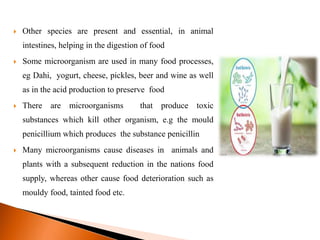
 Other species are present and essential, in animal
intestines, helping in the digestion of food
 Some microorganism are used in many food processes,
eg Dahi, yogurt, cheese, pickles, beer and wine as well
as in the acid production to preserve food
 There are microorganisms that produce toxic
substances which kill other organism, e.g the mould
penicillium which produces the substance penicillin
 Many microorganisms cause diseases in animals and
plants with a subsequent reduction in the nations food
supply, whereas other cause food deterioration such as
mouldy food, tainted food etc.
 Milk by its very nature, is a natural growth medium for microorganism
because of its near neutral pH, complex biochemical composition and high
water content
 Milk when secreted in the healthy udder is almost sterile, however, it is
subjected to many sources of microbial contamination
 The sources of contamination may be broadly classified as
a) from within the udder
b) from the exterior of the teats and udder
c) from milk holding and storage equipment.
 Bacteria in aseptically drawn milk are usually limited in number and include mostly
Micrococci, Lactococci, and Corynebacterium bovis
 Freshly drawn milk from healthy cows during routine milking operation may contain
from a few to several thousand microorganism
 The number is highly variable among animals and even from quarter to quarter in a given
milch animal
 Whereas a few microorganisms may enter milk while it is in the udder, most of the
microorganisms in raw milk are contaminants from the outside of the udder, milking
equipment, and human handlers
 The number and types of microorganisms, present in milk are influenced by season, farm
hygiene, feed and efficiency of collection, transportation, chilling and storage of milk
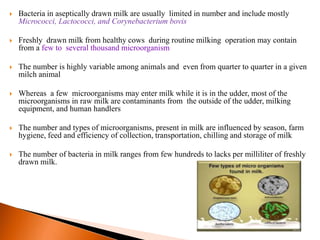
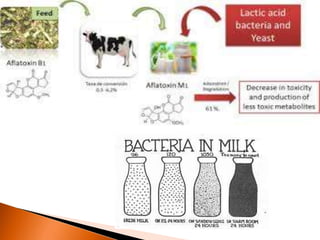
 The number of bacteria in milk ranges from few hundreds to lacks per milliliter of freshly
drawn milk.
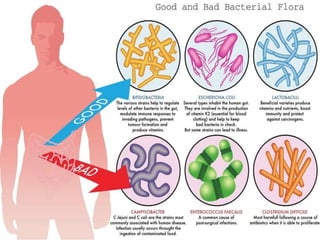
 Of these some microorganism are desirable, others are undesirable and
still others are harmful and pathogenic
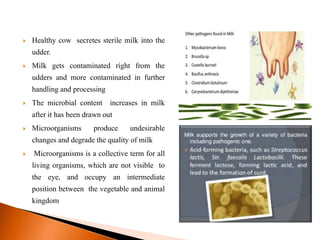
 Among the desirable microorganism (eg: Lactic acid bacteria ) there are
starter culture which can be used to produce a variety of fermented dairy
products.
 Pathogenic bacteria (e.g; Salmonella, Listeria) are capable of causing
infection or intoxication
 Milk, a highly nutritious food ideally suited for the growth of both spoilage
and pathogenic organisms is the basis for an extremely large dairy
industry
 Milk also plays a protection role for most of the microorganism
Microorganims in milk

Microorganims in milk

  • 2.
     Milk isthe white, fresh, clean, lacteal secretion obtained from female cattle.  Milk is produced by females of the cattle through the udder immediately after calving, to feed the young one.  Milk is a liquid food for human infants and adults.  It is excellent medium for many bacteria and fungi  The chemical composition of freshly drawn milk differs widely  The main bulk of milk is water. It forms 87.3%.  Lactose constitutes 5%
  • 3.
     Fat is3.8%  Casein is 2.5%  Whey is 1.4%  The pH of milk varies from 6.7 to 6.9  Milk contains vitamins such as A, B1, B2, C & D  It contains body building proteins, bone forming minerals, energy giving lactose, milk fat and fatty acids  All nutrients present in the milk are easily digestible  Thus milk seems to be a balanced diet to infants, invalids, convalescents and patients
  • 4.
     Healthy cowsecretes sterile milk into the udder.  Milk gets contaminated right from the udders and more contaminated in further handling and processing  The microbial content increases in milk after it has been drawn out  Microorganisms produce undesirable changes and degrade the quality of milk  Microorganisms is a collective term for all living organisms, which are not visible to the eye, and occupy an intermediate position between the vegetable and animal kingdom
  • 5.
     They arefound every where in the atmosphere, in water and in the soil and as they break down organic materials, they play a very important role in the cycle of the nature  There are thousands of species which are important to the life and economic structure of the human race. For example: Certain species form simple chemical elements during the break down of dead organic material which plants can use again  They increases soil fertility and crop production which results in more food
  • 6.
     Other speciesare present and essential, in animal intestines, helping in the digestion of food  Some microorganism are used in many food processes, eg Dahi, yogurt, cheese, pickles, beer and wine as well as in the acid production to preserve food  There are microorganisms that produce toxic substances which kill other organism, e.g the mould penicillium which produces the substance penicillin  Many microorganisms cause diseases in animals and plants with a subsequent reduction in the nations food supply, whereas other cause food deterioration such as mouldy food, tainted food etc.
  • 8.
     Milk byits very nature, is a natural growth medium for microorganism because of its near neutral pH, complex biochemical composition and high water content  Milk when secreted in the healthy udder is almost sterile, however, it is subjected to many sources of microbial contamination  The sources of contamination may be broadly classified as a) from within the udder b) from the exterior of the teats and udder c) from milk holding and storage equipment.
  • 9.
     Bacteria inaseptically drawn milk are usually limited in number and include mostly Micrococci, Lactococci, and Corynebacterium bovis  Freshly drawn milk from healthy cows during routine milking operation may contain from a few to several thousand microorganism  The number is highly variable among animals and even from quarter to quarter in a given milch animal  Whereas a few microorganisms may enter milk while it is in the udder, most of the microorganisms in raw milk are contaminants from the outside of the udder, milking equipment, and human handlers  The number and types of microorganisms, present in milk are influenced by season, farm hygiene, feed and efficiency of collection, transportation, chilling and storage of milk  The number of bacteria in milk ranges from few hundreds to lacks per milliliter of freshly drawn milk.
  • 11.
     Of thesesome microorganism are desirable, others are undesirable and still others are harmful and pathogenic  Among the desirable microorganism (eg: Lactic acid bacteria ) there are starter culture which can be used to produce a variety of fermented dairy products.  Pathogenic bacteria (e.g; Salmonella, Listeria) are capable of causing infection or intoxication  Milk, a highly nutritious food ideally suited for the growth of both spoilage and pathogenic organisms is the basis for an extremely large dairy industry  Milk also plays a protection role for most of the microorganism