Towards Optimal Microbiome:
Boosting YOur Gut Health
Healthy Microbiome, Healthy You
For more info, contact us: xeraya@xeraya.com
Follow us: @xerayacapital
www.xeraya.com
Source: https://www.healthline.com/nutrition/gut-microbiome-and-health
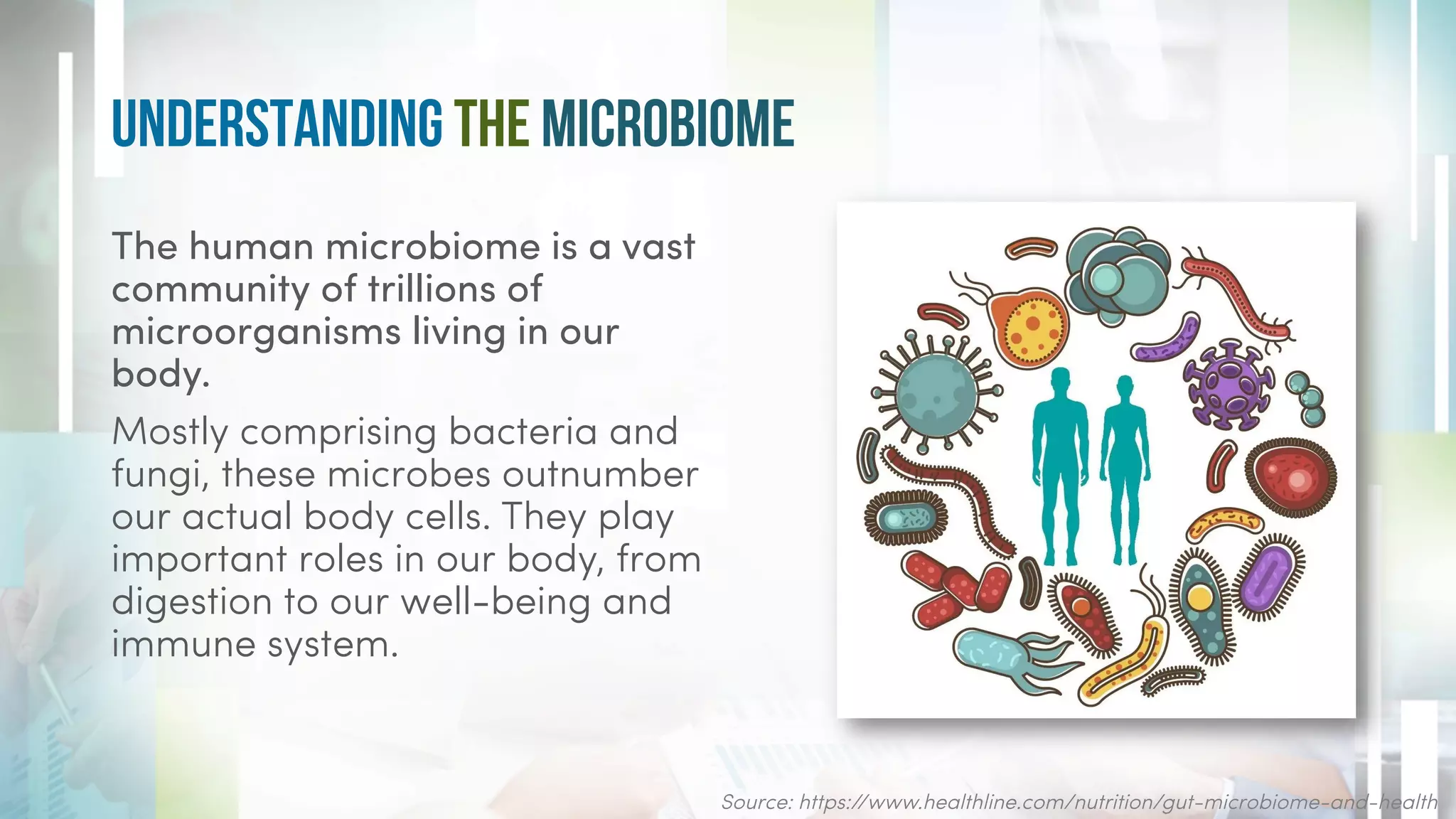
The human microbiome is a vast
community of trillions of
microorganisms living in our
body.
Mostly comprising bacteria and
fungi, these microbes outnumber
our actual body cells. They play
important roles in our body, from
digestion to our well-being and
immune system.
Understanding The Microbiome
Source: https://www.hsph.harvard.edu/news/press-releases/personal-microbiomes-contain-unique-fingerprints/
The microbioME Identity
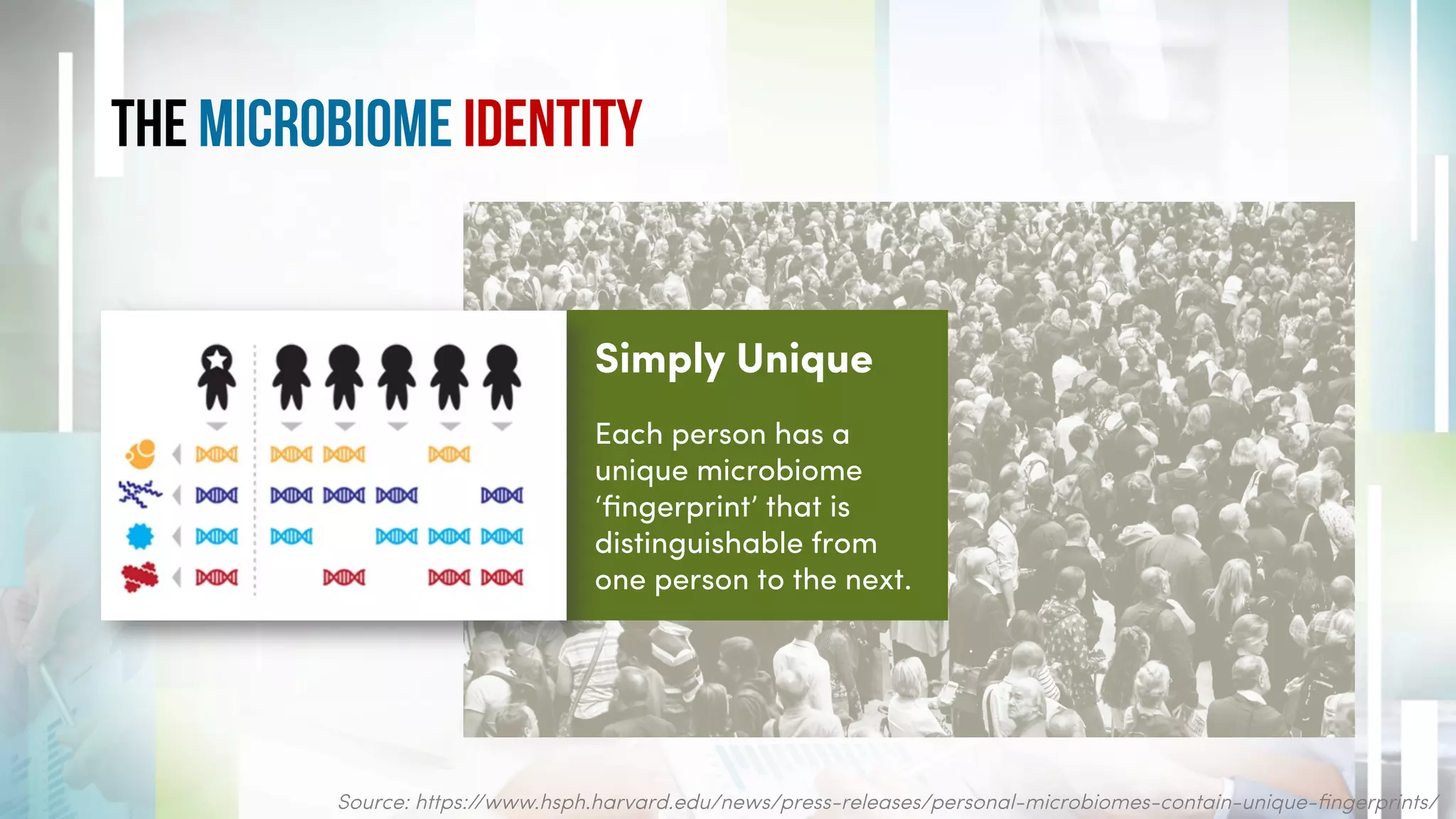
Simply Unique
Each person has a
unique microbiome
‘fingerprint’ that is
distinguishable from
one person to the next.
Scientists recently discovered
that our microbiome have a
major influence on our
metabolism, body weight,
propensity to illness, immune
system, appetite, and even our
mood.
Taking care of our microbiome
has tremendous benefits to our
overall health & well-being.
Source: https://www.sciencefocus.com/the-human-body/how-to-boost-your-microbiome/
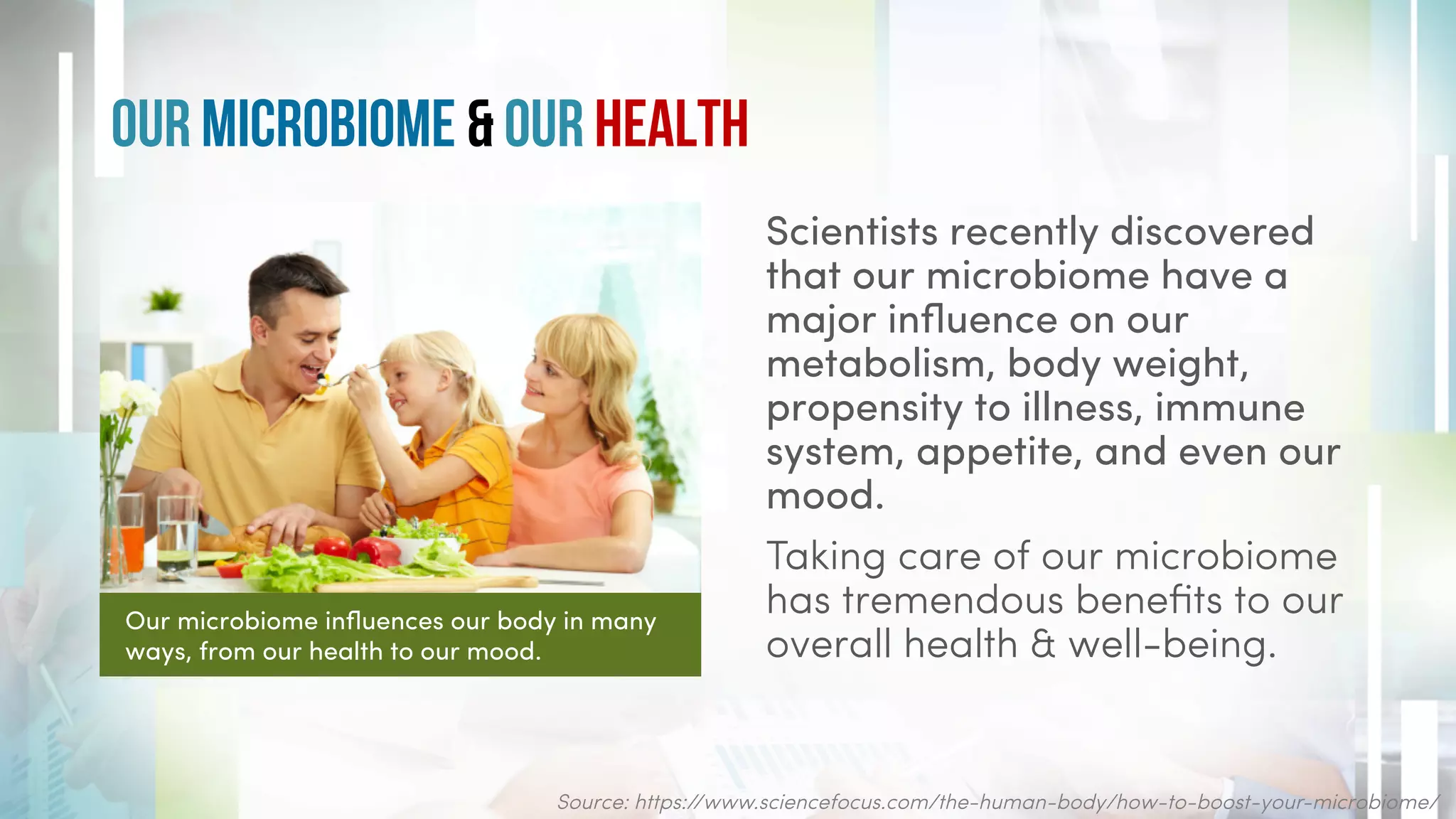
Our microbiome influences our body in many
ways, from our health to our mood.
Our Microbiome & Our Health
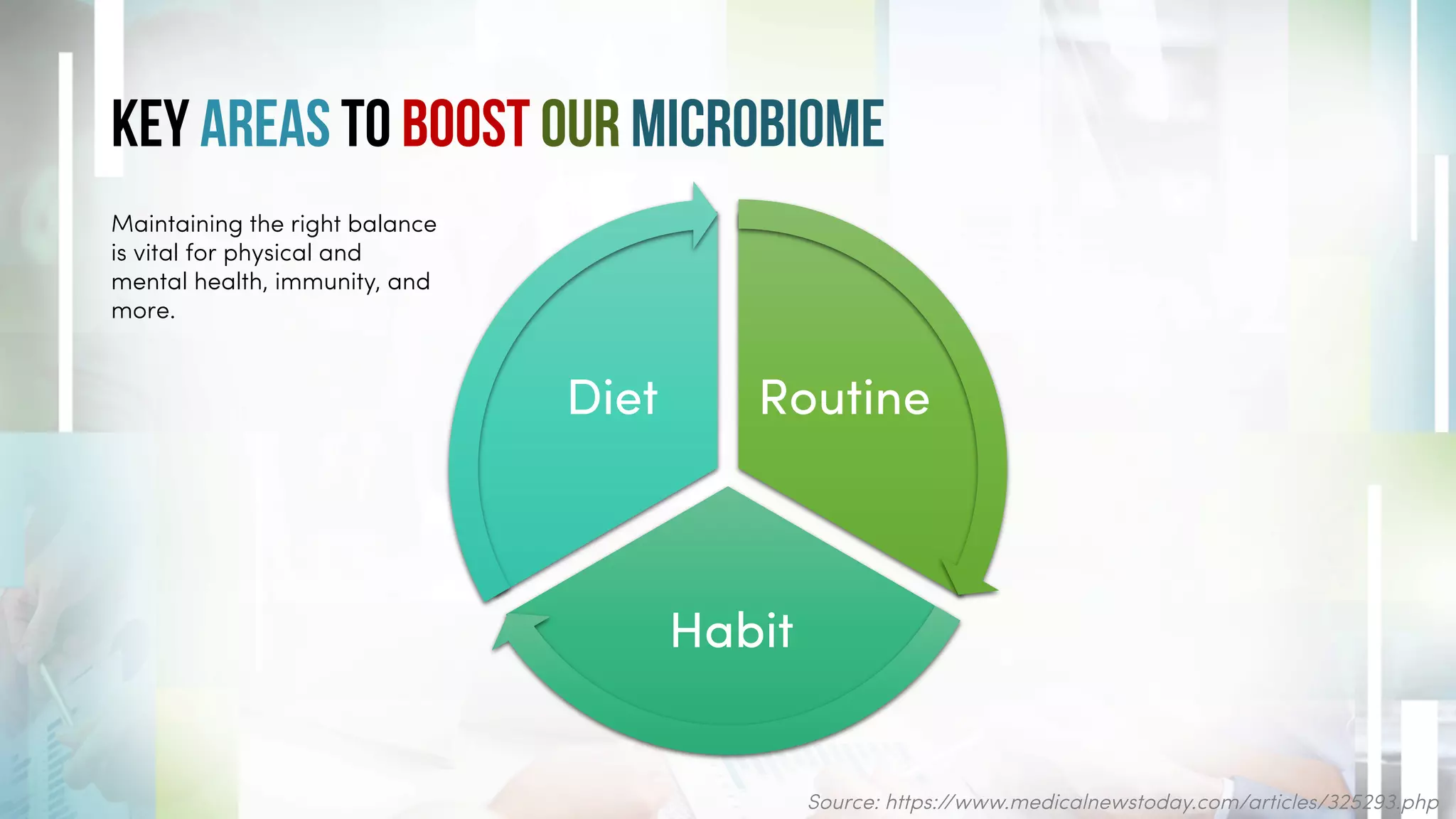
Key Areas To Boost Our Microbiome
Maintaining the right balance
is vital for physical and
mental health, immunity, and
more.
Routine
Habit
Diet
Source: https://www.medicalnewstoday.com/articles/325293.php
Optimal Diet: Probiotics & Prebiotics
Probiotics are live bacteria and
yeasts that are good for you,
they help keep your gut healthy.
They are mostly found in
fermented foods.
Prebiotics are non-digestible
carbohydrates that probiotics
feed on. It encourages
beneficial bacteria to multiply in
the gut.
Probiotics:
Yoghurt,
pickles, miso,
kimchi,
tempeh,
sauerkraut
Source: https://www.webmd.com/digestive-disorders/what-are-probiotics
Prebiotics:
Banana, apples,
onion, garlic,
asparagus,
cucumber, honey
Optimal Diet: Fruits & Vegetables
Source: https://www.webmd.com/digestive-disorders/what-are-probiotics
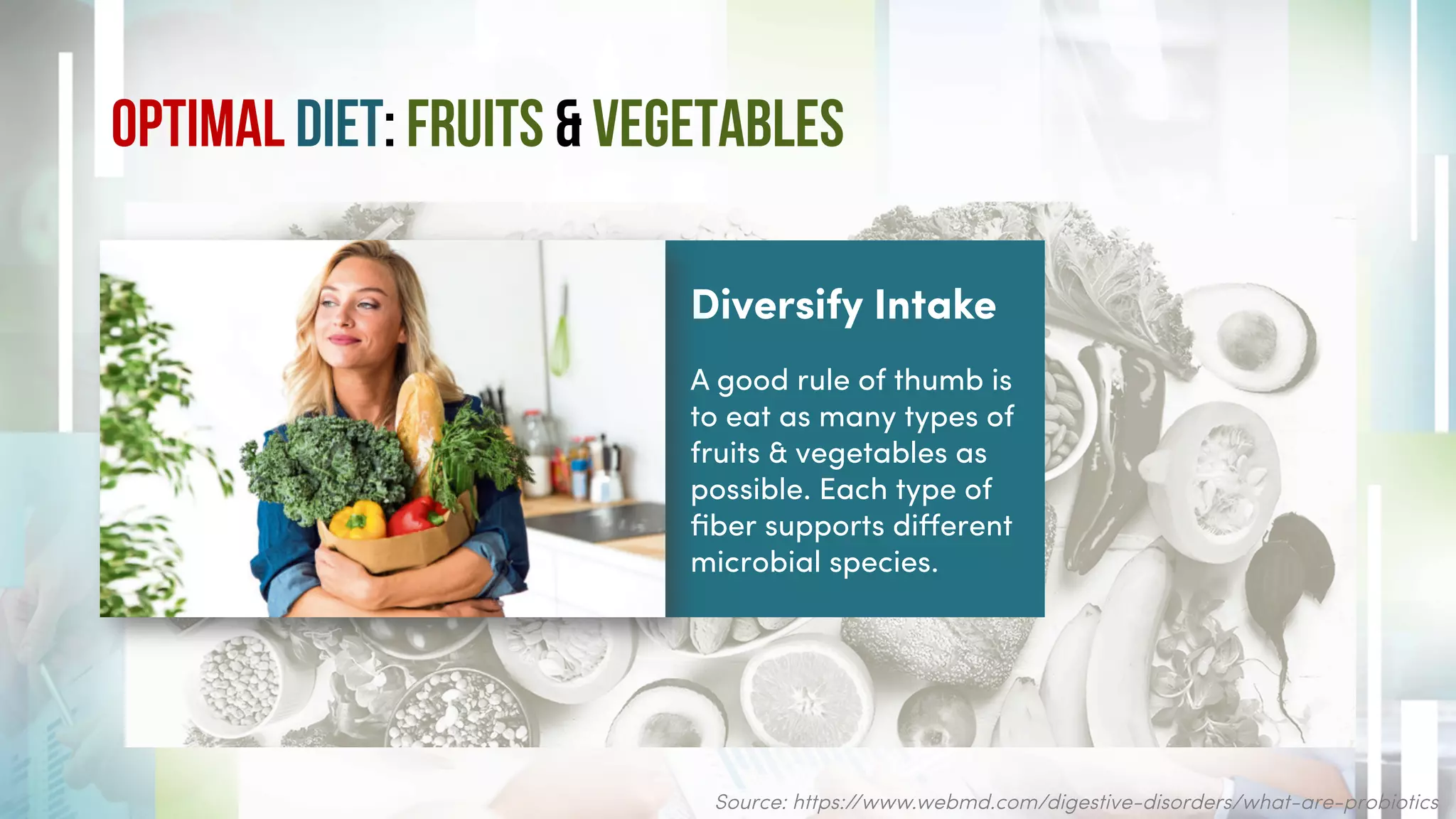
Diversify Intake
A good rule of thumb is
to eat as many types of
fruits & vegetables as
possible. Each type of
fiber supports different
microbial species.
Avoid sugar or artificial
sweeteners that may cause
imbalance of gut microbes.
This would disrupt the
metabolism of microbes and
reduce gut diversity – and can
lead to obesity and diabetes.
Occasionally fasting is
encouraged to give your
microbes some rest.
Source: https://www.sciencefocus.com/the-human-body/how-to-boost-your-microbiome/
Optimal Diet: Eating Habits
Excessive consumption of sweetened and
processed foods cause ‘dysbiosis’ and can
upset the gut microbes.
Optimal Routine: Exercise Regularly
A 2014 study found that athletes
had a larger variety of gut flora
than non-athletes.
Regularly exercising contributes
to good heart health and
weight maintenance.
Research has also suggested
that it may also improve gut
health, which may, in turn, help
control obesity.
Source: https://www.medicalnewstoday.com/articles/325293.php
A 2014 animal study has shown
that irregular sleep patterns
(circadian rhythms) and
disturbed sleep can have
negative outcomes for our
microbiome.
This increases the risk of obesity,
metabolic syndrome, and
inflammatory bowel disease.
Adults should sleep at least 7
hours per night.
Source: https://www.ncbi.nlm.nih.gov/pmc/articles/PMC4029760/
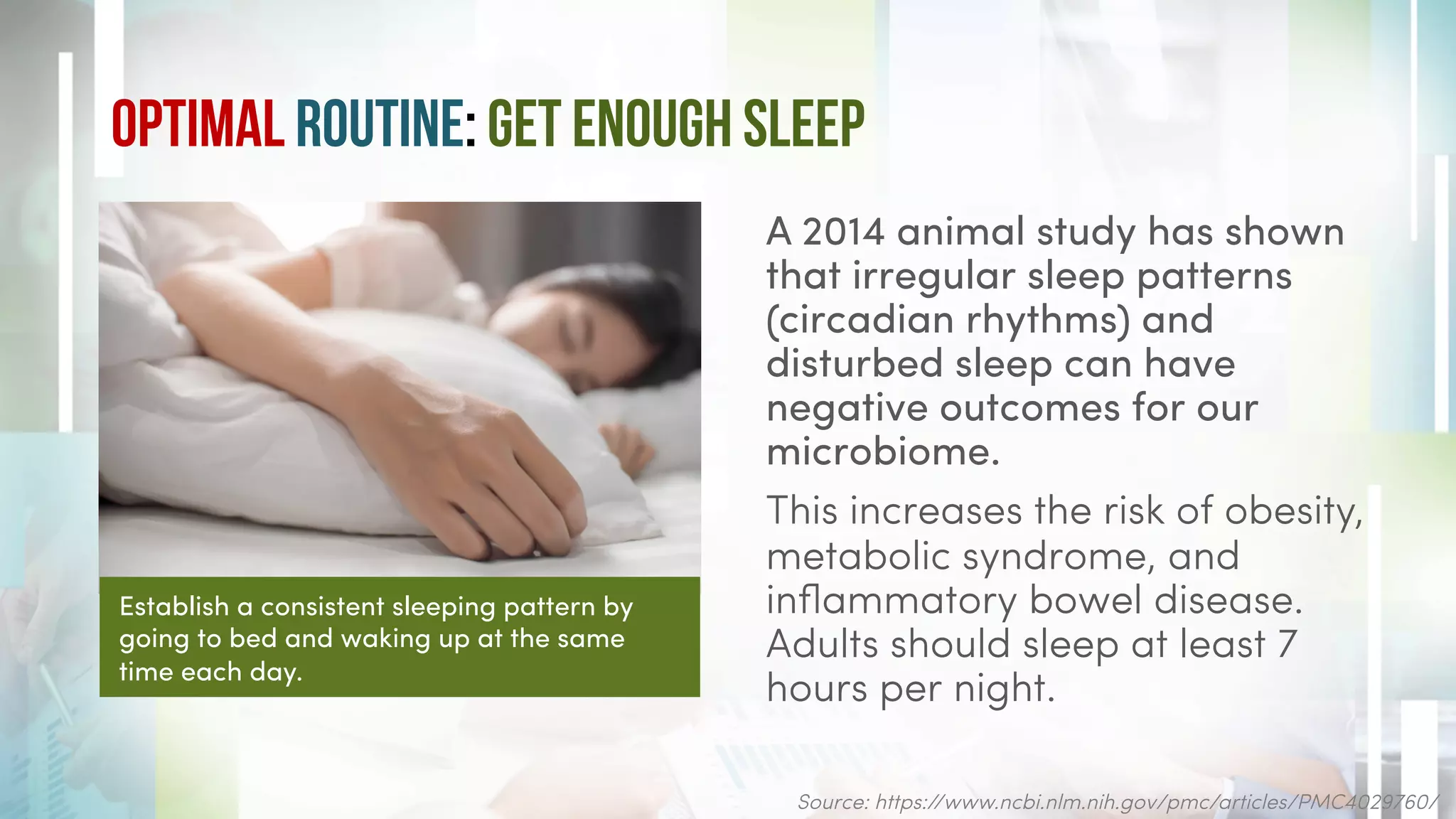
Establish a consistent sleeping pattern by
going to bed and waking up at the same
time each day.
Optimal Routine: Get Enough Sleep
Ideal Habits: Avoid Smoking
A 2018 review of research
published over a 16-year period
found that smoking alters the
intestinal microbiome.
Smoking increases the
population of potentially
harmful microorganisms and
decreases the levels of
beneficial ones.
Source: https://www.ncbi.nlm.nih.gov/pubmed/29626219
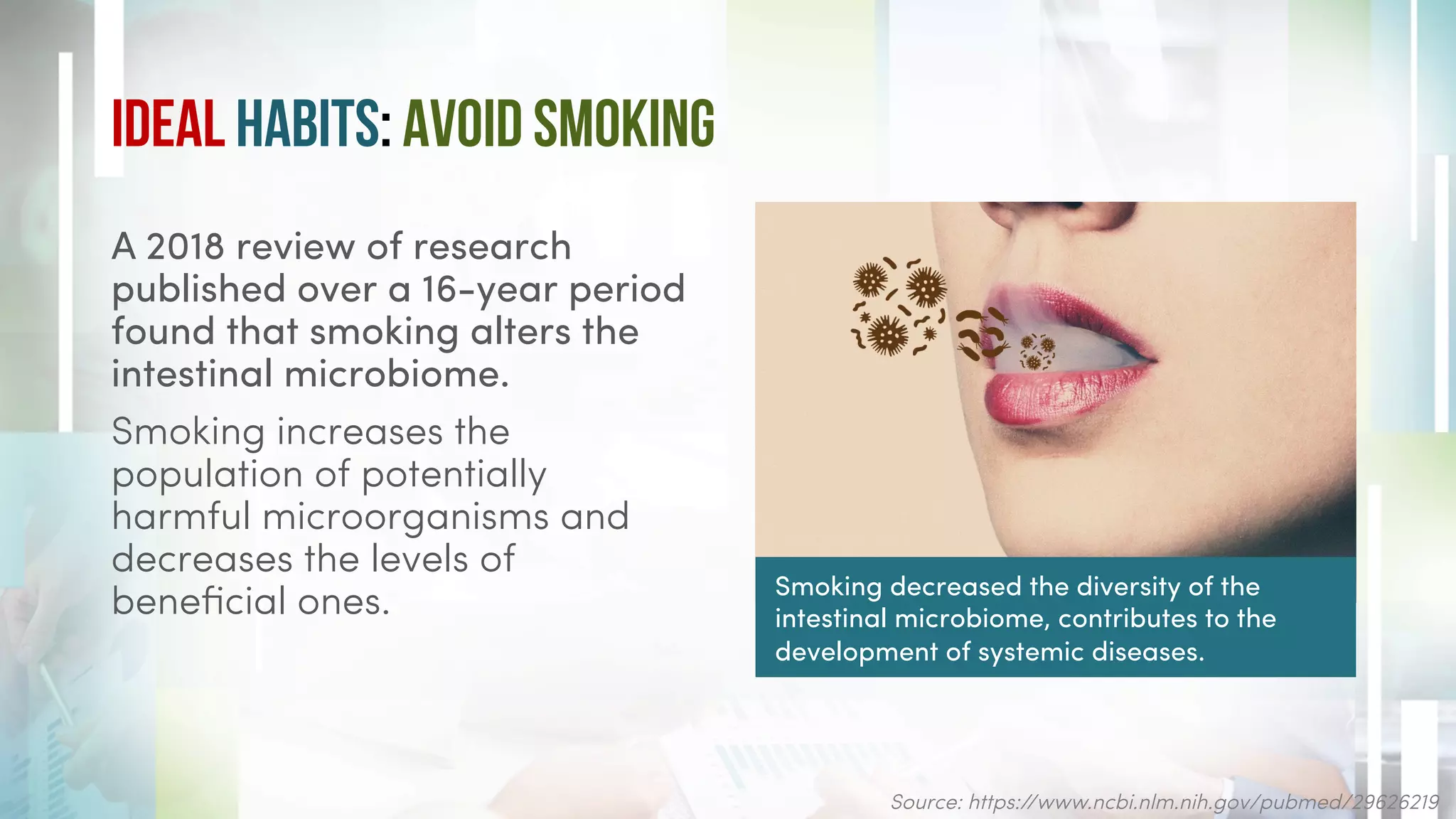
Smoking decreased the diversity of the
intestinal microbiome, contributes to the
development of systemic diseases.
Researchers found that
psychological stressors can
disrupt the microorganisms in
the intestines, even if the stress
is short-term.
Stressors that can negatively
affect gut health include:
•  psychological or work stress
•  environmental stress (heat, cold, or
noise)
•  sleep deprivation
Source: https://www.ncbi.nlm.nih.gov/pmc/articles/PMC4105248/
Good stress management techniques include
meditation, deep breathing exercises, and
relaxation (music or hobby).
Ideal Habits: Reduce & Manage Stress
Source: https://www.britannica.com/science/human-microbiome
Probiotics &
Prebiotics
Eat more
fermented
foods and
consume plenty
of fruits &
vegetables.
Avoid
processed
foods.
Get Enough Sleep
Sleep at least 7
hours per night,
maintain a
consistent sleeping
pattern.
Exercise
Regularly
At least 2-3 hours
per week, along
with muscle
strength activities.
Manage Stress,
Avoid Smoking
Pick up a hobby that
you find relaxing,
take a walk, or just
enjoy the music.
Optimal microbioME Summary
•  Maintaining a healthy microbiome contributes to better
overall health and well-being.
•  By adjusting our dietary intake and lifestyle habits, we can
alter the diversity and number of microbes in our bodies for
the better.
•  Positive changes you can make include taking probiotics,
follow a fiber-rich diet comprising fruits & vegetables.
•  Other lifestyle changes you can work on is getting enough
sleep and exercising regularly.
Conclusion
By xeraya capital
For more info, contact us: xeraya@xeraya.com
Follow us: @xerayacapital
www.xeraya.com

Towards Optimal Microbiome: Boosting Your Gut Health

  • 1.
    Towards Optimal Microbiome: BoostingYOur Gut Health Healthy Microbiome, Healthy You For more info, contact us: xeraya@xeraya.com Follow us: @xerayacapital www.xeraya.com
  • 2.
    Source: https://www.healthline.com/nutrition/gut-microbiome-and-health The humanmicrobiome is a vast community of trillions of microorganisms living in our body. Mostly comprising bacteria and fungi, these microbes outnumber our actual body cells. They play important roles in our body, from digestion to our well-being and immune system. Understanding The Microbiome
  • 3.
    Source: https://www.hsph.harvard.edu/news/press-releases/personal-microbiomes-contain-unique-fingerprints/ The microbioMEIdentity Simply Unique Each person has a unique microbiome ‘fingerprint’ that is distinguishable from one person to the next.
  • 4.
    Scientists recently discovered thatour microbiome have a major influence on our metabolism, body weight, propensity to illness, immune system, appetite, and even our mood. Taking care of our microbiome has tremendous benefits to our overall health & well-being. Source: https://www.sciencefocus.com/the-human-body/how-to-boost-your-microbiome/ Our microbiome influences our body in many ways, from our health to our mood. Our Microbiome & Our Health
  • 5.
    Key Areas ToBoost Our Microbiome Maintaining the right balance is vital for physical and mental health, immunity, and more. Routine Habit Diet Source: https://www.medicalnewstoday.com/articles/325293.php
  • 6.
    Optimal Diet: Probiotics& Prebiotics Probiotics are live bacteria and yeasts that are good for you, they help keep your gut healthy. They are mostly found in fermented foods. Prebiotics are non-digestible carbohydrates that probiotics feed on. It encourages beneficial bacteria to multiply in the gut. Probiotics: Yoghurt, pickles, miso, kimchi, tempeh, sauerkraut Source: https://www.webmd.com/digestive-disorders/what-are-probiotics Prebiotics: Banana, apples, onion, garlic, asparagus, cucumber, honey
  • 7.
    Optimal Diet: Fruits& Vegetables Source: https://www.webmd.com/digestive-disorders/what-are-probiotics Diversify Intake A good rule of thumb is to eat as many types of fruits & vegetables as possible. Each type of fiber supports different microbial species.
  • 8.
    Avoid sugar orartificial sweeteners that may cause imbalance of gut microbes. This would disrupt the metabolism of microbes and reduce gut diversity – and can lead to obesity and diabetes. Occasionally fasting is encouraged to give your microbes some rest. Source: https://www.sciencefocus.com/the-human-body/how-to-boost-your-microbiome/ Optimal Diet: Eating Habits Excessive consumption of sweetened and processed foods cause ‘dysbiosis’ and can upset the gut microbes.
  • 9.
    Optimal Routine: ExerciseRegularly A 2014 study found that athletes had a larger variety of gut flora than non-athletes. Regularly exercising contributes to good heart health and weight maintenance. Research has also suggested that it may also improve gut health, which may, in turn, help control obesity. Source: https://www.medicalnewstoday.com/articles/325293.php
  • 10.
    A 2014 animalstudy has shown that irregular sleep patterns (circadian rhythms) and disturbed sleep can have negative outcomes for our microbiome. This increases the risk of obesity, metabolic syndrome, and inflammatory bowel disease. Adults should sleep at least 7 hours per night. Source: https://www.ncbi.nlm.nih.gov/pmc/articles/PMC4029760/ Establish a consistent sleeping pattern by going to bed and waking up at the same time each day. Optimal Routine: Get Enough Sleep
  • 11.
    Ideal Habits: AvoidSmoking A 2018 review of research published over a 16-year period found that smoking alters the intestinal microbiome. Smoking increases the population of potentially harmful microorganisms and decreases the levels of beneficial ones. Source: https://www.ncbi.nlm.nih.gov/pubmed/29626219 Smoking decreased the diversity of the intestinal microbiome, contributes to the development of systemic diseases.
  • 12.
    Researchers found that psychologicalstressors can disrupt the microorganisms in the intestines, even if the stress is short-term. Stressors that can negatively affect gut health include: •  psychological or work stress •  environmental stress (heat, cold, or noise) •  sleep deprivation Source: https://www.ncbi.nlm.nih.gov/pmc/articles/PMC4105248/ Good stress management techniques include meditation, deep breathing exercises, and relaxation (music or hobby). Ideal Habits: Reduce & Manage Stress
  • 13.
    Source: https://www.britannica.com/science/human-microbiome Probiotics & Prebiotics Eatmore fermented foods and consume plenty of fruits & vegetables. Avoid processed foods. Get Enough Sleep Sleep at least 7 hours per night, maintain a consistent sleeping pattern. Exercise Regularly At least 2-3 hours per week, along with muscle strength activities. Manage Stress, Avoid Smoking Pick up a hobby that you find relaxing, take a walk, or just enjoy the music. Optimal microbioME Summary
  • 14.
    •  Maintaining ahealthy microbiome contributes to better overall health and well-being. •  By adjusting our dietary intake and lifestyle habits, we can alter the diversity and number of microbes in our bodies for the better. •  Positive changes you can make include taking probiotics, follow a fiber-rich diet comprising fruits & vegetables. •  Other lifestyle changes you can work on is getting enough sleep and exercising regularly. Conclusion
  • 15.
    By xeraya capital Formore info, contact us: xeraya@xeraya.com Follow us: @xerayacapital www.xeraya.com