BIT 1030 Sustainability Science for
Engineers
Microbial Fuel Cell
Interview 2 (March 22, 2017)
TEAM MEMBERS
NAME REGISTRATION NO-
SUBGROUP 1
1. ALEENA JOSE 15BMD0040
2. ANSHULI KUMARI 15BMD0028
3. NIVEDITHA 15BBT0036
4.SHATAKSHI YADAV 15BMD0066
5.VINITA KUMARI 15BBT0057
SUBGROUP 2
1.AYINDRILA DUTTA 16BBT0055
2.PARTHA SARATHI 16BBT0067
3.ANKITA KAR 16BBT0075
4.CHERYL JOSEPH 16BBT0077
STATEMENT-
• Two different models of Microbial fuel Cell
using two different types of bacteria and
different methods of construction.
• Theme of sustainability- Alternative energy
source
• Importance- It is a simple and eco friendly
source of green energy (electricity) which
can replace non-renewable energy sources
helping us to proceed toward sustainable
development and help us to determine which
microbial fuel cell is more efficient .
SUBGROUP 1-
COMPONENTS REQUIED
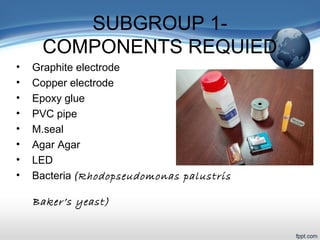
• Graphite electrode
• Copper electrode
• Epoxy glue
• PVC pipe
• M.seal
• Agar Agar
• LED
• Bacteria (Rhodopseudomonas palustris
Baker’s yeast)
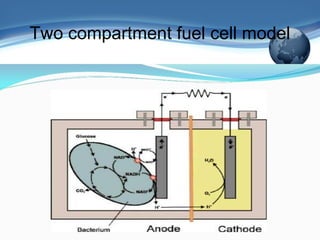
Two compartment fuel cell model
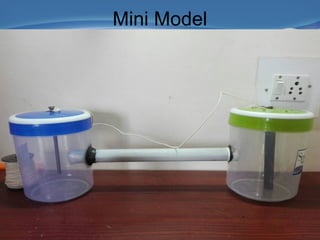
Mini Model
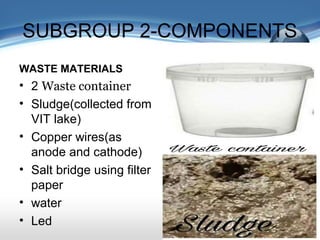
SUBGROUP 2-COMPONENTS
WASTE MATERIALS
• 2 Waste container
• Sludge(collected from
VIT lake)
• Copper wires(as
anode and cathode)
• Salt bridge using filter
paper
• water
• Led
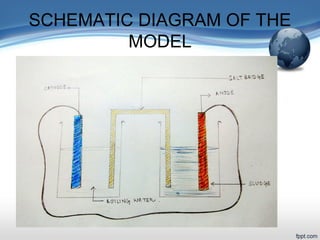
SCHEMATIC DIAGRAM OF THE
MODEL
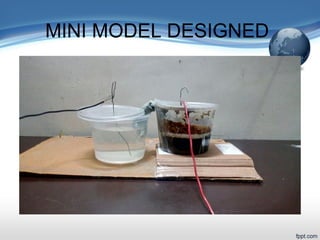
MINI MODEL DESIGNED
APPLICATIONS
 Treatment of wastewater and solid wastes and generation of electricity:
A)Micro-organisms can perform the dual duty of degrading effluents and
generating power.
B) When micro-organisms oxidize organic compounds present in waste water,
electrons are released yielding a steady source of electrical current.
 BOD sensing:
A) Sensor for pollutant analysis. The Electricity Yield from the MFC is directly
proportional to the organic matter present which makes an MFC viable as a BOD
sensor.
B) An MFC-type BOD sensor can be kept operational for over 5 years without
extra maintenance, has far longer life span than most BOD sensors.
 Hydrogen Production
EDUCATIONAL APLLICATIONS
• Soil-based microbial fuel cells serve as educational tools, as
they encompass multiple scientific disciplines (microbiology,
geochemistry, electrical engineering, etc.) and can be made
using commonly available materials, such as soils and items
from the refrigerator.
• Kits for classrooms and hobbyists and research-grade kits for
scientific laboratories and corporations are available.
CONTRIBUTION OF EACH MEMBER
SUBGROUP-1
S
L
N
O
MEMBER RESPONSIBILITIES AND WORK DONE CONTRIB
UTION(%)
1. Aleena jose Construction of model, constant monitoring of the
project
20
2 Anshuli
kumari
Arya
Construction of model, constant monitoring of the
project
20
3 Niveditha Construction of model, constant monitoring of the
project
20
4 Shatakshi
Yadav
Construction of model, constant monitoring of the
project
20
5 Vinita
kumari
Construction of model, constant monitoring of the
project
20
SUBGROUP -2
SL
N0
MEMBER RESPONSIBILITIES AND WORK DONE CONTRIBU
TION(%)
1. AYINDRILA
DUTTA
Making of presentation and mini model
construction and monitoring.
25
2 PARTHA
SARATHI
Sludge collection from VIT lake ,mini model
construction and monitoring
25
3 ANKITA KAR Sludge collection from VIT lake ,mini model
construction and monitoring
25
4 CHERYL
JOSEPH
Making of sketches, mini model construction
and monitoring.
25

microbial fuel cell

  • 1.
    BIT 1030 SustainabilityScience for Engineers Microbial Fuel Cell Interview 2 (March 22, 2017)
  • 2.
    TEAM MEMBERS NAME REGISTRATIONNO- SUBGROUP 1 1. ALEENA JOSE 15BMD0040 2. ANSHULI KUMARI 15BMD0028 3. NIVEDITHA 15BBT0036 4.SHATAKSHI YADAV 15BMD0066 5.VINITA KUMARI 15BBT0057 SUBGROUP 2 1.AYINDRILA DUTTA 16BBT0055 2.PARTHA SARATHI 16BBT0067 3.ANKITA KAR 16BBT0075 4.CHERYL JOSEPH 16BBT0077
  • 3.
    STATEMENT- • Two differentmodels of Microbial fuel Cell using two different types of bacteria and different methods of construction. • Theme of sustainability- Alternative energy source • Importance- It is a simple and eco friendly source of green energy (electricity) which can replace non-renewable energy sources helping us to proceed toward sustainable development and help us to determine which microbial fuel cell is more efficient .
  • 4.
    SUBGROUP 1- COMPONENTS REQUIED •Graphite electrode • Copper electrode • Epoxy glue • PVC pipe • M.seal • Agar Agar • LED • Bacteria (Rhodopseudomonas palustris Baker’s yeast)
  • 5.
  • 6.
  • 7.
    SUBGROUP 2-COMPONENTS WASTE MATERIALS •2 Waste container • Sludge(collected from VIT lake) • Copper wires(as anode and cathode) • Salt bridge using filter paper • water • Led
  • 8.
  • 9.
  • 10.
    APPLICATIONS  Treatment ofwastewater and solid wastes and generation of electricity: A)Micro-organisms can perform the dual duty of degrading effluents and generating power. B) When micro-organisms oxidize organic compounds present in waste water, electrons are released yielding a steady source of electrical current.  BOD sensing: A) Sensor for pollutant analysis. The Electricity Yield from the MFC is directly proportional to the organic matter present which makes an MFC viable as a BOD sensor. B) An MFC-type BOD sensor can be kept operational for over 5 years without extra maintenance, has far longer life span than most BOD sensors.  Hydrogen Production
  • 11.
    EDUCATIONAL APLLICATIONS • Soil-basedmicrobial fuel cells serve as educational tools, as they encompass multiple scientific disciplines (microbiology, geochemistry, electrical engineering, etc.) and can be made using commonly available materials, such as soils and items from the refrigerator. • Kits for classrooms and hobbyists and research-grade kits for scientific laboratories and corporations are available.
  • 12.
    CONTRIBUTION OF EACHMEMBER SUBGROUP-1 S L N O MEMBER RESPONSIBILITIES AND WORK DONE CONTRIB UTION(%) 1. Aleena jose Construction of model, constant monitoring of the project 20 2 Anshuli kumari Arya Construction of model, constant monitoring of the project 20 3 Niveditha Construction of model, constant monitoring of the project 20 4 Shatakshi Yadav Construction of model, constant monitoring of the project 20 5 Vinita kumari Construction of model, constant monitoring of the project 20
  • 13.
    SUBGROUP -2 SL N0 MEMBER RESPONSIBILITIESAND WORK DONE CONTRIBU TION(%) 1. AYINDRILA DUTTA Making of presentation and mini model construction and monitoring. 25 2 PARTHA SARATHI Sludge collection from VIT lake ,mini model construction and monitoring 25 3 ANKITA KAR Sludge collection from VIT lake ,mini model construction and monitoring 25 4 CHERYL JOSEPH Making of sketches, mini model construction and monitoring. 25