



MicroService Architecture 
@Ctrip 
William Yang(杨波) 
Dev Manager & Architect 
@Ctrip.com
Problem Domain 
• System decoupling for deployability and 
scalability 
• Evolutionary architecture and adaptive 
organization 
• Mobile Backend Architecture
Agenda 
• The curse of the monolith 
• Case study – decomposing Ctrip mobile 
backend into microservice 
• Microservice best practice 
• What we have learned
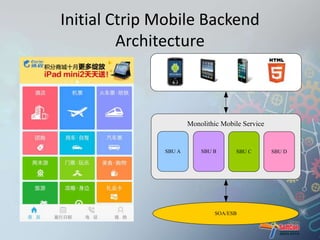
Initial Ctrip Mobile Backend 
Architecture 
Monolithic Mobile Service 
SBU A SBU B SBU C SBU D 
SOA/ESB
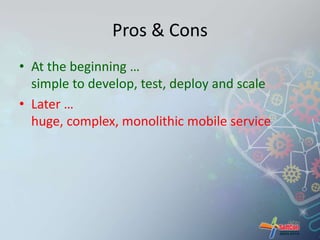
Pros & Cons 
• At the beginning … 
simple to develop, test, deploy and scale 
• Later … 
huge, complex, monolithic mobile service
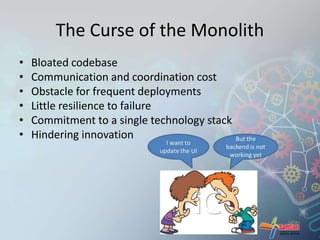
The Curse of the Monolith 
• Bloated codebase 
• Communication and coordination cost 
• Obstacle for frequent deployments 
• Little resilience to failure 
• Commitment to a single technology stack 
• Hindering innovation
MicroService Architecture Style 
• Decomposing a single app as a suite of services 
• Communicating with lightweight mechanism 
• Built around business capabilities 
• Independently deployable 
• Minimum of centralized management 
• May be written in different programming 
languages and use different storages 
http://martinfowler.com/articles/microservices.html
Who has Migrated to MicroService 
http://microservices.io/patterns/microservices.html
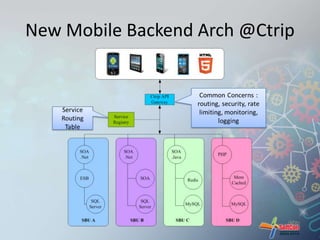
New Mobile Backend Arch @Ctrip
Key MicroService Infrastructure 
• Service 
– Service framework, gateway, registry 
• Monitoring 
– Logging, tracing, metrics 
• Deployment 
– TEST/UAT/PROD environments 
– CI/CD 
• Push common concerns to technical 
infrastructure
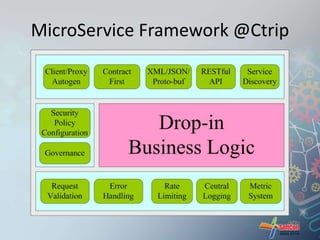
MicroService Framework @Ctrip
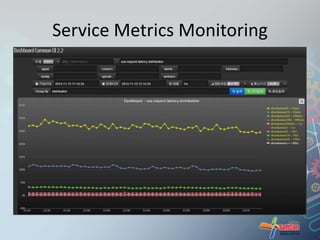
Service Metrics Monitoring
MicroService Availability 
• Assume a monolithic service with 99.99% 
availability, what if you have ~30 microservices 
each with 99.99% availability?? 
• Combined effective availability 
== 2 HOURS of downtime per month 
== 99.7% uptime!!
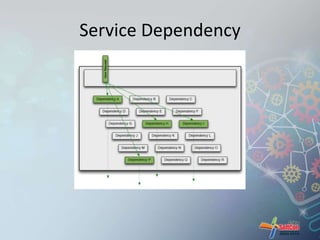
Service Dependency
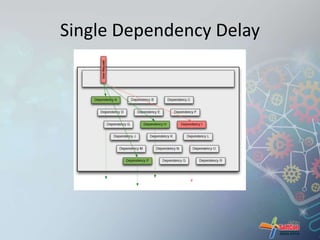
Single Dependency Delay
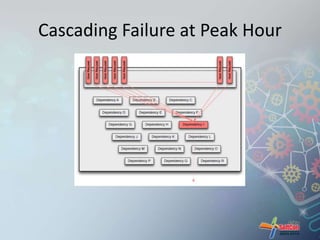
Cascading Failure at Peak Hour
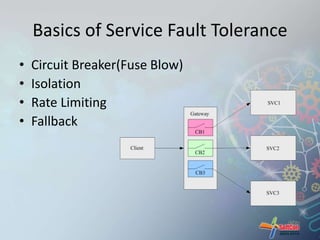
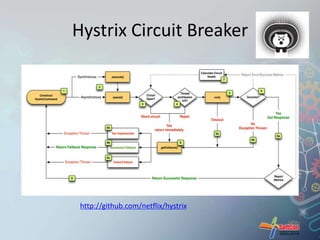
Basics of Service Fault Tolerance 
• Circuit Breaker(Fuse Blow) 
• Isolation 
• Rate Limiting 
• Fallback
Hystrix Circuit Breaker 
http://github.com/netflix/hystrix
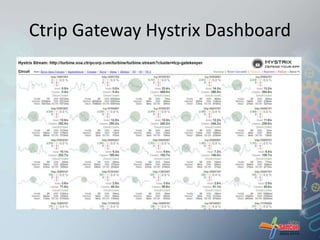
Ctrip Gateway Hystrix Dashboard
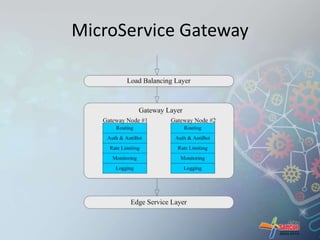
MicroService Gateway
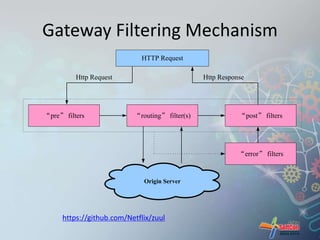
Gateway Filtering Mechanism 
“pre” filters “routing” filter(s) “post” filters 
Origin Server 
“error” filters 
HTTP Request 
Http Request Http Response 
https://github.com/Netflix/zuul
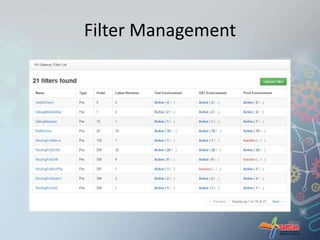
Filter Management
Advanced Usage of Gateway 
• Surgical debugging 
• Stress testing 
• Canary testing 
• Service migration 
• Load shedding 
• Active/Active traffic management
Migration to MicroService 
Achievement @Ctrip 
• System decoupled and domain ownership 
clarified 
• Business innovation speed accelerated 
• Overall system reliability improved 
• Decentralized architecture w/o SPOF 
• Develop, test, deploy and scale independently 
• Evolutionary architecture
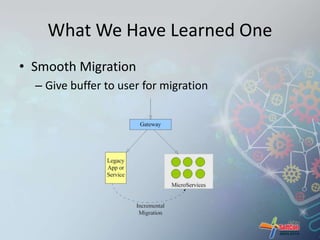
What We Have Learned One 
• Smooth Migration 
– Give buffer to user for migration
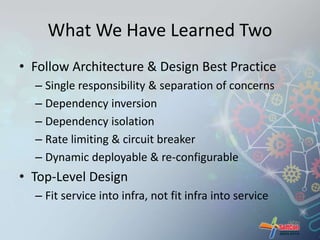
What We Have Learned Two 
• Follow Architecture & Design Best Practice 
– Single responsibility & separation of concerns 
– Dependency inversion 
– Dependency isolation 
– Rate limiting & circuit breaker 
– Dynamic deployable & re-configurable 
• Top-Level Design 
– Fit service into infra, not fit infra into service
What We Have Learned Three 
• Conway’s Law 
– “Any organization that design a system(defined 
broadly) will produce a design whose structure is a 
copy of the organization’s communication 
structure” – Melvin Conway, 1968 
– “Those system then constrain the options for 
organizational change” – Dan North
Caveat 
• MicroService is not a Free Lunch 
– Significant operations overhead 
– Substantial DevOps skills required 
– Implicit interface 
– Duplication of effort 
– Distributed system complexity 
– Testability challenges 
http://highscalability.com/blog/2014/4/8/microservices-not-a-free-lunch.html
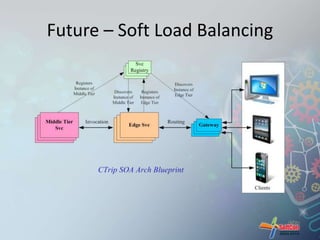
Future – Soft Load Balancing
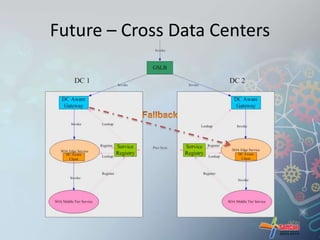
Future – Cross Data Centers
About Me 
• William Yang(杨波) 
• Dev Manager & Architect @Ctrip Middleware 
Team @Shanghai 
We are 
hiring!
谢谢

MicroServices architecture @ Ctrip v1.1

  • 1.
    MicroService Architecture @Ctrip William Yang(杨波) Dev Manager & Architect @Ctrip.com
  • 2.
    Problem Domain •System decoupling for deployability and scalability • Evolutionary architecture and adaptive organization • Mobile Backend Architecture
  • 3.
    Agenda • Thecurse of the monolith • Case study – decomposing Ctrip mobile backend into microservice • Microservice best practice • What we have learned
  • 4.
    Initial Ctrip MobileBackend Architecture Monolithic Mobile Service SBU A SBU B SBU C SBU D SOA/ESB
  • 5.
    Pros & Cons • At the beginning … simple to develop, test, deploy and scale • Later … huge, complex, monolithic mobile service
  • 6.
    The Curse ofthe Monolith • Bloated codebase • Communication and coordination cost • Obstacle for frequent deployments • Little resilience to failure • Commitment to a single technology stack • Hindering innovation
  • 7.
    MicroService Architecture Style • Decomposing a single app as a suite of services • Communicating with lightweight mechanism • Built around business capabilities • Independently deployable • Minimum of centralized management • May be written in different programming languages and use different storages http://martinfowler.com/articles/microservices.html
  • 8.
    Who has Migratedto MicroService http://microservices.io/patterns/microservices.html
  • 9.
    New Mobile BackendArch @Ctrip
  • 10.
    Key MicroService Infrastructure • Service – Service framework, gateway, registry • Monitoring – Logging, tracing, metrics • Deployment – TEST/UAT/PROD environments – CI/CD • Push common concerns to technical infrastructure
  • 11.
  • 12.
  • 13.
    MicroService Availability •Assume a monolithic service with 99.99% availability, what if you have ~30 microservices each with 99.99% availability?? • Combined effective availability == 2 HOURS of downtime per month == 99.7% uptime!!
  • 14.
  • 15.
  • 16.
  • 17.
    Basics of ServiceFault Tolerance • Circuit Breaker(Fuse Blow) • Isolation • Rate Limiting • Fallback
  • 18.
    Hystrix Circuit Breaker http://github.com/netflix/hystrix
  • 19.
  • 20.
  • 21.
    Gateway Filtering Mechanism “pre” filters “routing” filter(s) “post” filters Origin Server “error” filters HTTP Request Http Request Http Response https://github.com/Netflix/zuul
  • 22.
  • 23.
    Advanced Usage ofGateway • Surgical debugging • Stress testing • Canary testing • Service migration • Load shedding • Active/Active traffic management
  • 24.
    Migration to MicroService Achievement @Ctrip • System decoupled and domain ownership clarified • Business innovation speed accelerated • Overall system reliability improved • Decentralized architecture w/o SPOF • Develop, test, deploy and scale independently • Evolutionary architecture
  • 25.
    What We HaveLearned One • Smooth Migration – Give buffer to user for migration
  • 26.
    What We HaveLearned Two • Follow Architecture & Design Best Practice – Single responsibility & separation of concerns – Dependency inversion – Dependency isolation – Rate limiting & circuit breaker – Dynamic deployable & re-configurable • Top-Level Design – Fit service into infra, not fit infra into service
  • 27.
    What We HaveLearned Three • Conway’s Law – “Any organization that design a system(defined broadly) will produce a design whose structure is a copy of the organization’s communication structure” – Melvin Conway, 1968 – “Those system then constrain the options for organizational change” – Dan North
  • 28.
    Caveat • MicroServiceis not a Free Lunch – Significant operations overhead – Substantial DevOps skills required – Implicit interface – Duplication of effort – Distributed system complexity – Testability challenges http://highscalability.com/blog/2014/4/8/microservices-not-a-free-lunch.html
  • 29.
    Future – SoftLoad Balancing
  • 30.
    Future – CrossData Centers
  • 31.
    About Me •William Yang(杨波) • Dev Manager & Architect @Ctrip Middleware Team @Shanghai We are hiring!
  • 32.