

Building an Agile Culture with OKR
www.leanperformance.com
The traditional
model is broken
@meetfelipe
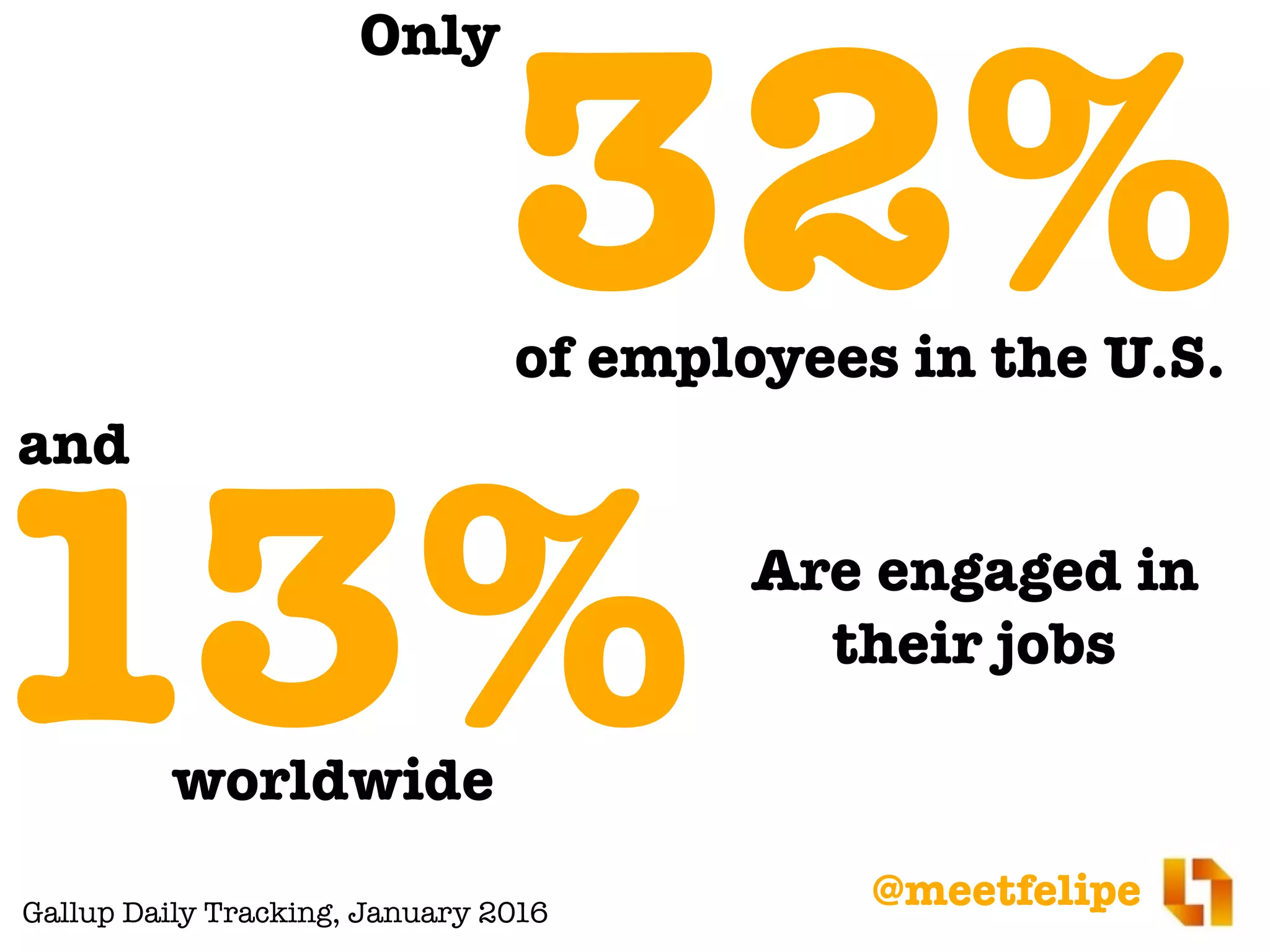
32%of employees in the U.S.
Gallup Daily Tracking, January 2016
13%worldwide
Only
Are engaged in
their jobs
and
@meetfelipe
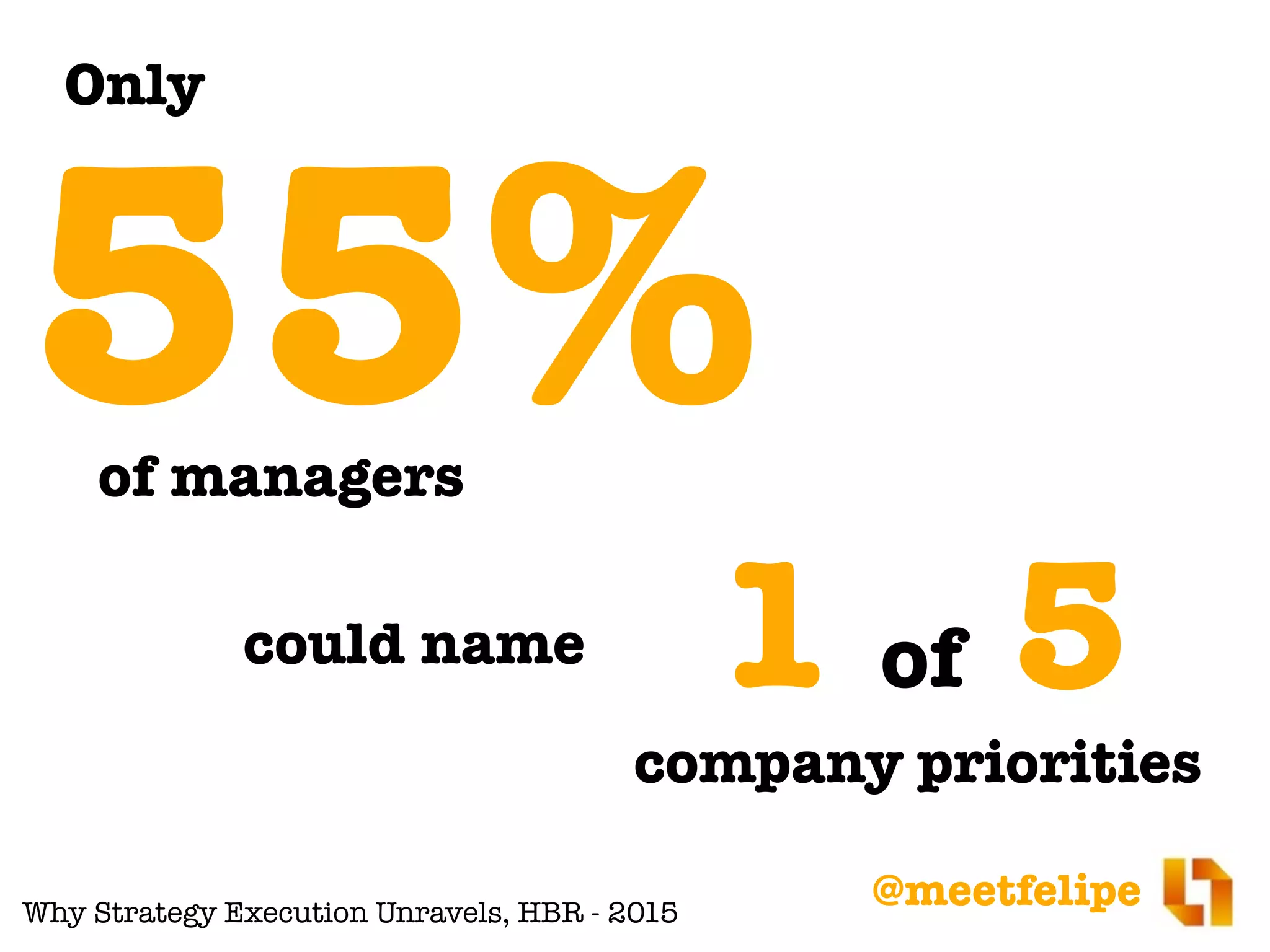
55%of managers
Only
Why Strategy Execution Unravels, HBR - 2015
company priorities
1 of 5could name
Although we are using Agile
tactically,
we are using waterfall for
strategy and goal setting
Static Annual Planning
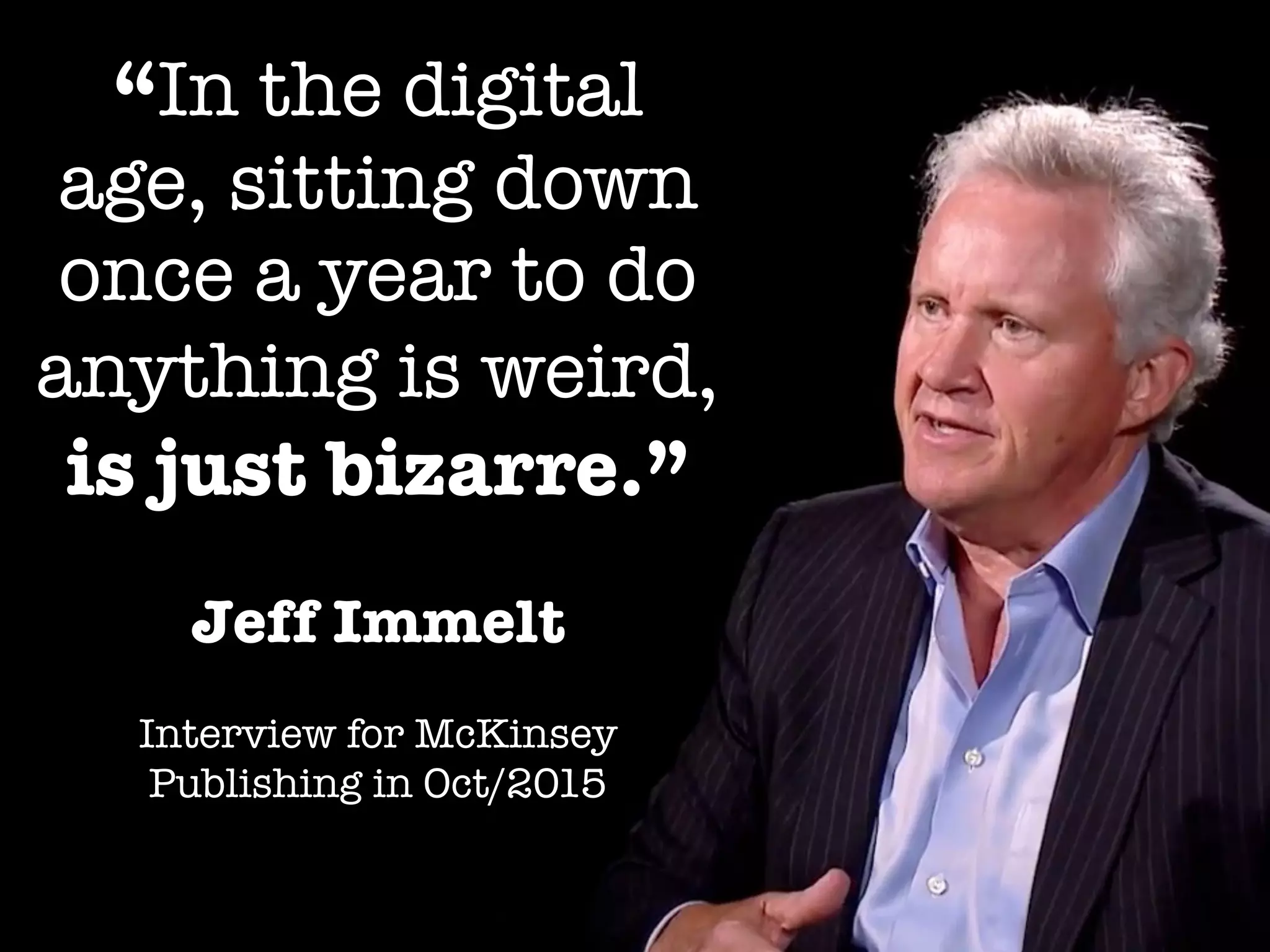
Jeff Immelt
Interview for McKinsey
Publishing in Oct/2015
“In the digital
age, sitting down
once a year to do
anything is weird,
is just bizarre.”
Goals Cascade ?
@meetfelipe
Top-Down
Unidirectional
Irreversible Flow
No Feedback Loops
Ends Crashing on the Rocks
Cascade (or waterfall):
@meetfelipe
Laszlo Bock
VP of People Operations, Google
“Research agrees with your
intuition:
Having goals improve
performance.
Spending hours cascading
goals does not.”
Cascading creates silos
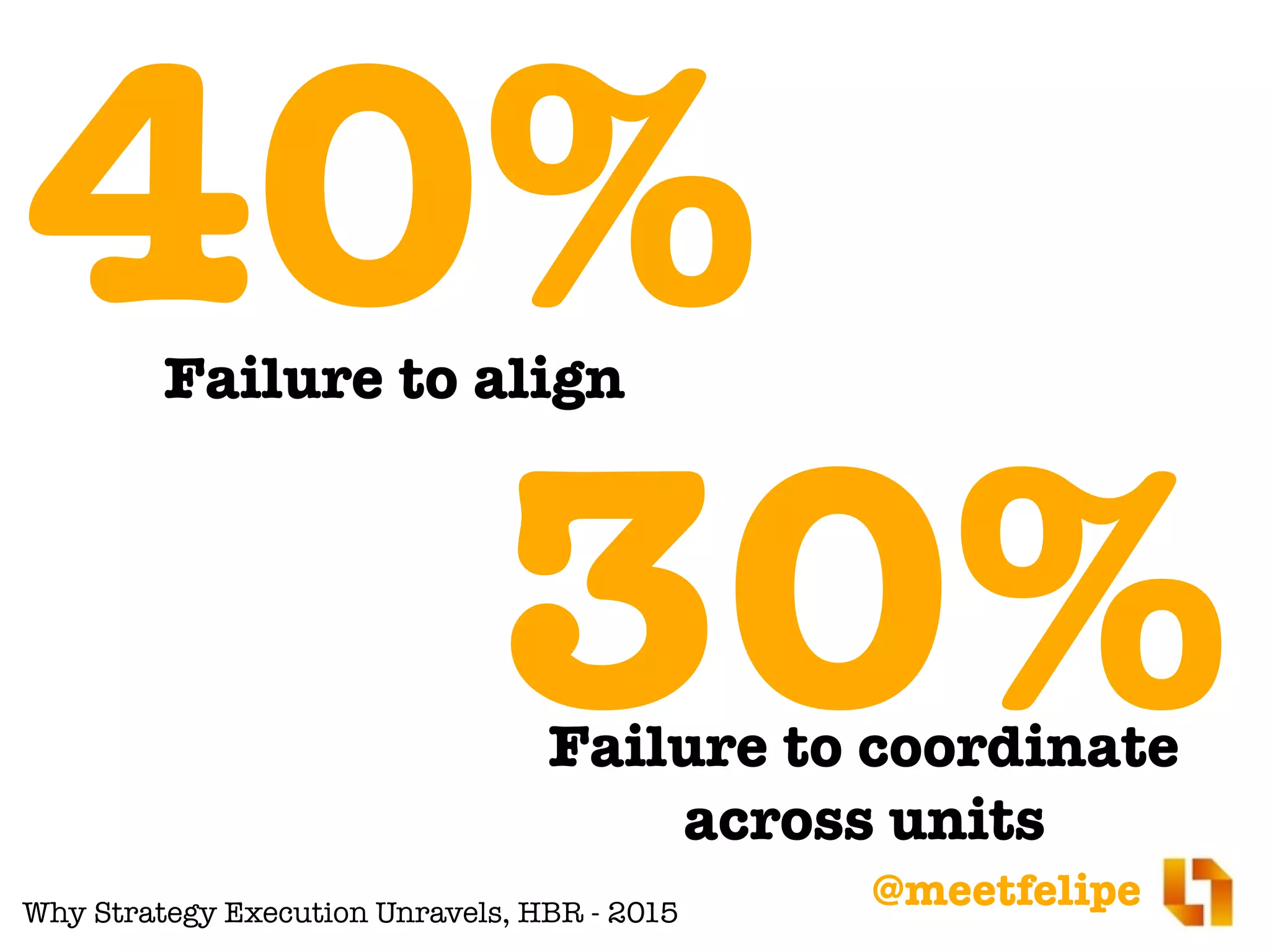
What is the greatest
challenge to executing
strategy?
@meetfelipe
30%Failure to coordinate
across units
Why Strategy Execution Unravels, HBR - 2015
40%Failure to align
There has to be another way
Full-Stack Agility
We have to use Agile on all
layers of management
@meetfelipe
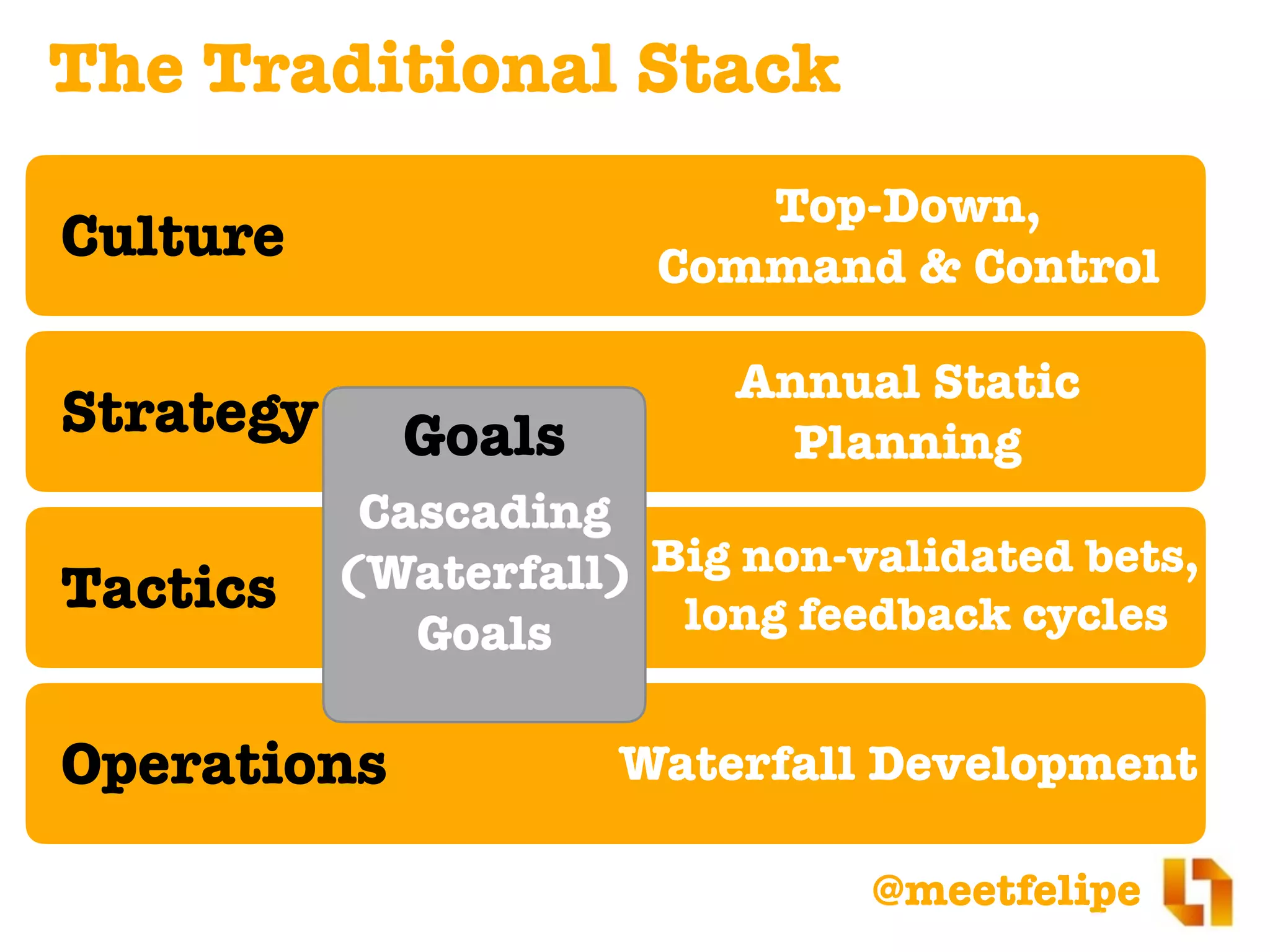
Strategy
Tactics
Operations
Culture
Goals
Waterfall Development
Big non-validated bets,
long feedback cycles
Annual Static
Planning
Top-Down,
Command & Control
Cascading
(Waterfall)
Goals
The Traditional Stack
@meetfelipe
Strategy
Tactics
Operations Agile Development
Lean Startup +
Lean Prod Mgmt.
Culture
Goals
Half-Baked Agility
Cascading
(Waterfall)
Goals
Annual Static
Planning
Top-Down,
Command & Control
Waterfall Legacy
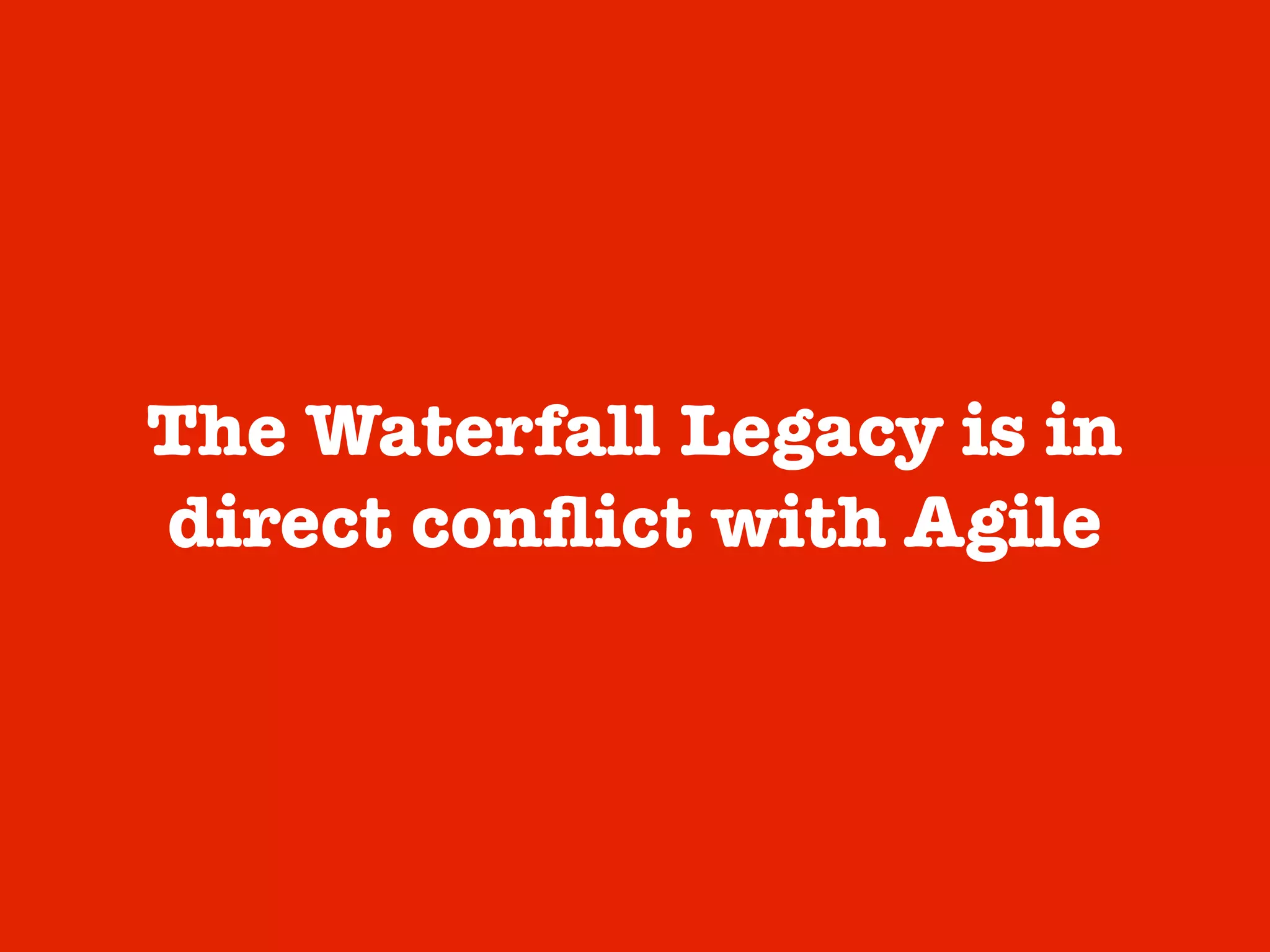
The Waterfall Legacy is in
direct conflict with Agile
@meetfelipe
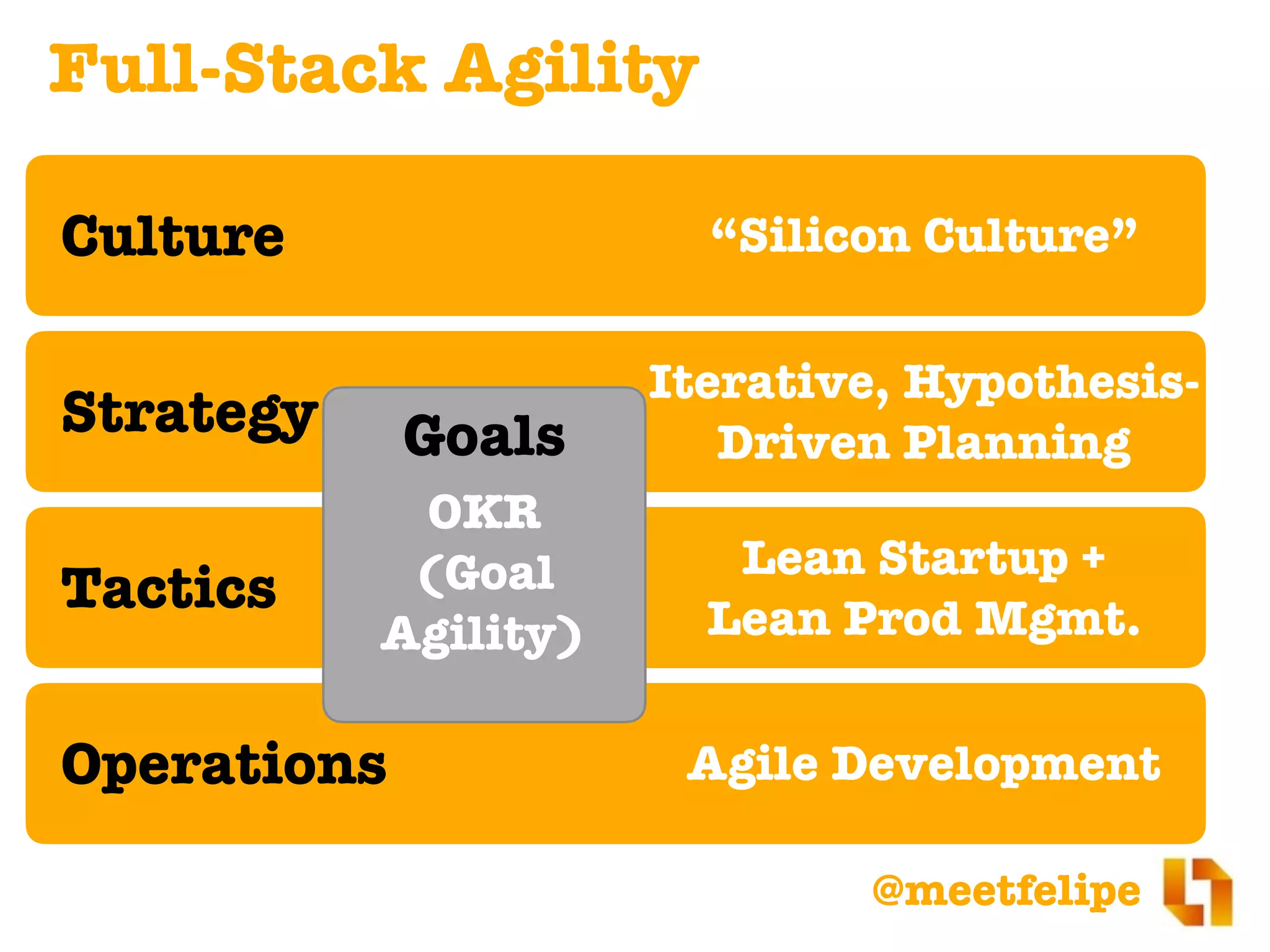
Strategy
Tactics
Operations Agile Development
Culture
Iterative, Hypothesis-
Driven Planning
“Silicon Culture”
Goals
OKR
(Goal
Agility)
Full-Stack Agility
Lean Startup +
Lean Prod Mgmt.
@meetfelipe
Silicon Culture’s 6As
Agility Iterative, incremental, fast feedback
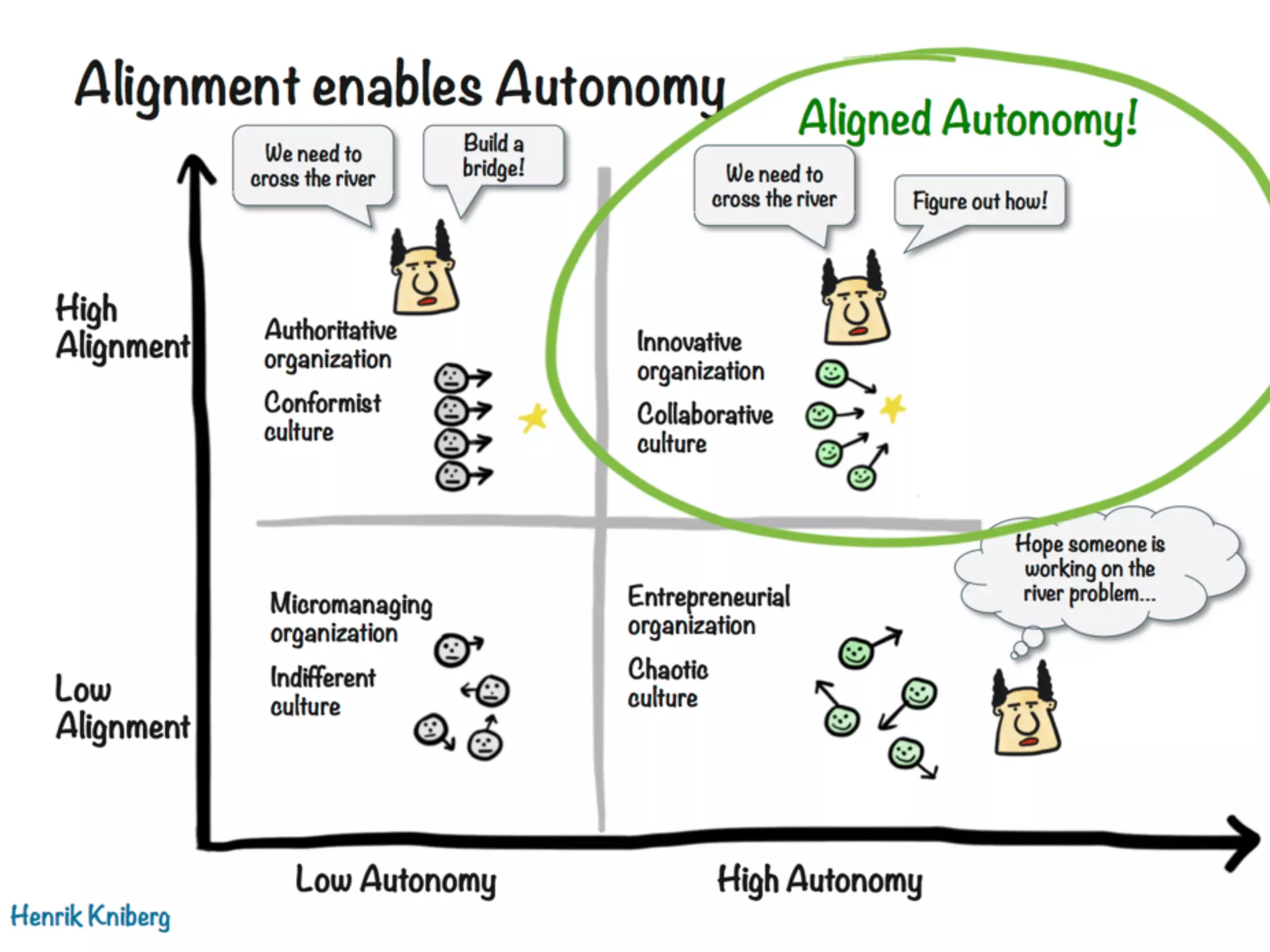
Autonomy Self-managed teams
Alignment 360º Alignment (between teams)
Accountability Focus on delivering value
Assumptions-
Driven
Data driven, hypothesis validation,
experiments
Authenticity Purpose, consistent values
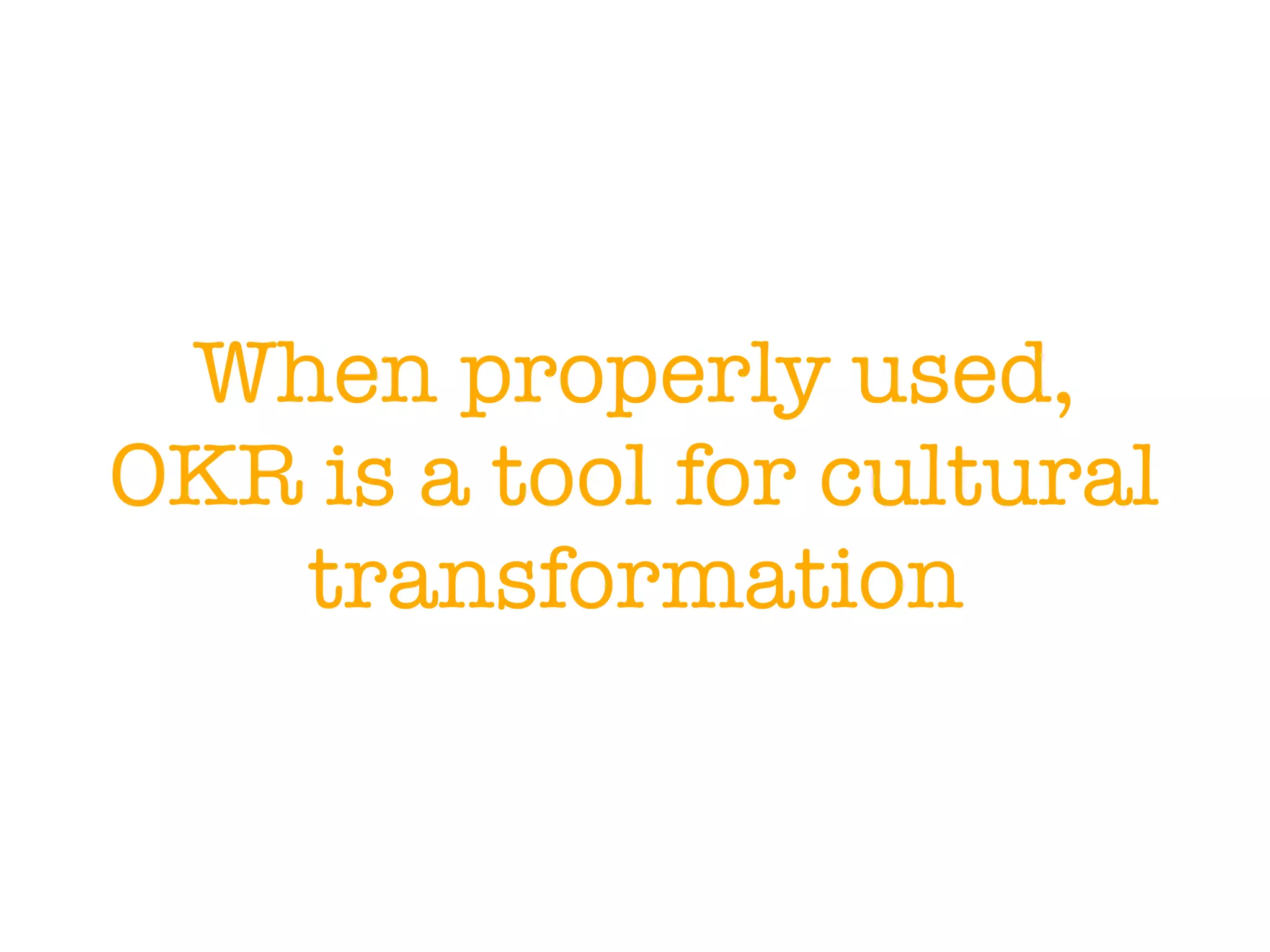
When properly used,
OKR is a tool for cultural
transformation
@meetfelipe
How Silicon Valley
sets goals?
@meetfelipe
OKR: Objectives and Key Results
•OKR is an Agile goal setting framework.
When used properly, it helps expand agility.
•Created by Intel and adopted by Google in
1999.
•Used by LinkedIn, Twitter, Dropbox, GoPro
and several other companies.
@meetfelipe
Objective:
•Aspirational.
•Memorable – Simpler, shorter, remarkable.
•Qualitative.
OKR: Components
Key Results:
•2-5 per Objective.
•Quantitative & Measurable.
•Metrics (recommended) or Milestones.
@meetfelipe
Key Results:
•Increase average weekly visits to 3.3 per
active user
•Reach a Net Promoter Score of 52%.
•Increase non paid (organic) traffic to 80%.
•Reduce revenue churn to 1%.
•Increase engagement (users that complete a
full profile) to 75%.
Objective: Delight our customers
OKR - Example
What is unique
@meetfelipe
•Goal Agility: Instead of using an annual
static planning process, OKR uses shorter
goal setting cycles (usually every quarter).
•Simplicity: In order to enable frequent goal
setting, the process is extremely simple.
OKRs are simple and easily understood.
What is unique about OKR
@meetfelipe
•Dual Cadence: OKR understands that
strategy and tactics have two different
rhythms:
•A strategic cadence with high-level longer-
term goals for the company.
•A tactical cadence with shorter-term OKRs
for the teams.
What is unique about OKR
@meetfelipe
•OKRs Don’t Cascade: OKR uses a market-
based approach that is simultaneously bottom-
up and top-down, creating horizontal
alignment between teams and reducing
interdependencies.
60% of the OKRs are set bottom-up, defined by
the teams and aligned with the company goals.
What is unique about OKR
@meetfelipe
Seeking ambitious goals is a key principle in
OKR:
•Stretch Goals: Goals that are just beyond the
threshold of what seems possible and make the
team rethink the way they work.
•Separation from compensation: Decoupling
goals from salary and promotions is key so
that the team may go for hard and aspirational
goals.
What is unique about OKR
How OKR complements
Agile and Lean
@meetfelipe
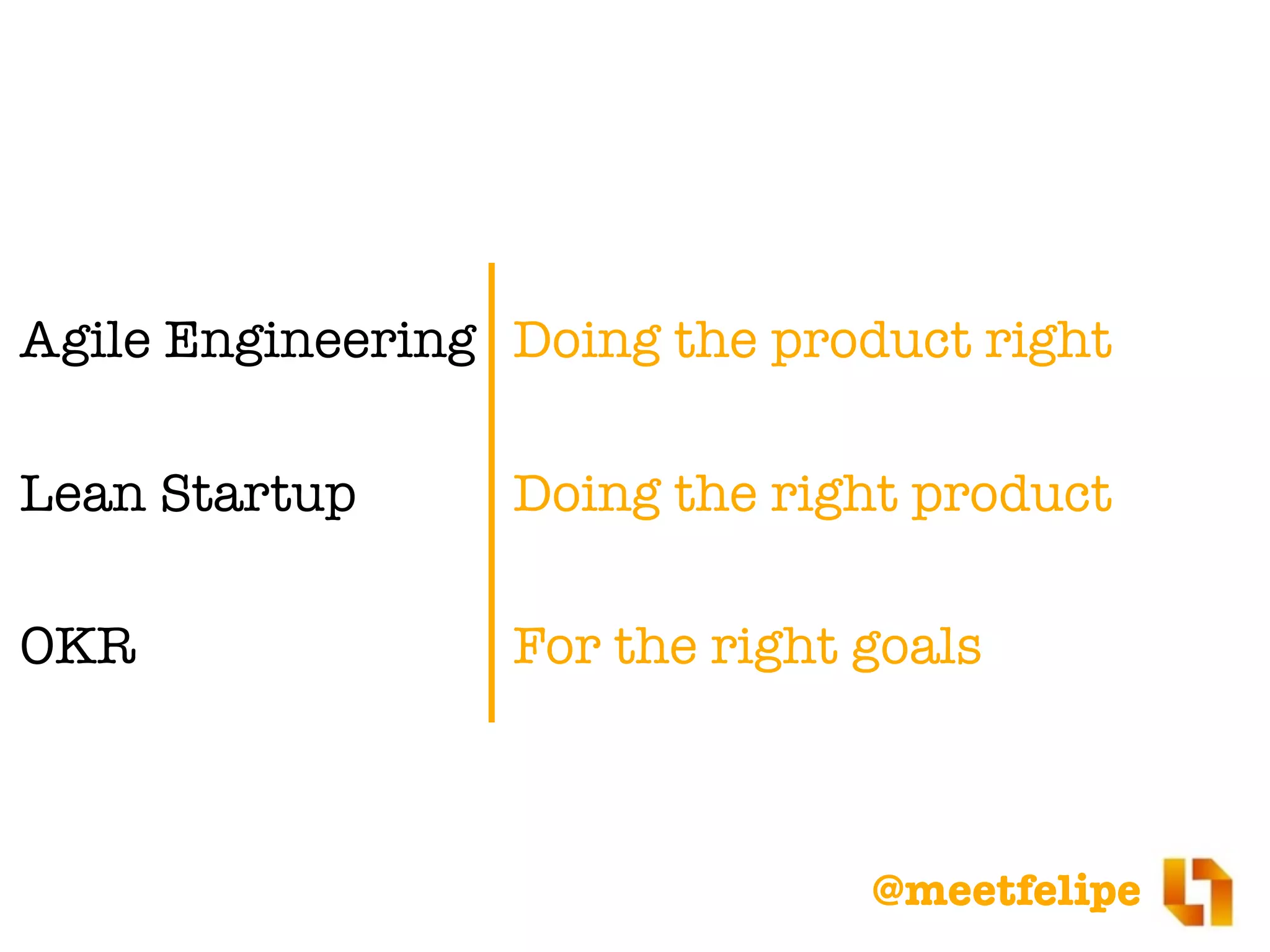
Agile Engineering Doing the product right
Lean Startup Doing the right product
OKR For the right goals
Doing right the right
product for the right goals
@meetfelipe
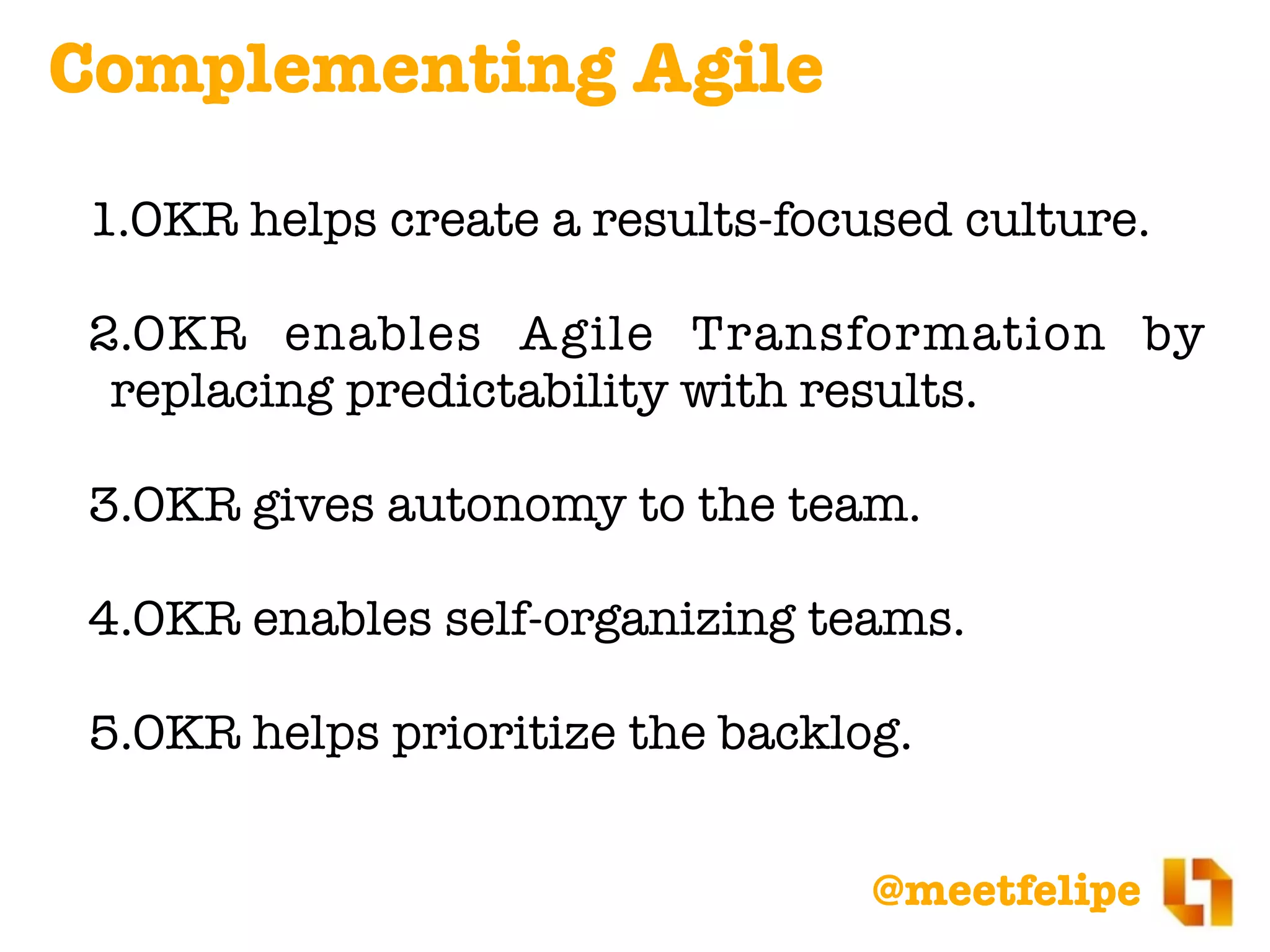
1.OKR helps create a results-focused culture.
2.OKR enables Agile Transformation by
replacing predictability with results.
3.OKR gives autonomy to the team.
4.OKR enables self-organizing teams.
5.OKR helps prioritize the backlog.
Complementing Agile
@meetfelipe
1
OKR helps create a
Results-Focused Culture
@meetfelipe
Agile was created as an alternative to
waterfall for managing software development
projects. As such, it is focused on managing
deliverables (user stories or features).
The Agile Manifesto itself refers to working
s o f t w a r e a n d v a l u a b l e s o f t w a r e
interchangeably. But they are not the same.
There are several methods for estimating
value in Agile, but none to track actual
business results.
From Features to Value
@meetfelipe
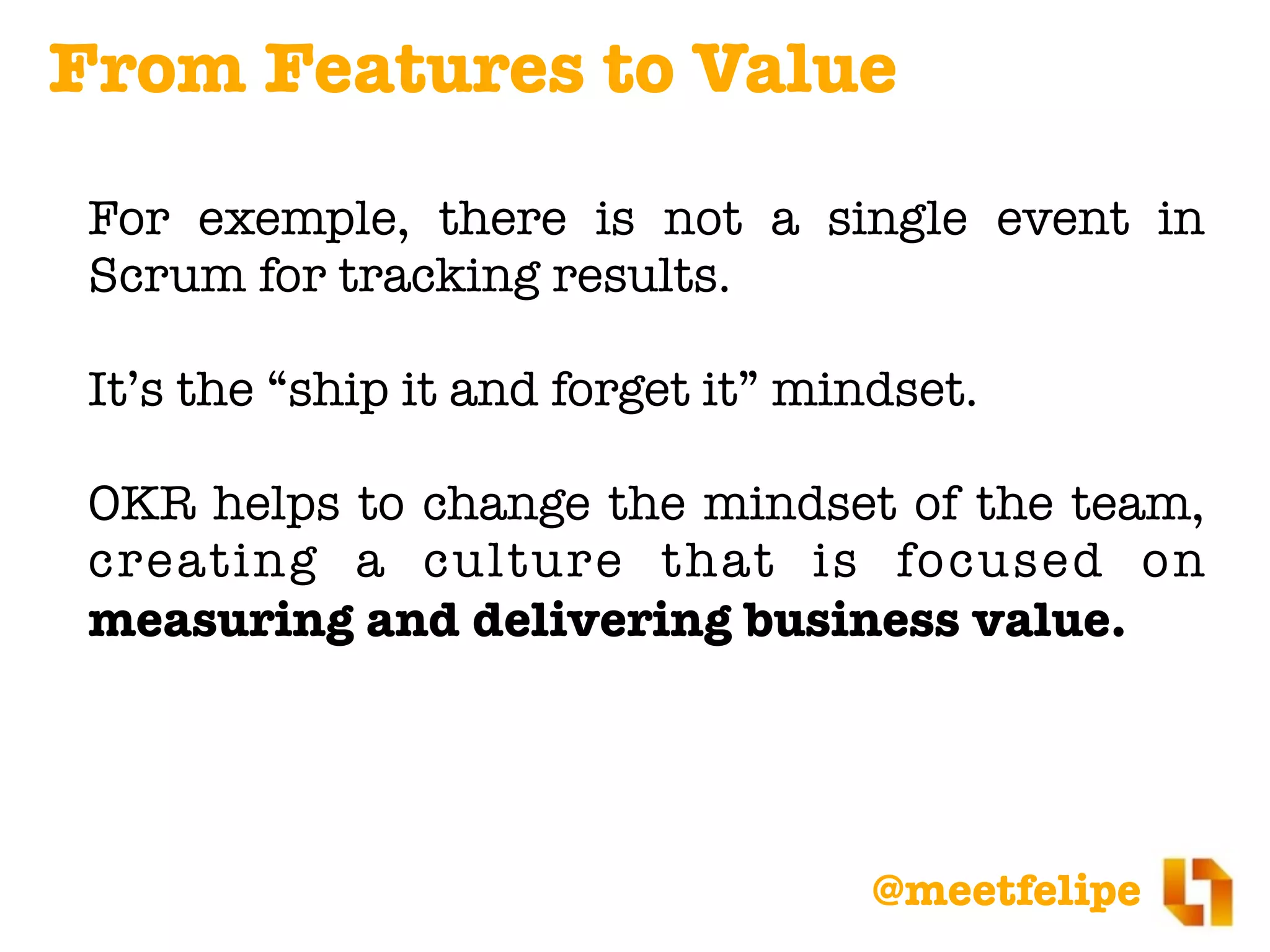
For example, there is not a single event in
Scrum for tracking results.
It’s the “ship it and forget it” mindset.
OKR helps to change the mindset of the team,
creating a culture that is focused on
measuring and delivering business value.
From Features to Value
@meetfelipe
“OKRs help Reframe the
situation from output
(features on roadmaps) to
outcome (business
results).”
Marty Cagan, Silicon Valley Product
Group
@meetfelipe
2
OKR enables
Agile Transformation by
replacing predictability with
results
@meetfelipe
One of the main barriers for Agile adoption is
the fear of losing control and predictability.
OKR helps overcome that by replacing the
perceived predictability of a Gantt chart with a
commitment to deliver pre-defined business
results.
Instead of committing to deliver X by Y date,
the team commits to iterate towards the
agreed results.
From predictability to results
@meetfelipe
3
OKR gives autonomy to the
team
@meetfelipe
OKRs enables team autonomy by changing the
mindset.
•From: “the role of the team is to deliver the
features the customer/management wants”
•To: “the role of the team is to achieve the
success criteria as described in the Key
Results and agreed with the stakeholders.”
Enabling Autonomy
@meetfelipe
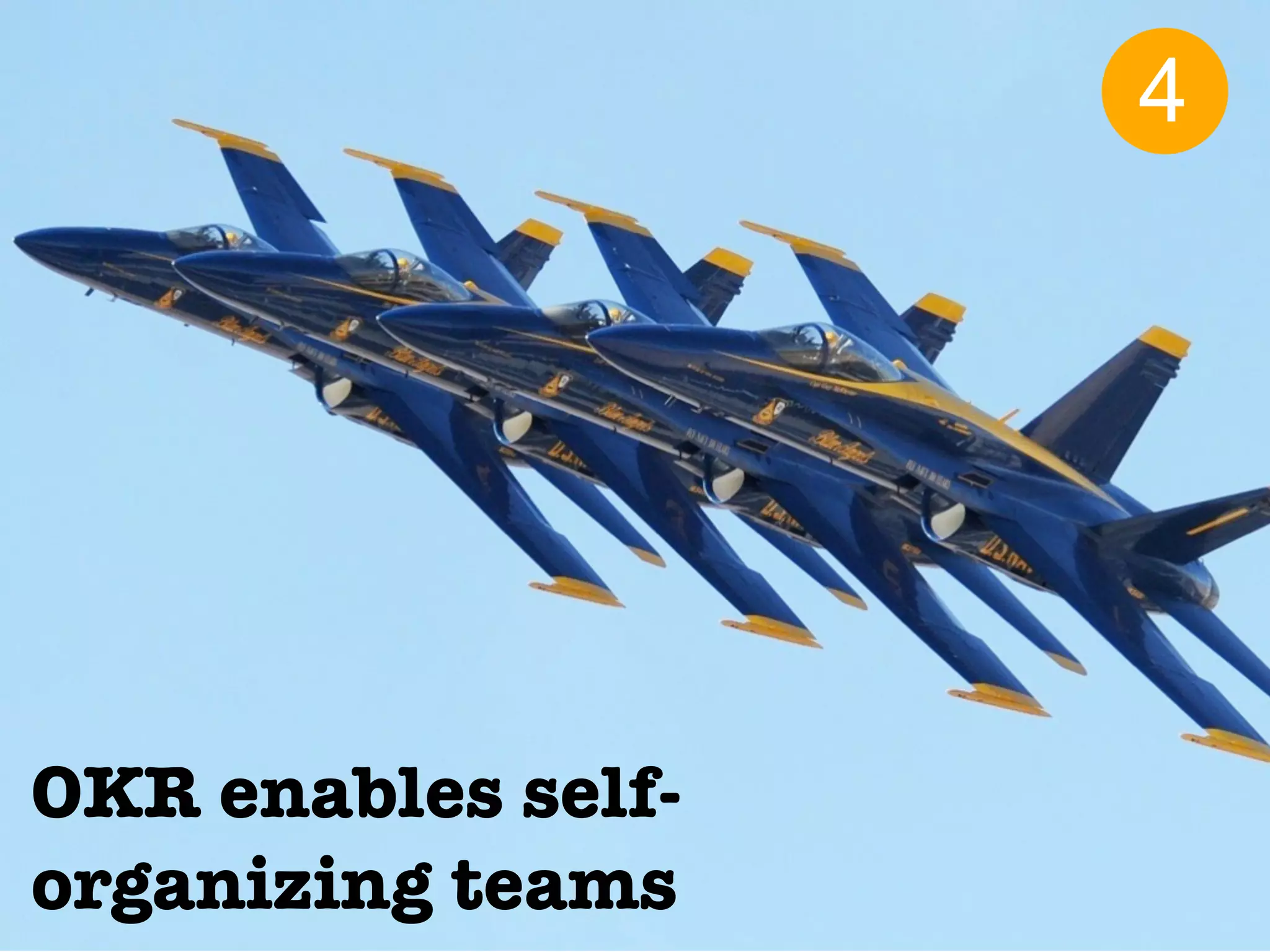
4
OKR enables self-
organizing teams
@meetfelipe
Self-managed teams
need direction
A set of OKRs will
give them that
@meetfelipe
OKR helps prioritize the
backlog
5
“If a feature idea doesn’t
speak directly to one of the
top KPI’s [Key Results] on
the product scorecard
[OKRs], it’s generally off the
list.”
Marty Cagan, Silicon Valley Product
Group
Further Reading
Agile Goal Setting with OKR
www.infoq.com/articles/agile-goals-
okr

Building an Agile Culture with OKR