
Benefits of forage systems on
product quality
Michael Richard F Lee
Reader in Sustainable Livestock Systems and Food Security
School of Veterinary Sciences, University of Bristol &
North Wyke, Rothamsted Research (FSLRA)
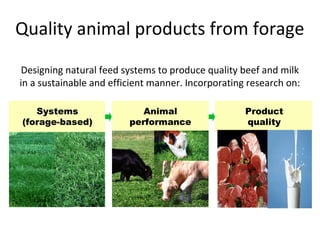
Quality animal products from forage
Designing natural feed systems to produce quality beef and milk
in a sustainable and efficient manner. Incorporating research on:
Product
quality
Animal
performance
Systems
(forage-based)
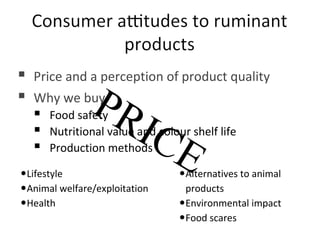
 Price and a perception of product quality
 Why we buy:
 Food safety
 Nutritional value and colour shelf life
 Production methods
•Lifestyle
•Animal welfare/exploitation
•Health
•Alternatives to animal
products
•Environmental impact
•Food scares
PRICE
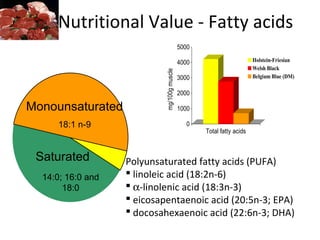
Nutritional Value - Fatty acids
Polyunsaturated fatty acids (PUFA)
 linoleic acid (18:2n-6)
 α-linolenic acid (18:3n-3)
 eicosapentaenoic acid (20:5n-3; EPA)
 docosahexaenoic acid (22:6n-3; DHA)
Monounsaturated
18:1 n-9
Saturated
0
1000
2000
3000
4000
5000
mg/100gmuscle
Total fatty acids
Holstein-Friesian
Welsh Black
Belgium Blue (DM)
14:0; 16:0 and
18:0
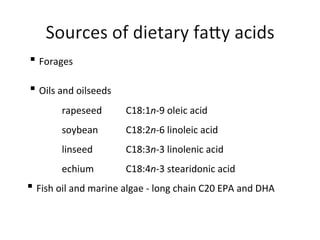
 Forages
 Oils and oilseeds
rapeseed C18:1n-9 oleic acid
soybean C18:2n-6 linoleic acid
linseed C18:3n-3 linolenic acid
echium C18:4n-3 stearidonic acid
 Fish oil and marine algae - long chain C20 EPA and DHA
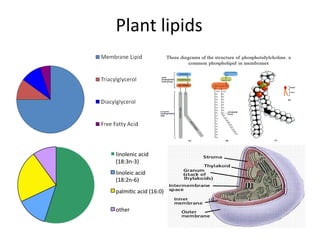
Plant lipids
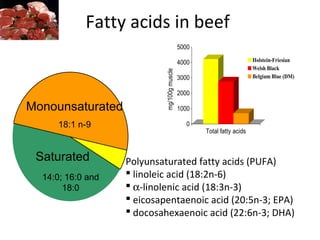
Fatty acids in beef
Polyunsaturated fatty acids (PUFA)
 linoleic acid (18:2n-6)
 α-linolenic acid (18:3n-3)
 eicosapentaenoic acid (20:5n-3; EPA)
 docosahexaenoic acid (22:6n-3; DHA)
Monounsaturated
18:1 n-9
Saturated
0
1000
2000
3000
4000
5000
mg/100gmuscle
Total fatty acids
Holstein-Friesian
Welsh Black
Belgium Blue (DM)
14:0; 16:0 and
18:0
mouth abomasum
Rumen
Organelle phospho-
& galacto lipid
FFA
Lipolysis
Dietary Lipid
FFA C18 PUFA
Conjugated dienes and trienes
Trans C18:1
C18:0
Lipolysis
Biohydrogenation
Cell Bound
Free
Biohydrogenation
C18:3 n-3 92%
C18:2 n-6 86%
Red Clover PPO
Fish Oil
Plant
Secondary
Metabolites
Protozoa
Green
Odour
Animal Science Programme
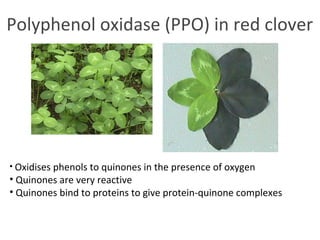
Polyphenol oxidase (PPO) in red clover
• Oxidises phenols to quinones in the presence of oxygen
• Quinones are very reactive
• Quinones bind to proteins to give protein-quinone complexes
0
5
10
15
20
25
30
35
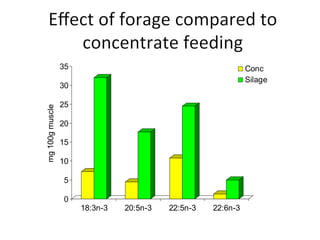
mg100gmuscle
18:3n-3 20:5n-3 22:5n-3 22:6n-3
Conc
Silage
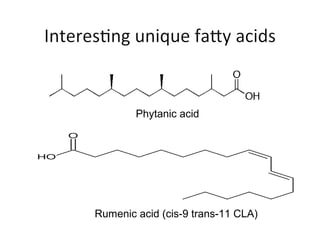
Phytanic acid
Rumenic acid (cis-9 trans-11 CLA)
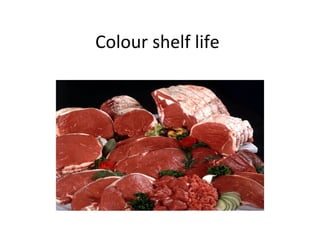
Colour shelf life
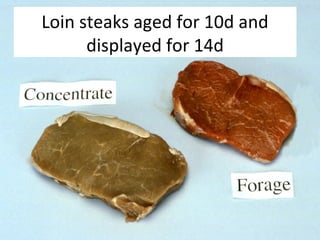
Loin steaks aged for 10d and
displayed for 14d
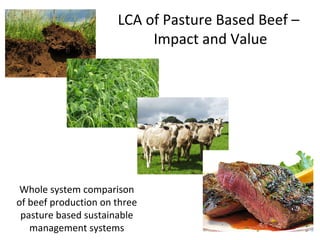
LCA of Pasture Based Beef –
Impact and Value
Whole system comparison
of beef production on three
pasture based sustainable
management systems
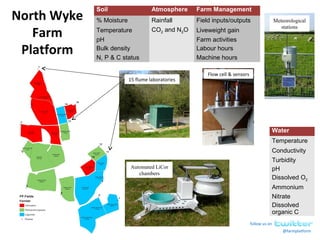
Soil Atmosphere Farm Management
% Moisture Rainfall Field inputs/outputs
Temperature CO2 and N2O Liveweight gain
pH Farm activities
Bulk density Labour hours
N, P & C status Machine hours
Water
Temperature
Conductivity
Turbidity
pH
Dissolved O2
Ammonium
Nitrate
Dissolved
organic C
15 flume laboratories
@farmplatform
follow us on
Flow cell & sensors
Automated LiCor
chambers
Meteorological
stations
North Wyke
Farm
Platform
www.globalfarmplatform.org

Benefits of forage systems on product quality - Michael Lee

  • 1.
    Benefits of foragesystems on product quality Michael Richard F Lee Reader in Sustainable Livestock Systems and Food Security School of Veterinary Sciences, University of Bristol & North Wyke, Rothamsted Research (FSLRA)
  • 2.
    Quality animal productsfrom forage Designing natural feed systems to produce quality beef and milk in a sustainable and efficient manner. Incorporating research on: Product quality Animal performance Systems (forage-based)
  • 3.
     Price anda perception of product quality  Why we buy:  Food safety  Nutritional value and colour shelf life  Production methods •Lifestyle •Animal welfare/exploitation •Health •Alternatives to animal products •Environmental impact •Food scares PRICE
  • 4.
    Nutritional Value -Fatty acids Polyunsaturated fatty acids (PUFA)  linoleic acid (18:2n-6)  α-linolenic acid (18:3n-3)  eicosapentaenoic acid (20:5n-3; EPA)  docosahexaenoic acid (22:6n-3; DHA) Monounsaturated 18:1 n-9 Saturated 0 1000 2000 3000 4000 5000 mg/100gmuscle Total fatty acids Holstein-Friesian Welsh Black Belgium Blue (DM) 14:0; 16:0 and 18:0
  • 5.
     Forages  Oilsand oilseeds rapeseed C18:1n-9 oleic acid soybean C18:2n-6 linoleic acid linseed C18:3n-3 linolenic acid echium C18:4n-3 stearidonic acid  Fish oil and marine algae - long chain C20 EPA and DHA
  • 6.
  • 7.
    Fatty acids inbeef Polyunsaturated fatty acids (PUFA)  linoleic acid (18:2n-6)  α-linolenic acid (18:3n-3)  eicosapentaenoic acid (20:5n-3; EPA)  docosahexaenoic acid (22:6n-3; DHA) Monounsaturated 18:1 n-9 Saturated 0 1000 2000 3000 4000 5000 mg/100gmuscle Total fatty acids Holstein-Friesian Welsh Black Belgium Blue (DM) 14:0; 16:0 and 18:0
  • 8.
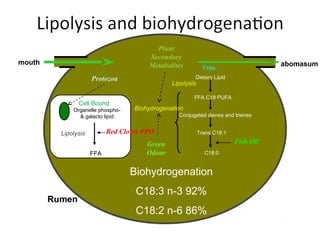
    mouth abomasum Rumen Organelle phospho- &galacto lipid FFA Lipolysis Dietary Lipid FFA C18 PUFA Conjugated dienes and trienes Trans C18:1 C18:0 Lipolysis Biohydrogenation Cell Bound Free Biohydrogenation C18:3 n-3 92% C18:2 n-6 86% Red Clover PPO Fish Oil Plant Secondary Metabolites Protozoa Green Odour
  • 10.
    Animal Science Programme Polyphenoloxidase (PPO) in red clover • Oxidises phenols to quinones in the presence of oxygen • Quinones are very reactive • Quinones bind to proteins to give protein-quinone complexes
  • 11.
  • 12.
    Phytanic acid Rumenic acid(cis-9 trans-11 CLA)
  • 13.
  • 15.
    Loin steaks agedfor 10d and displayed for 14d
  • 16.
    LCA of PastureBased Beef – Impact and Value Whole system comparison of beef production on three pasture based sustainable management systems
  • 17.
    Soil Atmosphere FarmManagement % Moisture Rainfall Field inputs/outputs Temperature CO2 and N2O Liveweight gain pH Farm activities Bulk density Labour hours N, P & C status Machine hours Water Temperature Conductivity Turbidity pH Dissolved O2 Ammonium Nitrate Dissolved organic C 15 flume laboratories @farmplatform follow us on Flow cell & sensors Automated LiCor chambers Meteorological stations North Wyke Farm Platform
  • 18.