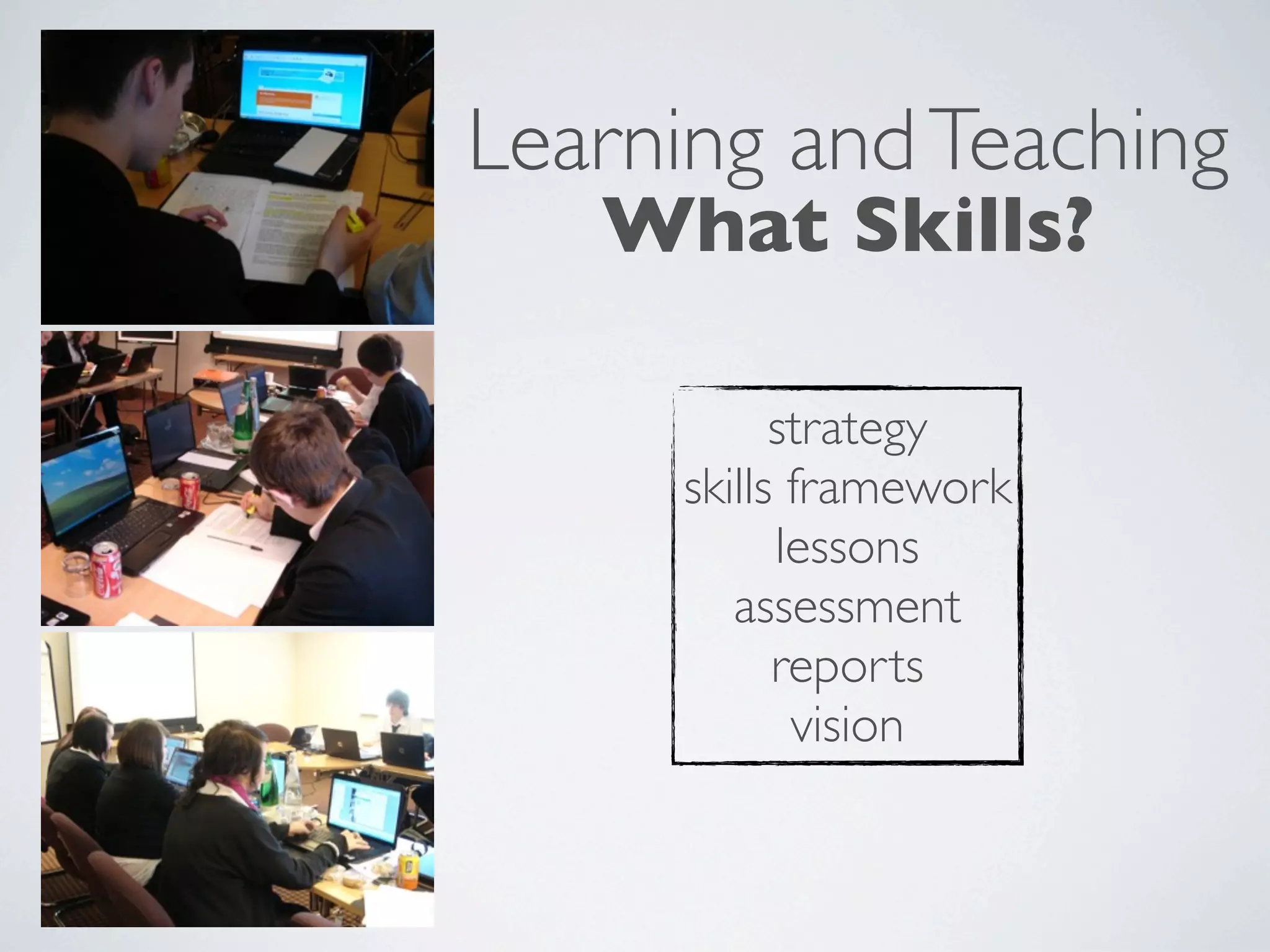
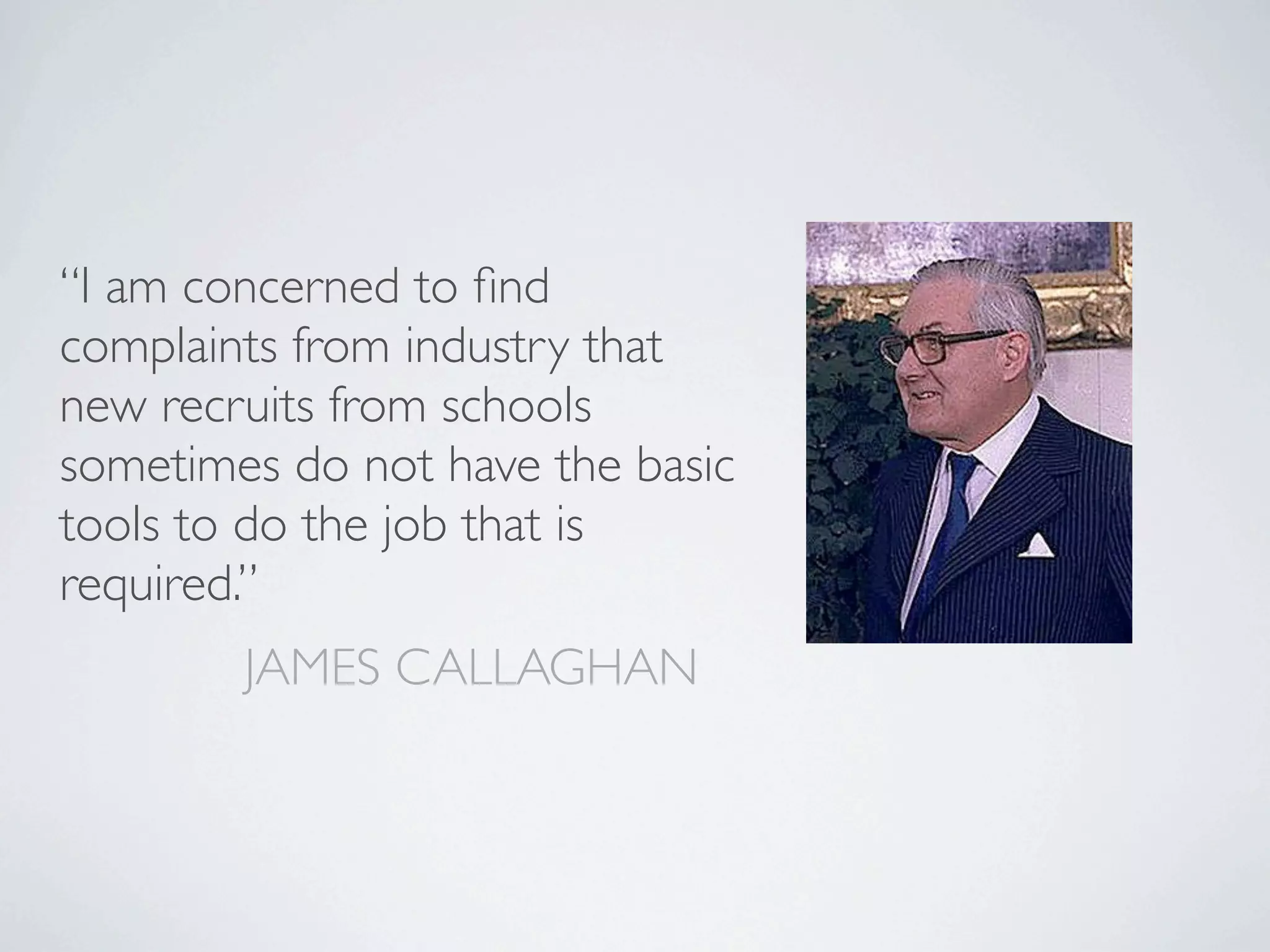
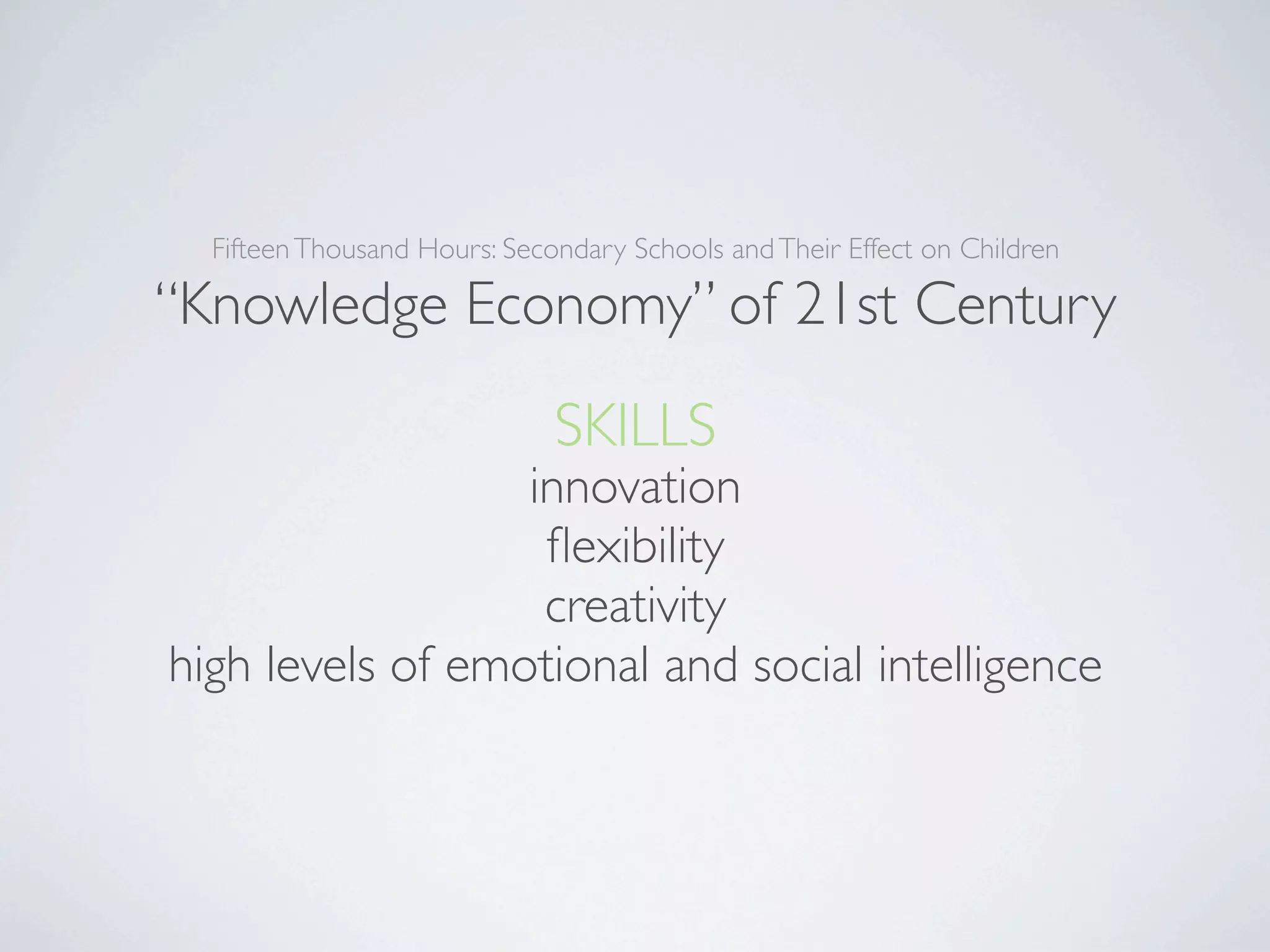
Learning and Teaching
   What Skills?

           strategy
     skills framework
           lessons
        assessment
           reports
            vision
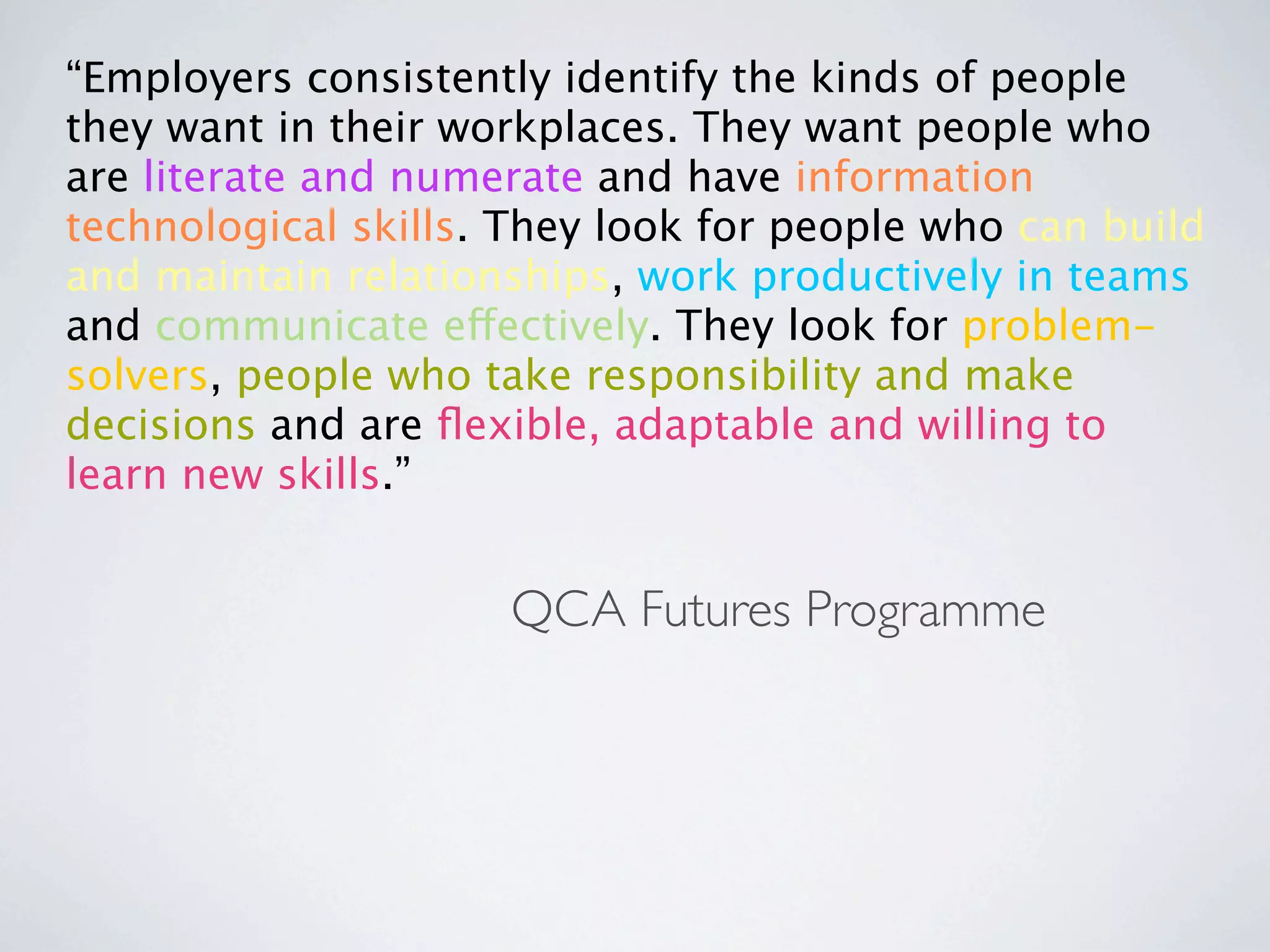
“I am concerned to find
complaints from industry that
new recruits from schools
sometimes do not have the basic
tools to do the job that is
required.”
        JAMES CALLAGHAN
Fifteen Thousand Hours: Secondary Schools and Their Effect on Children

“Knowledge Economy” of 21st Century
                              SKILLS
                  innovation
                   flexibility
                   creativity
high levels of emotional and social intelligence
“Employers consistently identify the kinds of people
they want in their workplaces. They want people who
are literate and numerate and have information
technological skills. They look for people who can build
and maintain relationships, work productively in teams
and communicate effectively. They look for problem-
solvers, people who take responsibility and make
decisions and are flexible, adaptable and willing to
learn new skills.”


                     QCA Futures Programme
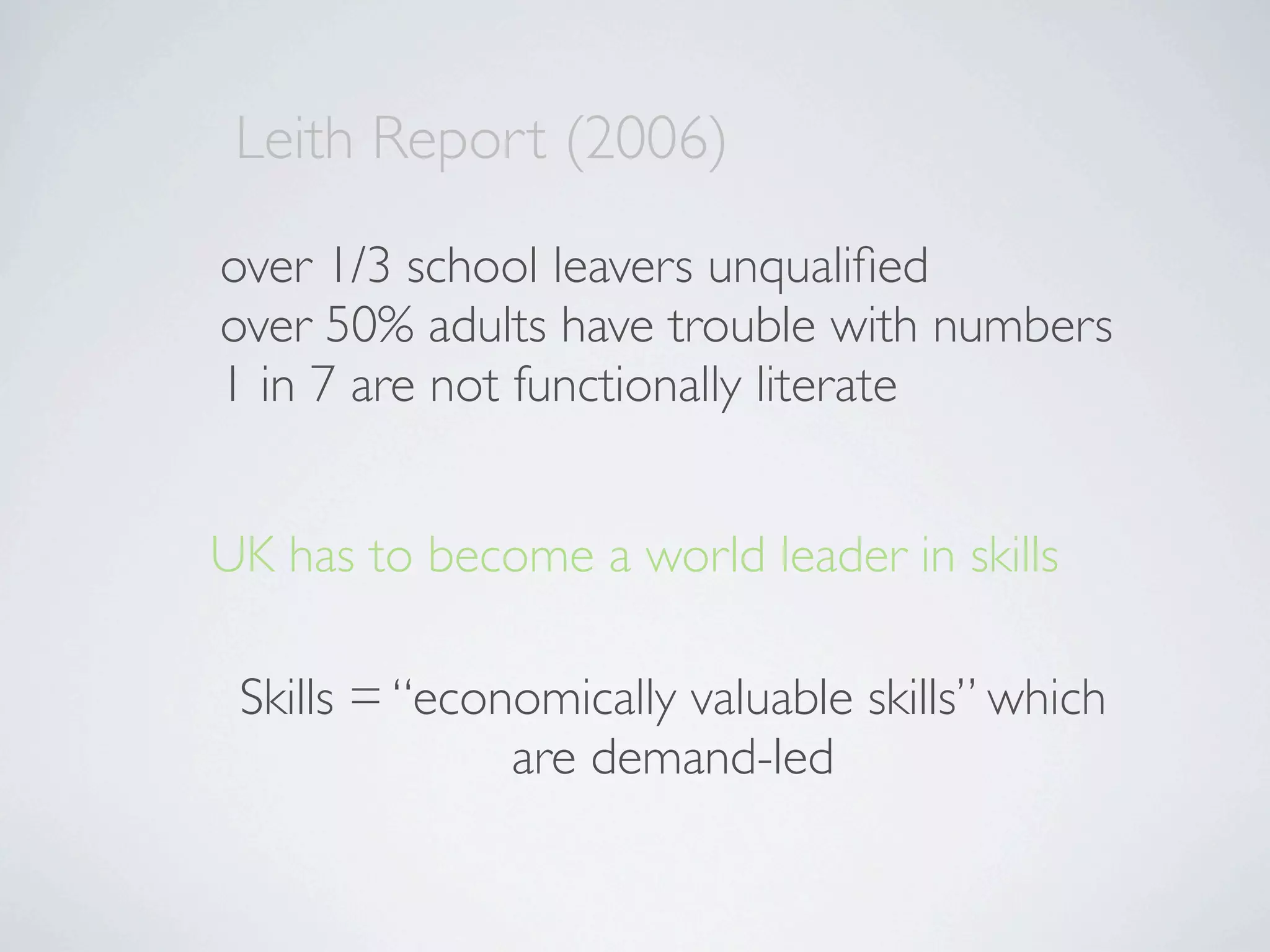
Leith Report (2006)
over 1/3 school leavers unqualified
over 50% adults have trouble with numbers
1 in 7 are not functionally literate


UK has to become a world leader in skills

 Skills = “economically valuable skills” which
               are demand-led
“we are still educating people for a world
           that is disappearing.”

                 RSA, Redefining Work
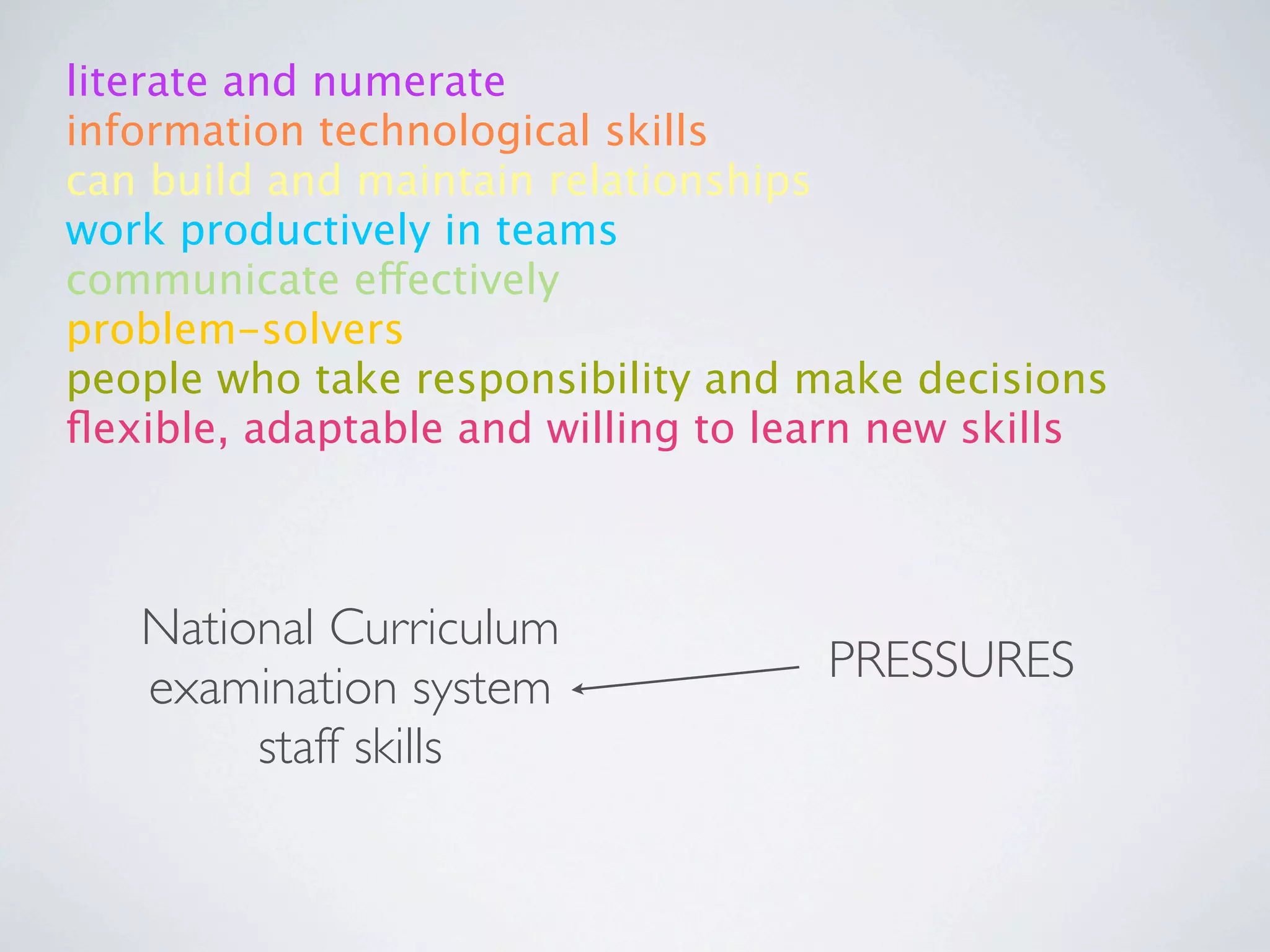
literate and numerate
information technological skills
can build and maintain relationships
work productively in teams
communicate effectively
problem-solvers
people who take responsibility and make decisions
flexible, adaptable and willing to learn new skills


   National Curriculum
                                    PRESSURES
   examination system
        staff skills
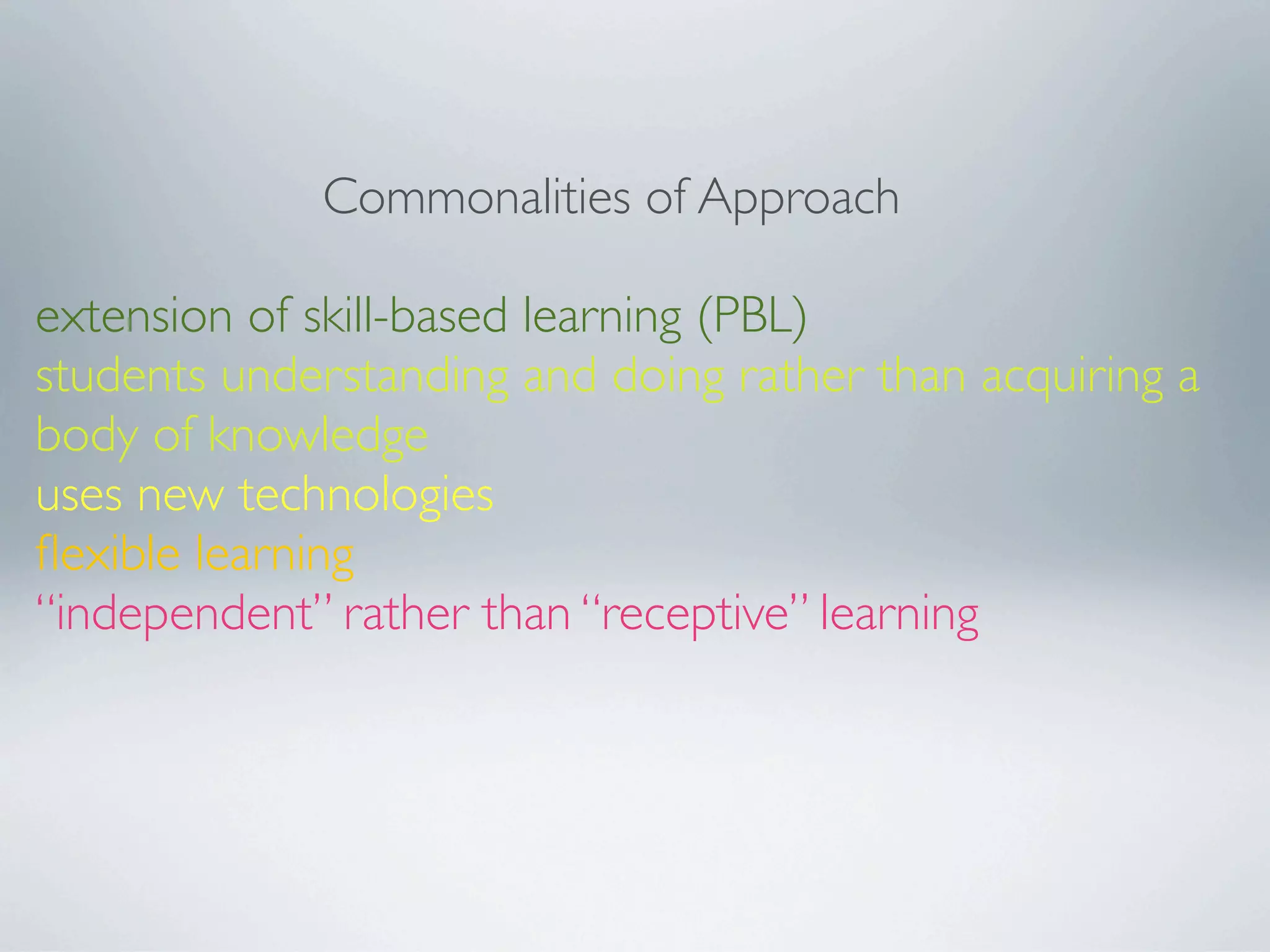
Commonalities of Approach

extension of skill-based learning (PBL)
students understanding and doing rather than acquiring a
body of knowledge
uses new technologies
flexible learning
“independent” rather than “receptive” learning
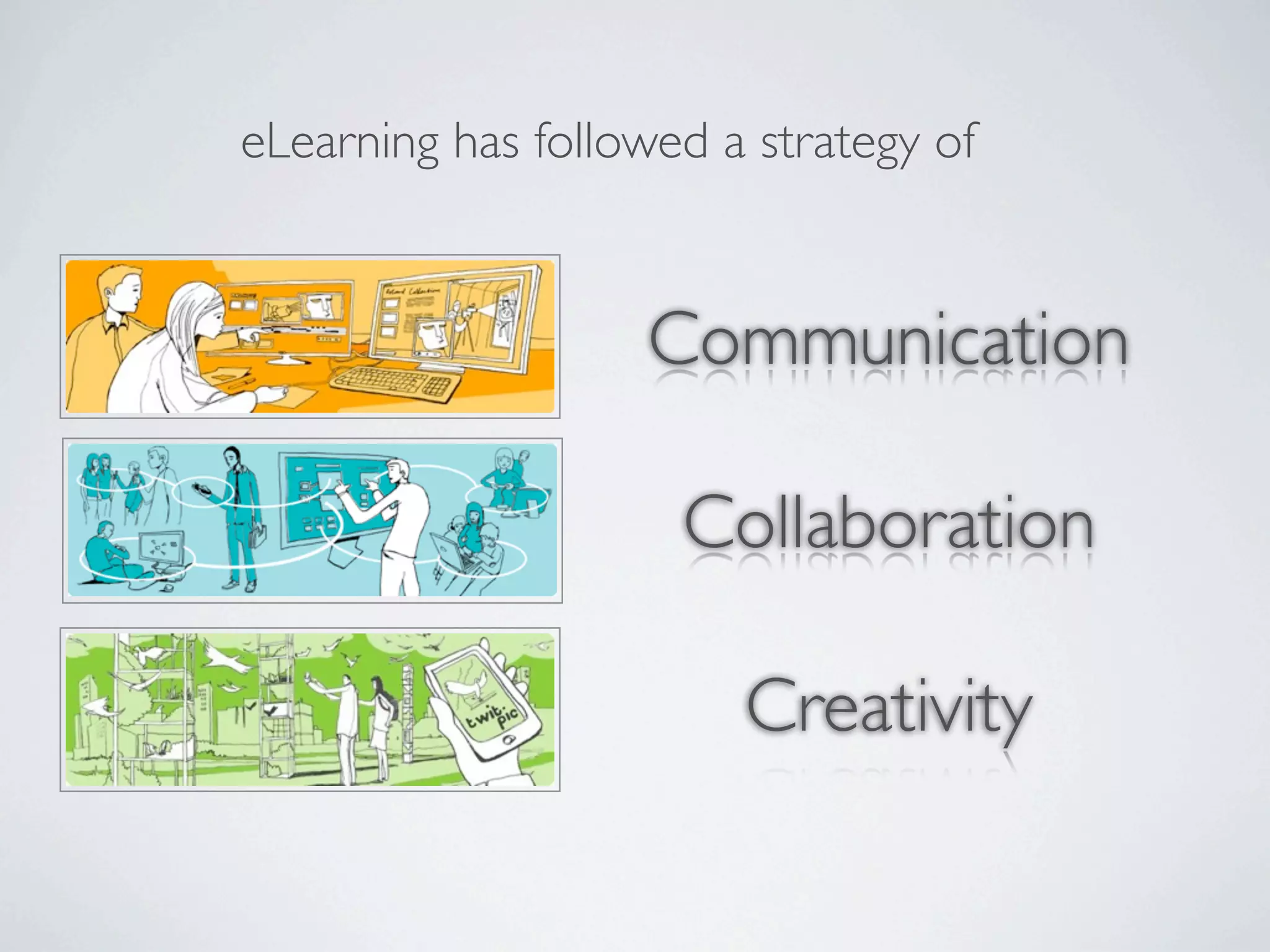
eLearning has followed a strategy of


                   Communication

                     Collaboration

                        Creativity
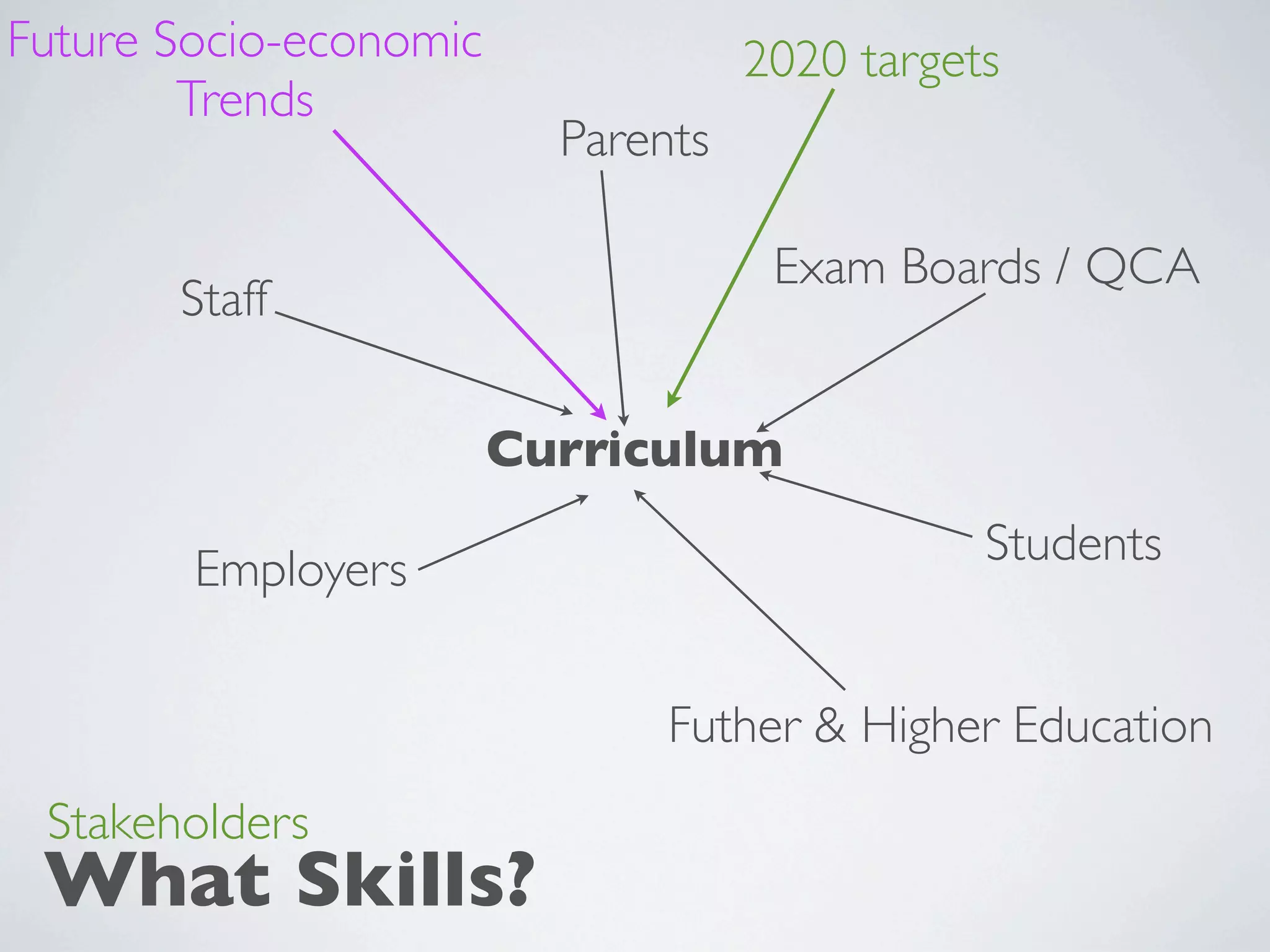
Future Socio-economic               2020 targets
        Trends
                          Parents

                                     Exam Boards / QCA
       Staff

                        Curriculum
                                               Students
        Employers


                               Futher & Higher Education
 Stakeholders
 What Skills?
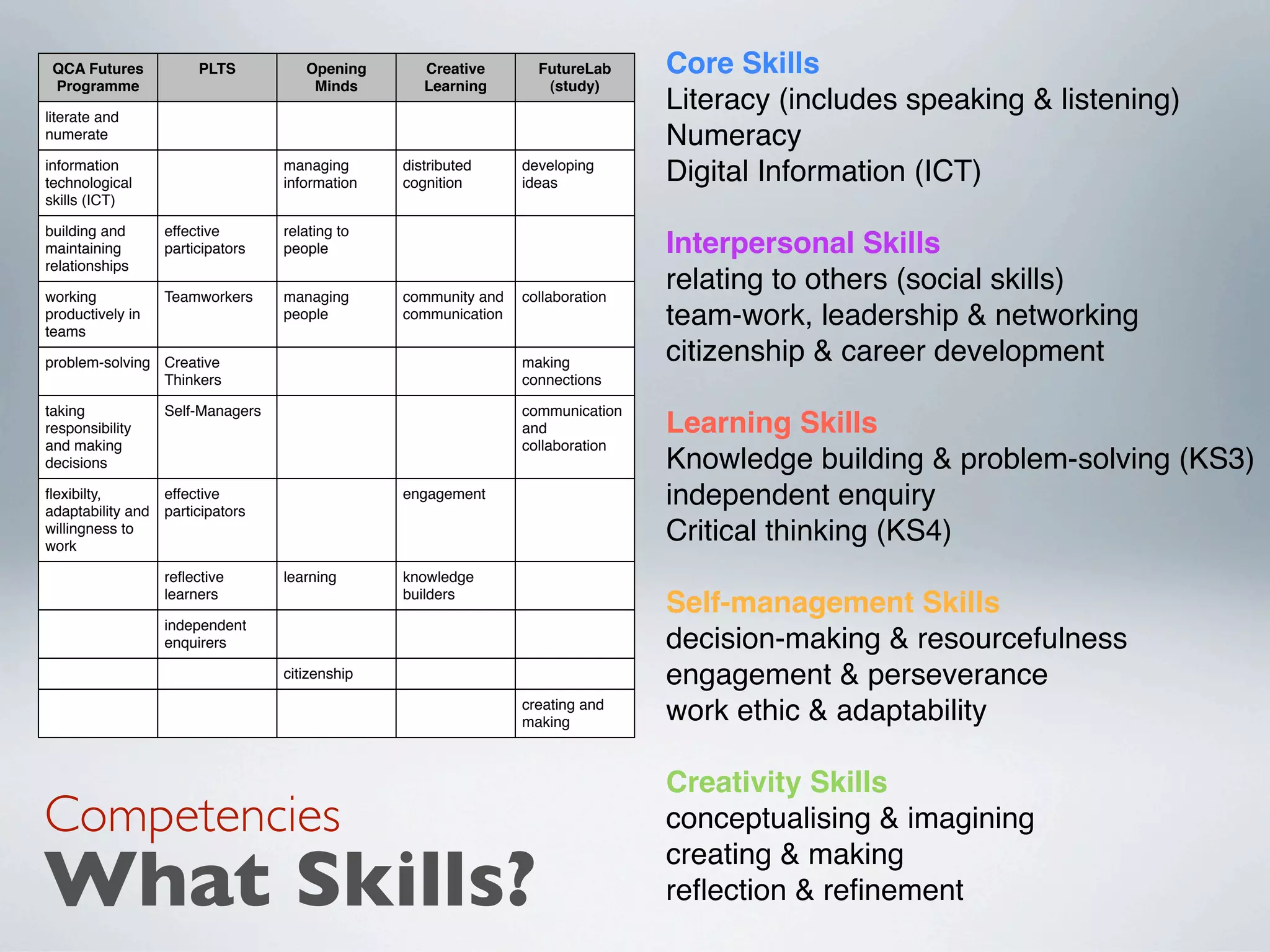
QCA Futures            PLTS          Opening       Creative       FutureLab     Core Skills
 Programme                             Minds        Learning        (study)

literate and
                                                                                 Literacy (includes speaking & listening)
numerate                                                                         Numeracy
information
technological
                                   managing
                                   information
                                                 distributed
                                                 cognition
                                                                 developing
                                                                 ideas           Digital Information (ICT)
skills (ICT)

building and       effective       relating to
maintaining        participators   people                                        Interpersonal Skills
relationships

working            Teamworkers     managing      community and   collaboration
                                                                                 relating to others (social skills)
productively in
teams
                                   people        communication                   team-work, leadership & networking
problem-solving Creative                                         making          citizenship & career development
                Thinkers                                         connections

taking             Self-Managers                                 communication
responsibility                                                   and             Learning Skills
and making                                                       collaboration
decisions                                                                        Knowledge building & problem-solving (KS3)
flexibilty,
adaptability and
                   effective
                   participators
                                                 engagement                      independent enquiry
willingness to
work
                                                                                 Critical thinking (KS4)
                   reflective       learning      knowledge
                   learners                      builders
                                                                                 Self-management Skills
                   independent
                   enquirers                                                     decision-making & resourcefulness
                                   citizenship                                   engagement & perseverance
                                                                 creating and
                                                                 making          work ethic & adaptability

                                                                                 Creativity Skills
Competencies                                                                     conceptualising & imagining

What Skills?
                                                                                 creating & making
                                                                                 reflection & refinement
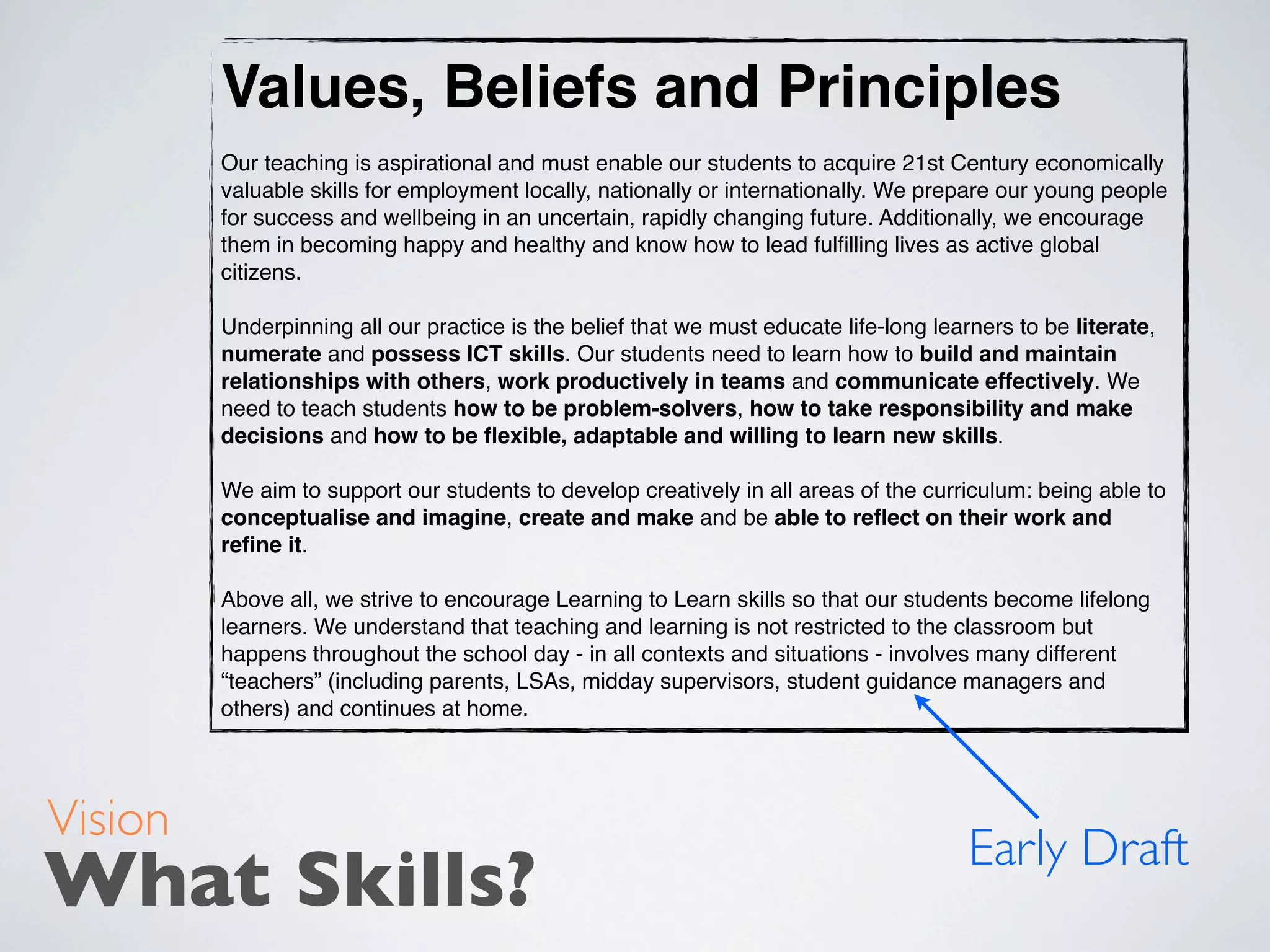
Values, Beliefs and Principles
         Our teaching is aspirational and must enable our students to acquire 21st Century economically
         valuable skills for employment locally, nationally or internationally. We prepare our young people
         for success and wellbeing in an uncertain, rapidly changing future. Additionally, we encourage
         them in becoming happy and healthy and know how to lead fulfilling lives as active global
         citizens.

         Underpinning all our practice is the belief that we must educate life-long learners to be literate,
         numerate and possess ICT skills. Our students need to learn how to build and maintain
         relationships with others, work productively in teams and communicate effectively. We
         need to teach students how to be problem-solvers, how to take responsibility and make
         decisions and how to be flexible, adaptable and willing to learn new skills.

         We aim to support our students to develop creatively in all areas of the curriculum: being able to
         conceptualise and imagine, create and make and be able to reflect on their work and
         refine it.

         Above all, we strive to encourage Learning to Learn skills so that our students become lifelong
         learners. We understand that teaching and learning is not restricted to the classroom but
         happens throughout the school day - in all contexts and situations - involves many different
         “teachers” (including parents, LSAs, midday supervisors, student guidance managers and
         others) and continues at home.


Vision
                                                                                        Early Draft
What Skills?
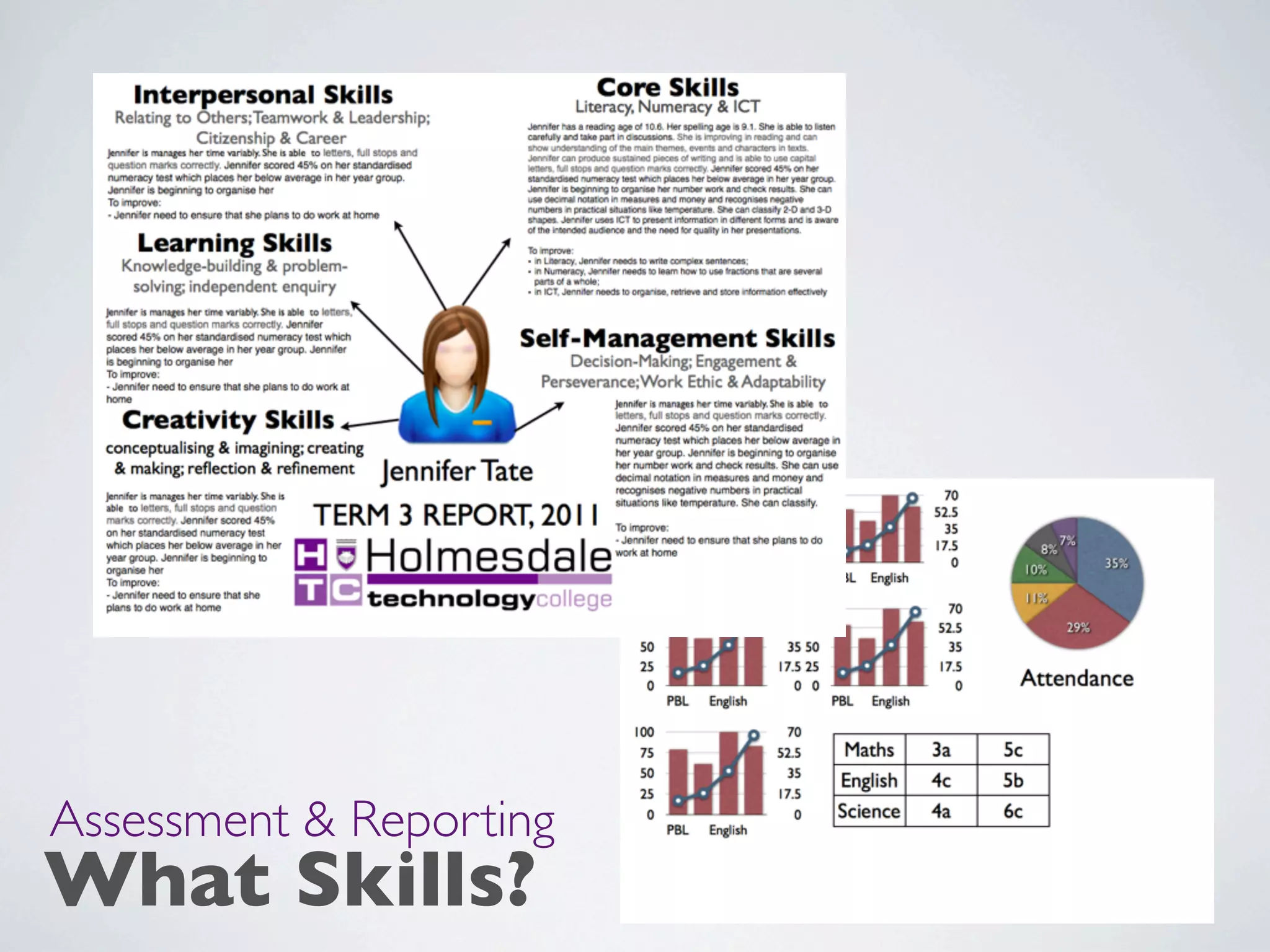
Assessment & Reporting
What Skills?
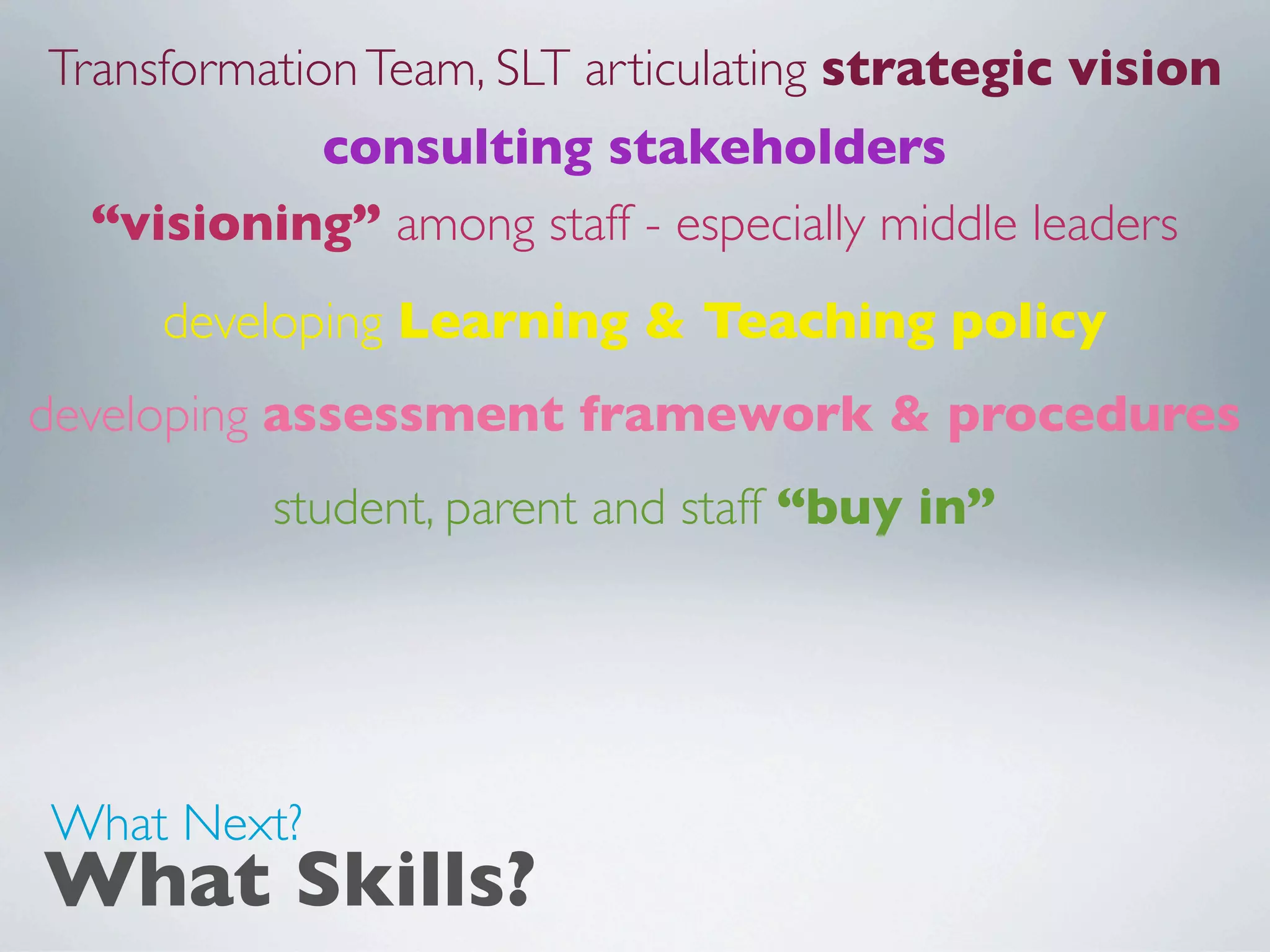
Transformation Team, SLT articulating strategic vision
           consulting stakeholders
  “visioning” among staff - especially middle leaders
     developing Learning & Teaching policy
developing assessment framework & procedures
          student, parent and staff “buy in”


What Next?
What Skills?

Mhf Skills

  • 1.
    Learning and Teaching What Skills? strategy skills framework lessons assessment reports vision
  • 2.
    “I am concernedto find complaints from industry that new recruits from schools sometimes do not have the basic tools to do the job that is required.” JAMES CALLAGHAN
  • 3.
    Fifteen Thousand Hours:Secondary Schools and Their Effect on Children “Knowledge Economy” of 21st Century SKILLS innovation flexibility creativity high levels of emotional and social intelligence
  • 4.
    “Employers consistently identifythe kinds of people they want in their workplaces. They want people who are literate and numerate and have information technological skills. They look for people who can build and maintain relationships, work productively in teams and communicate effectively. They look for problem- solvers, people who take responsibility and make decisions and are flexible, adaptable and willing to learn new skills.” QCA Futures Programme
  • 5.
    Leith Report (2006) over1/3 school leavers unqualified over 50% adults have trouble with numbers 1 in 7 are not functionally literate UK has to become a world leader in skills Skills = “economically valuable skills” which are demand-led
  • 6.
    “we are stilleducating people for a world that is disappearing.” RSA, Redefining Work
  • 7.
    literate and numerate informationtechnological skills can build and maintain relationships work productively in teams communicate effectively problem-solvers people who take responsibility and make decisions flexible, adaptable and willing to learn new skills National Curriculum PRESSURES examination system staff skills
  • 8.
    Commonalities of Approach extensionof skill-based learning (PBL) students understanding and doing rather than acquiring a body of knowledge uses new technologies flexible learning “independent” rather than “receptive” learning
  • 9.
    eLearning has followeda strategy of Communication Collaboration Creativity
  • 10.
    Future Socio-economic 2020 targets Trends Parents Exam Boards / QCA Staff Curriculum Students Employers Futher & Higher Education Stakeholders What Skills?
  • 11.
    QCA Futures PLTS Opening Creative FutureLab Core Skills Programme Minds Learning (study) literate and Literacy (includes speaking & listening) numerate Numeracy information technological managing information distributed cognition developing ideas Digital Information (ICT) skills (ICT) building and effective relating to maintaining participators people Interpersonal Skills relationships working Teamworkers managing community and collaboration relating to others (social skills) productively in teams people communication team-work, leadership & networking problem-solving Creative making citizenship & career development Thinkers connections taking Self-Managers communication responsibility and Learning Skills and making collaboration decisions Knowledge building & problem-solving (KS3) flexibilty, adaptability and effective participators engagement independent enquiry willingness to work Critical thinking (KS4) reflective learning knowledge learners builders Self-management Skills independent enquirers decision-making & resourcefulness citizenship engagement & perseverance creating and making work ethic & adaptability Creativity Skills Competencies conceptualising & imagining What Skills? creating & making reflection & refinement
  • 12.
    Values, Beliefs andPrinciples Our teaching is aspirational and must enable our students to acquire 21st Century economically valuable skills for employment locally, nationally or internationally. We prepare our young people for success and wellbeing in an uncertain, rapidly changing future. Additionally, we encourage them in becoming happy and healthy and know how to lead fulfilling lives as active global citizens. Underpinning all our practice is the belief that we must educate life-long learners to be literate, numerate and possess ICT skills. Our students need to learn how to build and maintain relationships with others, work productively in teams and communicate effectively. We need to teach students how to be problem-solvers, how to take responsibility and make decisions and how to be flexible, adaptable and willing to learn new skills. We aim to support our students to develop creatively in all areas of the curriculum: being able to conceptualise and imagine, create and make and be able to reflect on their work and refine it. Above all, we strive to encourage Learning to Learn skills so that our students become lifelong learners. We understand that teaching and learning is not restricted to the classroom but happens throughout the school day - in all contexts and situations - involves many different “teachers” (including parents, LSAs, midday supervisors, student guidance managers and others) and continues at home. Vision Early Draft What Skills?
  • 13.
  • 14.
    Transformation Team, SLTarticulating strategic vision consulting stakeholders “visioning” among staff - especially middle leaders developing Learning & Teaching policy developing assessment framework & procedures student, parent and staff “buy in” What Next? What Skills?