

Production Process in
Toothpaste industry
By: Rahul Sui
MANUFACTURING AND OPERATION MANAGEMENT
What is Production?
SOURCE:- WIKIPEDIA,LC JHAMB
The process and methods used to transform tangible inputs
(raw materials, semi-finished goods) and intangible inputs
(ideas,information,knowledge) into goods or services.
Resources are used in this process to create an output that is
suitable for use or has exchange value
 The manufacturing of large quantities of standardized
products, frequently utilizing assembly line technology. Mass
production refers to the process of creating large numbers of
similar products efficiently. Mass production is typically
characterized by some type of mechanization, as with an
assembly line, to achieve high volume, the detailed
organization of materials flow, careful control of quality
standards and division of labor.
Process employed in :- Mass Production
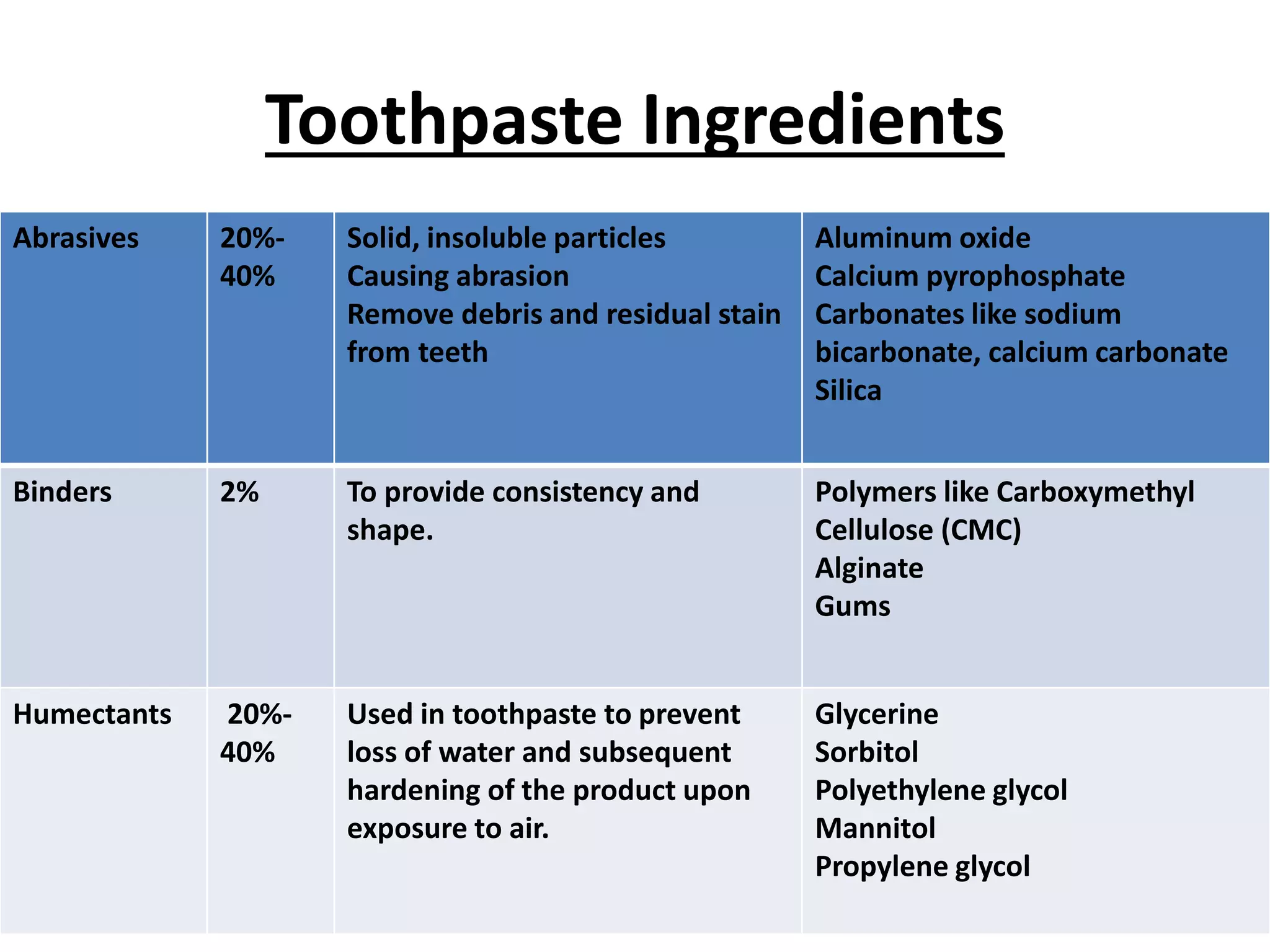
Toothpaste Ingredients
Abrasives 20%-
40%
Solid, insoluble particles
Causing abrasion
Remove debris and residual stain
from teeth
Aluminum oxide
Calcium pyrophosphate
Carbonates like sodium
bicarbonate, calcium carbonate
Silica
Binders 2% To provide consistency and
shape.
Polymers like Carboxymethyl
Cellulose (CMC)
Alginate
Gums
Humectants 20%-
40%
Used in toothpaste to prevent
loss of water and subsequent
hardening of the product upon
exposure to air.
Glycerine
Sorbitol
Polyethylene glycol
Mannitol
Propylene glycol
5/1/2015Free Template from www.brainybetty.com 5
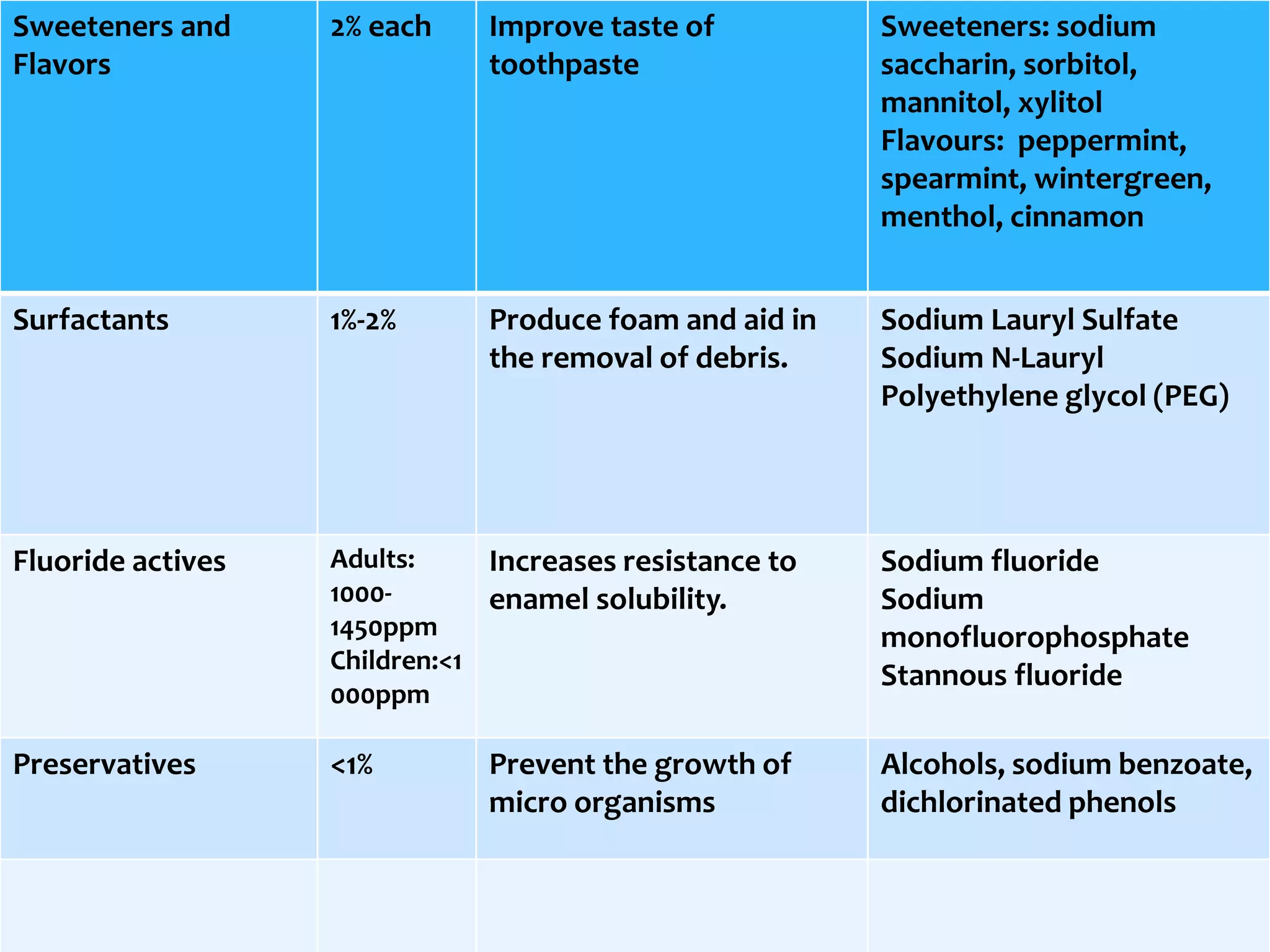
Sweeteners and
Flavors
2% each Improve taste of
toothpaste
Sweeteners: sodium
saccharin, sorbitol,
mannitol, xylitol
Flavours: peppermint,
spearmint, wintergreen,
menthol, cinnamon
Surfactants 1%-2% Produce foam and aid in
the removal of debris.
Sodium Lauryl Sulfate
Sodium N-Lauryl
Polyethylene glycol (PEG)
Fluoride actives Adults:
1000-
1450ppm
Children:<1
000ppm
Increases resistance to
enamel solubility.
Sodium fluoride
Sodium
monofluorophosphate
Stannous fluoride
Preservatives <1% Prevent the growth of
micro organisms
Alcohols, sodium benzoate,
dichlorinated phenols
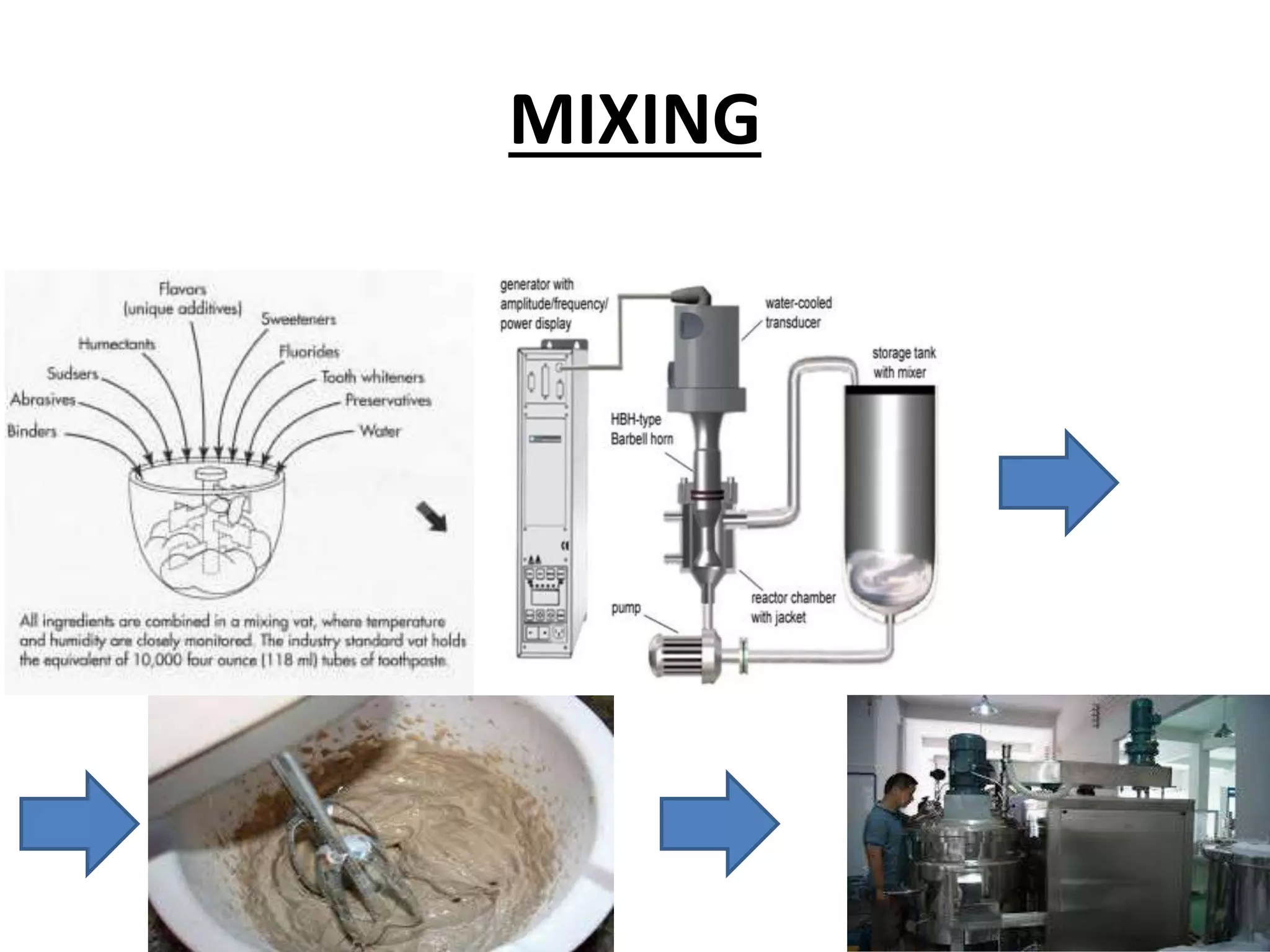
MIXING
6
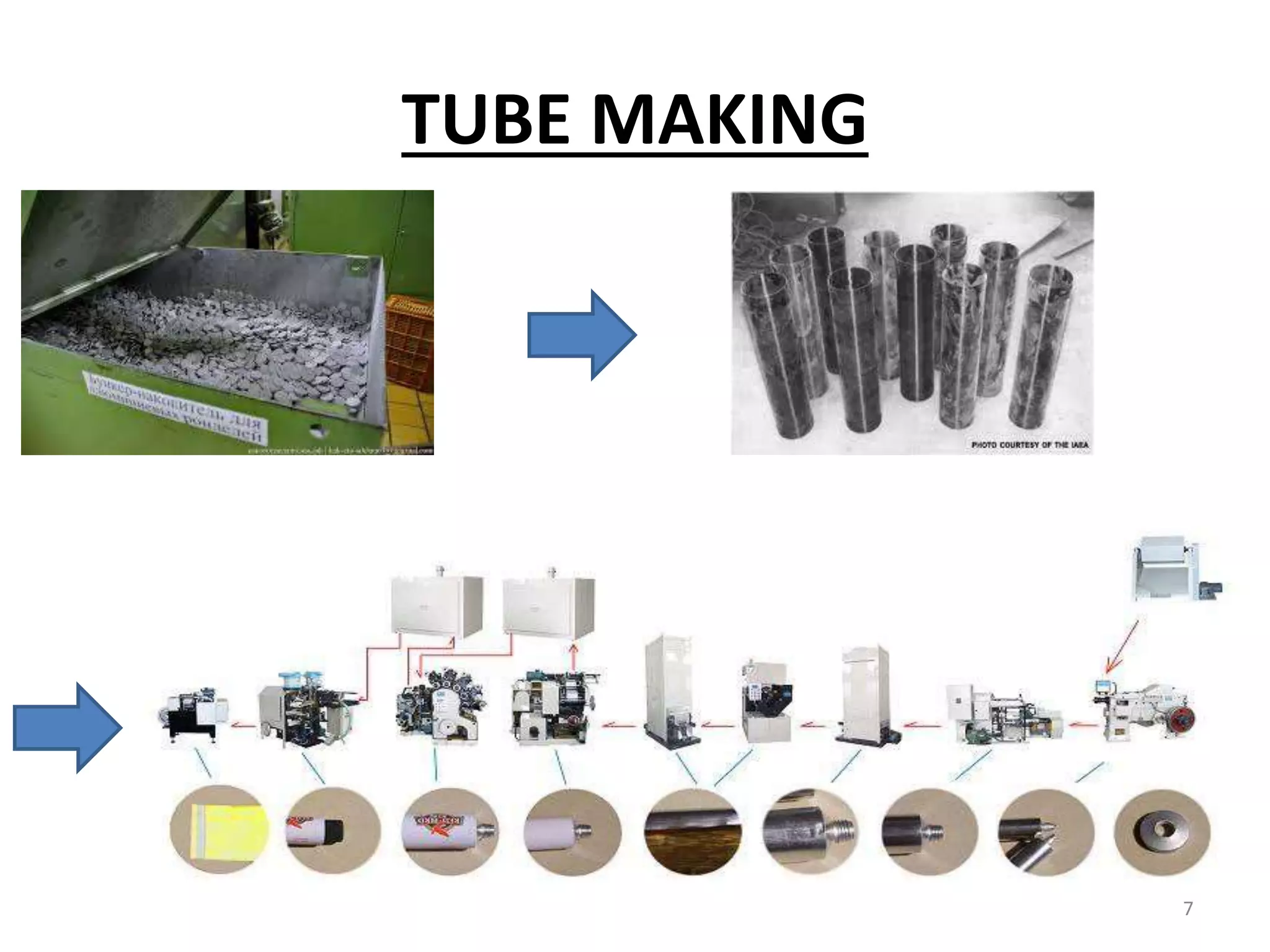
TUBE MAKING
7
8
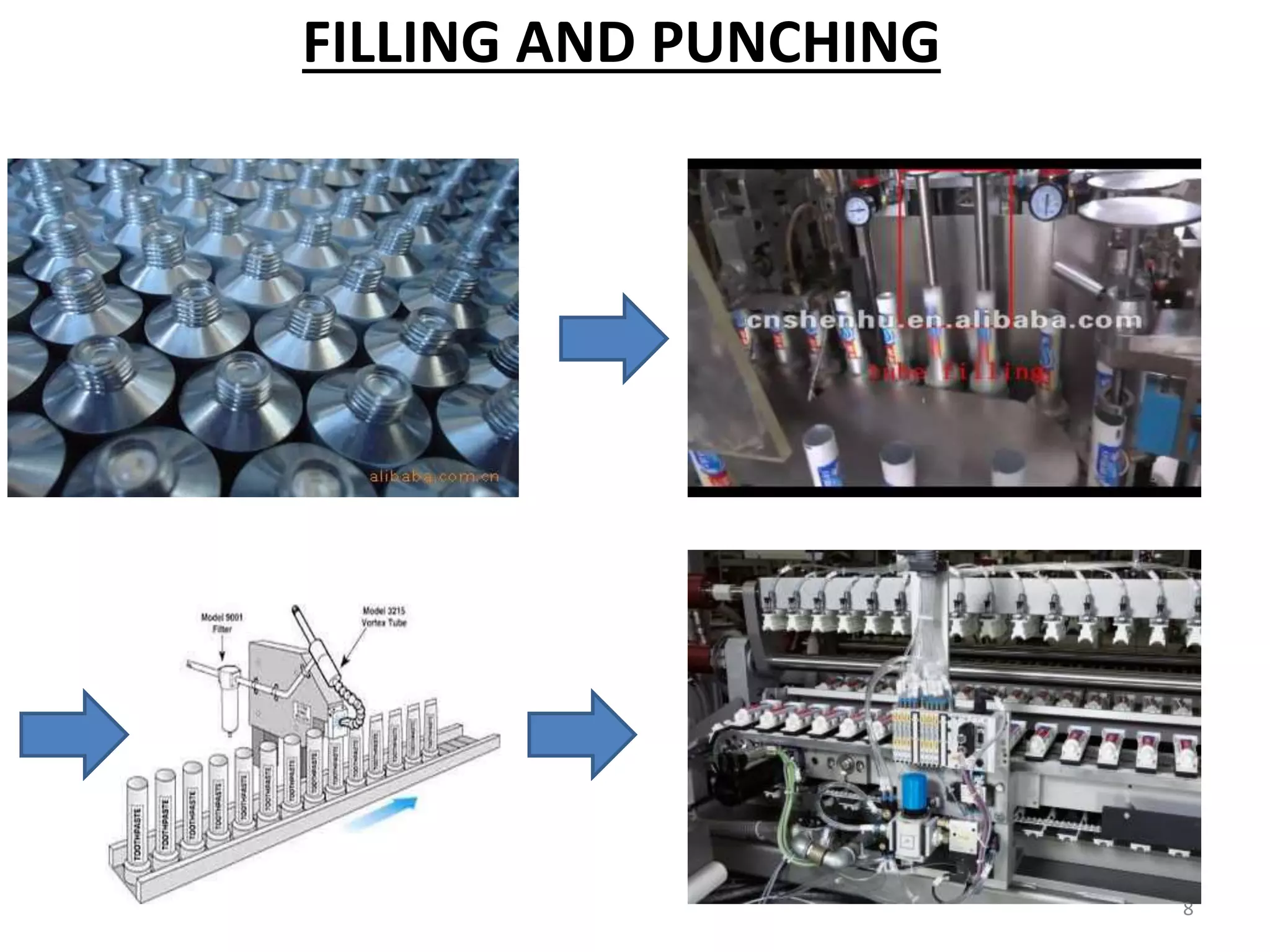
FILLING AND PUNCHING
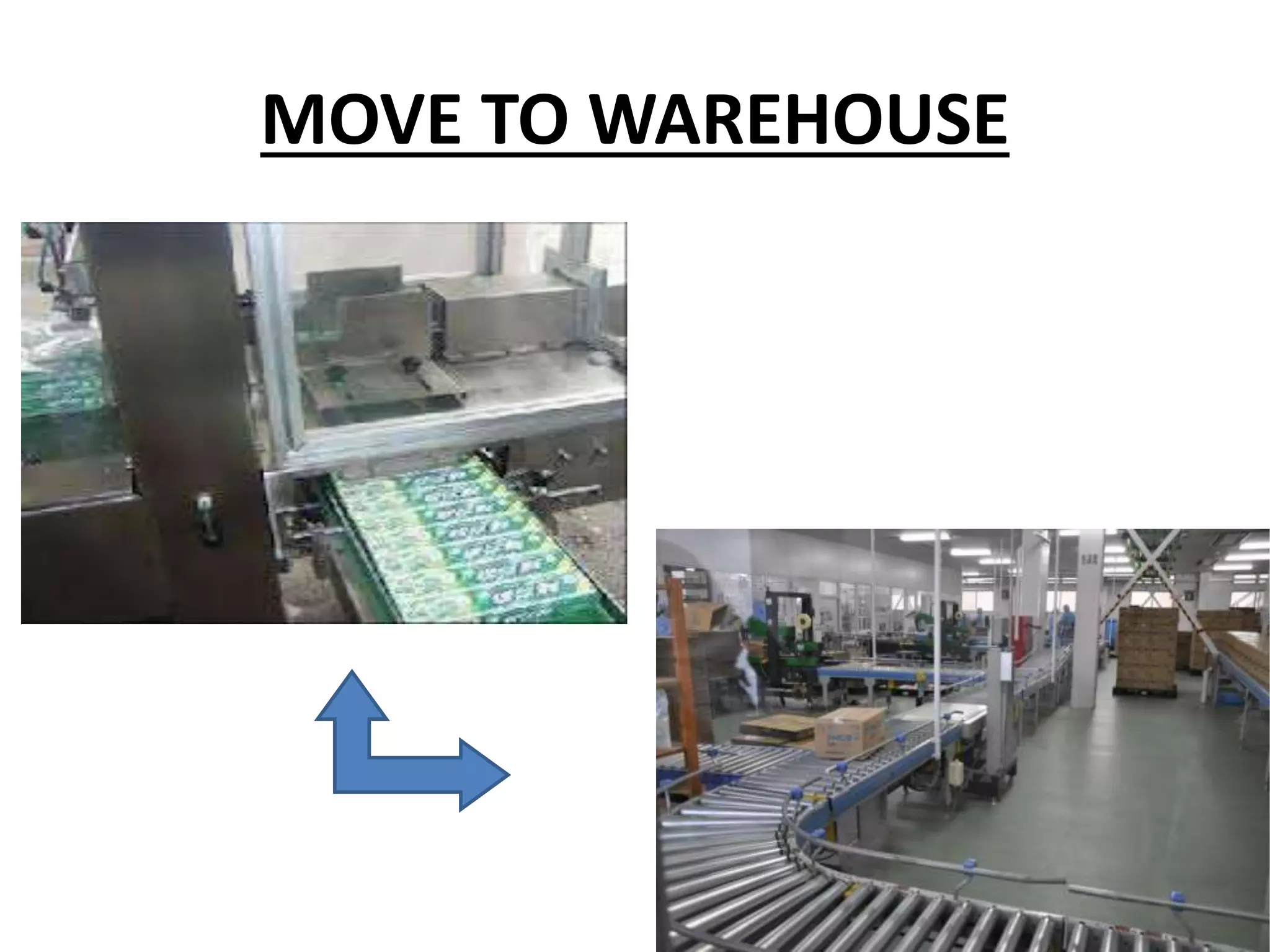
MOVE TO WAREHOUSE
9
 WIKIPEDIA
 INVESTOPEDIA
 BUSINESS DIRECTORY
 GOOGLE IMAGES
 PATENTWORLD
SOURCES
11

MFG RAHUL SUI

  • 1.
    Production Process in Toothpasteindustry By: Rahul Sui MANUFACTURING AND OPERATION MANAGEMENT
  • 2.
    What is Production? SOURCE:-WIKIPEDIA,LC JHAMB The process and methods used to transform tangible inputs (raw materials, semi-finished goods) and intangible inputs (ideas,information,knowledge) into goods or services. Resources are used in this process to create an output that is suitable for use or has exchange value
  • 3.
     The manufacturingof large quantities of standardized products, frequently utilizing assembly line technology. Mass production refers to the process of creating large numbers of similar products efficiently. Mass production is typically characterized by some type of mechanization, as with an assembly line, to achieve high volume, the detailed organization of materials flow, careful control of quality standards and division of labor. Process employed in :- Mass Production
  • 4.
    Toothpaste Ingredients Abrasives 20%- 40% Solid,insoluble particles Causing abrasion Remove debris and residual stain from teeth Aluminum oxide Calcium pyrophosphate Carbonates like sodium bicarbonate, calcium carbonate Silica Binders 2% To provide consistency and shape. Polymers like Carboxymethyl Cellulose (CMC) Alginate Gums Humectants 20%- 40% Used in toothpaste to prevent loss of water and subsequent hardening of the product upon exposure to air. Glycerine Sorbitol Polyethylene glycol Mannitol Propylene glycol
  • 5.
    5/1/2015Free Template fromwww.brainybetty.com 5 Sweeteners and Flavors 2% each Improve taste of toothpaste Sweeteners: sodium saccharin, sorbitol, mannitol, xylitol Flavours: peppermint, spearmint, wintergreen, menthol, cinnamon Surfactants 1%-2% Produce foam and aid in the removal of debris. Sodium Lauryl Sulfate Sodium N-Lauryl Polyethylene glycol (PEG) Fluoride actives Adults: 1000- 1450ppm Children:<1 000ppm Increases resistance to enamel solubility. Sodium fluoride Sodium monofluorophosphate Stannous fluoride Preservatives <1% Prevent the growth of micro organisms Alcohols, sodium benzoate, dichlorinated phenols
  • 6.
  • 7.
  • 8.
  • 9.
  • 10.
     WIKIPEDIA  INVESTOPEDIA BUSINESS DIRECTORY  GOOGLE IMAGES  PATENTWORLD SOURCES
  • 11.

Editor's Notes

  • #5 Binders: Contribute to the creamy consistency of the toothpaste and hence, control the viscosity.