Methyl Isocyanate Group 3 Ng Geok Ting  Nian Yue Anh Syahmi
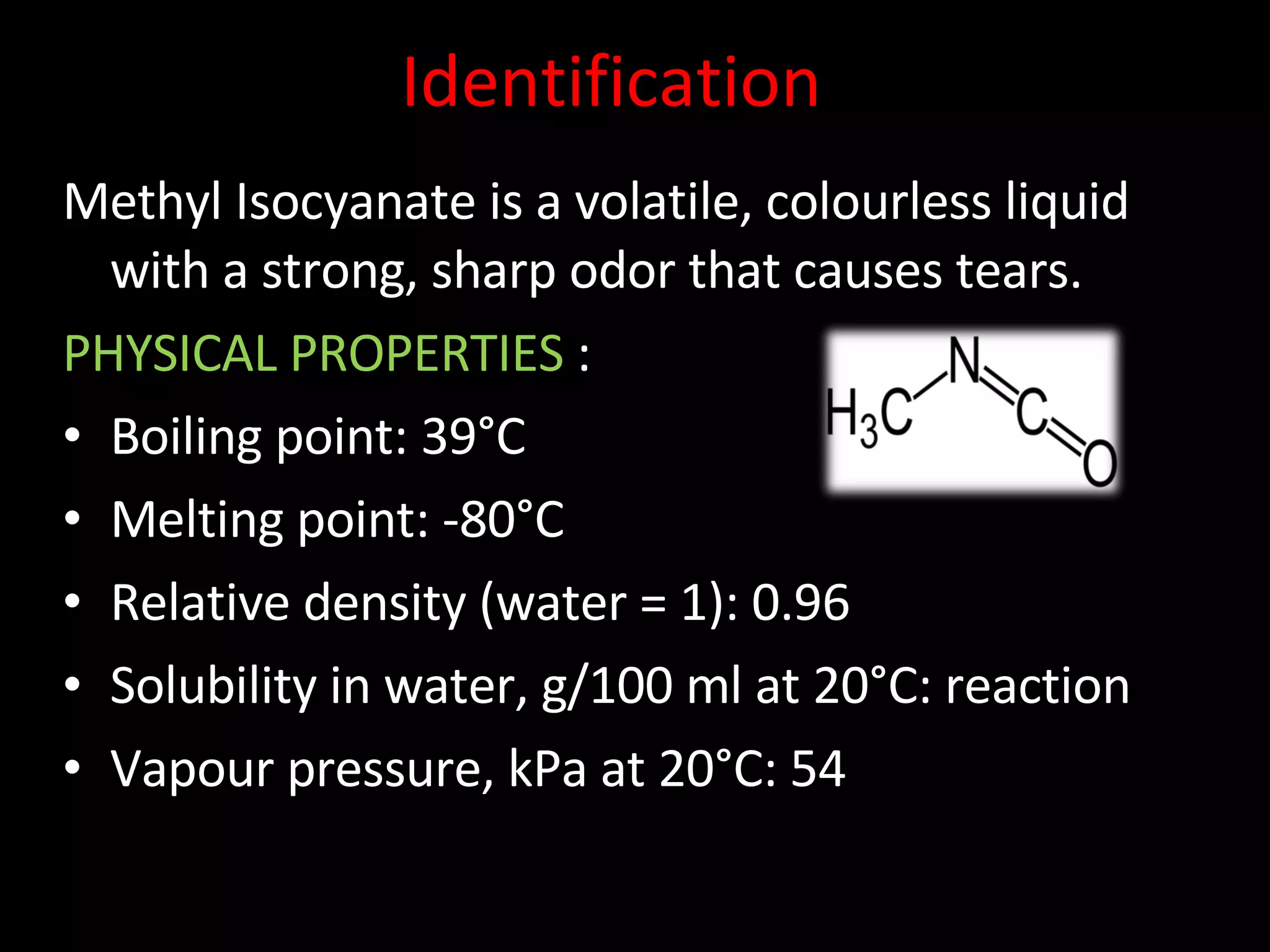
Methyl Isocyanate is a volatile, colourless liquid  with a strong, sharp odor that causes tears.  PHYSICAL PROPERTIES  : Boiling point: 39°C Melting point: -80°C Relative density (water = 1): 0.96 Solubility in water, g/100 ml at 20°C: reaction Vapour pressure, kPa at 20°C: 54 Identification
Relative vapour density (air = 1): 2 Relative density of the vapour/air-mixture at 20°C (air = 1): 1.44
Health  Fire Environmental Hazards of methyl isocyanate
Health Hazards Acute effects Chronic effects Reproductive and developmental effects Cancer risks
Fire hazards Flammable liquid Cannot use water to put out the fire Poisonous gas produce in the fire Vapors may travel to source of ignition and flash back Vapor heavier than air and may travel a distance to cause a fire or explosion.
Environmental hazard Bacterial contamination of drinking water Air pollution Contamination of  food
Fire data of methyl isocyanate At temperatures below 39ºC (102ºF) Very flammable colorless liquid that readily evaporates when exposed to air.  Gaseous methyl isocyanate is slightly heavier than air.  Release Hydrogen cyanide
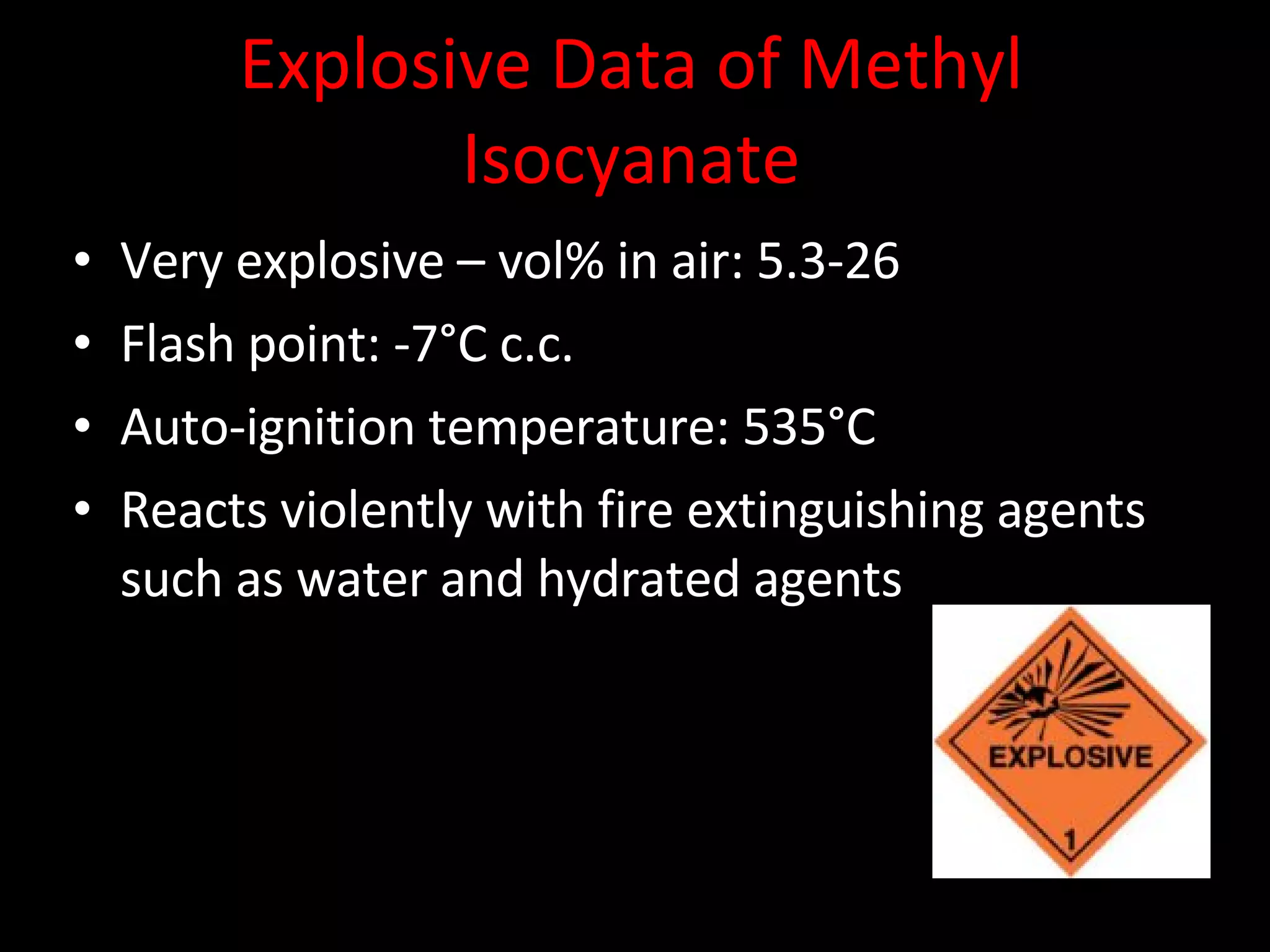
Explosive Data of Methyl Isocyanate Very explosive – vol% in air: 5.3-26 Flash point: -7°C c.c. Auto-ignition temperature: 535°C Reacts violently with fire extinguishing agents such as water and hydrated agents
First Aid Measures Fire : Alcohol-resistant foam, dry sand, powder, carbon dioxide. NO hydrous agents. Explosion  : In case of fire: cool drums, by spraying with water but avoid contact of the substance with water. Combat fire from a sheltered position. Inhalation :  Fresh air, rest. Half-upright position. And give artificial respiration.
Skin : Remove polluted clothes. Wash skin with water or shower. Eye : First rinse with water for several minutes, then go to see a doctor. Ingestion : Wash mouth. Do not induce vomiting, then drink plenty of water.
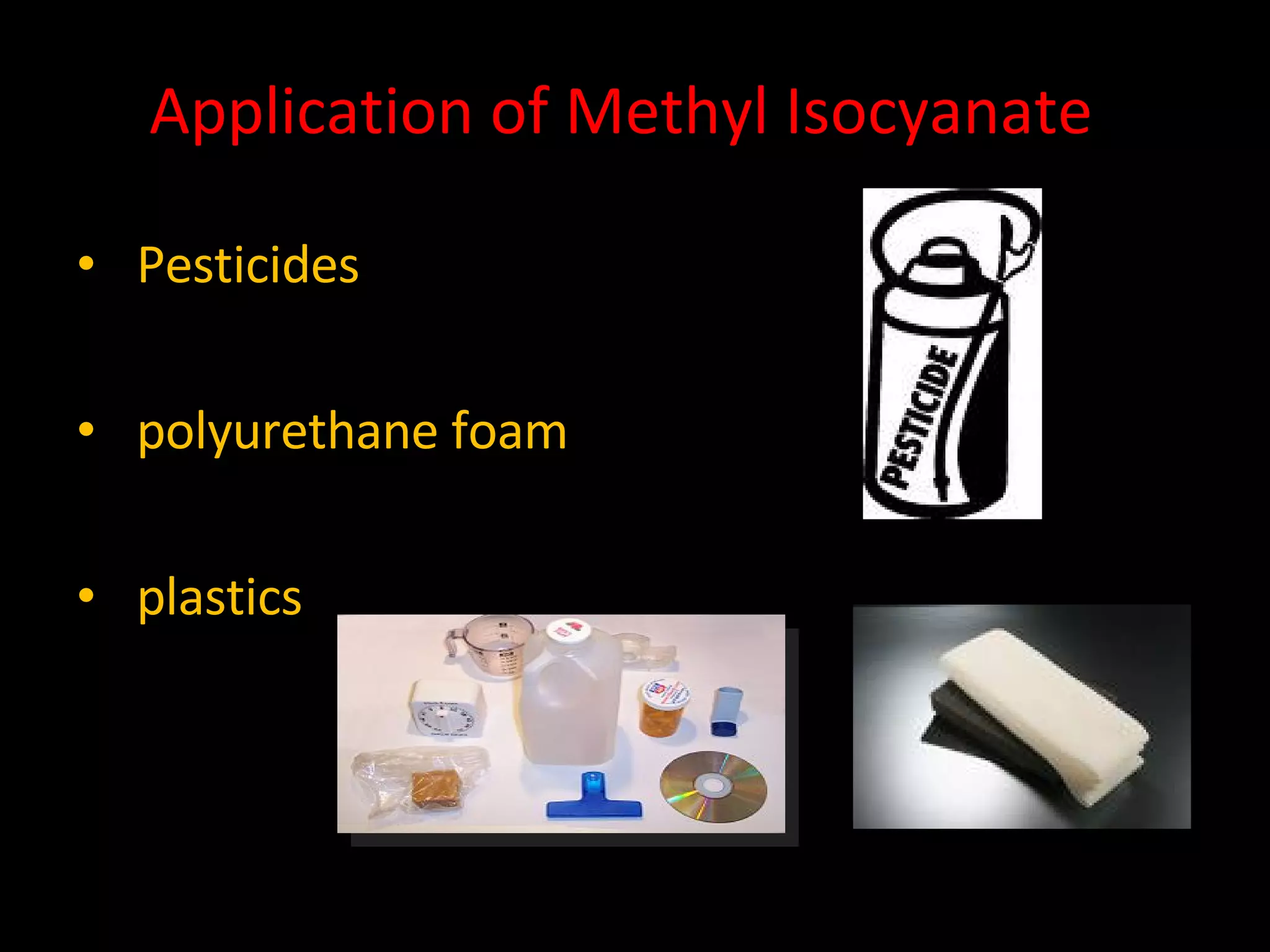
Application of Methyl Isocyanate Pesticides polyurethane foam plastics
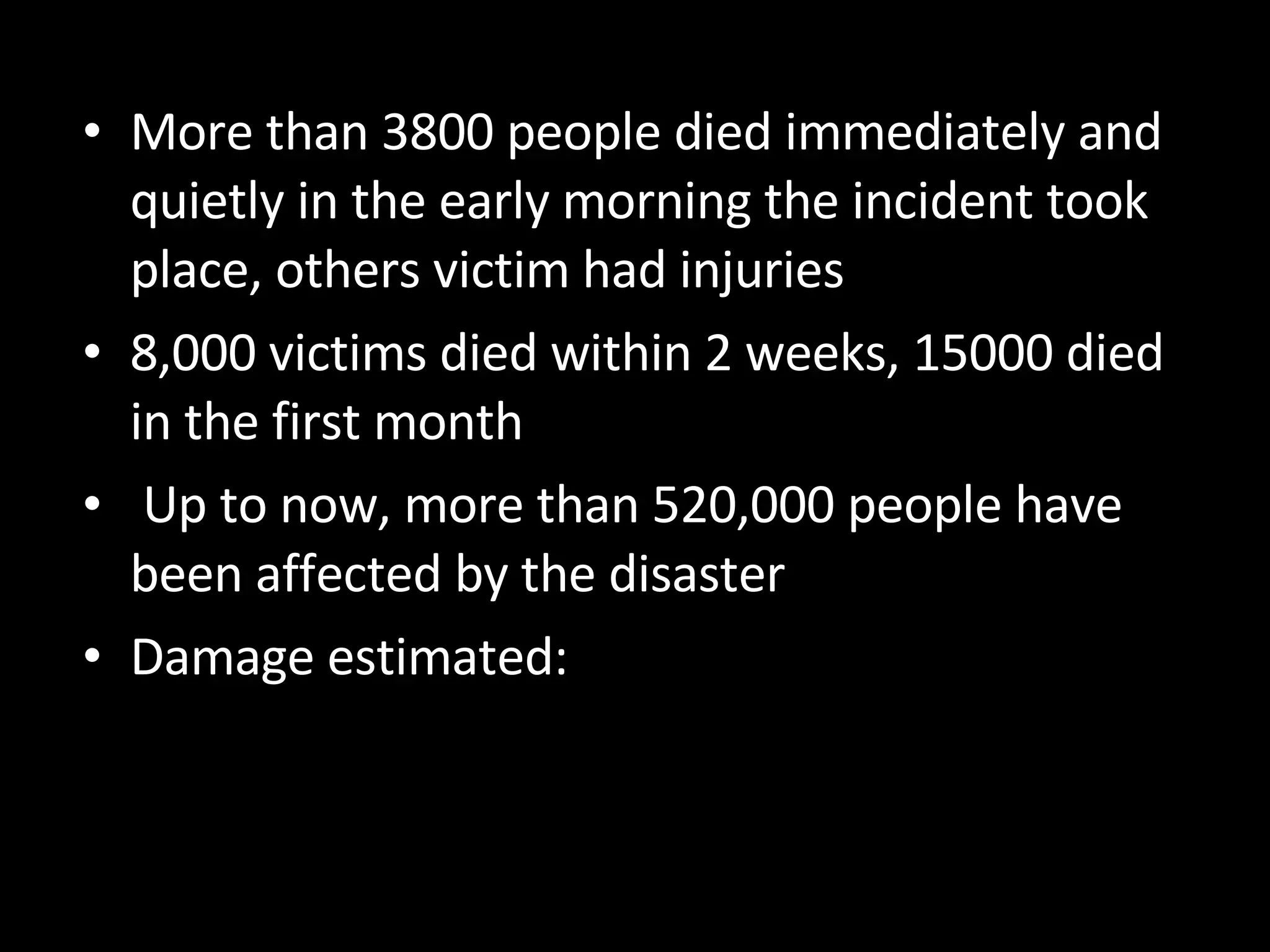
Building Industry    •  Sandwich panels    •  Pre-insulated pipes    •  Moulded or cut 1/2 pipe sectionals    •  Spray foam    •  Rigid slabs    •  Supports for manufacture of lightweight concrete and pre-fabricated walls / slabs  Thermal Insulation For Food Industry    •  Refrigerated show cases    •  Domestic and commercial refrigerators & deep freeze chests    •  Insulation of fishing vessel hull & storage areas    •  Ice boxes for commercial and domestic purposes    •  Refrigerated containers    •  Refrigerated trucks / transport
Thermal Insulation For Hot / Cold Purposes    •    Hot water heater tanks    •  Insulated drink and food containers    •  Temperature controlled rooms / vessels   •  Pipelines / valves  Buoyancy & Void Filling    •  Buoys    •  Pontoons    •  Filling of voids to prevent pests and vermin Other Applications   •  Air filter rims
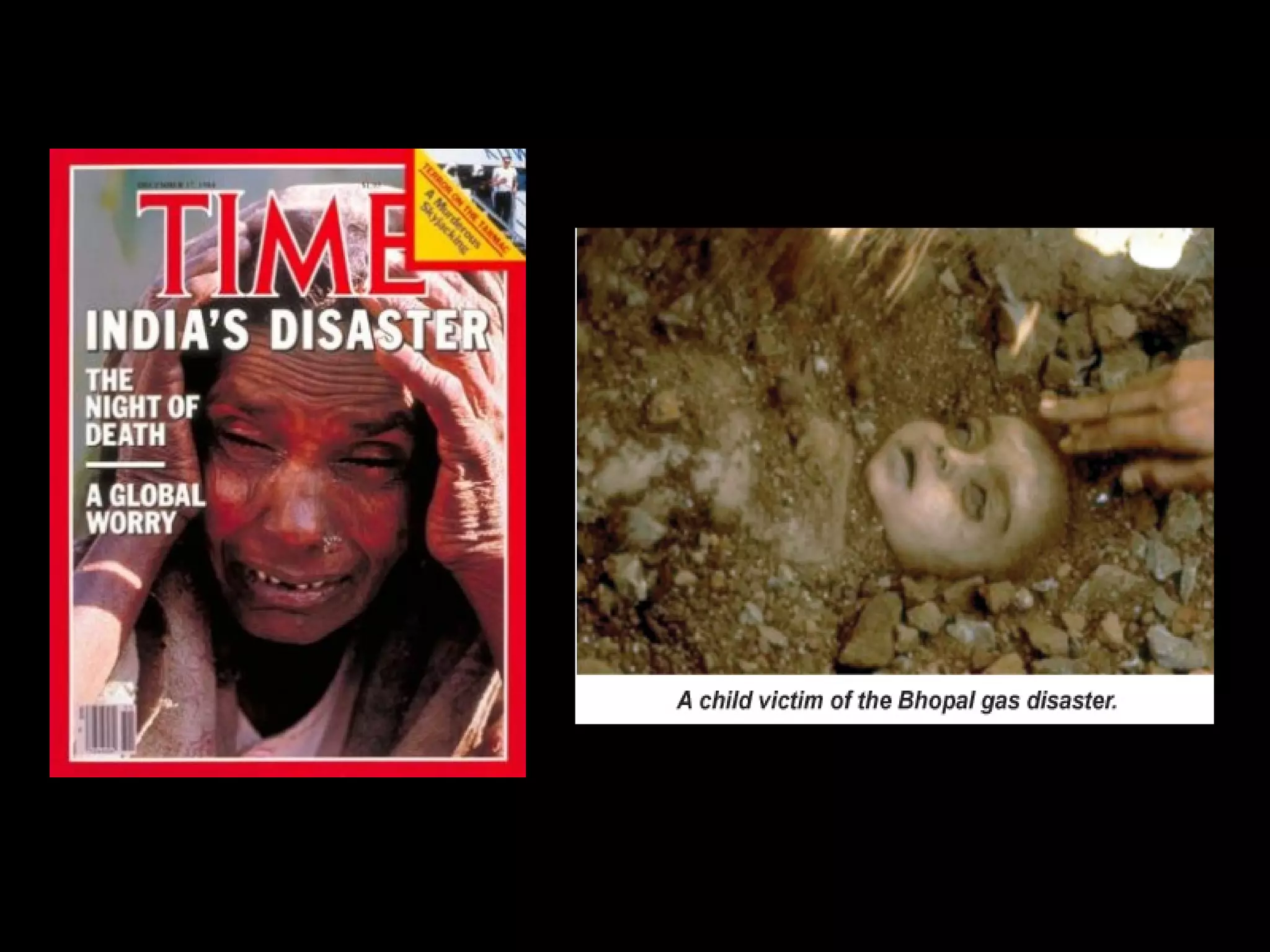
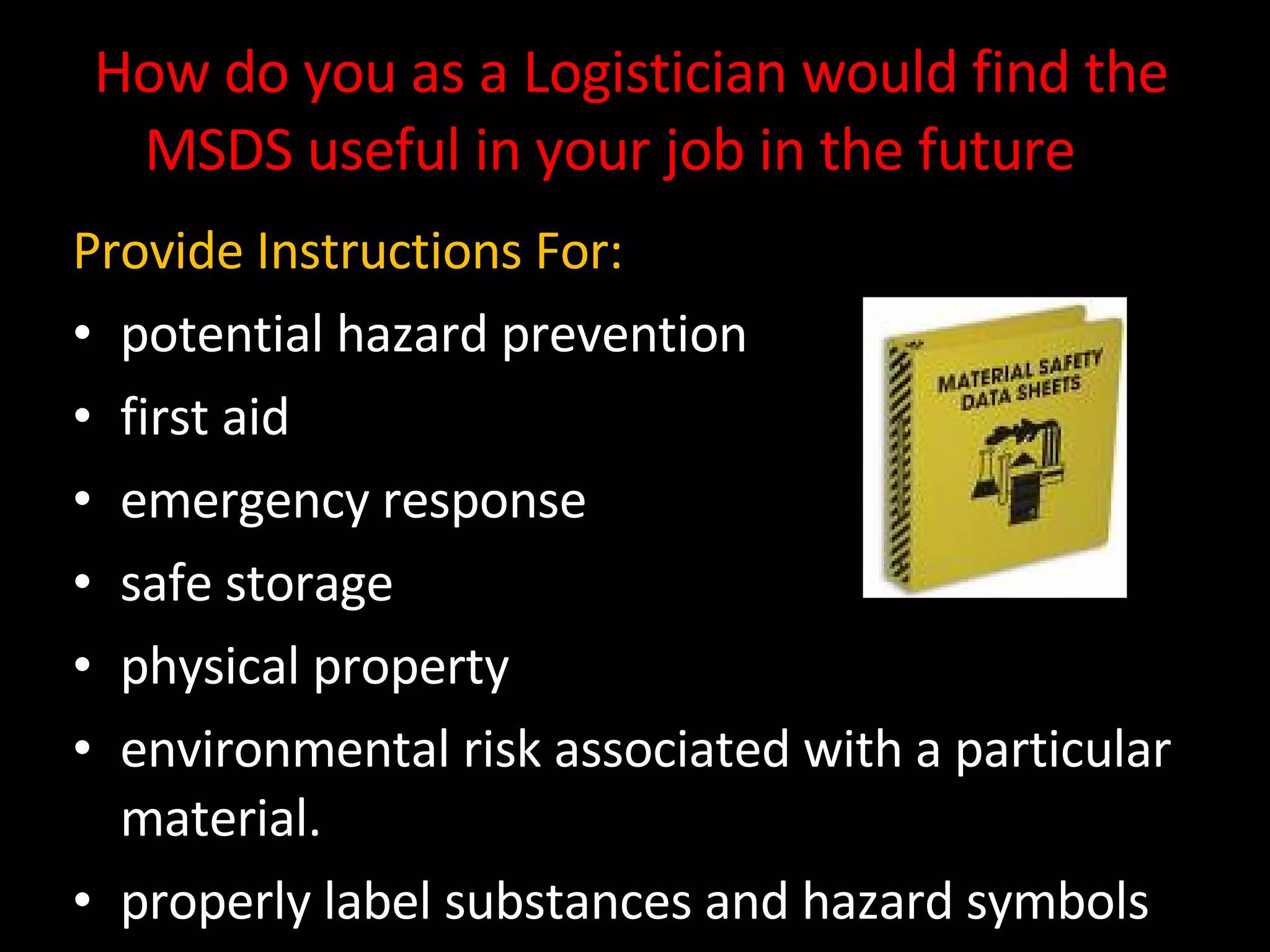
Incident-   Bhopal Disaster  The worst industrial tradegy  How was it happened? Occurred from Union Carbide India plant, Bhopal, India on midnight 2 nd -3 rd  of Dec, 1984 42 tons of MIC- a super poisonous chemical- was contained in only one tank (tank 610) Water cleaning of pipes entered into the MIC tank 610 caused a violently huge reaction.
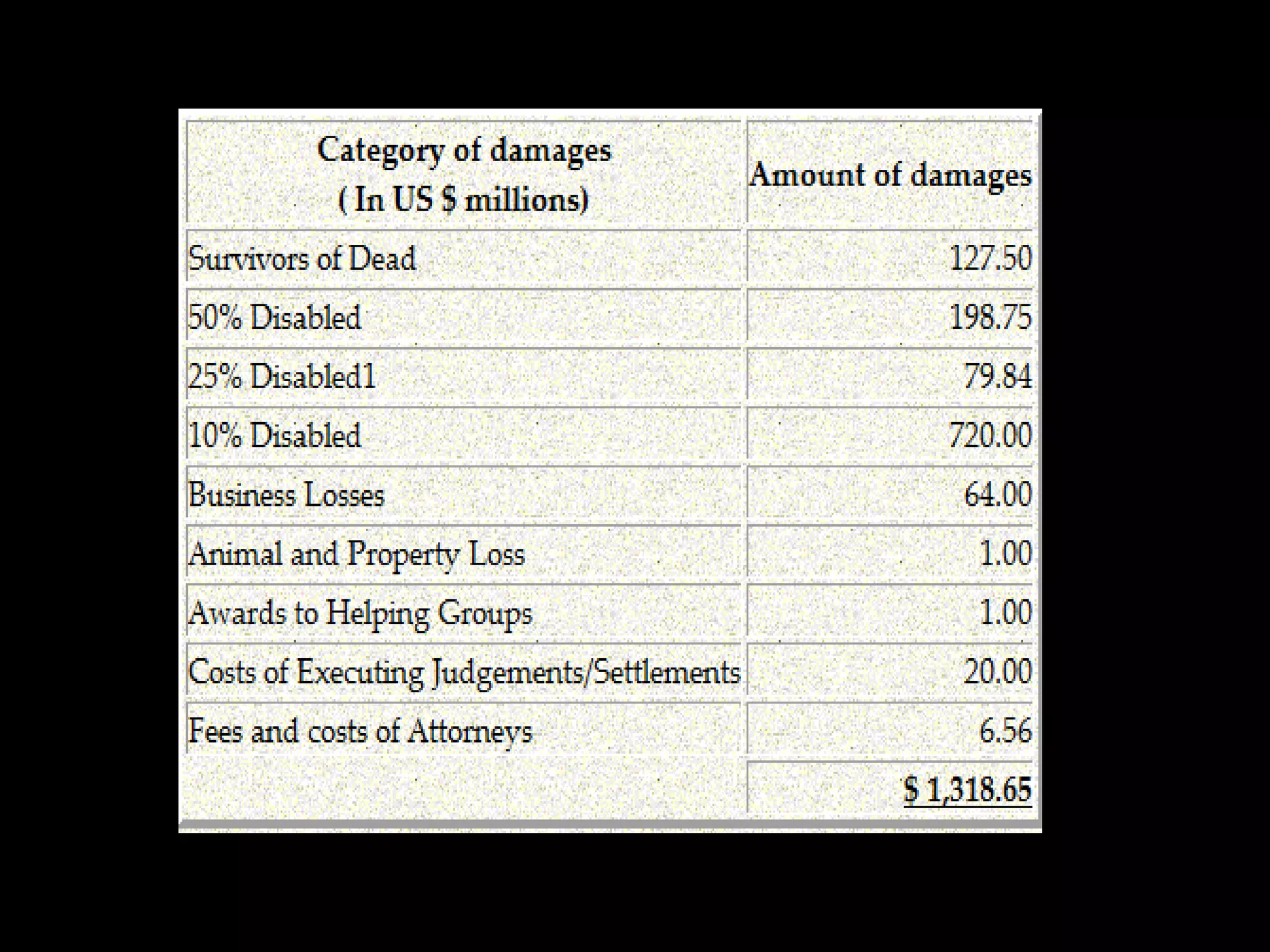
More than 3800 people died immediately and quietly in the early morning the incident took place, others victim had injuries 8,000 victims died within 2 weeks, 15000 died in the first month Up to now, more than 520,000 people have been affected by the disaster Damage estimated:
 
Causes: Technological errors: amount of MIC contained in the tank was far exceeded the allowed safety limit; many valves and lines were in poor condition; safety system was inadequate and safety regulations were ignored … Organizational and operational errors: they use MIC instead of a less toxic ( but more expensive ) material; poor education of operators and shortage of supervisors, workers;  Legal errors: the chemical plant was allowed to locate in the heart of a densely populated area.
 
How do you as a Logistician would find the MSDS useful in your job in the future ?  Provide Instructions For: potential hazard prevention first aid emergency response safe storage physical property  environmental risk associated with a particular material.  properly label substances and hazard symbols
The End Reference   :  http://www.apu.com.sg/en/rigidform.aspx http://www.intox.org/databank/documents/chemical/methylis/eics0004.htm http://msds.chem.ox.ac.uk/ME/methyl_isocyanate.html http://nj.gov/health/eoh/rtkweb/documents/fs/1270.pdf http://en.wikipedia.org/wiki/Bhopal_disaster#cite_note-Eckerman2001-0 http://www.netphotograph.com/article.php?id=6
http://www.grazian-archive.com/governing/bhopal/Bhopal_C6.html http://www.corrosion-doctors.org/Pollution/bhopal.htm http://www.green-web.org/zt/bhopal/pix.html http://www.mcphate.com/clips/bhopal.htm
Review of Group 4 Carbon Tetrachloride
is a manufactured chemical that does not occur naturally.  It is a clear liquid with a sweet aroma and often found in air as a colourless gas.  Not flammable and does not dissolve in water easily. Expose  : breathing and drinking of contaminated air near manufacturing plants or waste sites happens to consume contaminated soils vegetation.
Uses  : production of refrigerator fluid, pesticide, degreasing agent and composition of fire extinguishers Storage  : store in cool, dry location away from all heavily trafficked areas  and emergency exits.  Real life Accident : In USA, due to the fire caused by the protest and other “lack of attention” releases (waste storage area prone to air borne), the Rocky Flats is contaminated with plutonium and carbon tetrachloride
Our Comments Its provides  a lot of information about the Carbon Tetrachloride  Better understanding the danger of the chemical and ways of handling it. Did not provide statistics about the usage of chemical and how MSDS help the logistician job Overall, the finding are interesting with pictures and let us know more about carbon tetrachloride

Methyl Iscoyanate(version 3)

  • 1.
    Methyl Isocyanate Group3 Ng Geok Ting Nian Yue Anh Syahmi
  • 2.
    Methyl Isocyanate isa volatile, colourless liquid with a strong, sharp odor that causes tears. PHYSICAL PROPERTIES : Boiling point: 39°C Melting point: -80°C Relative density (water = 1): 0.96 Solubility in water, g/100 ml at 20°C: reaction Vapour pressure, kPa at 20°C: 54 Identification
  • 3.
    Relative vapour density(air = 1): 2 Relative density of the vapour/air-mixture at 20°C (air = 1): 1.44
  • 4.
    Health FireEnvironmental Hazards of methyl isocyanate
  • 5.
    Health Hazards Acuteeffects Chronic effects Reproductive and developmental effects Cancer risks
  • 6.
    Fire hazards Flammableliquid Cannot use water to put out the fire Poisonous gas produce in the fire Vapors may travel to source of ignition and flash back Vapor heavier than air and may travel a distance to cause a fire or explosion.
  • 7.
    Environmental hazard Bacterialcontamination of drinking water Air pollution Contamination of food
  • 8.
    Fire data ofmethyl isocyanate At temperatures below 39ºC (102ºF) Very flammable colorless liquid that readily evaporates when exposed to air. Gaseous methyl isocyanate is slightly heavier than air. Release Hydrogen cyanide
  • 9.
    Explosive Data ofMethyl Isocyanate Very explosive – vol% in air: 5.3-26 Flash point: -7°C c.c. Auto-ignition temperature: 535°C Reacts violently with fire extinguishing agents such as water and hydrated agents
  • 10.
    First Aid MeasuresFire : Alcohol-resistant foam, dry sand, powder, carbon dioxide. NO hydrous agents. Explosion : In case of fire: cool drums, by spraying with water but avoid contact of the substance with water. Combat fire from a sheltered position. Inhalation : Fresh air, rest. Half-upright position. And give artificial respiration.
  • 11.
    Skin : Removepolluted clothes. Wash skin with water or shower. Eye : First rinse with water for several minutes, then go to see a doctor. Ingestion : Wash mouth. Do not induce vomiting, then drink plenty of water.
  • 12.
    Application of MethylIsocyanate Pesticides polyurethane foam plastics
  • 13.
    Building Industry   •  Sandwich panels   •  Pre-insulated pipes   •  Moulded or cut 1/2 pipe sectionals   •  Spray foam   •  Rigid slabs   •  Supports for manufacture of lightweight concrete and pre-fabricated walls / slabs Thermal Insulation For Food Industry    •  Refrigerated show cases   •  Domestic and commercial refrigerators & deep freeze chests   •  Insulation of fishing vessel hull & storage areas   •  Ice boxes for commercial and domestic purposes   •  Refrigerated containers   •  Refrigerated trucks / transport
  • 14.
    Thermal Insulation ForHot / Cold Purposes    •    Hot water heater tanks   •  Insulated drink and food containers   •  Temperature controlled rooms / vessels   •  Pipelines / valves Buoyancy & Void Filling    •  Buoys   •  Pontoons   •  Filling of voids to prevent pests and vermin Other Applications   •  Air filter rims
  • 15.
    Incident- Bhopal Disaster The worst industrial tradegy How was it happened? Occurred from Union Carbide India plant, Bhopal, India on midnight 2 nd -3 rd of Dec, 1984 42 tons of MIC- a super poisonous chemical- was contained in only one tank (tank 610) Water cleaning of pipes entered into the MIC tank 610 caused a violently huge reaction.
  • 16.
    More than 3800people died immediately and quietly in the early morning the incident took place, others victim had injuries 8,000 victims died within 2 weeks, 15000 died in the first month Up to now, more than 520,000 people have been affected by the disaster Damage estimated:
  • 17.
  • 18.
    Causes: Technological errors:amount of MIC contained in the tank was far exceeded the allowed safety limit; many valves and lines were in poor condition; safety system was inadequate and safety regulations were ignored … Organizational and operational errors: they use MIC instead of a less toxic ( but more expensive ) material; poor education of operators and shortage of supervisors, workers; Legal errors: the chemical plant was allowed to locate in the heart of a densely populated area.
  • 19.
  • 20.
    How do youas a Logistician would find the MSDS useful in your job in the future ? Provide Instructions For: potential hazard prevention first aid emergency response safe storage physical property environmental risk associated with a particular material. properly label substances and hazard symbols
  • 21.
    The End Reference : http://www.apu.com.sg/en/rigidform.aspx http://www.intox.org/databank/documents/chemical/methylis/eics0004.htm http://msds.chem.ox.ac.uk/ME/methyl_isocyanate.html http://nj.gov/health/eoh/rtkweb/documents/fs/1270.pdf http://en.wikipedia.org/wiki/Bhopal_disaster#cite_note-Eckerman2001-0 http://www.netphotograph.com/article.php?id=6
  • 22.
  • 23.
    Review of Group4 Carbon Tetrachloride
  • 24.
    is a manufacturedchemical that does not occur naturally. It is a clear liquid with a sweet aroma and often found in air as a colourless gas. Not flammable and does not dissolve in water easily. Expose : breathing and drinking of contaminated air near manufacturing plants or waste sites happens to consume contaminated soils vegetation.
  • 25.
    Uses :production of refrigerator fluid, pesticide, degreasing agent and composition of fire extinguishers Storage : store in cool, dry location away from all heavily trafficked areas and emergency exits. Real life Accident : In USA, due to the fire caused by the protest and other “lack of attention” releases (waste storage area prone to air borne), the Rocky Flats is contaminated with plutonium and carbon tetrachloride
  • 26.
    Our Comments Itsprovides a lot of information about the Carbon Tetrachloride Better understanding the danger of the chemical and ways of handling it. Did not provide statistics about the usage of chemical and how MSDS help the logistician job Overall, the finding are interesting with pictures and let us know more about carbon tetrachloride