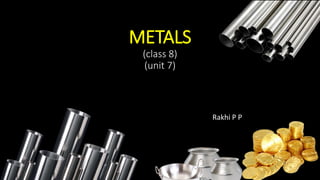
METALS
(class 8)
(unit 7)
Rakhi P P
• Metal is a material ( an element, compound, or alloy) that is typically
hard, opaque, shiny and has good electrical and thermal conductivity.
• Metals are the backbone of all industrial works and products.
• We can’t imagine a world without Metals.
• Approximately 91 of the 118 elements of the periodic table are
metals
Properties of metals
• Malleability
• Ductility
• Hardness
• Metallic luster
• High electrical and thermal conductivity
• Sonority
• High melting point and density
Malleability
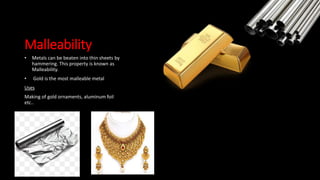
• Metals can be beaten into thin sheets by
hammering. This property is known as
Malleability.
• Gold is the most malleable metal
Uses
Making of gold ornaments, aluminum foil
etc..
DUCTILITY
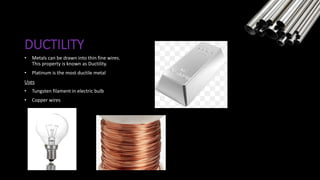
• Metals can be drawn into thin fine wires.
This property is known as Ductility.
• Platinum is the most ductile metal
Uses
• Tungsten filament in electric bulb
• Copper wires
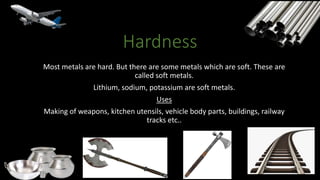
Hardness
Most metals are hard. But there are some metals which are soft. These are
called soft metals.
Lithium, sodium, potassium are soft metals.
Uses
Making of weapons, kitchen utensils, vehicle body parts, buildings, railway
tracks etc..
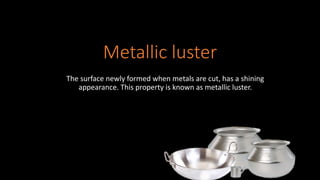
Metallic luster
The surface newly formed when metals are cut, has a shining
appearance. This property is known as metallic luster.
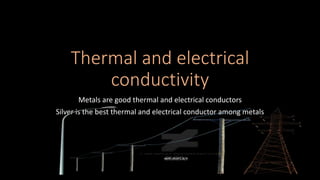
Thermal and electrical
conductivity
Metals are good thermal and electrical conductors
Silver is the best thermal and electrical conductor among metals
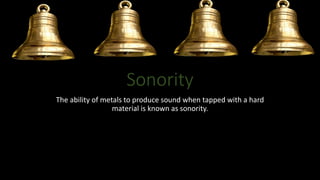
Sonority
The ability of metals to produce sound when tapped with a hard
material is known as sonority.
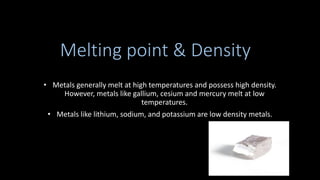
Melting point & Density
• Metals generally melt at high temperatures and possess high density.
However, metals like gallium, cesium and mercury melt at low
temperatures.
• Metals like lithium, sodium, and potassium are low density metals.
Metals & Non metals
Metals
• Good conductors of heat and
electricity
• Malleable
• Ductile
• Possess metallic luster
• Solid at room temperature (
except mercury)
Non metals
• Poor conductors of heat and
electricity.
• Brittle: if solid.
• Non ductile.
• Do not possess metallic luster.
• Solids, liquids or gases at room
temperatures.

Metals ppt

  • 1.
  • 2.
    • Metal isa material ( an element, compound, or alloy) that is typically hard, opaque, shiny and has good electrical and thermal conductivity. • Metals are the backbone of all industrial works and products. • We can’t imagine a world without Metals. • Approximately 91 of the 118 elements of the periodic table are metals
  • 3.
    Properties of metals •Malleability • Ductility • Hardness • Metallic luster • High electrical and thermal conductivity • Sonority • High melting point and density
  • 4.
    Malleability • Metals canbe beaten into thin sheets by hammering. This property is known as Malleability. • Gold is the most malleable metal Uses Making of gold ornaments, aluminum foil etc..
  • 5.
    DUCTILITY • Metals canbe drawn into thin fine wires. This property is known as Ductility. • Platinum is the most ductile metal Uses • Tungsten filament in electric bulb • Copper wires
  • 6.
    Hardness Most metals arehard. But there are some metals which are soft. These are called soft metals. Lithium, sodium, potassium are soft metals. Uses Making of weapons, kitchen utensils, vehicle body parts, buildings, railway tracks etc..
  • 7.
    Metallic luster The surfacenewly formed when metals are cut, has a shining appearance. This property is known as metallic luster.
  • 8.
    Thermal and electrical conductivity Metalsare good thermal and electrical conductors Silver is the best thermal and electrical conductor among metals
  • 9.
    Sonority The ability ofmetals to produce sound when tapped with a hard material is known as sonority.
  • 10.
    Melting point &Density • Metals generally melt at high temperatures and possess high density. However, metals like gallium, cesium and mercury melt at low temperatures. • Metals like lithium, sodium, and potassium are low density metals.
  • 11.
    Metals & Nonmetals Metals • Good conductors of heat and electricity • Malleable • Ductile • Possess metallic luster • Solid at room temperature ( except mercury) Non metals • Poor conductors of heat and electricity. • Brittle: if solid. • Non ductile. • Do not possess metallic luster. • Solids, liquids or gases at room temperatures.