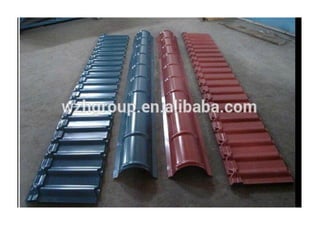
MS PROFILE SHEET CLADDING /
CORRUGATED SHEET ROOFING
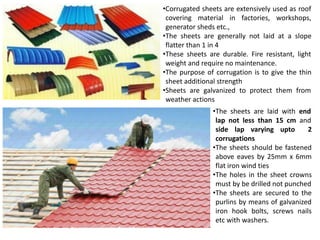
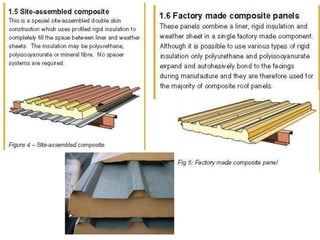
•Corrugated sheets are extensively used as roof
covering material in factories, workshops,
generator sheds etc.,
•The sheets are generally not laid at a slope
flatter than 1 in 4
•These sheets are durable. Fire resistant, light
weight and require no maintenance.
•The purpose of corrugation is to give the thin
sheet additional strength
•Sheets are galvanized to protect them from
weather actions
•The sheets are laid with end
lap not less than 15 cm and
side lap varying upto 2
corrugations
•The sheets should be fastened
above eaves by 25mm x 6mm
flat iron wind ties
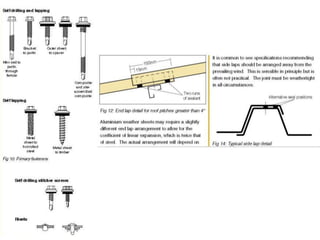
•The holes in the sheet crowns
must by be drilled not punched
•The sheets are secured to the
purlins by means of galvanized
iron hook bolts, screws nails
etc with washers.
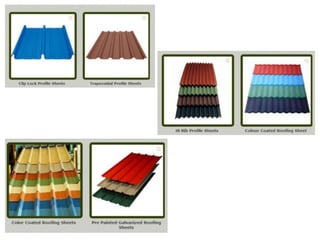
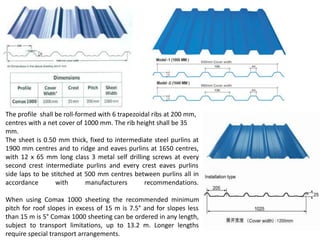
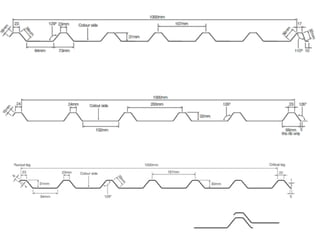
The profile shall be roll-formed with 6 trapezoidal ribs at 200 mm,
centres with a net cover of 1000 mm. The rib height shall be 35
mm.
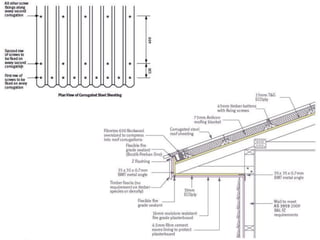
The sheet is 0.50 mm thick, fixed to intermediate steel purlins at
1900 mm centres and to ridge and eaves purlins at 1650 centres,
with 12 x 65 mm long class 3 metal self drilling screws at every
second crest intermediate purlins and every crest eaves purlins
side laps to be stitched at 500 mm centres between purlins all in
accordance with manufacturers recommendations.
When using Comax 1000 sheeting the recommended minimum
pitch for roof slopes in excess of 15 m is 7.5° and for slopes less
than 15 m is 5° Comax 1000 sheeting can be ordered in any length,
subject to transport limitations, up to 13.2 m. Longer lengths
require special transport arrangements.
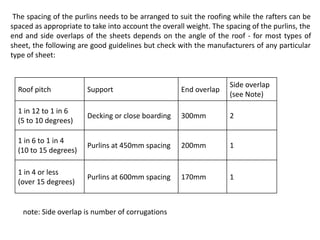
The spacing of the purlins needs to be arranged to suit the roofing while the rafters can be
spaced as appropriate to take into account the overall weight. The spacing of the purlins, the
end and side overlaps of the sheets depends on the angle of the roof - for most types of
sheet, the following are good guidelines but check with the manufacturers of any particular
type of sheet:
Roof pitch Support End overlap
Side overlap
(see Note)
1 in 12 to 1 in 6
(5 to 10 degrees)
Decking or close boarding 300mm 2
1 in 6 to 1 in 4
(10 to 15 degrees)
Purlins at 450mm spacing 200mm 1
1 in 4 or less
(over 15 degrees)
Purlins at 600mm spacing 170mm 1
note: Side overlap is number of corrugations
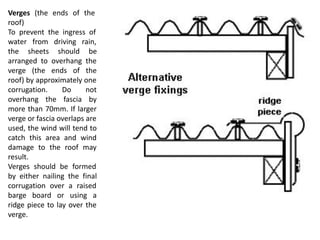
Verges (the ends of the
roof)
To prevent the ingress of
water from driving rain,
the sheets should be
arranged to overhang the
verge (the ends of the
roof) by approximately one
corrugation. Do not
overhang the fascia by
more than 70mm. If larger
verge or fascia overlaps are
used, the wind will tend to
catch this area and wind
damage to the roof may
result.
Verges should be formed
by either nailing the final
corrugation over a raised
barge board or using a
ridge piece to lay over the
verge.
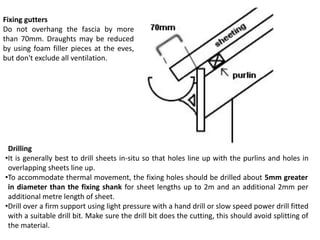
Fixing gutters
Do not overhang the fascia by more
than 70mm. Draughts may be reduced
by using foam filler pieces at the eves,
but don't exclude all ventilation.
Drilling
•It is generally best to drill sheets in-situ so that holes line up with the purlins and holes in
overlapping sheets line up.
•To accommodate thermal movement, the fixing holes should be drilled about 5mm greater
in diameter than the fixing shank for sheet lengths up to 2m and an additional 2mm per
additional metre length of sheet.
•Drill over a firm support using light pressure with a hand drill or slow speed power drill fitted
with a suitable drill bit. Make sure the drill bit does the cutting, this should avoid splitting of
the material.
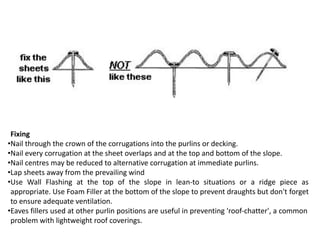
Fixing
•Nail through the crown of the corrugations into the purlins or decking.
•Nail every corrugation at the sheet overlaps and at the top and bottom of the slope.
•Nail centres may be reduced to alternative corrugation at immediate purlins.
•Lap sheets away from the prevailing wind
•Use Wall Flashing at the top of the slope in lean-to situations or a ridge piece as
appropriate. Use Foam Filler at the bottom of the slope to prevent draughts but don't forget
to ensure adequate ventilation.
•Eaves fillers used at other purlin positions are useful in preventing 'roof-chatter', a common
problem with lightweight roof coverings.

METAL SHEET ROOFING - BUILDING MATERIALS

  • 1.
    MS PROFILE SHEETCLADDING / CORRUGATED SHEET ROOFING
  • 2.
    •Corrugated sheets areextensively used as roof covering material in factories, workshops, generator sheds etc., •The sheets are generally not laid at a slope flatter than 1 in 4 •These sheets are durable. Fire resistant, light weight and require no maintenance. •The purpose of corrugation is to give the thin sheet additional strength •Sheets are galvanized to protect them from weather actions •The sheets are laid with end lap not less than 15 cm and side lap varying upto 2 corrugations •The sheets should be fastened above eaves by 25mm x 6mm flat iron wind ties •The holes in the sheet crowns must by be drilled not punched •The sheets are secured to the purlins by means of galvanized iron hook bolts, screws nails etc with washers.
  • 7.
    The profile shallbe roll-formed with 6 trapezoidal ribs at 200 mm, centres with a net cover of 1000 mm. The rib height shall be 35 mm. The sheet is 0.50 mm thick, fixed to intermediate steel purlins at 1900 mm centres and to ridge and eaves purlins at 1650 centres, with 12 x 65 mm long class 3 metal self drilling screws at every second crest intermediate purlins and every crest eaves purlins side laps to be stitched at 500 mm centres between purlins all in accordance with manufacturers recommendations. When using Comax 1000 sheeting the recommended minimum pitch for roof slopes in excess of 15 m is 7.5° and for slopes less than 15 m is 5° Comax 1000 sheeting can be ordered in any length, subject to transport limitations, up to 13.2 m. Longer lengths require special transport arrangements.
  • 11.
    The spacing ofthe purlins needs to be arranged to suit the roofing while the rafters can be spaced as appropriate to take into account the overall weight. The spacing of the purlins, the end and side overlaps of the sheets depends on the angle of the roof - for most types of sheet, the following are good guidelines but check with the manufacturers of any particular type of sheet: Roof pitch Support End overlap Side overlap (see Note) 1 in 12 to 1 in 6 (5 to 10 degrees) Decking or close boarding 300mm 2 1 in 6 to 1 in 4 (10 to 15 degrees) Purlins at 450mm spacing 200mm 1 1 in 4 or less (over 15 degrees) Purlins at 600mm spacing 170mm 1 note: Side overlap is number of corrugations
  • 12.
    Verges (the endsof the roof) To prevent the ingress of water from driving rain, the sheets should be arranged to overhang the verge (the ends of the roof) by approximately one corrugation. Do not overhang the fascia by more than 70mm. If larger verge or fascia overlaps are used, the wind will tend to catch this area and wind damage to the roof may result. Verges should be formed by either nailing the final corrugation over a raised barge board or using a ridge piece to lay over the verge.
  • 13.
    Fixing gutters Do notoverhang the fascia by more than 70mm. Draughts may be reduced by using foam filler pieces at the eves, but don't exclude all ventilation. Drilling •It is generally best to drill sheets in-situ so that holes line up with the purlins and holes in overlapping sheets line up. •To accommodate thermal movement, the fixing holes should be drilled about 5mm greater in diameter than the fixing shank for sheet lengths up to 2m and an additional 2mm per additional metre length of sheet. •Drill over a firm support using light pressure with a hand drill or slow speed power drill fitted with a suitable drill bit. Make sure the drill bit does the cutting, this should avoid splitting of the material.
  • 14.
    Fixing •Nail through thecrown of the corrugations into the purlins or decking. •Nail every corrugation at the sheet overlaps and at the top and bottom of the slope. •Nail centres may be reduced to alternative corrugation at immediate purlins. •Lap sheets away from the prevailing wind •Use Wall Flashing at the top of the slope in lean-to situations or a ridge piece as appropriate. Use Foam Filler at the bottom of the slope to prevent draughts but don't forget to ensure adequate ventilation. •Eaves fillers used at other purlin positions are useful in preventing 'roof-chatter', a common problem with lightweight roof coverings.