Metabolic pathways: glycose -
glucose oxidation in order to
obtain ATP
1
Presented by:
Preetham N A
1st Sem MTech.
Environmental Engineering
Department of civil engineering
BMS College of Engineering
Bengaluru
 Introduction
 Fundamentals of metabolic pathways
 Formula for glucose oxidation
 Mechanism
 Glycolysis Phase
 Investment Phase
 Payoff phase
 Clinical significance
 Reference
CONTENTS
2
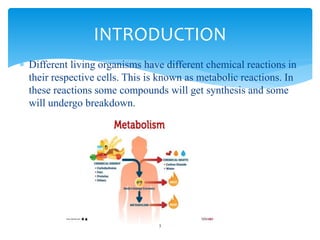
 Different living organisms have different chemical reactions in
their respective cells. This is known as metabolic reactions. In
these reactions some compounds will get synthesis and some
will undergo breakdown.
INTRODUCTION
3
 Metabolic pathways refer to the sequence of
enzyme-catalyzed reactions that lead to the
conversion of a substance into a final product.
 The oxidation of glucose refers to the
breakdown of glucose into usable products such
as ATP. To undergo oxidation, glucose passes
through three different pathways glycolysis, the
Krebs cycle (also known as the citric acid
cycle), and oxidative phosphorylation via the
electron transport chain.
Fundamentals of metabolic pathway
4
 The formula for glucose oxidation can be
viewed in one of two ways — the basic
oxidation of glucose and the net products of
glycolysis. In the basic oxidation of glucose
equation, glucose reacts with oxygen to form
carbon dioxide and water
Formula for glucose oxidation
5
 Glycolysis also produces other products, such as ATP,
the energy currency of the body, and NADH, an electron
carrier. To get a more complete picture of glycolysis, the
net formula for glycolysis provides an overview of the
net products of glycolysis. This net equation is
C6H12O6+2ADP+2Pi+2NAD+→
2pyruvate+2ATP+2NADH+2H+
 Pi refers to a phosphate group
 ADP is adenosine triphosphate
 NAD+ and NADPH are electron carriers
Formula for glucose oxidation
6
 Glycolysis Phases
Glycolysis has two phases: the investment phase
and the payoff phase. The investment phase is
where there is energy, as ATP, is put in, and the
payoff phase is where the net creation of ATP and
NADH molecules occurs. A total of 2 ATP goes in
the investment phase, with the production of 4
ATP resulting in the payoff phase; thus, there is a
net total of 2 ATP. The steps by which new ATP is
created has the name of substrate-level
phosphorylation
Mechanism
7
8
MECHANISM
 In this phase, there are two phosphates added to glucose.
Glycolysis begins with hexokinase phosphorylating
glucose into glucose-6 phosphate (G6P). This step is the
first transfer of a phosphate group and where the
consumption of the first ATP takes place. Also, this is an
irreversible step. This phosphorylation traps the glucose
molecule in the cell because it cannot readily pass the
cell membrane. From there, phosphoglucose isomerase
isomerizes G6P into fructose 6-phosphate (F6P).
Investment phase
9
 It is critical to remember that there are a total of two 3-
carbon sugars for every one glucose at the beginning of
this phase. The enzyme glyceraldehyde-3-phosphate
dehydrogenase metabolizes the G3P into 1,3-
diphosphoglycerate by reducing NAD+ into NADH.
Next, the 1,3-bisphosphoglycerate loses a phosphate
group through phosphoglycerate kinase to make 3-
phosphoglycerate and creates an ATP through substrate-
level phosphorylation. At this point, there are 2 ATP
produced, one from each 3-carbon molecule. The 3-
phosphoglycerate turns into 2-phosphoglycerate by
phosphoglycerate mutase, and then enolase turns the 2-
phosphoglycerate into phosphoenolpyruvate (PEP)
Payoff phase
10
 Then, phosphofructokinase (PFK-1) adds the second
phosphate. PFK-1 uses the second ATP and
phosphorylates the F6P into fructose 1,6-bisphosphate.
This step is also irreversible and is the rate-limiting step.
In the following step, fructose 1,6-bisphosphate
undergoes lysis into two molecules, which are substrates
for fructose-bisphosphate aldolase to convert it into
dihydroxyacetone phosphate (DHAP) and
glyceraldehyde 3-phosphate (G3P). DHAP is turned into
G3P by triosephosphate isomerase. DHAP and G3p are
in equilibrium with each other, meaning they transform
back and forth
11
 In the final step, pyruvate kinase turns PEP into pyruvate
and phosphorylates ADP into ATP through substrate-
level phosphorylation, thus creating two more ATP. This
step is also irreversible. Overall, the input for 1 glucose
molecule is 2 ATP, and the output is 4 ATP and 2 NADH
and 2 pyruvate molecules.
12
 Pyruvate kinase deficiency is an autosomal
recessive mutation that causes hemolytic
anemia. There is an inability to form ATP and
causes cell damage. Cells become swollen and
are taken up by the spleen, causing
splenomegaly. Signs and symptoms include
jaundice, icterus, elevated bilirubin, and
splenomegaly
Clinical significance
13
 Lenzen S. A fresh view of glycolysis and glucokinase
regulation: history and current status. J Biol
Chem. 2014 May 02;289(18):12189-94. [PMC free
article] [PubMed]
 Ren Y, Shen HM. Critical role of AMPK in redox
regulation under glucose starvation. Redox Biol. 2019
Jul;25:101154. [PMC free article] [PubMed]
 Website of Study.com
 Website of science direct
References
14
THANK YOU
15

Metabolic pathways.pptx

  • 1.
    Metabolic pathways: glycose- glucose oxidation in order to obtain ATP 1 Presented by: Preetham N A 1st Sem MTech. Environmental Engineering Department of civil engineering BMS College of Engineering Bengaluru
  • 2.
     Introduction  Fundamentalsof metabolic pathways  Formula for glucose oxidation  Mechanism  Glycolysis Phase  Investment Phase  Payoff phase  Clinical significance  Reference CONTENTS 2
  • 3.
     Different livingorganisms have different chemical reactions in their respective cells. This is known as metabolic reactions. In these reactions some compounds will get synthesis and some will undergo breakdown. INTRODUCTION 3
  • 4.
     Metabolic pathwaysrefer to the sequence of enzyme-catalyzed reactions that lead to the conversion of a substance into a final product.  The oxidation of glucose refers to the breakdown of glucose into usable products such as ATP. To undergo oxidation, glucose passes through three different pathways glycolysis, the Krebs cycle (also known as the citric acid cycle), and oxidative phosphorylation via the electron transport chain. Fundamentals of metabolic pathway 4
  • 5.
     The formulafor glucose oxidation can be viewed in one of two ways — the basic oxidation of glucose and the net products of glycolysis. In the basic oxidation of glucose equation, glucose reacts with oxygen to form carbon dioxide and water Formula for glucose oxidation 5
  • 6.
     Glycolysis alsoproduces other products, such as ATP, the energy currency of the body, and NADH, an electron carrier. To get a more complete picture of glycolysis, the net formula for glycolysis provides an overview of the net products of glycolysis. This net equation is C6H12O6+2ADP+2Pi+2NAD+→ 2pyruvate+2ATP+2NADH+2H+  Pi refers to a phosphate group  ADP is adenosine triphosphate  NAD+ and NADPH are electron carriers Formula for glucose oxidation 6
  • 7.
     Glycolysis Phases Glycolysishas two phases: the investment phase and the payoff phase. The investment phase is where there is energy, as ATP, is put in, and the payoff phase is where the net creation of ATP and NADH molecules occurs. A total of 2 ATP goes in the investment phase, with the production of 4 ATP resulting in the payoff phase; thus, there is a net total of 2 ATP. The steps by which new ATP is created has the name of substrate-level phosphorylation Mechanism 7
  • 8.
  • 9.
     In thisphase, there are two phosphates added to glucose. Glycolysis begins with hexokinase phosphorylating glucose into glucose-6 phosphate (G6P). This step is the first transfer of a phosphate group and where the consumption of the first ATP takes place. Also, this is an irreversible step. This phosphorylation traps the glucose molecule in the cell because it cannot readily pass the cell membrane. From there, phosphoglucose isomerase isomerizes G6P into fructose 6-phosphate (F6P). Investment phase 9
  • 10.
     It iscritical to remember that there are a total of two 3- carbon sugars for every one glucose at the beginning of this phase. The enzyme glyceraldehyde-3-phosphate dehydrogenase metabolizes the G3P into 1,3- diphosphoglycerate by reducing NAD+ into NADH. Next, the 1,3-bisphosphoglycerate loses a phosphate group through phosphoglycerate kinase to make 3- phosphoglycerate and creates an ATP through substrate- level phosphorylation. At this point, there are 2 ATP produced, one from each 3-carbon molecule. The 3- phosphoglycerate turns into 2-phosphoglycerate by phosphoglycerate mutase, and then enolase turns the 2- phosphoglycerate into phosphoenolpyruvate (PEP) Payoff phase 10
  • 11.
     Then, phosphofructokinase(PFK-1) adds the second phosphate. PFK-1 uses the second ATP and phosphorylates the F6P into fructose 1,6-bisphosphate. This step is also irreversible and is the rate-limiting step. In the following step, fructose 1,6-bisphosphate undergoes lysis into two molecules, which are substrates for fructose-bisphosphate aldolase to convert it into dihydroxyacetone phosphate (DHAP) and glyceraldehyde 3-phosphate (G3P). DHAP is turned into G3P by triosephosphate isomerase. DHAP and G3p are in equilibrium with each other, meaning they transform back and forth 11
  • 12.
     In thefinal step, pyruvate kinase turns PEP into pyruvate and phosphorylates ADP into ATP through substrate- level phosphorylation, thus creating two more ATP. This step is also irreversible. Overall, the input for 1 glucose molecule is 2 ATP, and the output is 4 ATP and 2 NADH and 2 pyruvate molecules. 12
  • 13.
     Pyruvate kinasedeficiency is an autosomal recessive mutation that causes hemolytic anemia. There is an inability to form ATP and causes cell damage. Cells become swollen and are taken up by the spleen, causing splenomegaly. Signs and symptoms include jaundice, icterus, elevated bilirubin, and splenomegaly Clinical significance 13
  • 14.
     Lenzen S.A fresh view of glycolysis and glucokinase regulation: history and current status. J Biol Chem. 2014 May 02;289(18):12189-94. [PMC free article] [PubMed]  Ren Y, Shen HM. Critical role of AMPK in redox regulation under glucose starvation. Redox Biol. 2019 Jul;25:101154. [PMC free article] [PubMed]  Website of Study.com  Website of science direct References 14
  • 15.