Mercirization
 Mercerization is a treatment for cellulosic materials,
typically cotton, that strengthens them and gives them
a lustrous appearance.
 It is a process in which the fabric is treated with cold
concentrated solution of Sodium Hydroxide (NaOH).
 The process essentially consist of impregnation of
cotton fabric in NaOH solution 25-35% strength for 30-
60 seconds at temperature of 18-30 °C.
2
1. To improve the luster.
2. To increase dye uptake or pick up.
3. To cover the dead fibers.
4. To stabilize the structure of yarn/fabric.
5. To increase the strength of yarn/fabric.
 Mercerization is very important process in wet
processing industry because of its resultant
effects (objectives), it may considered both, a
pretreatment and a finishing process.
3
 It was discovered in 1844 by John Mercer of England,
who treated cotton fibers with sodium hydroxide.
 The treatment caused the fibers to swell. The overall
fabric size shrank and made it stronger and easier
to dye.
 The process did not become popular until H. A. Lowe
improved it into its modern form in 1890.
 By holding the cotton during treatment to prevent it
from shrinking, Lowe found that the fibre gained a
lustrous appearance.
Background reviewed…
John Mercer discovered it in 1844. In his experiment, he
observed:
1. Shrinkage in fabric and yarn
2. Increase in moisture absorbency
3. Increase in dye uptake
4. Increase in chemical reactivity
5. Increase in tensile strength
 Discovery of most important effect of silk like Luster was
unknown till 1890 when Horace Lowe, another English
man discovered it perhaps unintentionally.
5
 The modern production method for mercerised
cotton, also known as "pearl" or "pearle" cotton,
gives cotton thread (or cotton-covered thread
with a polyester core) a sodium hydroxide bath
that is then neutralized with an acid bath.
 This treatment increases lustre, strength,
affinity to dye, resistance to mildew
 Mercerised thread is commonly used to
produce fine thread.
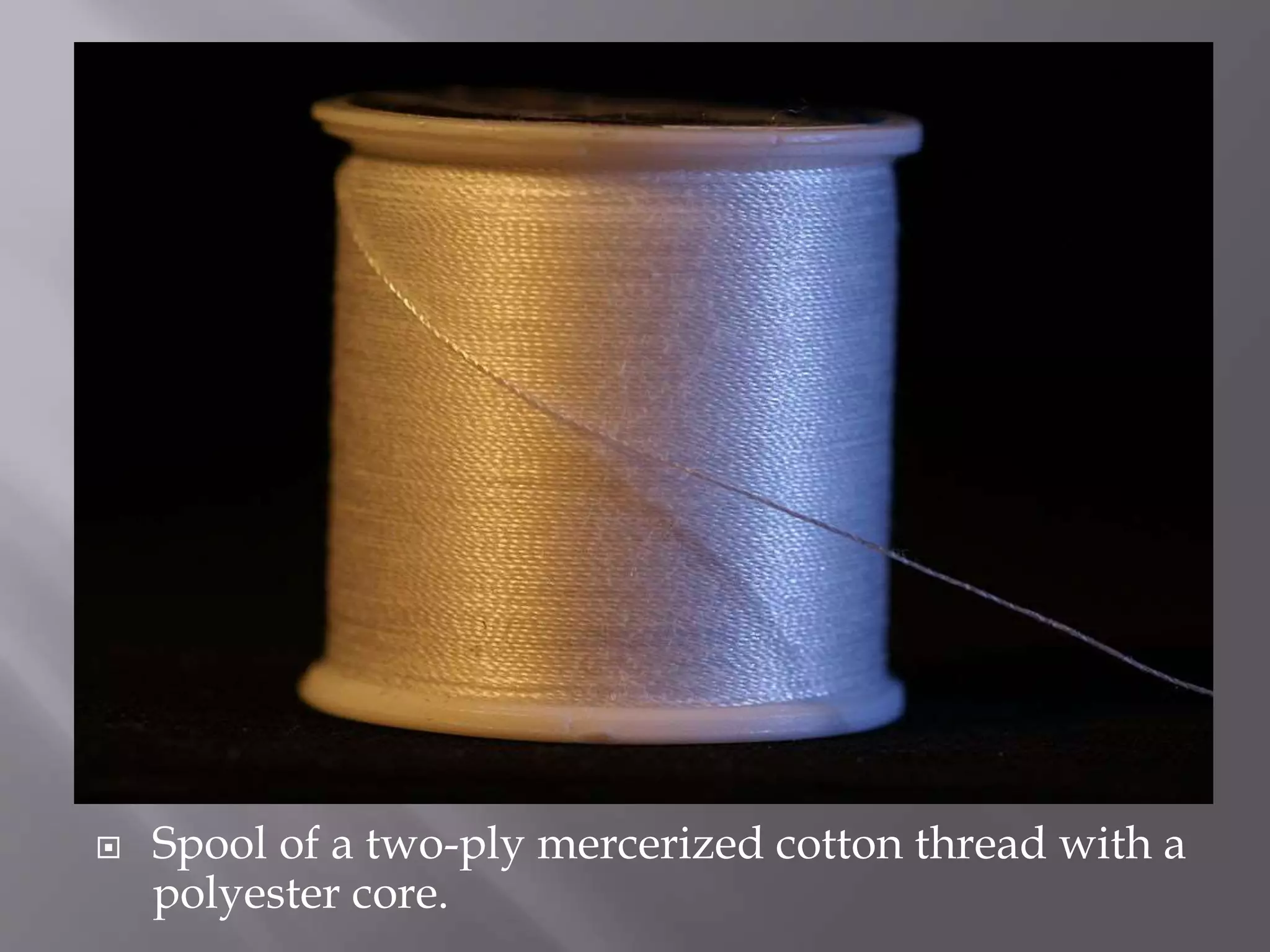
 Spool of a two-ply mercerized cotton thread with a
polyester core.
 During treatment fabric is stretched either by
clips or by roller to avoid its dimensional
shrinkage.
 After treating with caustic soda, fabric is
washed with hot water to bring concentration
of remained alkali below 10% without releasing
tension, to stabilized the structure of the
material.
8
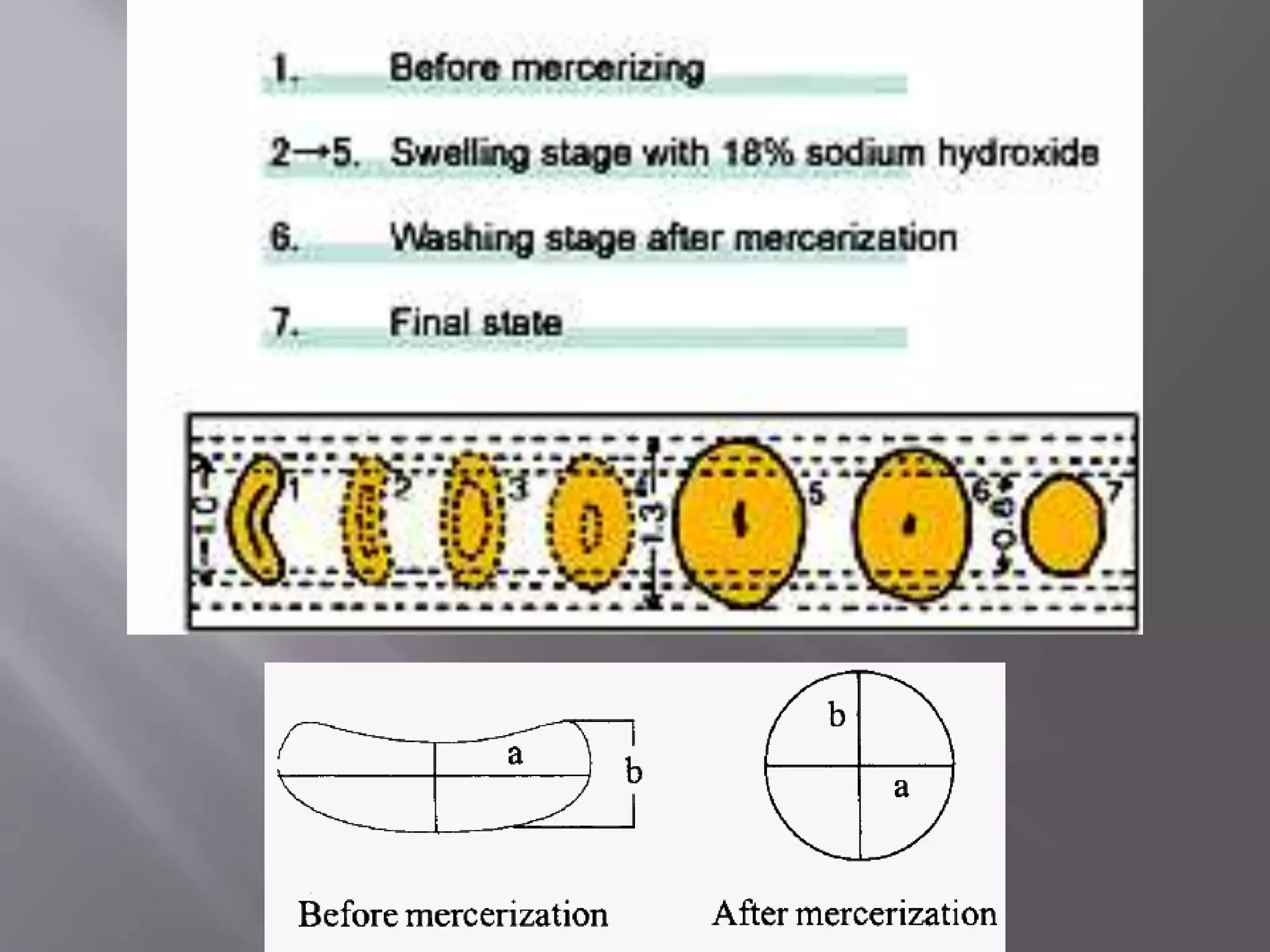
 Mercerising results in the swelling of the cell
wall of the cotton fibre.
 This causes increase in the surface area and
reflectance, and gives the fibre a softer feel.
 At Fiber level; swelling occurs causing, cross-
sectional morphology changes from bean shape
to round shape and Shrinkage occur along with
longitudinal direction.
 Able to absorb more water and therefore
absorb more dye.
 Colour of dyed clothe is more bright and
deeper.
 It also gives the clothe a better resistance to
multiple washing keeping the colour bright.
 It increases strength, smoothness, resistance to
mildew and luster.
1. Chain Type Mercerization Machine
In this machine fabric is allowed to shrink
freely width wise after passing the fabric or
yarn in two padders of NaOH solution. Then
the fabric brought back almost to its original
dimension by stretching both warp & weft
direction. By adjusting speed of two alkalis
padders rollers; warp wise tension is produced
while the weft stretching is done on clip
stentor.
14
15
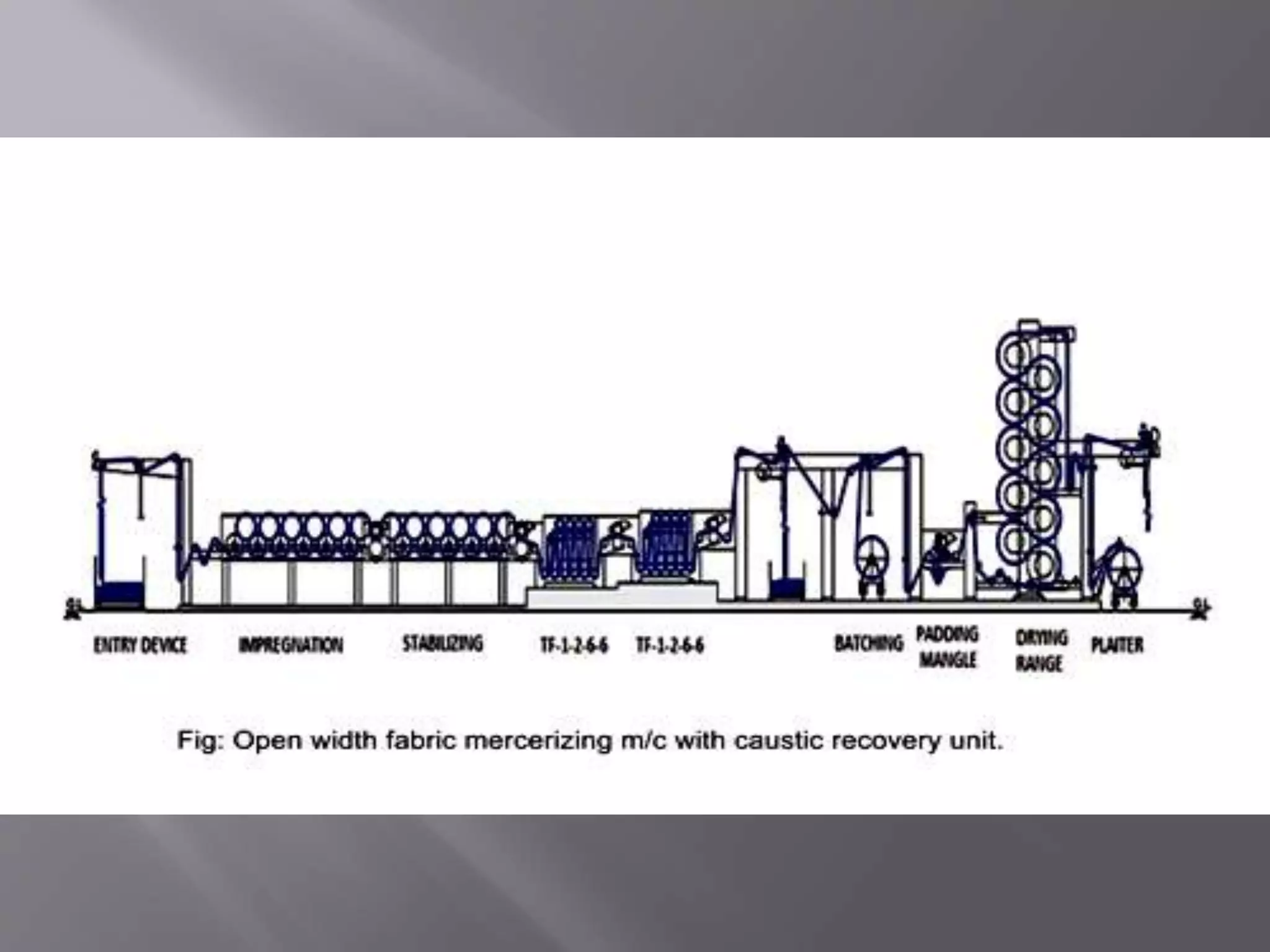
2. Roller Mercerization Machine.
In this machine fabric is firmly held b/w the
set of rubber & steel rollers during treatment
and its not allowed to shrink at all for time
until the strength of alkali is brought down by
washing with water or dilute alkali solution.
The width shrinkage is controlled by
protecting the slippage from the nip of the
roller during impregnation stage, while the
shrinkage in length wise is controlled by
maintaining a speed difference between the
cloth feeding Squeezing rollers of the
impregnation compartment.
17
19
Mercirization
Mercirization
Mercirization
Mercirization

Mercirization

  • 1.
  • 2.
     Mercerization isa treatment for cellulosic materials, typically cotton, that strengthens them and gives them a lustrous appearance.  It is a process in which the fabric is treated with cold concentrated solution of Sodium Hydroxide (NaOH).  The process essentially consist of impregnation of cotton fabric in NaOH solution 25-35% strength for 30- 60 seconds at temperature of 18-30 °C. 2
  • 3.
    1. To improvethe luster. 2. To increase dye uptake or pick up. 3. To cover the dead fibers. 4. To stabilize the structure of yarn/fabric. 5. To increase the strength of yarn/fabric.  Mercerization is very important process in wet processing industry because of its resultant effects (objectives), it may considered both, a pretreatment and a finishing process. 3
  • 4.
     It wasdiscovered in 1844 by John Mercer of England, who treated cotton fibers with sodium hydroxide.  The treatment caused the fibers to swell. The overall fabric size shrank and made it stronger and easier to dye.  The process did not become popular until H. A. Lowe improved it into its modern form in 1890.  By holding the cotton during treatment to prevent it from shrinking, Lowe found that the fibre gained a lustrous appearance.
  • 5.
    Background reviewed… John Mercerdiscovered it in 1844. In his experiment, he observed: 1. Shrinkage in fabric and yarn 2. Increase in moisture absorbency 3. Increase in dye uptake 4. Increase in chemical reactivity 5. Increase in tensile strength  Discovery of most important effect of silk like Luster was unknown till 1890 when Horace Lowe, another English man discovered it perhaps unintentionally. 5
  • 6.
     The modernproduction method for mercerised cotton, also known as "pearl" or "pearle" cotton, gives cotton thread (or cotton-covered thread with a polyester core) a sodium hydroxide bath that is then neutralized with an acid bath.  This treatment increases lustre, strength, affinity to dye, resistance to mildew  Mercerised thread is commonly used to produce fine thread.
  • 7.
     Spool ofa two-ply mercerized cotton thread with a polyester core.
  • 8.
     During treatmentfabric is stretched either by clips or by roller to avoid its dimensional shrinkage.  After treating with caustic soda, fabric is washed with hot water to bring concentration of remained alkali below 10% without releasing tension, to stabilized the structure of the material. 8
  • 9.
     Mercerising resultsin the swelling of the cell wall of the cotton fibre.  This causes increase in the surface area and reflectance, and gives the fibre a softer feel.  At Fiber level; swelling occurs causing, cross- sectional morphology changes from bean shape to round shape and Shrinkage occur along with longitudinal direction.
  • 12.
     Able toabsorb more water and therefore absorb more dye.  Colour of dyed clothe is more bright and deeper.  It also gives the clothe a better resistance to multiple washing keeping the colour bright.  It increases strength, smoothness, resistance to mildew and luster.
  • 14.
    1. Chain TypeMercerization Machine In this machine fabric is allowed to shrink freely width wise after passing the fabric or yarn in two padders of NaOH solution. Then the fabric brought back almost to its original dimension by stretching both warp & weft direction. By adjusting speed of two alkalis padders rollers; warp wise tension is produced while the weft stretching is done on clip stentor. 14
  • 15.
  • 17.
    2. Roller MercerizationMachine. In this machine fabric is firmly held b/w the set of rubber & steel rollers during treatment and its not allowed to shrink at all for time until the strength of alkali is brought down by washing with water or dilute alkali solution. The width shrinkage is controlled by protecting the slippage from the nip of the roller during impregnation stage, while the shrinkage in length wise is controlled by maintaining a speed difference between the cloth feeding Squeezing rollers of the impregnation compartment. 17
  • 19.

Editor's Notes

  • #5 http://en.wikipedia.org/wiki/Mercerised_cotton
  • #10 www.textiletoday.com.bd